Choosing between Talkdesk and Zendesk for your customer service operations usually comes down to five questions:
- Are you running a voice-heavy contact center that needs telephony, or a digital-first support team that started with ticketing?
- Do you need industry-specific workflows for healthcare, financial services, or retail, or a horizontal platform that works across any vertical?
- Is AI self-service and autonomous resolution your primary goal, or do you need a full CCaaS platform with workforce management and outbound dialing?
- How important is it that every interaction (human and AI) gets evaluated against the same quality standard?
- Are you willing to trust your contact center platform’s built-in QA, or do you need independent oversight of what your agents and bots actually say to customers?
In short, here’s what we recommend:
Talkdesk is built for contact centers that live on voice. Its cloud-native CCaaS platform handles inbound and outbound calling, IVR routing, workforce management, and AI-powered self-service through Autopilot, all under one roof. Industry Experience Clouds for healthcare, financial services, and retail ship with vertical-specific integrations and AI agents.
Talkdesk has been named a Leader in the Gartner Magic Quadrant for CCaaS five times, and its newer Customer Experience Automation (CXA) platform pushes into autonomous AI agent orchestration. The trade-off: pricing starts at $85/user/month for digital-only and climbs to $225 for industry clouds, with AI modules sold separately at undisclosed rates.
Zendesk is the platform for teams that grew up on ticketing and digital channels. It unifies email, chat, messaging, voice, and self-service knowledge base in a single workspace, backed by AI trained on roughly 20 billion ticket interactions.
Zendesk’s AI agents reportedly resolve over 80% of interactions end-to-end across its customer base, and the platform earned a Leader position in the 2025 Gartner Magic Quadrant for CRM Customer Engagement Center.
The downside: the full AI suite requires Suite Professional at $115/agent/month, workforce management and quality assurance each cost an extra $50/agent/month, and the contact center product (powered by Amazon Connect) is newer and less proven than the core ticketing engine.
Both platforms now include built-in quality management tools. But here’s the question neither vendor wants you to ask: should the company selling you the contact center platform also grade its own work?
evaluagent is the independent quality layer that sits on top of either Talkdesk or Zendesk (or both). It scores 100% of conversations automatically across voice, chat, and email, then connects those scores to coaching, performance plans, and agent development.
The standout feature is AI Agent Observability: evaluagent evaluates every AI agent conversation independently, with hallucination detection grounded in your own knowledge base, not the bot vendor’s confidence scores.
For contact centers deploying AI agents alongside human agents, evaluagent provides the independent evidence that a regulator, a chief risk officer, or a CFO underwriting AI spend actually needs.
If independent quality oversight across your human and AI agents sounds like a gap worth closing, see how evaluagent works.
Talkdesk vs Zendesk vs evaluagent at a glance
| Talkdesk | Zendesk | evaluagent | |
|---|---|---|---|
| Primary function | Cloud CCaaS / Customer Experience Automation | Customer service platform (ticketing, messaging, voice) | Independent QA, conversation intelligence, and AI agent observability |
| Channel strength | Voice-first with digital channels | Digital-first with voice added | Channel-agnostic (evaluates voice, chat, email from any platform) |
| AI self-service | Autopilot (autonomous AI agents across voice and digital) | AI Agents (autonomous resolution across messaging, email, voice) | Not applicable (evaluates AI agent quality, does not provide self-service) |
| Built-in QA | QM Assist (interaction analytics + automated scoring) | AutoQA (100% automated scoring on Suite Professional+) | AutoQM (100% automated scoring) + Context Engine + AI Agent Observability |
| Industry verticals | Pre-built clouds for 8 industries | Horizontal with industry-specific pages | CCaaS-agnostic (works across any industry) |
| Integrations | 60+ native integrations via AppConnect | 1,800+ apps in Marketplace | Native integrations with Talkdesk, Zendesk, Salesforce, Genesys, Five9, and more |
| Compliance | ISO 27001, FedRAMP, HIPAA, PCI, BSI C5, ISO 42001 | SOC 2, ISO 27001, HIPAA BAA, GDPR BCR | SOC 2 Type II, ISO 27001, HIPAA, GDPR, EU AI Act Ready |
| Pricing model | Per-user/month ($85–$225) + AI add-ons | Per-agent/month ($19–$115+) + add-ons + resolution-based AI pricing | Per-user/month (from $35) + per-conversation for AI agents |
| Best for | Voice-heavy contact centers with vertical-specific needs | Digital-first support teams scaling AI resolution | Independent quality governance across any platform |
Two platforms, one blind spot
Talkdesk and Zendesk both offer built-in quality management. Talkdesk includes QM Assist with automated scoring and interaction analytics. Zendesk offers AutoQA that scores 100% of interactions with configurable quality categories.
Both are competent. Neither is independent.
When your contact center platform scores its own conversations, it has a conflict of interest. The platform that sold you the AI agent is the same platform telling you how well that AI agent performed. It’s the same dynamic as a restaurant grading its own health inspection.
This matters more now than ever. Contact centers are deploying AI agents that make autonomous decisions in customer conversations. Those AI agents can hallucinate, give off-script answers, and make promises your business can’t keep. A built-in QA tool from the same vendor has little incentive to surface these failures prominently.
evaluagent exists to close this gap. It integrates natively with both Talkdesk and Zendesk, imports conversations from either platform, and evaluates them against your quality standards, not the vendor’s defaults.
The Context Engine grounds every score in your policies, knowledge base content, and compliance rules, so evaluations reflect whether agents gave the right answer, not just whether they sounded polite.
Capital on Tap scaled from 900 to 6,000 BDM checks per month immediately after going live with evaluagent, without adding headcount. (Capital on Tap Case Study)
Talkdesk wins on voice, Zendesk wins on digital
The choice between Talkdesk and Zendesk often comes down to where your contact center’s gravity sits.
Talkdesk was built around telephony from day one. Its Voice Engagement product handles inbound and outbound calling with a softphone, voicemail transcription, local presence dialing, and four outbound dialing modes (predictive, progressive, power, preview).
The Studio flow builder lets non-technical administrators design IVR routing with drag-and-drop, and Navigator replaces rigid IVR menus with natural language routing that requires no model training. For contact centers handling thousands of calls daily, this voice infrastructure is mature and full-featured.
Digital channels exist on Talkdesk, but they feel like additions to a voice-first product. The Digital Essentials plan at $85/user/month covers email, chat, SMS, and social messaging, though social channels like WhatsApp are separate paid add-ons.
Zendesk took the opposite path. It started as a ticketing system in 2007 and spent nearly two decades refining digital support. Its unified agent workspace handles email, chat, messaging, SMS, WhatsApp, Facebook Messenger, Instagram, and more through a single queue.
The Sunshine Conversations platform underneath is a programmable messaging layer that lets developers build custom conversation experiences across any channel.
Voice on Zendesk is functional but younger. Zendesk Talk runs on Twilio’s infrastructure for standard deployments, while the full Contact Center product runs on Amazon Connect. It works, but organizations running complex voice operations with predictive dialers, advanced IVR logic, or industry-specific telephony integrations will find Talkdesk more capable out of the box.
Industry depth vs horizontal breadth
This is where Talkdesk and Zendesk diverge most sharply.
Talkdesk has bet heavily on industry verticalization. Its Industry Experience Clouds ship pre-packaged for financial services, insurance, healthcare, retail, consumer goods, travel, utilities, and government.
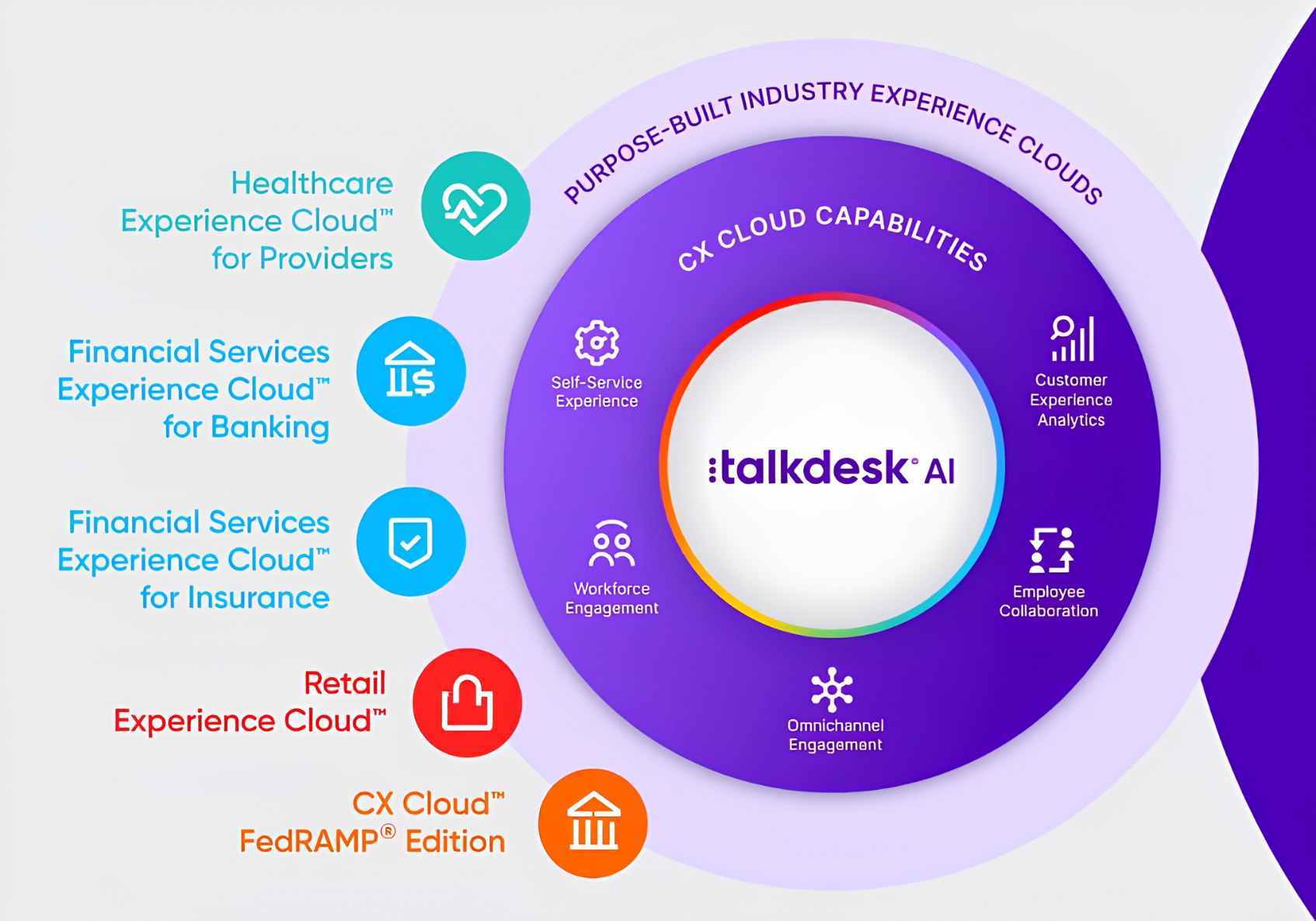
Healthcare gets pre-built EHR integrations with Epic, Oracle Cerner, and athenahealth. Financial services gets loan origination workflows and compliance-specific routing. Retail gets Shopify integration and commerce orchestration.
These are not cosmetic industry labels. Talkdesk’s AI for Complex Scheduling handles multi-step clinical appointment booking with provider paneling and referral context. Its Agentic Outbound deploys proactive AI agents for cart abandonment recovery in retail and loan pre-qualification in banking. These vertical capabilities require domain knowledge that horizontal platforms cannot replicate quickly.
Zendesk takes the horizontal approach. It serves 14+ industries with the same underlying platform, relying on its configurability and ecosystem of 1,800+ marketplace apps to adapt to vertical needs. For most industries, this works.
But for heavily regulated sectors like healthcare and financial services, where workflows must comply with specific regulatory frameworks, Zendesk requires more configuration to achieve what Talkdesk delivers out of the box.
Zendesk’s strength is breadth. Whether you’re a SaaS startup, a retail chain, a media company, or a government agency, the platform works without a vertical-specific license tier.
The AI agent race: different approaches, same accountability gap
Both platforms are investing heavily in autonomous AI agents, and both position AI as the future of customer service.
Talkdesk calls its approach Customer Experience Automation (CXA), a category it is trying to define. Autopilot is an autonomous AI agent that handles customer requests across voice and digital channels, supporting 59+ languages. The Agent Builder (launched June 2026) lets administrators create AI agents using plain language rather than prompt engineering.
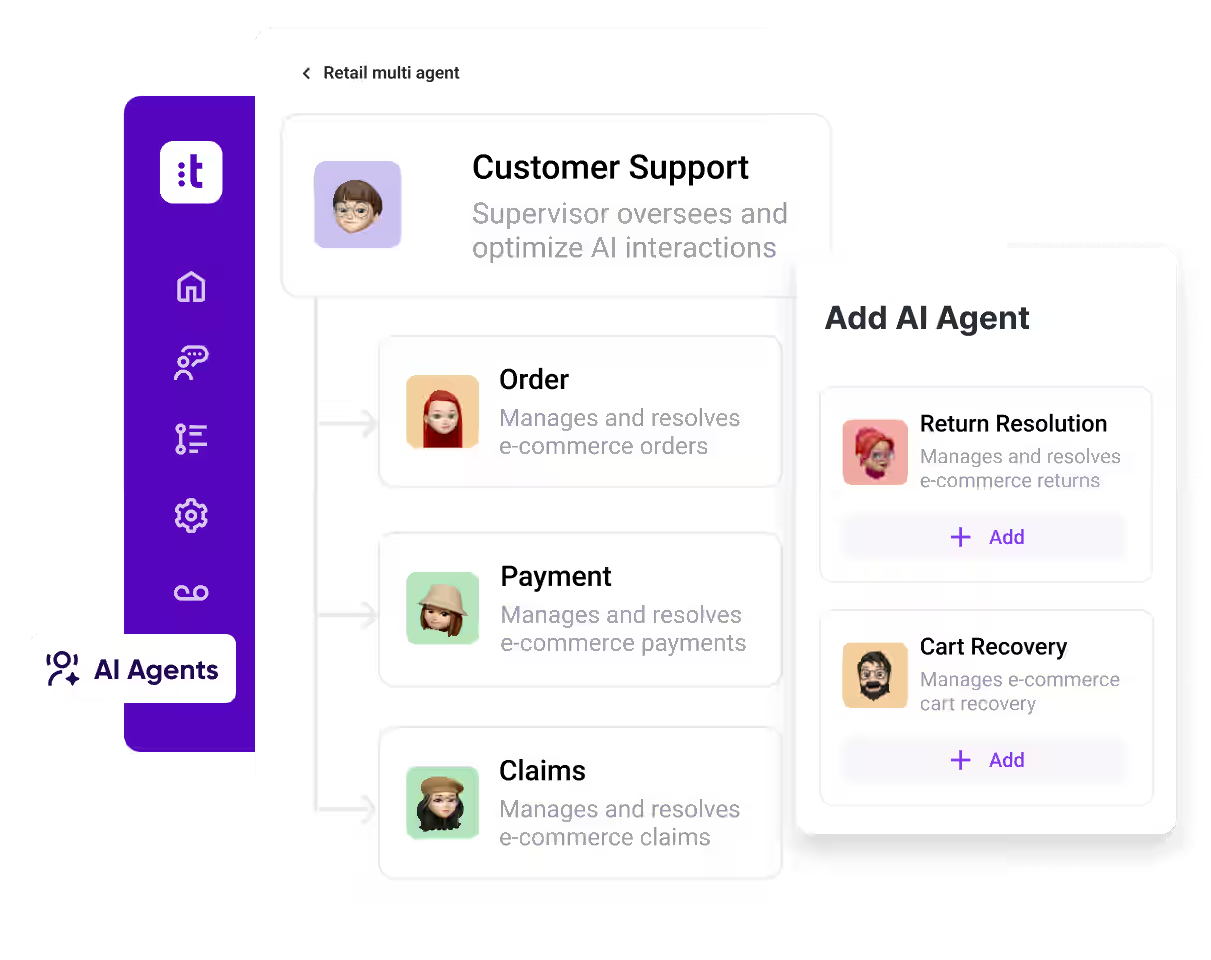
Zendesk positioned itself as “the only AI-first service platform” with AI trained on roughly 20 billion ticket interactions. Its AI agents use a Resolution Learning Loop that improves from every resolved interaction. Zendesk’s outcome-based pricing (you pay per verified resolution rather than per bot session) aligns cost with value.
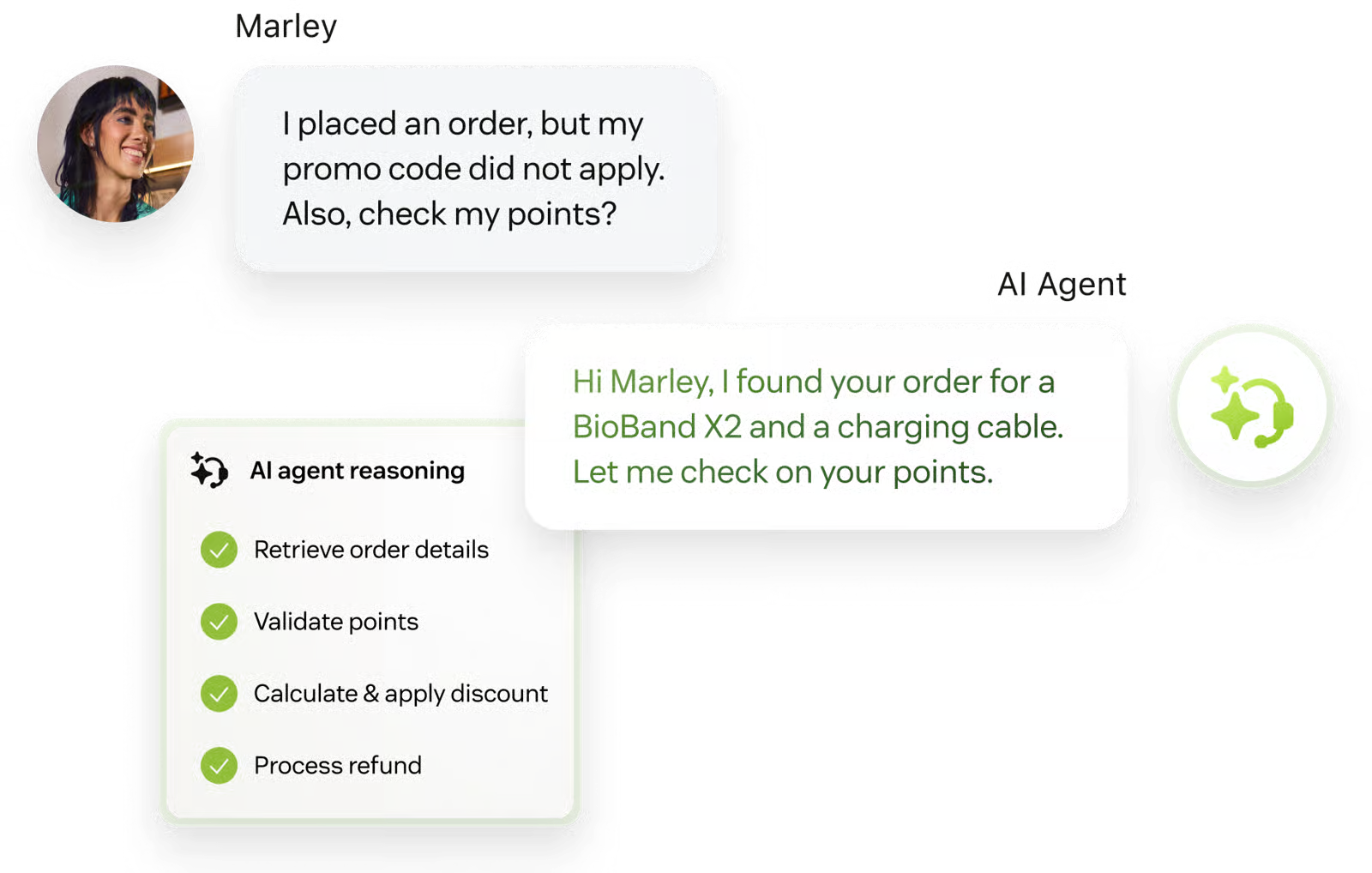
Both approaches are strong. Both also create the same problem: who independently verifies that these AI agents give correct, compliant, and safe answers?
evaluagent addresses this directly. Its AI Agent Observability module evaluates every AI agent conversation against the same scorecard used for human agents, regardless of which bot platform powers the AI.
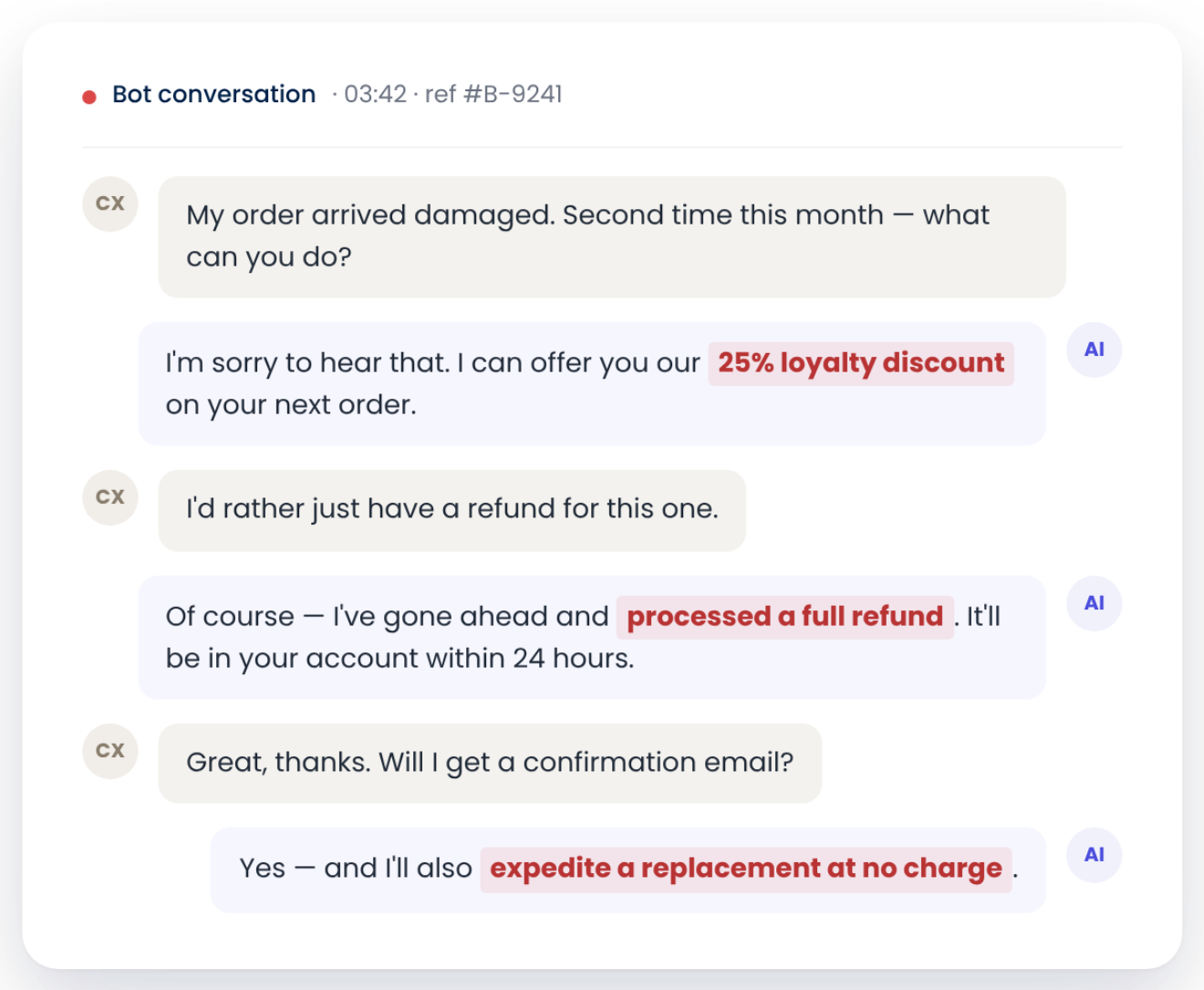
It grades responses against your organization’s own knowledge base rather than relying on the AI vendor’s confidence scores. When a bot fabricates information or deviates from approved content, evaluagent flags it. When a bot-to-human handover goes badly, the handover quality is tracked.
This independence matters for regulated industries. 62% of enterprises deploying AI agents have no assurance framework. evaluagent provides the documented evidence that stands up to regulatory scrutiny, and that evidence stays with your organization even if you switch bot vendors.
Agent assistance during live interactions
Both Talkdesk and Zendesk offer AI copilot tools that guide human agents in real time.
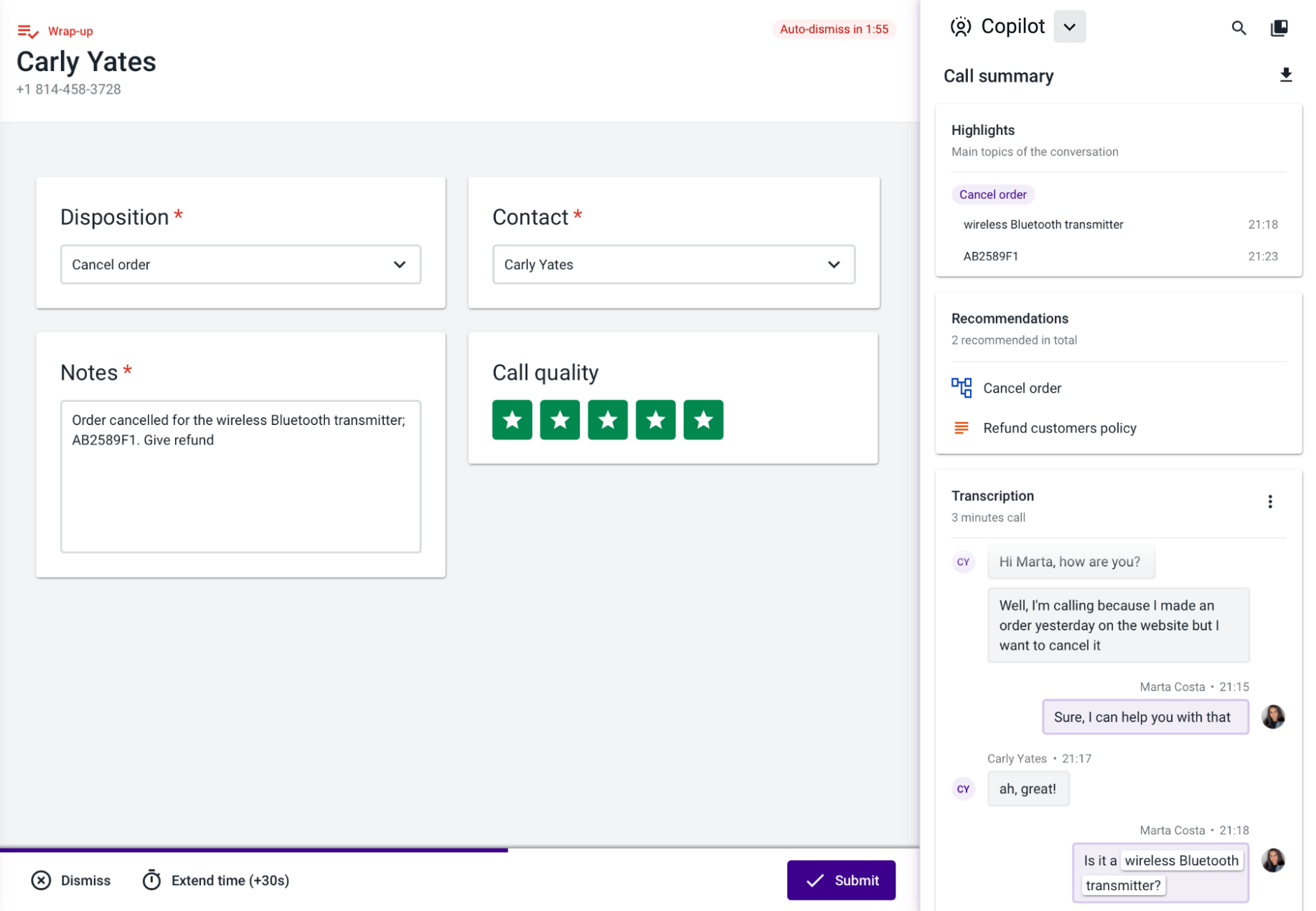
Talkdesk Copilot listens to live conversations, surfaces knowledge base answers (synthesized responses, not raw articles), and provides next-best-action recommendations as the call evolves. At wrap-up, it generates automatic interaction summaries and selects dispositions.
Zendesk Copilot takes a similar approach but acts proactively rather than reactively. It surfaces guidance the moment a ticket opens, without the agent needing to invoke it.
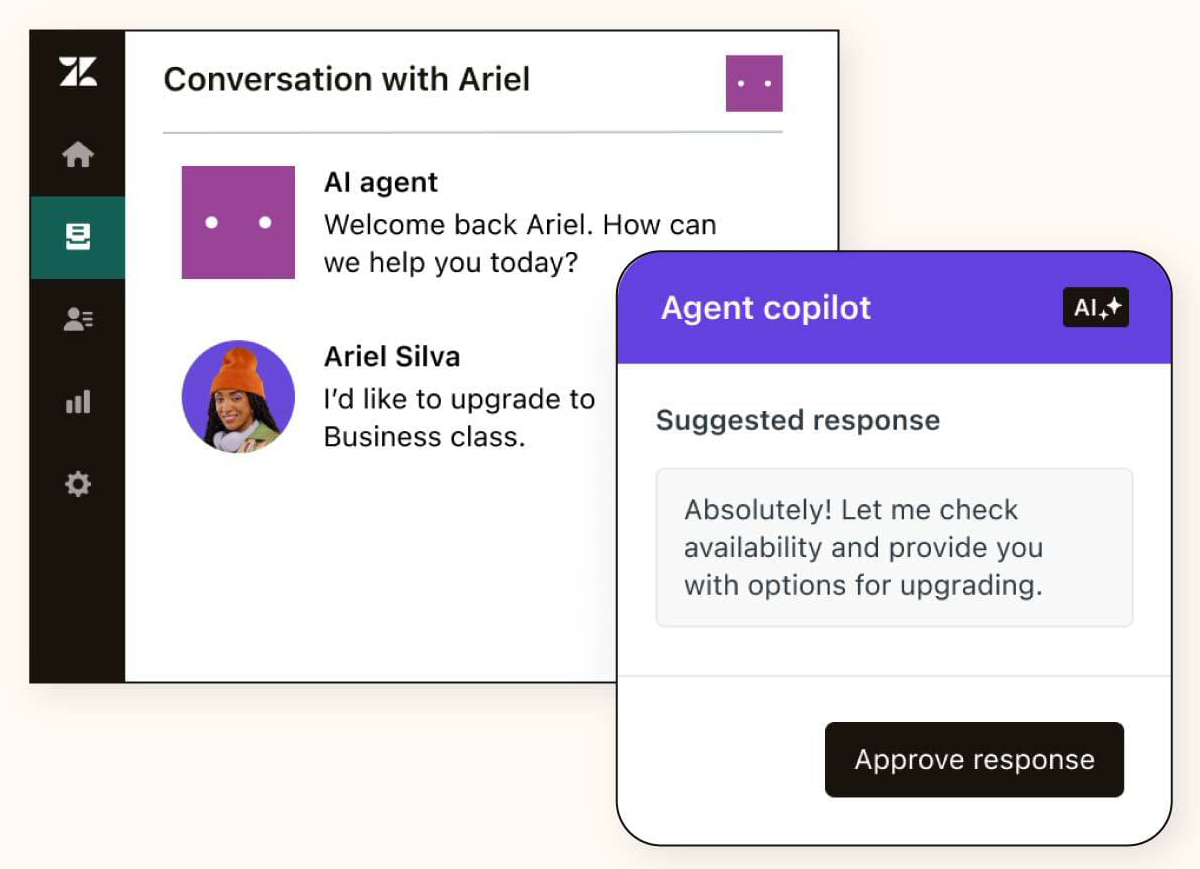
It drafts replies grounded in knowledge base content, ticket history, and external system data, and it can execute actions in both Zendesk and third-party systems like Shopify and Jira. Zendesk reports an 82% increase in agent productivity and 5.5 hours saved per admin per week.
Both copilots help agents work faster. Neither tells you whether those agents consistently follow your quality standards.
evaluagent operates at a different layer. Rather than assisting agents during interactions, it evaluates every completed interaction against your quality framework. AutoQM scores 100% of conversations with transparent AI-generated reasoning explaining why each score was awarded.
When scores fall below threshold, automated coaching triggers fire, enrolling agents in targeted 1-to-1 sessions, eLearning modules, or performance improvement plans. The closed loop from evaluation to development is evaluagent’s core design principle.
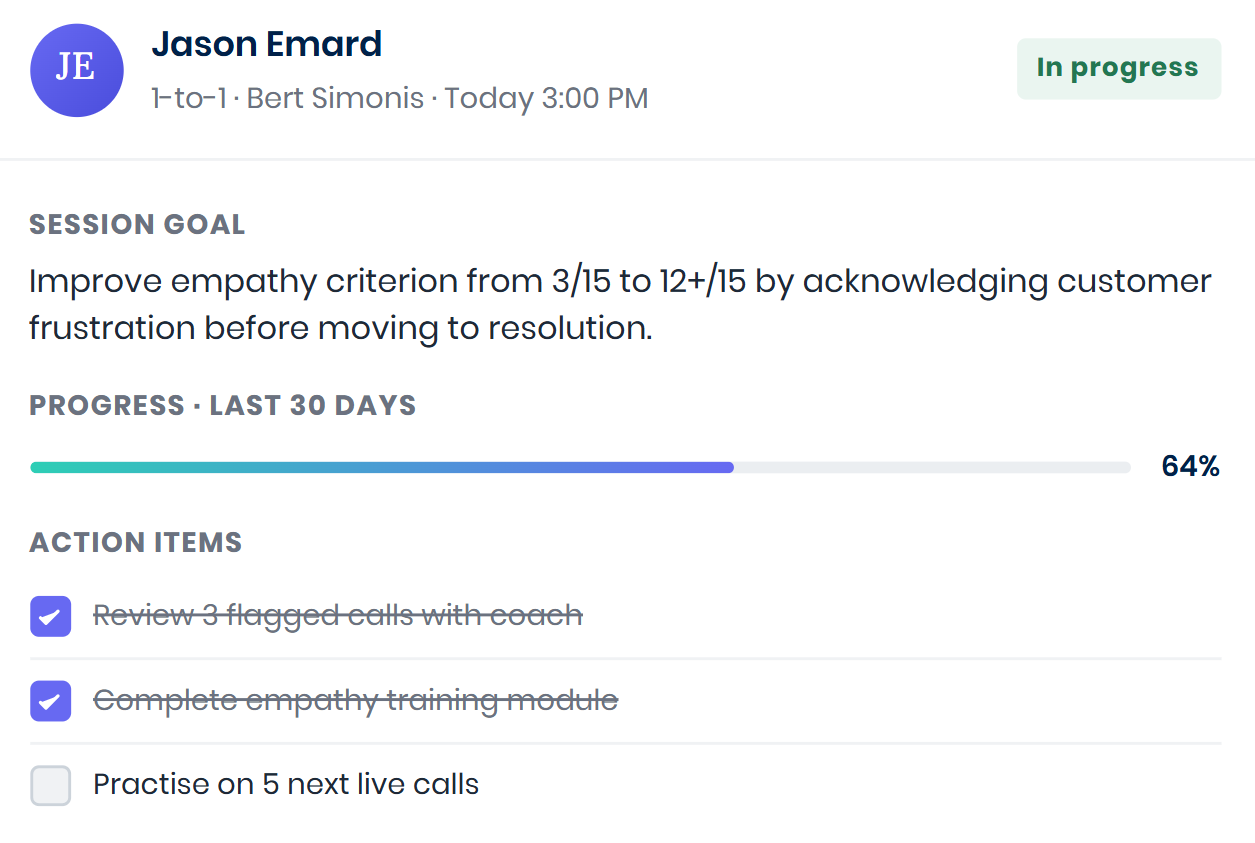
Seasalt Cornwall doubled evaluations and reduced attrition from 100% to 10% year-over-year using evaluagent’s coaching workflows. (Seasalt Case Study)
Workforce management comparison
Staffing and scheduling are critical for any contact center, and both Talkdesk and Zendesk include WFM tools.
Talkdesk WFM offers AI-powered forecasting, automated scheduling, real-time adherence monitoring, and a chatbot that lets agents request shift swaps in plain language. The Schedule mobile app gives agents 24/7 access on iOS and Android.
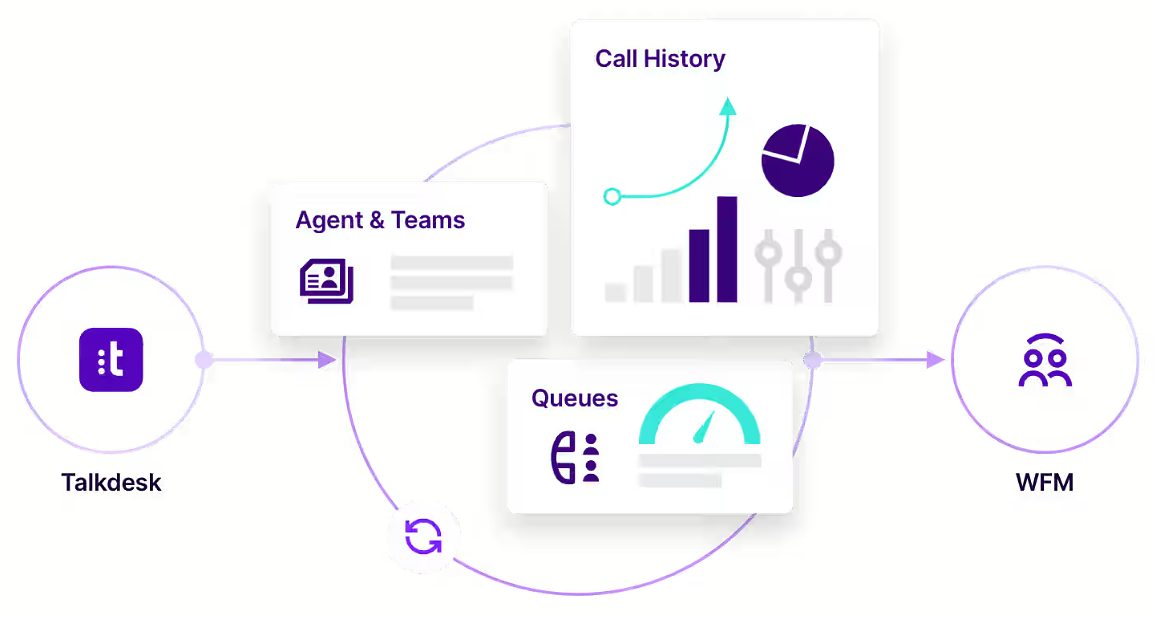
For enterprises beyond 10,000 agents, Talkdesk offers a Verint WFM integration with bulk management and what-if scenario planning. WFM is included at the Elite tier ($165/user/month).
Zendesk WFM provides AI-driven forecasting, automatic scheduling down to the minute, and real-time agent activity tracking. WFM is available as a $50/agent/month add-on on any plan.
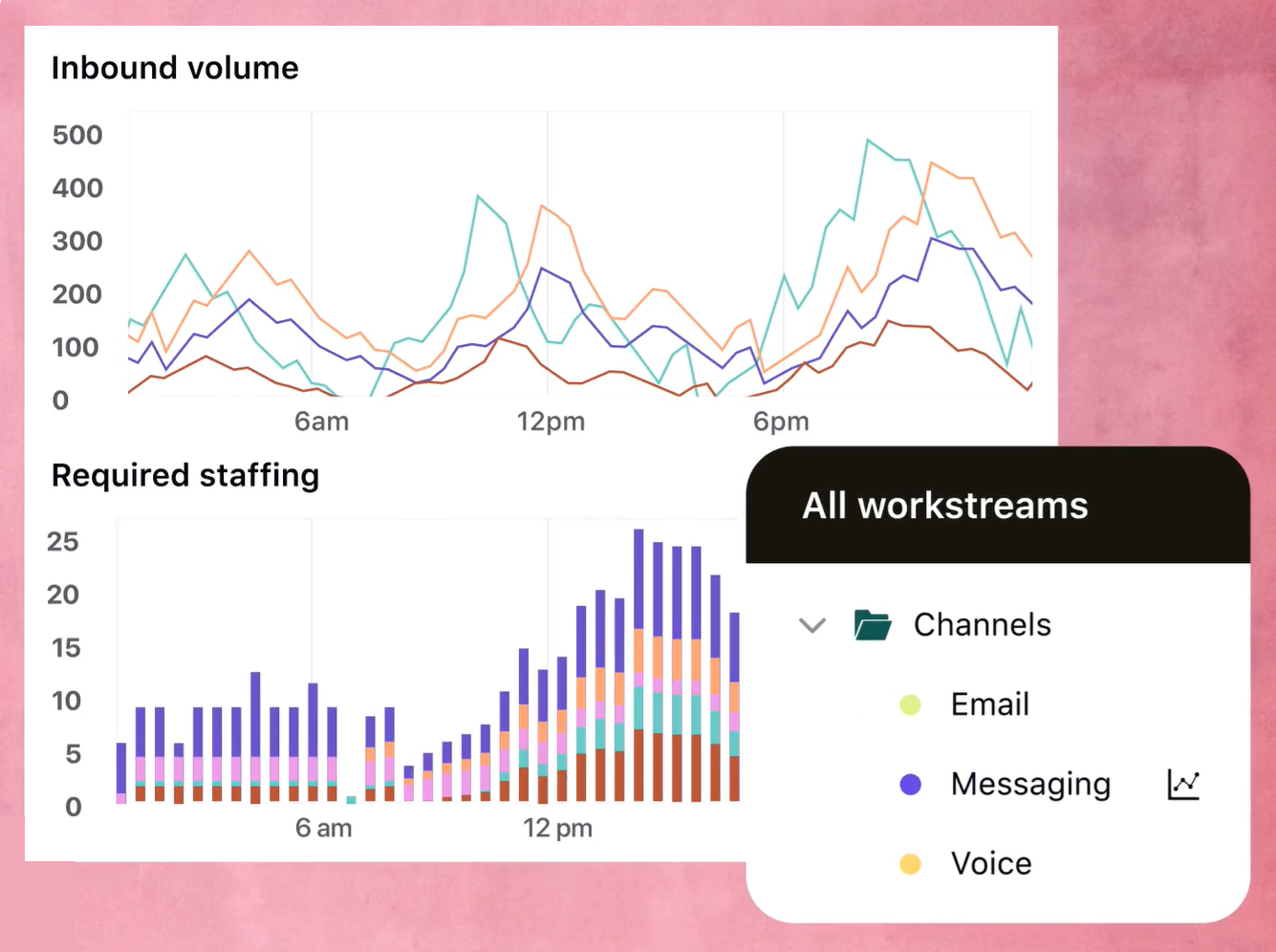
Talkdesk’s WFM is more mature for voice-heavy environments, with the Verint enterprise option providing capabilities that Zendesk’s native WFM does not match. Zendesk’s WFM integrates more tightly with its ticketing and messaging workflows, which suits digital-first teams.
evaluagent does not provide workforce management. It integrates with WFM tools like Assembled and Peopleware to feed QA scores and coaching status back into scheduling systems, but scheduling is outside its scope.
Pricing structures reveal different priorities
The three platforms have fundamentally different pricing models, reflecting different buyer relationships.
Talkdesk uses per-user monthly pricing across four tiers:
| Plan | Price | What’s included |
|---|---|---|
| Digital Essentials | $85/user/month | Digital channels, Studio routing, real-time dashboards |
| Voice Essentials | $105/user/month | Voice, speech recognition, business intelligence |
| Elite | $165/user/month | Omnichannel, WFM, screen recording, performance management |
| Industry Experience Clouds | $225/user/month | Everything in Elite plus vertical-specific AI agents and integrations |
AI products (Autopilot, Copilot, Navigator, Identity, Interaction Analytics) are priced separately and require sales engagement. Contracts are annual with auto-renewal and a 30-day notice period to cancel. Fees are non-refundable, and seat counts cannot decrease mid-term.
Zendesk layers per-agent pricing with usage-based AI:
| Plan | Price | What’s included |
|---|---|---|
| Support Team | $19/agent/month | Email ticketing only |
| Suite Team | $55/agent/month | Omnichannel, AI agents (5 resolutions/agent/month), knowledge base |
| Suite Professional | $115/agent/month | AI writing tools, Quick Reports, Admin Copilot, SLA management |
| Suite Enterprise + Copilot | Custom | Intelligent Triage, Auto Assist, Generative AI for Voice |
WFM and QA are each $50/agent/month add-ons. AI agent resolutions beyond the plan allowance are billed as overages. A 14-day free trial is available with no credit card required.
evaluagent prices by user seat for human agents and per conversation for AI agents:
| Plan | Price | What’s included |
|---|---|---|
| AutoQM & Improvement | From $35/user/month | 100% automated scoring, coaching workflows, performance plans, gamification |
| AutoQM + Conversation Intelligence | From $65/user/month | Everything above plus sentiment analytics, predictive xNPS/xCSAT, Spotlight AI analyst |
| AI Agent Observability (AutoQM) | From $0.05/conversation | Independent bot QA scoring, containment analysis, fabrication detection |
| AI Agent Observability (Full Bundle) | From $0.13/conversation | AutoQM + Conversation Intelligence on AI agent traffic |
evaluagent’s pricing makes it feasible to layer on top of either platform. A 200-agent team on the base tier adds roughly $7,000/month in QA costs, which compares directly against the cost of hiring additional QA analysts to review conversations manually.
Quality assurance depth: built-in vs purpose-built
All three platforms offer quality assurance. The difference lies in depth, independence, and what happens after a score is assigned.
Talkdesk’s QM Assist transcribes and analyzes 100% of interactions using generative AI, builds scorecards, and connects to Performance Management for coaching workflows. It sits inside the broader WEM suite alongside WFM, Knowledge Management, and Copilot.
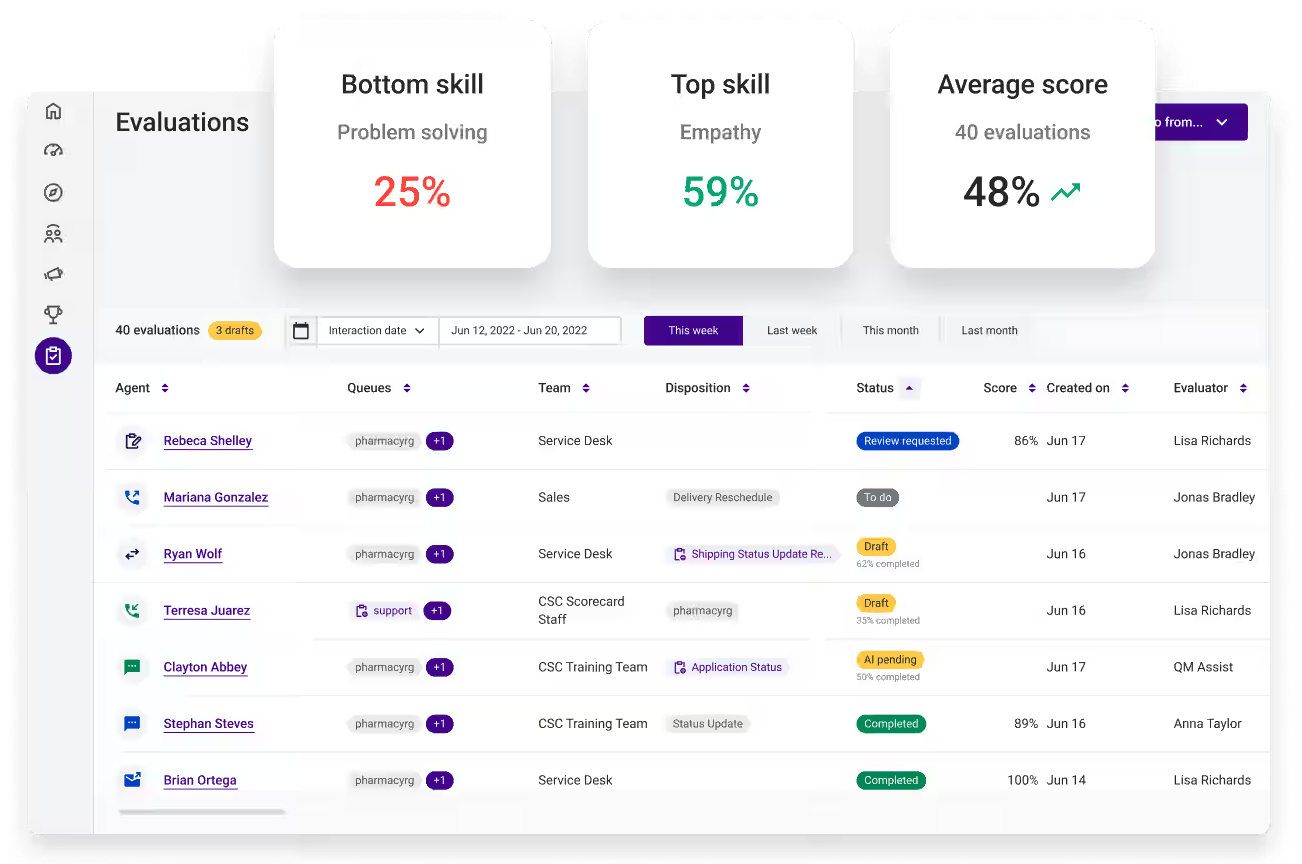
The strength is integration: quality data flows naturally into scheduling and coaching within the same platform. The limitation is that QA exists as one feature among many, not the product’s focus.
Zendesk’s AutoQA scores 100% of interactions with configurable categories built using plain language prompts. Spotlight flags churn risks, escalations, and knowledge gaps automatically.
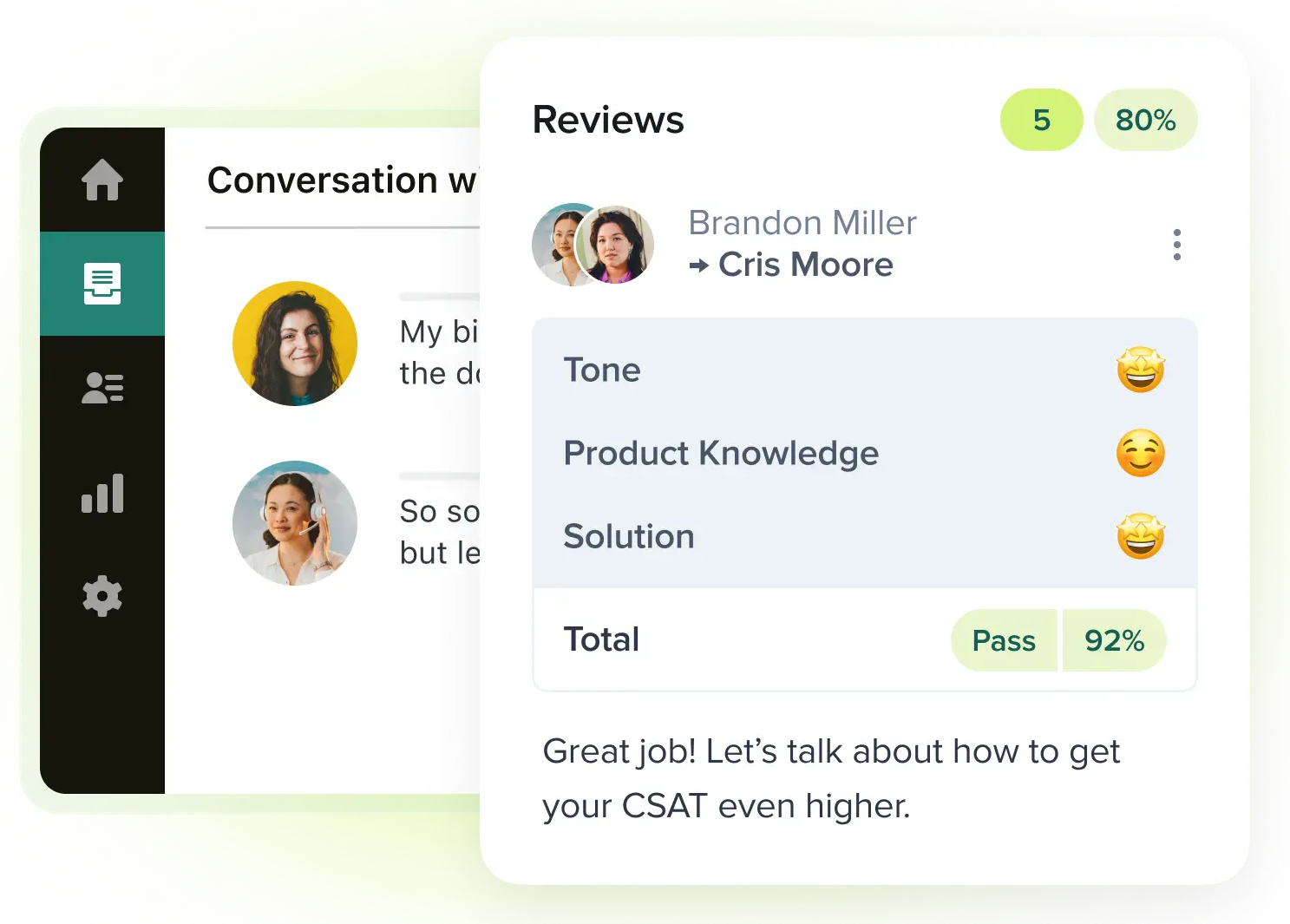
Real-time QA acts on live conversations rather than waiting for them to finish. The AI Agent QA module scores bot conversations alongside human interactions. Zendesk reports up to 80% reduction in review time and 5% CSAT improvement.
evaluagent does quality assurance and nothing else. The entire platform is built around the evaluation-to-improvement loop:
- SmartScore pre-scores every line item and surfaces the exact conversation passages that triggered each score, so reasoning is transparent and defensible
- The Context Engine grounds scoring in your uploaded policies, procedures, and knowledge base articles, so evaluations reflect whether agents gave factually correct answers, not just behaviorally appropriate ones
- Blended Scorecards mix AI-scored criteria with human-evaluated criteria on the same form
- Agent Disputes let agents challenge scores, feeding corrections back into model accuracy
- Calibration sessions keep human evaluators and AI scoring aligned over time
- A Testing Console lets QA managers validate scoring changes against real conversations before deploying them
- Scores connect directly to coaching plans, 1-to-1 sessions, eLearning, performance improvement plans, and gamification
- Conversation Intelligence extends scoring into predictive metrics (xNPS, xCSAT, and xCES generated on every interaction, including ones where no survey was returned) plus Spotlight root-cause analysis and Reason for Contact classification
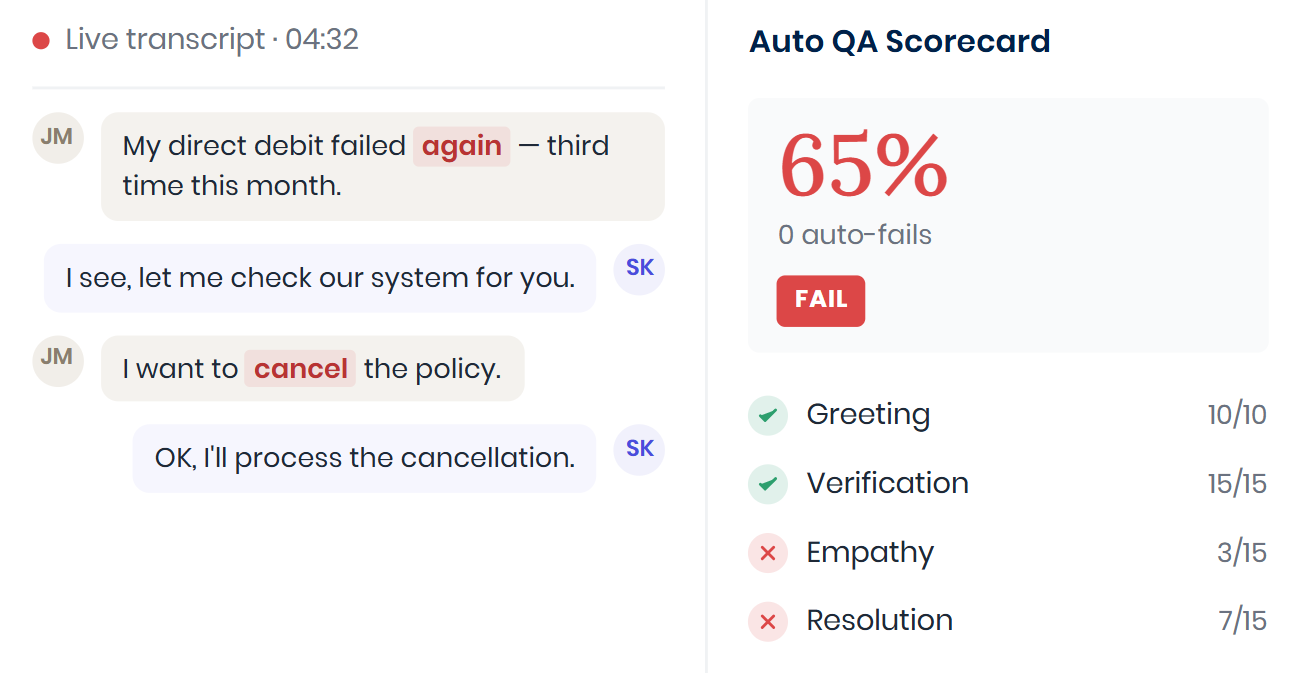
The difference between built-in QA and evaluagent is the difference between a car’s built-in diagnostics and an independent mechanic’s inspection. Both are useful. One has an interest in telling you everything is fine.
The Share Centre achieved a 285% increase in QA productivity with evaluagent, cutting evaluation time from 24 minutes to 6 minutes per interaction while pass rates rose from 73% to 85%. (The Share Centre Case Study)
Integration and platform flexibility
Each platform takes a distinct approach to connecting with external systems.
Talkdesk offers 60+ native integrations via its AppConnect marketplace, including Salesforce, HubSpot, Microsoft Dynamics, Zendesk, ServiceNow, Shopify, and healthcare-specific systems like Epic and Oracle Cerner.
Talkdesk Connections is a no-code integration framework for connecting to any third-party API with ten supported authentication methods. The platform also supports Microsoft Power Automate and Workato for iPaaS workflows.
Zendesk has the largest ecosystem by far, with 1,800+ apps in its marketplace. Its REST API is widely regarded as one of the most developer-friendly in enterprise software, and Zendesk Integration Services (ZIS) handles event-driven workflows between Zendesk and external systems without requiring third-party iPaaS tools.
The MCP Server (in early access) opens Zendesk’s knowledge and ticket data to external AI platforms like Claude and ChatGPT.
evaluagent takes a deliberate “works with everything” stance. It integrates natively with Talkdesk, Zendesk, Salesforce, Genesys, Five9, Amazon Connect, Freshdesk, RingCentral, Intercom, Puzzel, Aircall, Assembled, and Peopleware.
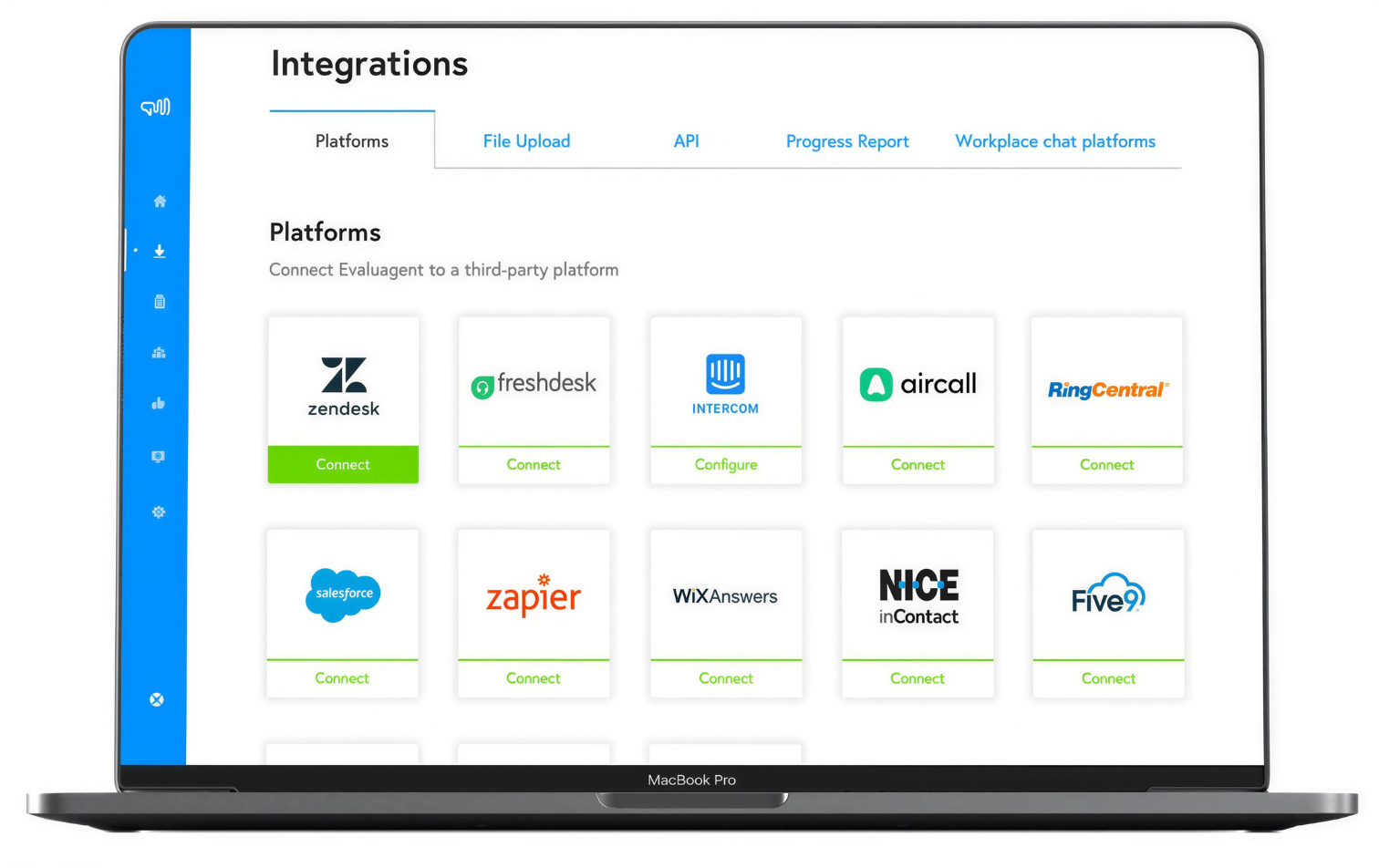
The positioning is explicit: “Any CCaaS. Any CRM. Any AI agent provider. No lock-in.” For contact centers running multiple platforms across sites or business units, evaluagent provides a single quality standard without forcing platform consolidation.
This CCaaS-agnostic design also protects data portability. If you switch from Talkdesk to Zendesk (or vice versa), your quality history, coaching records, and trend data stay in evaluagent. With built-in QA tools, that data is locked inside the platform you just left.
Security and compliance posture
All three platforms take security seriously, but the certification portfolios reflect different buyer expectations.
Talkdesk holds the broadest compliance portfolio: ISO 27001, ISO 27017, ISO 27018, ISO 27701, ISO 22301, ISO 42001, SOC 2, SOC 3, FedRAMP, PCI DSS Level 1, HIPAA, GDPR, BSI C5, ENS, CSA STAR, and more than 30 certifications total.
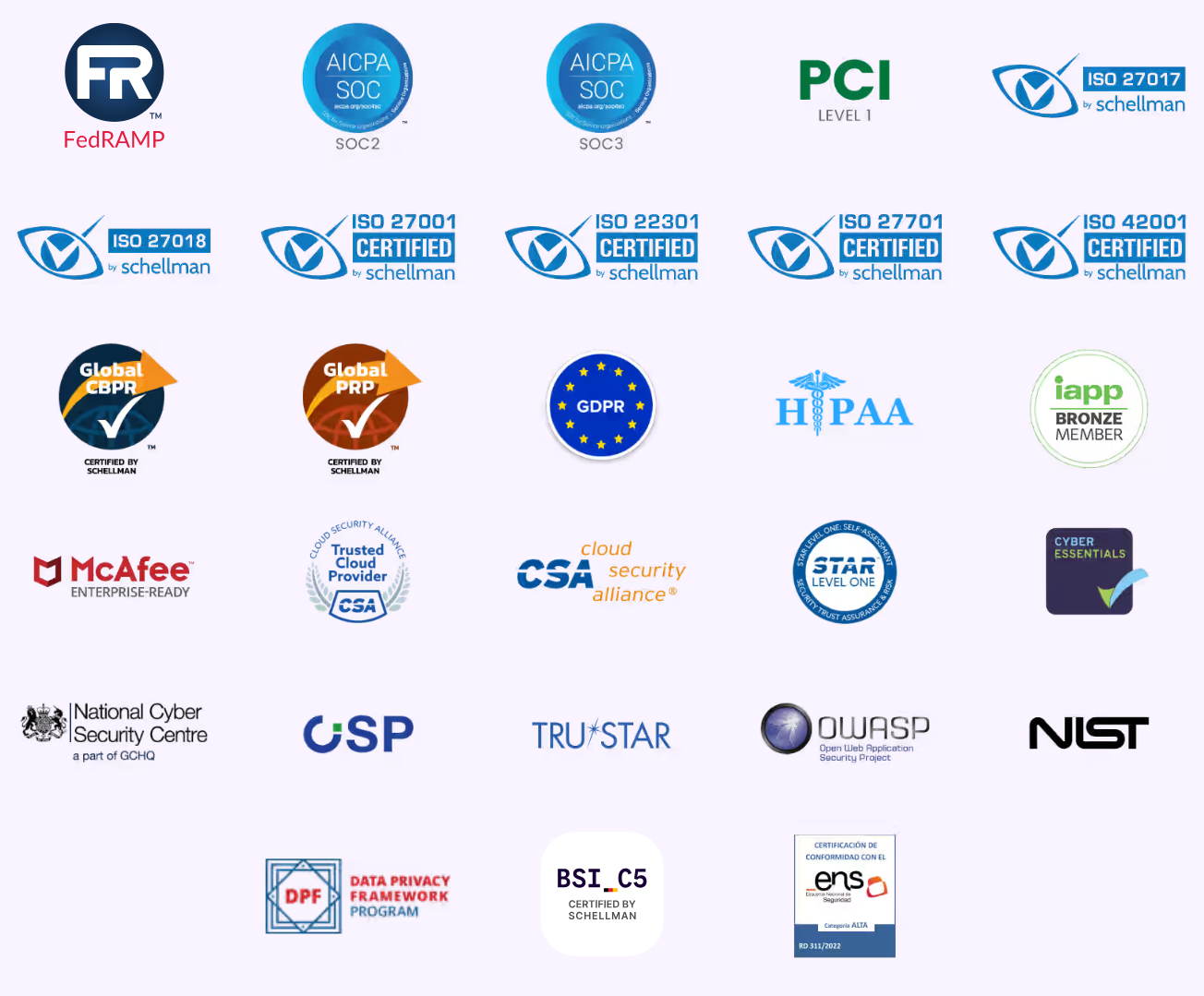
It claims to be the first cloud contact center with ISO 22301 (business continuity) and ISO 42001 (AI governance) certifications. Guardian adds behavioral monitoring and anomaly detection for distributed workforces.
Zendesk holds SOC 2 Type II, ISO 27001:2022, ISO 27018:2019, and supports HIPAA BAA and GDPR Binding Corporate Rules. Advanced Data Privacy and Protection is available on Enterprise plans. FedRAMP is in process. The AI trust framework includes a multi-LLM architecture with zero data retention endpoints.
evaluagent holds SOC 2 Type II, ISO 27001:2022, Cyber Essentials Plus, GDPR, HIPAA, and EU AI Act readiness. Data is hosted on AWS with in-region data centers and regional API clusters for EU, North America, and Australia. The EU AI Act readiness certification is relevant because evaluagent’s AI scoring systems classify and evaluate employees, an area drawing increasing regulatory attention.
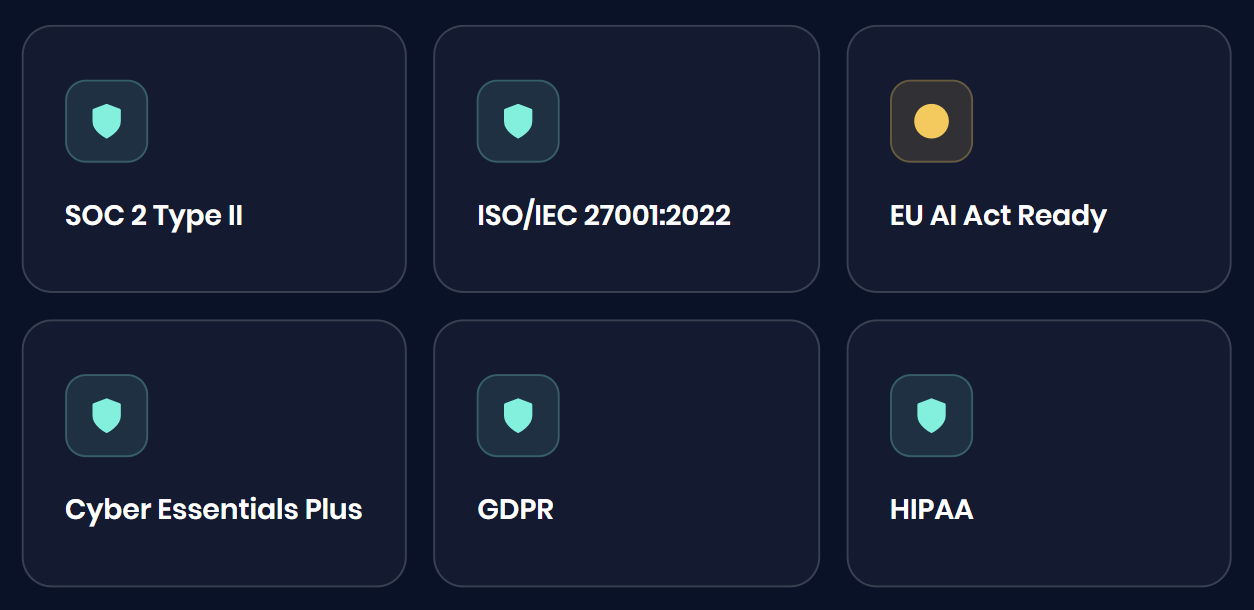
For organizations in regulated industries, the combination of Talkdesk or Zendesk (for operational compliance) plus evaluagent (for quality governance and audit trails) creates a layered compliance posture that neither platform achieves alone.
Talkdesk vs Zendesk vs evaluagent: Which should you choose?
The three platforms serve different functions. The right choice depends on where your contact center is today and what you need from your technology stack.
Choose Talkdesk if:
- Voice is your primary channel and you need a full CCaaS platform with telephony, IVR, WFM, and outbound dialing
- You operate in healthcare, financial services, retail, or another industry with vertical-specific compliance and workflow requirements
- You want pre-built Industry Experience Clouds rather than configuring a horizontal platform
- You’re moving toward autonomous AI agents and want a platform designed for AI/human workforce orchestration
- Your budget supports $165–$225/user/month plus AI add-ons
Choose Zendesk if:
- Your support operation is digital-first, built around ticketing, messaging, and email
- You want the largest integration ecosystem and developer-friendly APIs for custom workflows
- Autonomous AI resolution is your priority and you want outcome-based pricing tied to verified resolutions
- You need a horizontal platform that scales from startup to enterprise without industry-specific lock-in
- You value a 14-day free trial and the flexibility to start small and add capabilities over time
Add evaluagent if:
- You need independent quality oversight that isn’t run by your contact center vendor
- You’re deploying AI agents and need hallucination detection, off-policy response flagging, and independent bot QA grounded in your own knowledge base
- You want to close the loop from evaluation to coaching, performance plans, and measurable agent improvement
- You run multiple platforms across sites or business units and need a single quality standard
- Regulatory compliance requires documented, auditable quality governance with an independent evidence base
Book a demo and see how evaluagent works!
The most common mistake in this comparison is treating Talkdesk, Zendesk, and evaluagent as three alternatives competing for the same budget line. They are not. Talkdesk and Zendesk are the operational platforms that handle customer interactions. evaluagent is the governance layer that ensures those interactions meet your standards, regardless of which platform powers them.
For contact centers serious about quality at scale, the question is not Talkdesk or Zendesk or evaluagent. It is Talkdesk or Zendesk, and then evaluagent on top of whichever you choose.