If you’re comparing MaestroQA vs Zendesk for quality assurance in your contact center, start here: these two platforms approach the problem from opposite directions.
MaestroQA started as a QA tool and is becoming a conversation data analytics platform, a shift underscored by its ongoing rebrand to Rippit. Zendesk started as a help desk and added QA by acquiring Klaus. That history shapes everything: what each platform does well, where each falls short, and which teams get the most value from each.
Before choosing, ask yourself:
- Do you need a standalone QA platform that works across any help desk, or do you want QA built into your existing ticketing system?
- Is your priority scoring conversations, or turning conversation data into business intelligence?
- Are you deploying AI agents that need independent quality oversight, or is your focus still on human agent performance?
- How important is it that QA insights connect directly to coaching, training, and measurable agent improvement?
- Do you want your QA data locked inside one vendor’s ecosystem, or portable across whatever tools you use next?
Here’s what we recommend:
MaestroQA serves CX teams that want to treat conversation data as a strategic asset. Its AI Platform lets analysts create custom metrics using natural language prompts, and its data warehouse integrations (Snowflake, BigQuery, Databricks) make it possible to join conversation insights with revenue, churn, and product data.
The platform has strong roots in manual QA workflows and has expanded into AI-powered scoring, coaching, and chatbot monitoring. However, MaestroQA publishes no pricing, requires sales engagement to get started, and its analytics ambitions can outpace what smaller QA teams actually need.
Zendesk QA makes the most sense if you’re already running your help desk on Zendesk. Built on Zendesk’s acquisition of Klaus, the QA module scores 100% of interactions (including AI agent conversations) and feeds directly into Zendesk’s ticketing, workforce management, and analytics ecosystem.
The tight integration means less setup friction and a single view of agent performance alongside ticket data. The limitation is scope: Zendesk QA is an add-on to the Zendesk platform, not an independent quality system. If you switch help desks, your QA history stays behind. And if you need QA across multiple help desks or CCaaS platforms, Zendesk QA doesn’t support that.
Both platforms solve the same core problem: replacing manual, sample-based QA with automated scoring at scale. But neither fully closes the loop between quality insight and agent development, and both tie you to specific ecosystem constraints. There’s a third option built by people who spent their careers running contact center QA programs, and it takes a different approach.
evaluagent is the independent quality layer designed to work across any help desk, any CCaaS, and any AI agent provider. Founded in 2012 by three contact center operators, the platform scores 100% of conversations automatically across voice, chat, and email, then connects those scores to structured coaching workflows, performance improvement plans, and gamified agent development. Its built-in Conversation Intelligence layer reads the same conversations for customer signals, predicting satisfaction, resolution, and risk on every interaction, including the ones where no survey was ever returned.
What sets evaluagent apart is its combination of vendor neutrality and closed-loop action: it integrates natively with Zendesk, Salesforce, Genesys, Five9, Amazon Connect, Intercom, and more, so your quality data isn’t trapped inside any single vendor.
With its AI Agent Observability module, evaluagent evaluates AI chatbot conversations against the same standards applied to human agents, catching hallucinations and off-policy responses that bot vendors’ own metrics miss.
If a vendor-neutral QA platform with built-in coaching and AI agent governance sounds like what you need, book a demo with evaluagent.
MaestroQA vs Zendesk QA vs evaluagent at a glance
| MaestroQA | Zendesk QA | evaluagent | |
|---|---|---|---|
| Core focus | Conversation data analytics + QA | QA add-on inside the Zendesk ecosystem | Independent QA + coaching + AI agent governance |
| AutoQA coverage | 100% of conversations | 100% of conversations | 100% of conversations |
| Coaching workflows | Coaching sessions with to-do tracking | Targeted coaching assignment | Structured 1-to-1s, performance plans, gamification, built-in LMS |
| AI agent monitoring | Chatbot monitoring (generative AI bots) | AI Agent QA with human/AI comparison | Independent AI Agent Observability with hallucination detection |
| Help desk compatibility | Zendesk, Salesforce, Intercom, Freshdesk, and 30+ others | Zendesk only | Zendesk, Salesforce, Genesys, Five9, Amazon Connect, Intercom, and more |
| Conversation intelligence | AskAI querying plus data warehouse analytics | Automated risk flagging and Explore reporting (Zendesk data only) | xMetrics (predicted CSAT, NPS, resolution), sentiment, Spotlight root-cause analysis |
| Data warehouse integration | Snowflake, BigQuery, Databricks, Redshift, S3, PostgreSQL | Zendesk Explore (native analytics) | Power BI, Tableau, Looker, Metabase via reports exporter |
| Security & compliance | SOC 2 Type 2, ISO 27001, ISO 42001, PCI DSS 4.0 Level 1, HIPAA | SOC 2 Type II, ISO 27001, HIPAA BAA, GDPR BCR | SOC 2 Type II, ISO 27001:2022, HIPAA, GDPR, EU AI Act ready |
| Pricing transparency | No public pricing | $50/agent/month add-on | From $35/agent/month (published) |
| Free trial | No public trial | 14-day Zendesk trial | Demo-based; trials available on request |
| Best for | CX teams with warehouse infrastructure who prioritize analytics | Teams already on Zendesk wanting integrated QA | Contact centers needing vendor-neutral QA with coaching |
The fundamental difference: ecosystem lock-in vs independence
Zendesk QA lives inside the Zendesk ecosystem.
That’s its greatest strength and its biggest constraint. If Zendesk is your help desk and you don’t plan to change, the integration works: QA scores appear alongside ticket data, coaching assignments route through the same interface, and analytics flow into Zendesk Explore without middleware.
But if your contact center runs on Genesys, Five9, or Amazon Connect for voice, you can’t use Zendesk QA on those interactions without first routing everything through Zendesk. And if you ever switch help desks, your entire QA history stays behind.
MaestroQA offers broader compatibility.
It connects to Zendesk, Salesforce, Intercom, Freshdesk, Front, Kustomer, Gorgias, and over 30 other platforms, including phone systems like Five9, Talkdesk, RingCentral, and Genesys Cloud. This multi-platform approach gives MaestroQA an advantage for teams using different systems across channels or locations.
However, MaestroQA’s focus has shifted toward conversation data analytics, which means the core QA and coaching workflows receive less attention than the analytics layer.
evaluagent was designed from the start as a CCaaS-agnostic quality layer.
It integrates natively with Zendesk, Salesforce, Genesys, Five9, Amazon Connect, Freshdesk, RingCentral, Talkdesk, Intercom, Puzzel, Aircall, and others. The positioning is plain: “Any CCaaS. Any CRM. Any AI agent provider. No lock-in.”
For BPOs managing multiple clients on different platforms, this matters most, as evaluagent can run a quality program across all of them without requiring client IT investment.
Capital on Tap scaled from 900 to 6,000 BDM checks per month after go-live without adding headcount. (Capital on Tap Case Study)
AutoQA scoring: three approaches to the same problem
MaestroQA’s AI Platform (formerly AutoQA) uses a prompt-based approach.
Users write natural language prompts to define what they want measured, test those prompts against real tickets, review alignment scores comparing AI outputs to human grades, and refine until accuracy is satisfactory.
The platform supports three classifier types: LLM-based semantic classifiers for nuanced analysis, Phrase Match for keyword detection, and Process-Based classifiers for workflow adherence. Users can choose which LLM powers each workflow, with guidance recommending different models for different tasks. This flexibility appeals to teams with the technical ability to manage prompt engineering.
Zendesk QA’s AutoQA takes a simpler path.
Teams configure quality categories in plain language with no coding or model training required. Out-of-the-box categories include Empathy and Solution, and teams can build custom categories by describing what to look for. The Spotlight module adds automated flagging for churn risk, escalations, stuck conversation loops, dead air on calls, and knowledge gaps.
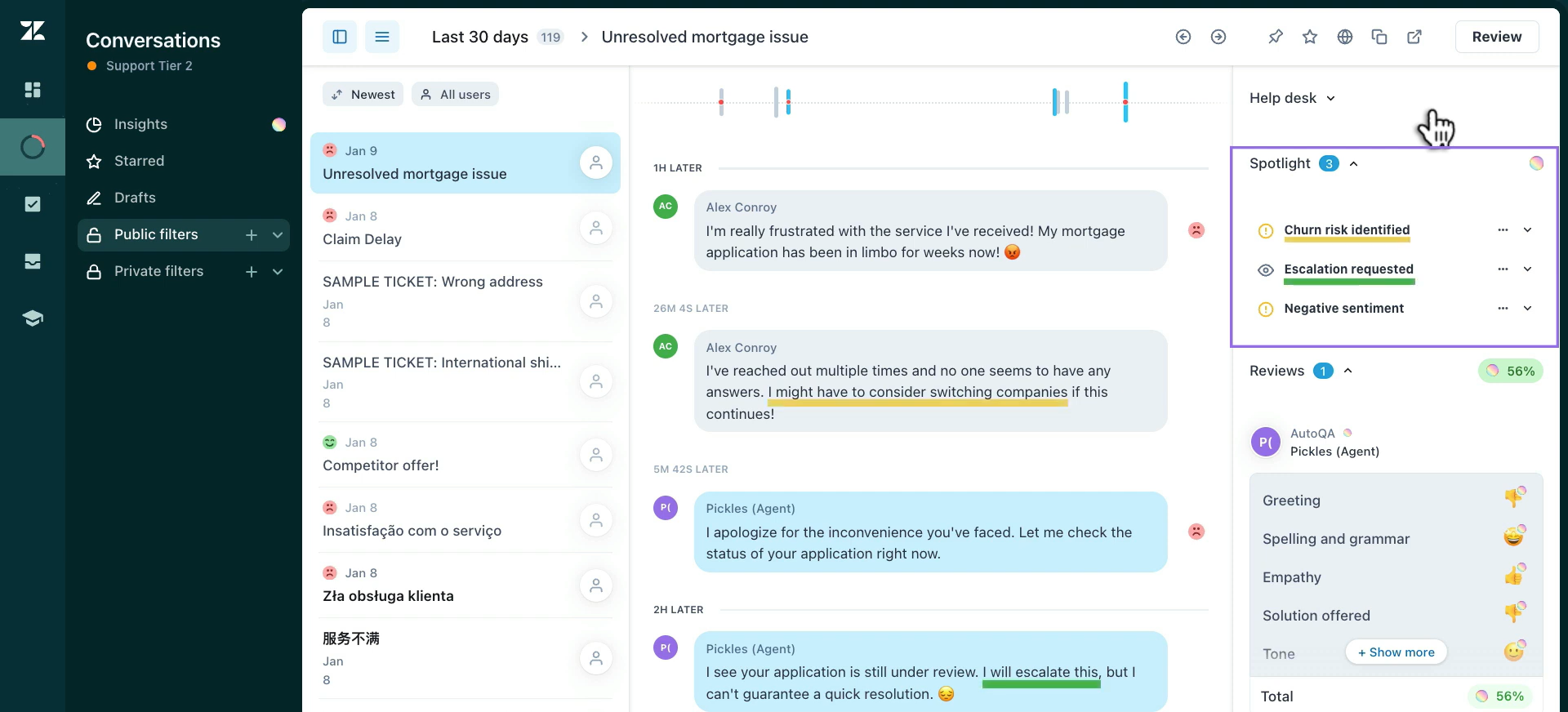
The trade-off: you cannot choose the underlying model the way MaestroQA allows, and the reasoning behind each score isn’t exposed with the depth that evaluagent’s SmartScore provides.
evaluagent’s AutoQA takes a calibrated, human-in-the-loop approach.
Rather than applying a generic model, the Context Engine grounds scoring in each customer’s QA policies, tone-of-voice rules, compliance obligations, and knowledge base content. A Testing Console lets QA managers validate any scoring change against real historical conversations before it goes live.
Blended Scorecards let some criteria be scored by AI while reserving others for human evaluators on the same scorecard. SmartScore provides AI-generated reasoning explaining why a mark was awarded, and Agent Disputes create a formal appeals mechanism that feeds back into model improvement.
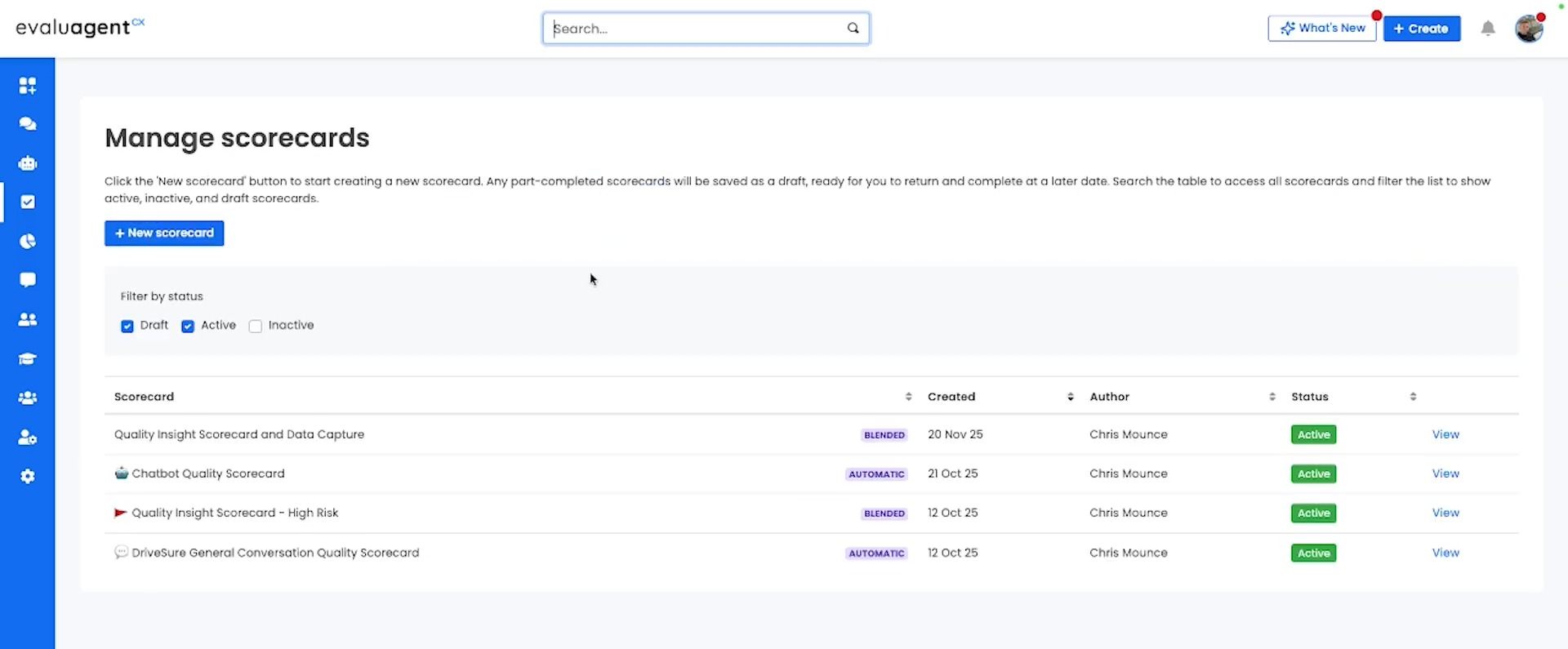
The practical difference: MaestroQA gives you the most control over prompt engineering. Zendesk QA gives you the least setup friction. evaluagent gives you the strongest calibration and human oversight infrastructure.
The coaching gap separates insight from improvement
MaestroQA includes a coaching module where graders flag scorecard criteria as coaching opportunities during the review process.
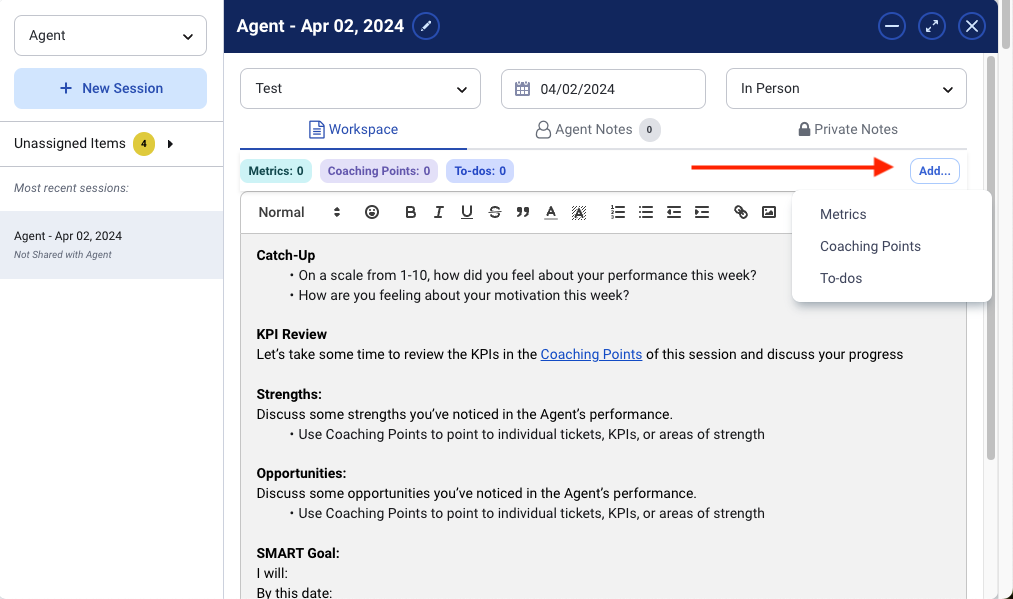
Coaching sessions support customizable templates, embedded performance metrics, and a to-do system with due dates and completion tracking. The workflow is competent, but coaching is one of several “Action” features rather than a central product pillar, and it shows in the relative depth compared to the analytics layer.
Zendesk QA offers targeted coaching assignment, including 1:1 and group sessions with systematic feedback delivery.
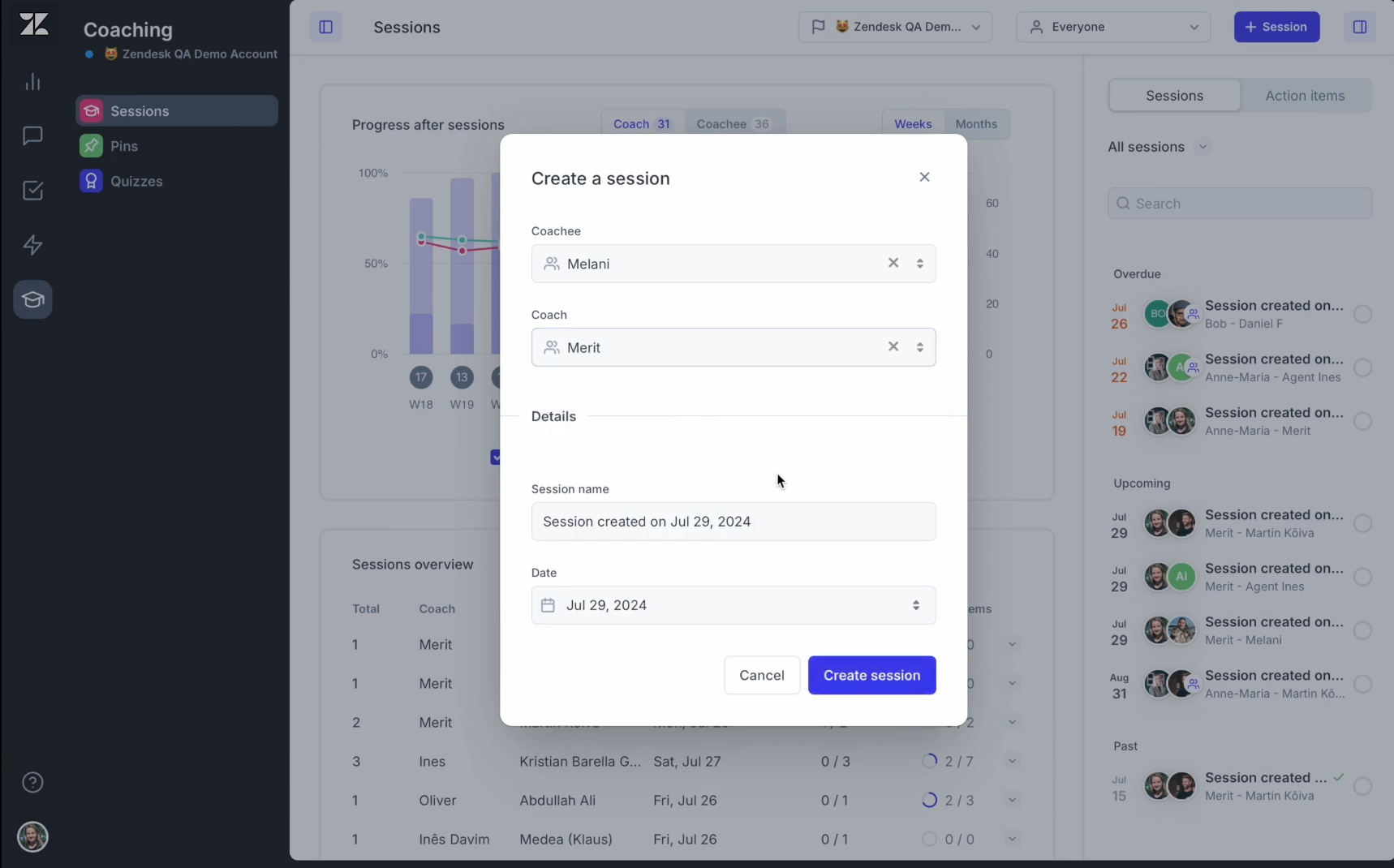
But coaching lives within the broader Zendesk ecosystem, and the depth of coaching-specific workflows (structured performance plans, gamification, learning management) is limited compared to dedicated QA platforms. If you want coaching to go beyond “assign a session and track completion,” you’ll need additional tools.
evaluagent treats coaching as the natural endpoint of every quality evaluation.
Scores don’t sit in a dashboard waiting for someone to act on them. Automated actions fire when a score, sentiment shift, or compliance flag meets a configured threshold, triggering a coaching session, escalation, or eLearning enrollment.
Structured 1-to-1 sessions tie directly to conversation evidence, with progress tracked against session-specific goals. Performance Plans link coaching sessions, actions, and eLearning courses into HR-ready documentation with a full audit trail. A built-in LMS delivers interactive eLearning with auto-enrollment triggered by performance metrics.
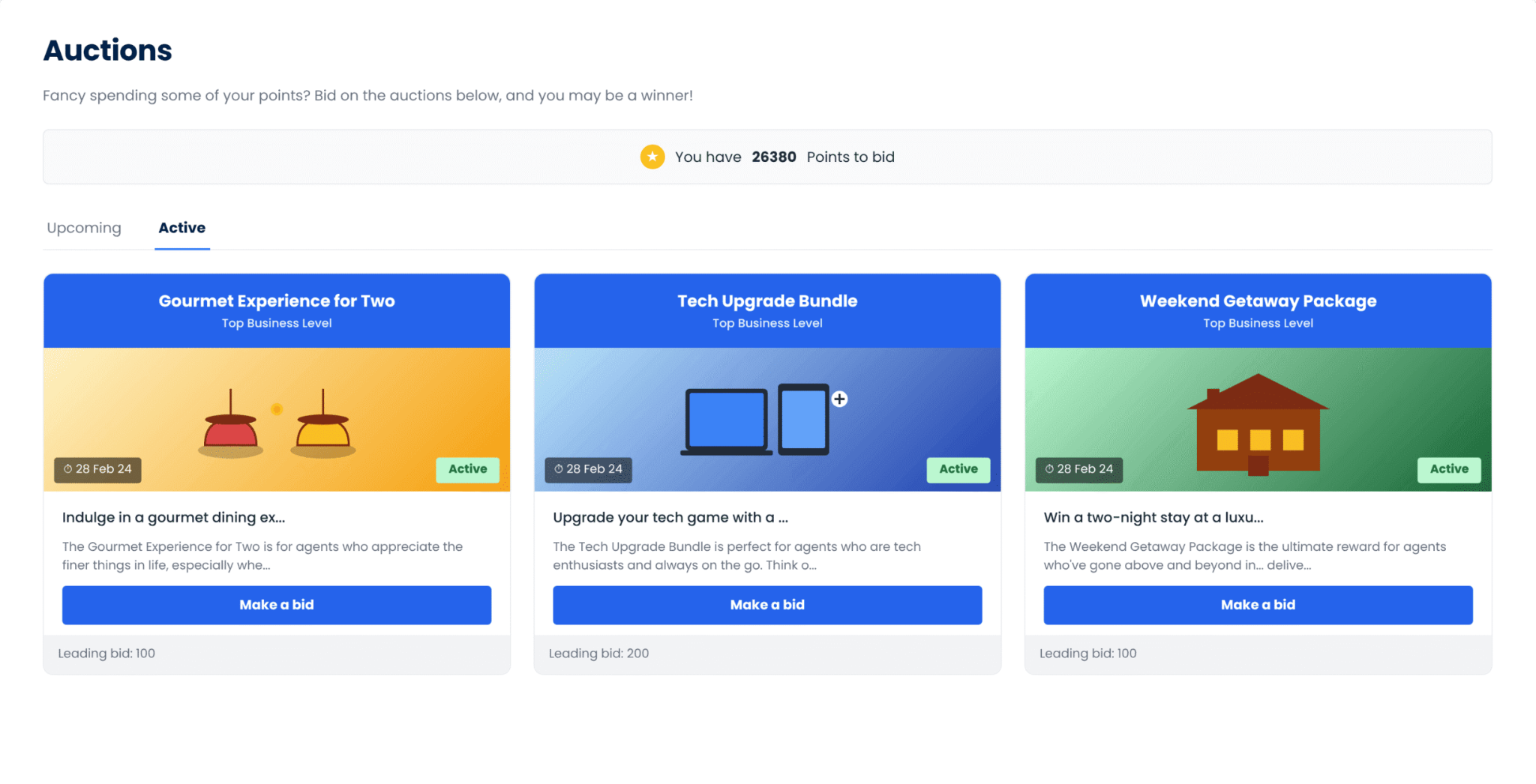
The gamification layer adds points, badges, leaderboards, and an eBay-style reward auction where agents bid on prizes using points earned from QA performance. It sounds like a small feature. In practice, it attacks the biggest problem in contact center operations: attrition.
Seasalt Cornwall doubled evaluations and reduced attrition from 100% to 10% year over year after implementing EvaluAgent’s coaching and gamification workflows. (Seasalt Cornwall Case Study)
AI agent governance: who watches the bots?
As contact centers deploy AI chatbots and virtual agents, a new quality problem emerges: who evaluates whether the bot gave the right answer? The bot vendor’s own containment rate doesn’t tell you whether contained conversations were actually resolved correctly.
MaestroQA offers AI Chatbot Monitoring as one of six primary use cases.
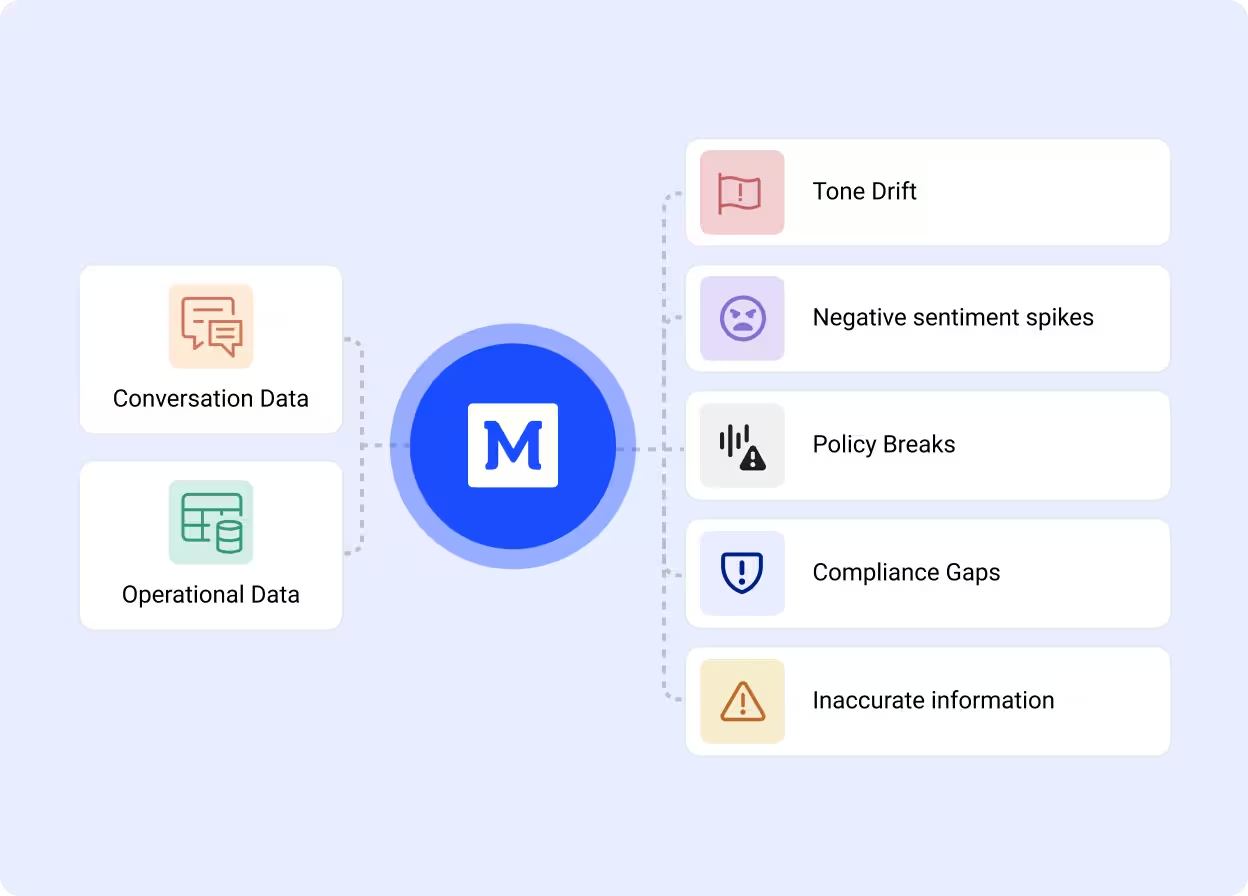
The platform evaluates generative bot responses for hallucination, missed disclosures, and compliance violations. It integrates with AI agent platforms including Ada, Agentforce (Salesforce), Decagon, and Forethought, and connects bot conversation data to the same analytics workflows used for human agent evaluation.
Zendesk QA includes AI Agent QA that scores bot conversations using the same quality categories applied to humans.
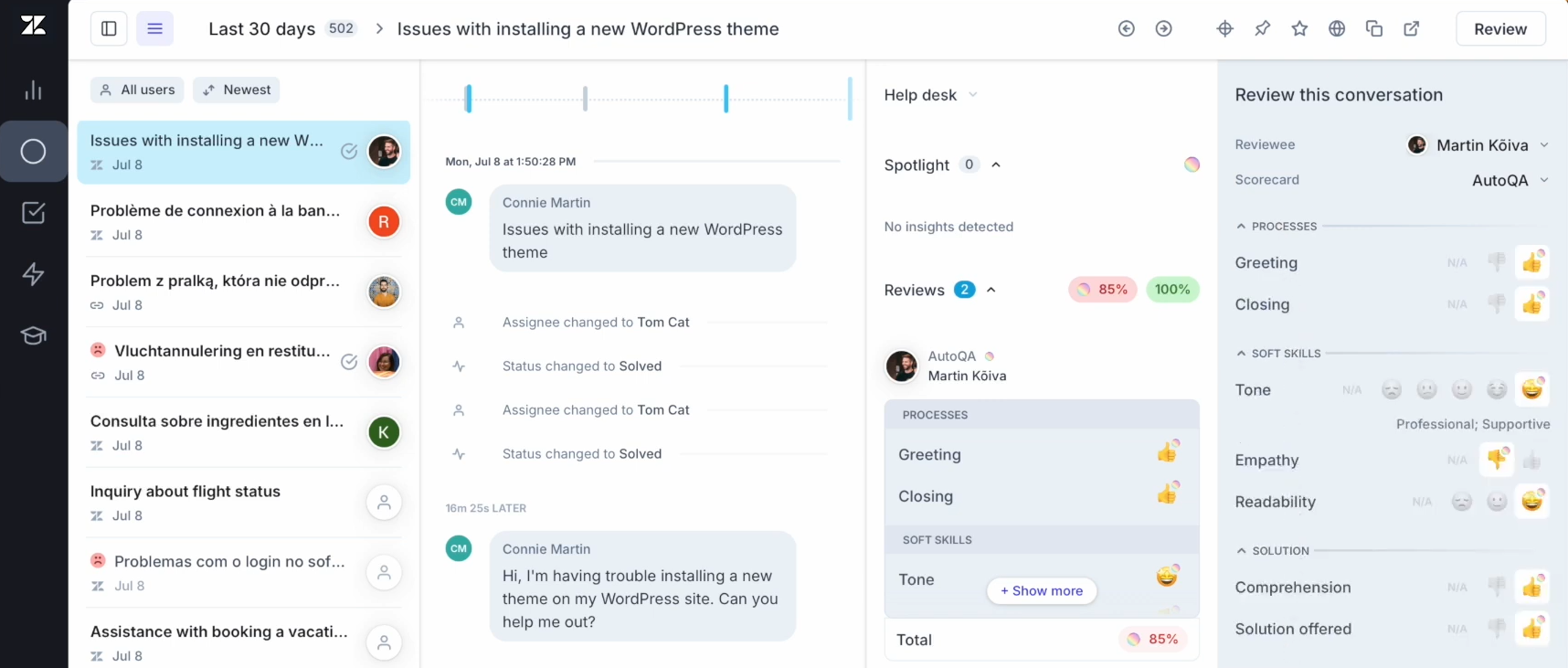
Results can be viewed alongside human agent scores. This works if your AI agents run on Zendesk’s own platform, but falls short for teams running AI agents from other providers (Cognigy, Sierra, or custom builds) that don’t route through Zendesk.
evaluagent takes a different architectural approach.
AI Agent Observability sits above the agent layer, operating independently of the bot platform. It evaluates conversations from multiple bot providers (Cognigy, Sierra, Decagon, and proprietary builds) against the same scorecard used for human agents.
The Context Engine grounds fabrication detection in the organization’s own knowledge base, so when a bot response can’t be traced back to sanctioned content, it gets flagged. Intent-level performance reporting shows which query types the bot handles well and which generate frustration.
evaluagent’s position is plain: “Don’t solely rely on your bot vendor’s metrics.” The platform frames itself as the independent evidence base that a regulator, a chief risk officer, or a CFO underwriting AI spend needs. For contact centers in regulated industries deploying AI agents, this independence is increasingly a procurement requirement.
evaluagent’s AI agent observability data stays in evaluagent, not in the bot platform. If you switch bot vendors, the full quality record carries over.
Conversation analytics and business intelligence
MaestroQA has the deepest data warehouse story.
The platform now positions itself as an “AI Conversation Data Quality Platform”, bridging the contact center and the enterprise data warehouse. Bidirectional integrations with Snowflake, BigQuery, Databricks, Redshift, S3, and PostgreSQL let teams join conversation insights with CRM, billing, and product data.
AskAI enables natural language querying across conversation datasets, with a choice of underlying large language models. For organizations with mature warehouse infrastructure, this capability is real.
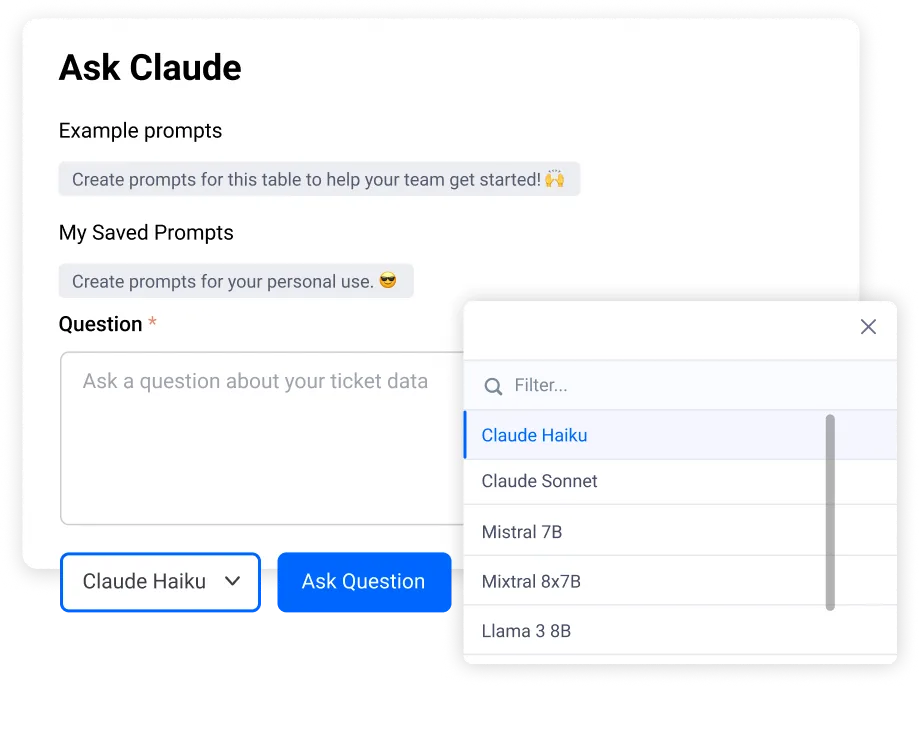
The caveat: getting full value from MaestroQA’s analytics requires that warehouse infrastructure to already exist. Companies without a data engineering team won’t use most of what makes MaestroQA distinctive.
Zendesk provides analytics through Zendesk Explore, its native reporting engine.
Explore covers the full Zendesk product surface: tickets, messaging, voice, AI agents, WFM, and QA data in one view. Quick Reports lets managers draft reports using natural language. For teams already on Zendesk, this view is valuable because it doesn’t require data engineering.
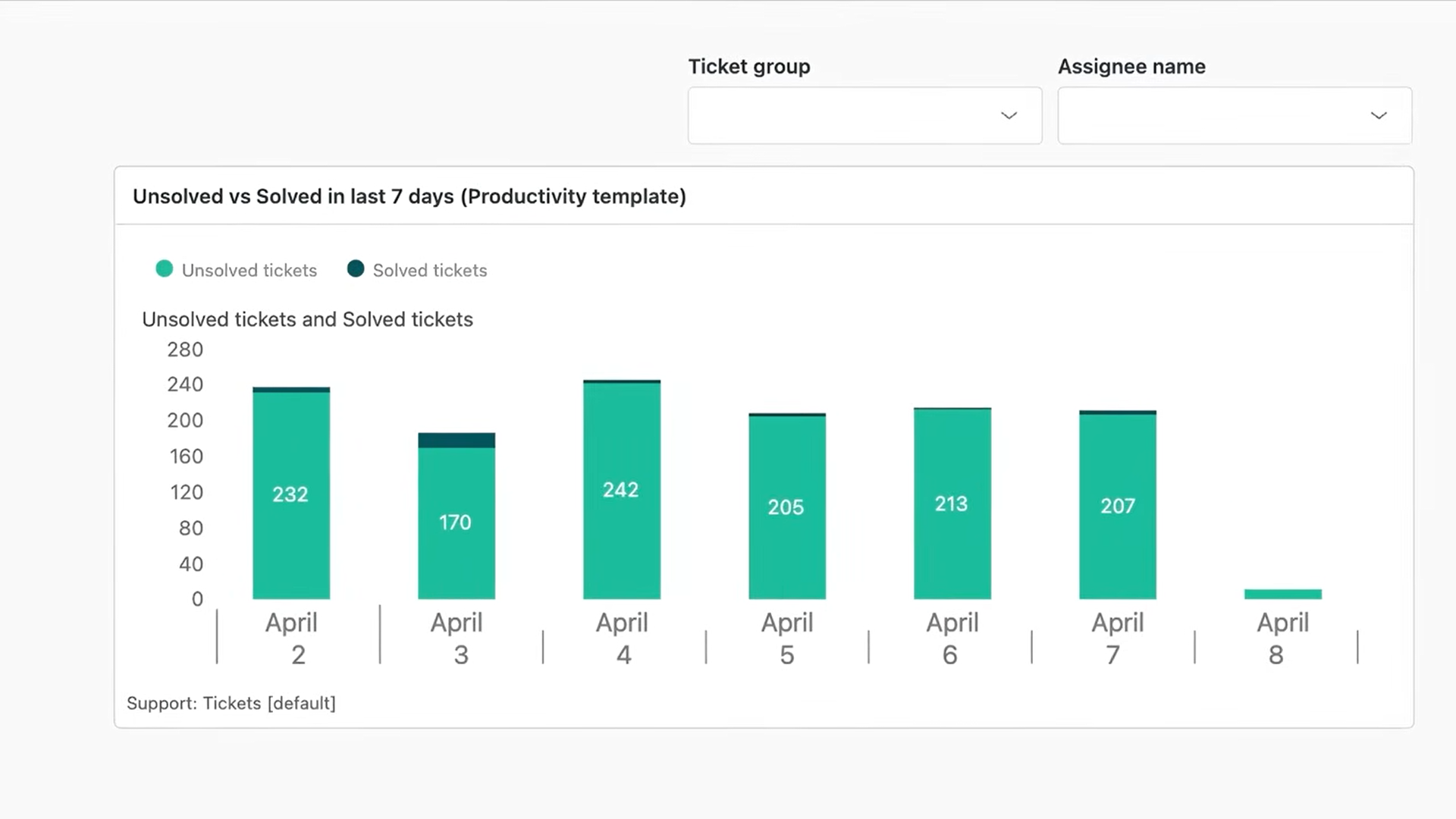
The limitation is that Explore only covers Zendesk data, so conversations handled by other systems for voice or chat remain invisible to your analytics.
evaluagent treats Conversation Intelligence as the other half of the quality equation: AutoQA defines what matters, and Conversation Intelligence shows what should matter next.
Conversation Intelligence provides automated Reason for Contact detection, sentiment analysis, and predictive xMetrics (xNPS, xCSAT, xResolution, xVulnerability) generated from conversation signals on every interaction, including the ones where no survey was ever returned.
Spotlight runs on-demand AI root-cause analysis across up to 1,000 filtered conversations, returning findings organized into Critical Issues, Monitor Closely, and Performing Well. A reports exporter pushes data into Power BI, Tableau, Looker, and Metabase.
evaluagent’s analytics are scoped differently from MaestroQA’s warehouse integration play.
Rather than shipping conversation data out for analysts to model, the platform delivers ready-made answers (why customers got in touch, how they felt, whether the issue was actually resolved) inside the same workflow that scores the conversations, so QA teams get root-cause insight without needing a data science background.
The predictive VoC metrics across 100% of contacts (rather than survey respondents) give QA leaders a signal that survey-based CSAT scores cannot match, and a concrete answer when executives ask what quality is contributing to the business.
In G2’s Summer 2026 reports, which rank vendors on verified customer reviews rather than analyst briefings, evaluagent placed as a High Performer in both Conversation Intelligence and Speech Analytics.
Compliance and security in regulated industries
For contact centers in financial services, insurance, and healthcare, compliance capabilities and security certifications are purchasing prerequisites.
MaestroQA holds SOC 2 Type 2, ISO 27001, ISO 42001 (AI management systems), PCI DSS 4.0 Level 1, and HIPAA Type 1 Attestation.
The PCI DSS 4.0 Level 1 certification is notable for financial services buyers. PII redaction uses Microsoft’s Presidio library with admin-configurable settings. Data is hosted on AWS with US and EU region options.
Zendesk offers SOC 2 Type II, ISO 27001:2022, ISO 27018:2019, GDPR Binding Corporate Rules, and HIPAA BAA support.
The Advanced Data Privacy and Protection (ADPP) add-on provides enhanced controls for enterprises in regulated industries. Regional data hosting is available. FedRAMP authorization is in process. Zendesk’s security posture is mature, as expected from a platform serving 20,000+ AI customers.
evaluagent is EU AI Act ready, and also holds formal certifications in SOC 2 Type II, ISO/IEC 27001:2022, and Cyber Essentials Plus, alongside HIPAA and GDPR compliance.
Data is hosted on AWS with in-region data centers (EU, North America, Australia), and the platform includes out-of-the-box PII redaction for both text and audio. SSO, MFA, and role-based access control are included at both paid tiers, not gated to enterprise.
That EU AI Act readiness matters as European regulators begin requiring documented AI governance frameworks for customer-facing systems.
For regulated buyers, Conversation Intelligence sharpens the compliance story further: the xVulnerability metric flags vulnerable-customer indicators and compliance risk on every conversation, turning obligations that were once spot-checked into something detected across 100% of contacts.
All three platforms meet enterprise security requirements. evaluagent’s EU AI Act readiness and inclusion of security features at all pricing tiers (not just enterprise) stand out for mid-market buyers who need compliance without gating core security behind a premium plan.
Pricing comparison
MaestroQA publishes no pricing.
The pricing page contains only a contact form. The company charges per agent graded, with additional team seats (reviewers, managers) included at no extra cost. No tiers, plan names, or feature-gating details are publicly disclosed. The lack of transparency is a barrier for buyers doing independent research.
Zendesk QA is available as an add-on at $50/agent/month, but it requires a Zendesk Support or Suite subscription as a foundation.
The cheapest path to Zendesk QA is Support Team ($19/agent/month) plus the QA add-on ($50/agent/month), totaling $69/agent/month. For the full AI suite with QA, WFM, and Copilot, costs run to $115+/agent/month before add-ons.
The Workforce Engagement Bundle (WFM + QA together) is $50/agent/month, but you still need a base Zendesk plan underneath.
evaluagent offers two tiers.
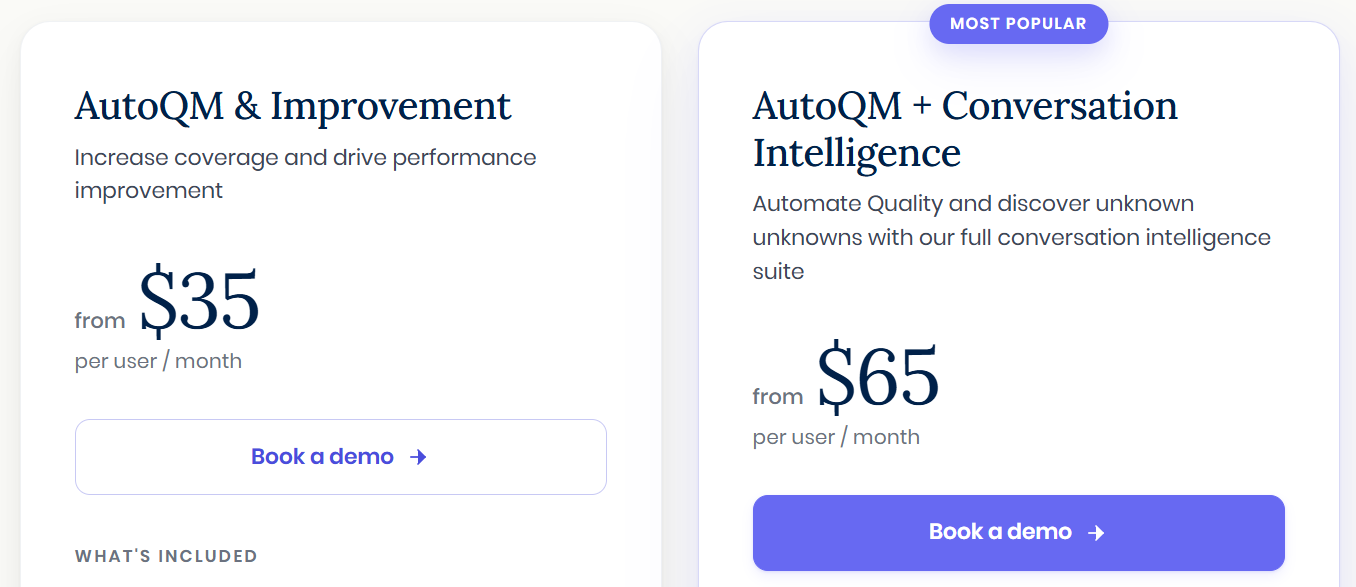
AutoQA & Improvement starts at $35/agent/month, covering automated scoring, coaching workflows, gamification, and the Context Engine. The Full Bundle (AutoQA + Conversation Intelligence) is $65/agent/month, adding sentiment analytics, predictive VoC metrics, Spotlight, and topic discovery. Volume discounts are available.
For a 100-agent contact center:
| Platform | Estimated monthly QA cost | Notes |
|---|---|---|
| MaestroQA | Unknown | No published pricing; requires sales engagement |
| Zendesk QA | $6,900+ | $19 Support Team + $50 QA add-on per agent; full Suite Professional + QA = $16,500+ |
| EvaluAgent (AutoQA) | $3,500 | Before volume discounts |
| EvaluAgent (Full Bundle) | $6,500 | Before volume discounts |
evaluagent’s published pricing makes independent comparison possible without a sales conversation. The transparency itself is the differentiator.
Zendesk QA’s total cost depends on which Zendesk base plan you’re already running.
MaestroQA’s opaque pricing makes direct comparison impossible without sales engagement. Whichever platform you lean toward, expect the full commercial model in writing before you sign; that’s ordinary due diligence for any QA purchase.
Who should choose what
The right platform depends on your infrastructure, your priorities, and what you need QA to accomplish beyond scoring.
Choose MaestroQA if:
- Conversation data analytics is your primary objective, not just QA scoring
- You have a data warehouse (Snowflake, BigQuery, Databricks) and want conversation insights flowing into it
- Your team includes analysts who can manage prompt engineering and LLM selection
- You need compliance monitoring across regulated verticals like financial services
- You’re comfortable with opaque pricing and a sales-led buying process
Request a demo from MaestroQA to explore their conversation analytics platform.
Choose Zendesk QA if:
- You’re already running your help desk on Zendesk and want QA without adding another vendor
- Integration with ticketing, WFM, and reporting matters more than cross-platform flexibility
- Your AI agents run on Zendesk and you want human/AI quality scoring in one view
- You value simplicity of setup over depth of customization
- You’re prepared for the total cost of Zendesk Suite plus QA add-ons
Start a Zendesk free trial to test QA alongside the full Suite.
Choose evaluagent if:
- You need QA that works across multiple help desks, CCaaS platforms, or AI agent providers
- Closing the loop from scoring to coaching to measurable agent improvement is your priority
- You’re deploying AI agents and need independent oversight with hallucination detection
- You want conversation intelligence built in, with predicted CSAT, NPS, and resolution scores on every interaction rather than only the ones where a survey comes back
- You want published, transparent pricing without a mandatory sales process
- You operate in a regulated industry and need EU AI Act readiness alongside SOC 2 and ISO 27001
- You’re a BPO managing quality across multiple clients on different platforms
Book a demo with EvaluAgent to see how the platform connects scoring to coaching across any help desk.
The Share Centre achieved a 285% increase in QA productivity, cutting evaluation time from 24 minutes to 6 minutes per interaction while pass rates rose from 73% to 85%. (The Share Centre Case Study)
The contact center quality space is splitting into two visions. One treats QA as a feature inside a larger platform (Zendesk’s approach). The other treats conversation quality as an independent discipline that deserves its own infrastructure (MaestroQA’s analytics play and evaluagent’s quality-to-coaching loop).
The right choice depends on whether you want quality embedded in your help desk or standing on its own, able to survive any vendor change and hold every agent (human or AI) to the same standard.