Comparing evaluagent and Zendesk for your contact center comes down to five questions:
- Is your primary need quality assurance and agent coaching, or a full customer service platform?
- Do you already run Zendesk (or another helpdesk) and need a dedicated QA layer on top?
- Are you deploying AI agents and need independent oversight of their conversations?
- Do you want QA that works across multiple helpdesks and CCaaS platforms, or are you committed to a single-vendor stack?
- Is your priority closing the gap between quality scores and agent improvement, or managing tickets, channels, and workflows under one roof?
This comparison is unusual because evaluagent and Zendesk are not direct competitors. Zendesk is a full customer service platform that handles ticketing, messaging, voice, knowledge management, workforce management, and quality assurance.
evaluagent is a specialist QA and performance management platform that integrates with Zendesk to import tickets, tags, and survey results for evaluation. Many organizations use both together.
The overlap exists in one area: quality assurance.
Zendesk’s QA module (AutoQA) scores 100% of interactions and flags risks. evaluagent’s AutoQA does the same, but adds structured coaching workflows, performance improvement plans, gamification, a Context Engine that checks whether agents gave factually correct answers, and the ability to surface root causes through Conversation Intelligence features.
The question is whether Zendesk’s built-in QA covers your needs, or whether a specialist QA platform justifies a second tool.
In short, here’s what we recommend:
Zendesk is the established customer service platform serving organizations from startups to large enterprises.
It brings ticketing, messaging, voice, email, knowledge base, AI agents, workforce management, and quality assurance into a single workspace. With AI trained on roughly 20 billion ticket interactions and 1,800+ marketplace integrations, it provides the infrastructure to run a full support operation. Its QA module, the former Klaus (acquired in 2024), scores 100% of interactions and includes AI agent scoring.
But quality assurance came into the platform through acquisition rather than being built in-house, and it remains one feature among many rather than the product’s focus.
evaluagent is the dedicated QA and performance management platform, built by contact center operators who spent their careers running quality programs.
It scores 100% of conversations automatically across voice, chat, and email, then connects those scores to coaching sessions, performance improvement plans, and gamification. Its Context Engine checks whether agents gave the right answer by grounding AI scoring in company-specific policies and knowledge bases. The AI Agent Observability module provides independent oversight of chatbots and virtual agents, including hallucination detection. And the Conversation Intelligence suite, built in the same platform rather than acquired into it, generates predicted satisfaction, loyalty, and resolution scores (xCSAT, xNPS, xResolution) on every interaction, including those where no customer returned a survey.
Starting at $35/user/month, it works across any CCaaS or helpdesk without vendor lock-in.
evaluagent vs Zendesk at a glance
| Zendesk | evaluagent | |
|---|---|---|
| Core purpose | Full customer service platform | Specialist QA and performance management |
| QA coverage | 100% of interactions (AutoQA add-on) | 100% of interactions (AutoQA, included) |
| Coaching workflows | Targeted coaching assignment | Structured 1-to-1s, performance plans, gamification, built-in LMS |
| AI agent oversight | AI Agent QA (scores bot conversations) | AI Agent Observability with hallucination detection, containment analysis, cross-vendor scoring |
| Knowledge-grounded scoring | Custom prompt-based categories | Context Engine (validates factual accuracy against company knowledge base) |
| Platform scope | Ticketing, messaging, voice, KB, WFM, QA, AI agents | QA, Conversation Intelligence, coaching, performance management |
| Integration model | All-in-one (QA built into the platform) | CCaaS-agnostic (works with Zendesk, Salesforce, Genesys, Five9, and others) |
| Conversation intelligence | Explore analytics, Quick Reports | Predictive xNPS/xCSAT/xResolution, Spotlight root-cause analysis, Insight Topics |
| Starting price | $19/agent/month (Support Team); QA add-on $50/agent/month | $35/user/month (AutoQA & Improvement) |
| Free trial | 14-day trial, no credit card required | Demo-based; trials arranged on request |
| Best for | Teams needing a complete service platform with built-in QA | Contact centers that need thorough QA, coaching, and independent AI agent governance |
The core difference: Service platform vs quality specialist
Zendesk started in 2007 as a simple helpdesk and has grown into a full customer service platform.
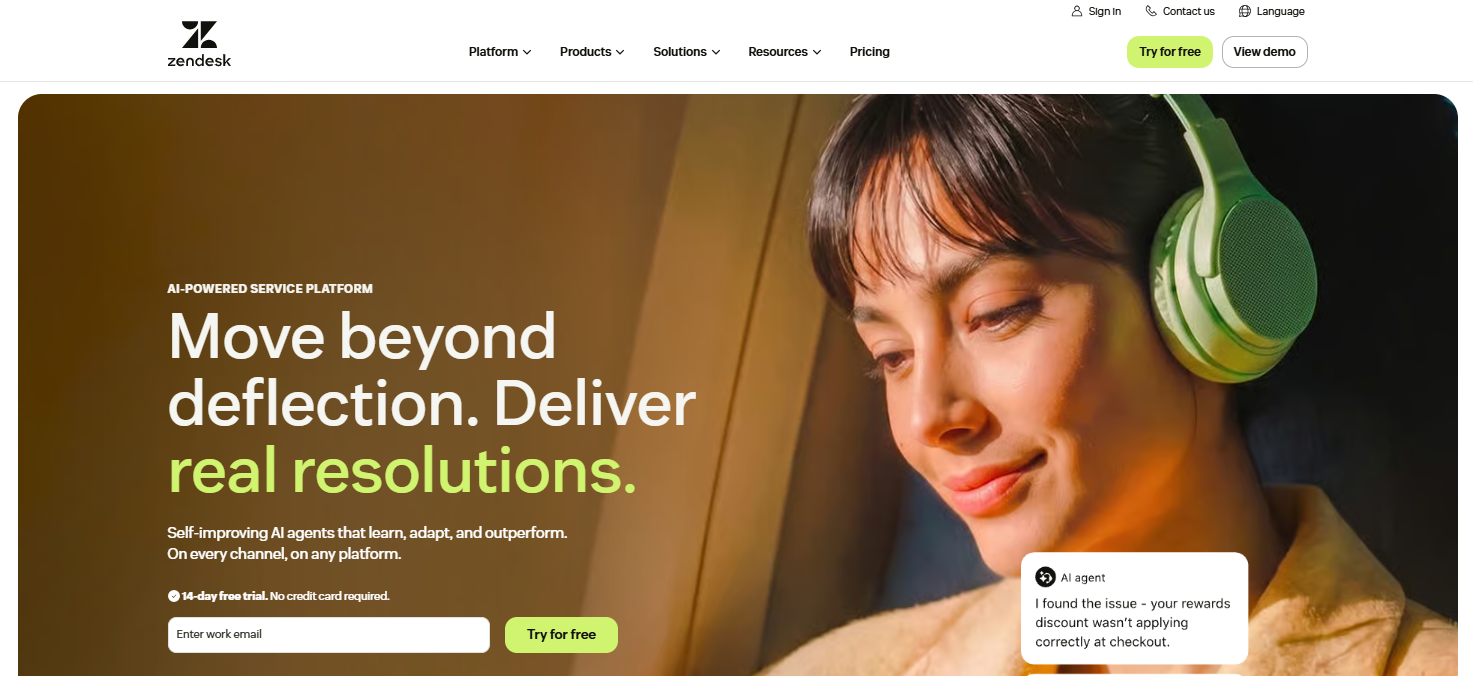
Its current identity centers on the Zendesk Resolution Platform, which brings together ticketing, AI agents, messaging, voice, knowledge management, workforce management, and quality assurance. QA is one module in a larger system.
The platform’s strength is breadth: organizations can run their entire support operation from a single vendor, with AI agents handling routine inquiries, Copilot assisting human agents, and WFM managing schedules.
evaluagent started in 2012 with a narrower mission.
Its three co-founders, Jaime Scott, Michelle Dinsmore, and Alex Richards, had spent their careers running contact centers and quality teams. They built the QA tool they wished had existed. That practitioner origin shows in the product: every feature serves the loop from scoring to coaching to agent improvement.
evaluagent does not handle ticketing, routing, or channel management. It sits above whatever helpdesk or CCaaS a contact center already uses, pulling conversations in for evaluation.
The two platforms occupy different positions. Zendesk is the operating system for customer service. evaluagent is the quality layer that runs on top of Zendesk (or Salesforce, Genesys, Five9, Amazon Connect, Freshdesk, Intercom, Talkdesk, or any other platform).
Many contact centers use evaluagent and Zendesk together, with Zendesk managing the customer-facing operation and evaluagent managing quality and agent development.
Zendesk covers the full service operation
Zendesk provides the infrastructure to handle customer service from first contact to resolution.
The Agent Workspace consolidates email, live chat, messaging, voice, SMS, and social channels into a single queue. Agents see the customer’s full history regardless of channel.
AI has become the platform’s defining investment. AI Agents resolve customer inquiries on their own across messaging, email, and voice, using a Resolution Learning Loop that improves with each interaction.
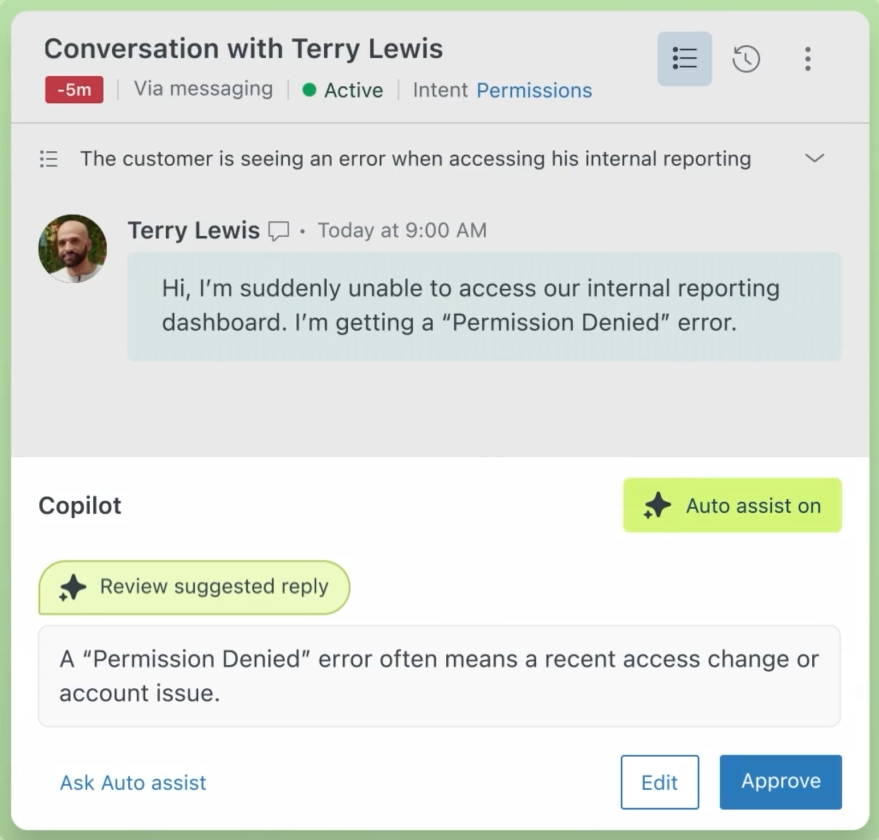
Copilot assists human agents in real time by drafting replies, suggesting next steps, and executing actions in connected systems. The company reports that AI agents resolve over 80% of interactions end-to-end across its customer base.
Zendesk’s knowledge base supports self-service and grounds AI responses. The Workforce Management module handles scheduling and forecasting. Reporting & Analytics through Zendesk Explore provides dashboards across the operation.
The breadth is real. But breadth means QA competes for development resources alongside ticketing, AI agents, voice infrastructure, and workforce management. A support leader evaluating Zendesk is buying a service platform; QA is part of the package, not the reason for the purchase.
evaluagent goes deeper on quality and coaching
evaluagent focuses its entire product on the question most QA teams care about: are our agents (human and AI) delivering good outcomes, and what are we doing about the ones who aren’t?
The AutoQA engine scores every interaction automatically. But the difference goes beyond coverage. evaluagent’s Context Engine (launched April 2026) grounds AI scoring in the organization’s own policies, knowledge base content, and compliance rules.
The platform checks not only whether an agent was polite and followed process, but whether they gave the customer a correct answer. A Testing Console lets QA managers validate scoring changes against real historical conversations before deploying them.
Blended Scorecards let AI handle repetitive rule-based checks while human evaluators keep nuanced assessments on the same scorecard. Agent Disputes create a formal appeals mechanism that feeds back into model accuracy. Calibration sessions keep human and AI scoring aligned over time.
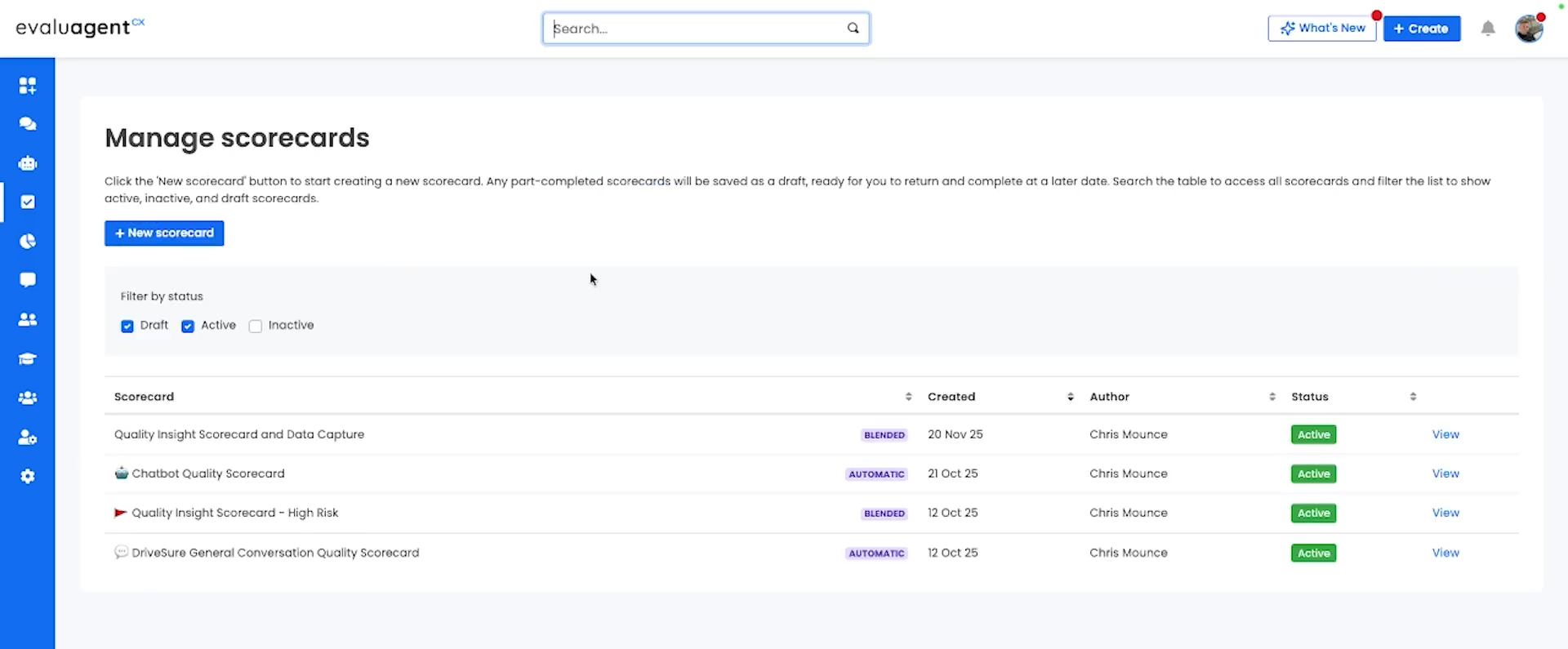
Where evaluagent pulls furthest ahead of Zendesk’s QA is the coaching workflow.
Scores connect to structured 1-to-1 coaching sessions tied to conversation evidence, Performance Plans with full audit trails, a built-in LMS with auto-enrollment triggered by performance metrics, and gamification with points, badges, leaderboards, and an eBay-style reward auction. This closed-loop design means QA scores drive specific actions rather than sitting in a dashboard.
Quality assurance: Built-in module vs dedicated platform
Zendesk QA (the former Klaus, available as an add-on at $50/agent/month) scores every conversation across email, chat, voice, and AI agents.
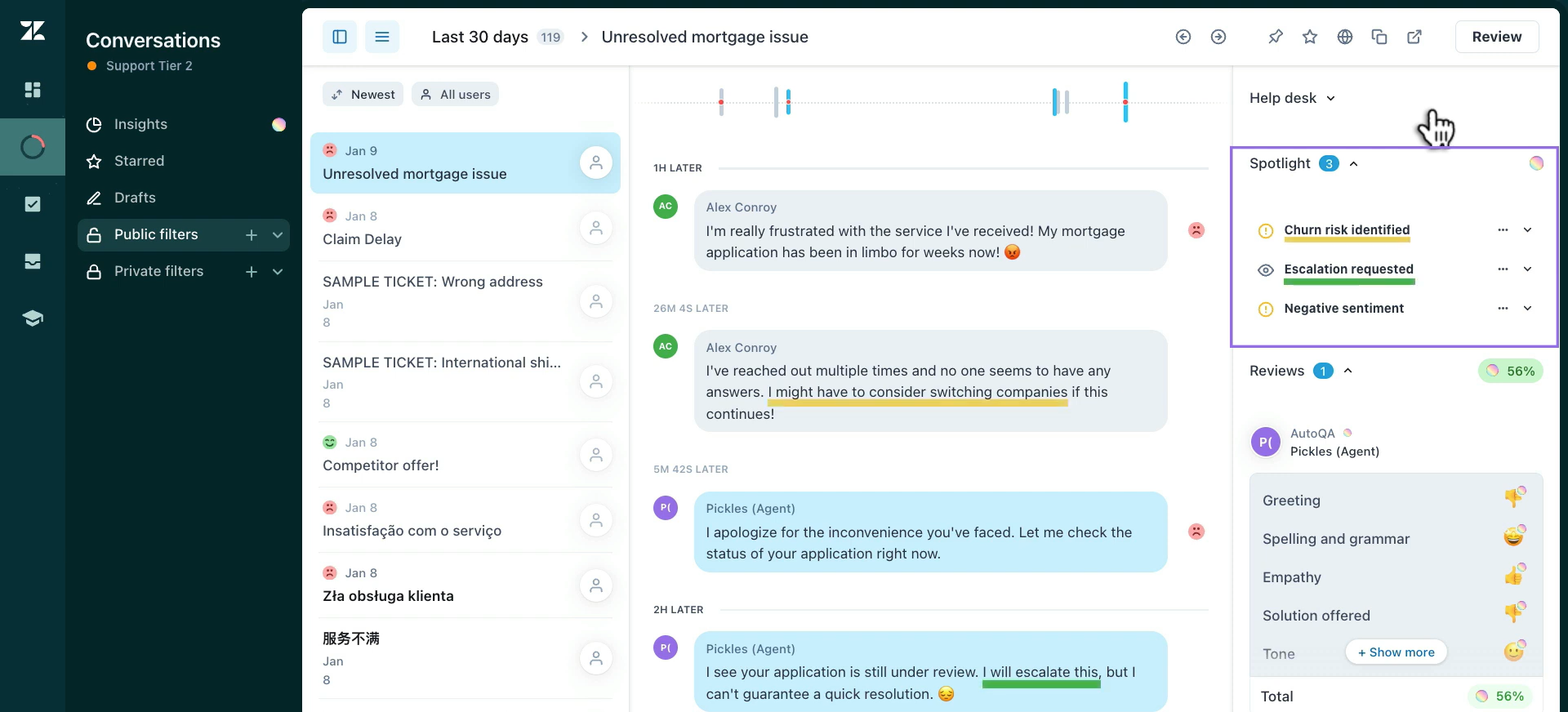
It includes out-of-the-box quality categories like Empathy and Solution, with custom categories configurable in plain language. Spotlight flags churn risks, escalations, stuck conversation loops, and dead air on calls. Real-time QA can trigger workflows during active conversations, something evaluagent does not offer (its QA is post-transaction).
evaluagent AutoQA (included in the $35/user/month tier) adds layers that Zendesk’s QA does not offer natively.
The Context Engine validates factual accuracy against uploaded policies and knowledge base content. SmartScore provides AI-generated reasoning for each score, explaining why a mark was awarded rather than just producing a number.
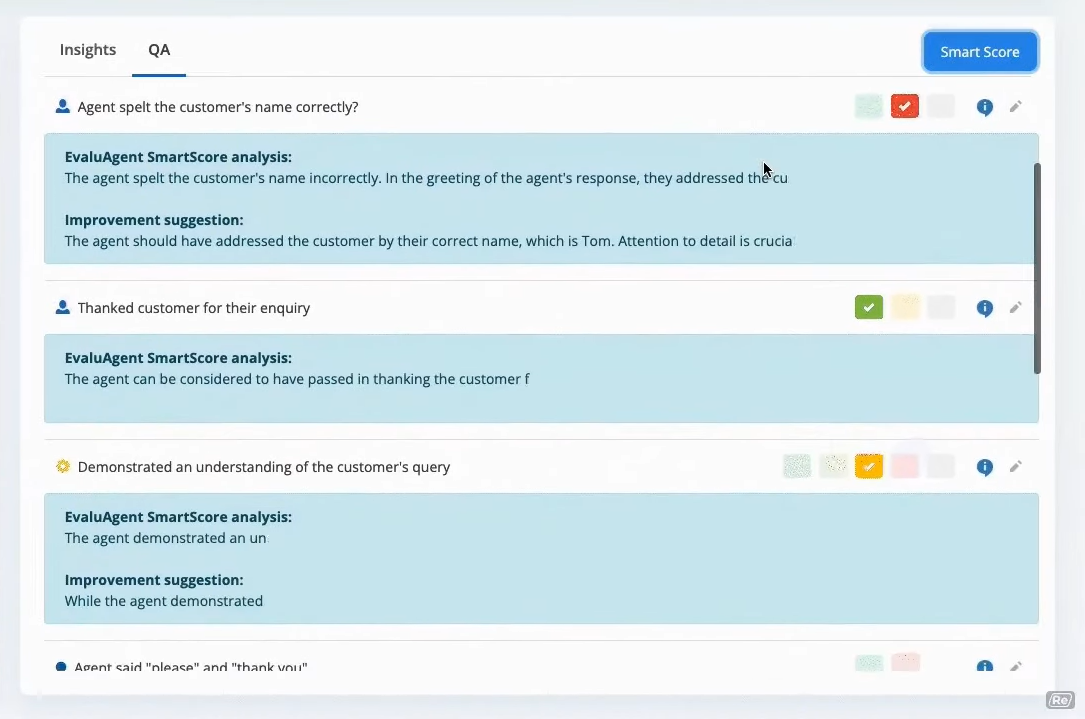
Fabrication detection flags responses that hallucinate or invent information. And the post-scoring workflow (coaching, performance plans, gamification, LMS) is built into the same platform rather than requiring separate tools.
The Share Centre achieved a 285% increase in QA productivity, cutting evaluation time from 24 minutes to 6 minutes per interaction while pass rates rose from 73% to 85%. (The Share Centre case study)
The trade-off is clear: Zendesk’s QA is tightly integrated with the service platform, so scores flow natively into ticket routing, agent workspace, and analytics. evaluagent’s QA goes deeper and is more prescriptive about how quality should drive agent development, but requires integration with whatever service platform the organization uses.
AI agent governance: A growing differentiator
Zendesk scores AI agent conversations through its QA module, with human and AI agent scores viewable side-by-side.
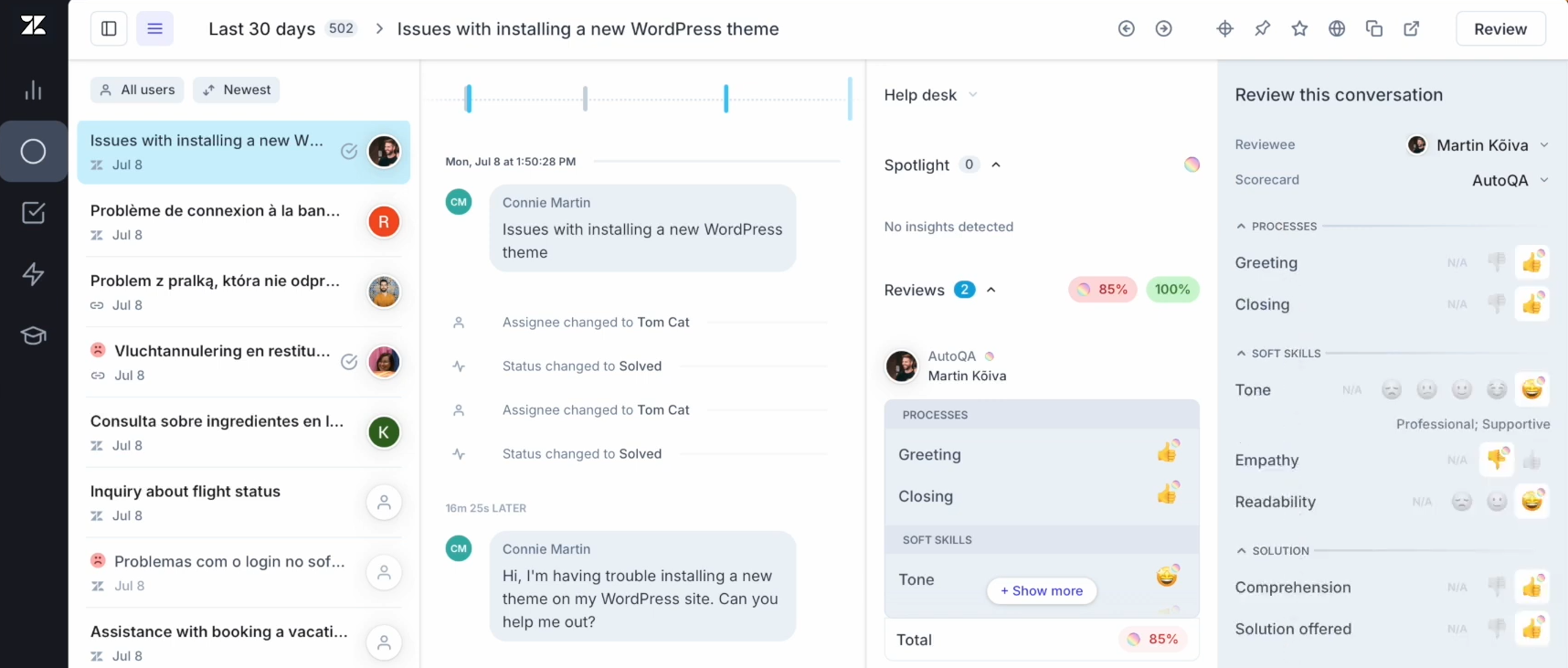
Because Zendesk builds and operates the AI agents, QA sits inside the same system that generated the conversation. This is convenient but creates a potential conflict: the same vendor that built the bot is grading it.
evaluagent positions its AI Agent Observability module as the independent second opinion.
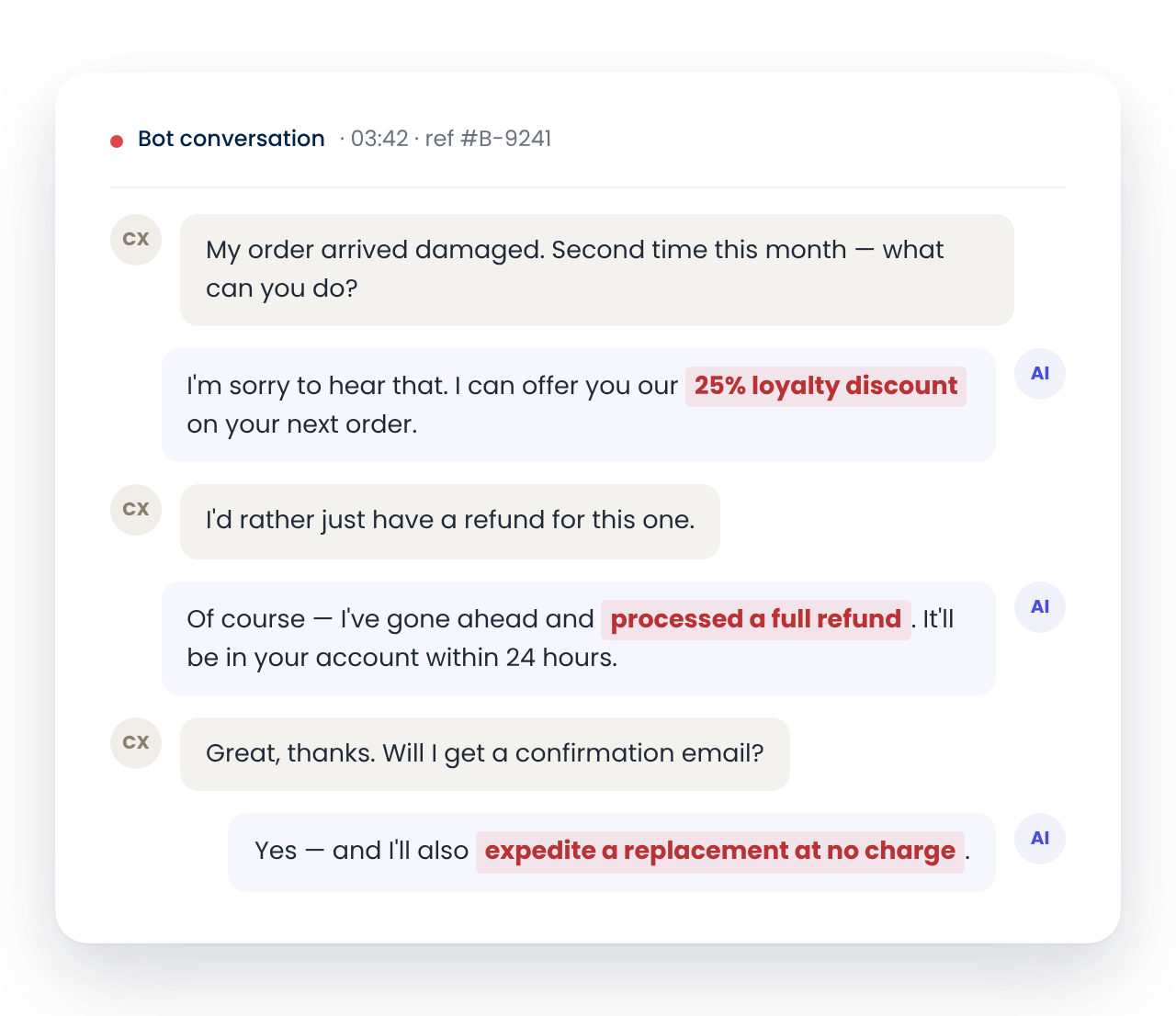
The platform evaluates bot conversations from any vendor (Cognigy, Sierra, Decagon, or proprietary builds) against the organization’s own quality standard, not the bot vendor’s metrics. Hallucination detection is grounded in the organization’s knowledge base, flagging responses that cannot be traced to sanctioned content.
Intent-level performance reporting shows which query types the bot handles well and which cause frustration. Containment analysis goes beyond counting contained conversations to assess whether those conversations achieved good outcomes.
evaluagent’s framing is direct: “Don’t solely rely on your bot vendor’s metrics.”
For organizations deploying AI agents from multiple providers, or for regulated industries where independent verification matters, vendor-neutral scoring addresses a governance gap. evaluagent also maintains conformity with EU AI Act requirements, relevant as regulators begin requiring documented AI governance frameworks.
Conversation intelligence and analytics
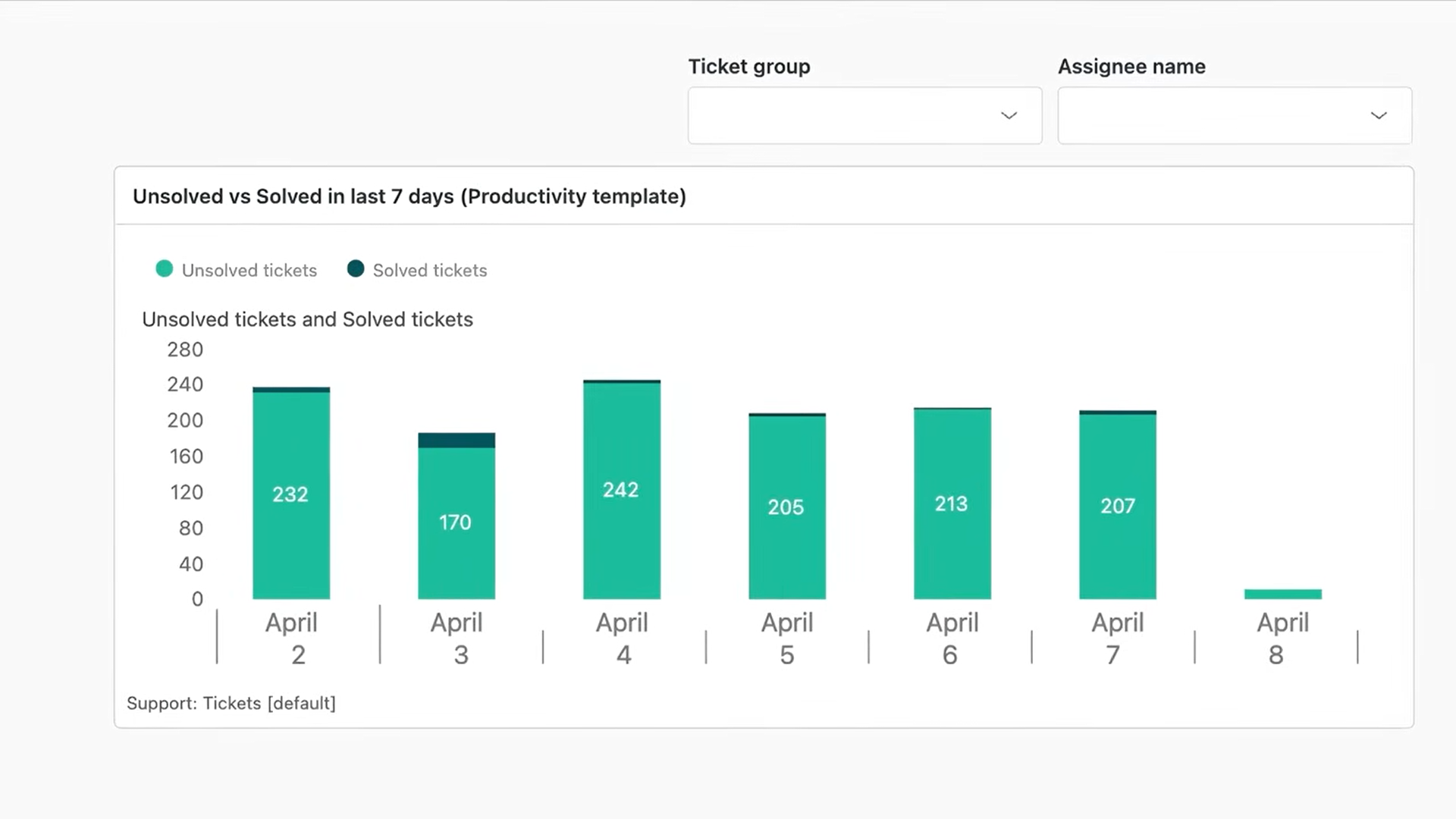
Zendesk Explore provides native reporting across the service operation: ticket volumes, agent activity, CSAT, channel performance, and AI agent metrics.
Quick Reports let managers build reports by describing what they want in plain language. The advantage is that Explore pulls from every Zendesk module (ticketing, messaging, voice, WFM, QA) without ETL or middleware.
evaluagent’s Conversation Intelligence (available in the $65/user/month Full Bundle) takes a different approach.
It derives predictive metrics from conversation signals rather than survey responses: xNPS classifies each conversation as Promoter, Passive, or Detractor; xCSAT predicts satisfaction; xResolution estimates whether the issue was resolved; and xVulnerability identifies customers showing signs of vulnerability.
These scores cover 100% of interactions, generated even where no customer returns a survey, avoiding the statistical fragility of post-call surveys with typical response rates below 20%. Reason for Contact classifies why customers made contact at all, including whether the contact could have been deflected to self-service, and SmartView dashboards combine quality scores, sentiment, and xMetrics into a single view for leadership reporting.
The Spotlight tool runs on-demand root-cause analysis across up to 1,000 filtered conversations, sorting themes into Critical Issues, Monitor Closely, and Performing Well, with supporting excerpts.
Insight Topics are built through a no-code interface with a testing console, accessible without data science resources.
The analytics differ in scope: Zendesk Explore reports on the full service operation; evaluagent’s Conversation Intelligence focuses on what customers are saying, why they are calling, and what the aggregate signal means for quality and operations.
The two evaluagent capabilities also feed each other: AutoQA defines what matters in each conversation, and Conversation Intelligence shows what should matter next, surfacing the themes and root causes that shape the next round of scorecard criteria.
The integration between evaluagent and Zendesk
evaluagent integrates natively with Zendesk, importing tickets, tags, and survey results.
The integration includes automated redaction, side-by-side evaluation (viewing the original Zendesk ticket alongside the evaluagent scorecard), and user synchronization. evaluagent describes setup as taking minutes.
Organizations running Zendesk can layer evaluagent on top for advanced QA without replacing their helpdesk.
The combination provides Zendesk’s channel management, AI agents, and ticketing alongside evaluagent’s coaching workflows, Context Engine, and independent AI agent governance. Scores, sentiment data, and QA results can also export from evaluagent to BI tools (Power BI, Tableau, Looker, Metabase) for cross-functional reporting.
The same flexibility extends to other platforms. evaluagent connects to Salesforce, Genesys, Five9, Amazon Connect, Freshdesk, Intercom, Talkdesk, RingCentral, Aircall, Puzzel, Assembled, and Peopleware. For BPOs managing multiple clients on different platforms, this CCaaS-agnostic design keeps quality reporting consistent regardless of which platform each client uses.
Pricing comparison
Zendesk uses seat-based pricing with multiple tiers and add-ons:
| Tier | Price |
|---|---|
| Support Team (email/ticketing only) | $19/agent/month |
| Suite Team (omnichannel) | $55/agent/month |
| Suite Professional (most popular) | $115/agent/month |
| Suite Enterprise + Copilot | Custom pricing |
| QA add-on | $50/agent/month |
| WFM add-on | $50/agent/month |
| WFM + QA bundle | $50/agent/month |
AI agent automated resolutions come with per-plan allowances (5-15 per agent per month), with overage billing beyond those limits. Voice calls and texts are billed on a pay-as-you-go basis beyond included minutes.
evaluagent uses seat-based pricing, published openly on its website:
| Tier | Price |
|---|---|
| AutoQA & Improvement | From $35/user/month |
| AutoQA + Conversation Intelligence (Full Bundle) | From $65/user/month |
Volume discounts are available. Both tiers include a dedicated Customer Success Manager and onboarding. Contract terms are negotiated per customer; there is no free plan.
The pricing comparison depends on what you are buying. An organization evaluating Zendesk as its service platform would compare Zendesk’s suite pricing against other helpdesks, not against evaluagent.
An organization that already has a service platform and needs dedicated QA would compare evaluagent’s $35-65/user/month against Zendesk’s QA add-on at $50/agent/month (which requires a Zendesk suite subscription).
For a 100-agent contact center already running Zendesk Suite Professional, adding Zendesk QA costs $5,000/month. Adding evaluagent’s AutoQA tier costs from $3,500/month. Adding evaluagent’s Full Bundle costs from $6,500/month. The cost difference is modest; the decision turns on feature depth rather than price.
Security and compliance
Zendesk holds SOC 2 Type II, ISO 27001:2022, ISO 27018:2019 certifications.
It offers GDPR compliance with Binding Corporate Rules, HIPAA Business Associate Agreements, PCI DSS with automatic credit card redaction, and FedRAMP (in process). Infrastructure runs on AWS with configurable data hosting locations. Advanced Data Privacy and Protection is available on enterprise plans.
evaluagent holds SOC 2 Type II, ISO/IEC 27001:2022, Cyber Essentials Plus certifications. It is GDPR-compliant and HIPAA-aligned, is available through G-Cloud, and maintains conformity with EU AI Act requirements.
Infrastructure runs on AWS with regional API clusters (UK/EU, US, and Australia) for data sovereignty. PII redaction for text and audio is included out of the box. SSO, MFA, and role-based access control are available at both paid tiers, not gated to enterprise.
Customer data is not used to train shared or third-party AI models, a commitment written into evaluagent’s data processing agreement.
Both platforms meet enterprise security requirements. evaluagent’s conformity with EU AI Act requirements is a differentiator for organizations subject to emerging AI regulation.
evaluagent vs Zendesk: Which should you choose?
The right choice depends on what problem you are solving.
Choose Zendesk if:
- You need a complete customer service platform covering ticketing, messaging, voice, and knowledge management
- You want QA, WFM, and AI agents from a single vendor to reduce integration complexity
- Your QA needs are met by automated scoring with basic coaching assignment
- You value real-time QA that can trigger workflows during active conversations
- You are a startup or growing team that wants one platform to scale into
- Your organization prefers consolidated vendor relationships over best-of-breed tools
Start a Zendesk free trial to test QA alongside the full Suite.
Choose evaluagent if:
- You already run a helpdesk or CCaaS platform and need a dedicated quality layer on top
- Structured coaching workflows, performance plans, and gamification are central to your QA program
- You want your AutoQA to be accurate to company policies, not just how an interaction was handled (Context Engine)
- You want Conversation Intelligence features like predictive customer satisfaction metrics (xNPS, xCSAT) across 100% of conversations
- You deploy AI agents from multiple vendors and need independent, cross-vendor quality governance
- You run a BPO managing multiple clients on different platforms and need consistent QA across all of them
- Compliance automation with fabrication detection and audit trails is a primary requirement
Book a demo with evaluagent to see how the platform connects scoring to coaching across any helpdesk.
Use both together if:
- You run Zendesk for your service platform and want advanced QA with closed-loop coaching
- You need Zendesk’s channel management and AI agents alongside independent quality oversight
- Your organization requires vendor-neutral scoring of AI agent conversations that Zendesk itself powers
The two platforms are not mutually exclusive. Zendesk handles the customer-facing operation. evaluagent handles quality governance and agent development. For organizations that need depth in both areas, the native integration makes them a natural pairing.
For contact centers where QA is a checkbox, Zendesk’s built-in module is likely sufficient. For operations where quality directly drives retention, compliance, and agent performance, evaluagent’s specialist depth earns its place alongside whatever service platform you already run.