Choosing between Playvox and Zendesk for contact center quality management comes down to a question most comparisons skip: do you want QA as a feature inside a larger platform, or as a discipline in its own right?
The questions worth asking:
- Do you need quality assurance that works independently of your ticketing or CCaaS vendor?
- Is AI-powered scoring of every conversation a requirement, or is manual sampling still sufficient?
- Are you deploying AI chatbots that need independent quality oversight?
- How important is the connection between QA scores and agent coaching?
- Does long-term vendor stability and product independence factor into your decision?
Here’s what we recommend:
Playvox is a workforce engagement management (WEM) suite covering QA, WFM, coaching, gamification, and eLearning, built for contact centers running on Salesforce, Zendesk, or Amazon Connect.
It earned the highest satisfaction score among Contact Center QA providers on G2 through Summer 2024 and carries a 4.8/5 on Capterra across 109 verified reviews. However, its October 2024 acquisition by NICE creates uncertainty about product direction, and its AI scoring capabilities trail dedicated alternatives.
Zendesk is a customer service platform where QA and WFM are available as add-ons at $50/agent/month each. Named a Leader in the 2025 Gartner Magic Quadrant for CRM Customer Engagement Center, Zendesk’s QA scores 100% of interactions with AutoQA and flags high-risk conversations with Spotlight.
For teams already running support on Zendesk, that integration is an advantage. But Zendesk’s QA only evaluates conversations that flow through Zendesk, a limitation for multi-platform operations.
Both platforms bring quality capabilities to contact centers, but through different trade-offs. Playvox’s future depends on NICE’s product roadmap. Zendesk’s QA lives inside a ticketing platform and only evaluates conversations handled within Zendesk. For teams that want QA as the primary discipline (AI-native, vendor-agnostic, and thorough enough to govern both human and AI agents), there’s a third approach.
evaluagent is a dedicated QA and performance improvement platform that scores 100% of conversations with AI calibrated to your own quality standards. Its Context Engine goes beyond communication quality to check whether agents gave factually correct answers, grounded in your policies and knowledge base.
For contact centers deploying AI chatbots, its AI Agent Observability module monitors bot quality independently, detecting hallucinations and off-policy responses across any bot vendor, scored against the same standard as human agents. CCaaS-agnostic and independent, it integrates natively with Zendesk, Salesforce, Genesys, Five9, Amazon Connect, and more.
If independent quality assurance sounds like the right approach for your contact center, book a demo to see evaluagent in action.
Playvox vs Zendesk vs evaluagent at a glance
| Playvox | Zendesk | evaluagent | |
|---|---|---|---|
| Primary focus | Workforce Engagement Management suite | AI-powered customer service platform | AI-powered QA and performance improvement |
| QA approach | Manual scorecards + AutoQA sentiment scoring | AutoQA on 100% of interactions | AutoQM on 100% of interactions with Context Engine |
| AI agent governance | No dedicated module | AI Agent QA (bot scoring) | Dedicated AI Agent Observability with hallucination detection |
| Coaching | Coaching, eLearning, gamification | Targeted 1:1 and group coaching | Coaching, 1-to-1s, performance plans, gamification, eLearning |
| WFM | Native WFM module | WFM add-on | Via Assembled and Peopleware integration |
| Platform independence | Now part of NICE | Zendesk-only QA | CCaaS-agnostic |
| Vendor status | Acquired by NICE (October 2024) | Private (Hellman & Friedman / Permira) | Independent (PeakSpan Capital-backed) |
| Pricing model | Quote-only (not publicly disclosed) | QA: $50/agent/month add-on (Suite plan required) | From $35/user/month |
| Free trial | Not publicly offered | 14-day free trial | Demo-based |
| Best for | Salesforce-centric teams wanting bundled WEM | Teams already on Zendesk wanting integrated QA | Contact centers needing independent, AI-powered QA |
QA depth: feature vs. core discipline
Each platform treats quality assurance differently, and those differences matter once you move past the feature checklist.
Playvox built its QA around structured human evaluation. QA analysts receive a stream of interactions via automated Workloads, score them against customizable scorecards, and deliver question-level feedback to agents. Capterra reviewers praise the scorecard flexibility and ease of use.
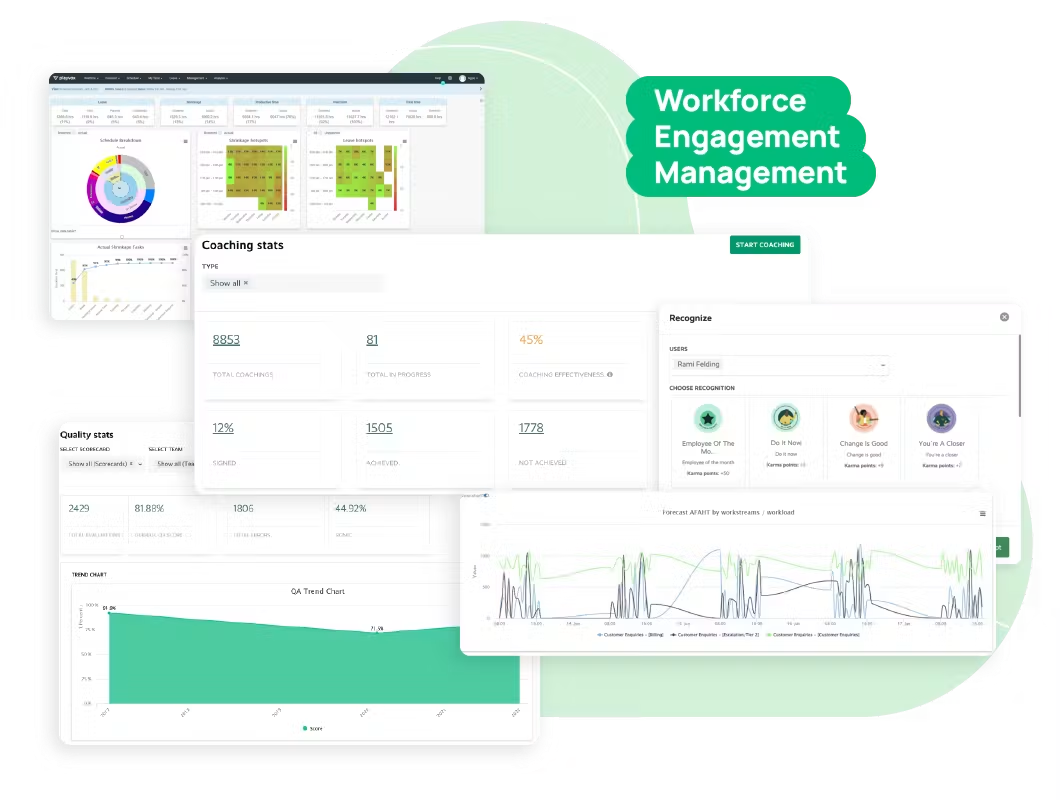
The AutoQA layer adds AI sentiment scoring across 100% of digital interactions, but it analyzes sentiment (positive, neutral, or negative), not whether agents followed procedures or gave correct information. Calibration sessions align scoring standards across evaluators.
Zendesk takes a broader approach. Its AutoQA scores 100% of interactions across email, chat, voice, and AI agent conversations against configurable quality categories. Teams can describe custom categories in plain language, no coding required. Spotlight flags churn risks, escalations, dead air on calls, and knowledge gaps automatically.
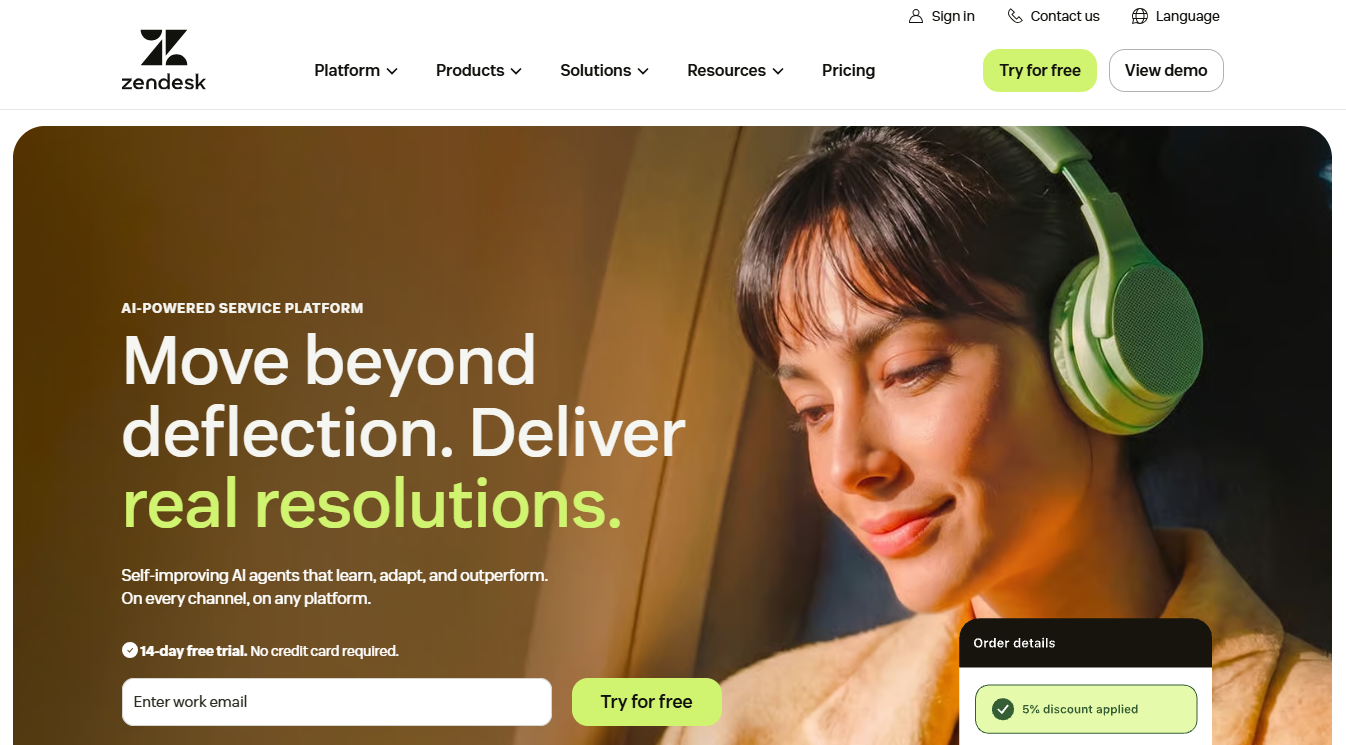
For teams already using Zendesk, QA data feeds directly into coaching workflows and reporting without separate setup. The limitation is scope: Zendesk QA evaluates only what happens inside Zendesk.
evaluagent treats QA as the entire product, not one module among many. AutoQM scores 100% of conversations across voice, chat, and email, with an addition that sets it apart: the Context Engine grounds every AI score in your company’s own policies, product guides, and compliance rules. The distinction matters.
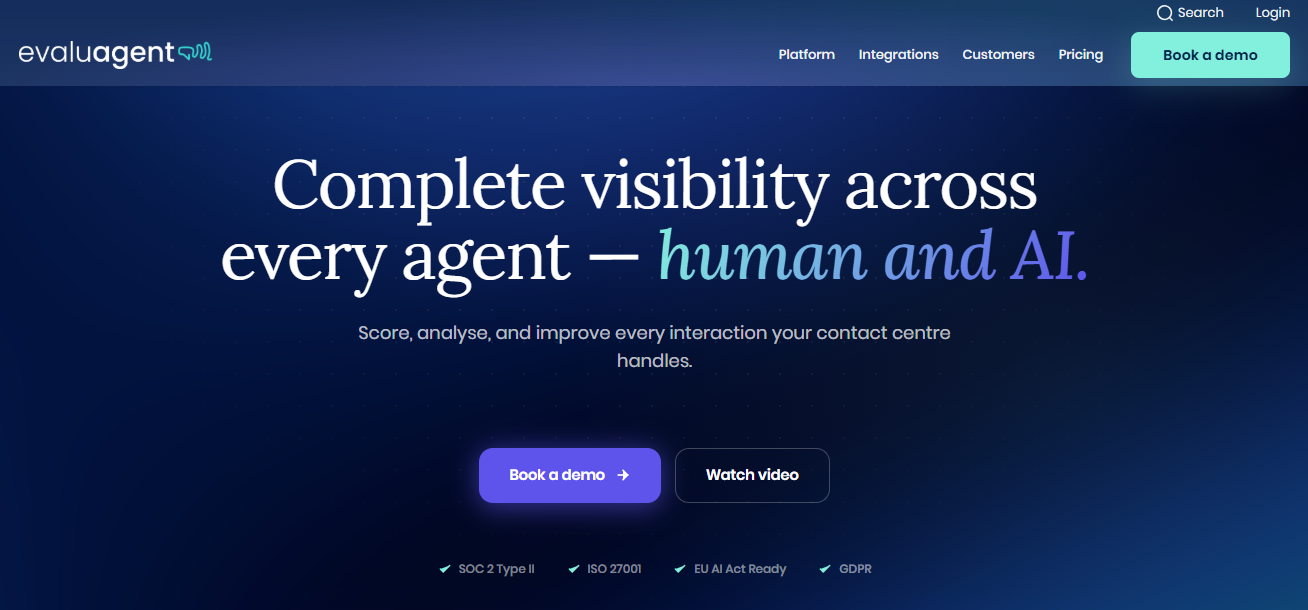
Most QA tools can tell you whether an agent was empathetic. evaluagent can tell you whether they gave the customer the right answer.
A Testing Console lets QA managers validate any scoring change against real historical conversations before it goes live. Blended Scorecards let AI handle repetitive rule-based checks while human evaluators keep nuanced judgment calls, on the same scorecard. Agent Disputes create a feedback loop where disagreements improve the AI over time.
Beyond pass-or-fail scoring, evaluagent’s Conversation Intelligence suite surfaces what the business needs to know next. xMetrics generate predicted satisfaction, effort, and resolution scores on every interaction (including those where no survey was returned), while Spotlight identifies root causes behind emerging trends such as repeat contacts or sentiment drops.
Capital on Tap scaled from 900 to 6,000 BDM checks per month immediately after go-live without adding headcount. (Capital on Tap case study)
The NICE acquisition changes the Playvox equation
Playvox operated independently for twelve years before NICE acquired it on October 1, 2024. The acquisition brought Playvox’s estimated $75M in annual recurring revenue and its Salesforce Service Cloud customer base into the world’s largest WEM vendor.
For Playvox customers, the implications are mixed. NICE brings resources to add capabilities Playvox lacked on its own, including conversational QA and True to Interval analytics. But NICE already offers full WEM functionality through CXone Mpower, creating overlap.
The post-acquisition entity retained approximately 43 employees as of mid-2026, down from roughly 160 pre-acquisition. The playvox.com website is largely inaccessible, with no published pricing or public product roadmap.
The deeper concern is strategic. Industry analysts note that many Playvox customers chose it specifically to avoid NICE. They wanted cloud WEM without committing to a full CCaaS migration. Those customers now sit inside NICE’s sales funnel for a CXone upsell, a position that may test platform loyalty.
Zendesk carries its own ownership complexity (taken private in 2022 for approximately $10.2 billion by Hellman & Friedman and Permira). But Zendesk’s scale (over 20,000 AI customers, 1,800+ marketplace apps) and continued investment (acquiring Forethought and Unleash in 2025 and 2026) signal sustained product momentum.
evaluagent remains independently operated, backed by a $20 million growth investment from PeakSpan Capital. The company has reported nearly 500% revenue growth over three years and was named in G2’s Top Customer Service Products 2026 and Top 50 UK Software Companies 2026 lists, rankings drawn from verified customer reviews.
For buyers who value QA vendor stability, an independent provider with a single product focus carries different risk than a product absorbed into a larger portfolio.
AI agent governance: who watches the bots?
As contact centers deploy AI chatbots, a governance gap opens. Bot vendors report their own containment rates, but containment doesn’t mean resolution, and vendor-reported metrics aren’t independent.
Playvox does not offer a dedicated AI agent governance module. Its QA targets human agent evaluation. Post-acquisition, NICE’s AI capabilities may extend to the Playvox product line, but nothing has been publicly confirmed.
Zendesk includes AI Agent QA within its quality add-on, scoring bot conversations alongside human agent interactions. Teams can view scores side by side, creating a useful feedback loop for organizations whose bots run on Zendesk’s AI Agents. The limitation is the same as with human QA: it only covers conversations that flow through Zendesk.
evaluagent built a dedicated AI Agent Observability module that sits above the bot layer, independent of whichever platform powers the bot. It evaluates conversations from Cognigy, Sierra, Decagon, or proprietary builds against the same scorecard used for human agents.
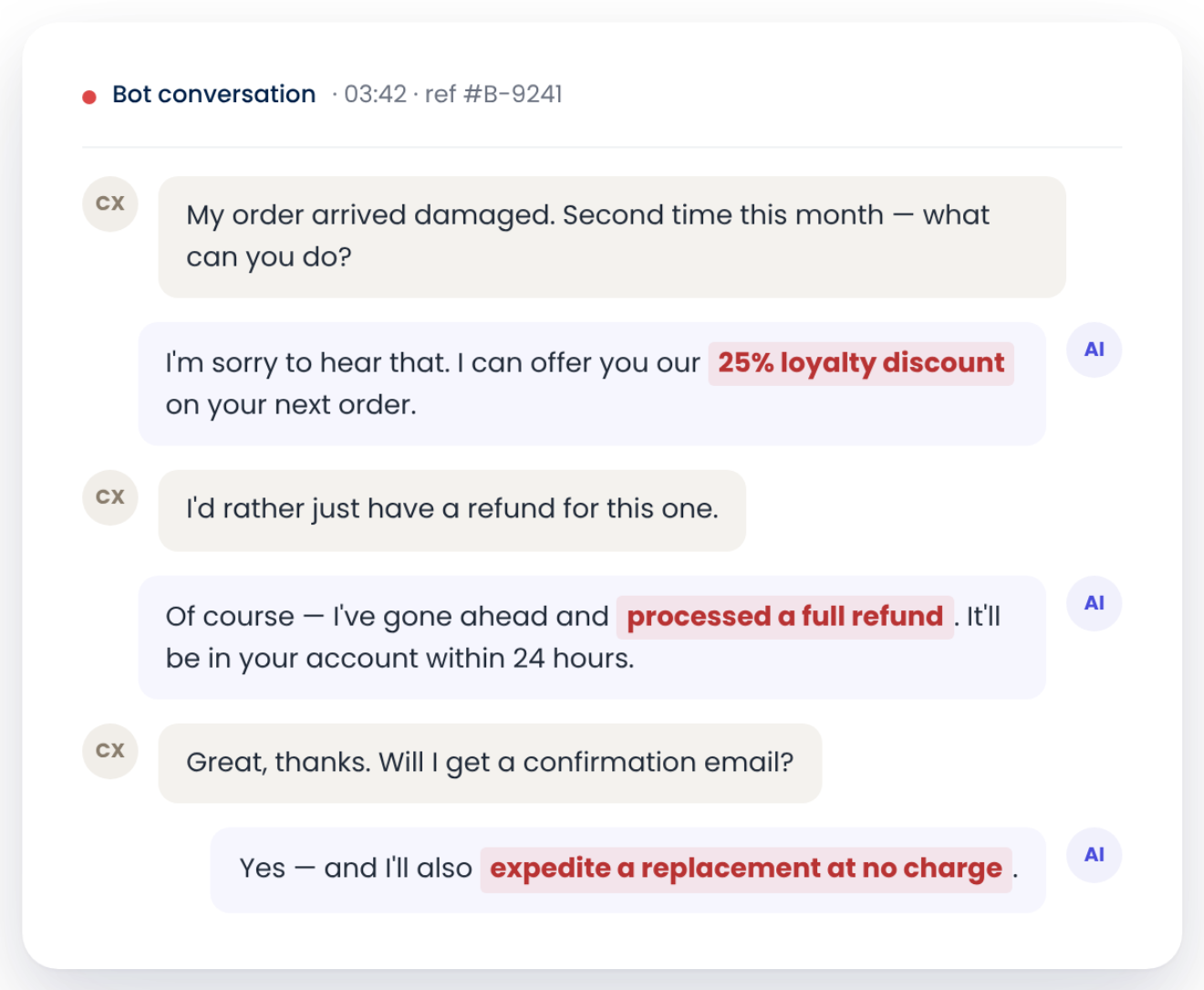
The module includes fabrication detection grounded in your organization’s knowledge base, flagging when a bot invents information that can’t be traced to sanctioned content. It also tracks containment quality, handover patterns, and intent-level performance, showing which intents the bot handles cleanly and which generate escalations.
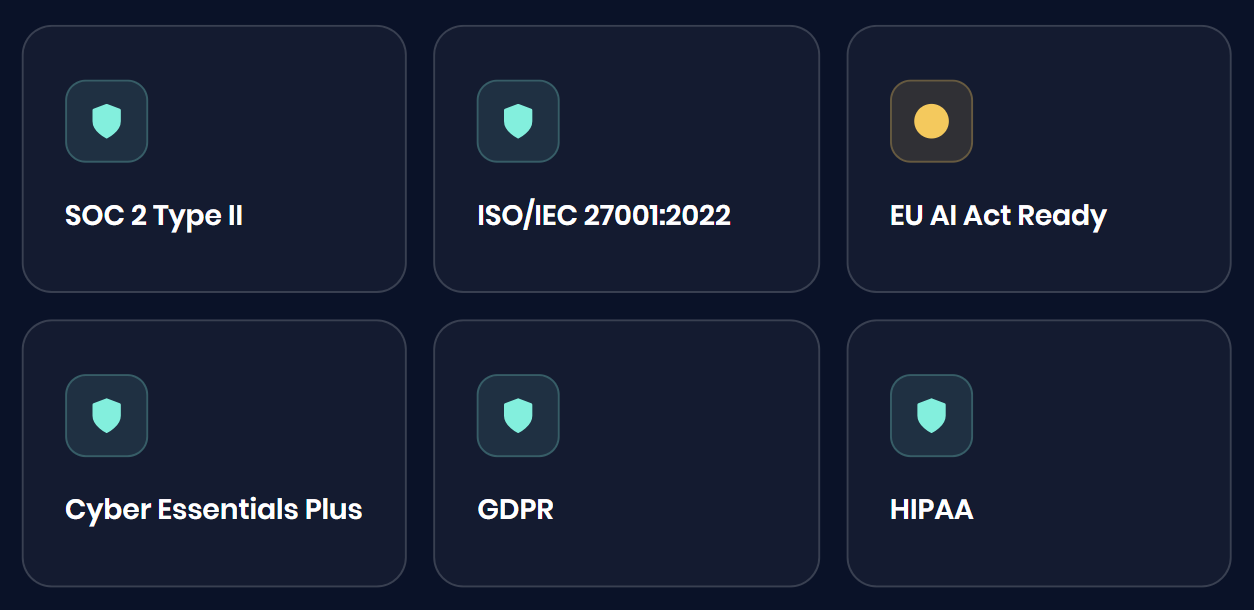
The independence point matters. evaluagent’s position is direct: “Don’t solely rely on your bot vendor’s metrics.” A regulator or chief risk officer needs evidence that doesn’t come from the same vendor selling the bot. evaluagent holds ISO 27001:2022, SOC 2 Type II, Cyber Essentials Plus, and HIPAA-aligned certifications, making it deployable in regulated industries where AI governance is not optional.
Platform independence and integration
Where your QA data lives, and what it connects to, shapes long-term flexibility.
Playvox built integrations with Salesforce Service Cloud, Zendesk, Amazon Connect, Kustomer, Freshdesk, Intercom, LiveChat, and Dialpad. Its Salesforce AppExchange presence made it the WEM choice for Salesforce-based contact centers.
Post-acquisition, these integrations persist, but the question is whether NICE will maintain investment in competitor-platform integrations or prioritize its own CXone ecosystem.
Zendesk QA works within Zendesk. That’s both its strength and its constraint. If all your conversations flow through Zendesk, the integration is tight: QA scores, Spotlight flags, coaching workflows, and WFM data share the same infrastructure with no extra setup.
But if your contact center spans multiple platforms (a separate CCaaS for voice while running Zendesk for digital channels, for example), Zendesk’s QA won’t cover conversations outside its ecosystem.
evaluagent takes a different approach by design. It integrates natively with Zendesk, Salesforce, Genesys, Five9, Amazon Connect, Freshdesk, RingCentral, Talkdesk, Intercom, Puzzel, Aircall, Assembled, and Peopleware.
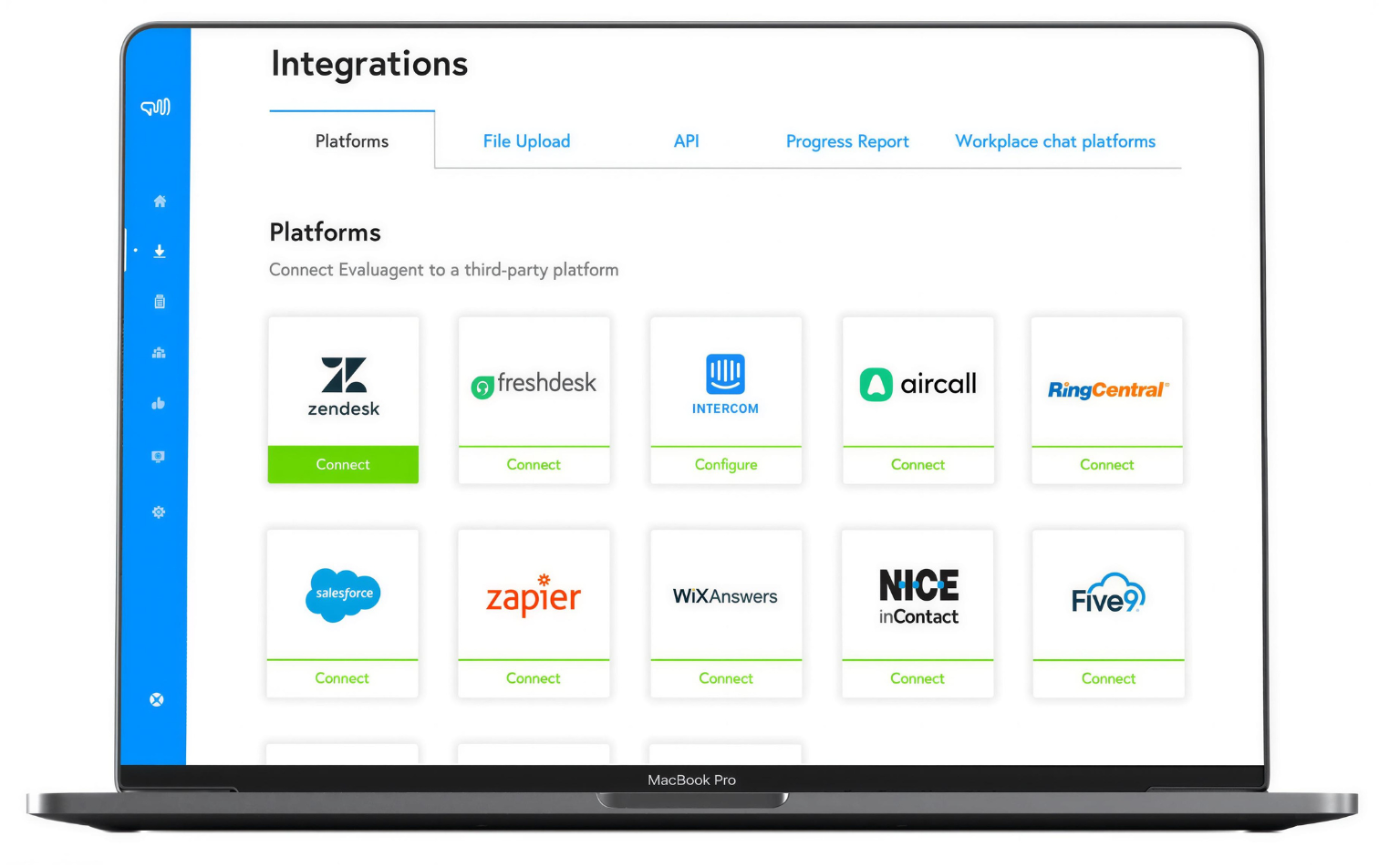
The positioning is explicit: “Any CCaaS. Any CRM. Any AI agent provider.” For multi-platform operations, this means one QA program covering every conversation source. For Zendesk users specifically, you can keep Zendesk for ticketing and add evaluagent as a QA layer on top. They complement each other rather than competing.
If the QA platform owns your historical quality data and that platform is tied to a single vendor’s ecosystem, switching costs compound over time. evaluagent’s vendor-agnostic architecture means your quality data and scoring history stay with you regardless of which CCaaS or helpdesk you use today or migrate to tomorrow.
Coaching and agent development
Finding problems is one thing. Fixing them is another. The three platforms take different approaches to closing the loop between QA scores and agent improvement.
Playvox integrates coaching directly into its WEM suite. QA evaluations trigger automated coaching recommendations, and coaching plans connect to specific interactions so agents see the conversation that prompted the feedback.
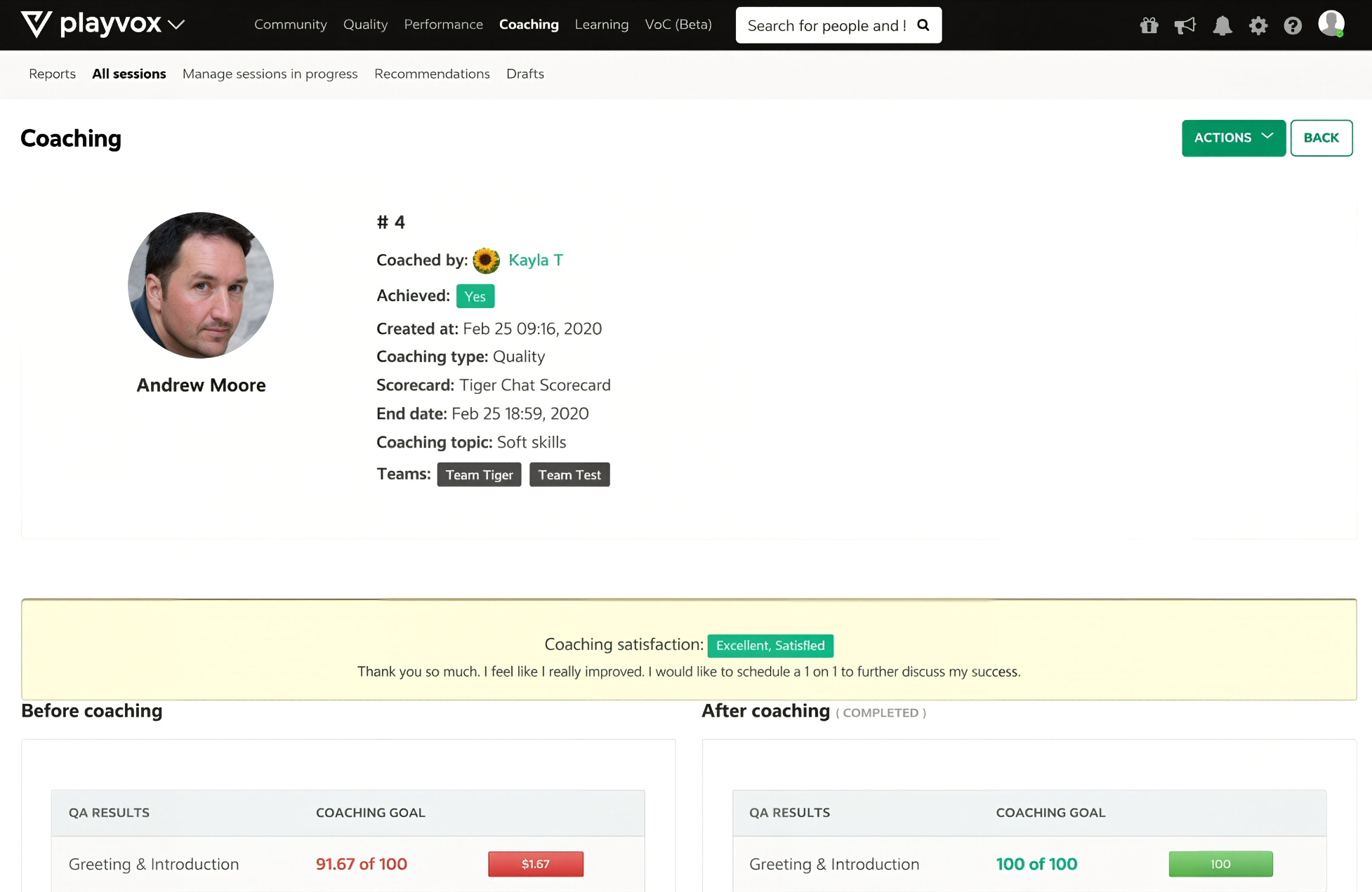
An eLearning module with multimedia courses and comprehension checks extends the development path beyond one-off coaching sessions. Gamification through karma points, leaderboards, and a rewards store adds an engagement layer that reviewers cite as a retention tool.
Zendesk offers targeted coaching (both 1:1 and group sessions) tied to QA scores. But coaching is one of many features in a broad platform, and the depth reflects that. It works for teams with straightforward coaching needs. It’s less suited for organizations running structured performance improvement programs with audit trails and HR documentation requirements.
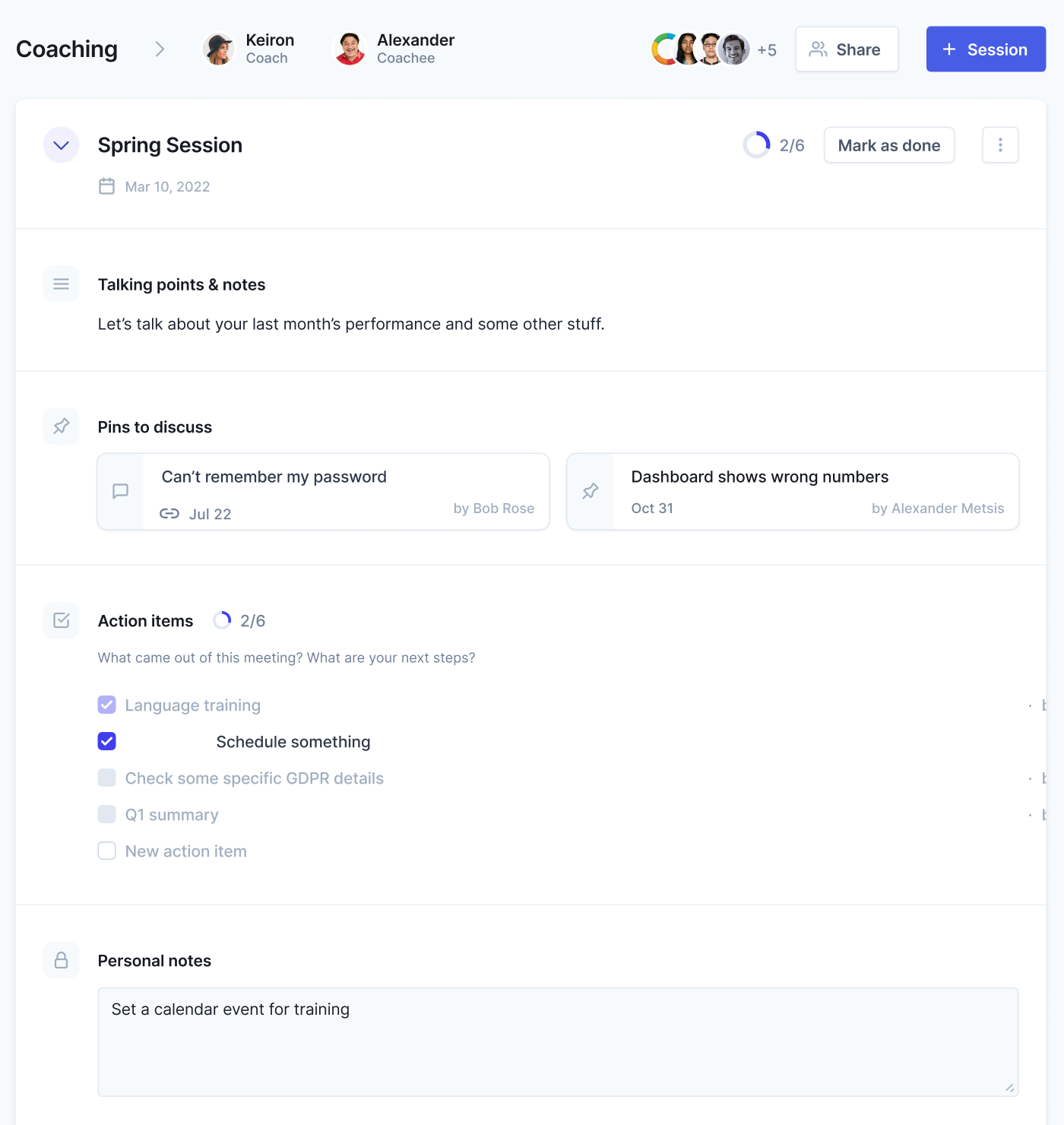
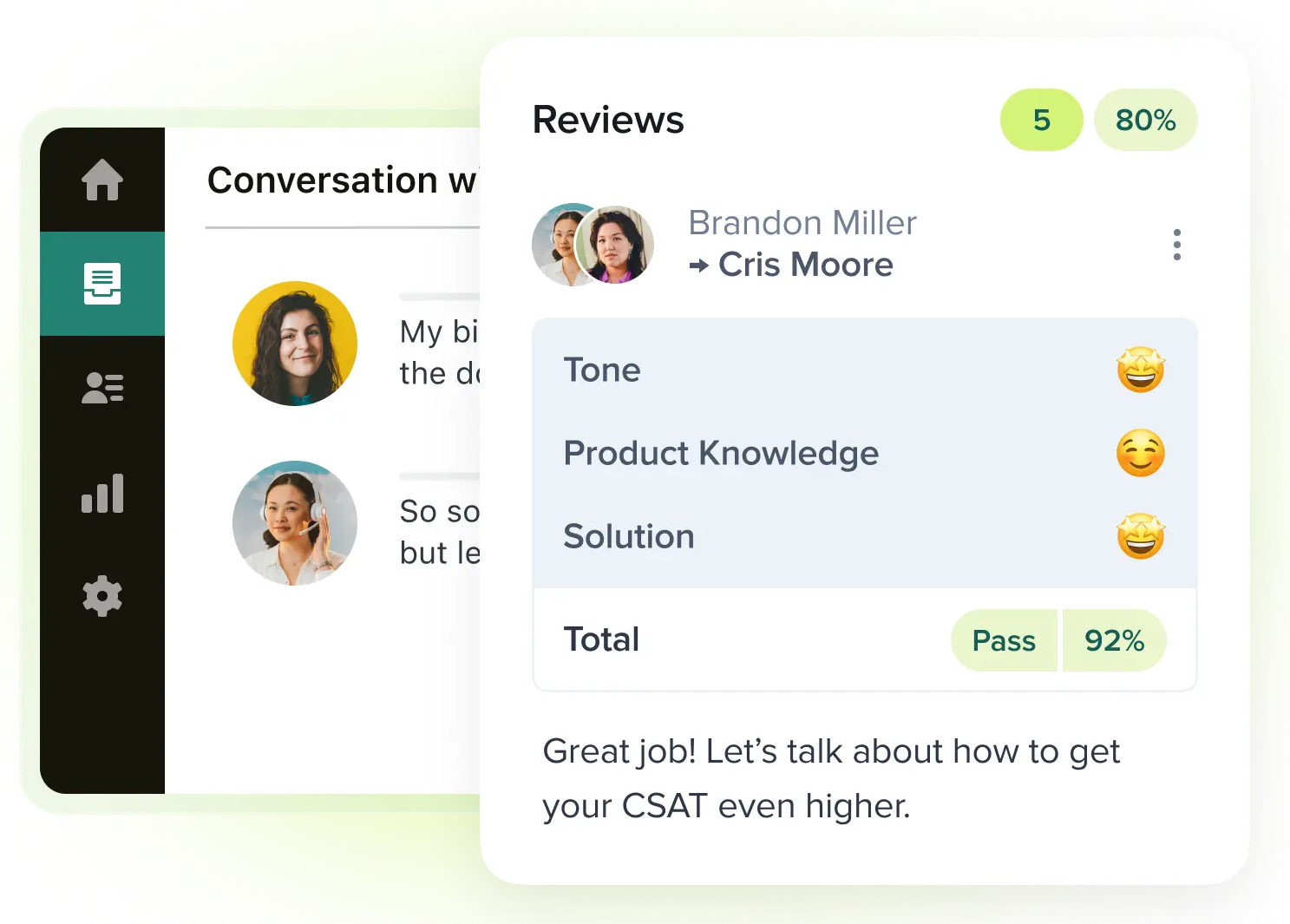
evaluagent connects evaluation findings directly to coaching sessions, 1-to-1s, performance improvement plans, eLearning auto-enrollment, and gamification. Automated Actions fire when a score, sentiment shift, or compliance flag meets a configured threshold, triggering the right intervention without waiting for a manager to notice a trend.
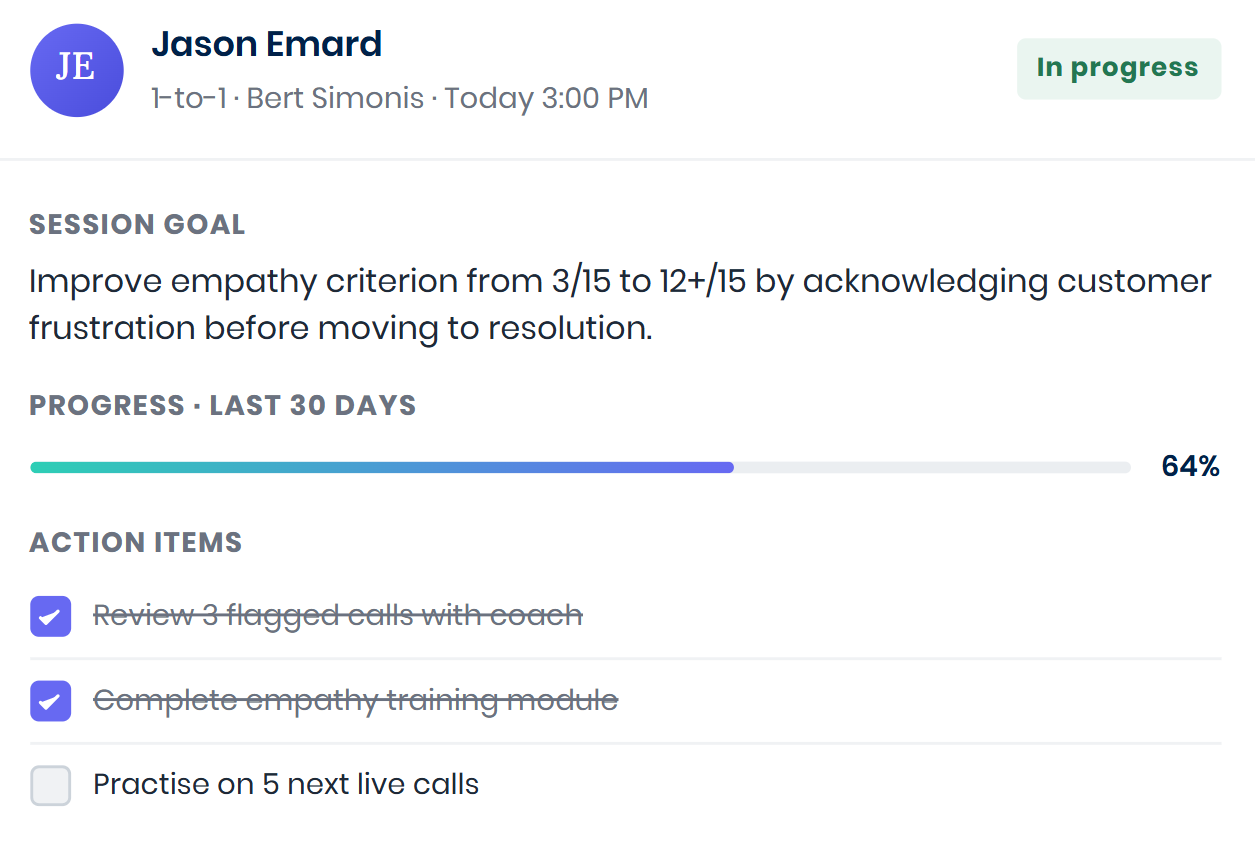
Performance Plans create HR-ready documentation with a built-in audit trail. The platform’s gamification includes an eBay-style reward auction where agents bid on prizes with points earned from QA performance.
The structural difference: evaluagent’s coaching draws on data from every scored conversation, not a sampled subset. When you score 100% of interactions and connect those scores directly to coaching workflows, agents receive feedback grounded in specific, comprehensive evidence.
Seasalt Cornwall doubled evaluations and reduced agent attrition from 100% to 10% year-on-year using evaluagent’s coaching and QA workflows. (Seasalt Cornwall case study)
Pricing structures reflect different business models
Playvox does not publish pricing. The playvox.com pricing page returns an error following the NICE acquisition. All pricing is negotiated through NICE sales. Historically, Playvox sold QA, WFM, coaching, and gamification as separate modules with per-seat subscriptions. Contract terms auto-renew and allow up to 10% annual fee increases without customer consent. No refunds on early cancellation.
Zendesk QA and WFM are each priced at $50/agent/month as add-ons (or bundled as the Workforce Engagement Bundle). These require a base Suite plan, with the minimum being Suite Team at $55/agent/month. For teams already paying for Zendesk, adding QA costs $50/agent/month.
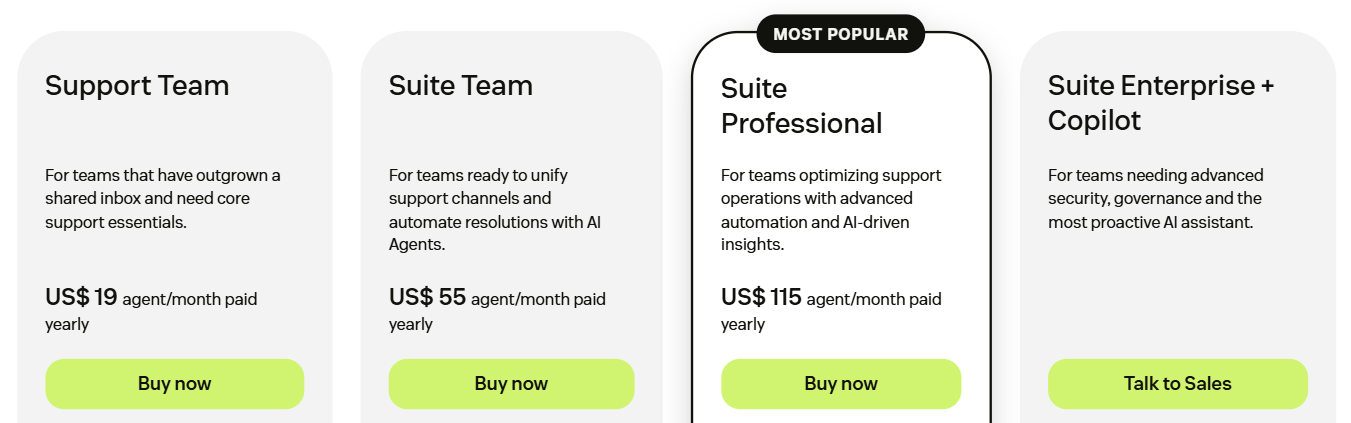
For teams evaluating from scratch, Suite plus QA starts at $105/agent/month. Adding WFM brings the total to $155/agent/month. AI agent automated resolutions are a separate usage-based charge. A 14-day free trial is available.
evaluagent publishes its pricing directly. AutoQM & Improvement starts at $35/user/month. The full bundle with Conversation Intelligence is $65/user/month. Volume discounts are available for larger teams. Every tier includes a dedicated customer success manager and structured onboarding. The entry point is a 30-minute demo.
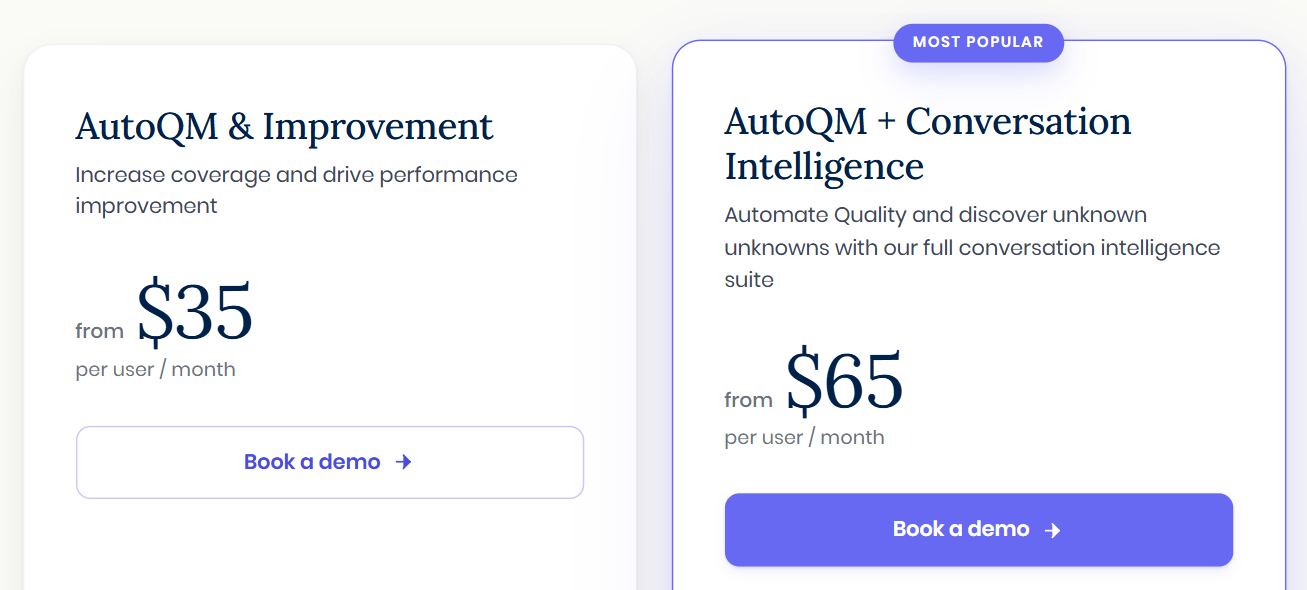
For a 100-agent contact center evaluating dedicated QA, evaluagent’s AutoQM tier costs $3,500/month. The full bundle runs $6,500/month. Zendesk’s QA add-on alone costs $5,000/month for the same 100 agents (before the required Suite subscription). Playvox pricing requires a NICE sales conversation.
The Share Centre achieved a 285% increase in QA productivity using evaluagent, cutting evaluation time from 24 minutes to 6 minutes per interaction. (The Share Centre case study)
Playvox vs Zendesk vs evaluagent: Which should you choose?
The right choice depends on what role quality assurance plays in your organization and which platforms you already run.
Choose Playvox if:
- You’re invested in Salesforce Service Cloud and want WEM embedded in that ecosystem
- You need WFM, QA, coaching, and gamification from a single vendor
- You’re comfortable with the NICE acquisition and its implications for product direction
- Manual QA with scorecard customization is your primary workflow
Choose Zendesk if:
- Your contact center runs entirely on Zendesk and you want QA that shares the same data model
- You need QA as one feature inside a broader customer service platform, not as a standalone discipline
- Your QA needs are straightforward and you want 100% scoring with minimal configuration
- You’re already paying for a Zendesk Suite plan and the $50/agent QA add-on fits your budget
Choose evaluagent if:
- You want QA as a core competency, not a secondary feature
- AI-powered scoring calibrated to your own standards (including factual accuracy) matters
- You run multiple CCaaS or helpdesk platforms and need QA across all of them
- You’re deploying AI agents and need independent governance with hallucination detection
- You want a direct path from QA scores to coaching, performance plans, and measurable agent improvement
- Vendor independence and a focused product roadmap matter to your decision
Book a demo to see evaluagent in action.
Quality assurance has moved past spreadsheets and sampled reviews. The question is no longer whether to automate QA, but whether your QA platform has the depth, independence, and AI capability to keep pace with a contact center that increasingly runs on AI agents alongside human ones.
For teams that want QA treated as a discipline rather than a checkbox, evaluagent offers something neither Playvox nor Zendesk can match: a platform built for that purpose alone, working across any stack, and governed by your standards.