If you’ve ever estimated your Amazon Connect bill by multiplying $0.038 per voice minute across your call volume, then realized you still need to add telephony charges, per-message chat fees, case creation costs, customer profile fees, SMS delivery surcharges, and regional telecom taxes, you already know: pay-as-you-go pricing sounds simple but turns opaque fast.
The platform handles over 16 million interactions daily and bundles AI capabilities into its base pricing rather than charging for each feature separately. But that bundled pricing sits on top of a layered cost structure where telephony, messaging delivery, case management, and customer profiles all carry their own charges.
We analyzed Amazon Connect’s pricing model, hidden costs, and capability gaps. It’s the right choice if:
- You already run workloads on AWS and want your contact center on the same infrastructure
- Your call volume fluctuates by season or campaign, making per-seat licensing wasteful
- You need AI features like real-time agent assist, post-contact summaries, and conversational analytics included rather than sold as add-ons
- You have engineers comfortable building on AWS services like Lambda, Lex, and Bedrock
- You want to scale without renegotiating contracts when you add 5,000 agents for peak season
Amazon Connect’s pricing creates challenges if:
- You want a turnkey solution without AWS architecture expertise
- You need detailed native reporting without connecting QuickSight or a third-party BI tool
- Your QA program requires automated scoring across all conversations with coaching workflows built in
- You want independent quality oversight of both human and AI agent conversations
- You need a system that connects evaluation findings directly to agent development
Amazon Connect’s native quality management tools evaluate interactions at scale, but the scoring, coaching, and performance improvement workflow lacks the depth of a dedicated QA platform.
That’s where evaluagent fits, not as a replacement for Amazon Connect, but as a QA layer that plugs directly into it. evaluagent integrates natively with Amazon Connect, importing calls and chats to score 100% of conversations automatically, then connecting those scores to structured coaching, performance plans, and agent development.
We’ve included a detailed breakdown of how evaluagent extends Amazon Connect as a QA and performance improvement layer. If you want to skip to the evaluagent pricing breakdown, use this link.
Amazon Connect Pricing Summary
| Amazon Connect Customer | evaluagent | |
|---|---|---|
| Pricing Model | Pay-as-you-go, per interaction | Per seat/month |
| Voice | $0.038/min (includes all AI) + telephony charges | From $35/user/month (AutoQM) or $65/user/month (Full Bundle) |
| Chat | $0.010/message sent or received | Same seat-based pricing covers chat QA |
| $0.080/email sent or received | Same seat-based pricing covers email QA | |
| AI Features | Bundled in base rates (self-service, agent assist, analytics, WFM, evaluations) | AI scoring of 100% of conversations, Context Engine, fabrication detection |
| Free Tier | AWS Free Tier: 1,000 Customer Profiles/month, 500 chat analytics messages/month (first 12 months) | No free plan; demo available on request |
| Best For | Enterprises on AWS who want a scalable contact center with consumption-based pricing | Contact centers that need independent, full-coverage QA with closed-loop coaching and AI agent governance |
Amazon Connect Pricing: In-Depth Overview
Amazon Connect uses a pay-as-you-go model with no seat-based licensing, no per-agent monthly fees, no minimum commitments, and no long-term contracts.
You pay for interactions as they happen. Since March 2025, the default plan for new customers is “Connect Customer,” which bundles all AI capabilities into the base per-interaction rate. A legacy “Customer Basic” plan still exists for some accounts with lower base rates but separate AI charges. Here’s what each component costs.
Amazon Connect Voice Pricing: $0.038 Per Minute + Telephony
| Component | Rate | Notes |
|---|---|---|
| Voice service charge | $0.038/min | All AI included |
| US DID number | $0.030/day | Per number, varies by region |
| US inbound DID usage | $0.0022/min | Telco charges on top |
| US outbound calling | $0.0048/min | Telco charges on top |
| Outbound campaigns voice | $0.045/min | Instead of standard $0.038 |
| In-app/web calling audio | $0.010/min | Additional charge |
The $0.038 per minute voice service charge is the base rate covering the Amazon Connect platform, all AI features (real-time agent assist, conversational analytics, post-contact summaries, performance evaluations, forecasting, scheduling), and the agent workspace.
But this is not your total voice cost. Amazon Connect bills telephony charges for phone numbers and per-minute carrier usage separately on top.
For a US-based contact center with a DID number, the total cost per voice minute works out to roughly $0.040–$0.044 for inbound calls (service charge + DID day rate amortized + inbound telco) and $0.043–$0.047 for outbound calls. International rates vary by country, with DID numbers available in 158 countries and outbound coverage in 72.
| Voice Pricing | |
|---|---|
| Pros | Cons |
| – All AI bundled at no extra charge | – Telephony costs add 10–20% on top |
| – No per-seat or per-agent fees | – Costs can spike at high volume |
| – Pay only for minutes used | – Regional rate differences complicate budgeting |
| – Scales down to zero when idle | – Must track multiple line items per invoice |
Amazon Connect Chat and Messaging: $0.010–$0.014 Per Message
| Channel | Rate | Notes |
|---|---|---|
| Chat messages | $0.010/message | Sent or received |
| SMS and third-party messaging | $0.014/message | Plus delivery fees |
| WhatsApp Business delivery | $0.005/message | Via AWS End User Messaging |
| Step-by-step guides (chat) | $0.010/message | Same as chat rate |
Chat is priced per message in both directions, and every message sent by an agent or customer counts. For a typical chat interaction of 15–20 messages, expect $0.15–$0.20 per conversation, with AI features included.
SMS and third-party messaging carry a higher service charge of $0.014 per message, plus AWS End User Messaging delivery fees that vary by region and carrier. A US 10DLC outbound SMS adds roughly $0.009 per message on top of the service charge, bringing the effective cost to around $0.023 per SMS sent.
| Chat & Messaging | |
|---|---|
| Pros | Cons |
| – Low per-message cost for chat | – Both sent and received messages count |
| – WhatsApp and Apple Messages supported natively | – SMS delivery fees add up quickly |
| – Persistent conversation history across sessions | – High-volume chatbot interactions can accumulate cost |
| – Same AI features as voice channels | – International SMS rates vary widely |
Amazon Connect Email: $0.080 Per Email
| Component | Rate | Notes |
|---|---|---|
| Email service charge | $0.080/email | Sent or received |
| Amazon SES delivery | ~$0.00036/email avg | Varies by size/attachments |
Email is the most expensive per-interaction channel at $0.080 per email sent or received, though each email typically resolves more complex issues than a single chat message.
Amazon SES delivery fees are negligible by comparison.
| Pros | Cons |
| – AI-powered categorization and routing included | – $0.080/email is the highest per-unit cost |
| – Auto-responses and case creation before agent involvement | – Both inbound and outbound emails billed |
| – Feeds into outbound campaigns | – Not cost-effective for high-volume transactional email |
| – Conversational analytics included | – Better suited for complex issues than quick queries |
Amazon Connect Tasks, Cases, and Customer Profiles
| Feature | Rate | Notes |
|---|---|---|
| Tasks | $0.070/task | Agent follow-ups, callbacks, compliance documentation |
| Cases | $0.12/case created | Created via agent workspace, API, or flow |
| Customer Profiles (external data) | $0.005/profile utilized daily | Free for Connect-generated data only |
| Outbound campaign processing | $0.005/attempt | All channels |
| Video connections | $0.015/min per participant | Additional charge |
| Screen sharing | $0.015/min | Additional charge |
Beyond per-interaction charges, Amazon Connect bills separately for several platform features. Cases at $0.12 each and Customer Profiles at $0.005 per profile per day (when importing external CRM data) are the two costs most likely to surprise teams during their first billing cycle.
Customer Profiles generated from Amazon Connect interaction data are free. But the moment you import Salesforce, ServiceNow, or Shopify data to enrich those profiles, the daily per-profile charge activates. A contact center with 50,000 active customer profiles pulling from external sources would add $250/day ($7,500/month) to the bill.
| Tasks, Cases & Profiles | |
|---|---|
| Pros | Cons |
| – Tasks route non-customer work through the same engine | – Case creation charges accumulate at volume |
| – Profiles unify data from 80+ sources | – External data profiles cost $0.005/day each |
| – Outbound campaign processing is cheap per attempt | – Video and screen sharing carry premium rates |
| – Connect-generated profile data is free | – Must model profile costs carefully before importing CRM data |
Amazon Connect Legacy Plan: Customer Basic
| Channel | Customer Basic Rate | Connect Customer Rate | Difference |
|---|---|---|---|
| Voice | $0.018/min | $0.038/min | +111% |
| Chat | $0.004/msg | $0.010/msg | +150% |
| SMS/messaging | $0.010/msg | $0.014/msg | +40% |
| $0.050/email | $0.080/email | +60% |
Some existing customers remain on the Customer Basic plan, which has lower base rates but charges separately for AI features.
Under Customer Basic, conversational analytics for voice costs $0.015/min for the first 5 million minutes per month, real-time agent assistance adds $0.0080/min, screen recording costs $0.0060/min, forecasting and scheduling runs $27/agent/month, and performance evaluations add $12/agent/month.
For a contact center using all AI features, the total per-minute cost under Customer Basic often exceeds the Connect Customer plan’s flat $0.038. The Connect Customer plan is the better value for any team planning to use AI capabilities, which is why AWS made it the default.
| Customer Basic | |
|---|---|
| Pros | Cons |
| – Lower base rates if you skip AI features | – AI features cost extra at every tier |
| – May save money for voice-only, no-AI deployments | – Some features not available at any price (email analytics, Nova Sonic, custom metrics) |
| – Existing customers can keep current pricing | – Total cost often exceeds Connect Customer when AI is added |
| – Granular control over which AI features to activate | – Forecasting and evaluations billed per agent/month, reintroducing seat-like costs |
Amazon Connect Free Tier and Trials
Amazon Connect has no standalone free trial for the full product. Two free access mechanisms exist within the AWS Free Tier:
AWS Free Tier (first 12 months of AWS account):
- 1,000 Customer Profiles per month (Connect-generated data only)
- 500 chat messages per month for conversational analytics
Feature-level free trials (activate upon first use):
- Conversational analytics for voice: 100,000 minutes/month free for the first 2 months
- Performance evaluations: 30-day free trial
- Forecasting, capacity planning, and scheduling: 90-day free trial
| Free Tier | |
|---|---|
| Pros | Cons |
| – Voice analytics trial (100K min) is generous | – No full-platform trial without paying for interactions |
| – 90-day WFM trial allows evaluation | – Free tier limited to first 12 months of AWS account |
| – No credit card required for AWS account creation | – Chat analytics trial covers only 500 messages |
| – Feature trials activate on first use, not on signup | – Cannot test voice or email channels without incurring charges |
Where Amazon Connect’s Native QA Falls Short
Amazon Connect bundles AI-powered quality management into its pricing, but its native capabilities serve a broader platform rather than a dedicated QA solution.
Several gaps emerge when you compare it to dedicated quality assurance tools:
Reporting Requires External Tooling
- Native dashboards work but offer limited customization and depth. G2 and Capterra reviewers consistently note that detailed or custom reports require Amazon QuickSight or a third-party BI tool, adding both cost and configuration overhead.
- QA managers cannot build the specific views they need without involving engineering resources.
No Closed-Loop Coaching Workflow
- Amazon Connect’s performance evaluations score interactions, but the platform does not connect those scores to structured coaching sessions, performance improvement plans, or agent development tracking.
- QA findings sit in the analytics layer. Acting on them (scheduling 1-to-1s, assigning training, tracking improvement over time) requires manual processes or additional tooling.
Configuration Demands AWS Expertise
- The platform works as a developer toolkit rather than a ready-made solution. Advanced workflows, IVR configurations, and custom integrations require AWS engineering skills.
- Gartner Peer Insights and G2 reviewers describe the interface as less intuitive than dedicated CCaaS competitors for non-technical admin users.
No Independent AI Agent Governance
- Amazon Connect can evaluate AI-led interactions using its native quality management framework, but the evaluation happens within the same platform that operates the AI agents.
- Organizations deploying AI bots lack an independent quality layer to verify that their AI agents give accurate, compliant, and on-policy responses.
These gaps don’t make Amazon Connect a poor choice. They reflect the reality that a platform built to run an entire contact center invests differently than one built exclusively for quality assurance.
How evaluagent Extends Amazon Connect
evaluagent is a quality assurance and performance improvement platform that integrates natively with Amazon Connect, importing calls and chats to provide the independent QA layer that Amazon Connect’s native tools don’t cover.
The integration is direct: evaluagent connects to Amazon Connect, automatically importing voice and chat interactions for scoring without manual uploads or CSV exports.
Once connected, evaluagent applies its AutoQM engine to score 100% of conversations against your own QA standards, then feeds those scores into structured coaching workflows, performance plans, and gamified agent development, closing the loop that Amazon Connect’s native evaluations leave open.
For contact centers already running Amazon Connect, evaluagent addresses four specific gaps: automated scoring calibrated to your standards (not a generic model), closed-loop coaching that connects QA findings to agent improvement, independent AI agent governance through a dedicated observability module, and a Context Engine that validates whether agents give factually correct answers by grounding evaluations against your own policies and knowledge base.
The platform is CCaaS-agnostic, meaning your QA program and historical quality data stay with you regardless of whether you continue with Amazon Connect or switch platforms later.
evaluagent AutoQM & Improvement: From $35/User/Month
| Feature | Details |
|---|---|
| Price | From $35/user/month |
| Coverage | 100% of voice, chat, and email conversations |
| Scoring | AI-powered AutoQM with SmartScore and Context Engine |
| Coaching | Structured 1-to-1s, performance plans, gamification |
| Integrations | Native Amazon Connect integration included |
| Security | SOC 2 Type II, ISO 27001:2022, HIPAA, GDPR |
The AutoQM & Improvement tier replaces sample-based manual QA with automated scoring across every interaction. Scorecards use a drag-and-drop builder with weighted criteria and auto-fail logic. Blended Scorecards let AI handle repetitive checks while human evaluators retain nuanced assessments on the same scorecard.
The coaching side connects directly to scores: when an evaluation triggers a threshold (low score, compliance flag, sentiment shift), automated Actions fire to schedule coaching, escalate to a manager, or enroll the agent in eLearning. Performance Plans create HR-ready documentation with audit trails, and gamification uses points, badges, leaderboards, and a reward auction to keep agents engaged.
| AutoQM & Improvement | |
|---|---|
| Pros | Cons |
| – 100% conversation coverage vs. traditional 2% sampling | – Requires active engagement to deliver outcomes |
| – Closed-loop coaching tied to conversation evidence | – Configuration and calibration take several weeks |
| – Context Engine grounds scoring in your own policies | – No Conversation Intelligence features at this tier |
| – Testing Console validates changes before production | – Volume discounts require sales negotiation |
Capital on Tap scaled from 900 to 6,000 BDM checks per month immediately after going live, without adding headcount, by deploying evaluagent’s automated scoring. (Capital on Tap Case Study)
evaluagent Full Bundle: From $65/User/Month
| Feature | Details |
|---|---|
| Price | From $65/user/month |
| Everything in AutoQM | Plus full Conversation Intelligence suite |
| Predictive Metrics | xNPS, xCSAT, xResolution across 100% of contacts |
| Analytics | Reason for contact detection, sentiment analysis, topic discovery |
| Investigation | Spotlight AI analyst for root-cause analysis |
| Vulnerability | xVulnerability detection for at-risk customers |
The Full Bundle adds Conversation Intelligence on top of AutoQM, the analytics layer that surfaces what customers are saying, why they’re calling, and what the aggregate patterns mean for operations. Predictive xNPS, xCSAT, and xResolution scores come from conversation signals across 100% of interactions, covering far more ground than post-call survey response rates.
The Spotlight tool works as an on-demand AI analyst: filter a set of conversations, run Spotlight, and it analyzes up to 1,000 interactions to surface themes organized into Critical Issues, Monitor Closely, and Performing Well, with clickable transcript evidence for each finding.
| Full Bundle | |
|---|---|
| Pros | Cons |
| – Predictive CX metrics across every interaction, not survey samples | – Nearly double the per-seat cost of AutoQM alone |
| – Spotlight replaces manual investigation with AI-driven root-cause analysis | – Requires conversation volume to generate meaningful trends |
| – Custom topic builder with testing console, no data science needed | – Learning curve for the full analytics suite |
| – Reason for contact detection automates what manual tagging misses | – Per-seat pricing adds up for large teams |
Seasalt Cornwall doubled their evaluations and reduced agent attrition from 100% to 10% year-on-year after implementing evaluagent’s quality and coaching workflows. (Seasalt Cornwall Case Study)
evaluagent AI Agent Observability
| Feature | Details |
|---|---|
| Prerequisite | Requires an active human-agent seat tier |
| Coverage | Every AI agent conversation scored against the same quality standard as human agents |
| Fabrication Detection | Knowledge-base-grounded checks for hallucinations and off-policy advice |
| Cross-Vendor | Scores bots across multiple platforms, not just Amazon Connect |
| Data Portability | Quality data stays with evaluagent, not the bot vendor |
AI Agent Observability evaluates every AI agent conversation against the same quality standard applied to human agents.
The module detects hallucinations by grading responses against your knowledge base, flags off-policy advice, tracks containment quality (not just containment rate), and identifies unrecoverable handovers where the bot has damaged the customer relationship before a human agent takes over.
This matters for Amazon Connect users because Connect’s native AI evaluation tools score interactions within the same platform that operates the AI agents.
evaluagent provides the independent second opinion that regulated industries and board-level oversight require. Scores, conversations, and trend data sit in evaluagent, not in the bot platform, so your quality record carries over if you change AI agent vendors.
| AI Agent Observability | |
|---|---|
| Pros | Cons |
| – Independent QA separate from the bot vendor’s own metrics | – Requires a human-agent seat tier as a prerequisite |
| – Knowledge-base-grounded fabrication detection | – Newer product line with less published customer evidence |
| – Cross-vendor scoring across multiple bot platforms | – Cannot purchase bot QA independently without seat subscription |
| – Same quality standard for humans and AI agents | – Pricing available on request rather than self-serve |
Amazon Connect Feature Value (Extended by evaluagent)
Quality Management Depth
Amazon Connect’s Approach: Amazon Connect includes AI-powered automated evaluations that can run on 100% of contacts, covering both human agents and automated interactions.
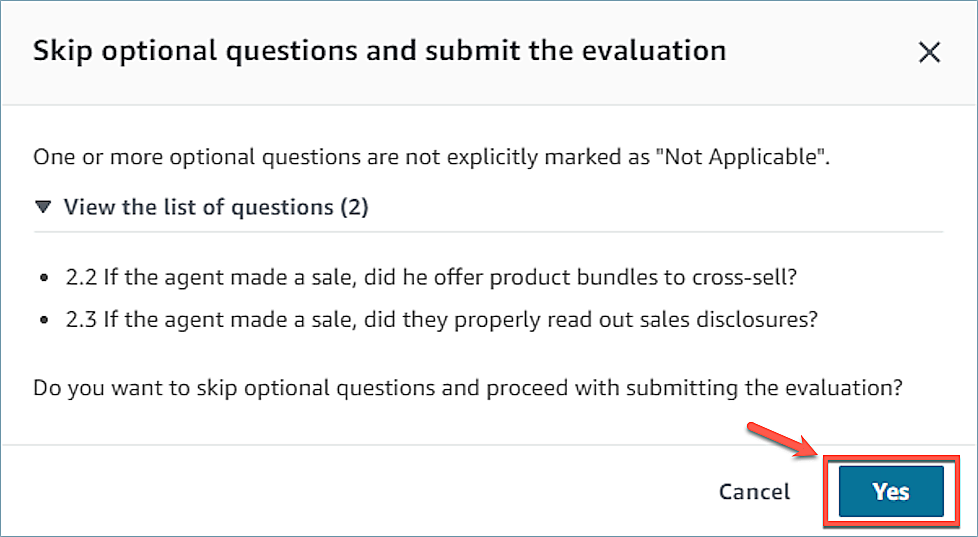
Evaluations use conversational prompts to define criteria, and the system returns answers with supporting context. But the evaluation output stays within the analytics layer. It does not feed into structured coaching sessions, performance improvement plans, or agent development tracking.
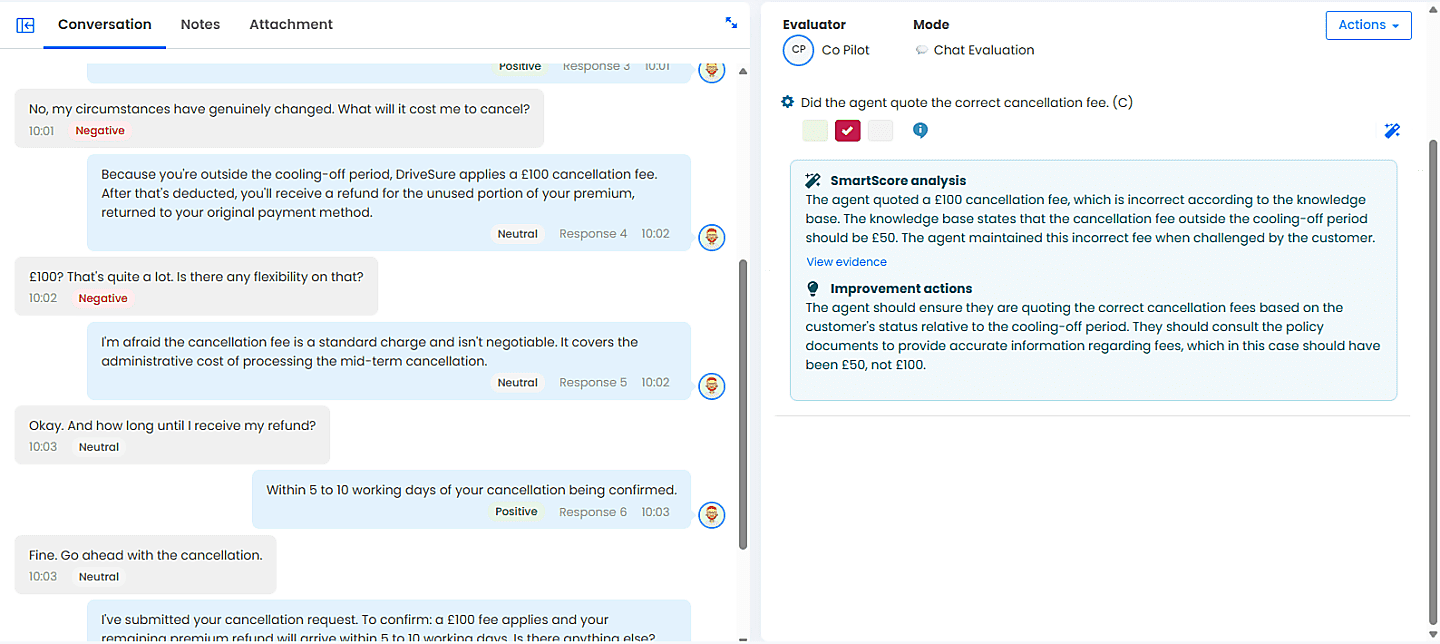
evaluagent’s Addition: evaluagent takes evaluation output and connects it to action. AutoQM scores flow directly into coaching 1-to-1s, performance plans, eLearning auto-enrollment, and gamification without leaving the platform.
The Context Engine adds a layer Amazon Connect’s native evaluations lack: validating whether agents gave factually correct answers by grounding scores against company-specific policies and knowledge base content. The Share Centre cut evaluation time from 24 minutes to 6 minutes while pass rates rose from 73% to 85%.
Reporting and Analytics
Amazon Connect’s Approach: Amazon Connect provides real-time dashboards refreshing every 15 seconds and historical views going back three months. An analytics data lake with zero-ETL architecture makes contact center data queryable from BI tools. The recently announced AI-powered manager assist lets managers query 150+ metrics in natural language.
However, G2 and Capterra reviewers consistently note that custom or detailed reports require Amazon QuickSight or external BI tools.
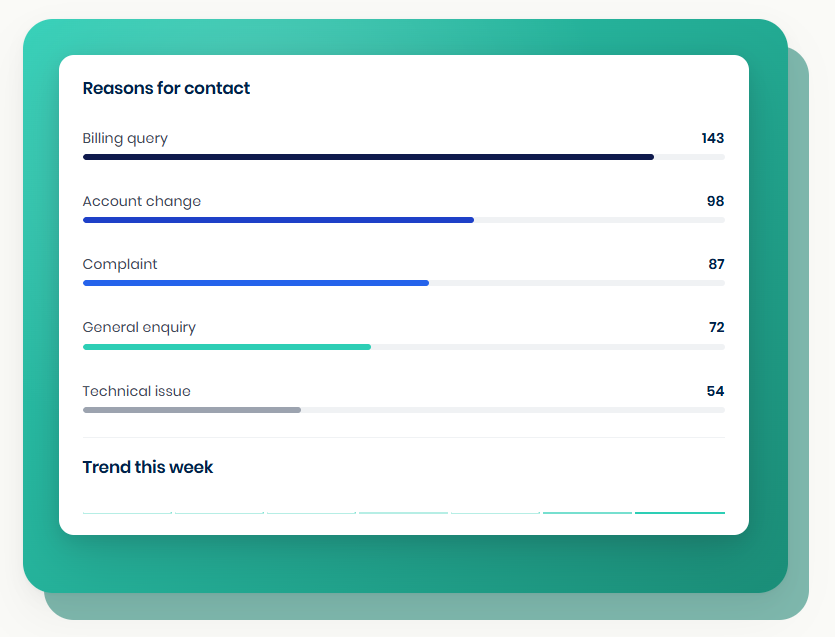
evaluagent’s Addition: evaluagent’s Conversation Intelligence surfaces QA-specific analytics that Connect’s operational dashboards don’t cover: predictive xNPS, xCSAT, and xResolution derived from conversation signals rather than survey responses, automated reason-for-contact detection, and the Spotlight tool for on-demand root-cause analysis across up to 1,000 conversations.
Data can also be pushed to Power BI, Tableau, Looker, and Metabase through evaluagent’s reports exporter.
AI Agent Governance
Amazon Connect’s Approach: Amazon Connect can evaluate AI-led interactions using the same quality management framework used for human agents.
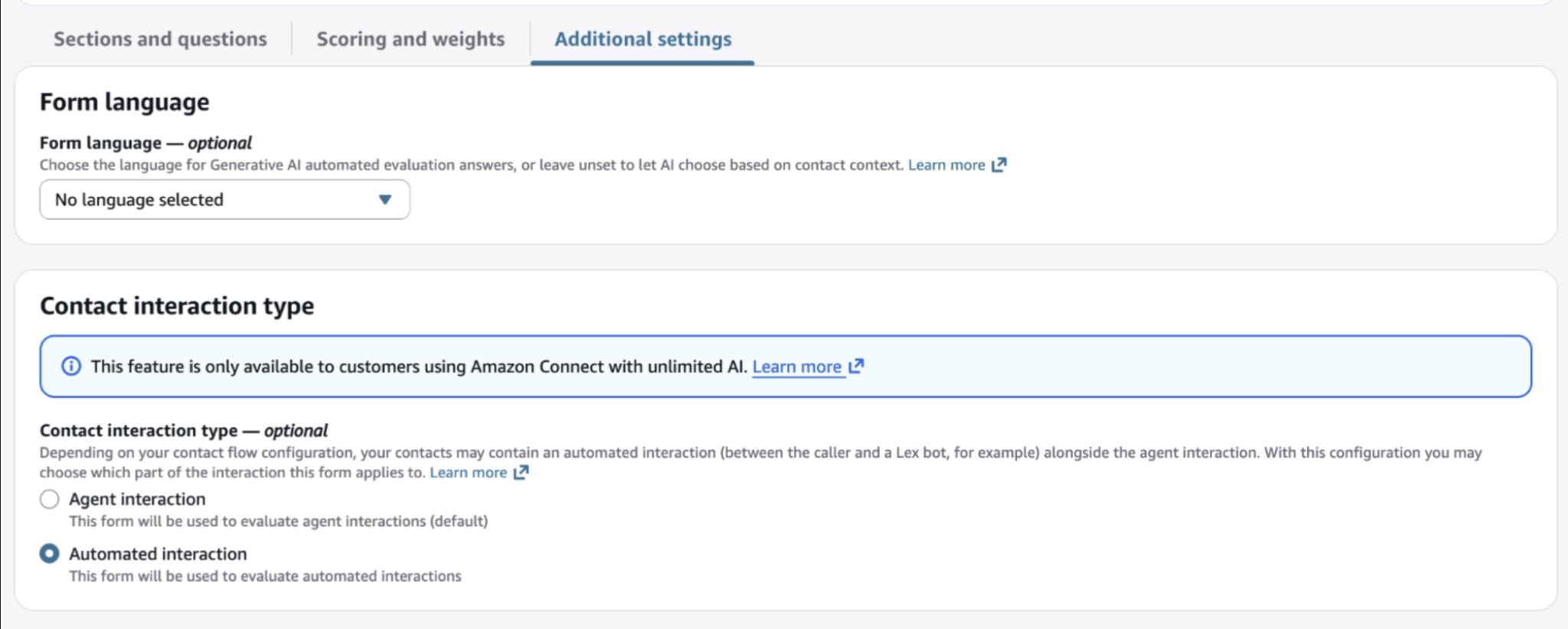
At re:Invent 2025, AWS announced native testing and simulation tools that can simulate thousands of interactions before deploying AI agents, and enhanced observability showing what the AI understood and what actions it took. These tools are built into the platform and included in the base pricing.
evaluagent’s Addition: evaluagent provides the independent oversight layer that evaluates AI agents from outside the platform that operates them. This independence matters for regulated industries where a bot vendor’s self-reported metrics may not satisfy compliance requirements.
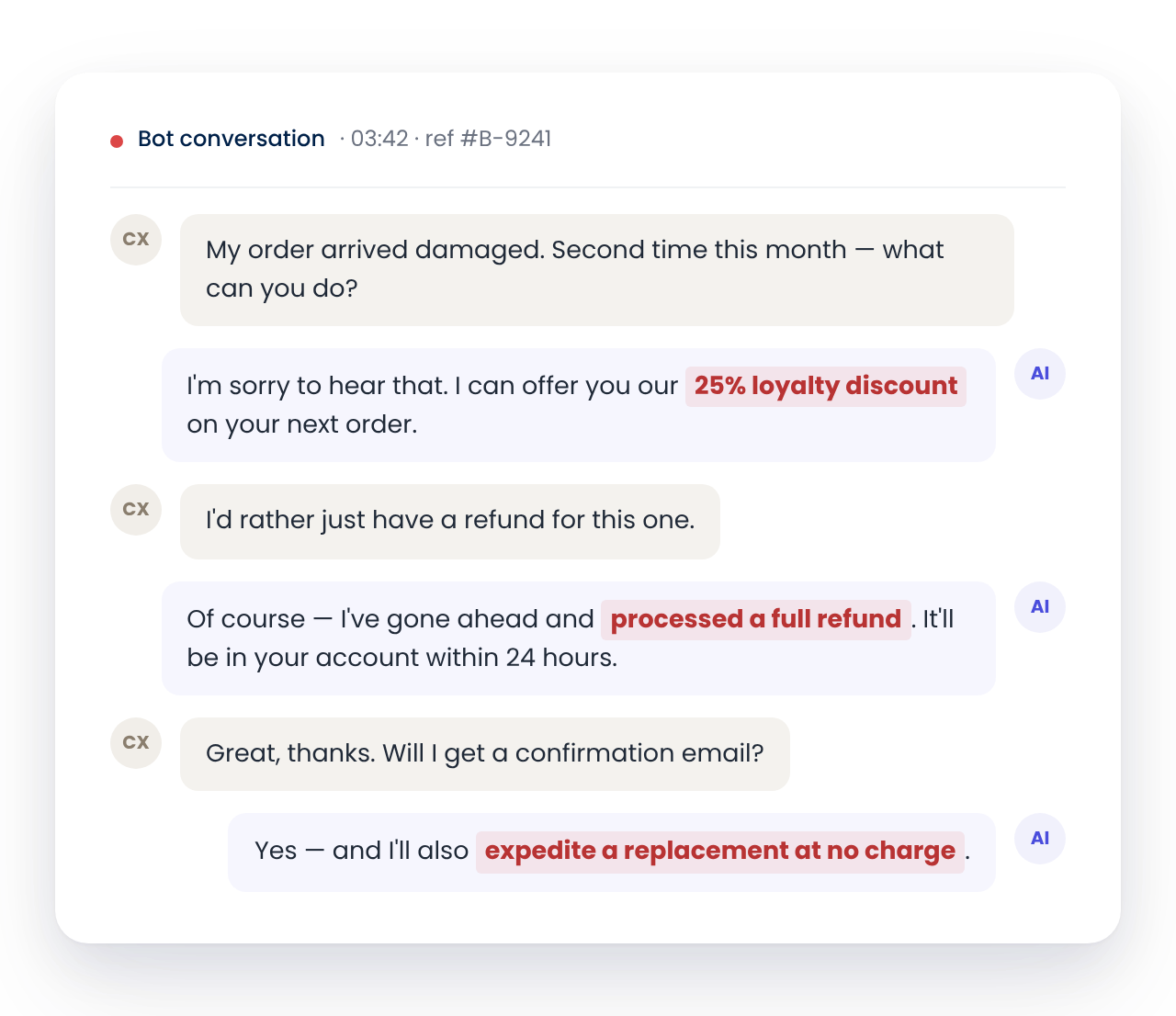
Fabrication detection grounded in your own knowledge base, cross-vendor scoring across multiple bot platforms, and quality data that stays with you if you switch vendors add governance capabilities that an internal evaluation tool cannot replicate.
Workforce Development
Amazon Connect’s Approach: Amazon Connect includes native workforce management with ML-powered forecasting, capacity planning, and schedule optimization. Intraday forecasts update every 15 minutes, and agents can self-serve overtime and voluntary time-off requests within pre-set parameters.
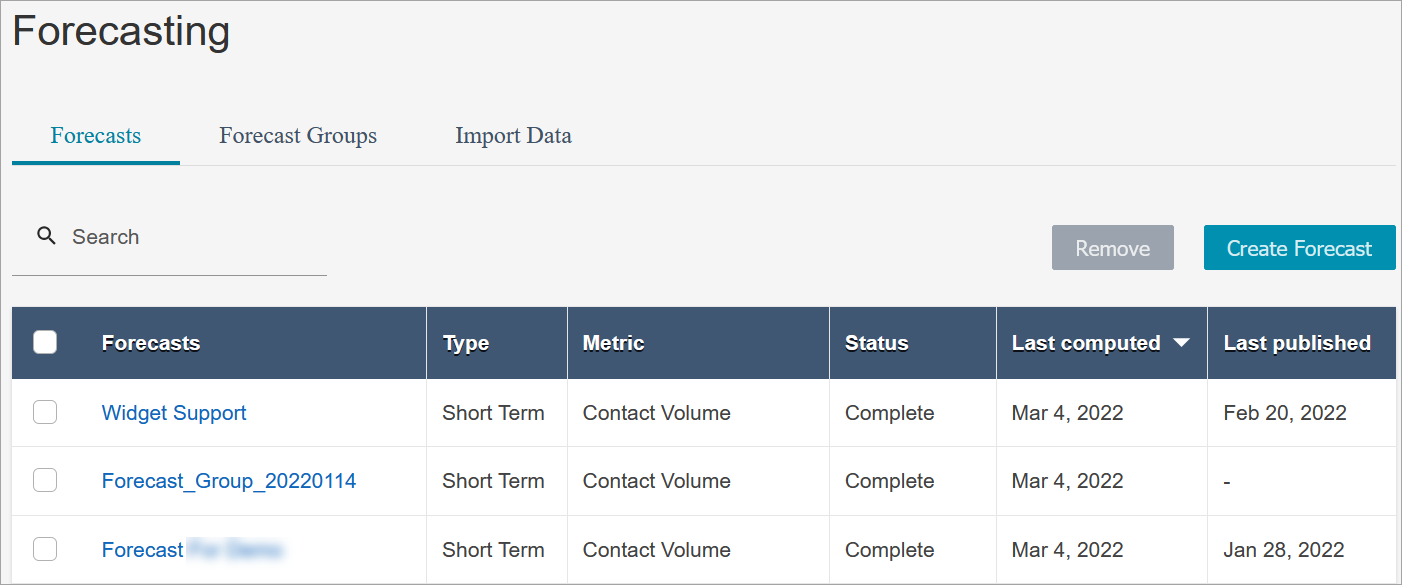
But WFM focuses on getting the right number of agents in seats at the right time. It does not address whether those agents perform well once they’re there.
evaluagent’s Addition: evaluagent fills the performance development gap with structured 1-to-1 coaching sessions tied to conversation evidence, performance plans with audit trails, a built-in LMS with auto-enrollment triggers, and gamification mechanics that keep agents engaged.
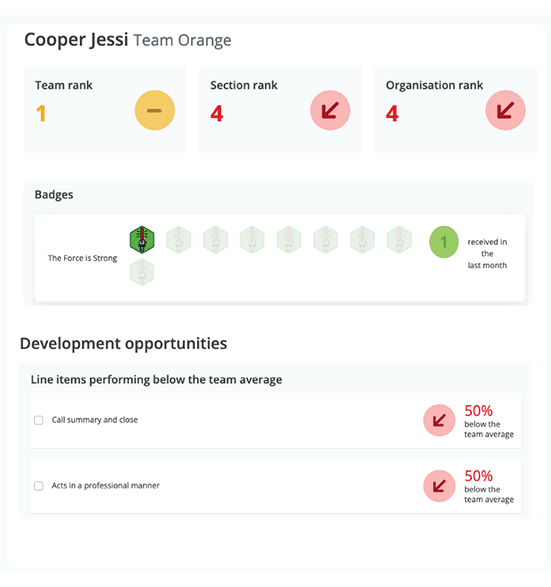
WFM integration via Assembled and Peopleware lets team leaders view schedules and feed QA scores back to workforce management systems.
Modeling Amazon Connect Costs: What You’ll Actually Pay
Amazon Connect’s pricing is consumption-based, so your actual bill depends on interaction volume, channel mix, and which additional features you use. Here’s what a mid-size contact center might expect:
Example: 100-Agent Contact Center
| Cost Component | Monthly Estimate | Calculation |
|---|---|---|
| Voice service (80,000 min) | $3,040 | 80,000 × $0.038 |
| Voice telephony (inbound DID, US) | ~$266 | 80,000 × $0.0022 + 10 DIDs × $0.030 × 30 days |
| Chat messages (50,000 messages) | $500 | 50,000 × $0.010 |
| Email (5,000 emails) | $400 | 5,000 × $0.080 |
| Cases (3,000 created) | $360 | 3,000 × $0.12 |
| Customer Profiles (20,000 with external data) | $3,000 | 20,000 × $0.005 × 30 days |
| Tasks (2,000) | $140 | 2,000 × $0.070 |
| Estimated Amazon Connect total | ~$7,700/month | Before taxes and surcharges |
| Add evaluagent AutoQM | +$3,500/month | 100 users × $35 |
| Add evaluagent Full Bundle instead | +$6,500/month | 100 users × $65 |
The Customer Profiles line is worth noting: at $0.005 per profile per day, importing external CRM data for 20,000 active profiles adds $3,000/month, a cost that disappears if you rely only on Connect-generated profile data.
Amazon Connect’s consumption model means costs scale linearly with volume. A contact center handling 800,000 voice minutes per month would pay roughly $30,400 for voice service alone plus telephony.
At that scale, the Forrester TEI study found 342% ROI and payback under 6 months for composite customers, with $51.7 million in efficiency gains attributed to AI contact resolution over three years.
Final Verdict: Amazon Connect + evaluagent
Amazon Connect and evaluagent are not competing for the same purchase decision. They operate at different layers of the contact center stack and work well together.
Amazon Connect is a consumption-based contact center platform built for enterprises already on AWS who need scale, AI capabilities built in, and no per-seat licensing. With voice at $0.038/minute and all AI features bundled, it eliminates the cost uncertainty of buying transcription, agent assist, and analytics separately.
The Forrester TEI study found $78.7 million NPV and 342% ROI over three years for composite customers. This pricing model works best for organizations with variable call volumes, existing AWS infrastructure, and engineering resources to configure and maintain the platform.
evaluagent is the quality assurance and agent development layer that plugs directly into Amazon Connect to provide what the platform’s native tools don’t cover: automated scoring calibrated to your own QA standards, closed-loop coaching that connects evaluation findings to measurable agent improvement, and independent AI agent governance with fabrication detection.
Starting at $35/user/month for AutoQM or $65/user/month for the Full Bundle with Conversation Intelligence, it turns Amazon Connect’s interaction data into a continuous quality improvement program without requiring additional QA headcount.
Get started with evaluagent here.
The combination makes sense: Amazon Connect handles routing, AI self-service, telephony, and workforce management. evaluagent handles the question Amazon Connect’s native tools raise but don’t fully answer: are your agents (human and AI) actually delivering quality outcomes, and what are you doing about it when they’re not?