If you’ve tried to find out what MaestroQA costs, you’ve hit the same wall as everyone else: a pricing page with no prices. No tiers, no dollar amounts, no per-seat rates. Just a contact form and a promise that “one of our experts will reach out.” For a platform that values transparency, that’s a gap when it comes to its own commercials.
MaestroQA has built a capable AI conversation analytics platform that processes 100% of customer interactions and connects QA scores to coaching workflows, data warehouse exports, and compliance monitoring.
But the platform is mid-transition (actively rebranding to “Rippit” while repositioning from a contact center QA tool to a broader “conversation data quality platform”), and its pricing stays behind a sales conversation.
Based on MaestroQA’s public materials and competitor positioning, we believe it’s a strong choice if:
- You need data warehouse integration (Snowflake, BigQuery, Redshift) to feed conversation insights into existing BI tools
- Your team wants natural-language querying of conversation data through AskAI
- You’re in a regulated industry requiring PCI DSS 4.0 Level 1 or ISO 42001 certification
- You value screen capture of agent desktops during interactions
- Your analysts want to choose which large language model powers each workflow
However, MaestroQA may not suit you if:
- You want to see pricing before talking to sales
- You need a dedicated module for evaluating AI chatbot and virtual agent quality
- You want built-in gamification and agent engagement tools alongside QA
- You want predicted satisfaction, effort, and resolution scores on every conversation, including the ones where no survey came back
- You need fast deployment without heavy configuration overhead
In this case, you should consider evaluagent: an AI-powered contact center QA and performance management platform that scores 100% of conversations with AutoQA, grounds every score in your own policies and knowledge base through its Context Engine, evaluates AI agents independently of the vendors that build them, and publishes its seat pricing from $35 per user per month.
We’ve included a detailed comparison with evaluagent in this review, as the strongest alternative for contact centers that want defensible AI scoring, independent AI agent governance, and Conversation Intelligence in one platform.
MaestroQA Pricing Summary
| MaestroQA | evaluagent | |
|---|---|---|
| Pricing Visibility | Custom quotes only; no public pricing | Seat pricing published on the website |
| Entry Tier | Not disclosed; contact sales for quote | AutoQA & Improvement: from $35/user/month |
| Full Platform | Not disclosed; includes Conversation Analytics + AI Platform + Coaching | AutoQA + Conversation Intelligence: from $65/user/month |
| AI Agent Evaluation | Handled as a use case inside existing QA workflows; no dedicated module | Dedicated AI Agent Observability module; pricing on request |
| Free Trial | No public free trial; demo-only entry | No public free plan; demo-based entry with trials available on request |
| Best For | Teams wanting conversation analytics integrated with existing data warehouses and BI tools | Contact centers that want defensible AI scoring, independent AI agent governance, and Conversation Intelligence in one platform |
MaestroQA Pricing: In-Depth Overview
MaestroQA uses a per-agent-graded pricing model, meaning you pay based on the number of agents whose interactions are evaluated.
Seats for reviewers, QA managers, and coaches come at no extra cost. Beyond that structural detail, everything else requires a sales conversation.
The pricing page contains a contact form but no plan names, tier breakdowns, or dollar amounts. The company says it believes in “creating tailored solutions that fit your unique needs and budget.”
What we can piece together from public materials: the platform appears to have role-based access tiers (Essentials/Team vs. Professional are referenced in user management documentation), flexible contracts with no long-term commitment required, and dedicated Customer Success Managers for all customers.
Implementation involves a separate Implementation Manager who runs discovery sessions during onboarding.
What MaestroQA’s Per-Agent-Graded Model Means
| Aspect | Details |
|---|---|
| Pricing unit | Per agent whose interactions are graded |
| QA/reviewer seats | Included at no extra cost |
| Published rates | None |
| Minimum commitment | Not disclosed |
| Contract length | Flexible, no long-term commitment required |
| Support | Dedicated CSM and Implementation Manager included |
The per-agent-graded model has a clear advantage: you don’t pay extra for QA analysts, team leads, and managers who review and coach.
If you have 100 agents and 10 QA reviewers, you pay for 100 seats, not 110. Costs stay predictable as your QA team grows.
| Per-Agent-Graded Model Pros | Per-Agent-Graded Model Cons |
|---|---|
| – QA reviewer seats included free | – No way to estimate costs without sales call |
| – Flexible contracts available | – Can’t compare pricing to alternatives independently |
| – Dedicated CSM for every customer | – Budget approval requires sales engagement |
| – Implementation Manager for onboarding | – No self-serve trial to test before committing |
MaestroQA Platform Modules
Though pricing is hidden, MaestroQA’s platform is organized into distinct modules. Understanding what’s included helps frame what you’d pay for.
Analysis modules:
| Module | Function |
|---|---|
| Conversation Analytics | Ingest and analyze 100% of conversations across channels; join with operational data from data warehouses |
| AI Platform (formerly AutoQA) | Create unlimited custom AI metrics using LLM, phrase match, or process-based classifiers; runs on 100% of interactions |
| AskAI | Natural-language querying of conversation data; worksheet-based analysis with multi-LLM selection |
| Reporting | Dashboards with line, bar, donut charts, and heat maps from QA, helpdesk, and WFM data |
Action modules:
| Module | Function |
|---|---|
| Quality Assurance | Rubric-based scoring with randomized and targeted grading assignments, calibration sessions, appeals |
| Coaching | AI-surfaced coaching opportunities, structured sessions with embedded conversation evidence, to-do tracking |
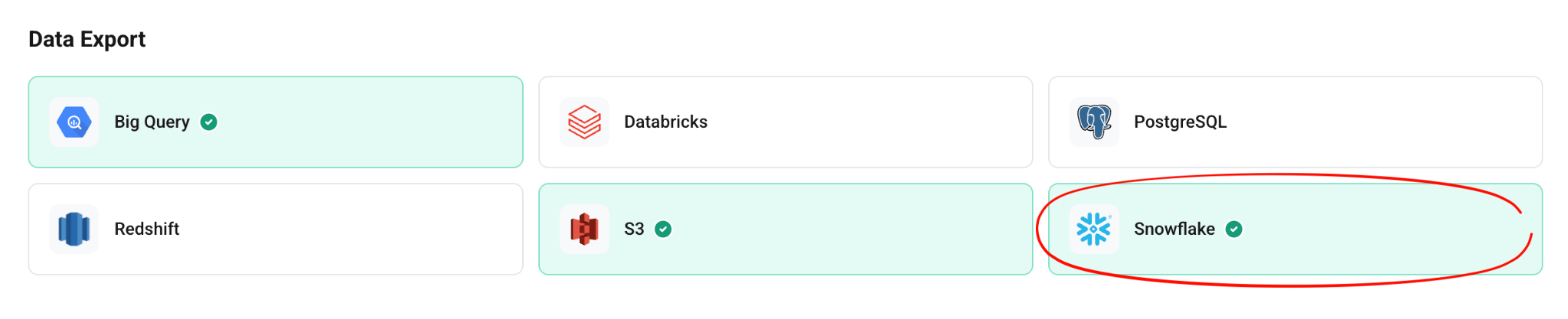
| Export | Hourly data warehouse sync to Snowflake, Redshift, BigQuery, Databricks, S3, and PostgreSQL |
| Screen Capture | Desktop recording during agent interactions with auto-highlighted critical moments |
Which modules are included at which price point, or whether any carry separate charges, is not disclosed.
| Platform Modules Pros | Platform Modules Cons |
|---|---|
| – Full conversation analytics with warehouse integration | – Feature gating between tiers not disclosed |
| – Model selection per workflow | – Whether Screen Capture is included isn’t disclosed |
| – AskAI for ad-hoc natural-language queries | – No clarity on what’s included vs. add-on |
| – Bidirectional data warehouse sync | – Configuration effort per AI metric can be significant |
MaestroQA Additional Costs and Considerations
Even with opaque pricing, several cost factors can be inferred from public materials:
Implementation and onboarding:
- Every customer receives a dedicated Implementation Manager and CSM
- Implementation involves discovery sessions and workflow mapping
- Whether implementation carries a separate fee is not disclosed
Data warehouse connections:
- Ingest from Snowflake, Redshift, BigQuery, Databricks, S3, PostgreSQL
- Export to the same set with hourly syncs
- Connection setup requires CSM coordination
AI model costs:
- Users choose between multiple LLMs per workflow
- Whether model selection affects pricing (cheaper models vs. more capable ones) is not stated
Integration dependencies:
- Native integrations cover major helpdesks, phone systems, and CRM platforms
- No iPaaS connectors (Zapier, Make, Workato) are documented
- Platforms not in the native catalog require API-based custom integration
Where MaestroQA Falls Short
MaestroQA offers a capable conversation analytics platform, but several limitations affect buyers evaluating it against alternatives:
No Published Pricing Creates Sales Friction
- The pricing page contains only a contact form with no pricing information
- Buyers cannot assess value, compare costs, or prepare budget proposals without engaging sales
- This slows procurement and disadvantages teams that need to move quickly
No Dedicated AI Agent Observability Module
- MaestroQA can monitor AI chatbot performance, but it frames this as a use case rather than a standalone governance module
- Bot quality runs through the same AI Platform and QA workflows used for human agents, rather than through a separate governance layer with its own standard
- As contact centers deploy more AI agents, independent bot governance is becoming a primary purchasing criterion
Limited Agent Engagement and Development Tools
- Its published feature set doesn’t include gamification (leaderboards, badges, reward systems) to drive agent motivation
- Coaching exists but lacks the engagement mechanics that reduce attrition
- The platform is built for analysts and managers more than for the agents themselves
Active Rebrand Creates Uncertainty
- The trust center already operates as “Rippit” while the main product remains “MaestroQA”
- Authentication URLs reference app.rippit.com while marketing pages use maestroqa.com
- A company repositioning toward conversation analytics raises a fair question about where quality management sits on the roadmap
These limitations have led many contact centers to explore alternatives with dedicated AI agent governance, a fuller agent development loop, and pricing they can assess before a sales call…
Best MaestroQA Alternative – evaluagent
evaluagent provides AI-powered quality assurance grounded in your own business context, independent evaluation of human and AI agents, and a closed-loop system that connects scoring to coaching, gamification, and agent development.
For teams that find MaestroQA’s treatment of bot quality as a use case too loose, its coaching stack aimed at managers rather than agents, and its hidden pricing frustrating, evaluagent offers a direct answer:
- AutoQA scoring 100% of conversations with the Context Engine grounding every score in your own policies,
- a dedicated AI Agent Observability module, a Conversation Intelligence suite built alongside the QA product rather than acquired into it,
- gamification that drives agent motivation,
- and published seat pricing starting at $35/user/month.
Founded in 2012 by contact center operators who had spent their careers running QA programs, evaluagent is built by practitioners for practitioners.
The platform serves customers including Samsung, Jet2, Capital on Tap, Seasalt, and ManyPets across Europe, North America, and Asia-Pacific. G2 named it to the Top 50 UK Software Companies 2026 (the only contact center software on the list) and, in its Summer 2026 report, recognized it as a Leader in Contact Center Quality Assurance and a High Performer in Conversation Intelligence and Speech Analytics.
The platform is CCaaS-agnostic (“Any CCaaS. Any CRM. Any AI agent provider. No lock-in”) and holds SOC 2 Type II, ISO 27001:2022, Cyber Essentials Plus, and HIPAA-aligned certifications.
evaluagent AutoQA & Improvement: From $35/user/month
| Feature | Details |
|---|---|
| Price | From $35/user/month |
| Coverage | 100% of conversations scored automatically |
| Channels | Voice, chat, and email |
| Coaching | 1-to-1s, performance plans, gamification included |
| AI Scoring | SmartScore with transparent reasoning |
| AI Coaching | Skill gaps across soft skills and process turned into coaching material |
| Security | SSO, MFA, role-based access included |
| Onboarding | Dedicated CSM and onboarding included |
The entry tier delivers evaluagent’s core value: AutoQA scoring 100% of interactions with the Context Engine grounding AI scores in your company’s policies and knowledge base. Unlike generic AI models, the Context Engine checks whether agents gave the right answer, not just whether they sounded professional.
This tier includes the full coaching and improvement loop: structured 1-to-1 sessions tied to conversation evidence, performance improvement plans with audit trails, and gamification with points, badges, leaderboards, and an auction-style reward system.
AI coaching identifies each agent’s skill gaps across soft skills and process and turns them into coaching material, so team leaders spend their time coaching rather than preparing to coach.
| AutoQA & Improvement | |
|---|---|
| Pros | Cons |
| – Published pricing with volume discounts | – Excludes Conversation Intelligence features |
| – Full coaching loop included from day one | – Starting price may increase for larger teams |
| – Context Engine grounds scores in your knowledge | – No predictive VoC metrics at this tier |
| – Gamification drives agent engagement | – Voice transcription quality depends on audio clarity |
Capital on Tap scaled from 900 to 6,000 BDM checks per month immediately after go-live without adding headcount. (Capital on Tap Case Study)
evaluagent AutoQA + Conversation Intelligence: From $65/user/month
| Feature | Details |
|---|---|
| Price | From $65/user/month |
| Includes | Everything in AutoQA & Improvement |
| Conversation Analytics | Reason for Contact, sentiment scoring, Insight Topics |
| Predictive Metrics | xNPS, xCSAT, xCES, xRepeats, xResolution, xVulnerability |
| AI Investigation | Spotlight analyzes up to 1,000 conversations on demand |
| Dashboards | SmartView combines quality scores, sentiment, xMetrics, and line item performance |
| Custom Topics | No-code builder with testing console |
The full bundle adds evaluagent’s Conversation Intelligence suite, built alongside the QA product rather than acquired into it. AutoQA defines what matters; Conversation Intelligence shows what should matter next.
Automated Reason for Contact detection classifies why customers got in touch without manual tagging, including whether the contact could have been deflected to self-service.
The xMetrics (xNPS, xCSAT, xCES, xRepeats, xResolution, and xVulnerability) predict satisfaction, effort, repeat contact, resolution, and vulnerability risk from conversation signals across 100% of contacts, including the interactions where no survey was ever returned.
Insight Topics detect defined language patterns (required disclosures, compliance statements, escalation and risk language), configurable by speaker and testable before publishing, while SmartView dashboards pull quality scores, sentiment, xMetrics, and line item performance into a single view.
The Spotlight tool works as an on-demand AI analyst: filter a conversation set, run Spotlight, and receive findings sorted into Critical Issues, Monitor Closely, and Performing Well, each with supporting transcript evidence, answering why a pattern is occurring rather than only reporting that it is.
| AutoQA + Conversation Intelligence Pros | AutoQA + Conversation Intelligence Cons |
|---|---|
| – Predictive VoC across 100% of contacts | – $65/user/month is a larger commitment |
| – Spotlight replaces ad-hoc analyst work | – Volume discounts require negotiation |
| – No-code custom topic builder | – Deeper analytics may require training |
| – Sentiment and vulnerability detection included | – Annual billing terms not publicly disclosed |
evaluagent AI Agent Observability: Independent Governance for Bots
| Feature | Details |
|---|---|
| Coverage | Every AI agent conversation evaluated against the same standard applied to human agents |
| Fabrication detection | Bot responses graded against your organization’s knowledge base |
| Containment and handover | Containment quality tracked, unrecoverable handovers identified |
| Independence | Operates above the agent layer, not inside it |
| Bot platforms | Cognigy, Sierra, Decagon, and proprietary bots |
This is where evaluagent separates from MaestroQA.
AI Agent Observability is a dedicated governance module that evaluates every AI agent conversation against the same quality standard applied to human agents. It detects hallucinations by grading bot responses against your organization’s knowledge base, flags off-policy responses, tracks containment quality, and identifies unrecoverable handovers.
evaluagent’s positioning is explicit: “Don’t solely rely on your bot vendor’s metrics.”
Because evaluagent doesn’t build or sell the agents it grades, there is no conflict of interest in the score, which is a position no CCaaS or conversational AI vendor evaluating its own agents can occupy. The module operates above the agent layer, not inside it, so scores stay independent of whichever bot platform you use.
If you switch bot vendors, your full quality history stays with you.
| AI Agent Observability Pros | AI Agent Observability Cons |
|---|---|
| – One standard applied to humans and AI agents alike | – Newer product module with less market tenure |
| – Independent of the vendor that supplied the bot | – Currently limited to post-interaction evaluation |
| – Fabrication detection grounded in your knowledge base | – Pricing for AI agent evaluation is quoted rather than published |
| – Quality history stays with you across vendor switches | – Detection quality depends on the knowledge base you upload |
MaestroQA Feature Value Breakdown (vs evaluagent)
Pricing Transparency
MaestroQA’s Approach: MaestroQA requires a sales conversation for any pricing information. The pricing page offers only a contact form.
The company claims it provides “transparent pricing with no hidden costs” and flexible contracts with no long-term commitment required, but buyers can’t verify these claims without engaging sales. The per-agent-graded model includes QA reviewer seats at no extra cost, but the base rate remains unknown.
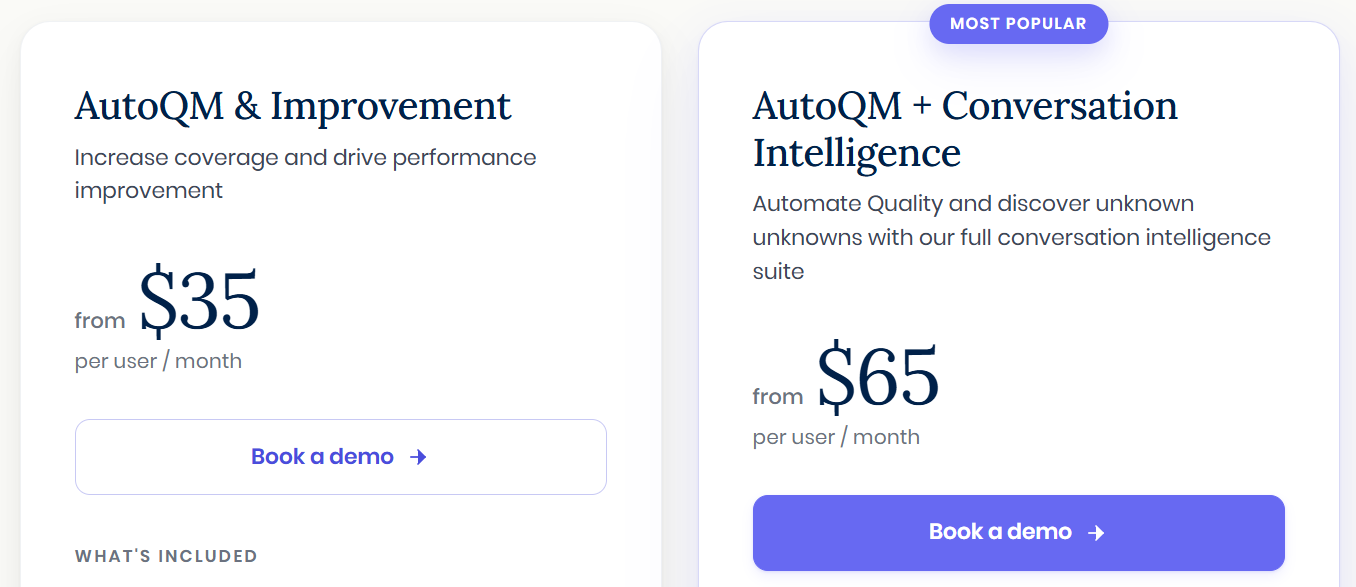
evaluagent’s Approach: evaluagent publishes its seat pricing on its website: $35/user/month for AutoQA & Improvement and $65/user/month for the full bundle with Conversation Intelligence. Volume discounts are available for large teams, and both tiers include a dedicated CSM and onboarding. Pricing for AI agent evaluation is provided on request.
AI-Powered QA and Scoring
MaestroQA’s Approach: MaestroQA’s AI Platform lets users create unlimited custom metrics using LLM classifiers, phrase match, and process-based logic. Users choose which LLM powers each workflow, with guidance on matching model to use case.
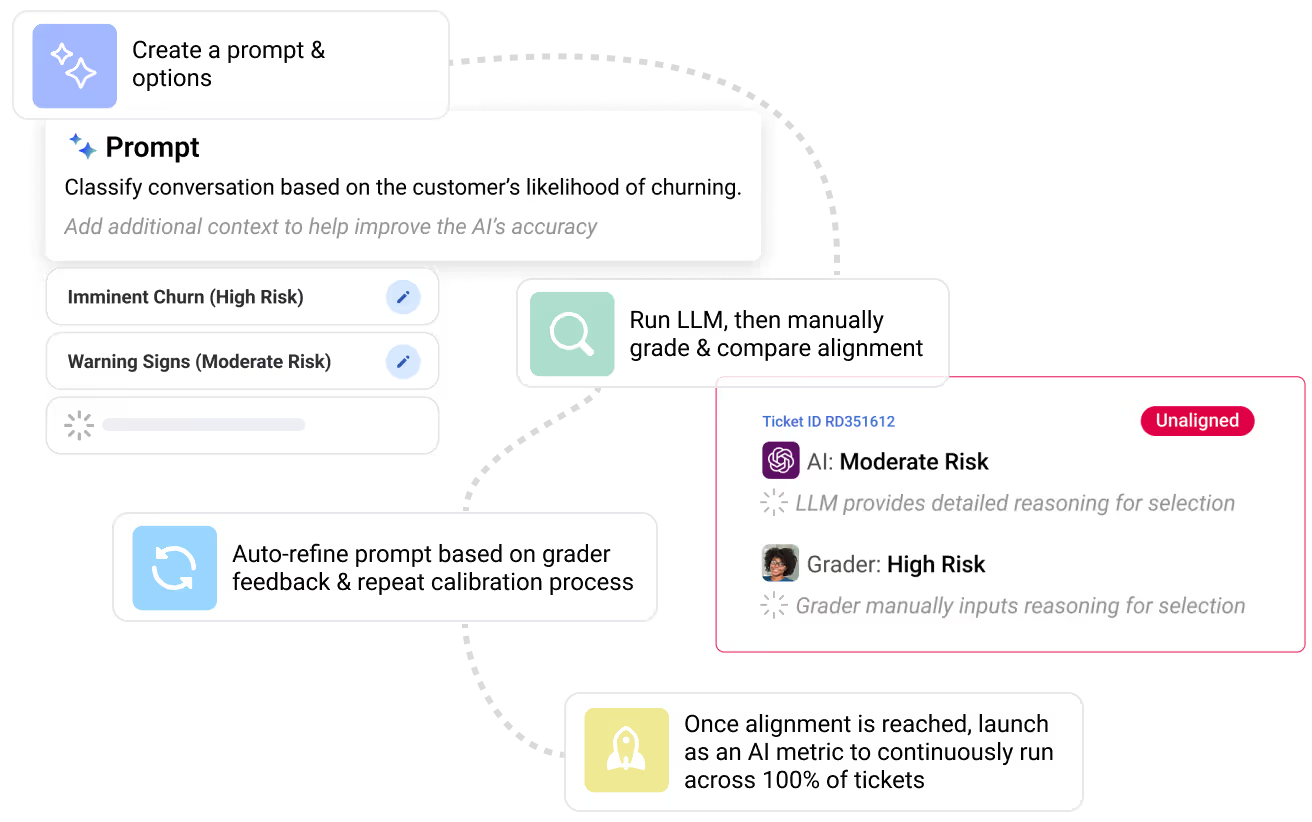
A build-test-refine loop shows AI results alongside human grading with an alignment score before any metric goes live. The platform positions against opaque competitors: “you decide the rules, you see the reasoning.”
evaluagent’s Approach: evaluagent’s AutoQA scores 100% of conversations through the Context Engine, the layer that sits on top of the model rather than being the model itself.
You upload your own knowledge base articles, procedures, and policies, then write guidelines describing what good looks like on each line item, so scoring runs against your definition of quality rather than a vendor’s definition of empathy.
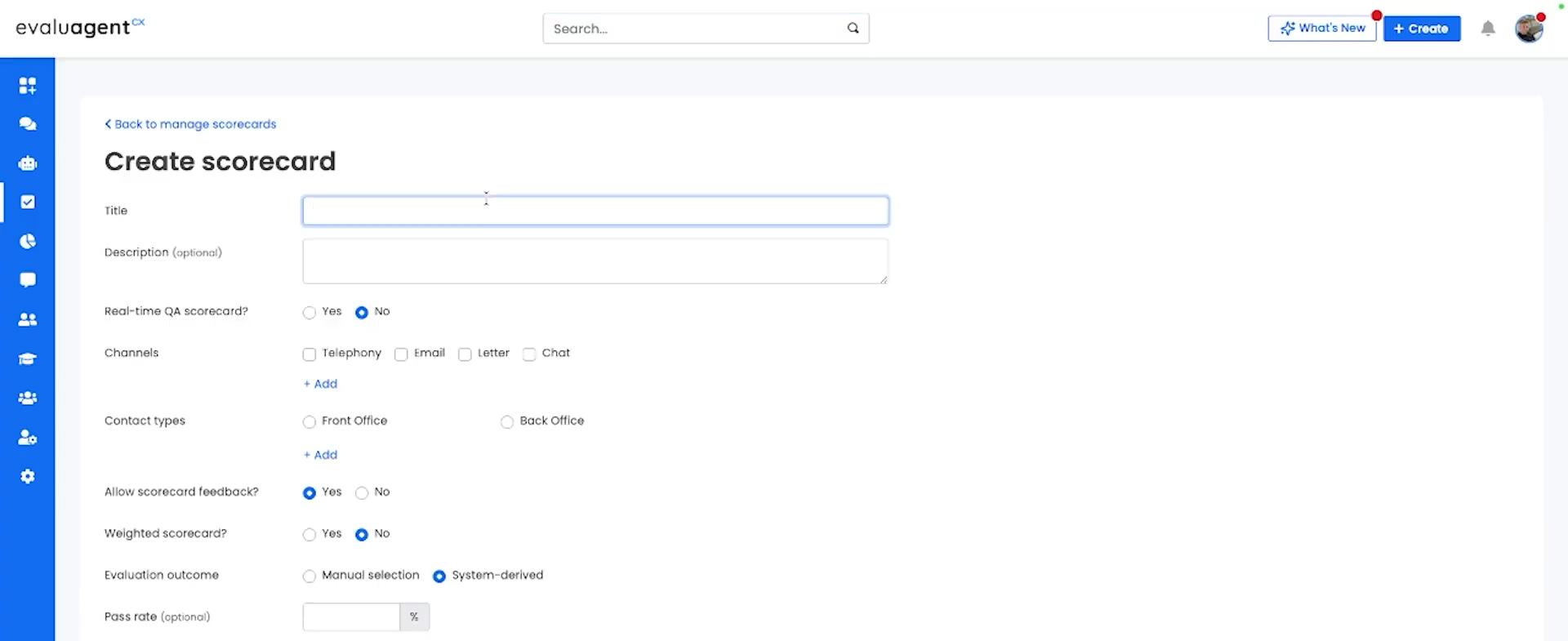
- SmartScore provides AI-generated reasoning for each mark, surfacing the exact conversation passages that triggered the score.
- Blended Scorecards let some criteria be scored by AI while others go to human evaluators on the same scorecard, and human review is configurable from none to every score before publication.
- A Testing Console validates any change against real conversations before deployment, and AI scores can run hidden in the background while evaluators calibrate against them, then be revealed once the team trusts the output.
Agent Development and Engagement
MaestroQA’s Approach: MaestroQA connects AI-surfaced coaching opportunities to structured sessions with embedded conversation evidence, customizable templates, and to-do tracking. Performance metrics can be embedded in coaching sessions. However, the platform focuses on the manager-coach workflow and does not include gamification or agent-facing engagement mechanics.
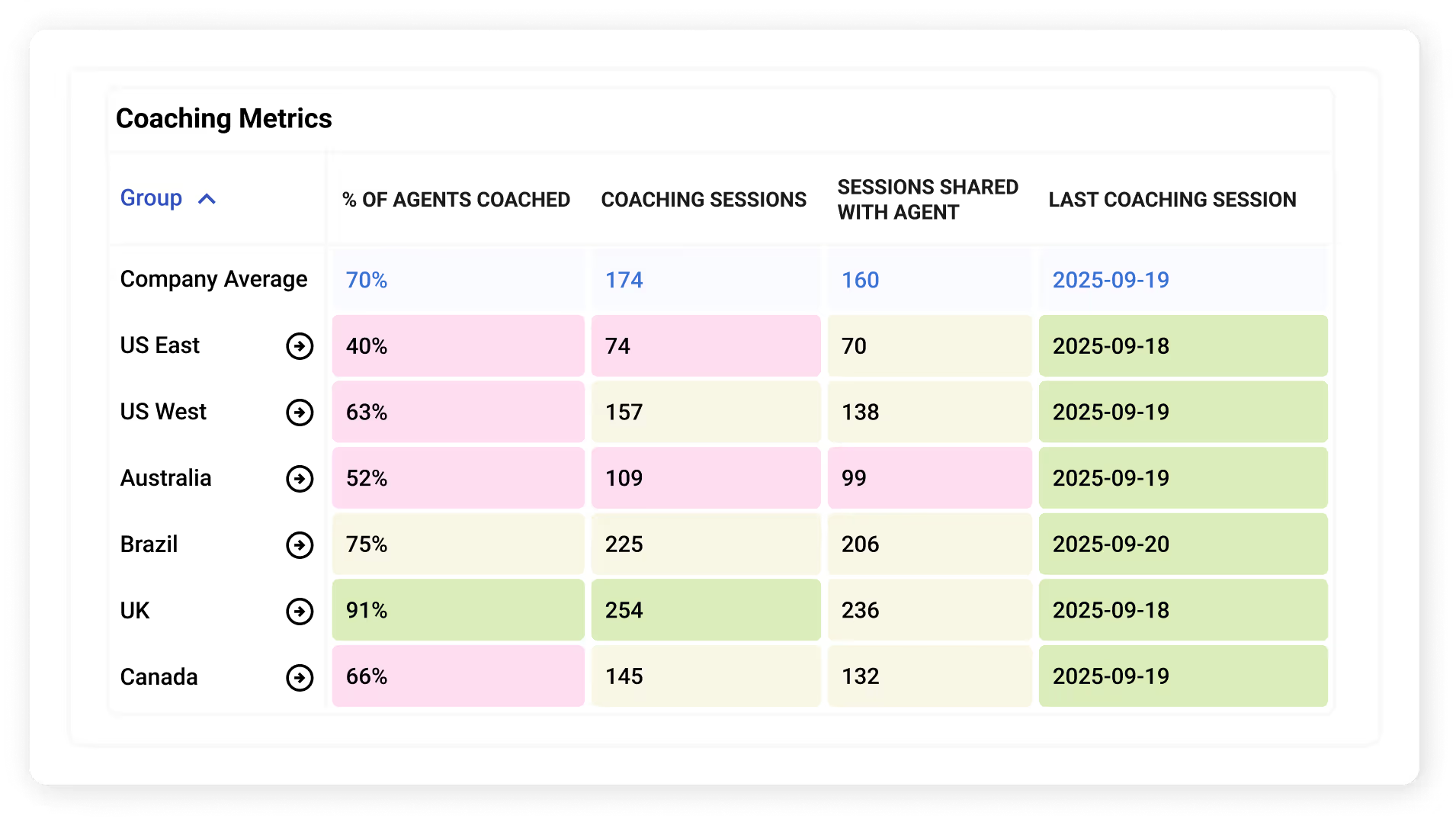
evaluagent’s Approach: evaluagent covers the same coaching ground with structured 1-to-1s tied to conversation evidence and performance improvement plans, but adds a full gamification layer with points, badges, leaderboards, and an auction-style reward system where agents bid on prizes using points earned from QA performance.
AI coaching identifies each agent’s skill gaps across soft skills and process and turns them into coaching material, so team leaders arrive at a 1-to-1 with the session already built. A built-in LMS with auto-enrollment triggered by performance metrics adds structured learning paths.
AI Agent and Chatbot Governance
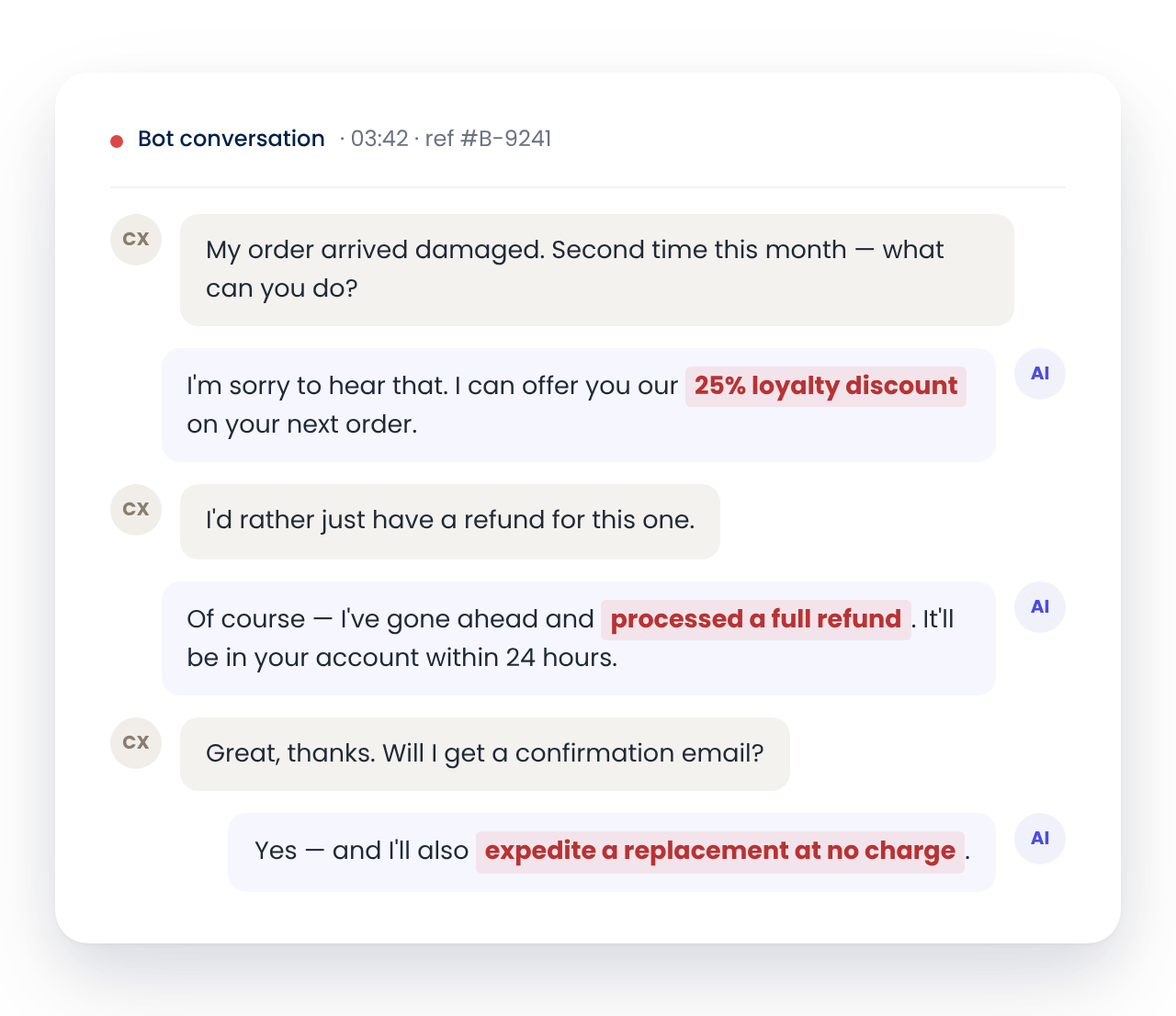
MaestroQA’s Approach: MaestroQA offers AI chatbot monitoring as a use case within its broader platform.
It evaluates generative bot responses for hallucination and compliance violations. However, it’s not structured as a separate module with its own standard (it runs through the same AI Platform and QA workflows used for human agent evaluation).
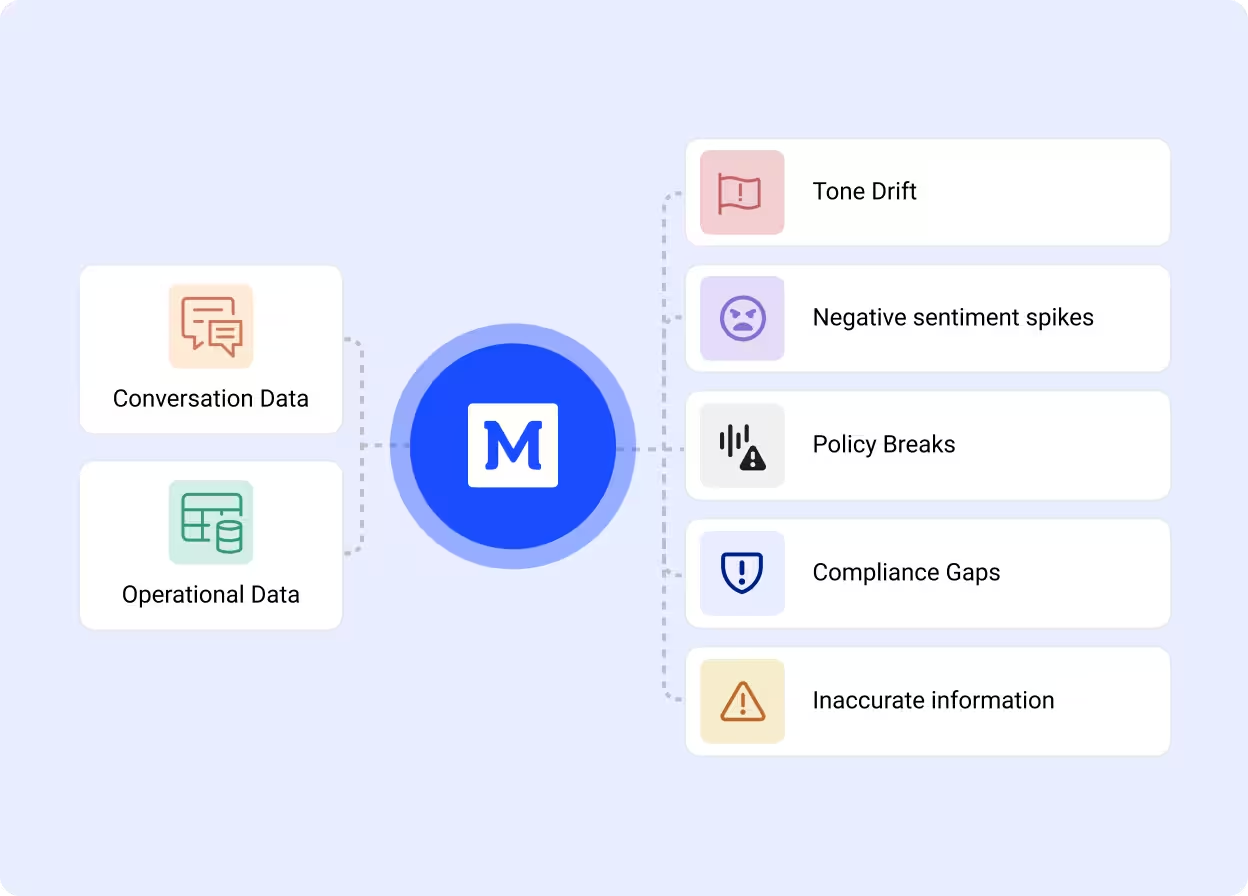
evaluagent’s Approach: evaluagent built AI Agent Observability as a dedicated module.
It operates above the agent layer, independent of the bot vendor, and includes fabrication detection grounded in the organization’s knowledge base, containment analysis, intent-level performance reporting, and cross-vendor scoring on a single standard.
Data and Analytics Integration
MaestroQA’s Approach: MaestroQA has invested heavily in data infrastructure. Bidirectional connections to Snowflake, Redshift, BigQuery, Databricks, S3, and PostgreSQL let conversation data flow into existing BI tools while operational data flows back in for enriched analysis.
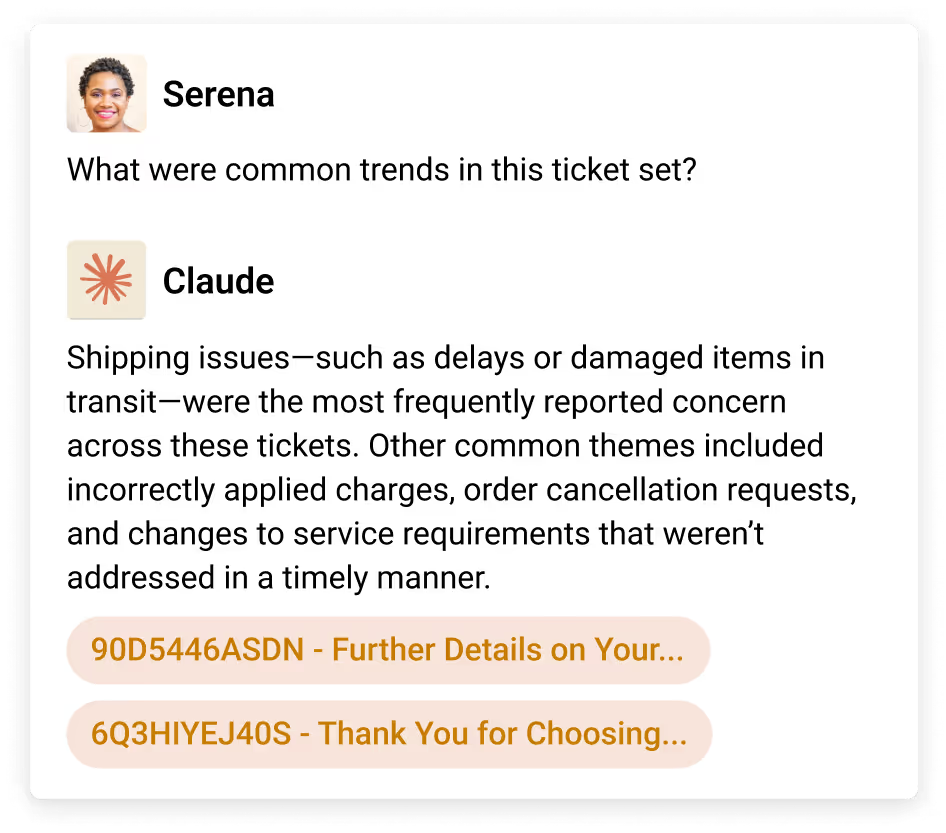
AskAI lets analysts query conversation data in natural language. A published Looker schema reference supports immediate BI setup. This is MaestroQA’s clearest competitive strength.
evaluagent’s Approach: evaluagent supports data export to Power BI, Tableau, Looker, and Metabase through a reports exporter, and provides an open REST API with regional endpoints for programmatic access, so the full dataset can be generated in the platform and taken anywhere.
The Spotlight tool provides on-demand AI investigation of conversation sets.
Where MaestroQA sends conversation data out to be analyzed alongside operational data, evaluagent answers the same class of question inside the platform:
- Reason for Contact classifies why customers got in touch and which demand was avoidable,
- Spotlight explains why a pattern is occurring,
- and SmartView dashboards combine quality scores, sentiment, and xMetrics without a BI build.
At present, though, it does not offer the bidirectional warehouse integration or natural-language querying of the raw conversation set that MaestroQA provides.
Final Verdict: MaestroQA vs evaluagent
The choice between MaestroQA and evaluagent depends on what matters most to your contact center: depth as a data platform, or defensible quality across every agent you run, human and AI.
MaestroQA is a conversation data analytics platform built for enterprises that want to treat customer interactions as a data asset. With custom-quoted pricing based on agents graded and bidirectional data warehouse integrations, it lets analytics teams feed conversation insights into Snowflake, BigQuery, and existing BI tools while using natural-language querying to surface patterns across millions of interactions.
This approach works best for organizations with mature data infrastructure, teams that already run data warehouses and want conversation data in their existing analytical workflows, and enterprises where stakeholders beyond the QA team need access to conversation intelligence.
Get started with MaestroQA here.
evaluagent is a QA and performance management platform built around two principles:
- Quality scored against your own definition of good.
- And complete, independent visibility across every agent, human and AI.
With AutoQA covering 100% of conversations, the Context Engine grounding each score in your policies and knowledge base, a dedicated AI Agent Observability module that grades bots independently of the vendors that build them, and a Conversation Intelligence suite built alongside the QA product rather than acquired into it, it gives contact centers a quality program they can defend upward and a clear read on what to fix next.
Seat pricing is published from $35/user/month, so the evaluation can begin before the sales call.
This makes it the stronger choice for:
- organizations deploying AI agents that need governance no bot vendor can credibly provide,
- teams that want coaching, gamification, and agent development in the same platform as the scoring,
- quality programs maturing past pass/fail into contact reasons, sentiment, and predicted satisfaction on interactions where no survey came back,
- and BPOs needing CCaaS-agnostic deployment across multiple client environments.
Get started with evaluagent here.
The difference is philosophy. MaestroQA asks “How can we turn conversation data into enterprise intelligence?” evaluagent asks “How do we prove that every conversation, human or AI, met your standard, and show you what that standard should cover next?”