Choosing between Genesys Cloud CX and Talkdesk for your contact center often comes down to five questions:
- Do you need a single platform covering voice, digital, WFM, and journey analytics, or would a focused CCaaS with vertical specialization serve you better?
- How important is native AI automation (virtual agents, copilots, autonomous resolution) to your near-term strategy?
- Are you in a regulated industry that needs pre-built compliance workflows, or do you need a general-purpose platform?
- Is your QA program keeping pace with your interaction volume, or are you still sampling 1–2% of conversations and hoping the rest are fine?
- Can your current tools evaluate AI agent conversations with the same rigor they apply to human agents?
In short, here’s what we recommend:
Genesys Cloud CX is the platform for enterprises that want everything under one roof. It combines voice routing, omnichannel digital engagement, workforce engagement management, quality assurance, journey analytics, and AI automation in a single cloud-native architecture, backed by over 3,000 APIs and an AppFoundry marketplace of third-party integrations.
The trade-off is complexity: advanced configuration (the Architect routing tool, WEM setup, AI Studio) carries a steep learning curve, and pricing starts at $75/user/month before AI consumption charges and professional services.
Talkdesk is the platform for mid-market and enterprise teams that want AI automation paired with industry specialization. Its Customer Experience Automation (CXA) framework positions AI agents (Autopilot, Copilot, Navigator) as a workforce alongside human agents, governed through a CXA Operations Center that treats AI and humans as one observable team.
The trade-off is that the pricing gap between the base tier ($85/user/month) and Industry Experience Clouds ($225/user/month) is wide, AI products are priced separately, and reporting customization has been a recurring pain point for enterprise buyers.
Both platforms handle conversations. But neither was built to answer the question that follows every conversation: was it actually good? That requires full-coverage quality assurance, structured coaching, and independent oversight of both human and AI agents. That’s where evaluagent comes in.
evaluagent is a CCaaS-agnostic quality assurance and performance management platform that sits on top of whichever contact center you run, including Genesys Cloud CX and Talkdesk, both of which it integrates with natively.
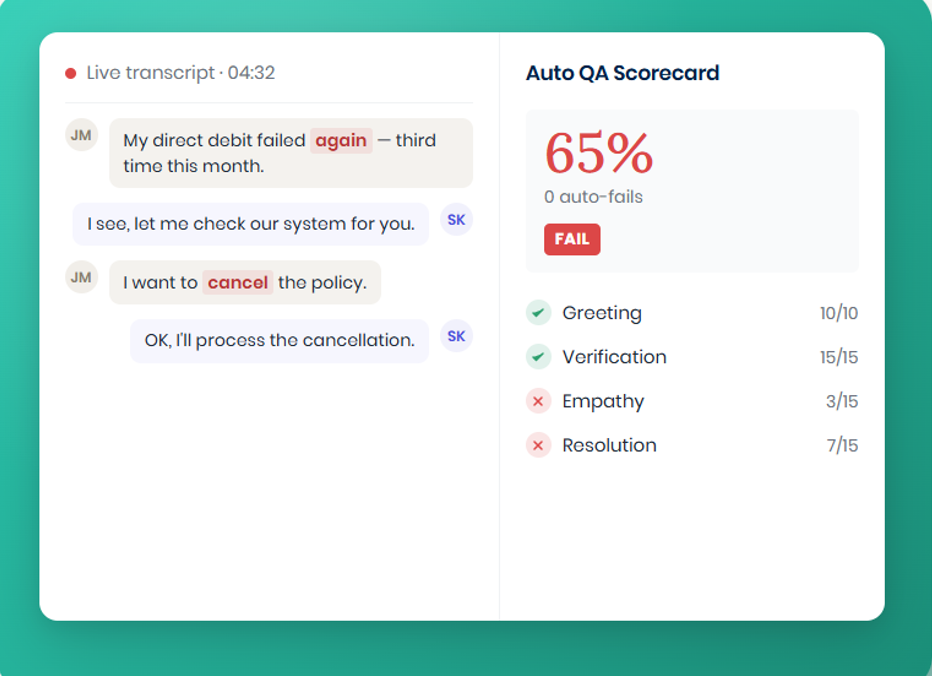
Its AutoQA scores 100% of conversations automatically across voice, chat, and email, then connects those scores to coaching plans, performance improvement workflows, and gamified agent development.
For contact centers deploying AI chatbots and virtual agents, evaluagent’s AI Agent Observability module evaluates every bot conversation against the same quality standard applied to humans, detecting hallucinations, off-policy responses, and compliance breaches that bot vendors’ own metrics won’t surface.
The Context Engine grounds all AI scoring in your company’s own policies and knowledge base, so scores reflect whether agents gave the right answer, not just the right tone.
If you want to see what 100% conversation coverage and independent AI agent oversight look like for your team, book a demo with evaluagent.
Genesys Cloud CX vs Talkdesk vs evaluagent at a glance
| Genesys Cloud CX | Talkdesk | evaluagent | |
|---|---|---|---|
| Primary function | All-in-one CCaaS + experience orchestration | CCaaS + Customer Experience Automation | QA, coaching, and AI agent observability |
| AI automation | Virtual agents (LAM-powered), copilots, predictive routing | Autopilot, Copilot, Navigator, multi-agent orchestration | AutoQA scoring, Context Engine, AI agent evaluation |
| Quality assurance | Native QA with Virtual Supervisor (AI pre-fills evaluations) | QM Assist with automated scoring | Full-coverage AutoQA with blended human + AI scorecards |
| Coaching and development | Performance management, gamification | Performance management, leaderboards | Structured 1-to-1s, performance plans, gamification, automated e-learning |
| AI agent governance | Guardrails within AI Studio | CXA Operations Center | Independent observability with hallucination detection |
| Industry vertical focus | Financial services, healthcare, retail, government | Financial services, healthcare, retail, travel, utilities | CCaaS-agnostic; financial services, insurance, retail, BPO |
| Integrations | 3,000+ APIs, AppFoundry marketplace | 60+ integrations, AppConnect marketplace | Genesys, Talkdesk, Five9, Zendesk, Salesforce, and more |
| Pricing model | Per-user, from $75/month (voice) to $155/month (full WEM) | Per-user, from $85/month to $225/month | Per-user, from $35/month (AutoQA) to $65/month (full bundle) |
| Best for | Enterprises needing a unified CX operating system | Mid-market and enterprise teams wanting AI-first vertical CX | Contact centers needing independent, full-coverage QA across any CCaaS |
Genesys and Talkdesk both handle conversations, evaluagent handles accountability
The distinction matters. Genesys Cloud CX and Talkdesk are infrastructure platforms: they route calls, power digital channels, schedule agents, and deploy AI bots. They include quality management modules, but those modules are one feature among dozens, not the core product.
evaluagent exists for one purpose: making sure every interaction, whether handled by a human or an AI agent, meets the quality standard your organization has defined. It doesn’t route calls. It doesn’t manage telephony. It doesn’t compete with your CCaaS. It complements it.
This is why the relationship between evaluagent and the other two platforms is “both/and” rather than “either/or.” evaluagent integrates natively with Genesys to automatically import support calls for analysis and evaluation.
It integrates with Talkdesk for QA and performance improvement with analytics and side-by-side conversation playback. In both cases, conversations flow from your CCaaS into evaluagent, where they’re scored, analyzed, and connected to coaching workflows, without requiring your QA team to leave the platform or build manual integrations.
The question isn’t whether to use evaluagent instead of Genesys or Talkdesk. It’s whether the QA capabilities built into your CCaaS are sufficient for your quality program, or whether a dedicated platform would close the gaps your built-in tools leave open.
Quality assurance: built-in modules vs. dedicated platform
Both Genesys and Talkdesk include quality management tools.
Genesys Cloud CX offers a Virtual Supervisor that pre-fills evaluation forms using AI, requiring human sign-off before scores are finalized.
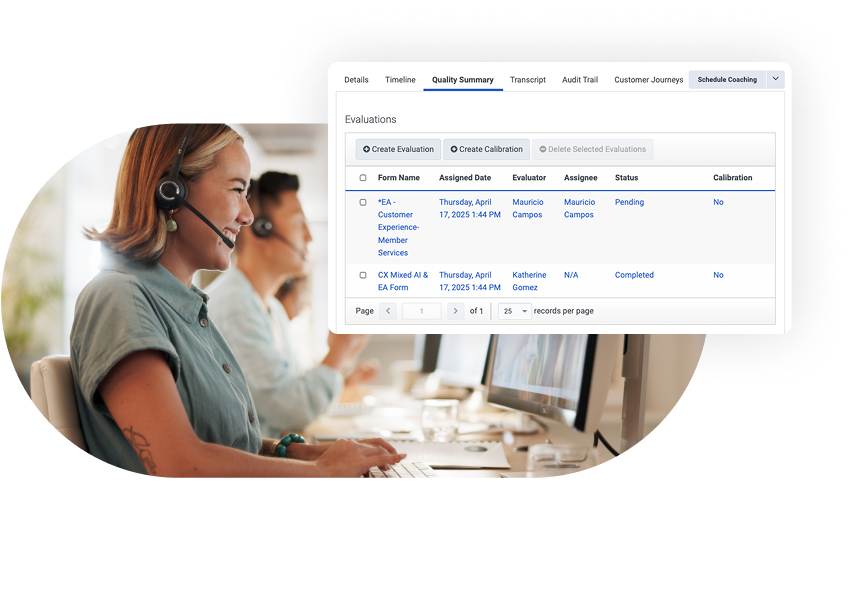
Talkdesk’s QM Assist combines keyword-based rules with generative AI to evaluate interactions. Both can score 100% of conversations using their analytics engines, and both provide simultaneous voice and screen recording playback.
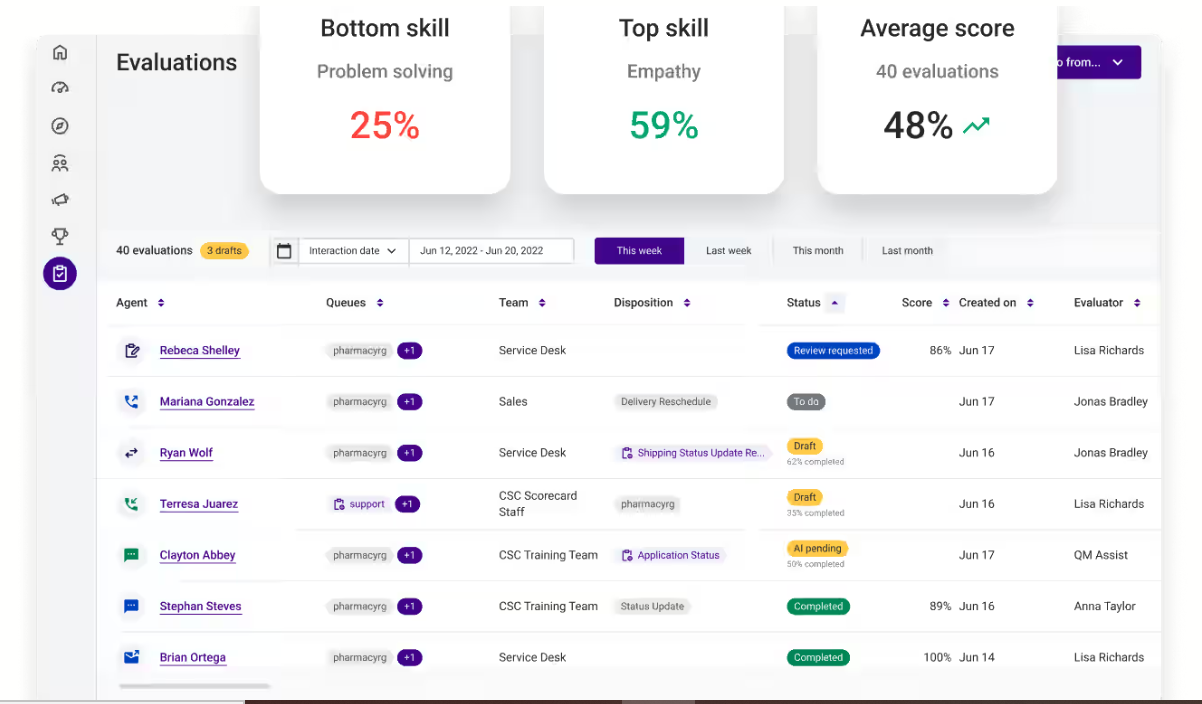
These capabilities work for organizations whose quality program is primarily about compliance checkboxes. But three gaps tend to emerge as programs mature.
Gap 1: Calibration and dispute resolution.
evaluagent’s Calibration sessions give QA teams a structured process for aligning human and AI evaluators on what “good” looks like, not just comparing scores but converging on shared standards over time.
Agent Disputes let agents formally challenge scores they disagree with, feeding corrections back into the AI model. Neither Genesys nor Talkdesk documents a comparable calibration and dispute workflow.
Gap 2: Context Engine grounding.
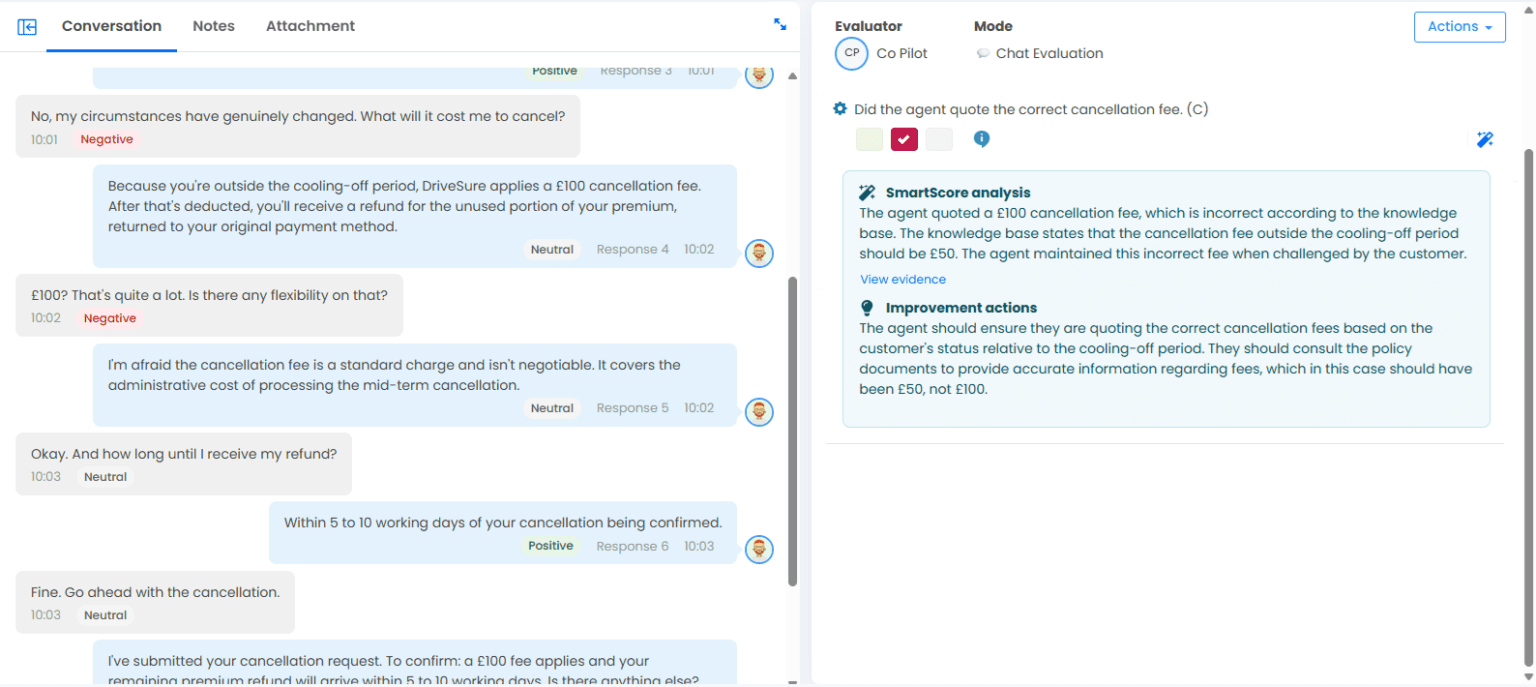
evaluagent’s Context Engine grounds AI scoring in your company’s specific QA policies, tone-of-voice guidelines, compliance rules, and knowledge base content.
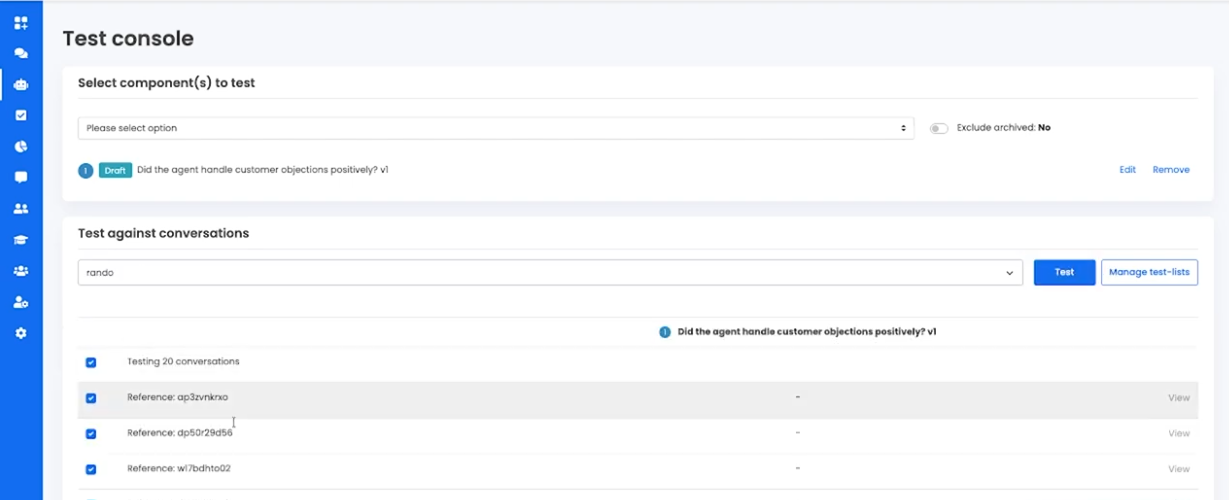
A Testing Console lets QA managers validate any scoring change against real historical conversations before it goes live.
This addresses a core limitation of generic AI scorers: they can assess whether an agent was polite, but they can’t assess whether the agent gave the correct answer to a product-specific question without the product documentation.
Gap 3: Closed-loop coaching.
Both CCaaS platforms offer performance management features (leaderboards, gamification, coaching assignments).
evaluagent goes further by connecting evaluation findings directly to structured 1-to-1 sessions tied to conversation evidence, Performance Plans with audit trails, automated action triggers that fire when a score or compliance flag crosses a threshold, and an automated lesson assignment system triggered by evaluation outcomes.
A low empathy score on Tuesday’s call triggers a coaching session by Thursday, with progress tracked against session-specific goals, all within one platform.
Capital on Tap scaled from 900 to 6,000 BDM checks per month immediately after going live with evaluagent, without adding QA headcount. (Capital on Tap case study)
AI agent oversight: who watches the bots?
Neither CCaaS platform was originally designed to answer this question, and it’s the one growing fastest in importance.
Genesys Cloud CX governs its AI agents through AI Studio guardrails: administrator-defined boundaries that constrain what the virtual agent can do. Every action is logged and auditable.
The Agentic Virtual Agent uses Large Action Models to reduce hallucination risk compared with general-purpose LLMs. But the governance is internal. Genesys monitors Genesys’s own AI, with no independent second opinion.
Talkdesk’s CXA Operations Center provides a dashboard for monitoring AI agent performance, quality evaluation, and workforce governance across humans and AI agents. It includes session-level execution traces and configurable guardrails for hallucination and policy violation prevention.
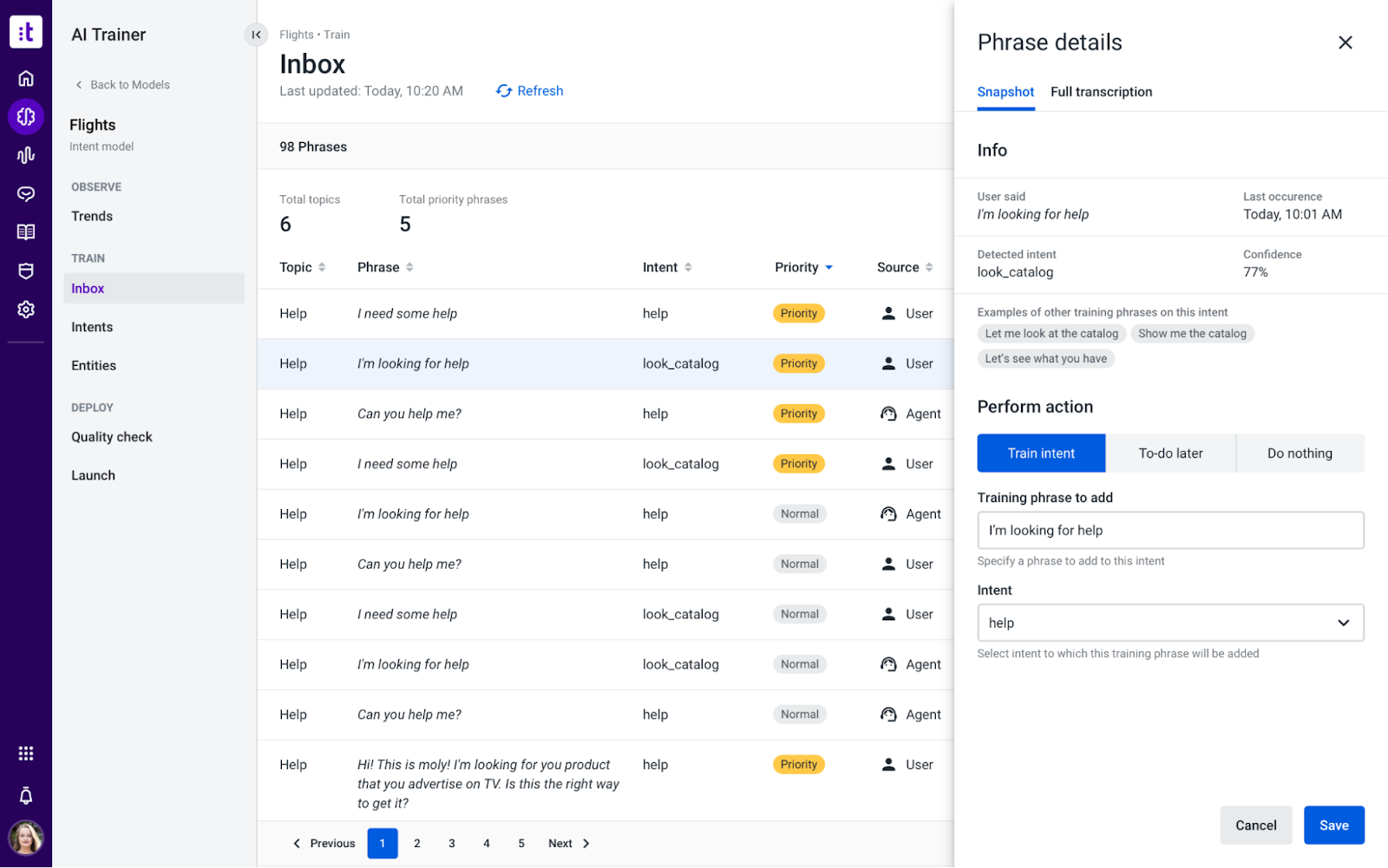
Again, the oversight comes from within the same platform that built and deployed the AI agent.
evaluagent approaches this differently. Its AI Agent Observability module sits above the agent layer, independent of whichever bot platform the contact center uses (Cognigy, Sierra, Decagon, or proprietary).
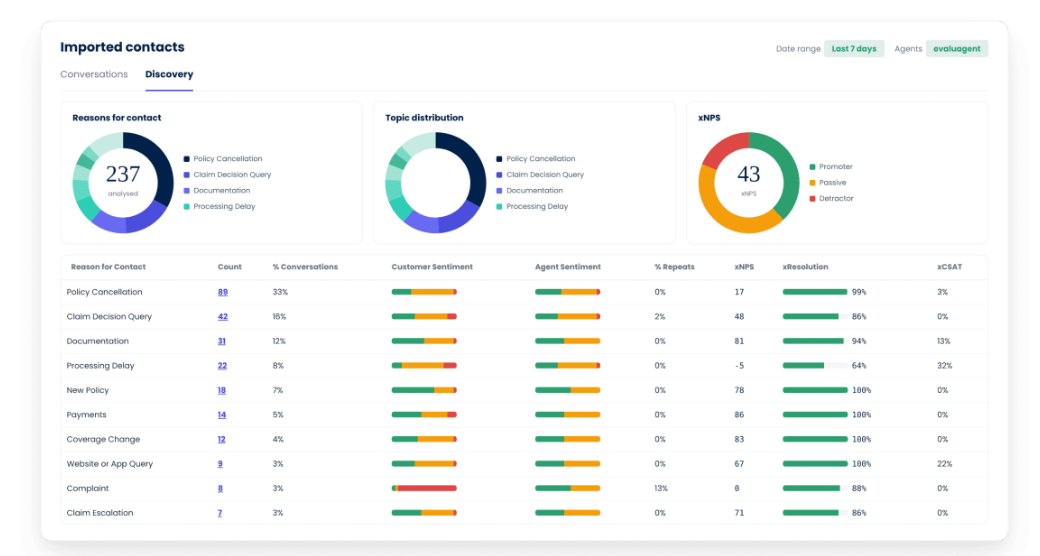
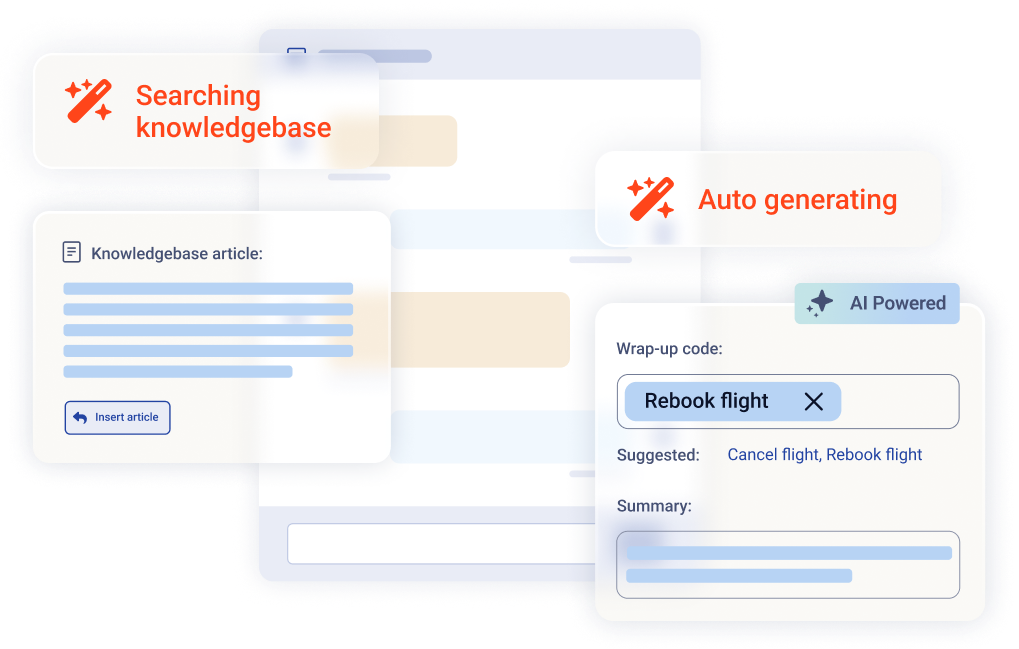
It evaluates every AI agent conversation against the same scorecard applied to human agents, with fabrication detection grounded in the organization’s own knowledge base, off-policy response flagging, containment analysis, and handover quality tracking.
The architectural distinction matters. Bot vendors have an inherent conflict of interest when reporting on their own AI’s quality.
A containment rate of 85% means one thing when the bot vendor defines it (the conversation stayed in the bot) and something different when evaluated independently (the customer’s problem was actually resolved correctly). evaluagent’s framing is direct: “Don’t solely rely on your bot vendor’s metrics.”
For regulated industries where a regulator or chief risk officer needs independent evidence for AI governance, this distinction between self-reported and independently verified quality is not academic. It’s a procurement requirement.
Genesys Cloud CX: the broadest platform
Genesys Cloud CX differentiates in the breadth of what it covers in a single architecture.
Voice routing with multiple ACD strategies (skills-based, bullseye, predictive, AI-driven). Speech-enabled IVR with drag-and-drop flow building. Digital engagement across web messaging, WhatsApp, email, SMS, Facebook, Instagram, and X.
Workforce management with 25+ ML forecasting models.
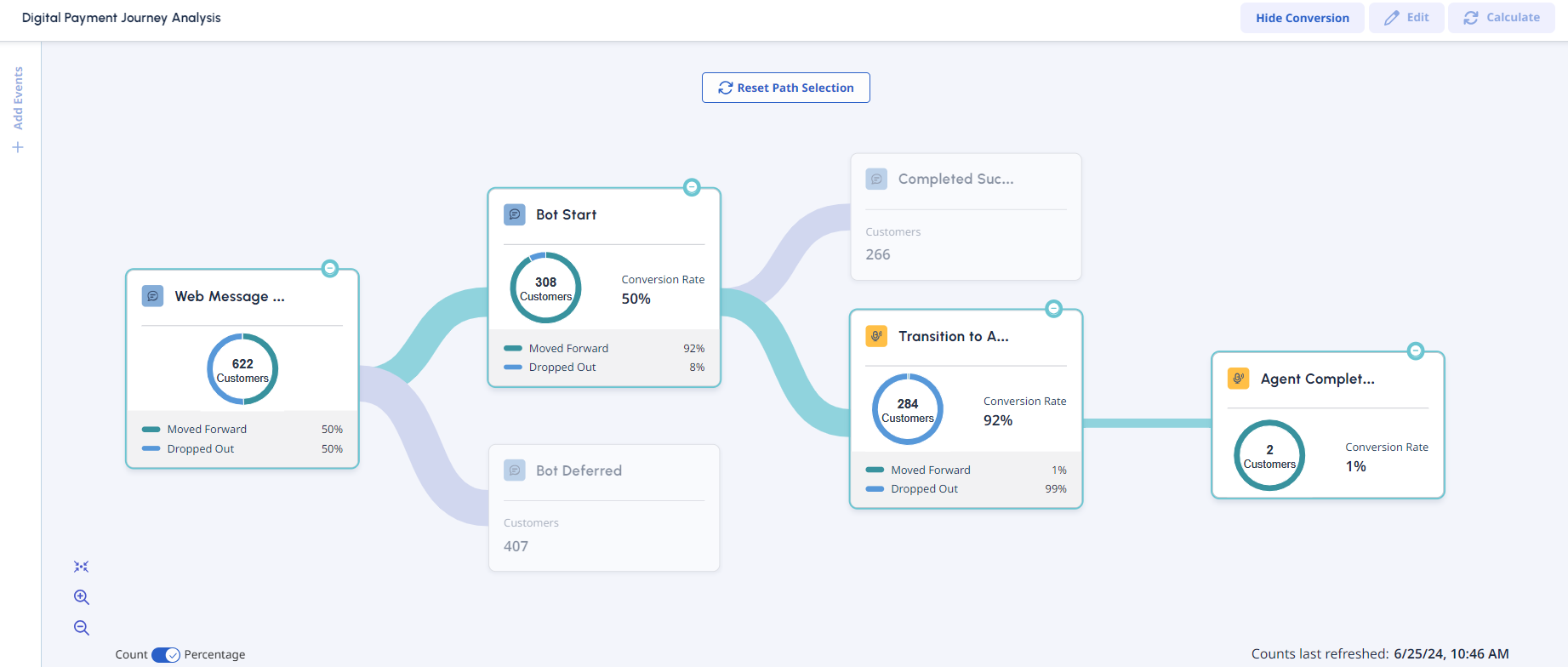
Journey analytics with funnel analysis and trend charts.
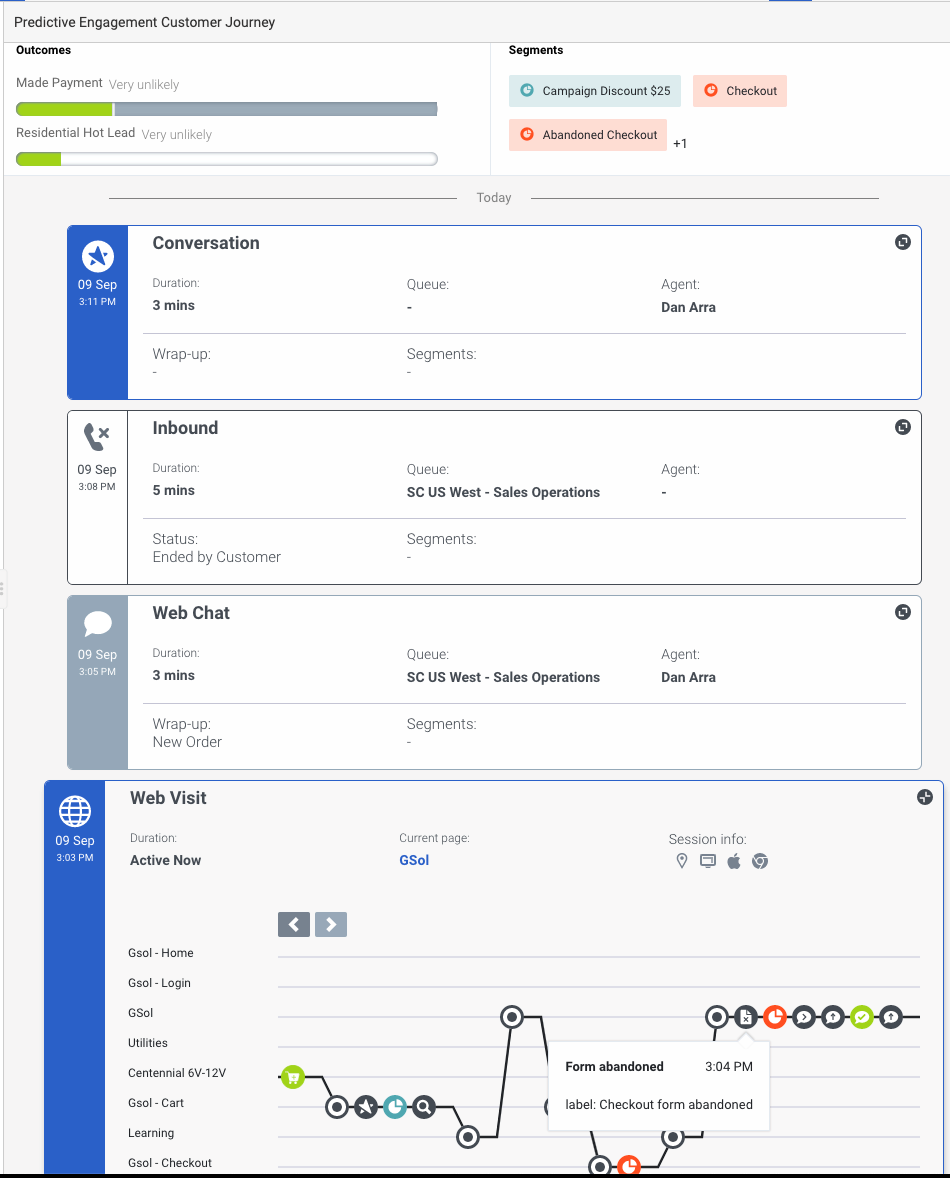
Predictive engagement that scores website visitors in real time and triggers proactive outreach. All of this runs on one codebase, one admin console, and one agent desktop.
For enterprises running multi-channel contact centers at scale (particularly in financial services, healthcare, and government, where regulators demand comprehensive recording, reporting, and compliance tooling) this platform completeness is the primary value.
It eliminates vendor sprawl. It reduces integration overhead. And it means that a routing decision, a quality evaluation, a workforce forecast, and a journey insight all draw from the same underlying data.
The strategic investments from Salesforce and ServiceNow ($1.5 billion combined in July 2025) reinforce the positioning: Genesys is becoming an integration hub within enterprise technology stacks, not just a standalone contact center product.
The cost of this breadth is complexity. G2 reviewers consistently flag the Architect tool and reporting customization as friction points. Large-scale implementations typically require professional services. And the pricing, while transparent at the tier level ($75/$115/$155 per user per month), grows with AI Experience token consumption, fair-use overages, and telephony charges.
Talkdesk: vertical depth and AI-first ambition
Talkdesk differentiates in the combination of industry-specific packaging and an aggressive AI automation roadmap.
The Industry Experience Clouds are not just branding. Healthcare includes pre-built integrations with Epic, Oracle Cerner, and athenahealth, plus AI for Complex Scheduling that handles multi-step clinical appointments.
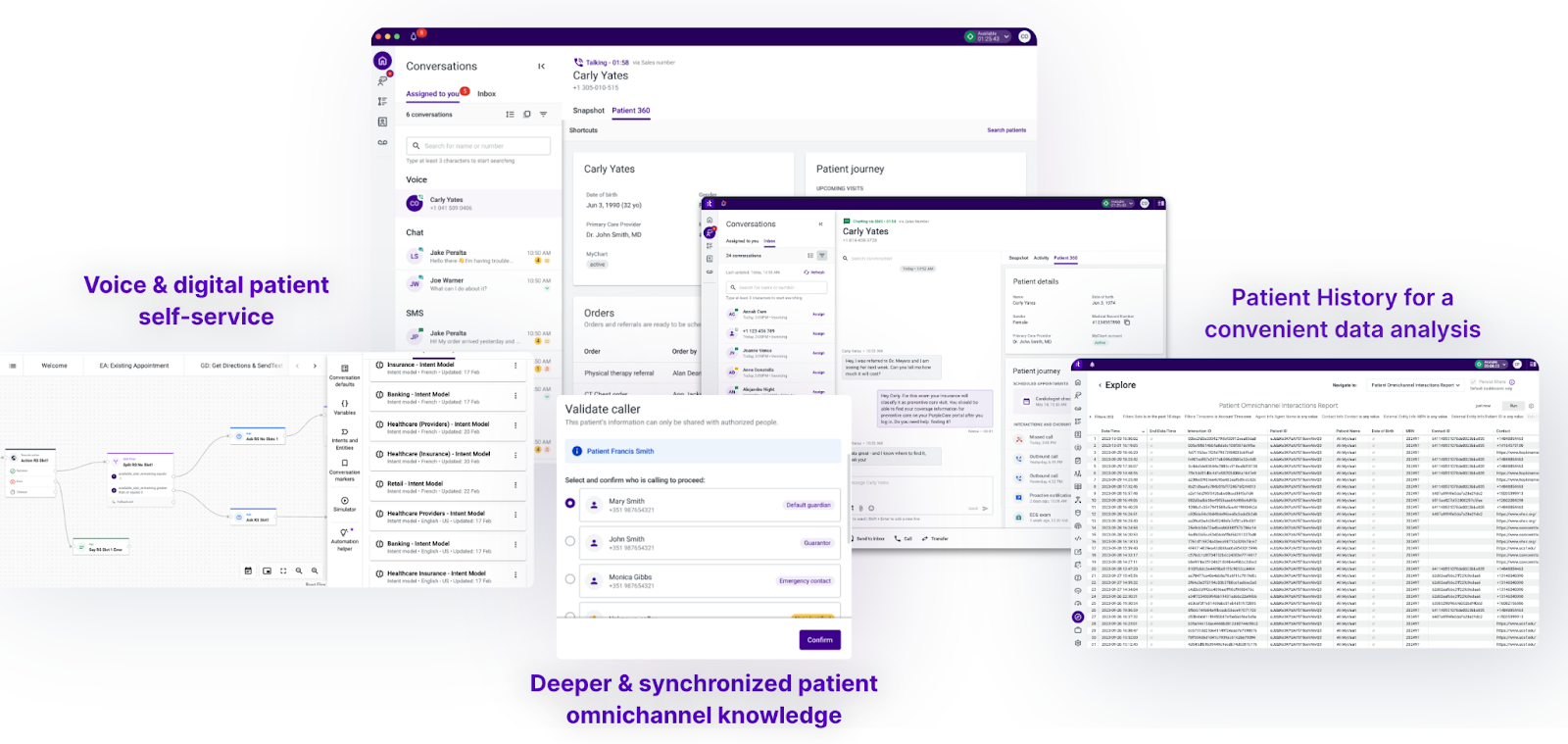
Financial services covers loan growth, deposit conversion, and claims management workflows. Retail includes Shopify integration and commerce orchestration.
For buyers in these verticals, Talkdesk shortens the time from purchase to production because the domain-specific scaffolding is already built.
The CXA platform represents a genuine architectural bet: Talkdesk positions AI agents not as features within a contact center but as a separate workforce alongside human agents. Autopilot handles autonomous resolution across voice and digital channels, supporting 59+ languages.
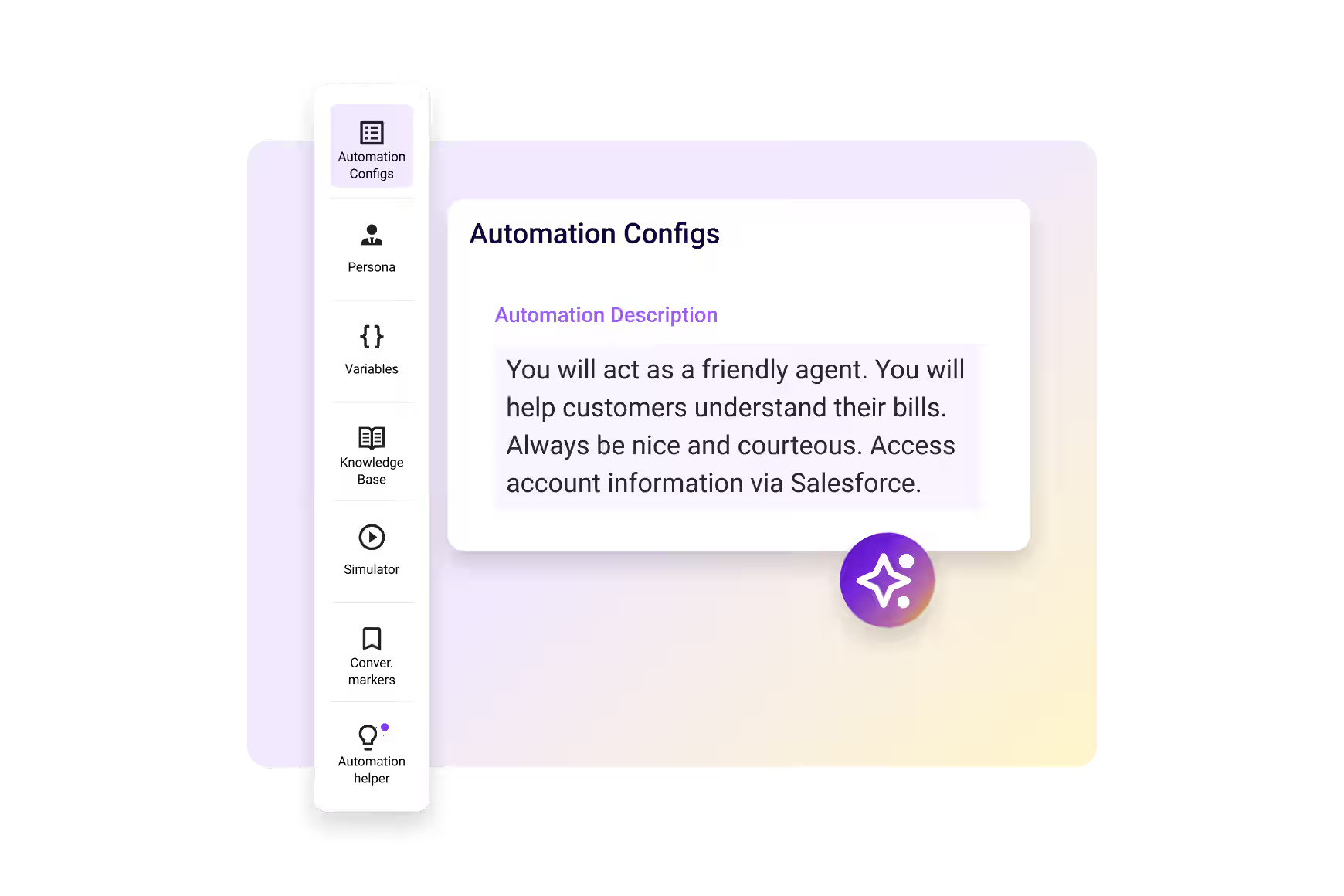
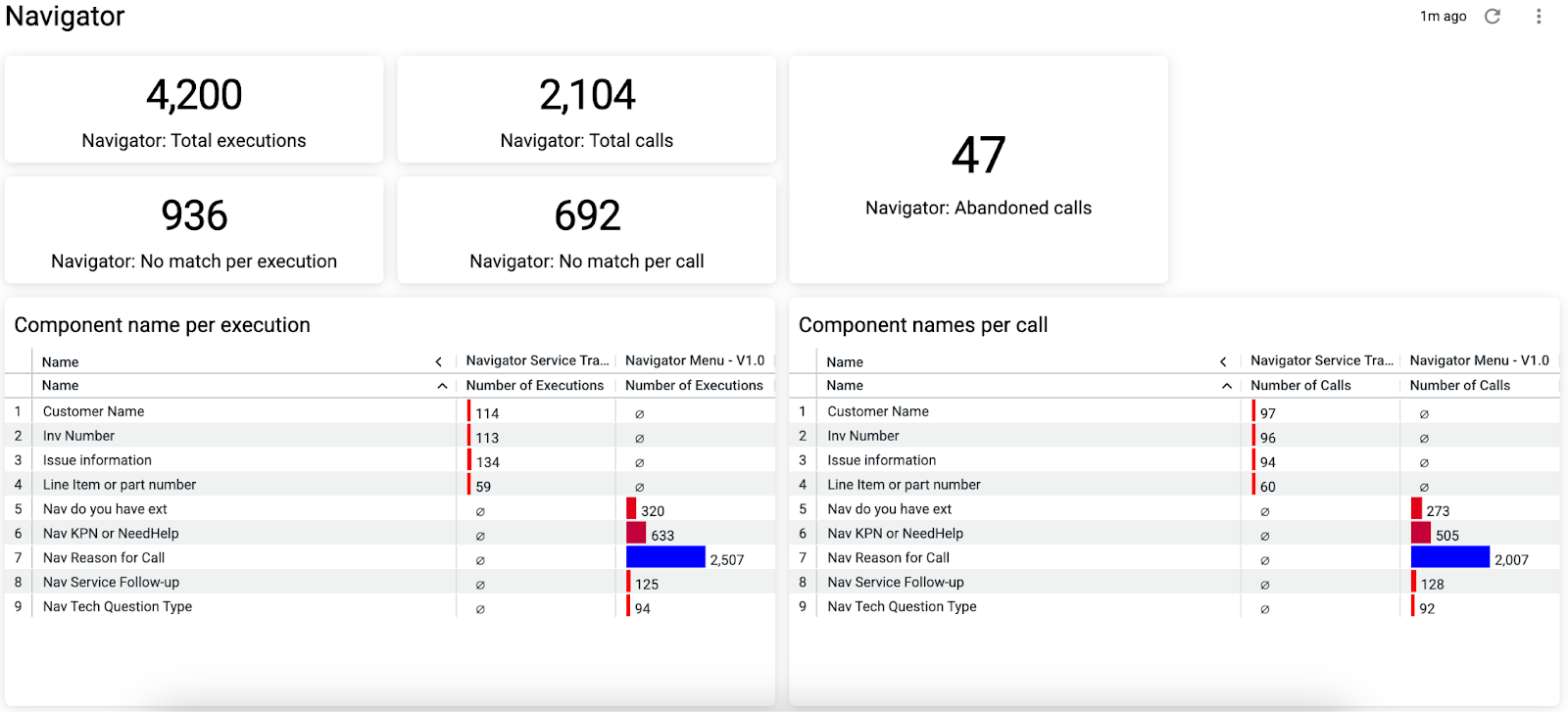
Navigator replaces traditional IVR with natural-language routing that requires no model training.
Agent Builder lets teams create production-ready AI agents using plain language.
Talkdesk also returned to Gartner Magic Quadrant Leader status in 2025 after two years as a Visionary, with Gartner citing industry-specific solutions and expanded agentic AI as the primary drivers.
The arrival of Munil Shah as Chief Product, Technology, and Customer Officer in April 2024 (previously CTO at UiPath and an engineering leader at Microsoft) is widely credited with the product course correction.
The trade-offs mirror the ambition. G2 reviewers flag administrative interface fragmentation, intermittent stability issues during peak traffic, and reporting limitations. AI add-ons (Autopilot, Copilot, Navigator, Identity) are priced separately from CX Cloud tiers, making total deployment cost harder to estimate.
Pricing comparison
The three platforms price different things, which makes direct comparison difficult. Here’s what you’re actually buying at each level.
Genesys Cloud CX charges per user per month, billed annually:
| Tier | Price | What it covers |
|---|---|---|
| CX 1 | $75/user/month | Voice, IVR, outbound campaigns, analytics, agent copilot, virtual agents, predictive routing |
| CX 2 | $115/user/month | CX 1 + digital channels, omnichannel routing, quality assurance, knowledge management |
| CX 3 | $155/user/month | CX 2 + full WEM (forecasting, scheduling, performance management) |
Additional costs: AI Experience tokens ($1.00/token beyond a 250-token monthly baseline), fair-use overages on BYOC minutes, data storage, transcription, and API calls. Professional services for implementation.
Talkdesk also charges per user per month, billed annually:
| Tier | Price | What it covers |
|---|---|---|
| Digital Essentials | $85/user/month | Digital channels only, Studio routing, Guardian, real-time dashboards |
| Voice Essentials | $105/user/month | Voice, speech recognition, voicemail transcription, BI (Explore) |
| Elite | $165/user/month | Omnichannel, WFM, screen recording, performance management |
| Industry Experience Clouds | $225/user/month | Elite + industry-specific AI agents, integrations, and workflows |
Additional costs: CXA AI products (Autopilot, Copilot, Navigator, Identity, Interaction Analytics) priced separately. Usage fees for call minutes, SMS, and transcription. CRM connectors (Salesforce, ServiceNow, etc.) are paid add-ons. Professional services on a time-and-materials basis.
evaluagent charges per user per month:
| Tier | Price | What it covers |
|---|---|---|
| AutoQA & Improvement | From $35/user/month | 100% automated scoring, coaching workflows, performance dashboards, Context Engine, fabrication detection |
| AutoQA + Conversation Intelligence | From $65/user/month | Everything above + reason for contact, sentiment analytics, xNPS/xCSAT/xResolution, Spotlight AI analyst, custom insight topics |
evaluagent is additive to your CCaaS cost, not a replacement. Pricing is published on the website, and the investment reflects a dedicated quality platform that replaces the headcount you would otherwise need to scale QA manually.
The Share Centre achieved a 285% increase in QA productivity with evaluagent, cutting evaluation time from 24 minutes to 6 minutes per interaction while pass rates rose from 73% to 85%. (The Share Centre case study)
Speech analytics and conversation intelligence
All three platforms transcribe and analyze conversations. The difference is what they do with the insight.
Genesys Cloud CX includes speech and text analytics that transcribes voice interactions across 70+ languages, detects sentiment at the interaction and segment level, and identifies topics. Supervisor Copilot generates AI summaries with reason for contact, resolution status, and sentiment drivers.
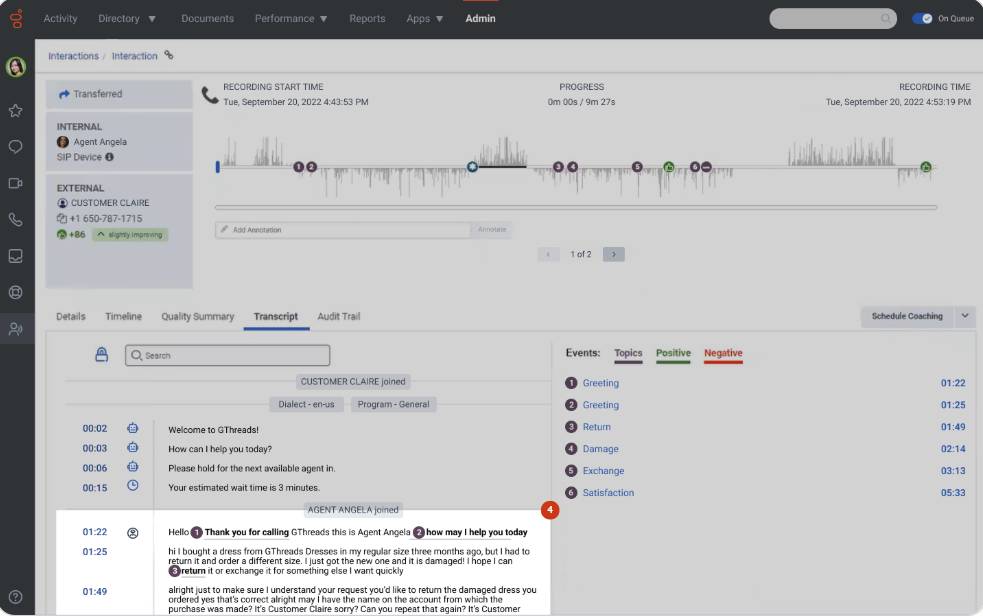
The system automatically redacts PII and PCI data from transcripts and corresponding audio. This is solid infrastructure-level capability, but it lives within the broader WEM suite, so its output primarily serves supervisors reviewing individual interactions.
Talkdesk offers Interaction Analytics that transcribes 100% of interactions and uses generative AI to discover topics and intent clusters without pre-defined keyword lists.
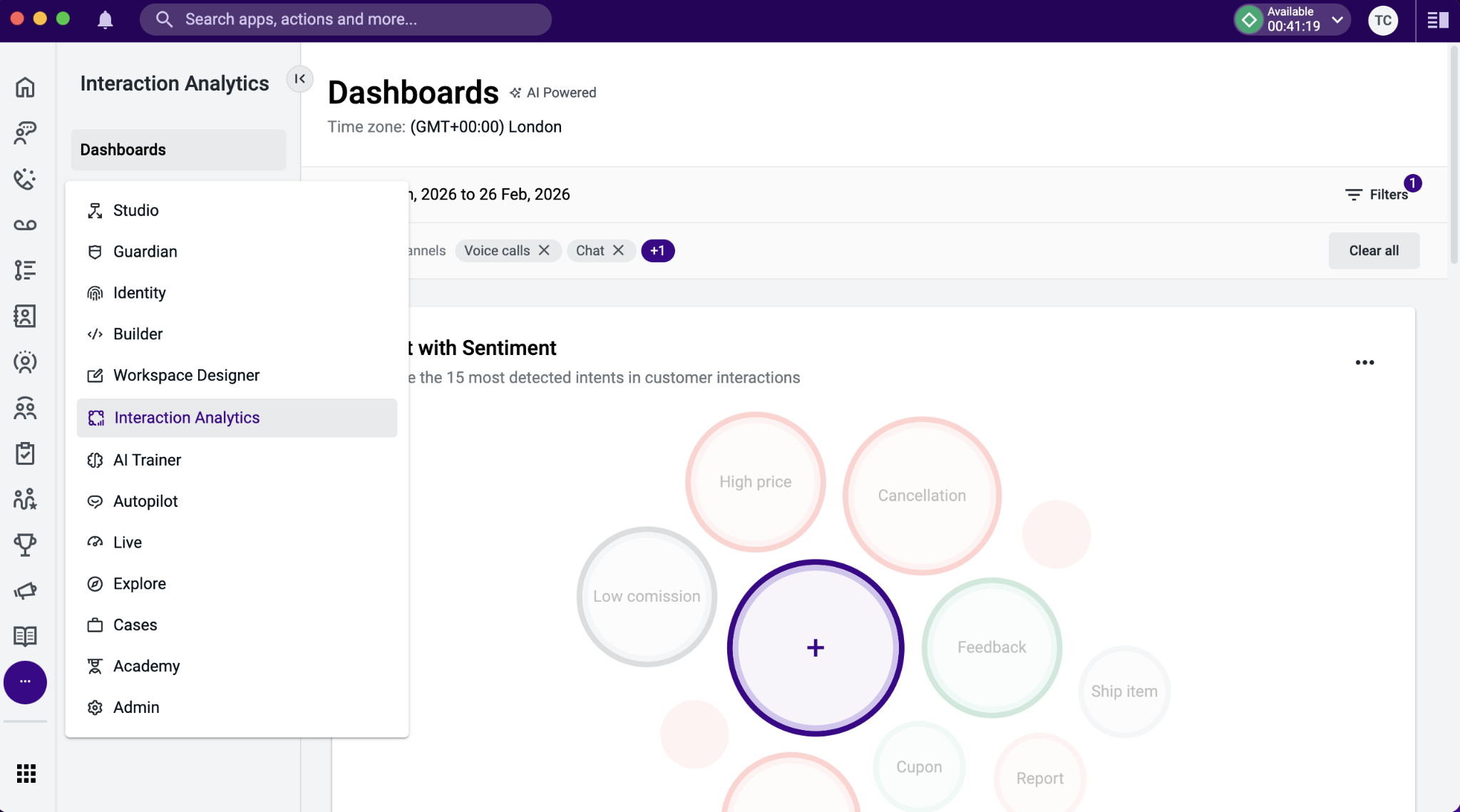
Automation Mining extends analysis to screen recordings, identifying tasks suitable for AI automation. CX Sensors push real-time alerts to Slack or Teams. This is conversation intelligence designed to feed the CXA automation pipeline, finding the next process to automate.
evaluagent’s Conversation Intelligence takes a different angle. Its predictive metrics (xNPS, xCSAT, xResolution, xVulnerability) are derived from conversation signals rather than post-call surveys, producing satisfaction predictions for every interaction instead of relying on the subset of customers who respond to surveys.
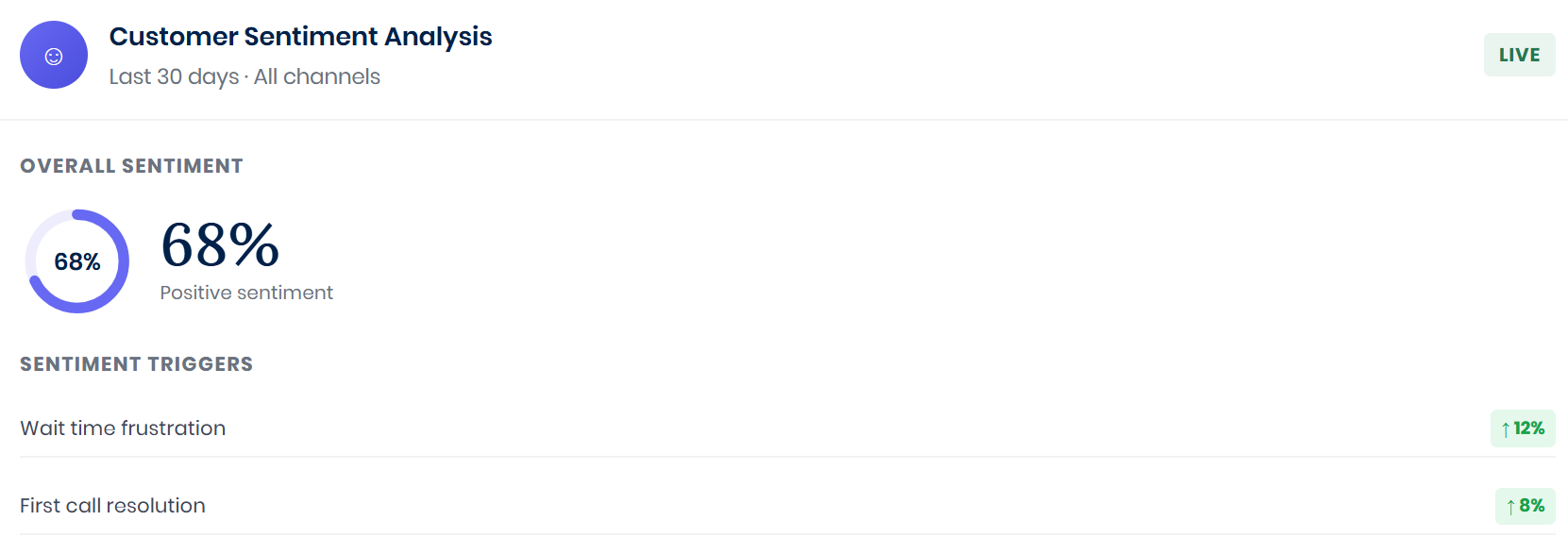
The Spotlight tool acts as an on-demand AI analyst: filter a set of conversations, run Spotlight, and receive prioritized findings organized into Critical Issues, Monitor Closely, and Performing Well, with supporting conversation excerpts and clickable transcript links.
Every insight traces back to the specific conversation moment that produced it.
The design philosophy differs. Genesys and Talkdesk use conversation intelligence to power their own platform capabilities (routing, automation, agent assist). evaluagent uses it to power quality decisions and cross-functional business intelligence, feeding insights into Power BI, Tableau, Looker, or Metabase through its reports exporter.
Workforce management: a clear Genesys and Talkdesk strength
This is a capability where the CCaaS platforms have the advantage, and where evaluagent does not compete.
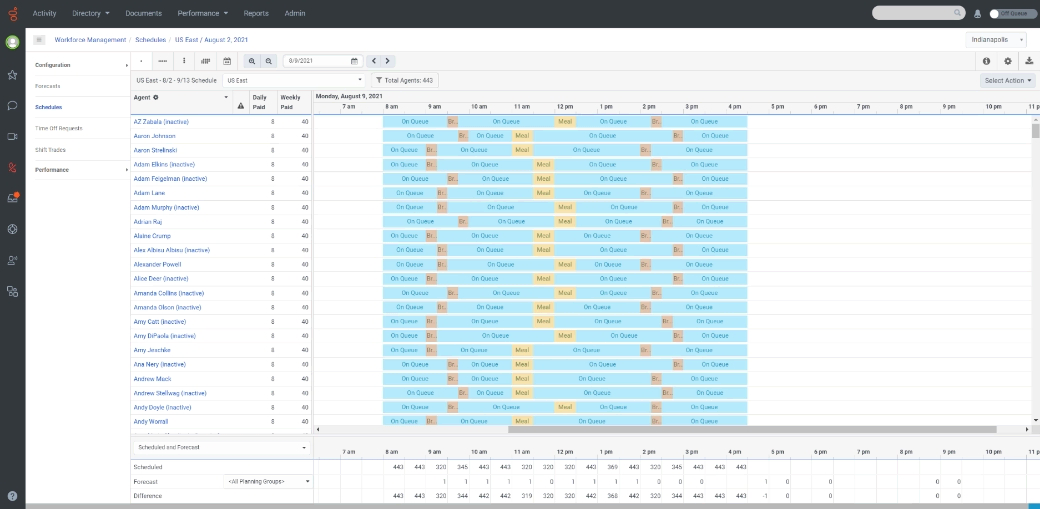
Genesys Cloud CX provides a mature, natively integrated workforce management suite: AI-powered forecasting using 25+ ML models, automated scheduling with blended multi-channel support, intraday management, and the Genesys Tempo mobile app for agent self-service.
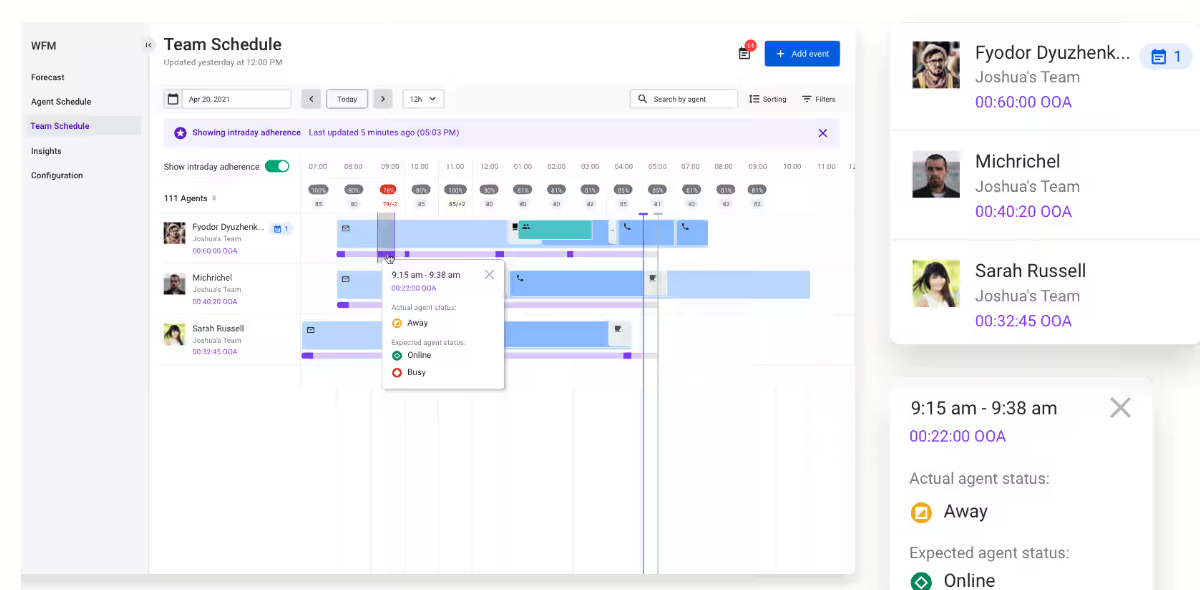
Talkdesk offers its own native WFM with AI-powered forecasting, automated scheduling, real-time adherence monitoring, and a conversational chatbot for agent schedule requests.
For organizations needing enterprise-grade WFM beyond 10,000 agents, Talkdesk offers an integrated Verint Workforce Management option.
evaluagent integrates with WFM platforms (Assembled and Peopleware) but does not provide its own scheduling, forecasting, or adherence capabilities. If WFM is a primary buying criterion, you’ll still need it from your CCaaS or a dedicated WFM vendor. evaluagent sits alongside WFM, feeding QA scores and coaching status back into the workforce management workflow.
Security and compliance
All three platforms maintain serious compliance portfolios, reflecting the regulated industries they serve.
Genesys Cloud CX holds the broadest set: ISO 27001, ISO 42001 (AI governance), PCI DSS, SOC 2, FedRAMP, HIPAA, HITRUST, GDPR, DORA, and more. Its AWS infrastructure runs across three or more Availability Zones in an Active/Active/Active configuration, with 500 automated chaos experiments daily. Automatic PII/PCI redaction is on by default.
Talkdesk holds more than 30 security certifications: ISO 27001, ISO 42001, ISO 22301 (business continuity, claiming first-in-class for cloud contact centers), FedRAMP, PCI DSS Level 1, HIPAA, BSI C5, and SOC 2/3. Guardian provides AI-powered workforce compliance monitoring.
evaluagent holds SOC 2 Type II, ISO/IEC 27001:2022, Cyber Essentials Plus, GDPR, HIPAA, and EU AI Act readiness. Data is hosted on AWS with regional API clusters (EU, North America, Australia) for data sovereignty. SSO, MFA, and role-based access control are included at both paid tiers, not gated to enterprise.
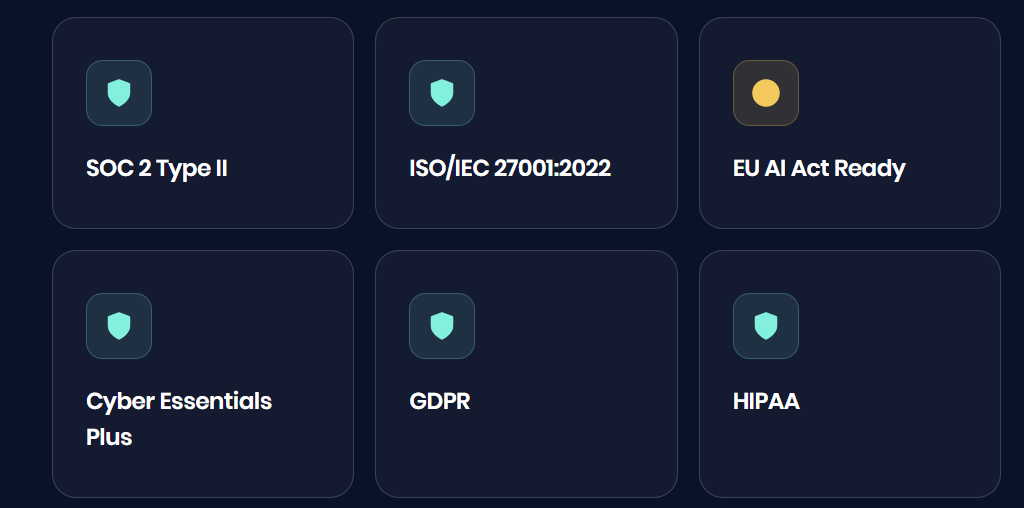
For contact centers in regulated industries, the practical question is whether your QA data requires the same compliance posture as your interaction data. evaluagent’s certifications ensure that evaluation records, coaching documentation, and agent performance data meet the same standard as the conversations themselves.
Integration approach
Genesys Cloud CX takes the API-first approach: over 3,000 APIs, an interactive API Explorer, SDKs in JavaScript, Java, .NET, Python, iOS, and Go, and a Terraform provider (CX as Code) for infrastructure-as-code management. The AppFoundry marketplace extends the platform with third-party apps. Data Actions let routing flows call external APIs at runtime.
Talkdesk provides a REST API platform with regional endpoints, an auto-generated OpenAPI 3.0 specification, and the AppConnect marketplace with 60+ integrations. Talkdesk Connections provides a no-code path for connecting to any external API. The Webhook Trigger API connects to Microsoft Power Automate.
evaluagent integrates natively with the CCaaS and helpdesk platforms its customers already use: Genesys, Talkdesk, Five9, Amazon Connect, RingCentral, Zendesk, Salesforce, Freshdesk, Intercom, Puzzel, and Aircall.
Its REST API follows the JSON:API specification, with regional endpoints for data sovereignty. For BI, the platform pushes interaction data, sentiment scores, and QA results into Power BI, Tableau, Looker, and Metabase.
The design intent differs: Genesys and Talkdesk want to be the center of your technology stack. evaluagent plugs into whatever stack you already have without requiring you to change it.
Genesys Cloud CX vs Talkdesk vs evaluagent: which should you choose?
These platforms solve different problems, and many organizations will use two of them together rather than choosing one.
Choose Genesys Cloud CX if:
- You need a single platform covering voice, digital, WFM, quality, and journey analytics in one architecture
- You’re running a contact center with 200+ agents across multiple channels
- CRM integration depth (Salesforce, ServiceNow, Microsoft Dynamics) is a procurement requirement
- You want AI automation (virtual agents, predictive routing, copilots) from the same vendor that handles your telephony
- You can invest in the learning curve and professional services required for advanced configuration
Choose Talkdesk if:
- You’re in financial services, healthcare, retail, or another vertical where industry-specific workflows save months of implementation
- AI-first automation (autonomous resolution, not just deflection) is central to your CX strategy
- You want a structured path from basic CCaaS to full CXA without re-platforming
- You value a drag-and-drop flow builder that non-technical teams can manage
- You need compliance certifications for regulated verticals (FedRAMP, HIPAA, PCI, BSI C5)
Add evaluagent if:
- Your current QA program samples 1–2% of conversations and you need full coverage without adding headcount
- You want AI scoring calibrated to your specific policies, knowledge base, and compliance rules, not a generic model
- You’ve deployed (or plan to deploy) AI agents and need independent oversight that doesn’t rely on the bot vendor’s own metrics
- You need a closed loop from evaluation to coaching, with structured 1-to-1s, performance plans, and audit trails
- You run multiple CCaaS or helpdesk platforms and need a single quality layer across all of them
Book a demo to see evaluagent’s AutoQA and AI Agent Observability.
The most common pattern among mature contact centers is a CCaaS platform for infrastructure (Genesys or Talkdesk for routing, telephony, WFM, and AI automation) paired with a dedicated QA platform for accountability (evaluagent for full-coverage scoring, coaching, and AI agent governance). The CCaaS handles the conversation. evaluagent makes sure the conversation was good, and proves it with data.
Seasalt Cornwall doubled evaluations and reduced agent attrition from 100% to 10% year-on-year after implementing evaluagent’s coaching and performance improvement workflows. (Seasalt Cornwall case study)