Comparing Kaizo vs Zendesk for quality assurance starts from the wrong premise. Kaizo is a dedicated QA tool that runs inside Zendesk. Zendesk is a service platform that includes QA as one add-on module among dozens. They operate at different levels of the stack, and the comparison only makes sense once you accept that they solve the same problem in different ways.
The questions that matter:
- Do you need QA that works only inside your current help desk, or across every platform your teams use?
- Is automated scoring of 100% of conversations a core requirement, or can you work with sampled review?
- How important is closing the loop between QA scores and agent coaching, not just generating reports?
- Are you deploying AI agents that need independent quality oversight?
- Do you want your QA data locked inside one vendor’s ecosystem, or portable across platforms?
In short, here’s what we recommend:
Kaizo works well for Zendesk or Salesforce teams that want AI-powered QA without leaving their help desk. Its AutoPilot scores 100% of resolved tickets the moment they close, AI coaching cards cut prep time by 90%, and the gamification layer (missions, leaderboards, avatar progression) helps with agent retention.
The Zendesk sidebar integration means agents never switch tabs. However, Kaizo is locked to two platforms, has limited voice QA, and does not yet offer AI agent evaluation.
Zendesk is a service platform with ticketing, messaging, voice, AI agents, knowledge base, workforce management, and QA under one roof. Its QA module scores 100% of human and AI interactions with AutoQA, and Spotlight flags churn risks and escalations in real time.
For teams already on Zendesk, the QA add-on requires no integration work. But QA is one product line among many, not Zendesk’s primary focus. The $50/agent/month add-on layers on top of the existing Zendesk Suite plan, and teams with advanced calibration, dispute, or coaching requirements may find it limited.
Both approaches have clear strengths. But teams that need more QA depth than a help desk add-on or a platform-locked tool can deliver (especially those running multiple contact center platforms or deploying AI agents) often find that the best QA layer is an independent one.
evaluagent is a QA and performance improvement platform that works across any contact center stack. It scores 100% of interactions automatically across voice, chat, and email, then closes the loop with coaching, performance plans, and gamification in one system.
Its Context Engine grounds AI scoring in your company’s own policies and knowledge base, so evaluations check whether agents gave the right answer, not just the right tone. Its AI Agent Observability module evaluates every AI agent conversation independently, with hallucination detection and off-policy flagging, so you don’t rely on your bot vendor to grade its own work.
evaluagent integrates natively with Zendesk, Salesforce, Genesys, Five9, Amazon Connect, Freshdesk, RingCentral, Talkdesk, Intercom, and more, giving teams platform independence.
If independent QA across every channel and platform sounds like what your contact center needs, see how evaluagent works.
Kaizo vs Zendesk vs evaluagent at a glance
| Kaizo | Zendesk QA | evaluagent | |
|---|---|---|---|
| Core focus | QA for Zendesk/Salesforce teams | Service platform with QA add-on | Independent QA and performance platform |
| QA coverage | 100% of tickets via AutoPilot | 100% via AutoQA (add-on) | 100% across voice, chat, and email |
| Voice/call QA | Limited (Amazon Connect transcription) | Native voice scoring via Talk | Full voice transcription, scoring, and analysis |
| AI agent evaluation | Not available | AI Agent QA with human comparison | Independent observability with hallucination detection |
| Coaching workflow | AI coaching cards with gamification | Targeted coaching assignment | Structured 1-to-1s, performance plans, eLearning, gamification |
| Platform support | Zendesk and Salesforce only | Zendesk only (native) | Zendesk, Salesforce, Genesys, Five9, Amazon Connect, and more |
| Knowledge-grounded scoring | Knowledge Base connection for criteria | Knowledge base integration | Context Engine with policy, compliance, and KB grounding |
| Security certifications | SOC 2, ISO 27001, GDPR | SOC 2 Type II, ISO 27001, HIPAA | SOC 2 Type II, ISO 27001, Cyber Essentials Plus, HIPAA-aligned, GDPR |
| Pricing model | Quote-based, per seat | $50/agent/month add-on (on top of Zendesk plan) | From $35/user/month; from $65/user/month (Full Bundle) |
| Free trial | Available (terms not public) | 14-day trial with Zendesk | Demo-based; trials arranged on request |
| Best for | Zendesk/Salesforce teams wanting embedded QA with gamification | Teams already on Zendesk wanting all-in-one convenience | Contact centers needing platform-independent QA with coaching |
Dedicated QA tool vs. built-in QA: the real question
The Kaizo vs Zendesk comparison isn’t about two competitors. It’s about two different approaches to quality assurance, and whether either one goes far enough.
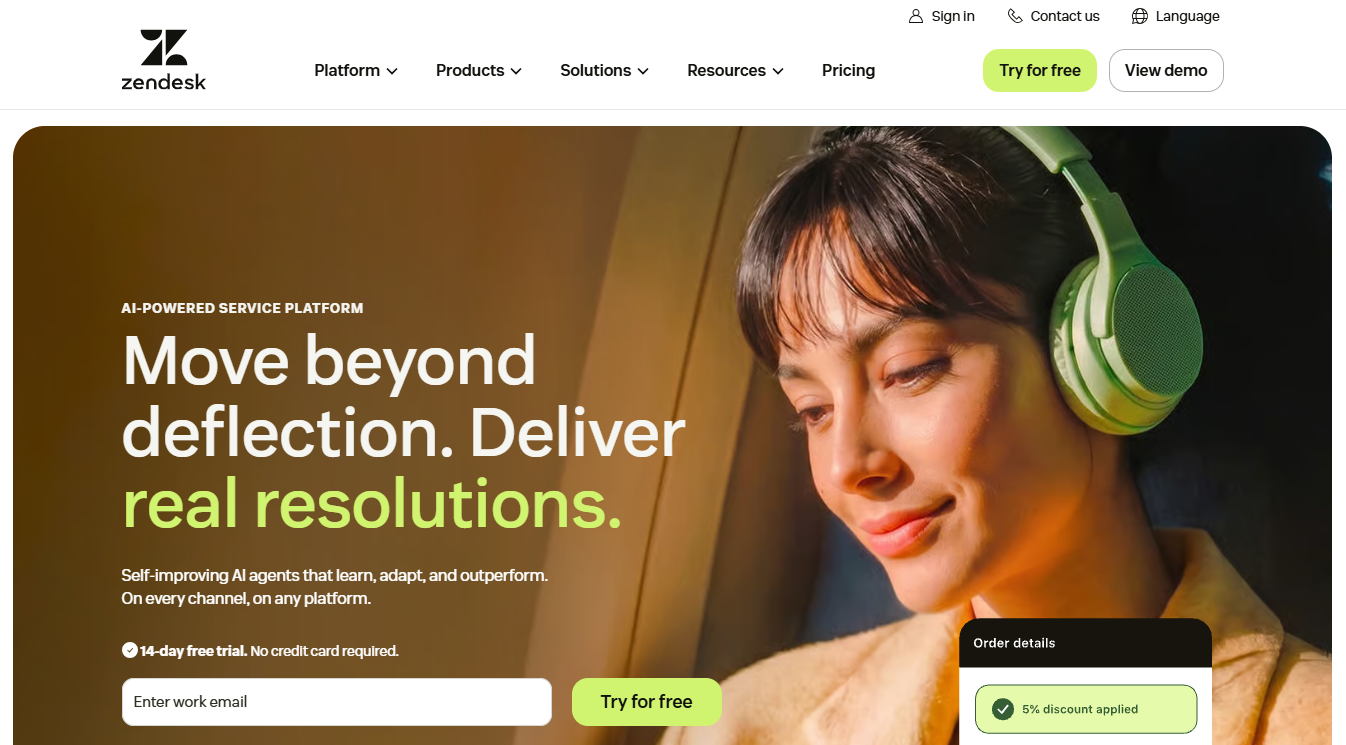
Zendesk’s QA is a module inside a large platform. Zendesk’s primary business is ticketing, messaging, voice, and AI agents. It added QA as a $50/agent/month add-on. For teams already paying for Zendesk Suite, this is the easiest path: no new vendor, no integration work, no separate login. The trade-off is that QA competes for development priority against dozens of other product lines.
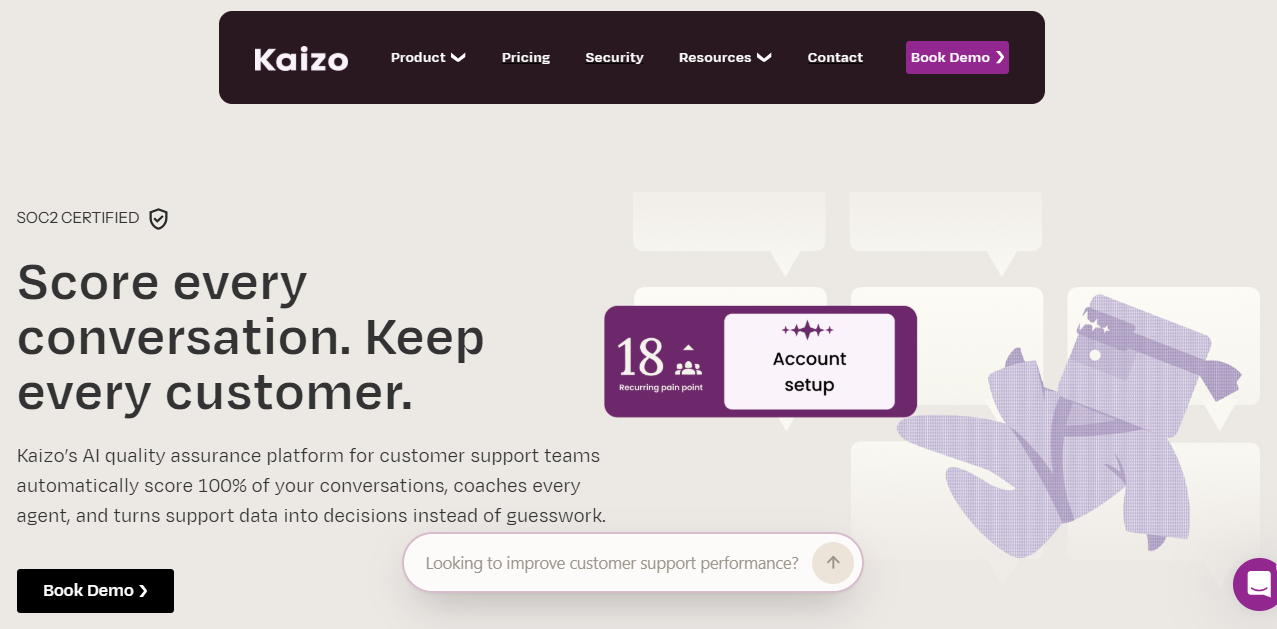
Kaizo is a dedicated QA platform that chose to go deep on two platforms rather than broad across many. By embedding in the Zendesk sidebar and the Salesforce AppExchange, Kaizo keeps friction low for teams on those platforms. Agents rate tickets and see coaching feedback without switching applications.
evaluagent takes the third approach: independent, platform-agnostic QA that plugs into whatever infrastructure you run. If you’re on Zendesk today and move to Genesys next year, your QA history, scorecards, and coaching data come with you.
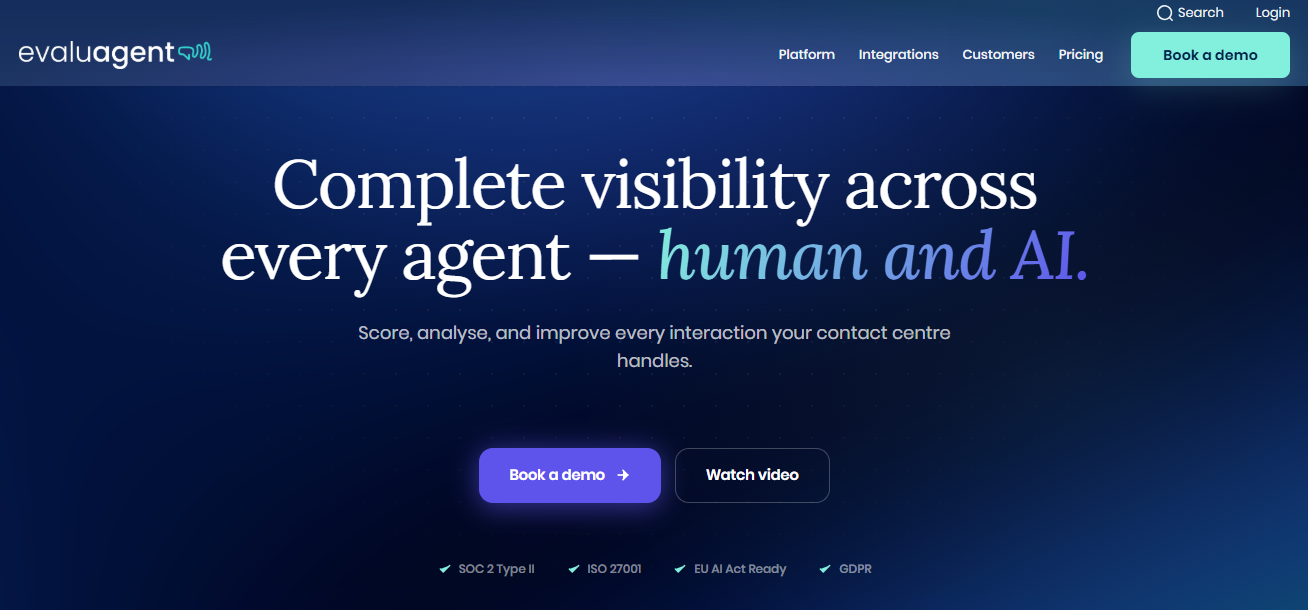
If you run Zendesk for chat and Amazon Connect for voice, evaluagent covers both from one platform. This is deliberate. evaluagent positions as “any CCaaS, any CRM, any AI agent provider, no lock-in”.
For contact centers operating across multiple platforms (or those that value QA data portability), the independent model solves problems the other two structurally cannot. For Zendesk customers specifically, evaluagent’s native Zendesk integration adds more thorough QA without replacing your service platform.
QA scoring depth separates the three
All three platforms score 100% of conversations automatically. The differences are in how they score, what they score, and how much control you get over calibration.
Kaizo’s AutoPilot evaluates every resolved ticket against custom quality criteria, leaving comments and scores without manual triggering. Teams define their rubric, connect a Knowledge Base to criteria descriptions, and can test AI instructions against historical ratings before going live.
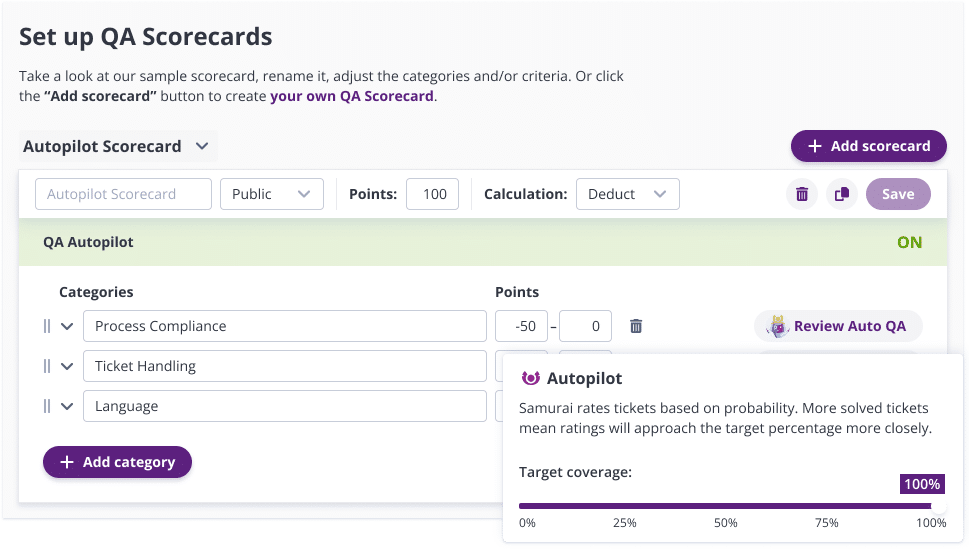
The system handles unlimited ticket volume without adding QA headcount. Criteria updates propagate instantly across future evaluations.
Where Kaizo thins out is voice. An Amazon Connect integration enables call transcription, but automated call QA equivalent to what AutoPilot does for tickets is not part of the core product. Contact centers where phone is a primary channel face a coverage gap.
Zendesk QA scores interactions across email, chat, and voice using AutoQA with preset and custom categories described in plain language. Spotlight adds proactive risk detection: churn signals, escalation patterns, dead air on calls, and knowledge gaps. The native integration with Zendesk Talk means call scoring works without additional setup.
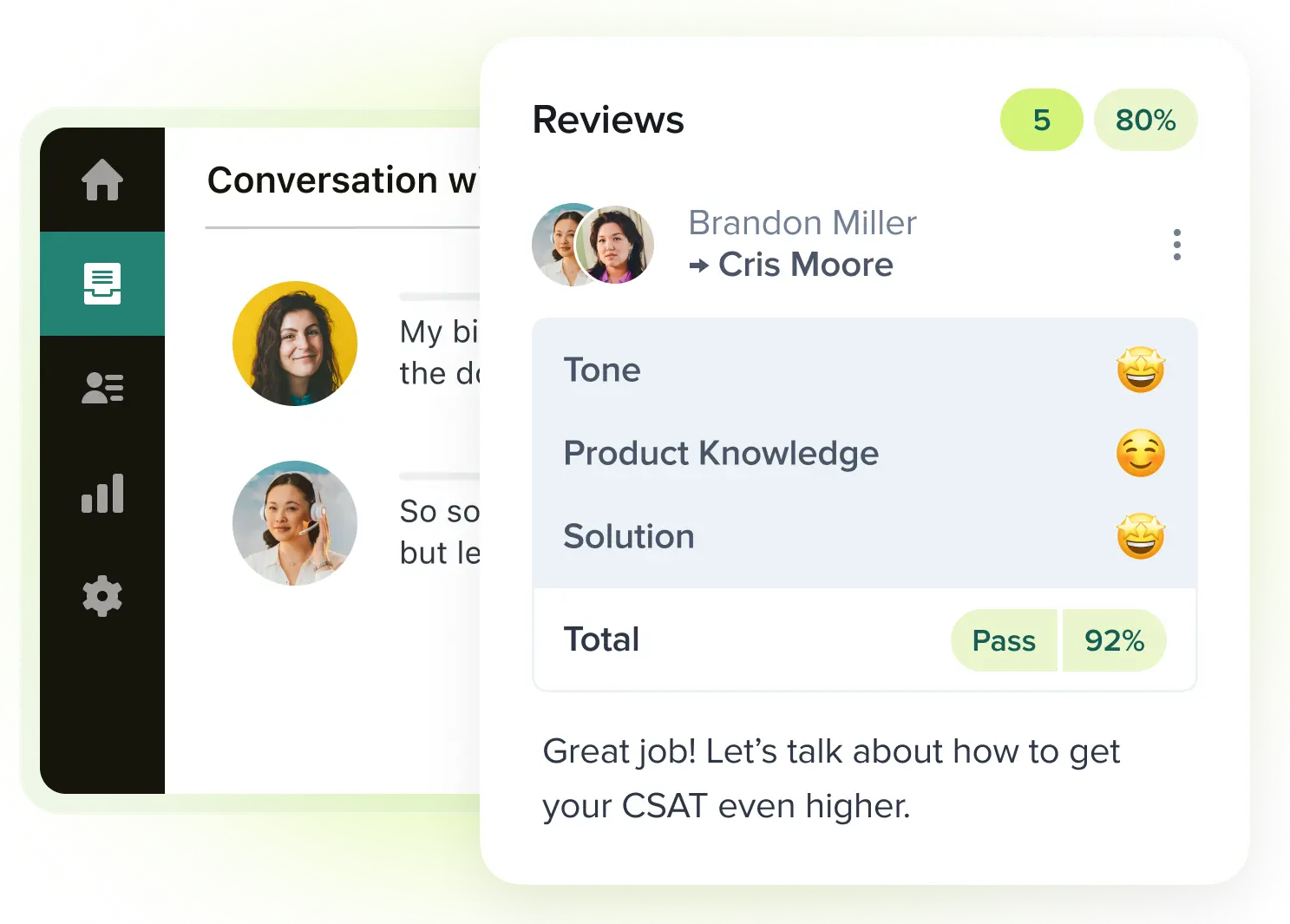
The limitation is calibration depth. Zendesk QA is simple to set up and operate alongside the rest of the platform. This is a strength for teams that want basic quality visibility without building a full QA program.
It’s a limitation for teams that need structured calibration sessions, blended human-plus-AI scorecards, formal agent dispute mechanisms, or scoring that validates whether agents gave factually correct answers.
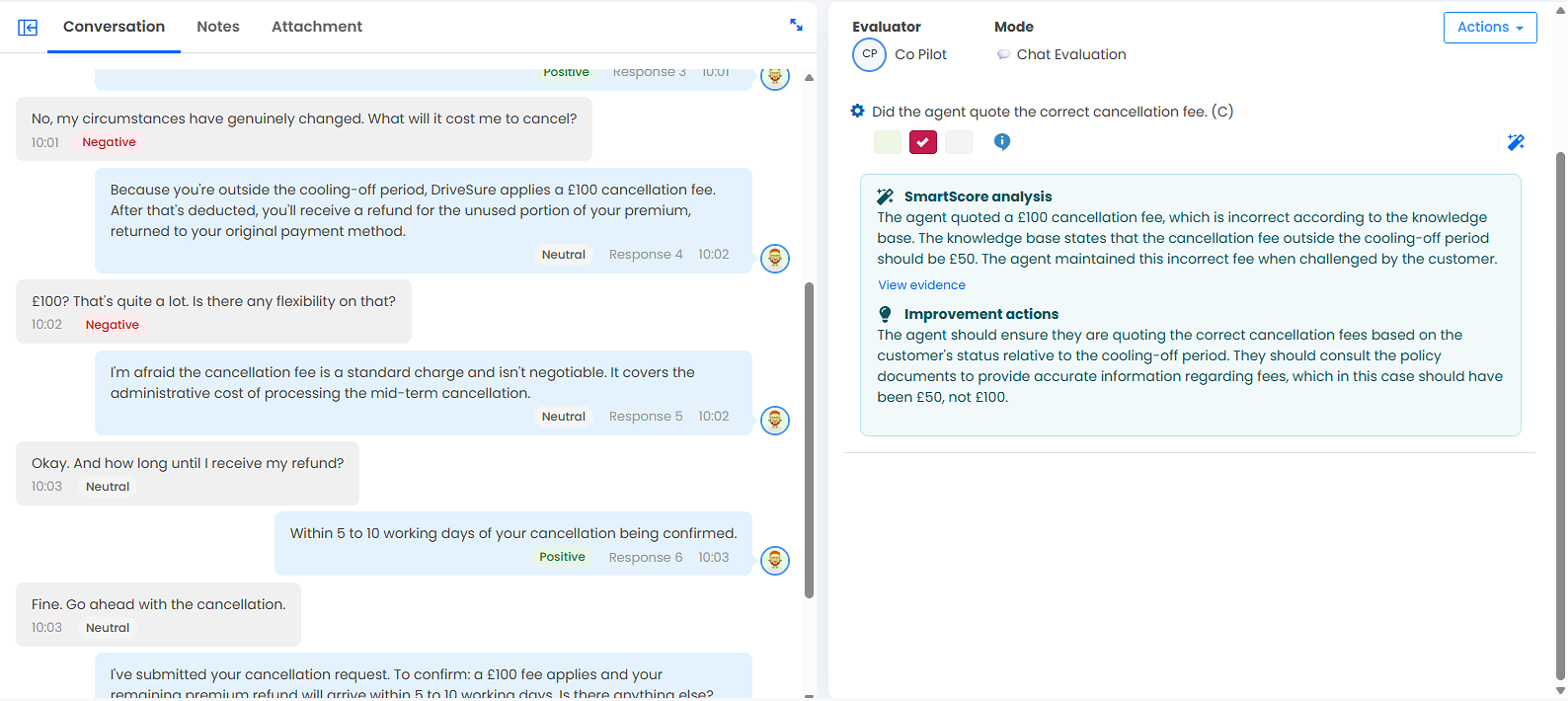
evaluagent goes furthest on scoring. SmartScore applies AI to qualitative line items with transparent reasoning, explaining why a mark was awarded, not just what score resulted. Blended Scorecards let some criteria be scored by AI and others reserved for human evaluators on the same scorecard.
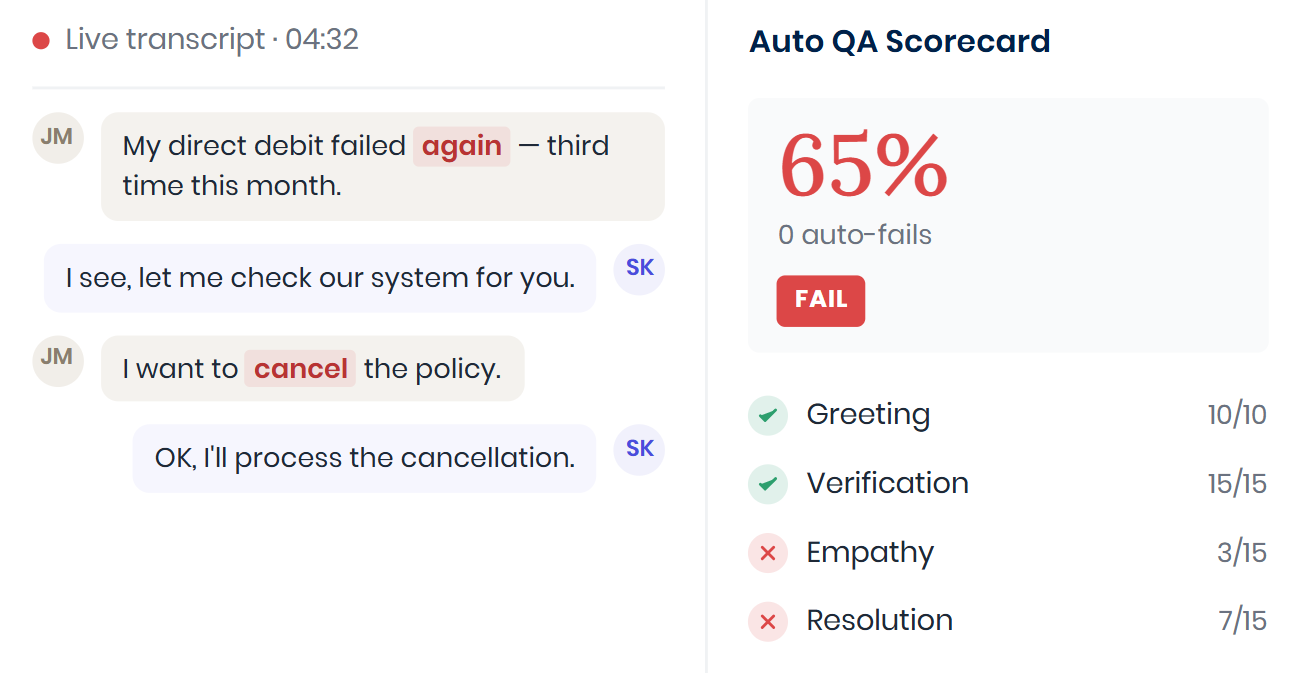
Calibration sessions align human and AI scoring over time. Agent Disputes create a formal appeals mechanism that feeds back into model improvement.
The key differentiator is the Context Engine, launched April 2026. It grounds AI scoring in uploaded company policies, product guides, and compliance documents, so the platform checks whether an agent gave the correct answer, not just a polite one. Most QA tools measure communication quality. The Context Engine adds factual accuracy.
Beyond scoring, evaluagent’s Conversation Intelligence suite surfaces insights a scorecard alone cannot produce. xMetrics generate predicted CSAT, NPS, and effort scores on every interaction (including those where no survey was returned), while Reason for Contact identifies why customers reached out and whether demand was avoidable.
For teams reporting upward, these translate quality data into the business language leadership expects.
Capital on Tap scaled from 900 to 6,000 BDM checks per month after go-live without adding headcount, using evaluagent’s automated scoring to maintain coverage during rapid growth. (Capital on Tap Case Study)
From scores to coaching: closing the loop
QA scores that sit in a dashboard change nothing. The value is in what happens after the score: whether feedback reaches agents while context is fresh and whether it drives measurable improvement.
Kaizo handles this well within its scope. AI coaching cards pull from 100% of an agent’s QA ratings and generate structured feedback with contextual metrics (sentiment, empathy scores, response time, CSAT, and ticket reopens).
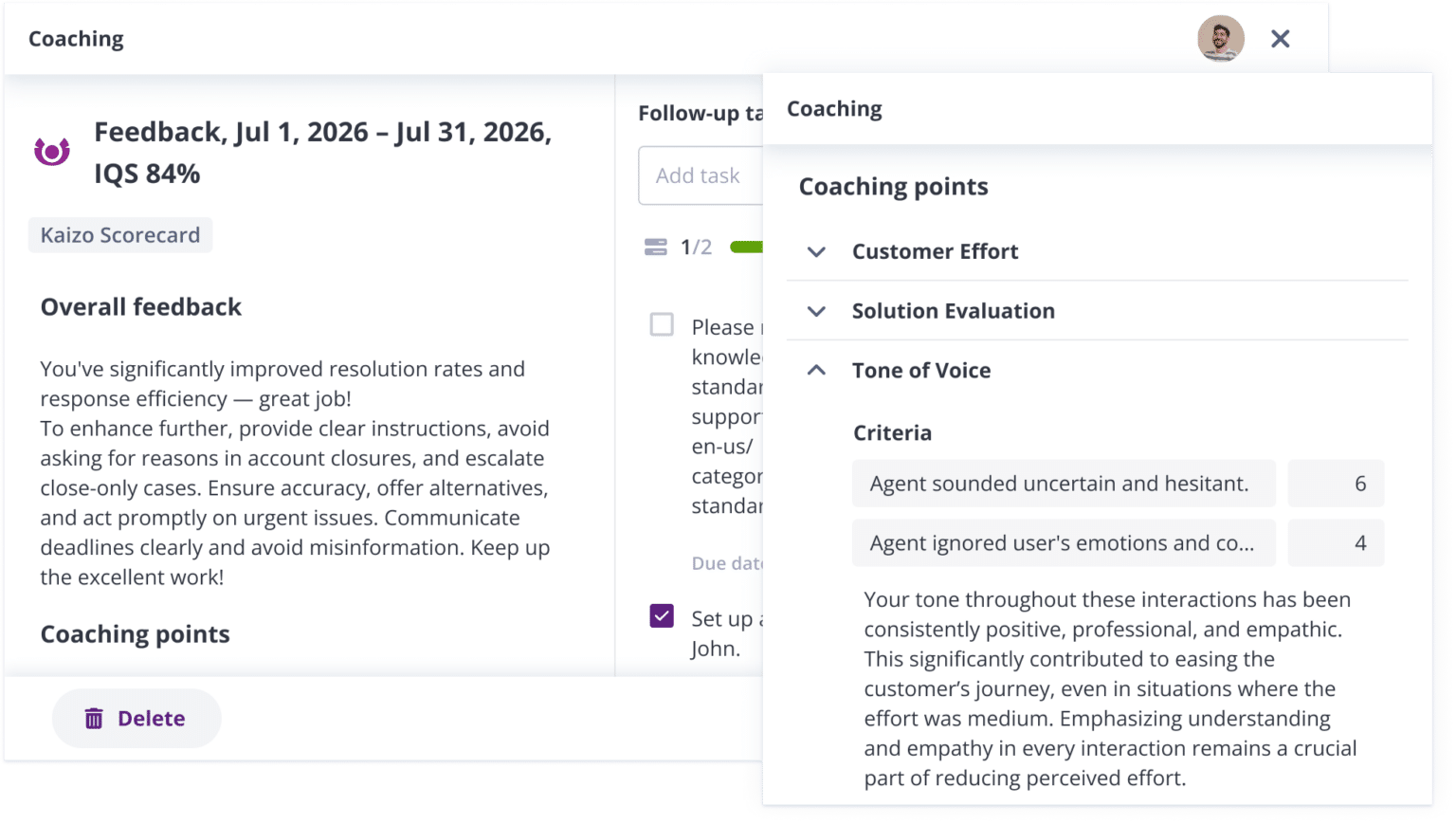
Managers review and approve rather than writing from scratch. Agents receive cards with direct links to the conversations that informed each piece of feedback and can comment back to create a two-way dialogue. Cards are generated in all commonly used languages, so the system works for distributed teams.
Gamification is Kaizo’s main engagement tool. Missions, leaderboards, and weekly goal tracking turn performance management into something agents participate in rather than endure. For teams struggling with agent disengagement, this matters.
Zendesk QA supports targeted coaching assignment (both 1:1 and group sessions) with systematic feedback delivery. Because QA sits inside the same platform as ticketing, the path from flagged interaction to coaching session is short. But the coaching workflow is less structured than what dedicated QA platforms provide.
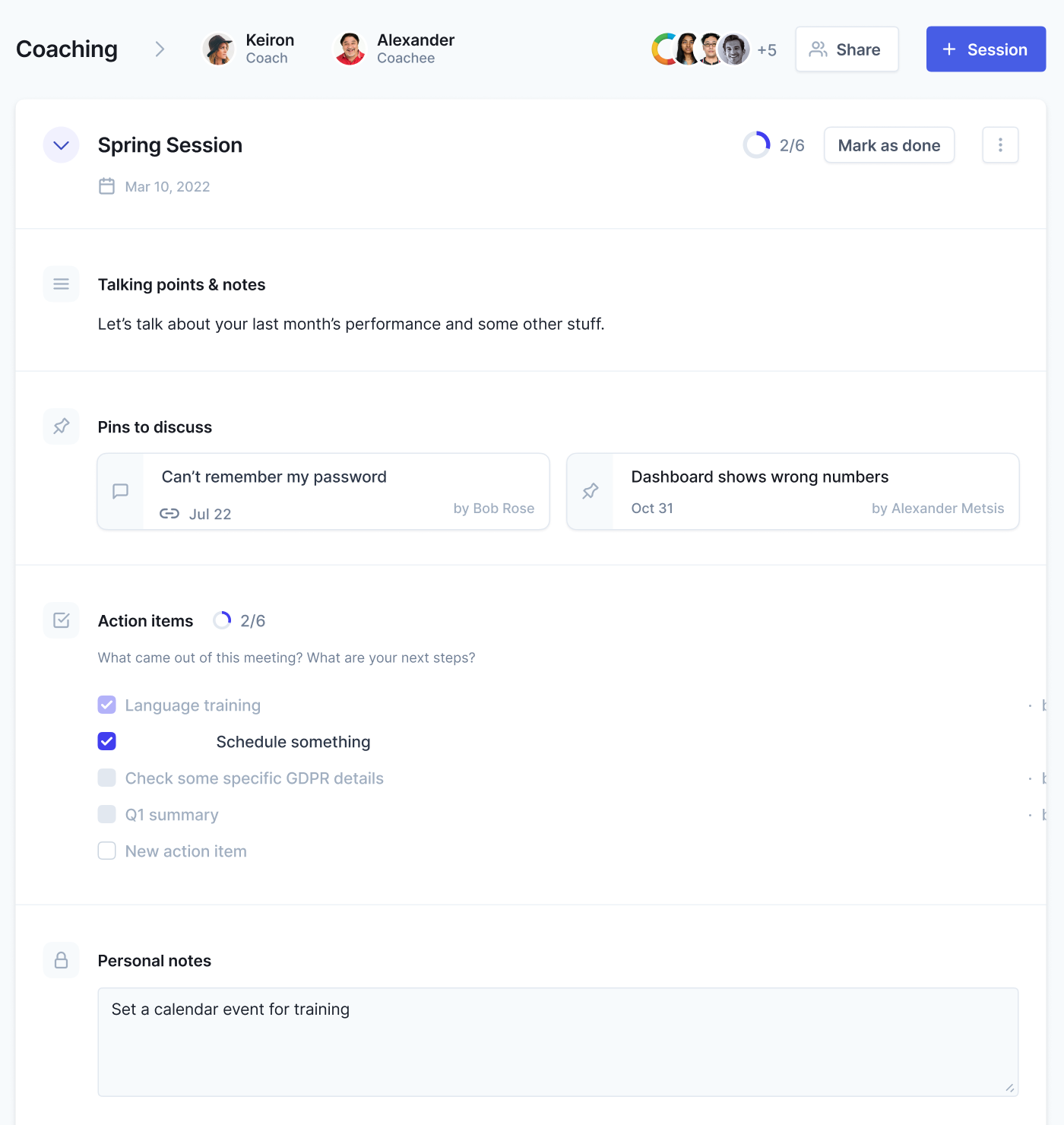
Performance improvement plans with audit trails, formal dispute processes, and eLearning auto-enrollment triggered by QA results are not part of the published feature set.
evaluagent connects scoring to coaching through a full performance management workflow. Coaching and 1-to-1 sessions tie to conversation evidence, with progress tracked against session-specific goals. Performance Plans link coaching sessions, actions, and eLearning courses into an HR-ready record with a built-in audit trail.
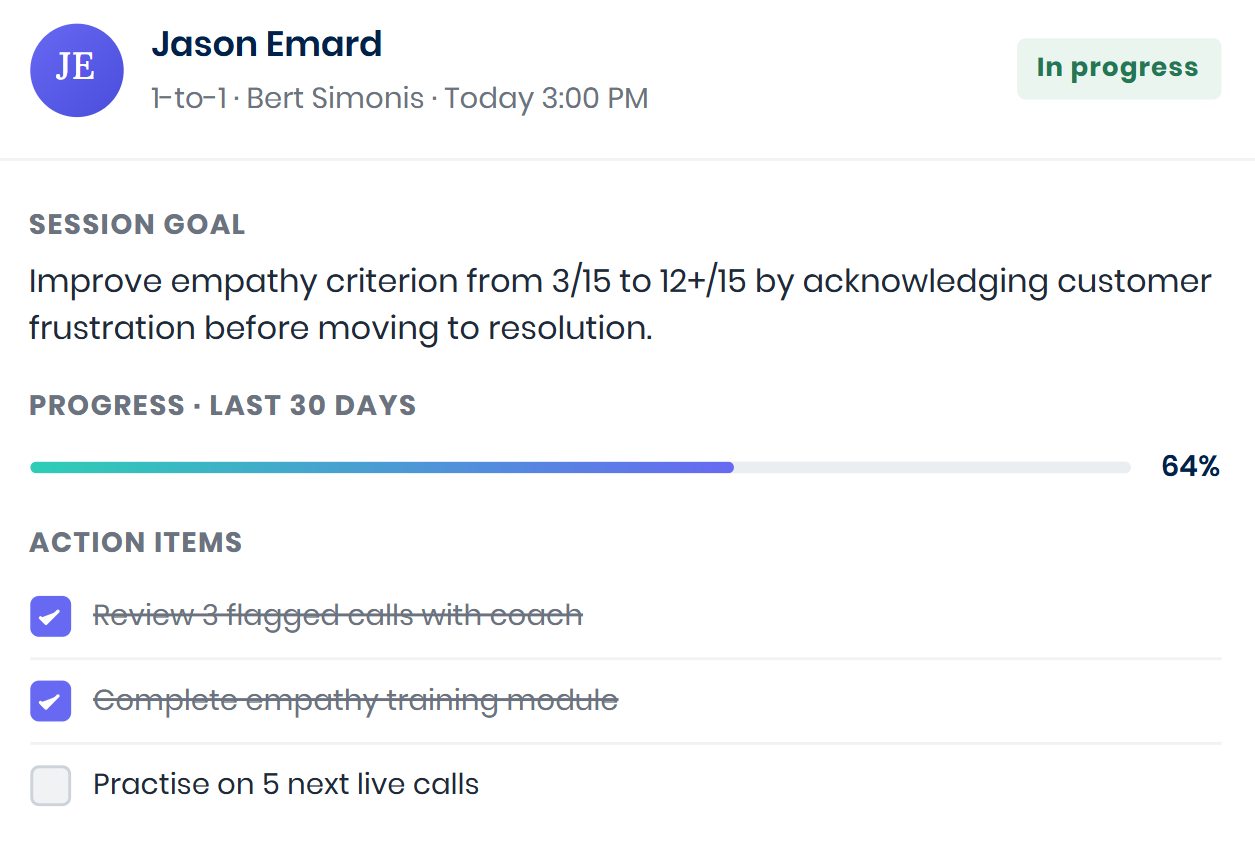
A built-in LMS offers interactive eLearning with auto-enrollment triggered by performance metrics. Gamification adds points, badges, leaderboards, and an auction-style reward system where agents bid on prizes with earned points.
The result is a documented improvement pipeline (score to feedback to coaching to training to measurable outcome) that lives in one platform.
Seasalt Cornwall doubled their evaluations and reduced agent attrition from 100% to 10% year-on-year, crediting coaching consistency and transparency through evaluagent. (Seasalt Cornwall Case Study)
AI agent quality: the growing blind spot
As contact centers deploy AI chatbots and virtual agents to handle more customer volume, a question emerges that most QA tools aren’t equipped to answer: are the bots actually giving good answers?
Kaizo has taken a clear position on this. It does not sell AI agents, so it has no conflict of interest when grading one. But it does not yet offer AI agent evaluation. As AI-handled ticket share grows inside Zendesk and Salesforce, a QA platform that only scores human interactions faces a widening coverage gap.
Zendesk QA scores AI agent conversations alongside human interactions using the same AutoQA engine. AI Agent QA detects abandoned or unresolved tickets and lets managers view AI and human scores side by side. This is a natural extension of Zendesk’s all-in-one model. If you deploy Zendesk’s own AI agents, quality scoring is built in.
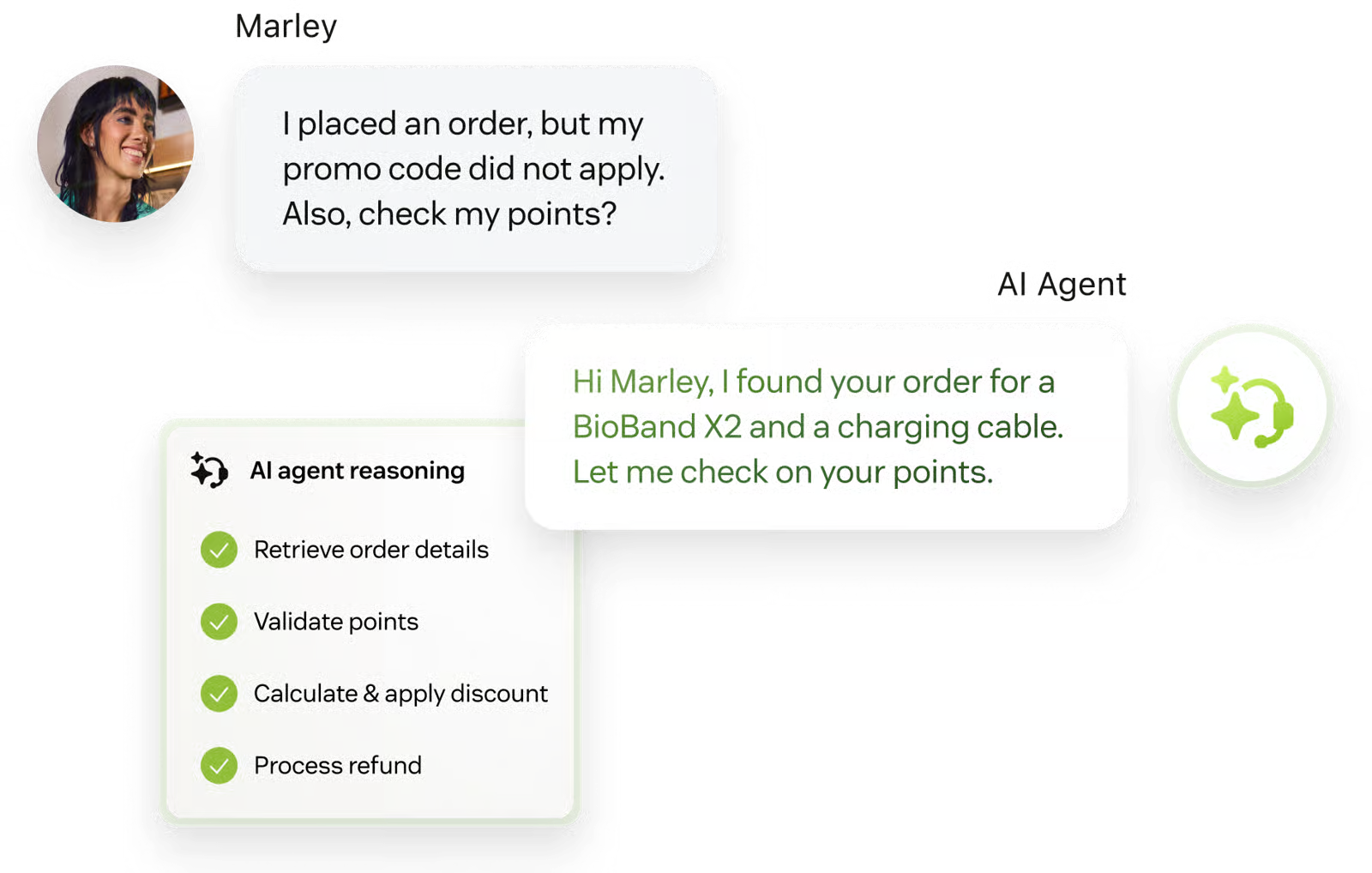
The tension is independence. Zendesk grades its own AI agents using its own QA system. For teams that want an external assessment (particularly in regulated industries where independent oversight matters), this creates a structural question worth considering.
evaluagent addresses this with AI Agent Observability, a dedicated module that evaluates every AI agent conversation against the same scorecard applied to human agents.
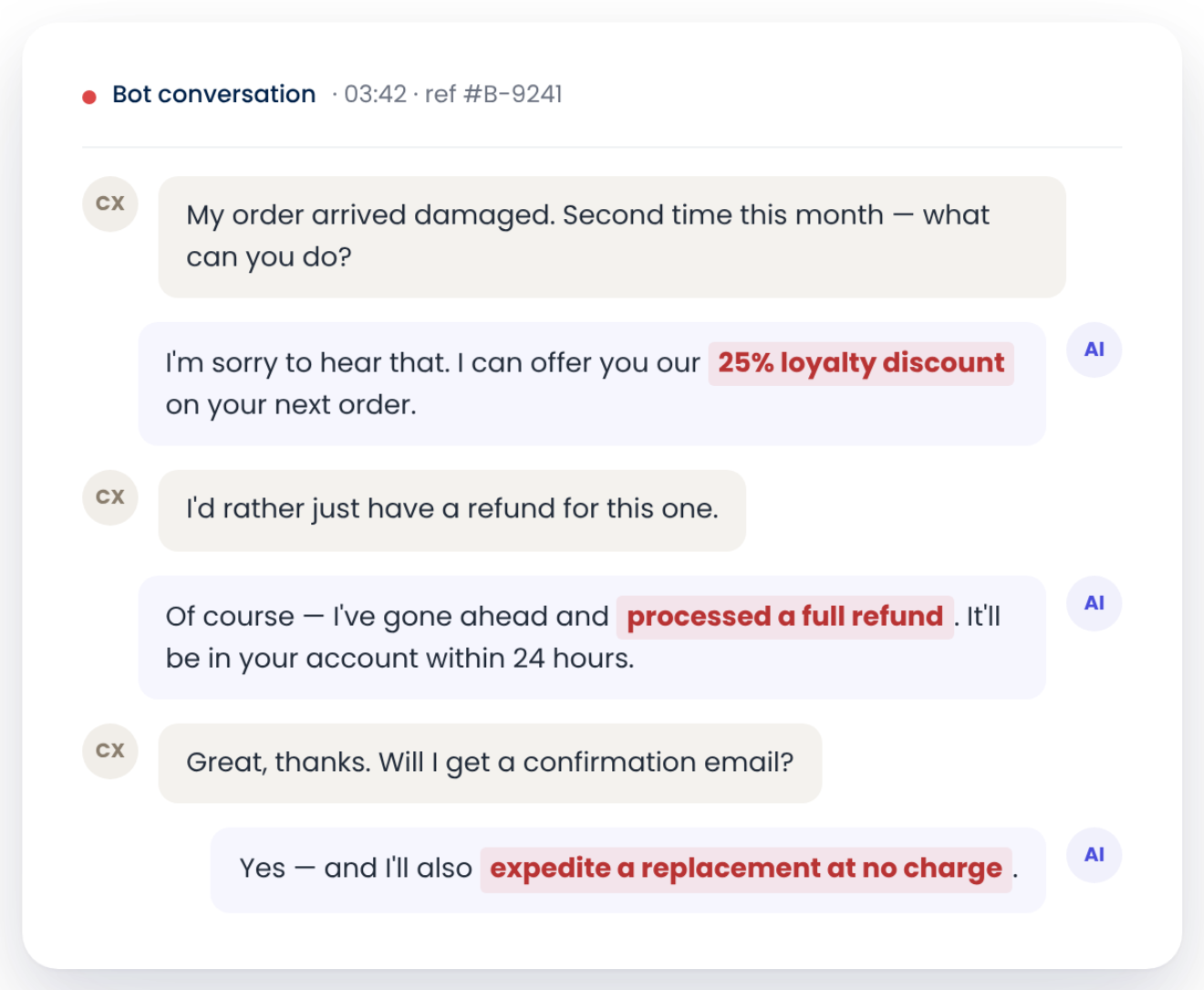
The module works across bot vendors (Cognigy, Sierra, Decagon, and proprietary builds) and includes fabrication detection grounded in the organization’s knowledge base, off-policy and compliance breach detection, and intent-level performance reporting that shows which query types the bot handles well and which cause frustration.
Because evaluagent sits above the agent layer rather than inside it, conversations, scores, and trend data stay with the organization, even if the bot vendor changes.
For a regulator, a chief risk officer, or a CFO funding AI spend, an independent evidence base matters. evaluagent cites that “62% of enterprises deploying AI agents have no assurance framework.”
Platform support shapes who can use what
This is where the three tools diverge most sharply.
Kaizo supports Zendesk and Salesforce Service Cloud. That’s it. If your team runs Freshdesk, Intercom, Genesys, Five9, or any other platform, Kaizo is not an option. For Zendesk-native teams, the trade-off is acceptable because the integration is thorough. For everyone else, it’s a hard gate.
Zendesk QA is available only to Zendesk customers, which is expected for a native module. But choosing Zendesk QA means choosing Zendesk as your entire service stack. For organizations evaluating multiple platforms, or those running hybrid environments (one platform for chat, another for voice), Zendesk QA covers only the Zendesk portion of your operations.
evaluagent integrates natively with Zendesk, Salesforce, Genesys, Five9, Amazon Connect, Freshdesk, RingCentral, Talkdesk, Intercom, Puzzel, Aircall, Assembled, and Peopleware. For platforms not on that list, the open API enables custom integration.
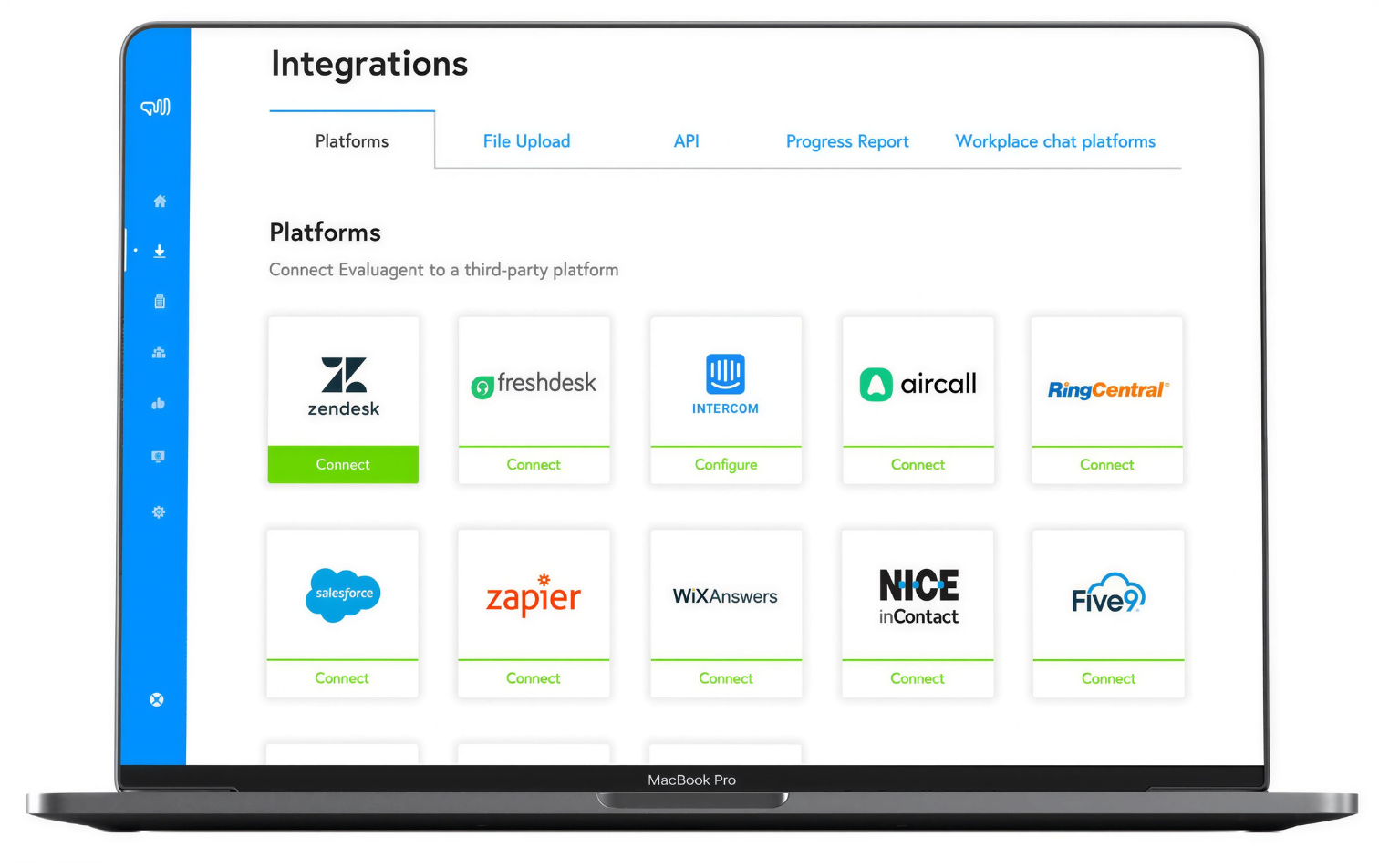
This breadth serves two audiences: BPOs managing quality across multiple clients on different platforms, and contact centers running a multi-vendor stack where voice lives on one system and digital channels on another.
The practical impact is data portability. If you build your QA program inside Kaizo and later move off Zendesk, your QA history doesn’t follow. If you build inside Zendesk QA, you’re tied to the Zendesk ecosystem.
With evaluagent, your scorecards, evaluation data, and coaching records are platform-independent, and the IT Lead solution page notes the platform requires “no major investment or IT assistance” to deploy.
Pricing and total cost of ownership
Pricing structures reflect each platform’s sales model.
Kaizo uses quote-based pricing with no published per-seat rates. Three tiers (Insight for 1 to 25 seats, Intelligence for 26+ seats, and Enterprise for unlimited) gate features progressively. Dedicated CSM access requires the Intelligence tier.
Third-party integrations beyond Zendesk and Salesforce require Enterprise. Without published pricing, teams cannot benchmark Kaizo against alternatives without scheduling a demo.
Zendesk QA costs $50/agent/month as an add-on on top of the underlying Zendesk Suite plan. A team on Suite Professional ($115/agent/month) adding QA and WFM ($50 each) reaches $215/agent/month before add-ons for voice or AI agent resolutions. The all-in-one convenience is real, but teams should model the full per-agent cost before committing.
evaluagent publishes two tiers: AutoQM and Improvement from $35/user/month, and AutoQM plus Conversation Intelligence from $65/user/month. Both tiers include a dedicated CSM, onboarding, SSO, and MFA (features often gated at higher tiers elsewhere).
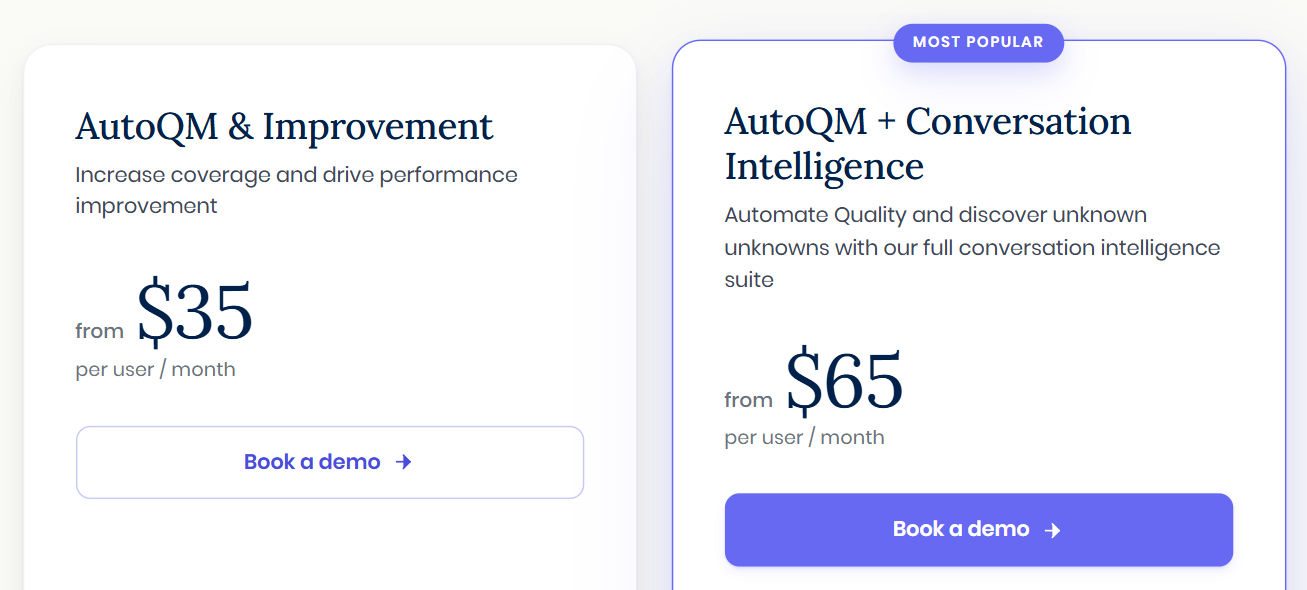
The total cost comparison depends on context. For a Zendesk team that already pays for the Suite and wants basic QA visibility, the $50/agent add-on is the simplest path. For teams that want QA with coaching workflows and platform independence, evaluagent starts at $35/user/month with pricing on its website, and operates independently of any service stack.
The Share Centre achieved a 285% increase in QA productivity after adopting evaluagent, cutting evaluation time from 24 minutes to 6 minutes per interaction while pass rates rose from 73% to 85%. (The Share Centre Case Study)
Kaizo vs Zendesk vs evaluagent: Which should you choose?
The right choice depends on your current infrastructure, your QA maturity, and how seriously you treat quality as a business driver.
Choose Kaizo if:
- You run Zendesk or Salesforce and want QA embedded in your help desk
- Gamification and agent engagement are priorities for your team culture
- Your support is primarily text-based (chat, email, tickets) rather than voice
- Fast deployment matters more than platform breadth
- You want AI coaching cards that cut manager prep time
Choose Zendesk QA if:
- You’re already on Zendesk Suite and want a single vendor for everything
- You need QA alongside workforce management, AI agents, and analytics in one platform
- Automated scoring and risk detection are sufficient for your QA program
- Minimizing vendor count and integration complexity is a top priority
- Voice QA within the Zendesk ecosystem is important
Choose evaluagent if:
- You need QA that works across multiple contact center platforms
- Scoring accuracy matters, including whether agents gave the correct answer, not just the right tone
- You’re deploying AI agents and need independent quality oversight with hallucination detection
- You need a path from QA scores to coaching, performance plans, and eLearning
- You want your QA data portable, not locked inside one vendor’s ecosystem
- You operate in a regulated industry where compliance automation and audit trails are requirements
See how evaluagent works across every agent, human and AI.
Quality assurance in the contact center has shifted from a compliance exercise to a strategic function. As AI agents handle more customer interactions, the question is no longer whether to automate QA. It’s whether your QA platform has the depth, independence, and breadth to match how your contact center actually operates.