Choosing between NICE CXone and Talkdesk for your contact center often comes down to five questions:
- Do you need the broadest feature suite under one roof, or a faster-moving platform with industry-specific capabilities?
- Are you running 500+ agents in a heavily regulated environment, or a mid-market operation that values quick deployment?
- Is your quality assurance program a compliance checkbox, or a lever for agent performance and customer outcomes?
- Do you want your quality management locked to your CCaaS vendor, or independent from it?
- Are you deploying AI agents and need governance that doesn’t come from the bot vendor itself?
In short, here’s what we recommend:
NICE CXone is the enterprise CCaaS platform with the widest feature set in the market. Its omnichannel routing, workforce management, interaction analytics, and AI capabilities under a single cloud platform earned it Gartner Magic Quadrant Leader status for 11 consecutive years, positioned furthest on Completeness of Vision.
For large contact centers running 500+ agents that want to consolidate multiple point solutions into one contract, CXone delivers breadth no competitor matches. The trade-off is complexity: pricing spans five tiers with numerous add-on SKUs, and the built-in quality management module costs extra in most tiers.
Talkdesk paired a modern CCaaS with industry-specific capabilities. Its Industry Experience Clouds for healthcare, financial services, retail, and other verticals come with specialized integrations, workflows, and AI agents. The platform’s repositioning around Customer Experience Automation (autonomous AI agents that resolve issues without human intervention) gives it traction in the AI-first market.
Talkdesk returned to Gartner Magic Quadrant Leader status in 2025 after two years as a Visionary. The limitation? Quality management and interaction analytics are separately priced CXA products, not included in any base tier.
Both platforms are strong CCaaS choices. But here’s what the comparison usually misses: quality management, the discipline that determines whether your agents actually improve, is treated as one module among dozens in both platforms. For organizations where agent quality drives business outcomes, there’s a third approach worth considering.
evaluagent is the independent, CCaaS-agnostic quality assurance and performance improvement platform built for contact centers that prioritize quality. Instead of offering QA as a side feature inside a larger suite, evaluagent makes it the entire product. AutoQA scores 100% of conversations automatically across voice, chat, and email, then connects those scores to coaching, performance plans, and gamification.
The Context Engine grounds AI scoring in your company’s own policies and knowledge base, so evaluations assess whether agents gave the right answer, not just the right tone. evaluagent integrates natively with NICE CXone, Talkdesk, Genesys, Five9, Amazon Connect, and more, meaning you can pair it with whichever CCaaS you choose.
If independent, full-coverage quality management sounds like the missing piece in your contact center stack, see how evaluagent works.
NICE CXone vs Talkdesk vs evaluagent at a glance
| NICE CXone | Talkdesk | evaluagent | |
|---|---|---|---|
| Primary function | Full CCaaS platform | CCaaS + CX Automation | QA & performance improvement |
| QA coverage | 100% via QM AI (add-on in most tiers) | 100% via Interaction Analytics (separate CXA product) | 100% via AutoQA (core product) |
| Coaching workflow | Performance Management module | Performance Management module | Coaching, 1-to-1s, performance plans, gamification, LMS |
| AI agent governance | Workforce Empowerment Suite (2026) | CXA Operations Center | Dedicated AI Agent Observability with fabrication detection |
| CCaaS capabilities | Full omnichannel routing, IVR, WFM | Full omnichannel routing, IVR, WFM | Not included (overlay on any CCaaS) |
| Vendor independence | Tied to CXone ecosystem | Tied to Talkdesk ecosystem | Works with any CCaaS or CRM |
| Analyst recognition | Gartner CCaaS Leader, 11 consecutive years | Gartner CCaaS Leader (2025, after 2 years as Visionary) | G2 Leader, Contact Center QA (Summer 2026) |
| Starting price | $110/agent/month | $85/user/month | $35/user/month |
| QM in base price | Only at $249/month Ultimate tier | No, separately priced | Yes, from $35/user/month |
| Best for | Large enterprises consolidating onto one platform | Mid-market and industry-specific contact centers | Organizations where quality is the priority, on any CCaaS |
Platform scope: enterprise suite vs. mid-market agility
NICE CXone and Talkdesk take different approaches to the CCaaS market, and understanding that difference matters more than any feature-by-feature comparison.
NICE CXone is the consolidation play.
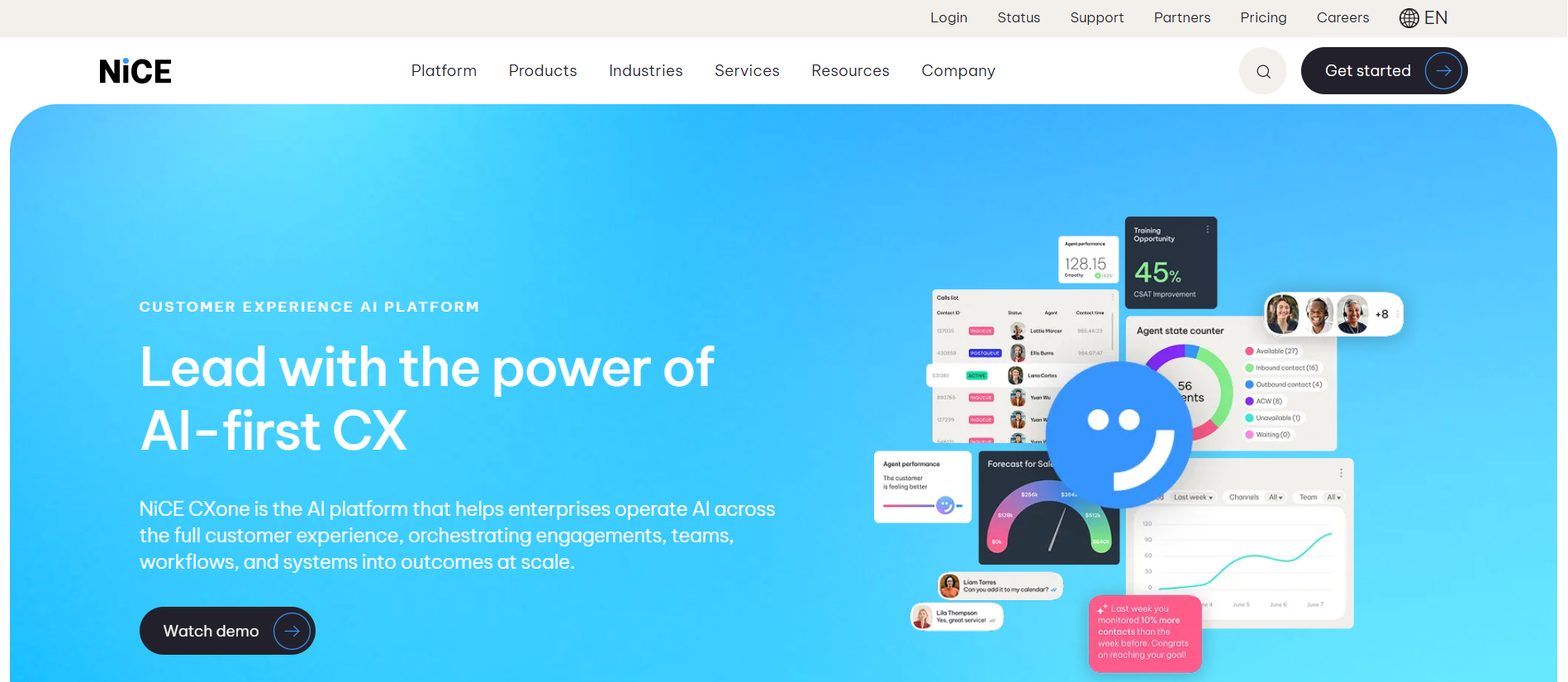
The platform brings omnichannel routing, IVR, workforce management, quality management, interaction analytics, recording, performance management, AI agent deployment, and knowledge management under one cloud tenant.
Forrester gave it the highest possible scores in 17 evaluation criteria in the Q2 2025 CCaaS Wave, calling it the broadest capability set in the industry. For enterprises running five or more point solutions across WFM, QA, analytics, and routing, CXone offers a single contract and a single data model.
The depth is real. NICE’s Enlighten AI models are trained on contact center interaction data, not generic language tasks. The 2025 acquisition of Cognigy for $955 million added conversational and agentic AI to the platform, and revenue reached $2.945 billion in FY2025 with cloud revenue growing 13% year over year. The platform serves 25,000 organizations in more than 150 countries.
But breadth has a cost. Users consistently report too many separately priced SKUs where bundling would be expected. Built-in reporting is difficult to customize and prone to inconsistencies between report types. And implementation requires sustained IT investment that puts it out of reach for organizations below 200-300 agents.
Talkdesk bet on vertical depth and AI speed.

The platform’s Industry Experience Clouds for healthcare (with EHR integrations for Epic, Oracle Cerner, and athenahealth), financial services, retail, and other verticals come with pre-built workflows and AI agents trained on domain-specific scenarios.
The Agent Builder (launched June 2026) lets teams create production-ready AI agents using plain language, and the CXA Operations Center (March 2026) provides governance across human and AI agents.
Talkdesk’s ease of use is a real differentiator. G2 reviewers rate it 4.4 out of 5 across 2,496 reviews, and the drag-and-drop Studio flow builder lets non-engineers modify routing without code. The weakness is WFM depth.
Forrester named Talkdesk a Strong Performer rather than a Leader in the Q2 2025 CCaaS Wave, citing limited workforce management capabilities. For organizations needing enterprise-scale WFM, Talkdesk offers a Verint WFM integration as an alternative path.
Quality management: built-in module vs. dedicated platform
Both NICE CXone and Talkdesk offer quality management. In both cases, QM is one feature among dozens, priced and positioned accordingly.
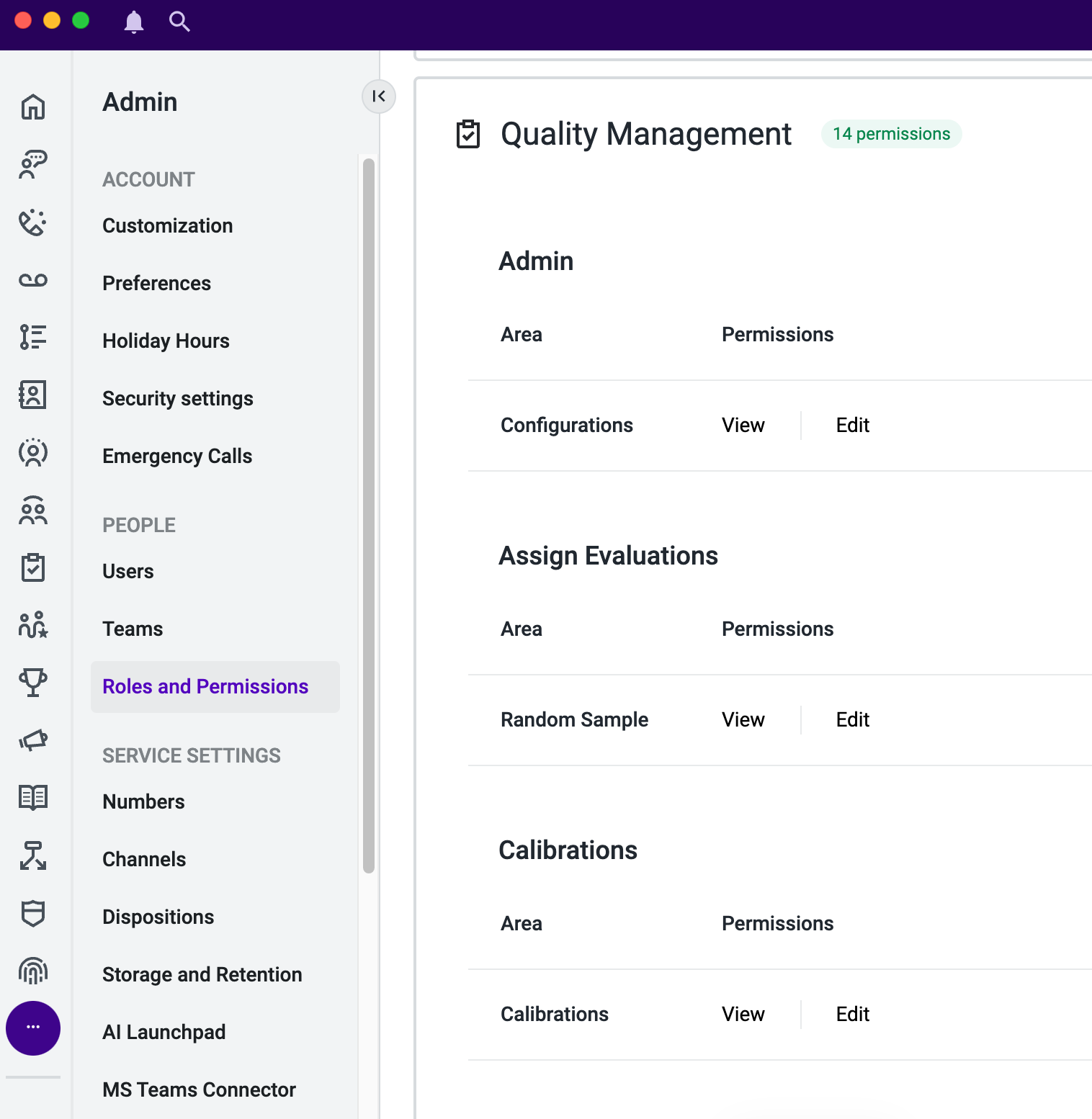
NICE CXone’s Quality Management uses Enlighten AI models to automatically score 100% of interactions across voice, chat, email, social, and CRM tickets.
Supervisors receive AI-generated summaries highlighting agent strengths and skill gaps. It benefits from sitting on the same data layer as NICE’s interaction analytics and WFM. The catch: QM is included only at the $249/month Ultimate tier.
At every lower tier, it’s an add-on with separately negotiated pricing. For a 200-agent operation already paying $110-$169 per seat for the base CCaaS, QM becomes yet another line item.
Talkdesk splits quality capabilities across two products.
Quality Management provides AI-powered automated scoring and manual evaluation workflows. Interaction Analytics adds transcription, sentiment analysis, and topic discovery across 100% of interactions. Both are separately priced CXA products that require direct sales engagement, layered on top of your $85-$225/user/month CCaaS seat cost. Pricing for these add-ons is not publicly disclosed.
evaluagent treats quality assurance as the core product, not a module.
AutoQA scores 100% of conversations starting at $35/user/month, which includes the Context Engine for knowledge-grounded scoring, SmartScore for AI-scored qualitative line items with transparent reasoning, Blended Scorecards that mix AI and human evaluation on the same form, a Testing Console for validating scoring changes against real conversations before deployment, and Agent Disputes that feed back into model accuracy.
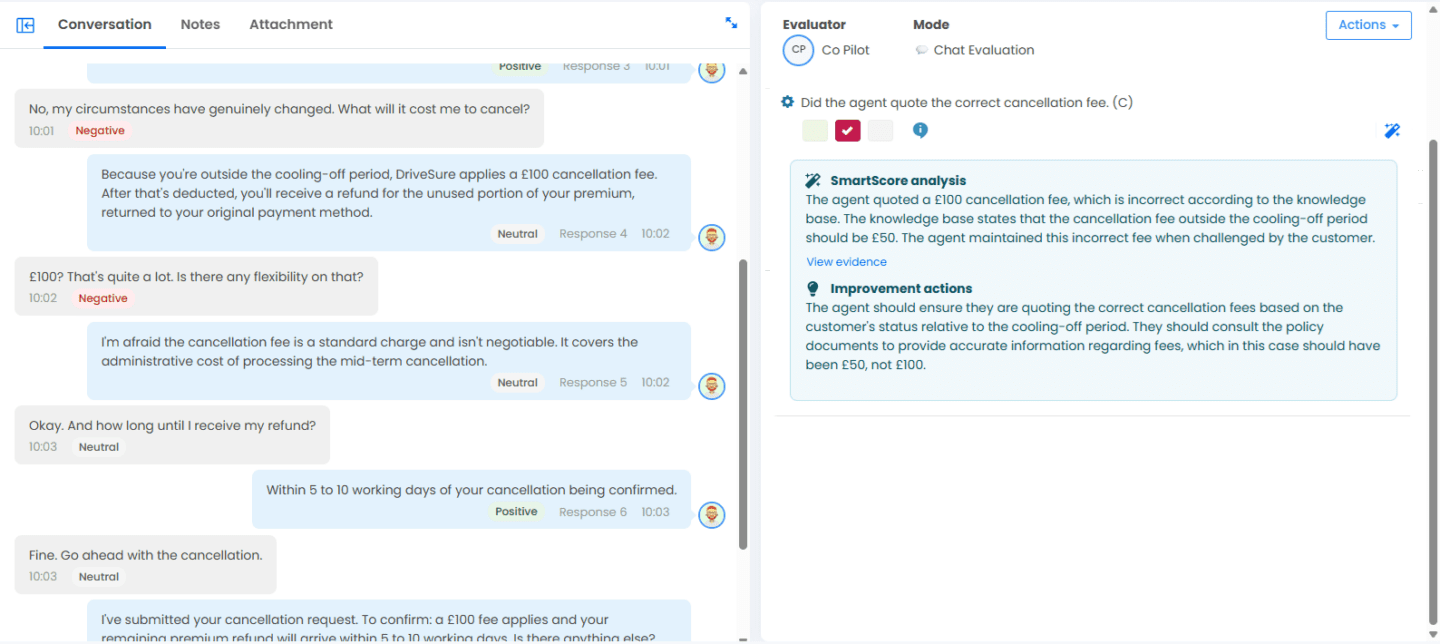
The Context Engine deserves attention.
Both NICE and Talkdesk score whether agents handled the conversation well: empathy, process adherence, communication skills. evaluagent’s Context Engine adds a layer that validates whether agents gave the factually correct answer by grounding AI scoring against uploaded company policies, product guides, and compliance documents.
It’s the difference between knowing your agent was polite and knowing your agent was right.
Calibration sessions keep human and AI scoring aligned over time, while the Testing Console lets QA managers trial any change against historical conversations before going live. Pre-launch validation and calibration are capabilities worth prioritizing in any QM evaluation. Ask any vendor how they let you test scoring changes before they go live.
evaluagent’s Conversation Intelligence suite extends the QA argument: AutoQA defines whether agents met the standard, while CI shows what the standard should be next.
Predicted satisfaction (xCSAT), effort (xCES), and NPS scores are generated on every interaction (including those where no survey was returned), giving QA leaders metrics their executives actually use. Spotlight identifies why patterns are occurring, and Reason for Contact surfaces demand that could be deflected to self-service.
Both NICE and Talkdesk offer interaction analytics, but evaluagent’s CI was built alongside AutoQA rather than acquired or added as a separate module, so scoring and insight share one data model.
The Share Centre achieved a 285% increase in QA productivity after deploying evaluagent, cutting evaluation time from 24 minutes to 6 minutes per interaction while pass rates rose from 73% to 85%. (The Share Centre Case Study)
AI agent governance: who watches the bots?
As contact centers deploy AI chatbots and virtual agents, a governance gap has emerged. Bot vendors report containment rates, but they cannot objectively tell you whether the answers were correct, compliant, or consistent with your company’s policies. Each platform addresses this gap differently.
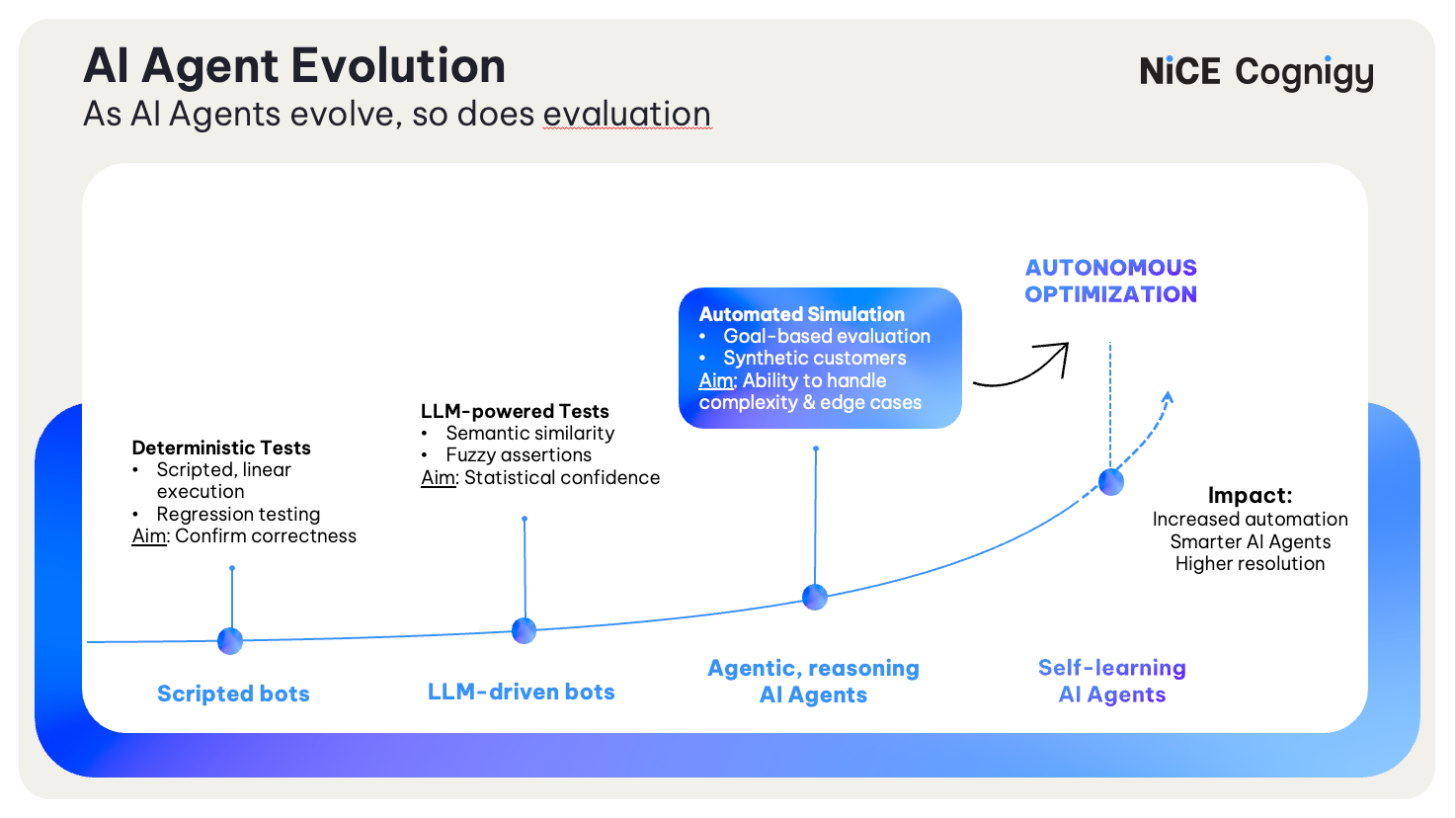
NICE CXone responded in June 2026 with the Workforce Empowerment Suite, which manages human and AI agents under one operating model with identical governance, quality standards, and performance metrics.
The Cognigy Simulator provides a testing lab for agents before production deployment. The capability is real, but it’s bound to the CXone ecosystem and the Cognigy AI agent layer that NICE acquired.
Talkdesk’s CXA Operations Center (launched March 2026) provides real-time observability, session-level execution traces, and configurable guardrails that prevent hallucinations and policy violations.
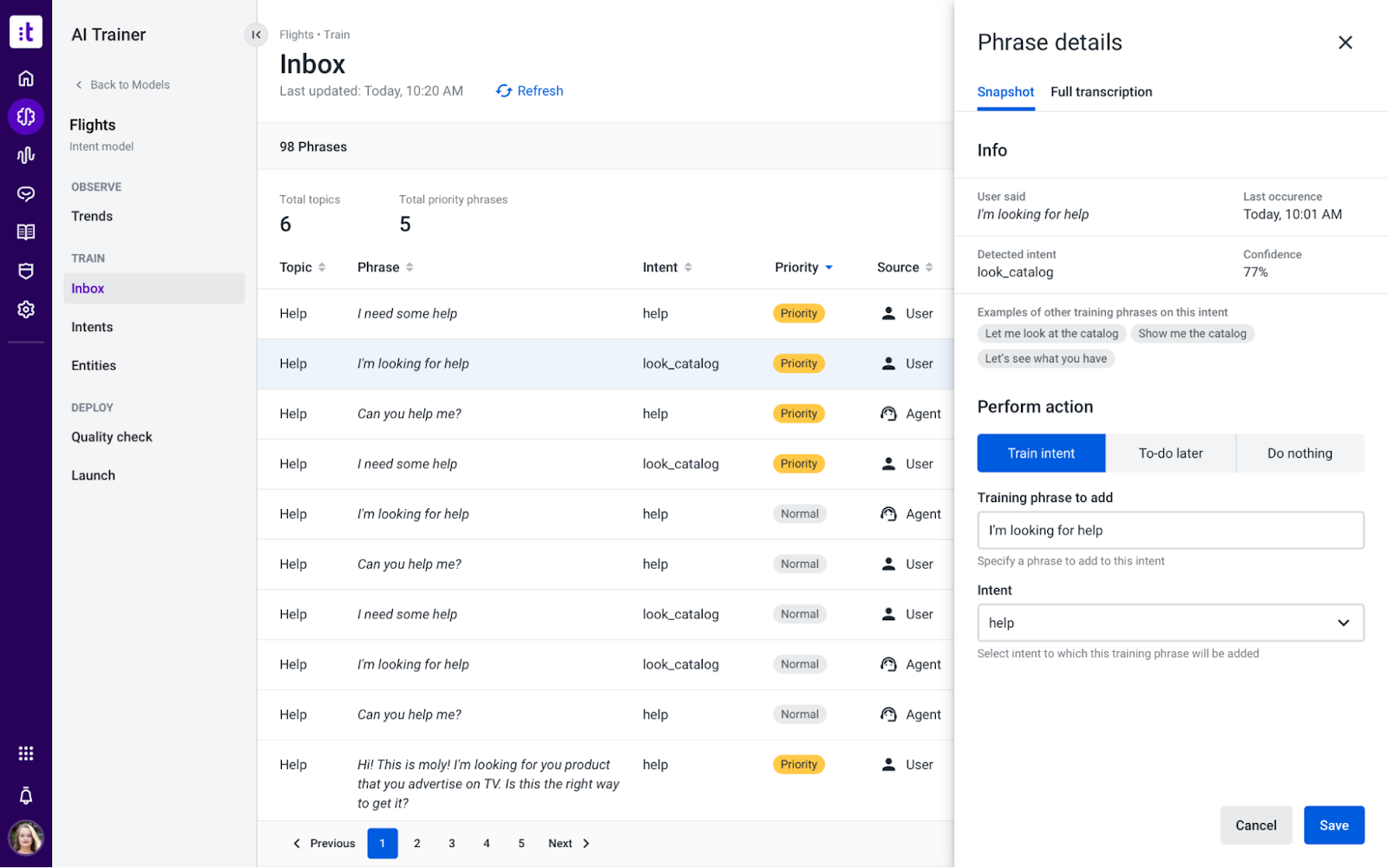
It lets business teams guide, test, and improve AI behavior without data science resources. The limitation: it governs Talkdesk’s own Autopilot agents, not third-party bots from other vendors.
evaluagent’s AI Agent Observability takes a vendor-independent approach.
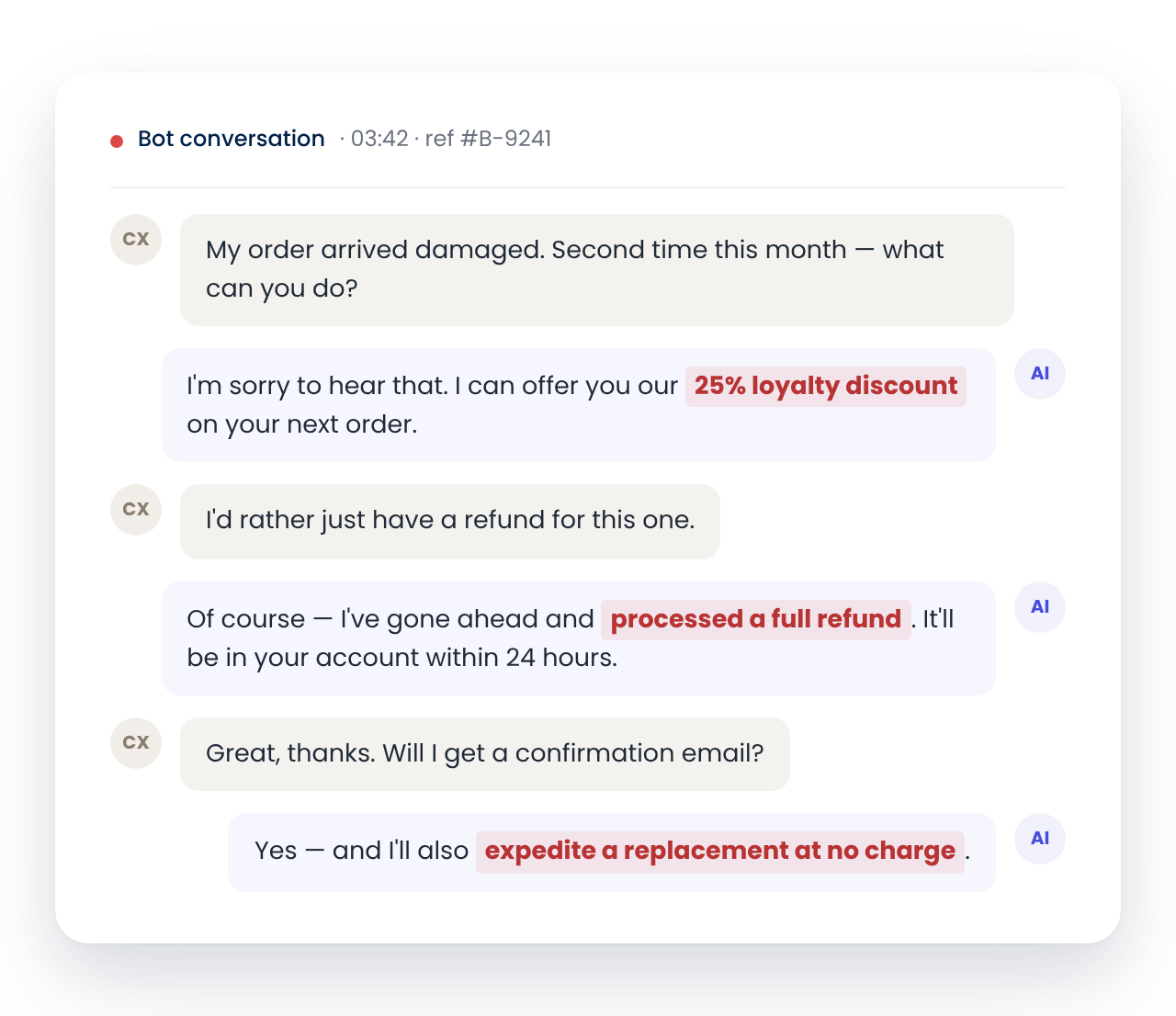
It evaluates conversations from any bot platform (Cognigy, Sierra, Decagon, or proprietary builds) against the same scorecards used for human agents. Fabrication detection is grounded in the organization’s own knowledge base, flagging when a bot invents information or contradicts sanctioned content.
Cross-vendor scoring lets teams compare AI agent quality across providers and against their best human agents on a single dashboard.
evaluagent’s positioning is direct: a regulator, a chief risk officer, or a CFO underwriting AI spend needs an independent evidence base, not the bot vendor’s self-reported metrics. And because conversation data and quality history sit in evaluagent rather than the bot platform, switching bot vendors doesn’t mean losing your governance record.
For organizations that source AI agents from multiple vendors, or plan to switch providers as the market matures, this independence is an advantage that neither NICE’s nor Talkdesk’s platform-native tools can provide.
The pricing math changes the comparison
The cost difference between these three approaches is large enough to reshape how you think about the decision.
NICE CXone starts at $110/agent/month for the Omnichannel Suite and scales to $249/agent/month for the Ultimate Suite plus $0.25 per session.
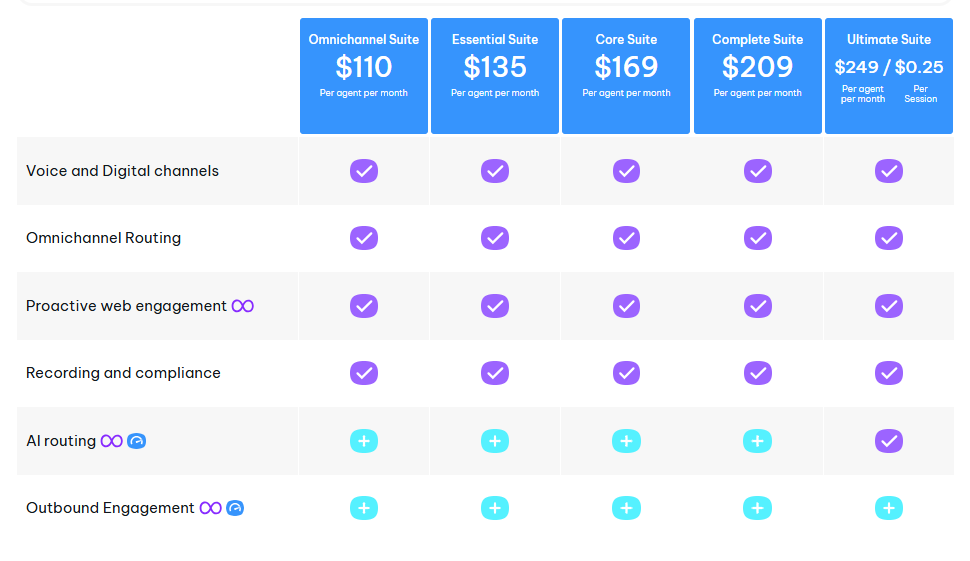
Quality Management is included only at the Ultimate tier. At every lower tier, QM, WFM, Performance Management, Interaction Analytics, and Copilot features are add-ons or consumption-based charges. Users report that adding new capabilities requires separate licenses, adding procurement complexity. Multi-year commitments are required to unlock volume discounts.
Talkdesk starts lower, at $85/user/month for Digital Essentials.
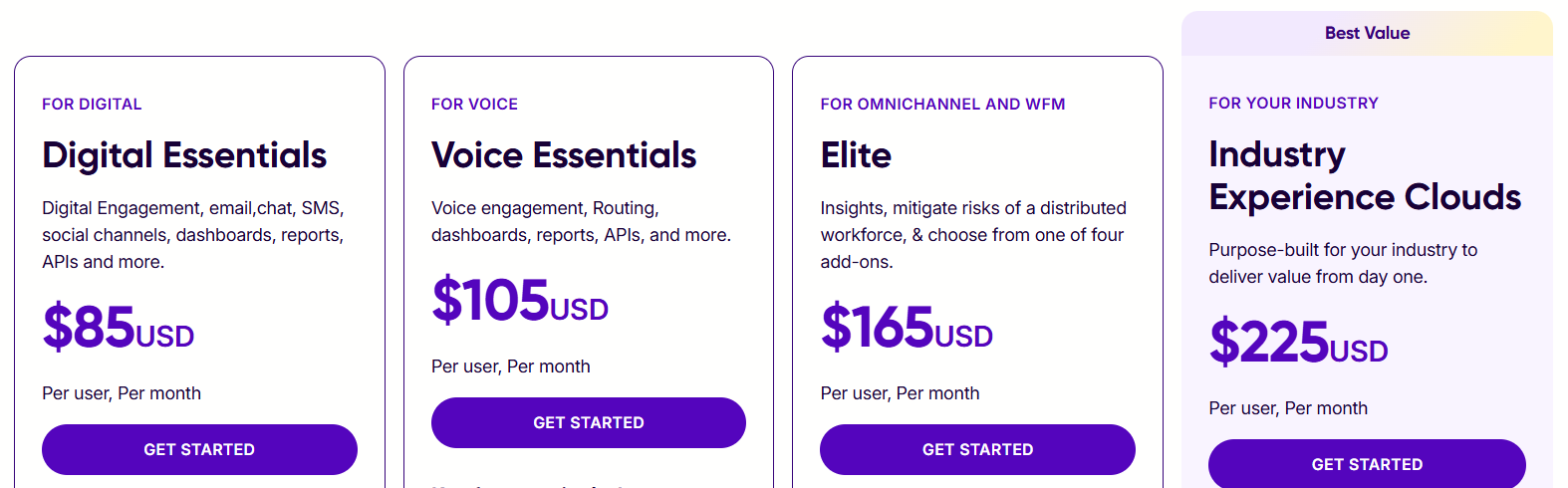
The Elite tier at $165/user/month is the first plan to include WFM, and the Industry Experience Clouds at $225/user/month layer on vertical-specific capabilities. Quality Management and Interaction Analytics are priced separately as CXA products with no published per-unit costs. CRM connectors for Salesforce, ServiceNow, and Microsoft Teams are separate paid add-ons even in higher tiers.
evaluagent starts at $35/user/month for AutoQA and Improvement and $65/user/month for the full bundle including Conversation Intelligence.
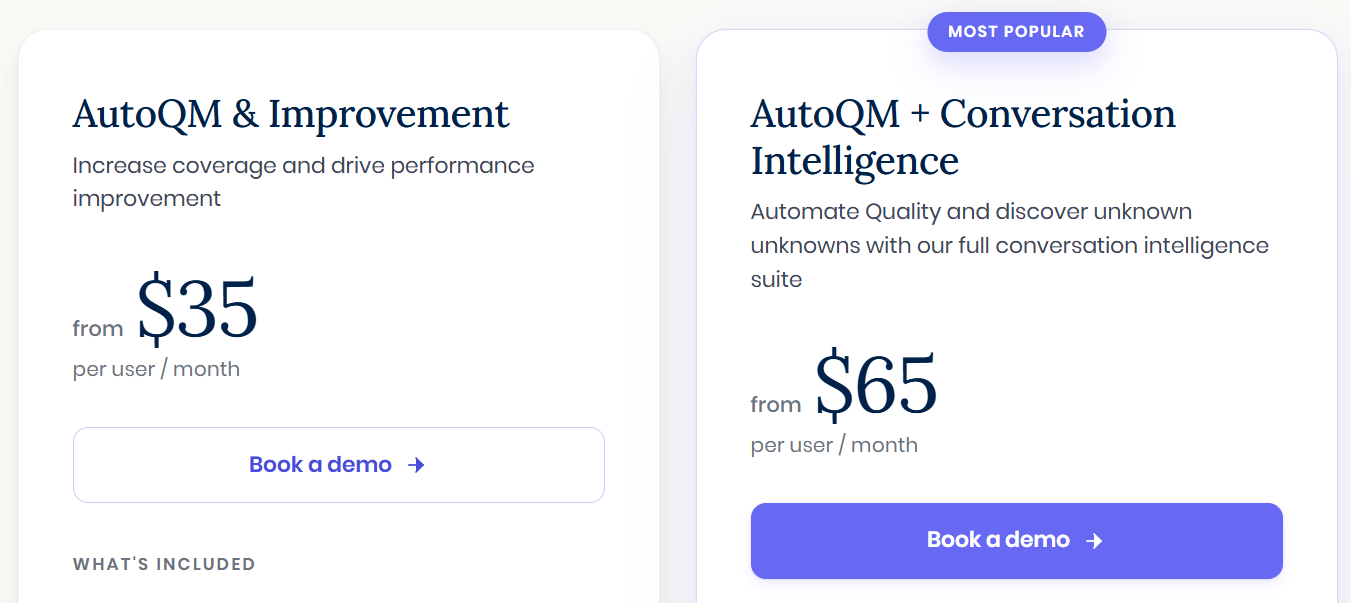
To make the comparison concrete: a 200-agent contact center buying NICE CXone’s Complete Suite ($209/agent/month) would spend $41,800 per month on CCaaS seats alone, before Quality Management add-on costs.
That same organization could run a less expensive CCaaS base tier alongside evaluagent’s full bundle at $65/user/month ($13,000/month for QA), saving tens of thousands monthly while getting better QA capabilities.
evaluagent is not a CCaaS replacement. You still need a platform for routing, telephony, and IVR. But for the QA and performance improvement layer, it costs a fraction of what the built-in modules add to your CCaaS bill, and it delivers capabilities that justify the separation.
Capital on Tap scaled from 900 to 6,000 BDM quality checks per month immediately after going live with evaluagent, without adding QA headcount. (Capital on Tap Case Study)
Vendor independence vs. platform lock-in
NICE CXone and Talkdesk both benefit from tight internal integration.
Quality scores feed performance dashboards, routing data informs WFM forecasts, and interaction analytics powers coaching workflows. When everything runs on one platform, data flows naturally.
But this integration creates switching costs. Move from NICE CXone to another CCaaS and your quality history, scoring models, coaching records, and performance data stay behind. The same applies to Talkdesk. Every month spent building QA intellectual property inside a CCaaS platform deepens the lock-in.
evaluagent is CCaaS-agnostic by design.
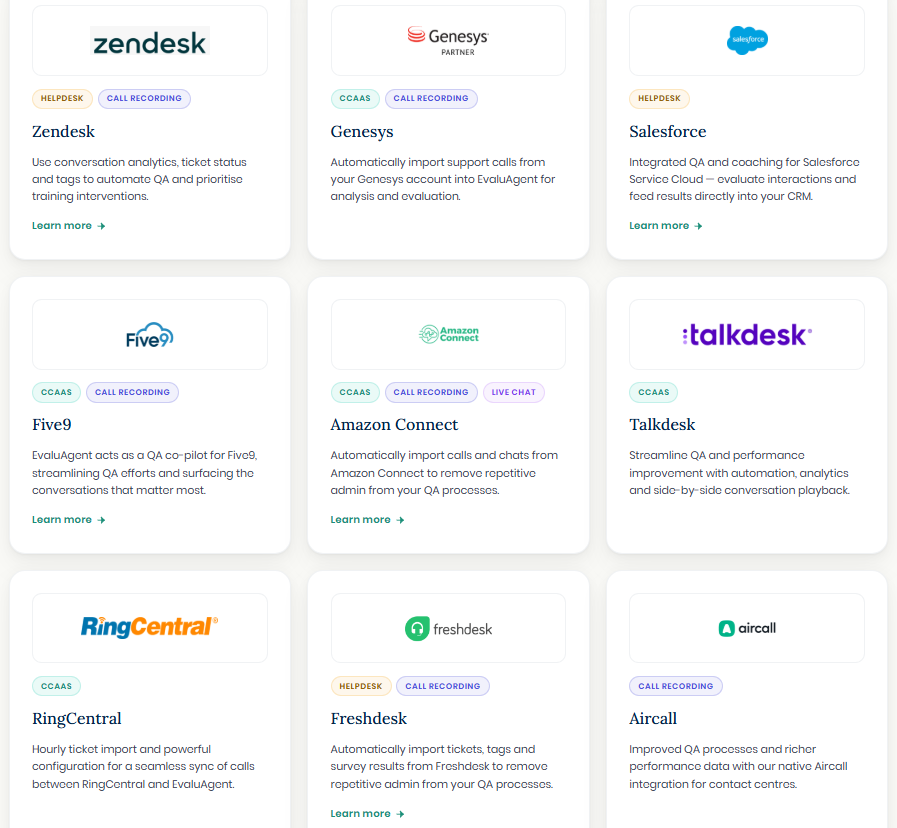
It integrates natively with NICE CXone, Talkdesk, Genesys, Five9, Amazon Connect, Zendesk, Salesforce, Freshdesk, RingCentral, Intercom, Puzzel, Aircall, Assembled, and Peopleware. For platforms not on the native list, the open API handles custom connectivity.
This matters in three specific scenarios.
First, BPOs managing multiple clients on different CCaaS platforms can maintain one quality standard across all of them, with dashboards segmented by client, team, or agent regardless of the underlying infrastructure, and no requirement for client IT investment to deploy.
Second, organizations evaluating a CCaaS migration (from NICE to Talkdesk, from an on-premise system to any cloud CCaaS, or between any two providers) can keep their quality history intact through the transition.
Third, contact centers running Talkdesk can use evaluagent’s native Talkdesk integration to add improved QA and coaching on top of Talkdesk’s CCaaS strengths, getting the best of both platforms rather than relying on the built-in QM module alone.
That last point changes the framing of the NICE vs. Talkdesk comparison. If you choose Talkdesk for its industry-specific capabilities and ease of use, you’re not stuck with its built-in QM. You can layer evaluagent on top for QA depth that matches or exceeds what NICE offers natively, while keeping the flexibility to switch CCaaS providers if your needs change.
Coaching and agent development
Scoring interactions is half the job. The other half is turning those scores into measurable agent improvement. This is where the gap between a CCaaS module and a dedicated QA platform shows most clearly.
NICE CXone’s Performance Management provides gamification, leaderboards, and coaching workflows that connect to QM scores.
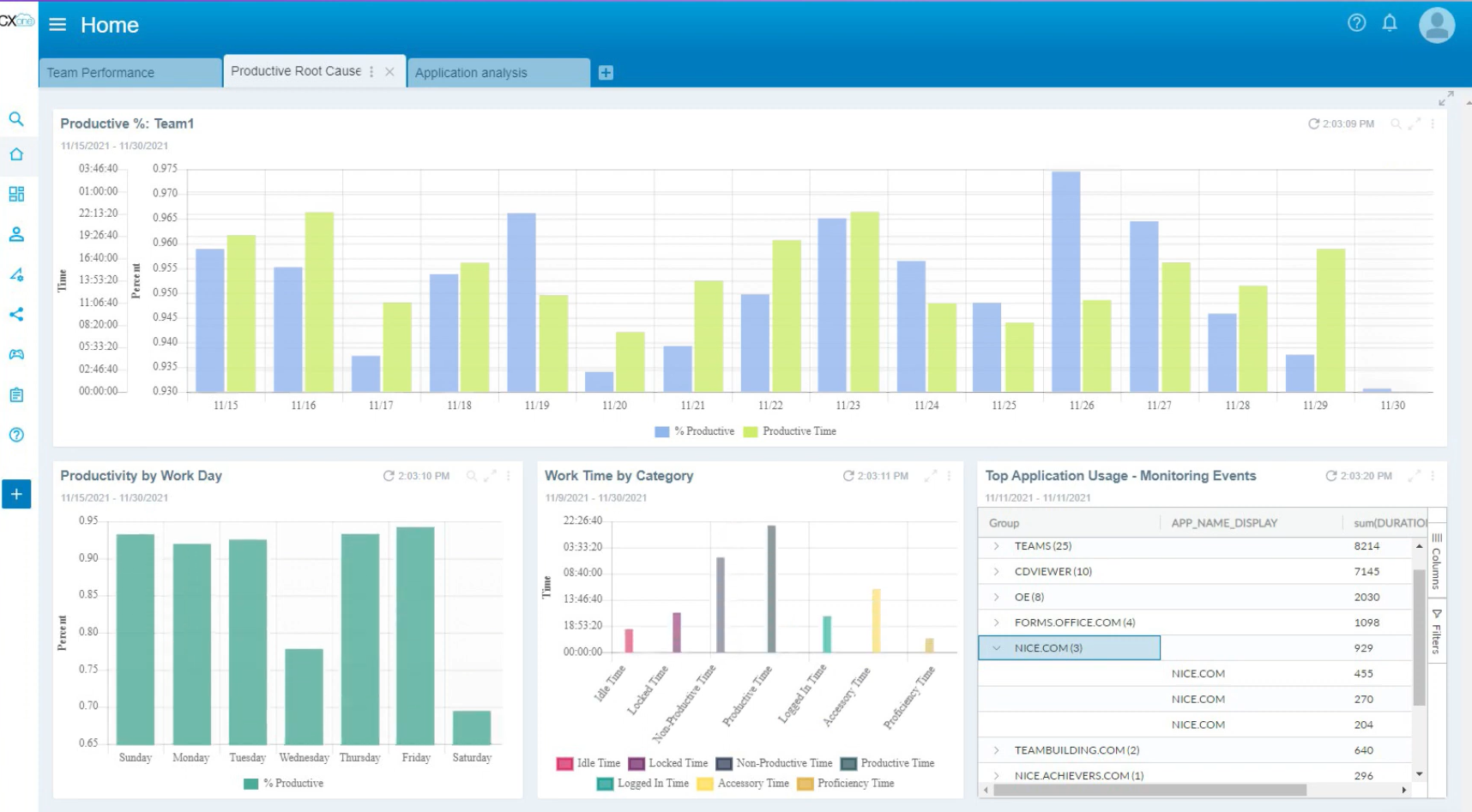
It consolidates KPIs from CXone, CRM, and HR systems. But the path from score to coaching has friction. Users report that performance management “requires manually pulling down raw data” rather than surfacing coaching triggers automatically. Performance Management is also a separate module, included at the Ultimate tier but priced as an add-on below it.
Talkdesk’s Performance Management takes a similar approach: leaderboards with click-to-coach workflows, challenges, badges, and peer recognition.
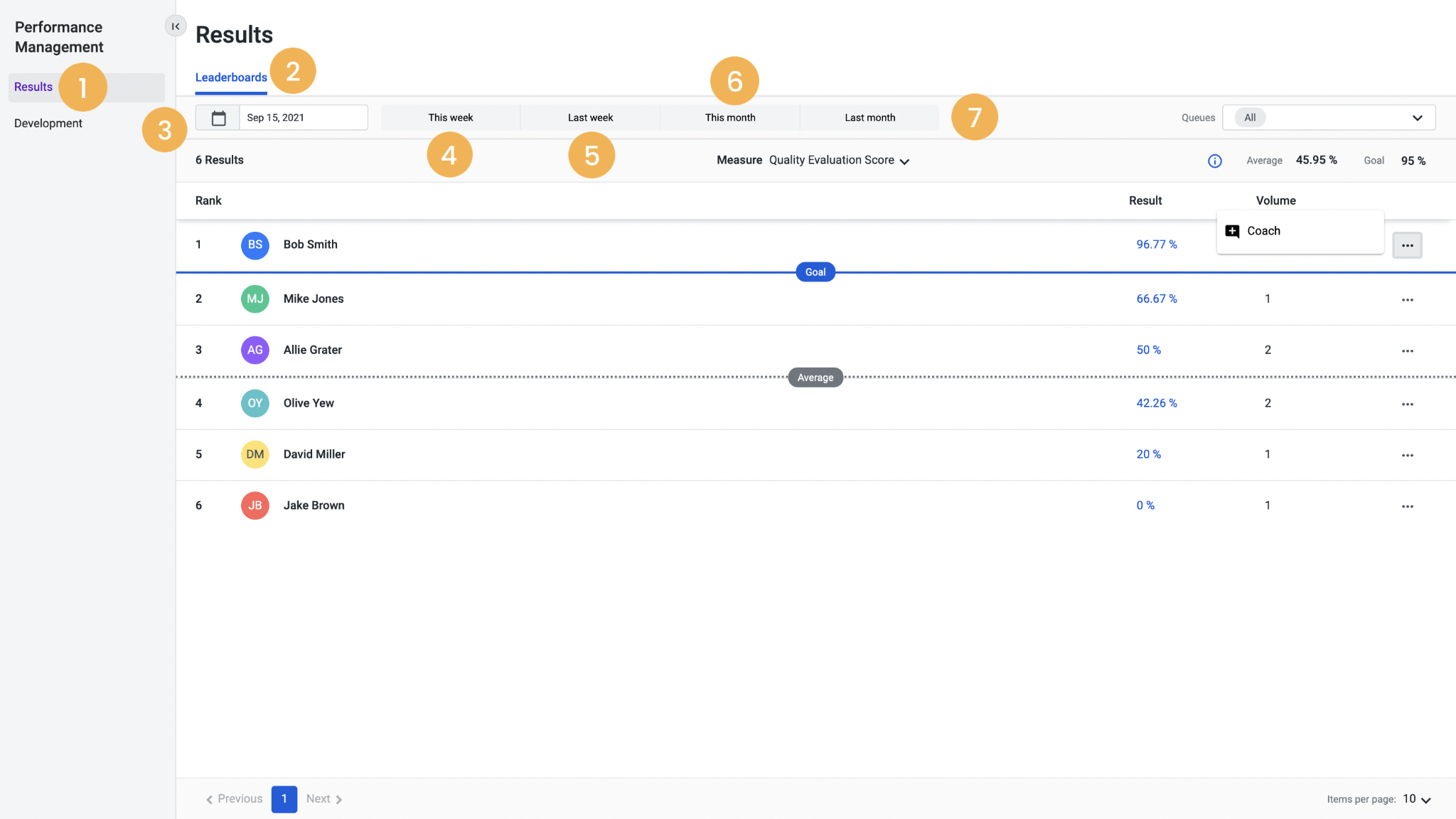
It’s included in the Elite tier ($165/user/month) and above. Quality Management feeds into these coaching workflows, but QM itself must be purchased separately.
evaluagent connects scoring to development in a single, continuous workflow.
When a score publishes, agents receive immediate feedback while the conversation context is still fresh. Automated actions trigger when a score, sentiment shift, or compliance flag meets a configured threshold, firing a coaching session, escalation, or eLearning enrollment without supervisor intervention.
Structured 1-to-1 sessions are tied to conversation evidence with progress tracked against specific goals (for example, “Improve empathy criterion from 3/15 to 12+/15 by acknowledging customer frustration before moving to resolution”). Performance Plans link coaching actions, 1-to-1 sessions, and eLearning courses into an HR-ready record with a built-in audit trail.
A built-in LMS offers interactive eLearning with auto-enrollment triggered by performance metrics: quizzes, lessons, learning paths, and gamified certificates. The gamification layer goes beyond standard leaderboards with an eBay-style reward auction where agents bid on prizes using points earned from QA performance.
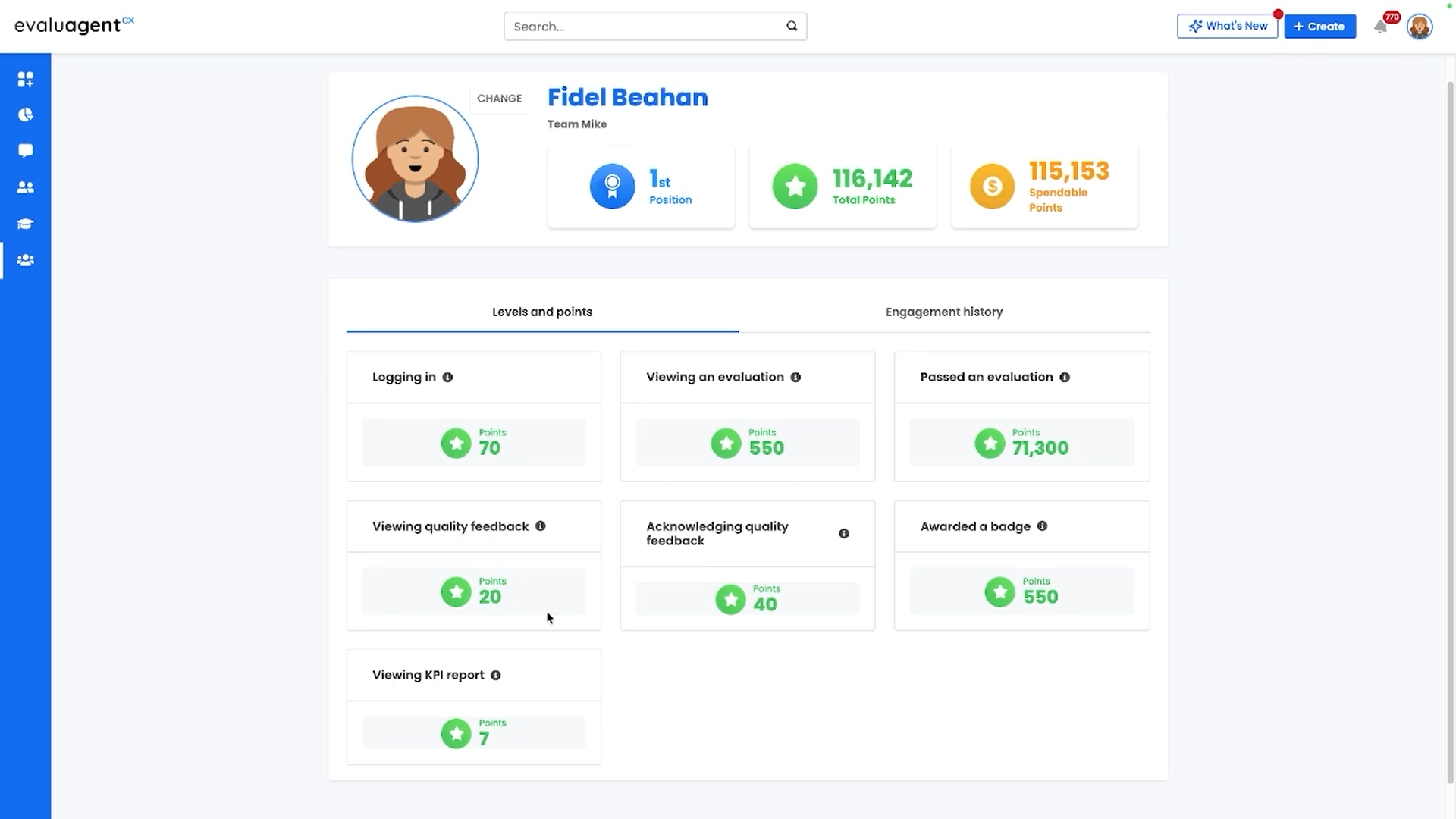
The difference is architectural. In NICE CXone and Talkdesk, the path from “this agent scored poorly on empathy” to “this agent completed empathy training and their scores improved” requires multiple modules, manual assembly, and active supervisor orchestration. In evaluagent, that path is a configured workflow that runs on its own.
Seasalt Cornwall doubled their evaluations and reduced agent attrition from 100% to 10% year-on-year after implementing evaluagent, attributed in part to coaching consistency and transparency driven by the platform. (Seasalt Cornwall Case Study)
NICE CXone vs Talkdesk vs evaluagent: Which should you choose?
The best choice depends on what your organization needs most and where you’re willing to compromise.
Choose NICE CXone if:
- You need a single platform that replaces five or more point solutions across routing, WFM, QA, analytics, and AI
- You’re running 500+ agents in a heavily regulated industry that requires FedRAMP, PCI DSS, or sovereign cloud infrastructure
- Your procurement process values 11-year Gartner Leader status and dual Gartner/Forrester validation
- You have the IT capacity for a complex implementation and multi-year commitment
- Budget accommodates $110-$249 per agent per month plus add-ons
Choose Talkdesk if:
- You operate in healthcare, financial services, retail, or another vertical that benefits from pre-built industry-specific workflows and integrations
- You value ease of use and want non-technical staff to manage routing flows
- You’re deploying AI agents for self-service and want a CXA framework with governance tools
- You need a modern CCaaS with fast deployment and are comfortable adding CXA products as you scale
- Your budget starts at $85-$225 per user per month, with AI products priced separately
Choose evaluagent if:
- Quality assurance is a strategic priority, not a compliance checkbox
- You want full-coverage QA and coaching on any CCaaS, including Talkdesk, NICE, Genesys, Five9, or Amazon Connect
- You’re deploying AI agents from any vendor and need independent governance with fabrication detection
- You run a BPO managing multiple clients across different CCaaS platforms
- You want dedicated QA at $35-$65 per user per month rather than paying for it as an add-on inside a $110-$249 per seat CCaaS suite
The NICE CXone vs Talkdesk comparison is real for organizations choosing a CCaaS platform. But for the quality management layer, the answer may not be either platform’s built-in module. evaluagent offers improved QA capabilities, at a lower cost, with the flexibility to work across whichever CCaaS you choose today or migrate to tomorrow.
In an industry where only 2% of interactions typically get evaluated under manual QA programs, the choice of quality platform matters at least as much as the choice of CCaaS.