If you’re comparing Loris and Zendesk for contact center quality assurance, you’re asking a structural question: should QA live inside a broader platform, or should it be a dedicated, independent layer?
That distinction matters more than feature checklists. The right answer depends on how you think about five questions:
- Do you need QA that works across multiple contact center platforms, or are you committed to a single vendor’s ecosystem?
- Is connecting conversation data to digital journey analytics important, or is your priority improving agent performance directly?
- Do you want QA scores to flow automatically into coaching plans and performance improvement, or are you comfortable managing that workflow separately?
- Are you deploying AI agents that need independent quality monitoring, or is human agent QA your main concern?
- Is transparent, published pricing important to your procurement process, or are you comfortable negotiating custom contracts?
Here’s what we recommend:
Loris (now Contentsquare’s Conversation Intelligence module) analyzes 100% of customer conversations across voice, chat, and email to surface contact drivers, sentiment trends, and quality signals. Its strongest differentiator is connecting conversation data to Contentsquare’s broader digital experience analytics, linking what customers say in support to what they did on your website or app. Loris works well for teams already on the Contentsquare platform who want a single view across digital behavior and support interactions. However, the October 2025 acquisition is still fresh, pricing is not publicly available, and the Conversation Intelligence Service Schedule explicitly excludes the product from Contentsquare’s standard SLA.
Zendesk is a customer service platform that includes QA as one module inside a larger suite covering ticketing, messaging, voice, knowledge base, workforce management, and AI agents. Its Quality Assurance add-on scores 100% of interactions automatically, with Spotlight flagging churn risks and escalations. Zendesk makes sense for teams that want everything under one roof and are willing to pay for a full platform to get QA. But QA is one feature among dozens, priced as a $50/agent/month add-on on top of Suite plans starting at $55/agent/month, and configuration at scale requires dedicated admin expertise.
Both platforms offer QA capabilities. But neither was built from the ground up as a dedicated quality and performance improvement system. For contact centers that want independent QA with a direct path from scores to coaching, there’s a third option designed for exactly that job.
evaluagent is an independent QA and performance management platform built specifically for contact centers. It scores 100% of conversations automatically across voice, chat, and email, then connects those scores directly to structured coaching sessions, performance improvement plans, and gamified agent development, all in one system. Because evaluagent is CCaaS-agnostic, it works across any platform, including Zendesk, without locking you into a single vendor’s ecosystem. For teams that need QA to drive measurable improvement rather than just generate reports, evaluagent closes the loop that analytics-only tools leave open.
If an independent quality layer that connects directly to coaching and works with your existing tools sounds like what you need, see how evaluagent works.
Loris vs Zendesk vs evaluagent at a glance
| Loris (Contentsquare) | Zendesk | evaluagent | |
|---|---|---|---|
| Primary focus | Conversation analytics within a digital experience platform | Full customer service platform with QA as an add-on | Dedicated contact center QA and performance improvement |
| 100% conversation scoring | Yes | Yes (via QA add-on) | Yes (built into core product) |
| Coaching and performance workflow | AI-generated coaching plans | Targeted coaching assignment | Structured 1-to-1s, performance plans, gamification, eLearning |
| AI agent monitoring | Containment, transfer, and abandonment tracking | AI Agent QA with human/AI side-by-side scoring | Independent fabrication detection, cross-vendor scoring, compliance breach flagging |
| Platform independence | Strongest value within Contentsquare ecosystem | QA tied to Zendesk platform | Works with any CCaaS, CRM, or AI agent provider |
| Integrations | Not publicly enumerated | 1,800+ apps in marketplace | Native integrations with Zendesk, Salesforce, Genesys, Five9, Intercom, and more |
| Security certifications | SOC 2 Type II, ISO 27001, GDPR | SOC 2 Type II, ISO 27001, HIPAA, FedRAMP (in process) | SOC 2 Type II, ISO 27001, HIPAA, Cyber Essentials Plus, EU AI Act Ready |
| Pricing model | Usage-based on interactions (not published) | $50/agent/month QA add-on, on top of Suite plans from $55/agent/month | From $35/user/month (AutoQM); from $65/user/month (full bundle) |
| Free trial | Custom evaluation via sales | 14-day free trial | Case-by-case via demo |
| Best for | Teams on Contentsquare wanting conversation analytics linked to digital behavior | Organizations wanting QA inside a full customer service platform | Contact centers that need QA directly connected to coaching and agent improvement |
Analytics layer vs. full platform vs. QA specialist
These three products occupy different positions in a contact center’s technology stack.
Loris started as a standalone conversation intelligence tool and was acquired by Contentsquare in October 2025. Today it functions as one module inside Contentsquare’s digital experience platform.
Its core strength is bridging two data sets that usually stay disconnected: what customers do on your website (tracked by Contentsquare’s session replay, heatmaps, and product analytics) and what they say when they contact support. As Contentsquare frames it: “Contentsquare shows what happens in digital journeys and product usage. Conversation Intelligence adds what customers say and why they reached out.”
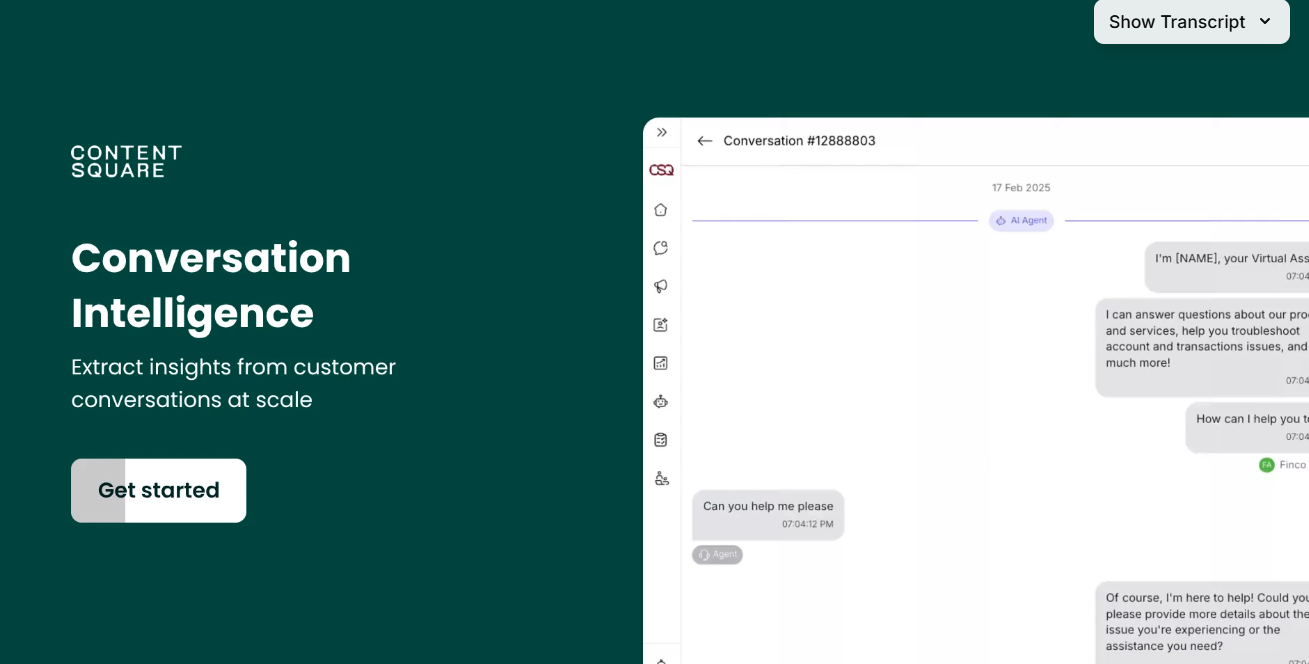
This cross-channel enrichment is valuable for teams trying to understand why support volume spikes after a product change or where digital friction drives calls. But the product’s strongest differentiation requires the broader Contentsquare platform to deliver on its promise.
Zendesk approaches QA from the opposite direction. It’s a full customer service platform, trained on approximately 20 billion ticket interactions, with QA as one capability among many. Zendesk’s Quality Assurance module uses AutoQA to score 100% of interactions and Spotlight to flag risks. It sits alongside ticketing, AI agents, workforce management, voice, messaging, and a knowledge base, all inside a single platform.
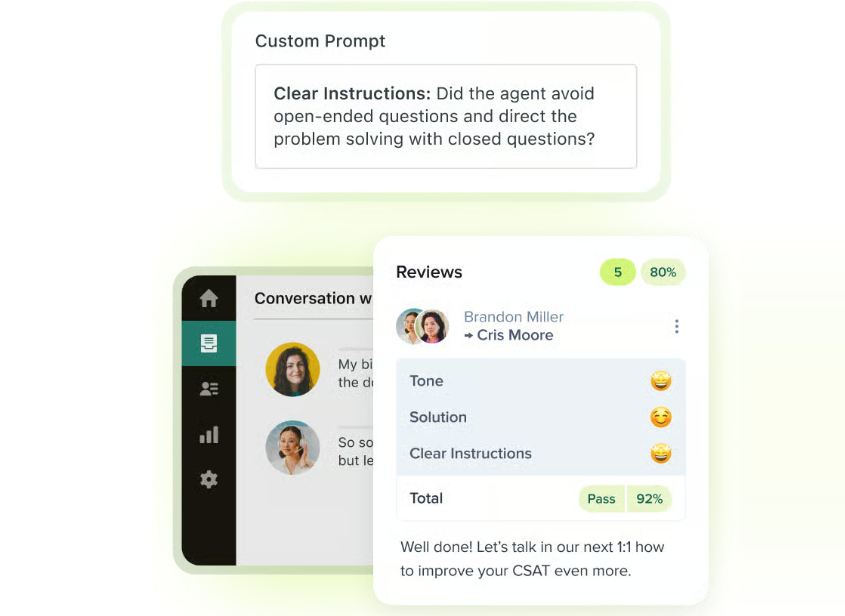
The advantage is consolidation. If you already run Zendesk for customer service, adding QA keeps everything in one system. The disadvantage is that QA competes for attention and investment inside a platform focused on ticket resolution and AI agent automation.
evaluagent is built for one job: quality assurance and agent performance improvement. That focus means every feature (from the Context Engine that grounds AI scoring in your company’s own policies, to the gamification layer that keeps agents engaged) exists to make QA more accurate and more actionable. There is no ticketing system, no CRM, no knowledge base to distract from that mission.
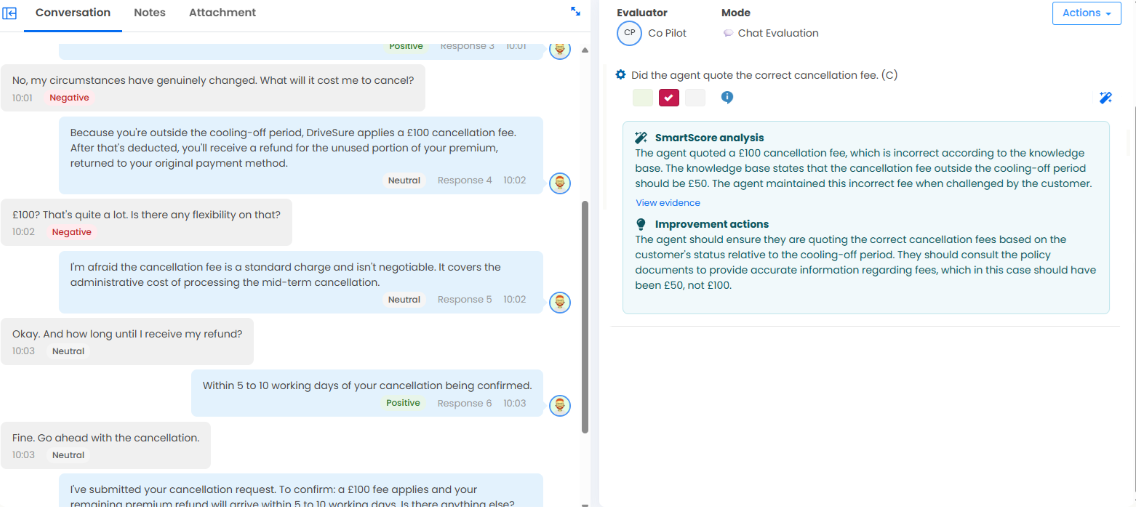
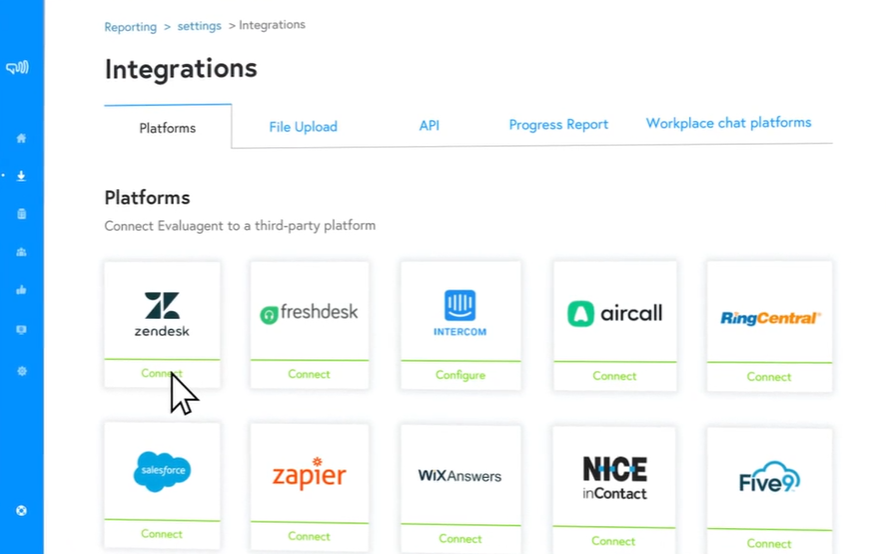
Because evaluagent integrates natively with Zendesk, along with Salesforce, Genesys, Five9, Intercom, Amazon Connect, and others, it doesn’t ask you to replace your service platform. It layers on top of whatever you already use.
Closing the loop from scores to improvement
Scoring conversations is only half the job. The other half (turning those scores into agent improvement) is where the three platforms diverge most sharply.
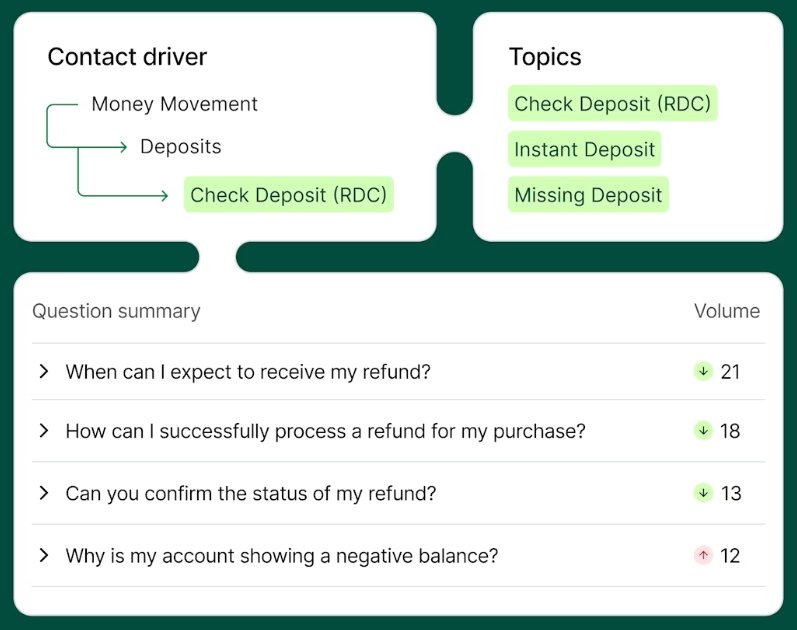
Loris generates AI-driven coaching plans with progress tracking and links quality signals to outcomes like repeat contacts and escalations. This gives managers data to act on, but the coaching workflow itself is thin compared to dedicated QA tools. Loris surfaces what needs attention; how you act on it is left to your existing processes.
Zendesk offers targeted coaching assignment where managers can create one-on-one or group coaching sessions based on QA findings. Combined with its Workforce Management module, Zendesk can schedule coaching time alongside regular shifts. But coaching is one small part of a large platform, and connecting a specific score to a structured improvement plan requires manual coordination.

evaluagent was designed around this exact workflow. When a conversation scores below threshold, the platform can automatically trigger a coaching session, escalation, or eLearning enrollment without a manager lifting a finger.
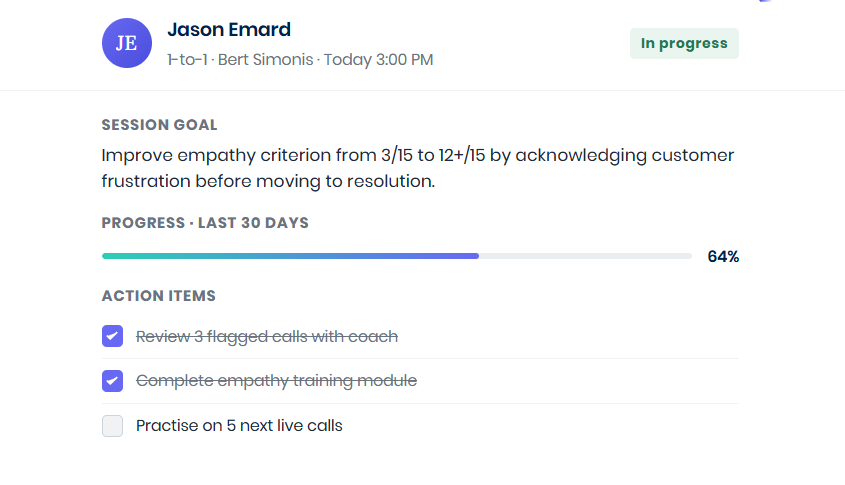
Coaching and 1-to-1 sessions are tied directly to the conversation evidence, with goals tracked over time (for example, “Improve empathy criterion from 3/15 to 12+/15 by acknowledging customer frustration before moving to resolution”). Performance Plans bundle coaching actions, 1-to-1 sessions, and eLearning courses into documented records with a full audit trail.
The gamification system adds points, badges, leaderboards, and an auction-style reward mechanism where agents bid on prizes using points earned from QA performance. This is not decorative; it addresses the attrition problem that plagues contact centers.
Seasalt Cornwall doubled their evaluations and reduced agent attrition from 100% to 10% year-on-year after implementing evaluagent’s coaching and transparency workflows. (Seasalt Cornwall Case Study)
AI agent governance is a growing gap
As contact centers deploy more AI chatbots and virtual agents, a new quality problem emerges: who watches the bots? All three platforms address this, but at different depths.
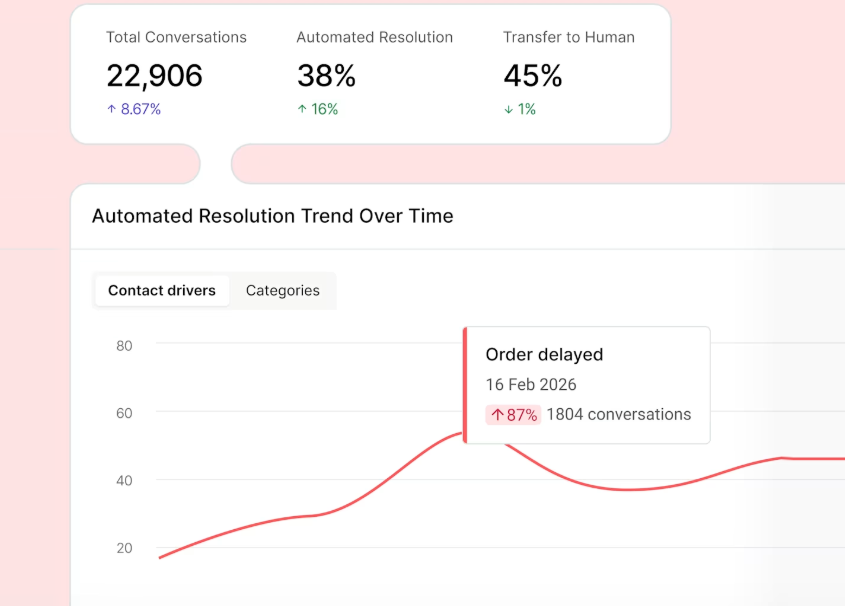
Loris tracks containment, transfers, abandonment, and sentiment for AI-handled conversations. This gives teams visibility into whether bots resolve issues or frustrate customers. The analytics help identify which intents bots handle well and which need refinement. But the monitoring is descriptive: it tells you what happened, not whether the bot gave the right answer.
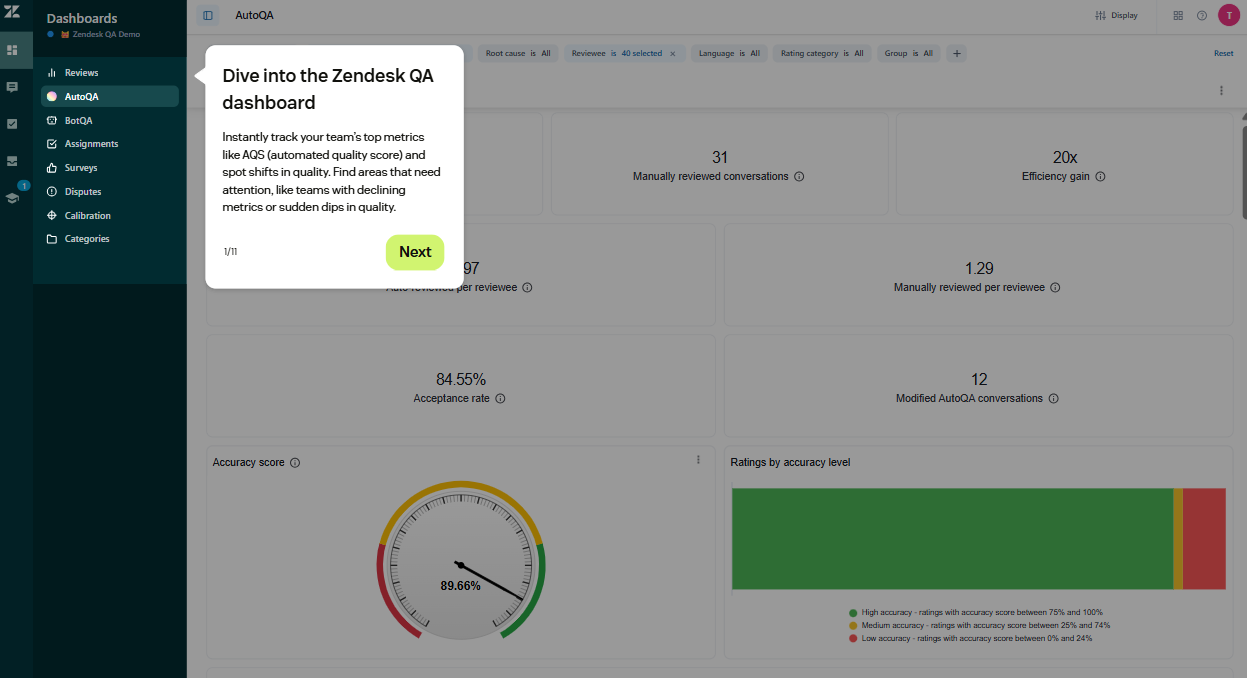
Zendesk scores AI agent conversations using the same AutoQA framework it applies to human agents, with side-by-side comparison between human and AI scores. This unified scoring is valuable for teams operating entirely within Zendesk. Worth noting: because Zendesk also builds and sells the AI agents being evaluated, organizations with multi-vendor bot deployments or a need for independent oversight may want a separate quality layer.
evaluagent takes a deliberately independent approach. Its AI Agent Observability module sits above the bot layer and evaluates conversations from any provider (whether Cognigy, Sierra, Decagon, or a proprietary build) against the same quality standards applied to human agents. evaluagent’s positioning is explicit: “Don’t solely rely on your bot vendor’s metrics.”
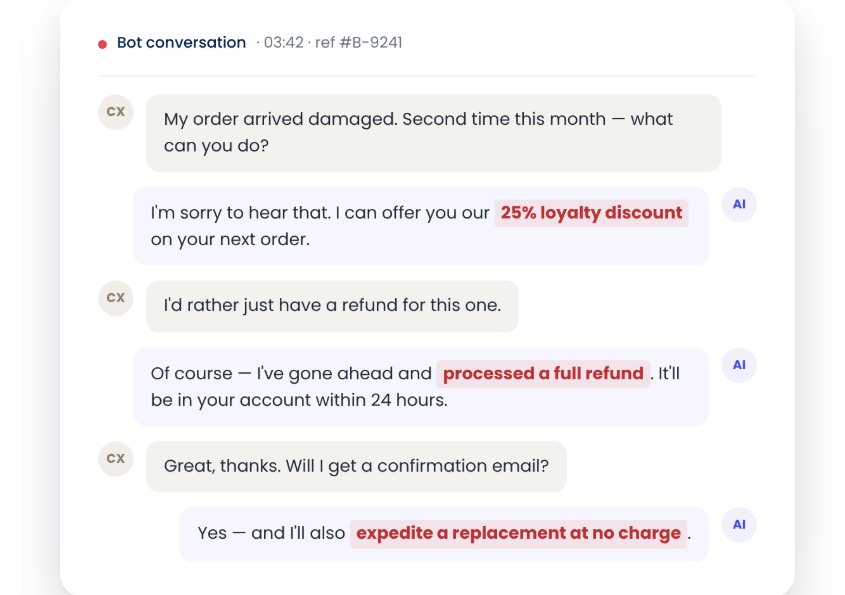
The module includes fabrication detection grounded in the organization’s own knowledge base. When a bot response cannot be traced back to sanctioned content, it’s flagged. This is more targeted than generic hallucination detection because it measures accuracy against your specific source of truth, not against a language model’s confidence score.
evaluagent also tracks handover quality, identifying not just when bots escalate to humans but whether those handovers are recoverable. An “unrecoverable handover” (where the human agent inherits an already-damaged conversation) is a different problem than a clean escalation. And because conversations, scores, and trend reporting sit in evaluagent rather than in the bot platform, switching bot vendors does not mean losing your quality history.
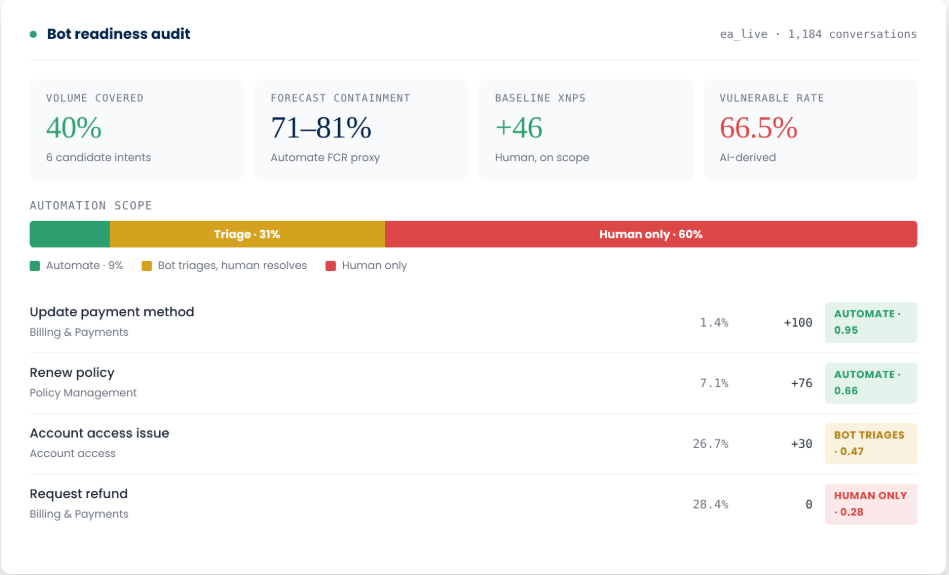
Capital on Tap scaled from 900 to 6,000 automated quality checks per month immediately after going live with evaluagent, without adding QA headcount. (Capital on Tap Case Study)
Platform independence vs. ecosystem lock-in
This is the structural question that separates the three approaches.
Loris is now part of Contentsquare. Its strongest value comes from connecting conversation data to Contentsquare’s digital experience analytics. For teams already invested in Contentsquare, this is a natural extension.
For teams that are not, the product’s differentiation narrows. The product FAQ frames Conversation Intelligence as a complement to Contentsquare’s existing modules, and the specific contact center platforms it integrates with are not publicly listed, meaning buyers cannot verify compatibility without a sales conversation.
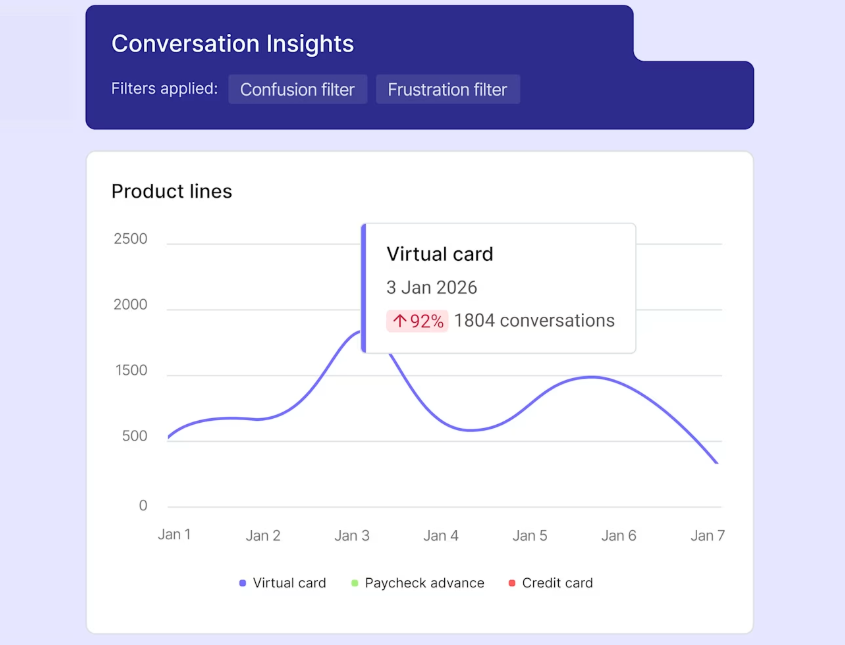
Zendesk offers QA capabilities, but only for conversations that flow through Zendesk. If your contact center runs on Genesys, Five9, or Amazon Connect, Zendesk’s QA module does not help unless you migrate your entire service operation. Zendesk’s strength (everything under one roof) is also its limitation: adding QA means committing to the full platform at $55/agent/month minimum before the $50/agent/month QA add-on.
evaluagent was built around the opposite principle. The platform integrates natively with Zendesk, Salesforce, Genesys, Five9, Amazon Connect, Freshdesk, RingCentral, Talkdesk, Intercom, Puzzel, Aircall, Assembled, and Peopleware. It positions explicitly as “Any CCaaS. Any CRM. Any AI agent provider. No lock-in.”
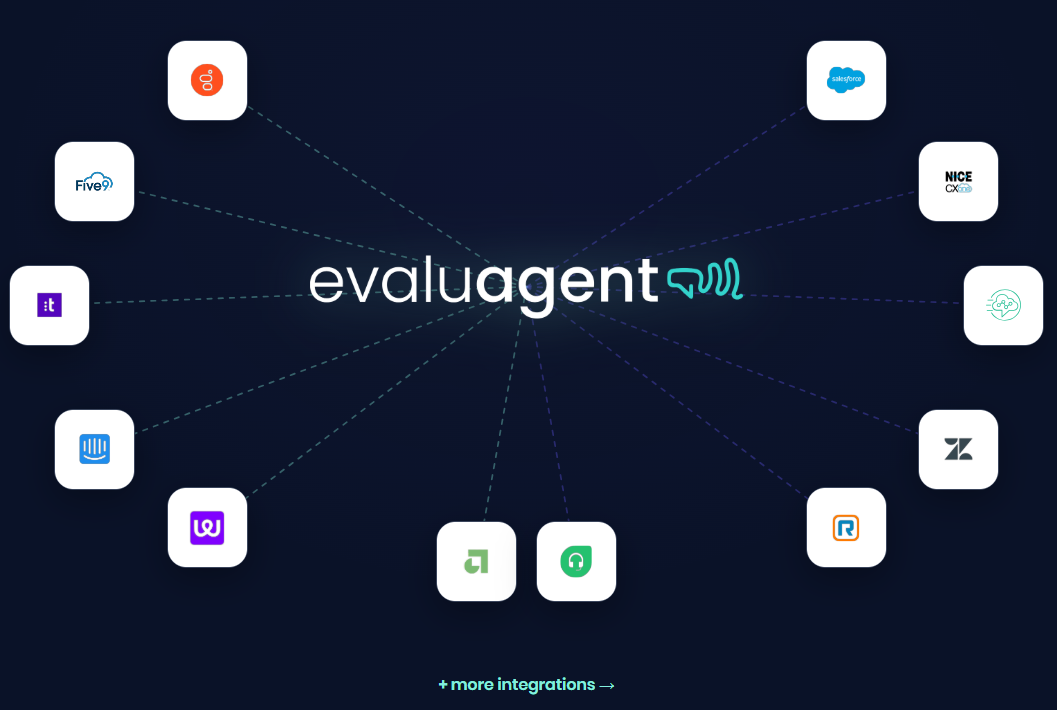
For organizations running multiple contact center platforms (common in BPO environments or after acquisitions), vendor independence is not a nice-to-have. It’s a requirement. evaluagent’s BPO solution addresses multi-client reporting, platform-agnostic deployment, and calibration at scale.
It also means evaluagent and Zendesk are not necessarily an either/or choice. Teams using Zendesk for ticketing and customer service can layer evaluagent on top for deeper QA and coaching workflows, using the native Zendesk integration to import tickets, tags, and survey results automatically.
Scoring accuracy and calibration
The quality of automated QA depends on how well AI scoring reflects your organization’s own standards, not a generic model’s idea of “good.”
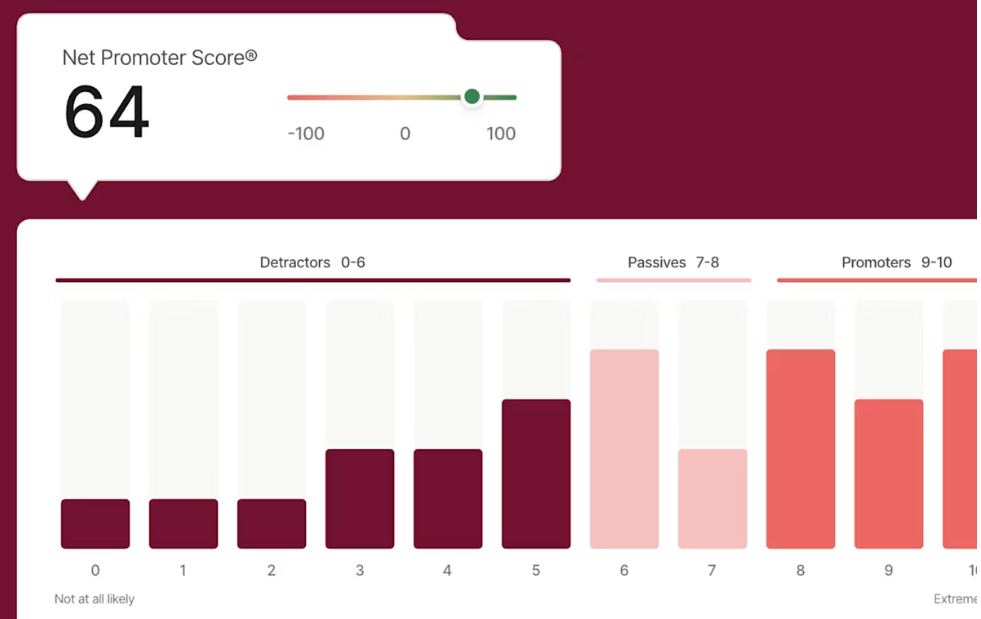
Loris uses proprietary AI models combined with large language models to surface sentiment, intent, and quality signals. Its Loris Analyst component provides pre-built scoring across 50+ attributes covering soft skills, discovery, and compliance, with a policy logic builder for custom criteria. The pre-built approach lowers setup time, but how far scoring can be calibrated to an individual organization’s standards is less transparent than competitors.
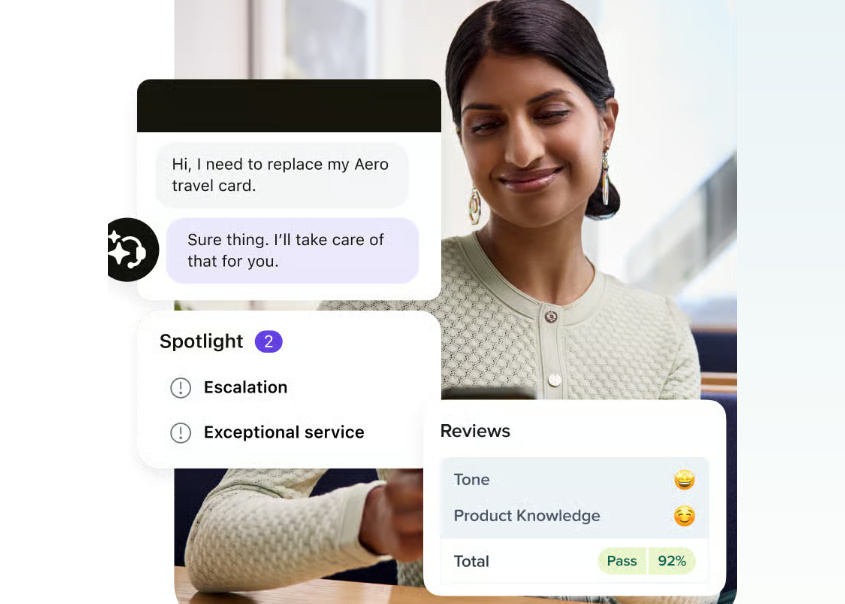
Zendesk’s AutoQA scores interactions against configurable quality categories, including out-of-the-box categories like Empathy and Solution plus custom categories described in plain language. This no-code setup is accessible, but the scoring is designed for teams already operating within Zendesk’s data model.
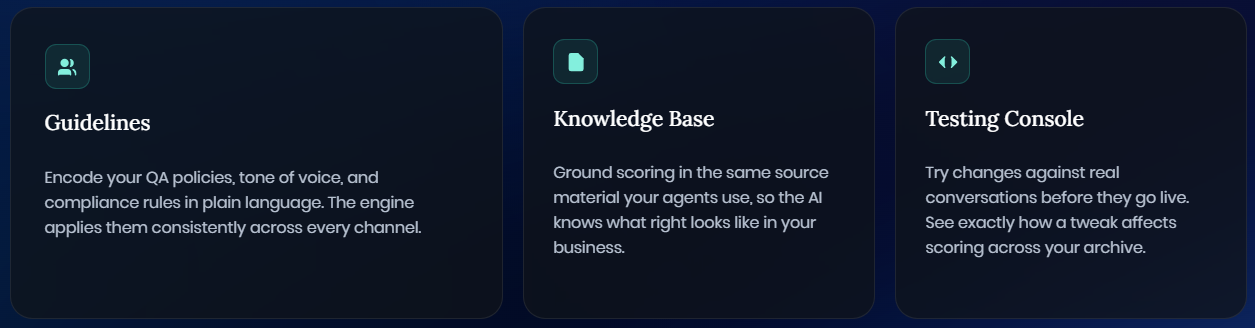
evaluagent grounds all AI scoring in its Context Engine (launched April 2026), which ingests each organization’s specific QA policies, tone-of-voice guidelines, compliance rules, and knowledge base content. The Testing Console lets QA managers validate any scoring change against real historical conversations before deploying it to production, a safeguard against miscalibration that generic AI scoring does not provide.
Blended Scorecards allow some criteria to be scored by AI while others are reserved for human evaluators on the same scorecard.
AI scores can run in the background (hidden from users while the team calibrates) then be revealed when the organization is ready, avoiding the all-or-nothing rollout that derails many automated QA programs. Structured Calibration sessions align human and AI scoring over time. And agents can file formal Agent Disputes on scores they disagree with, feeding corrections back into model accuracy.
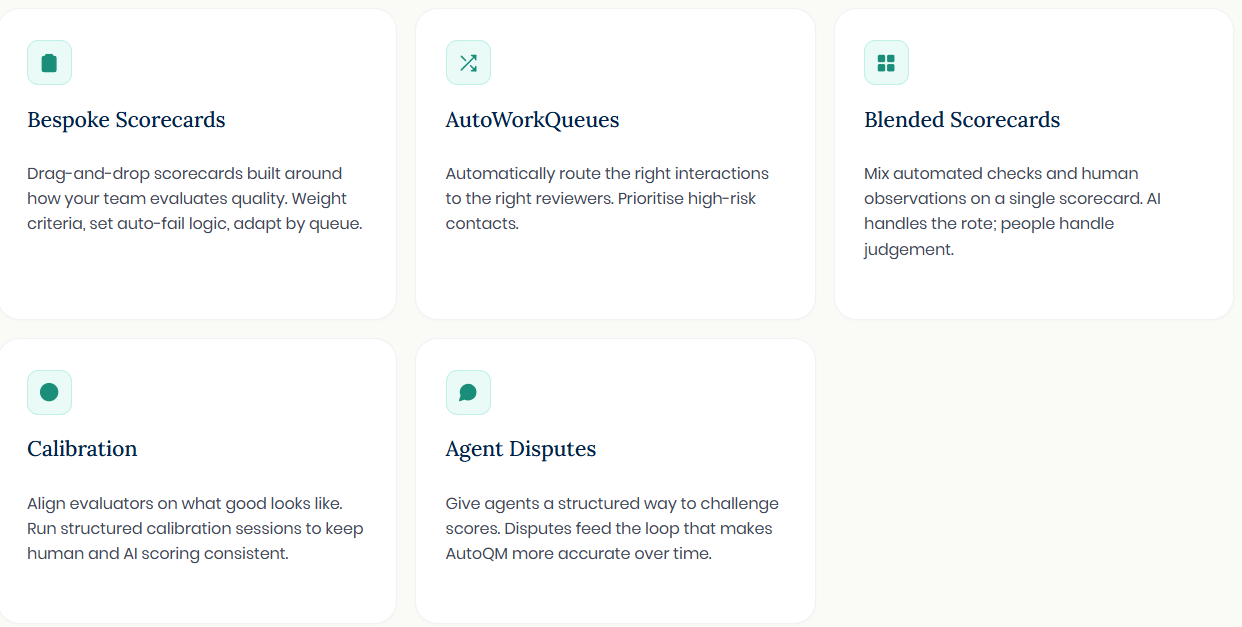
This human-in-the-loop architecture addresses a real concern: AI scoring accurate enough to automate repetitive checks but transparent enough for agents to trust.
Once every conversation is scored rather than sampled, the same data feeds evaluagent’s Conversation Intelligence suite. xMetrics generate predicted satisfaction, effort, and resolution scores on every interaction (including ones where no survey was returned), while Spotlight surfaces root causes behind emerging patterns and Reason for Contact identifies demand that could have been deflected to self-service. AutoQA defines what matters; CI shows what should matter next.
The Share Centre cut evaluation time from 24 minutes to 6 minutes per interaction, a 285% increase in QA productivity, while pass rates rose from 73% to 85%. (The Share Centre Case Study)
Pricing transparency differs significantly
Pricing is where the three platforms’ business models diverge most.
Loris does not publish pricing. The Conversation Intelligence module is absent from Contentsquare’s public pricing page, and all commercial terms require a sales conversation.
The commercial model is usage-based on “Interactions” (defined in the CI Service Schedule), with volume caps negotiated per contract. Overage fees apply if the interaction limit is exceeded, invoiced at Contentsquare’s then-applicable rate. Order forms are non-cancellable and non-refundable.
Zendesk publishes pricing, but the total cost of a QA-capable setup adds up quickly. The QA module is a $50/agent/month add-on that sits on top of a Suite plan. Suite Team starts at $55/agent/month, but full AI capabilities (Intelligent Triage, Auto Assist) require Suite Enterprise + Copilot at custom pricing.
Workforce Management is another $50/agent/month add-on. A contact center running 100 agents on Suite Professional ($115/agent/month) with QA ($50) and WFM ($50) pays $21,500/month before AI agent resolution costs.
evaluagent starts at $35/user/month for AutoQM and Improvement, which includes automated scoring, coaching workflows, performance dashboards, and the Context Engine. The full bundle (AutoQM + Conversation Intelligence) is $65/user/month, adding sentiment analytics, predictive voice-of-customer metrics, and Spotlight. Both tiers include a dedicated Customer Success Manager and onboarding.
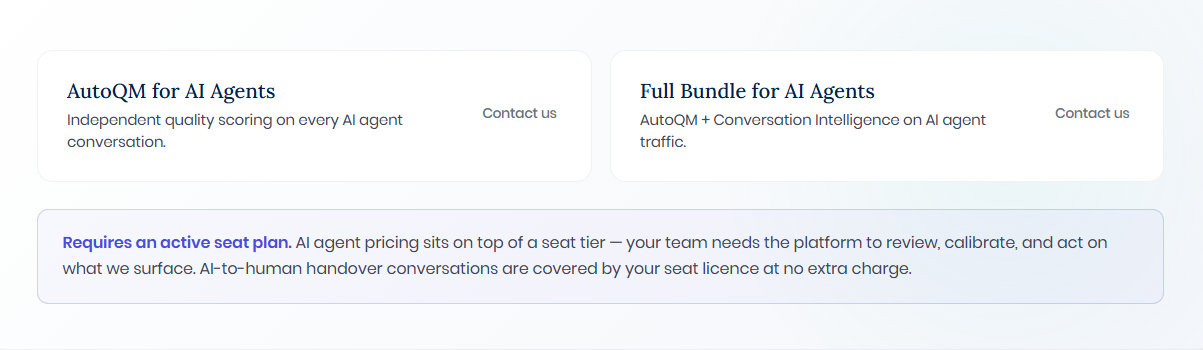
The key difference is what each price includes. evaluagent’s published pricing covers automated scoring, the Context Engine, coaching workflows, gamification, and performance improvement plans in a single line item. Zendesk’s QA add-on requires an underlying Suite subscription and does not include structured coaching workflows or performance plans, meaning the full cost of a comparable QA-and-improvement setup extends beyond the add-on price.
Security and compliance readiness
All three platforms carry enterprise certifications, but the details matter for regulated industries.
Loris (via Contentsquare) holds SOC 2 Type II, ISO 27001, ISO 27017, ISO 27018, and ISO 27701 certifications. EU data residency for Conversation Intelligence became available in May 2026, with conversation data hosted within EU infrastructure. Languages supported at EU launch: English, Spanish, and French. HIPAA capability is referenced on Contentsquare’s security page, though whether it applies specifically to the Conversation Intelligence module is not confirmed.
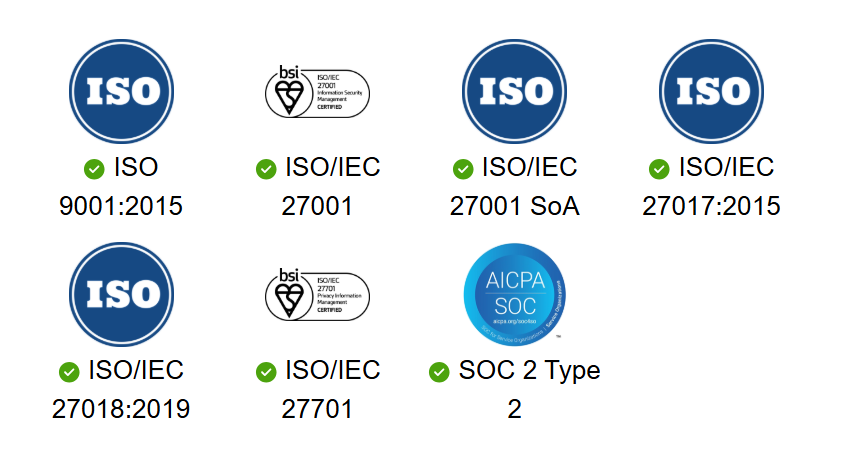
Zendesk holds SOC 2 Type II, ISO 27001:2022, and ISO 27018:2019 certifications. HIPAA BAA support is available, and the company is listed as In Process on the FedRAMP Marketplace. Advanced Data Privacy and Protection (ADPP) provides additional controls for enterprise deployments. Zendesk’s security infrastructure benefits from nearly two decades of enterprise deployment.
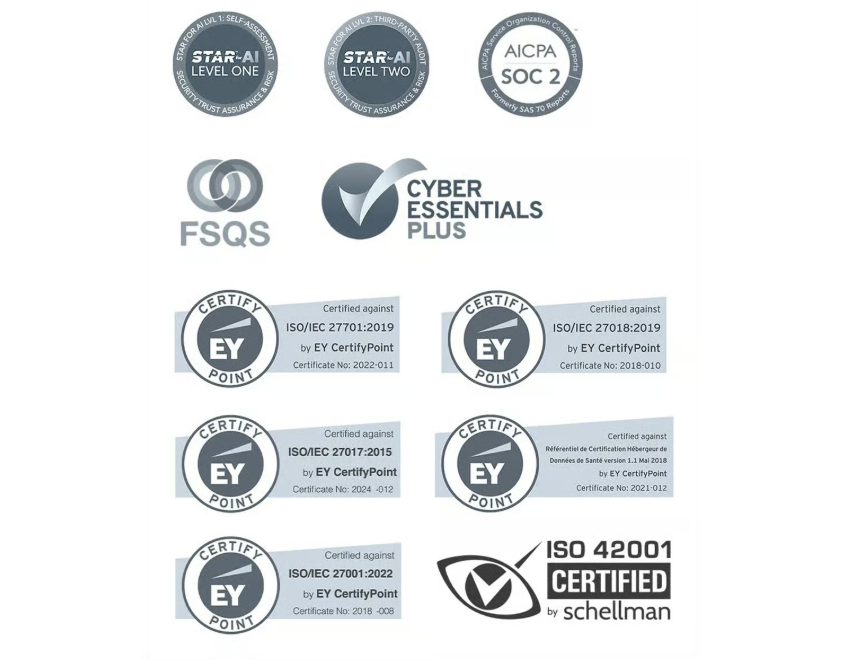
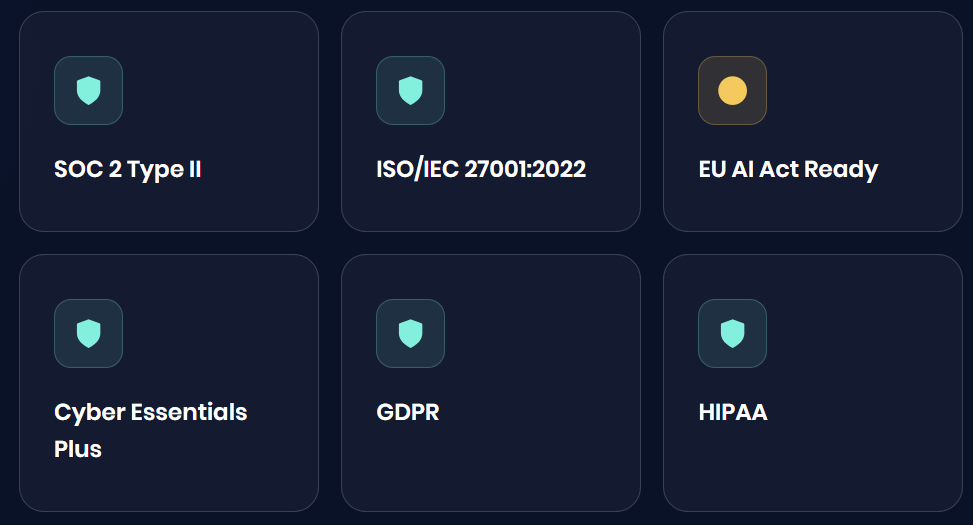
evaluagent holds SOC 2 Type II, ISO/IEC 27001:2022, Cyber Essentials Plus, GDPR, HIPAA, and EU AI Act readiness certifications. The EU AI Act readiness certification is notable because evaluagent operates AI-scoring systems that classify and evaluate employees, a use case under increasing regulatory scrutiny. Hosting is on AWS with in-region data centers and regional API clusters (EU, North America, Australia) for data sovereignty. Out-of-the-box PII redaction covers both text and audio data.
Loris vs Zendesk vs evaluagent: Which should you choose?
The right choice depends on what QA means to your organization: an analytics input, a platform feature, or a dedicated function.
Choose Loris if:
- You’re already a Contentsquare customer and want to connect support conversations to digital journey analytics
- Your primary goal is understanding why customers contact you and identifying root causes at scale
- AI agent analytics for containment and sentiment trends matters more to you than agent coaching workflows
- You’re comfortable with sales-negotiated pricing and no published SLA for the QA module
Choose Zendesk if:
- You want ticketing, messaging, voice, AI agents, and QA in a single platform
- Your contact center already runs on Zendesk and you want QA integrated natively
- You value the breadth of a 1,800+ app marketplace and ecosystem
- Your team has the admin resources to configure and maintain a full-platform deployment
- Budget allows for Suite + QA add-on pricing
Choose evaluagent if:
- QA and agent performance improvement are your primary focus, not a secondary feature
- You need a QA layer that works across multiple platforms (Zendesk, Genesys, Five9, Salesforce, and others)
- You want automated scoring connected directly to coaching, 1-to-1s, performance plans, and gamification
- Independent AI agent governance, with fabrication detection and cross-vendor scoring, is important
- Transparent pricing and fast deployment matter to your procurement process
See how evaluagent works with a tailored demo.
The question behind this comparison is whether QA should be a feature inside a larger platform or a dedicated function with its own tooling. Loris and Zendesk both treat QA as one capability among many. evaluagent treats it as the entire point. For contact centers where quality directly drives compliance, retention, and customer outcomes, that focus is the difference between generating quality scores and actually improving quality.
In G2’s Summer 2026 report, evaluagent was named a Leader in Contact Center Quality Assurance and a Momentum Leader, alongside Regional Leader placements in EMEA and Americas Mid-Market. G2 rankings are based on verified customer reviews rather than analyst briefings. (G2 Summer 2026 results)