Choosing between Amazon Connect and NICE CXone for your contact center often comes down to five questions:
- Are you already running on AWS, or do you want a platform that works independently of your cloud provider?
- Do you prefer paying only for what you use, or do you want predictable per-agent pricing with everything bundled?
- Does your team have the technical depth to build a contact center from components, or do you need a turnkey solution?
- How critical is quality management to your operation, and are you comfortable relying on your CCaaS vendor’s built-in QA?
- Do you need to evaluate AI agent conversations with the same rigor you apply to human agents?
In short, here’s what we recommend:
Amazon Connect is the natural choice for organizations already invested in AWS. Its pay-per-use pricing ($0.038 per voice minute, no seat licenses) eliminates the fixed costs that make traditional CCaaS contracts painful for variable-volume operations.
With all AI capabilities bundled into base pricing and native integrations across the AWS ecosystem, it gives engineering teams the building blocks to construct exactly the contact center they want. The tradeoff is real: Amazon Connect works more like a developer toolkit than a finished product, and organizations without AWS expertise will struggle to get full value from it.
NICE CXone is built for enterprises that want one platform to handle everything. A Gartner Magic Quadrant Leader for 11 consecutive years, it offers the widest capability set in CCaaS, covering omnichannel routing, workforce management, quality management, interaction analytics, and agentic AI under one roof.
That breadth comes at a cost: per-agent pricing starts at $110/month and climbs with add-on modules, and the platform’s complexity can overwhelm organizations below 200–300 agents.
Both platforms include built-in quality management tools. But here’s what neither will tell you: their QA capabilities are one module among dozens, competing for development attention with routing, telephony, WFM, and AI. For contact centers where quality drives business outcomes, that built-in approach leaves gaps.
evaluagent is the independent quality layer designed for the problem both platforms treat as a feature. It scores 100% of conversations automatically across voice, chat, and email, then closes the loop with structured coaching, performance plans, and gamification in one system.
Because evaluagent is CCaaS-agnostic, it works alongside either platform (with a native Amazon Connect integration) and protects your quality data if you ever switch vendors. Its AI Agent Observability module evaluates bot conversations for hallucinations, off-policy responses, and compliance breaches, holding AI agents to the same standards as human ones.
If independent, full-coverage quality management sounds like the missing piece in your contact center stack, see how evaluagent works.
Amazon Connect vs NICE CXone vs evaluagent at a glance
| Amazon Connect | NICE CXone | evaluagent | |
|---|---|---|---|
| Core approach | Cloud-native CCaaS built on AWS infrastructure | All-in-one enterprise CX platform | Independent QA and performance management layer |
| Platform maturity | Gartner CCaaS Leader for 3 consecutive years | Gartner CCaaS Leader for 11 consecutive years | G2 Leader in Contact Center QA (Summer 2026) |
| AI capabilities | All AI bundled in base pricing (Bedrock, Lex, Nova) | Enlighten AI + Cognigy agentic AI | AutoQM scoring, Context Engine, Conversation Intelligence, AI Agent Observability |
| Quality management | Contact Lens (included, requires configuration) | QM module (add-on in most tiers) | Full-coverage AutoQM with closed-loop coaching |
| Deployment complexity | Requires AWS expertise to configure | Turnkey but complex at scale | Goes live in weeks with dedicated onboarding |
| Channel coverage | Voice, chat, email, SMS, WhatsApp, Apple Messages | Voice, chat, email, SMS, social, 30+ digital channels | Analyzes conversations from any connected CCaaS |
| Pricing model | Pay-per-use (per minute/message) | Per-agent/month ($110–$249) + add-ons | Per user/month ($35–$65) |
| Free trial | AWS Free Tier (limited) + feature trials | 60-day no-risk trial | Demo-based; trials available on request |
| Best for | AWS-centric teams with engineering resources | Large enterprises wanting a single vendor | Contact centers serious about quality improvement |
Two pricing models, two philosophies
Amazon Connect and NICE CXone price their platforms in opposite ways, and the difference reveals what each company values.
Amazon Connect charges per interaction: $0.038 per voice minute, $0.010 per chat message, $0.080 per email. No seat licenses, no minimum commitments, no long-term contracts. If your call volume drops to zero next month, your bill drops to zero (minus phone number fees). A Forrester TEI study found 342% ROI and payback in under six months for a composite customer.
The critical detail: all AI capabilities are included in these rates. Transcription, sentiment analysis, agent assist, post-contact summaries, and quality evaluations come bundled, not upsold.
But consumption pricing has a shadow side. Telephony costs, Lambda invocations, S3 storage, and Bedrock customization all arrive as separate line items. G2 reviewers note that costs can escalate as call volumes, storage needs, and additional AWS services compound. Budgeting requires close monitoring, and the bill can surprise teams unfamiliar with AWS cost dynamics.
NICE CXone uses per-agent tiered pricing. The Omnichannel Suite starts at $110/agent/month. Essential Suite: $135. Core: $169. Complete: $209. Ultimate: $249 plus $0.25 per AI session. The predictability appeals to enterprise procurement teams, but the add-on structure creates its own complexity.
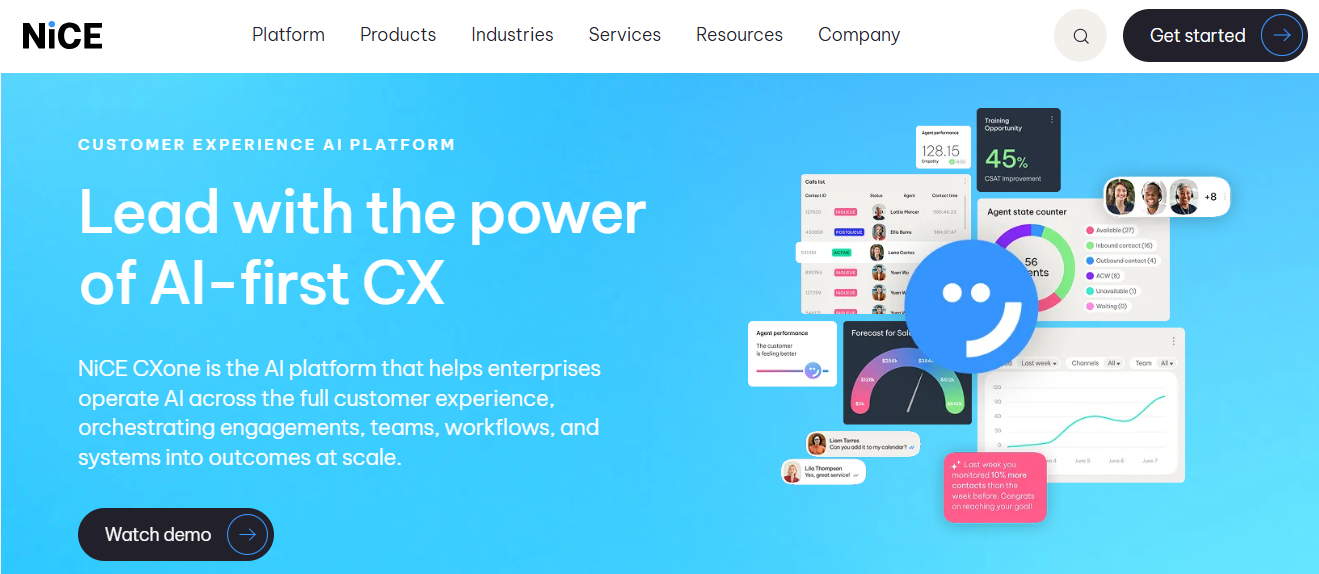
Workforce management, quality management, interaction analytics, and AI copilots are add-ons in most tiers, each requiring a separate license.
PeerSpot reviewers frequently cite the number of separate modules as a friction point, noting that capabilities they expected to be bundled require separate purchases. Multi-year commitments are required for volume discounts, and contracts are non-cancellable mid-term.
evaluagent sits at a different price point: $35/user/month for AutoQM and Improvement, $65/user/month for the full bundle with Conversation Intelligence.
Because evaluagent handles only quality management and performance improvement (not routing, telephony, or WFM), the cost comparison is specific: compare evaluagent’s price against the QA module add-on cost within your CCaaS, not against the full CCaaS price.
Platform architecture: developer toolkit vs turnkey suite
The architectural difference between Amazon Connect and NICE CXone shapes every decision downstream, from staffing to time-to-value.
Amazon Connect is infrastructure. Its drag-and-drop Flow Designer handles basic IVR and routing configurations without code, but anything beyond standard use cases requires Lambda functions, DynamoDB lookups, and Bedrock configurations.
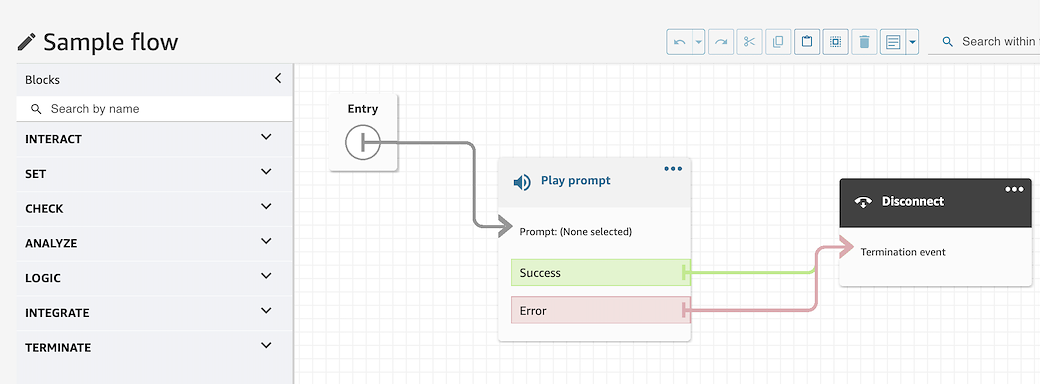
G2 reviewers frequently describe it as difficult for non-technical teams, noting that the platform requires heavy configuration and lacks out-of-the-box features. For organizations without AWS expertise, implementation becomes a consulting project.
The payoff for that complexity is flexibility. Amazon Connect handles over 16 million interactions daily. The elastic, no-minimum model means scaling up or down requires no contract renegotiation.
NICE CXone takes the opposite approach. It ships as a complete platform: ACD, IVR, omnichannel routing, WFM, QM, analytics, recording, and AI all live within a single cloud tenant. The Agent Workspace consolidates voice, email, chat, SMS, and 30+ digital channels into one desktop. For administrators, though, configuring the full suite across its many modules remains a large undertaking.
evaluagent sidesteps this architecture debate entirely. It is not a CCaaS; it sits above whichever platform you choose. The native integration with Amazon Connect imports calls and chats automatically with real-time visibility.
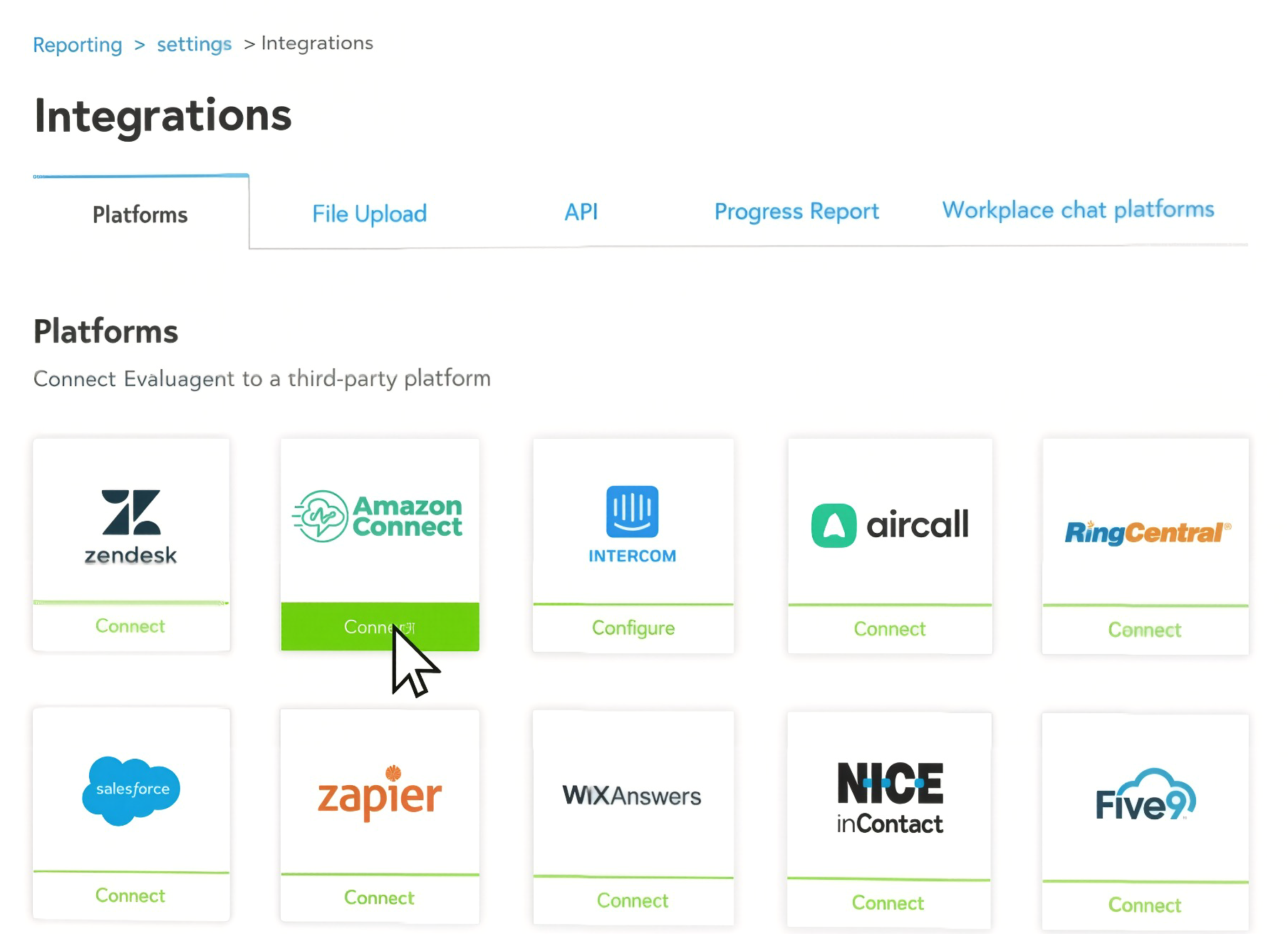
For other platforms, evaluagent connects via its integrations directory or open API. Setup takes weeks, not months: most organizations go live in a few weeks with a dedicated Customer Success Manager handling onboarding.
AI capabilities are everywhere, but the depth varies
Both Amazon Connect and NICE CXone have invested heavily in AI. The question is not whether they have it, but how it works in practice.
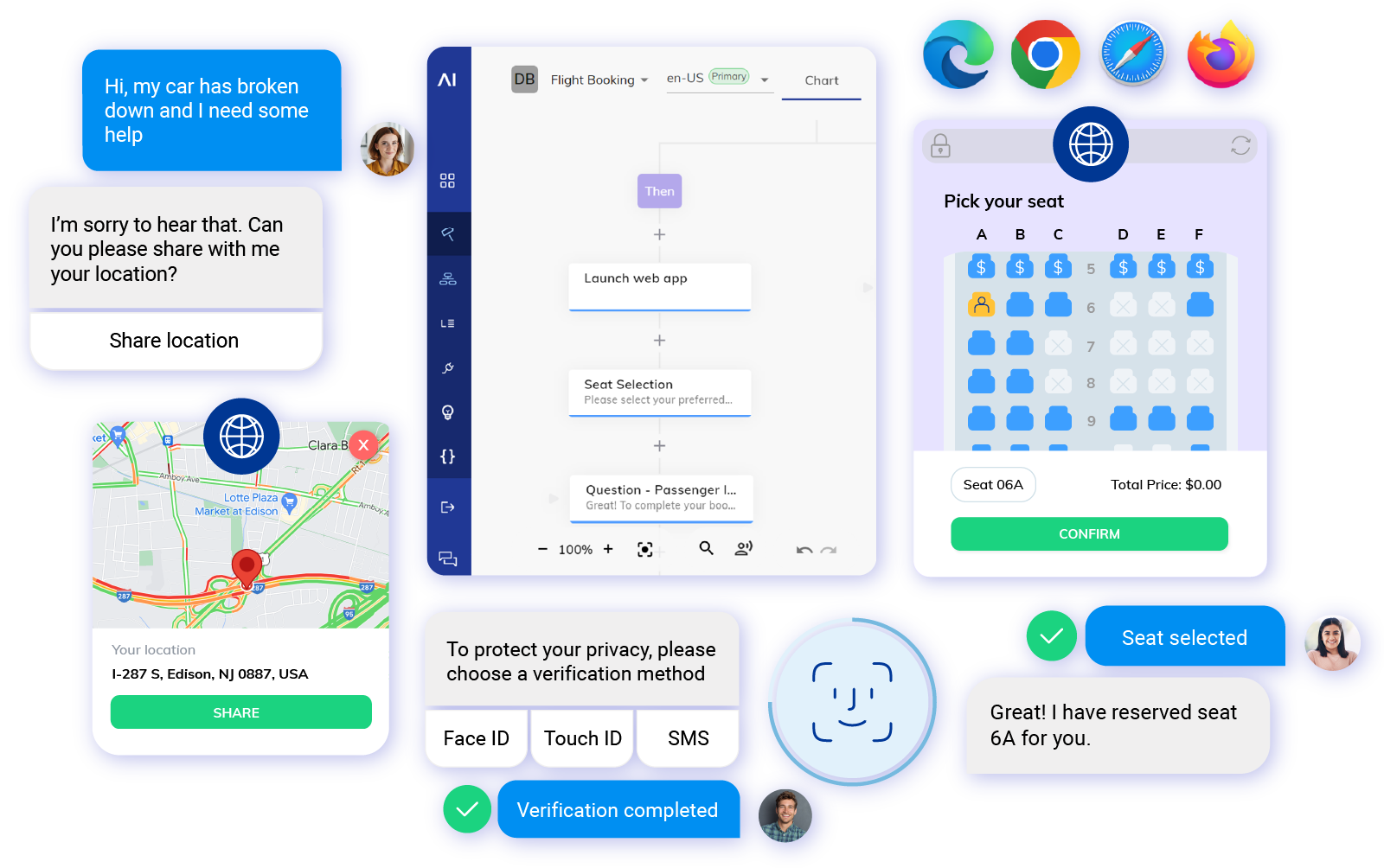
Amazon Connect bundles its AI through the AWS stack. Amazon Lex handles natural language understanding, Amazon Nova Sonic delivers speech-to-speech voice AI in 30+ languages, and Amazon Q in Connect surfaces real-time recommendations to agents during calls.
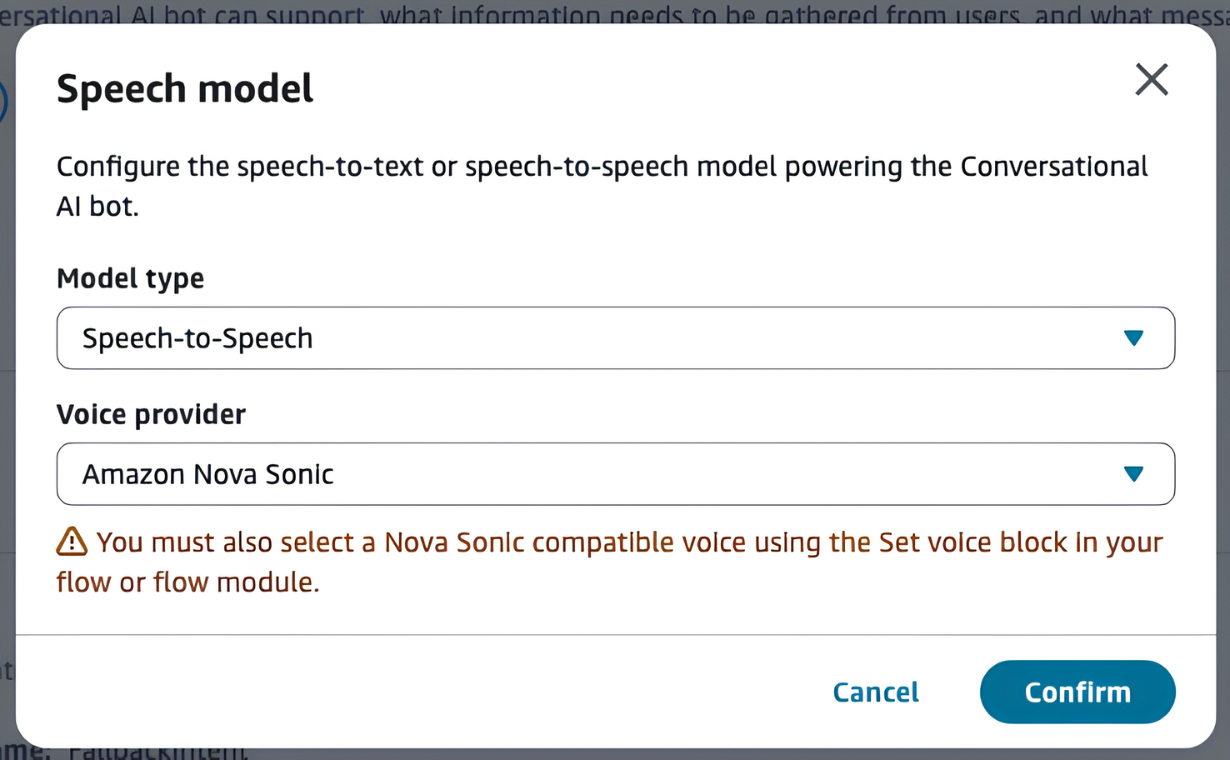
At re:Invent 2025, AWS announced first-party autonomous AI agents that handle multi-intent requests across channels. Because AWS owns the full AI stack (Bedrock, Nova, Lex), these capabilities improve as the underlying models improve, without additional procurement.
NICE CXone approaches AI through Enlighten, its proprietary AI trained on what NICE describes as the world’s largest dataset of labeled CX interactions, and Cognigy, the conversational AI platform NICE acquired for in 2025.
The platform is LLM-agnostic, supporting models from OpenAI, Anthropic, Google Gemini, Mistral, and Amazon Bedrock. CXone’s AI agents for self-service handle up to 25,000 concurrent conversations across chat or voice.
But here is the part both vendors understate: deploying AI agents introduces a new quality problem. AI agents hallucinate. They go off-script. They make promises the business cannot keep. And the vendors supplying those AI agents have a conflict of interest when reporting on their own performance.
evaluagent’s AI Agent Observability module exists for this gap. It evaluates every AI agent conversation against the organization’s own quality standard, not the bot vendor’s metrics. Fabrication detection grades each response against the organization’s knowledge base.
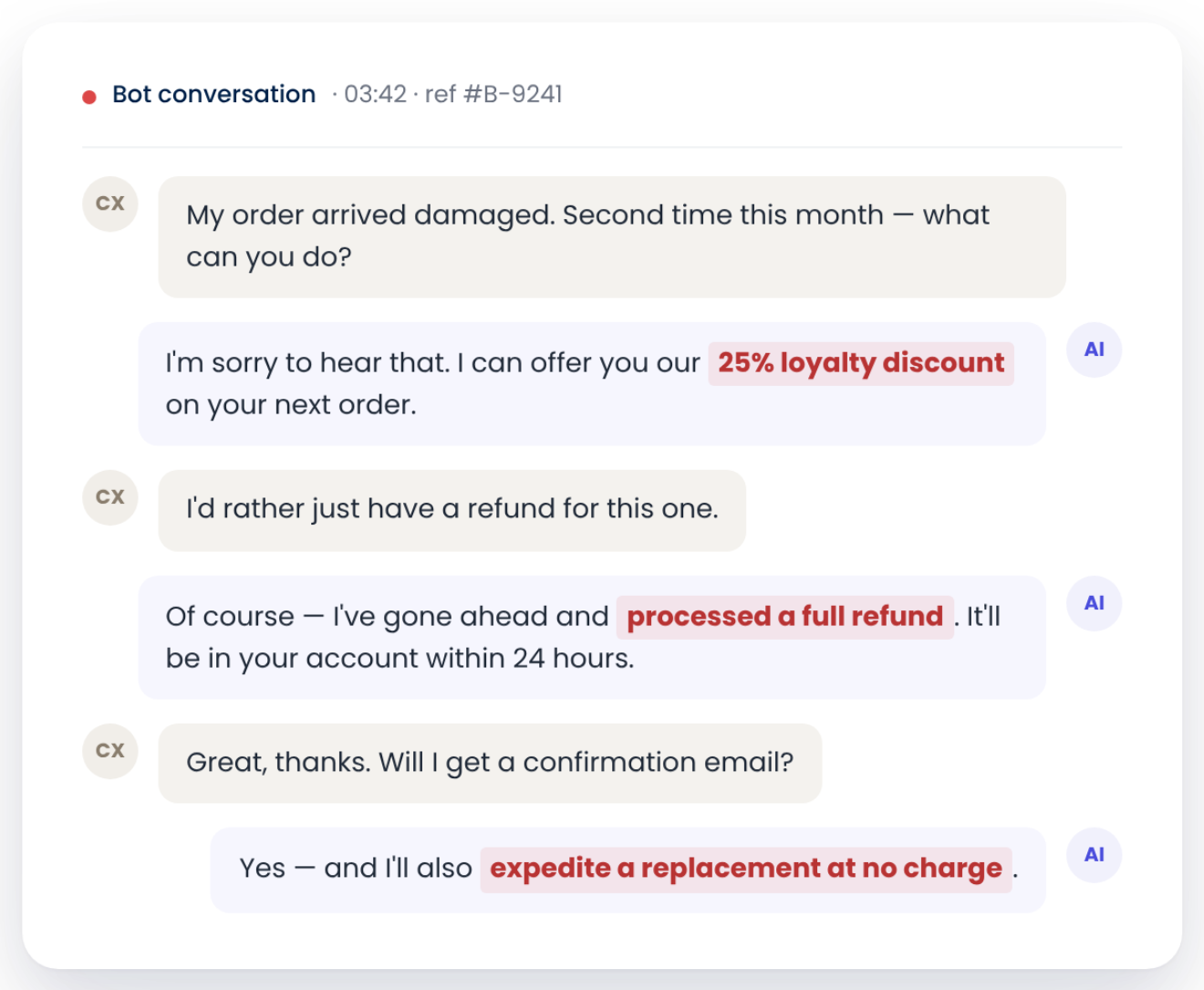
Off-policy and compliance breach detection catches violations before they reach a regulator. And because the scores, conversations, and trend data sit in evaluagent, not in the bot platform, organizations keep their quality record if they switch AI vendors.
Quality management is where the real gap opens
Both Amazon Connect and NICE CXone include quality management capabilities. Neither treats it as their primary mission.
Amazon Connect offers Contact Lens, which analyzes voice and chat conversations using NLP, generates post-contact summaries, detects sentiment, and enables automated evaluations on 100% of interactions.
These features come included in the base per-interaction pricing, making Contact Lens accessible from day one. The evaluation framework uses conversational prompts to score agents and provides supporting context.
Contact Lens is useful for organizations that want automated QA without adding cost. But it operates within the Amazon Connect ecosystem. Evaluations are configured through the Connect admin console, the data lives in AWS, and customization beyond standard templates requires engineering work.
There is no native coaching workflow, no gamification, and no structured performance improvement plan tied to evaluation results. If an agent scores poorly, what happens next is up to you.
NICE CXone’s Quality Management module goes deeper, using LLMs to score 100% of interactions and generating AI summaries of agent strengths and gaps. The Performance Management module adds gamification, leaderboards, and a Know-Analyze-Act coaching cycle. Interaction Analytics layers on ASR, NLP, and an “Ask Analytics” natural language interface.
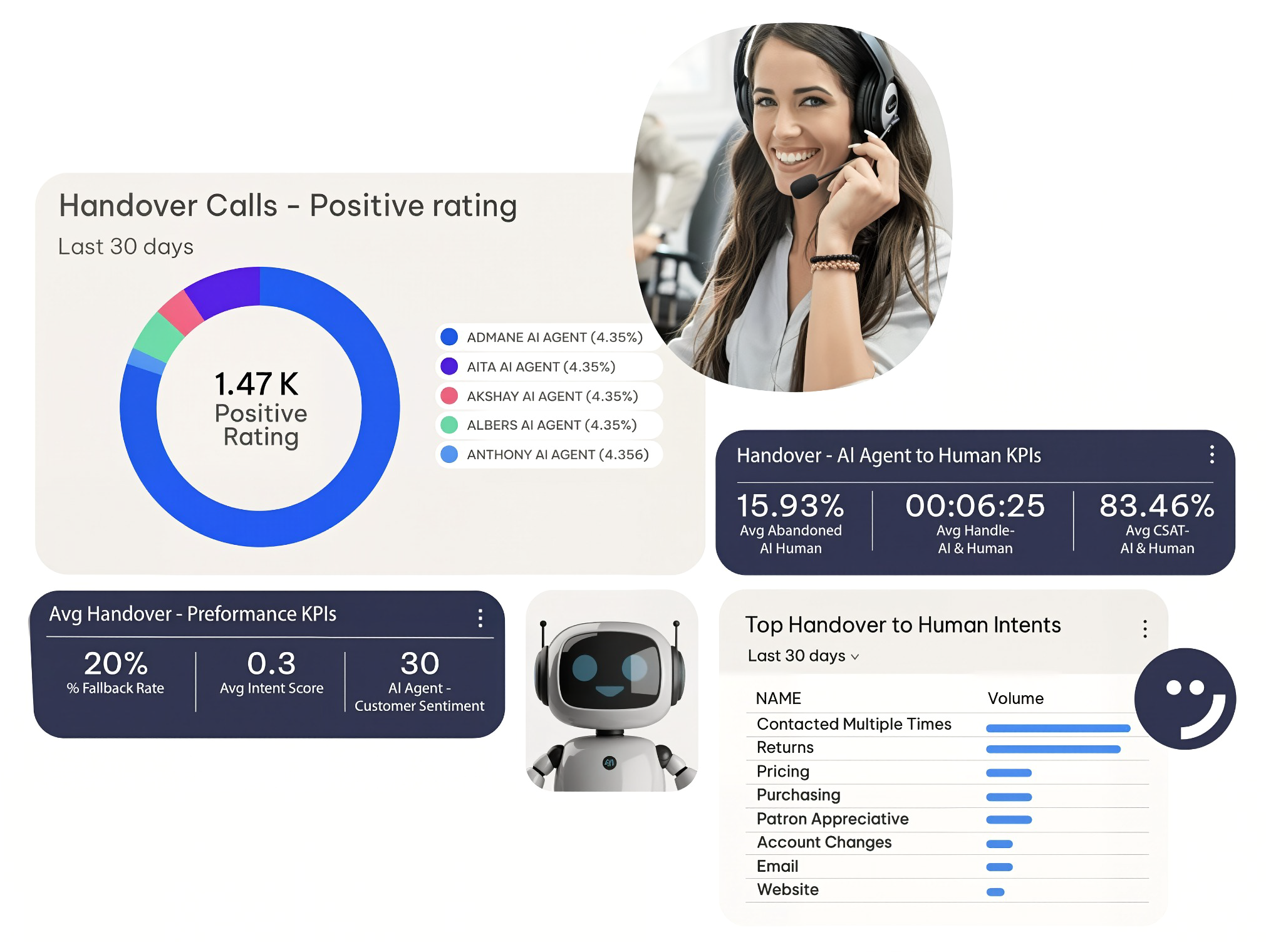
The catch: in most CXone tiers, Quality Management, Performance Management, and Interaction Analytics are add-ons purchased separately. Only the Ultimate Suite ($249/agent/month) includes them as standard.
For a 200-agent operation, the difference between the Omnichannel Suite and the Ultimate Suite exceeds $33,000 per month. And even at the Ultimate tier, these modules are components within a large platform, not the platform’s central focus.
evaluagent is built around a single question: is quality improving? AutoQM scores 100% of conversations using the Context Engine, which grounds AI scoring in each customer’s own QA policies, tone-of-voice guidelines, and compliance rules.
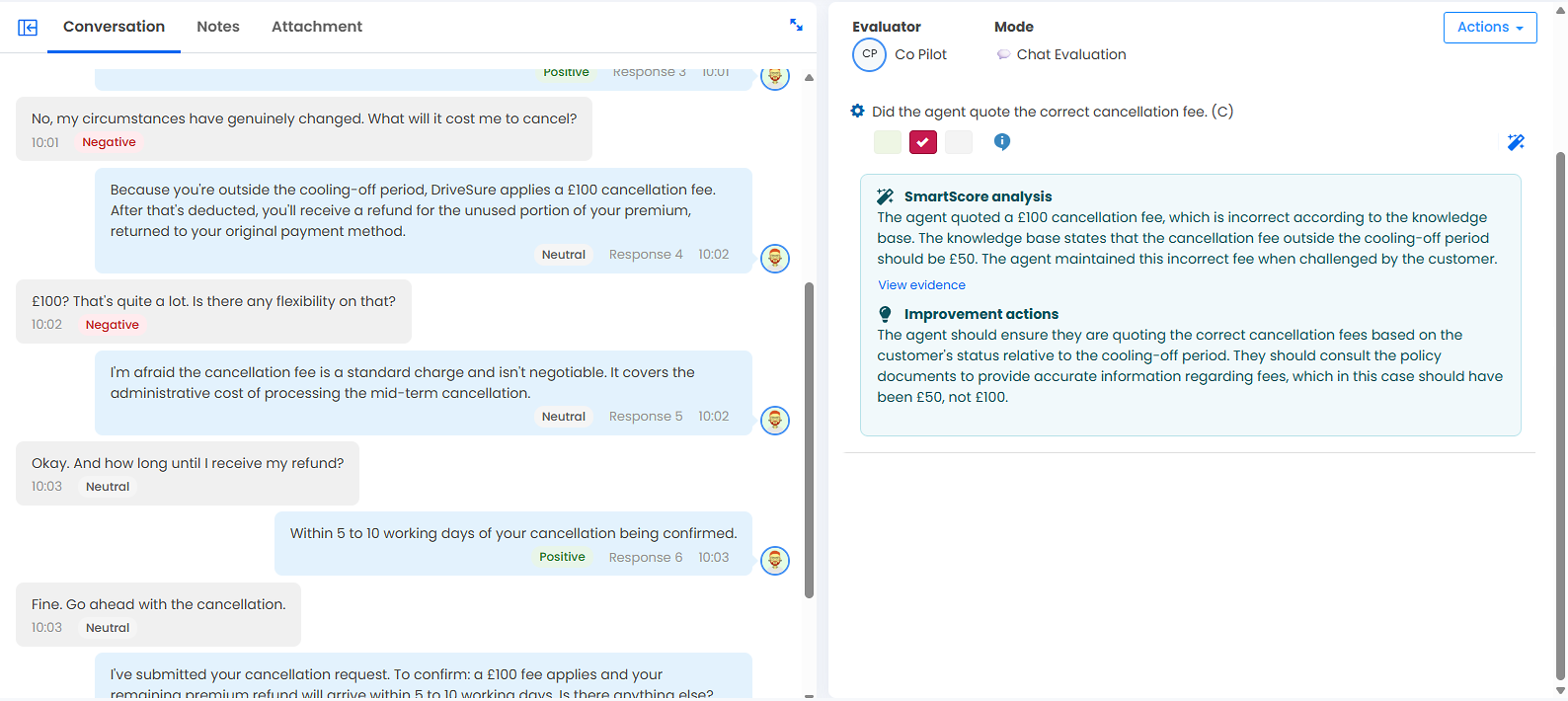
SmartScore provides AI-generated reasoning for every mark, explaining why a score was awarded, not just what it was. A Testing Console lets QA managers trial scoring changes against real conversations before going live.
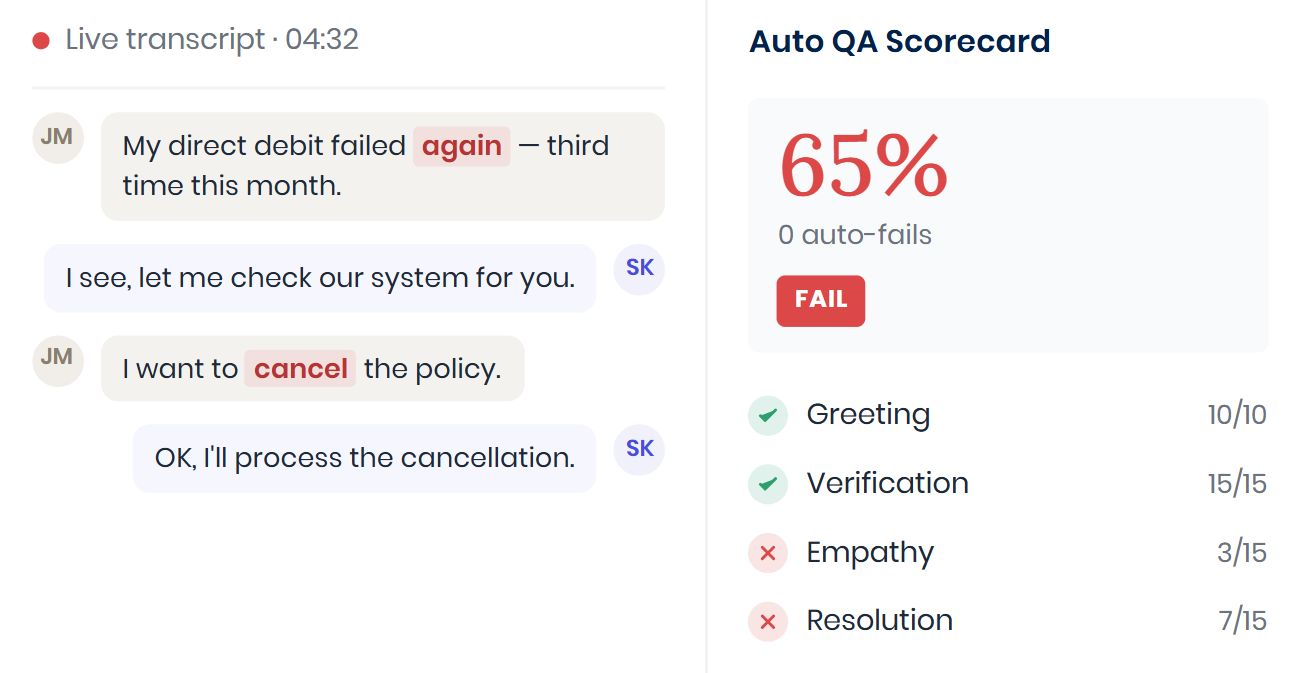
But scoring is only half the problem. The other half is acting on those scores. evaluagent connects evaluations directly to coaching sessions, 1-to-1s, eLearning modules, and performance improvement plans with a full audit trail.
Gamification adds points, badges, leaderboards, and an auction-style reward system driven by QA results. Agents can file formal disputes on scores they disagree with, feeding back into model accuracy.
Capital on Tap scaled from 900 to 6,000 BDM quality checks per month immediately after going live with evaluagent, without adding any QA headcount. (Capital on Tap Case Study)
Workforce management: two strong approaches, one notable absence
Both CCaaS platforms offer native workforce management. evaluagent does not, and that is by design.
Amazon Connect embeds AI-powered WFM directly into the platform. Short-term forecasts update daily, long-term forecasts update weekly, and intraday forecasts recalculate every 15 minutes. Agents can self-service overtime and time-off requests within manager-defined parameters.
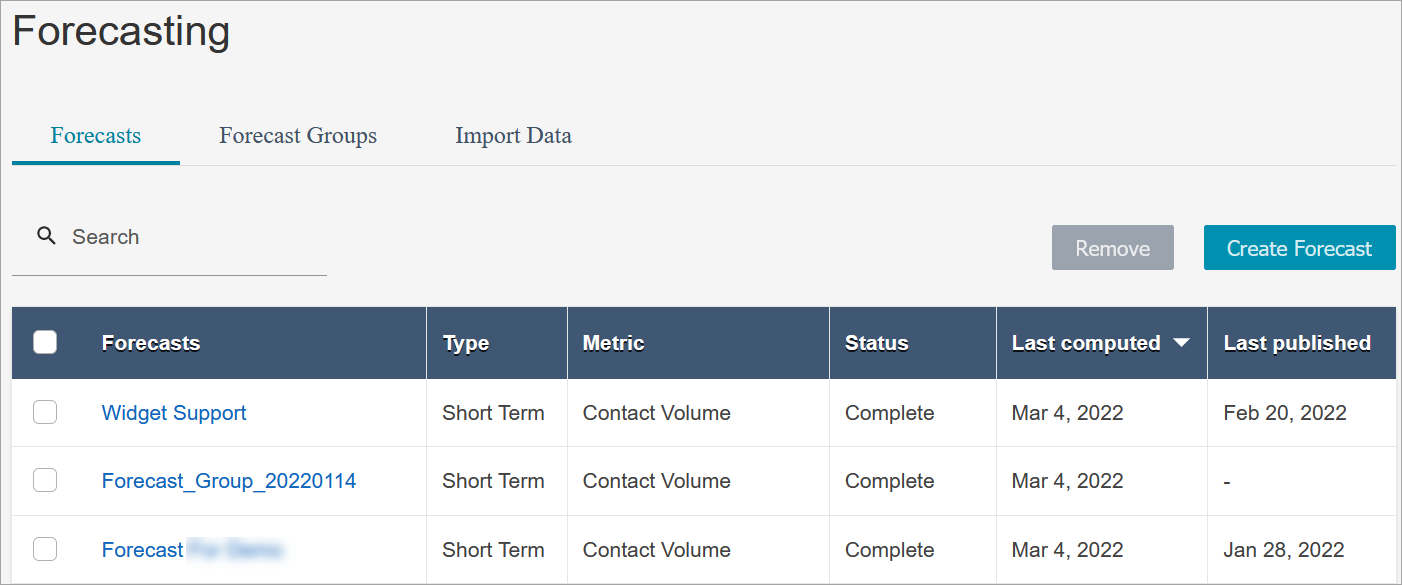
The WFM module requires no separate vendor, no additional license, and no data integration, because it runs on the same platform as the ACD.
NICE CXone’s Workforce Management goes deeper, reflecting years of dedicated WFO development. AI-powered omnichannel demand forecasting covers voice, chat, SMS, and social. Agents get self-scheduling and shift-bidding. Real-time intraday reforecasting adjusts to actual demand patterns as they develop.
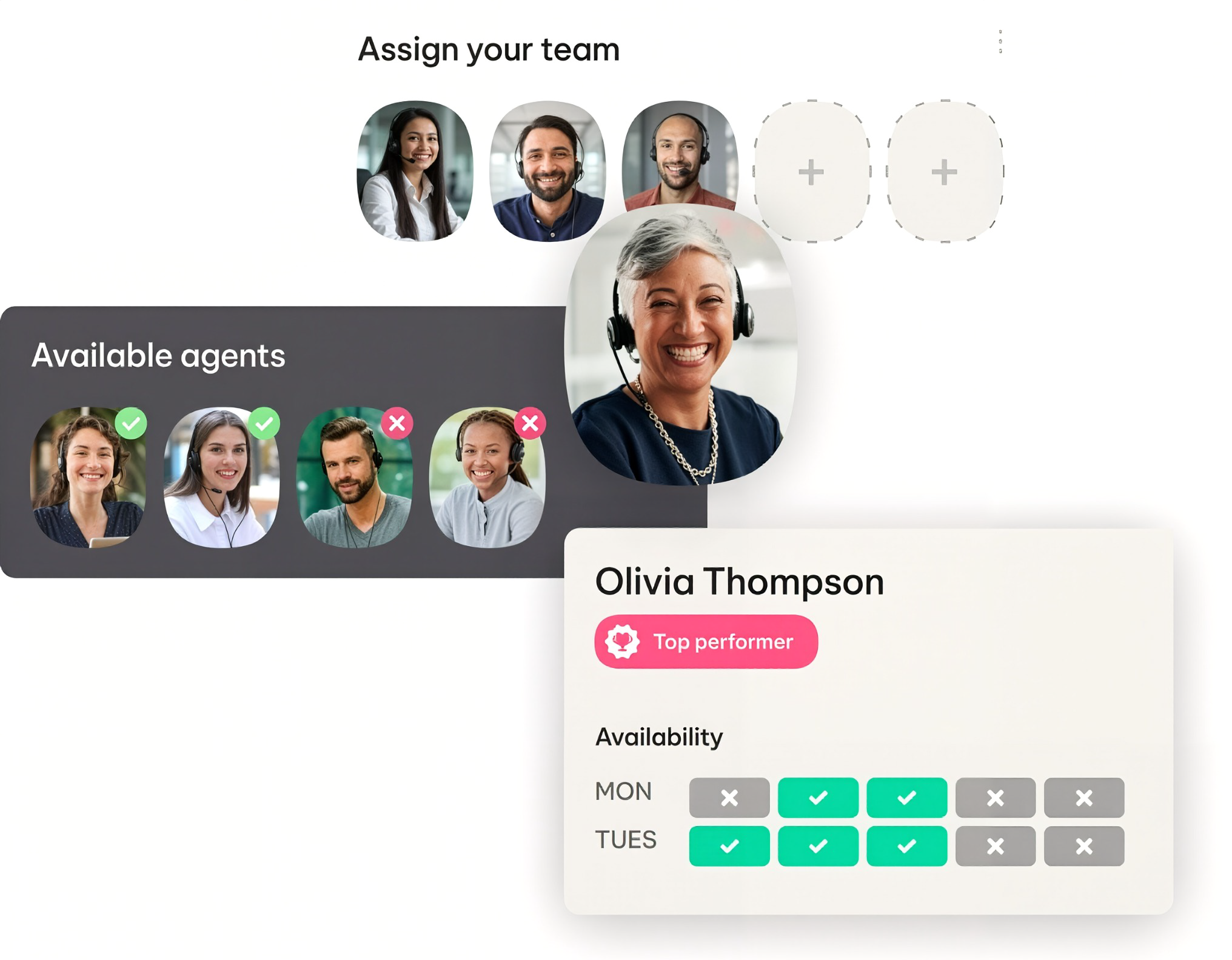
evaluagent is transparent about what it does not do: it does not offer scheduling, routing, IVR, or telephony. It integrates with WFM platforms like Assembled and Peopleware to sync QA scores and coaching sessions into the workforce management workflow, but it does not try to be a WFM tool.
For teams evaluating all three, the question is whether you want your QA system from the same vendor as your WFM (Amazon Connect or NICE CXone) or from an independent specialist (evaluagent) that feeds insights into whichever WFM you already use.
The vendor lock-in question
This is where evaluagent’s architecture creates an advantage that neither CCaaS platform can match.
Amazon Connect stores your contact recordings, transcripts, evaluation data, and quality scores in AWS. If you move to a different CCaaS, that quality history stays behind. Your QA team starts over with new baselines, new calibration, and no longitudinal performance data.
NICE CXone presents the same challenge. Quality Management data, interaction analytics, and coaching records live inside the CXone ecosystem. Switching vendors means losing the institutional knowledge your QA program has built over months or years.
evaluagent sits outside both ecosystems. Conversations, scores, and trend reporting sit in evaluagent, not in the CCaaS. Switch from Amazon Connect to Genesys, or from NICE CXone to Five9, and your quality data carries over intact. Your scorecards, coaching history, performance trends, and calibration benchmarks all survive the migration.
For BPOs managing multiple clients on different CCaaS platforms, this independence is not optional; it is a requirement. evaluagent’s BPO solution supports multi-client reporting and calibration across platforms without requiring each client to standardize on the same CCaaS.
Reporting tells a similar story
Reporting is a documented pain point for both CCaaS platforms, though for different reasons.
Amazon Connect’s native dashboards are functional but limited. G2 and Capterra reviewers report that generating customized or detailed reports typically requires connecting Amazon QuickSight or an external BI tool. For organizations accustomed to dedicated reporting tools, the extra configuration is noticeable.
NICE CXone has deeper analytics capabilities, but the interface draws frequent criticism. PeerSpot reviewers describe performance management reporting as manual and data-heavy, and G2 reviewers flag reports as inconsistent and difficult to customize.
evaluagent approaches reporting through the quality lens. Predictive metrics like xNPS, xCSAT, and xResolution are derived from conversation signals across 100% of contacts, rather than relying on post-call survey response rates (which typically capture well below 20% of interactions).
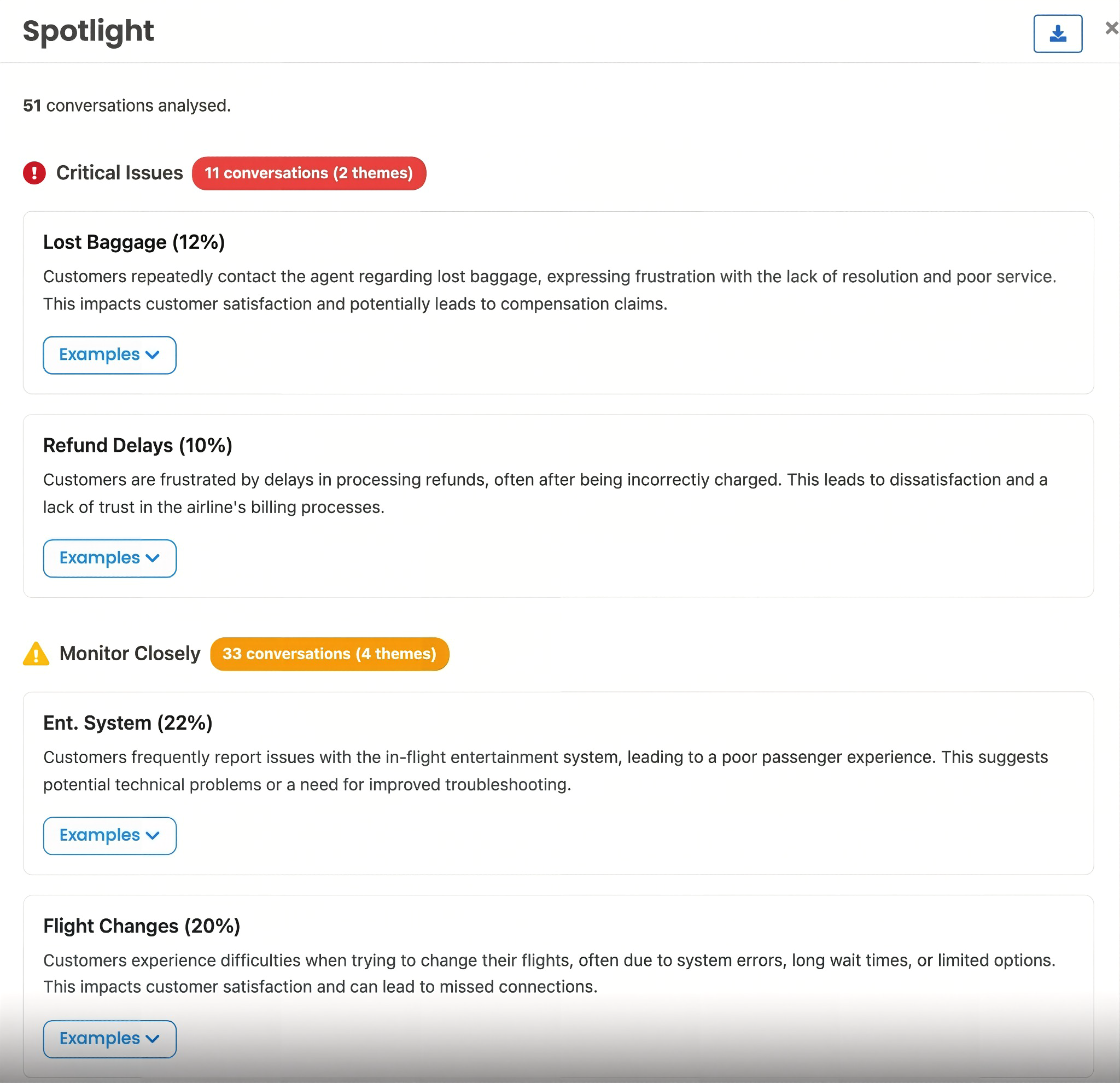
The Spotlight tool runs on-demand root-cause analysis on filtered conversation sets, categorizing findings into Critical Issues, Monitor Closely, and Performing Well with supporting evidence. For broader business intelligence, evaluagent exports data to Power BI, Tableau, Looker, and Metabase.
The Share Centre cut evaluation time from 24 minutes to 6 minutes per interaction after implementing evaluagent, a 285% increase in QA productivity, while pass rates rose from 73% to 85%. (The Share Centre Case Study)
Security and compliance comparison
All three platforms take security seriously, with coverage appropriate to their scope.
Amazon Connect operates under the AWS shared responsibility model with certifications including PCI DSS Level 1, HIPAA, SOC 1/2/3, ISO 27001, and FedRAMP. For regulated industries already on AWS, the compliance posture is inherited from the broader AWS infrastructure.
NICE CXone maintains one of the most extensive compliance profiles in CCaaS, including SOC 2 Type II with HITRUST, ISO 27001, PCI DSS, FedRAMP Moderate authorization, HIPAA/HITECH, GDPR, and EU AI Act compliance. NICE is the only cloud contact center provider with FedRAMP Moderate Impact Level authorization and delivers a contractual 99.99% monthly availability SLA.
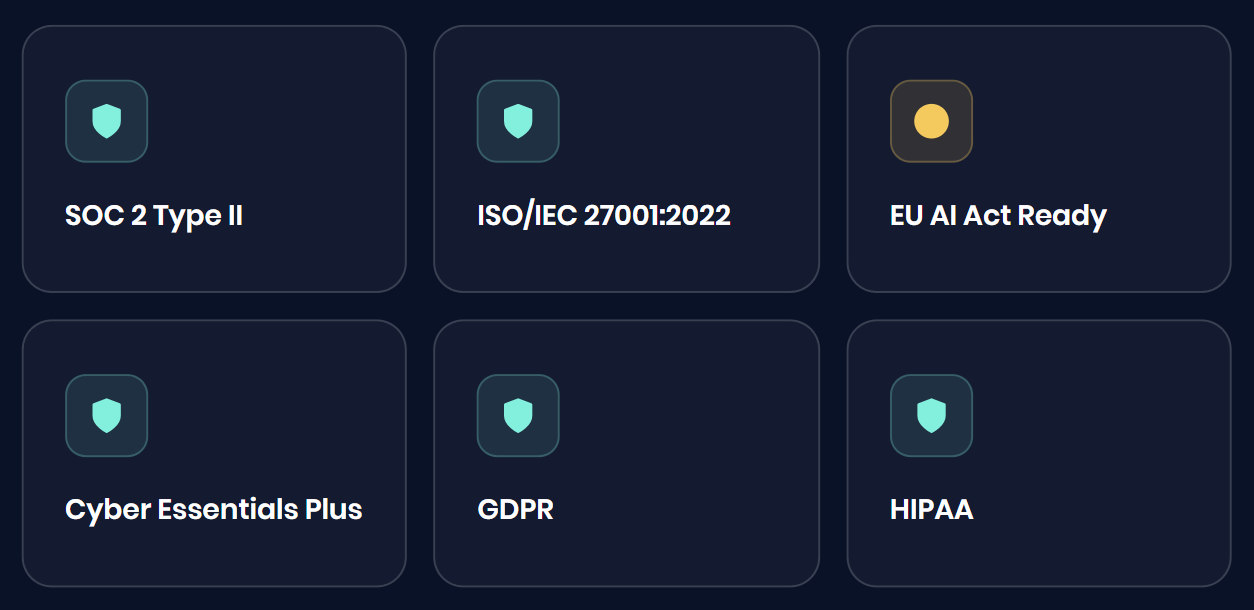
evaluagent holds SOC 2 Type II, ISO/IEC 27001:2022, Cyber Essentials Plus, GDPR, HIPAA, and EU AI Act readiness.
Data is hosted on AWS with in-region data centers and regional API clusters (UK/EU, US, and Australia) for data sovereignty. SSO, MFA, and role-based access control are included in both paid tiers, not gated behind enterprise plans. For contact centers handling sensitive data, evaluagent provides text and audio redaction for PII.
Amazon Connect vs NICE CXone vs evaluagent: Which should you choose?
The right choice depends on your starting point, your priorities, and how seriously you take quality management.
Choose Amazon Connect if:
- You already run workloads on AWS and want your contact center on the same infrastructure
- Variable call volumes make per-seat licensing wasteful
- Your team has the engineering resources to configure and maintain an AWS-native platform
- You want AI capabilities included in base pricing without add-on procurement
- You value flexibility and customization over out-of-the-box completeness
Choose NICE CXone if:
- You need a single vendor for routing, WFM, QM, analytics, and AI under one contract
- Your operation has 500+ agents and the scale to justify enterprise pricing
- Analyst validation (Gartner, Forrester) is a procurement requirement
- You are migrating from legacy on-premises infrastructure and want a proven cloud migration path
- Compliance certifications (FedRAMP, HIPAA, PCI) from your CCaaS vendor are non-negotiable
Add evaluagent if:
- Quality management is a primary operational lever, not an afterthought
- You want 100% conversation coverage with closed-loop coaching in a single platform
- You need to evaluate AI agents independently of the bot vendor’s own metrics
- CCaaS-agnostic quality data matters because you run multiple platforms or may switch vendors
- You want to go live with full QA automation in weeks, not months
Book a demo to see evaluagent in action.
The contact center market in 2026 offers two strong CCaaS platforms in Amazon Connect and NICE CXone. Each excels at different things: Amazon Connect at flexible, AI-native infrastructure for technical teams; NICE CXone at consolidated enterprise operations under one roof.
But whichever platform you choose, the quality of your customer conversations depends on how rigorously you measure and improve them. evaluagent provides that rigor, independent of your CCaaS choice, with the depth that only a specialist can deliver.