If you’re comparing Level AI vs Zendesk for contact center quality, you’re asking a fundamental question: should your QA platform be part of your intelligence platform, part of your service platform, or independent of both?
These two products approach quality from opposite directions. Level AI is a CX intelligence suite that bundles QA with real-time agent assist, AI virtual agents, and conversation analytics. Zendesk is a customer service platform that includes QA as one add-on among many. Both tie your quality program to a larger product commitment. Before choosing, answer these questions:
- Do you need a customer service platform with QA built in, or a dedicated quality layer that works with whatever you already use?
- Is your priority scoring every interaction, or do you also need real-time agent assist and AI virtual agents from the same vendor?
- How important is it that your QA platform works independently of your CCaaS or helpdesk?
- Are you evaluating AI chatbot conversations with the same standards you apply to human agents?
- Do you want to own your quality data regardless of which service platform you switch to next year?
In short, here’s what we recommend:
Level AI is a CX intelligence platform built on seven proprietary domain-specific models trained on contact center data. Auto-QA scores every interaction automatically, Agent Assist guides agents during live calls, iCSAT infers customer satisfaction without surveys, and AI Virtual Agents handle frontline automation.
For enterprise contact centers that want QA, coaching, analytics, and agent automation under one roof, Level AI offers real depth. But there’s no public pricing, no self-serve trial, and the platform bundles capabilities that smaller QA-focused teams may not need.
Zendesk is the dominant customer service platform, handling ticketing, messaging, voice, and knowledge management for over 20,000 customers using its AI features. Its QA add-on scores 100% of interactions with AutoQA and includes Spotlight for flagging churn risk and escalation patterns.
For teams already running their helpdesk on Zendesk, adding native QA means no new vendor, no integration project, and familiar workflows. The trade-off: QA is one add-on in a much larger product, and your quality data stays inside Zendesk’s ecosystem.
Both platforms deliver solid automated QA. But both also tie quality management to a broader product commitment. For contact centers that want independent quality oversight across any stack, there’s a third option.
evaluagent is a dedicated QA and performance improvement platform that scores 100% of conversations automatically and connects those scores directly to coaching, 1-to-1s, performance plans, and gamification. It works with Zendesk, Salesforce, Genesys, Five9, Amazon Connect, Freshdesk, Talkdesk, Intercom, and more.
Its Context Engine grounds every AI score in your own policies and knowledge base, and its AI Agent Observability module evaluates bot conversations independently of the bot vendor’s own metrics. For teams that want their QA platform to outlast any single CCaaS decision, evaluagent provides that independence.
If an independent quality layer that works with your existing stack sounds right, book a demo with evaluagent.
Level AI vs Zendesk vs evaluagent at a glance
| Level AI | Zendesk | evaluagent | |
|---|---|---|---|
| Primary function | CX intelligence platform | Customer service platform | QA & performance improvement |
| Auto-QA coverage | 100% of interactions | 100% of interactions (add-on) | 100% of interactions |
| Real-time agent assist | Yes (Agent Assist, AgentGPT) | Yes (Copilot) | No (post-interaction focus) |
| AI virtual agents | Yes (voice + chat) | Yes (AI Agents) | No (evaluates them, doesn’t provide them) |
| Conversation intelligence | VoC Insights, iCSAT, Analytics | Explore analytics, Analyst Copilot | Conversation Intelligence with Spotlight |
| Coaching workflow | AI-generated coaching plans | Targeted coaching (QA add-on) | Structured 1-to-1s, performance plans, gamification |
| CCaaS independence | Works above any CCaaS | Tied to Zendesk platform | Works with any CCaaS or helpdesk |
| AI agent QA | Scores virtual agent conversations | AI Agent QA in QA add-on | Independent AI Agent Observability module |
| Security certifications | ISO 27001, SOC 2, HIPAA, PCI, HITRUST | SOC 2, ISO 27001, HIPAA, GDPR BCR | SOC 2 Type II, ISO 27001:2022, Cyber Essentials Plus, HIPAA, GDPR, EU AI Act Ready |
| Pricing transparency | No public pricing | Published per-agent plans | Published per-agent plans |
| Starting price | Custom (sales required) | $50/agent/month (QA add-on) | $35/user/month |
| Free trial | No (demo only) | 14-day trial (no card required) | Demo-based (case-by-case trials) |
| Best for | Enterprise CX teams wanting one intelligence platform | Teams already on Zendesk wanting native QA | Teams wanting independent QA across any stack |
They approach quality from opposite directions
Level AI, Zendesk, and evaluagent all score 100% of customer interactions. That’s where the similarity ends.
Level AI started as a conversation intelligence platform in 2018 and expanded into a CX suite covering QA, agent assist, coaching, VoC analytics, and AI virtual agents. Its Auto-QA runs on QA-GPT, a scoring engine trained on contact center data that handles over 90% of scorecard criteria automatically.
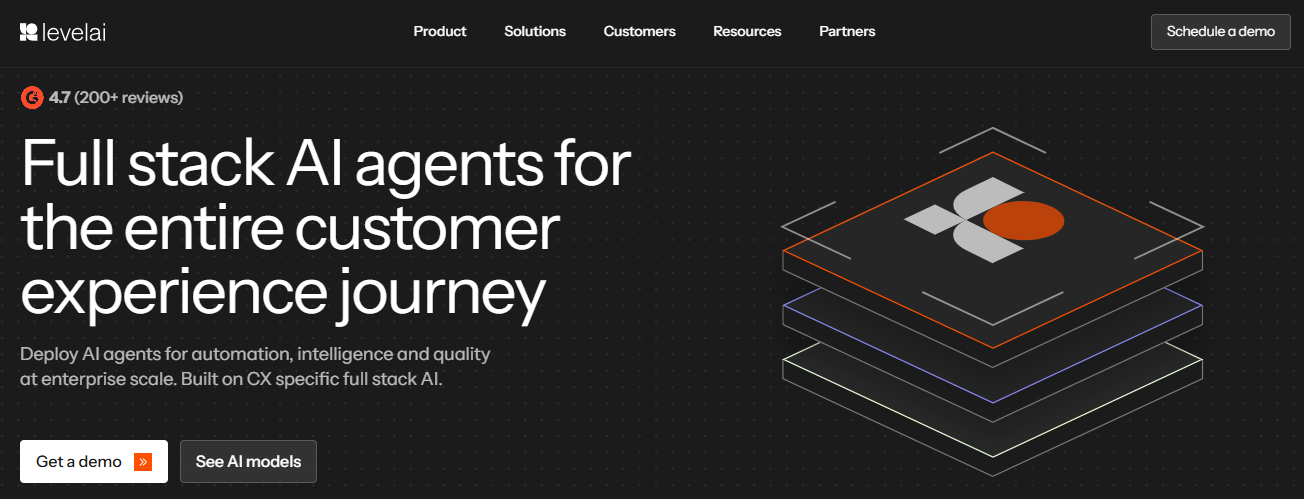
The platform doesn’t just grade transcripts. It also evaluates agent screen recordings, tracking desktop behavior alongside conversation quality. Level AI’s argument is that quality, coaching, analytics, and automation should live in one system under one AI architecture.
Zendesk arrived at QA from the opposite direction. It spent nearly two decades building the service platform (ticketing, messaging, voice, knowledge base) and added quality assurance through its Tymeshift acquisition and subsequent product development.
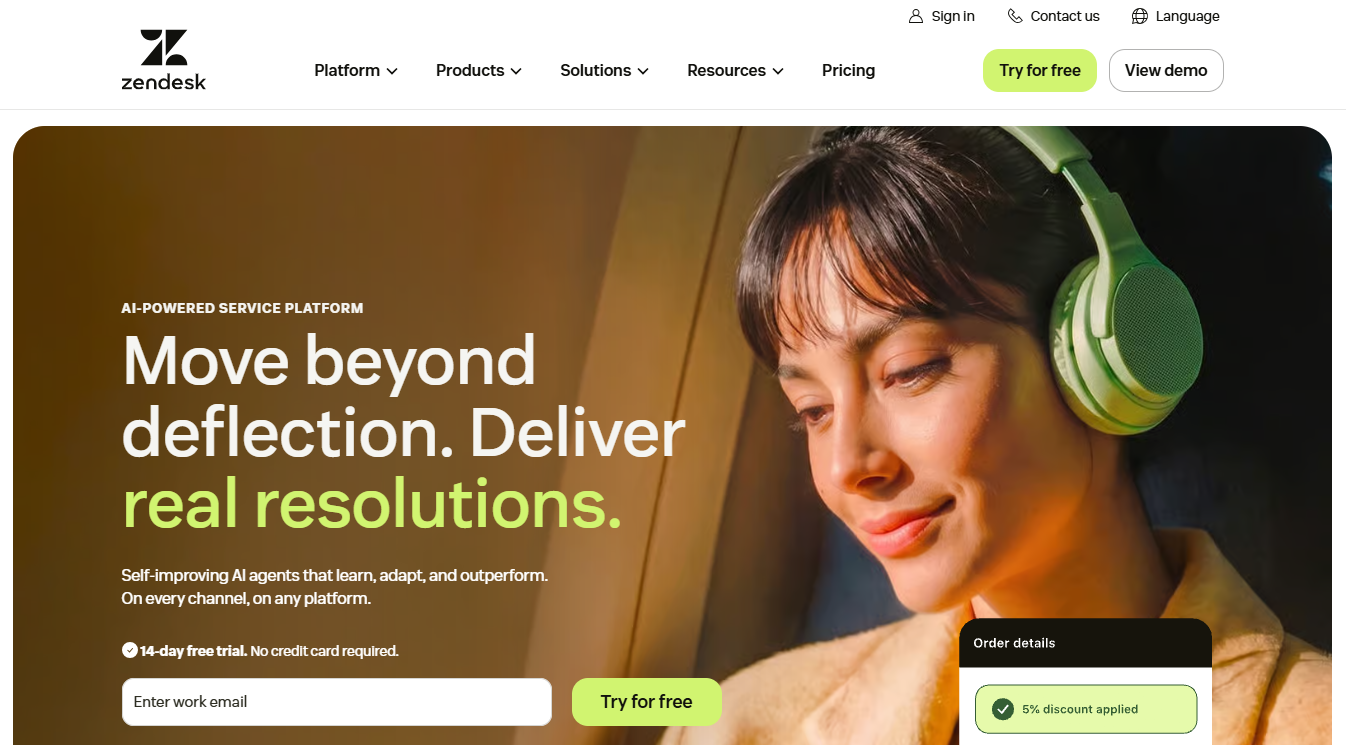
Zendesk’s QA add-on scores interactions using AutoQA with configurable categories described in plain language, and its Spotlight module flags churn risks, escalations, and dead air automatically. QA lives inside the same workspace where agents handle tickets, making adoption straightforward for existing Zendesk customers.
evaluagent takes a third approach. Founded in 2012 by former contact center operators, it was built exclusively for QA and agent development. It doesn’t try to be a helpdesk, a CCaaS, or an agent assist tool. Instead, it integrates with whatever platforms you already use and applies a consistent quality standard across all of them.
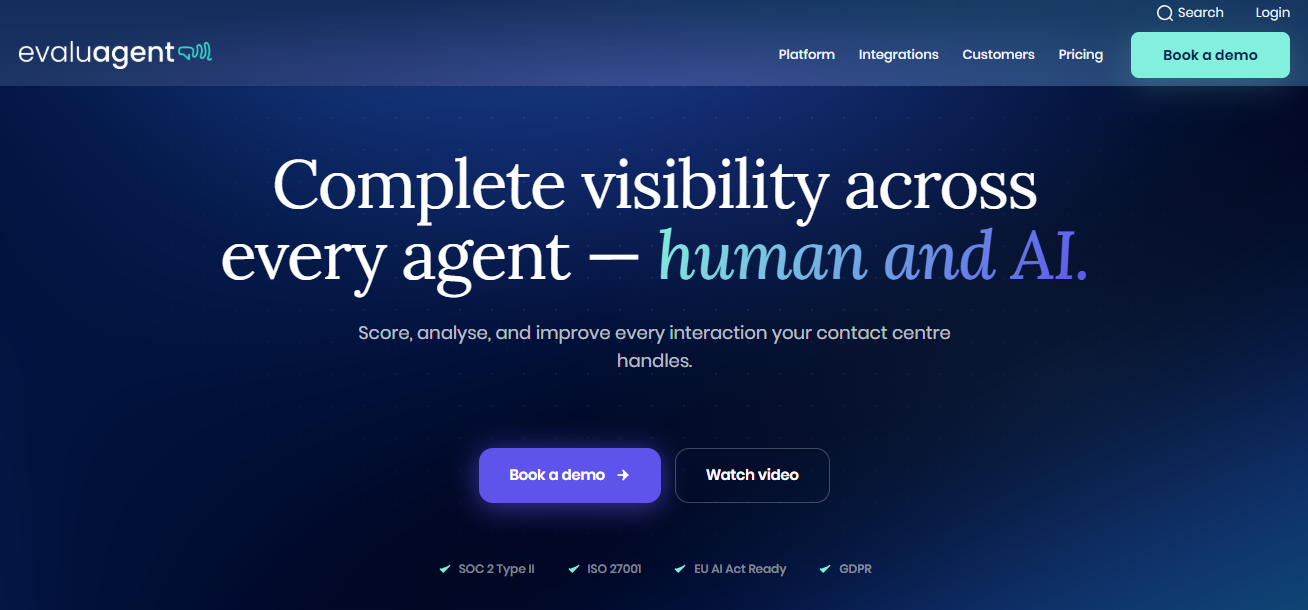
Its AutoQM scores every interaction, then feeds those scores directly into coaching workflows, performance plans, and gamification, closing the loop between identifying a problem and fixing it.
The philosophical difference matters. Level AI says: bring everything under one intelligence roof. Zendesk says: add QA to the service platform you’re already paying for. evaluagent says: keep QA independent so it survives your next platform decision.
Automated QA: the scoring differences that matter
All three platforms auto-score conversations. The differences lie in how they calibrate, what they can evaluate, and how they connect findings to action.
Level AI’s QA-GPT evaluates 100% of interactions across calls, chats, emails, and bot conversations. Teams bring their existing scorecards or select from pre-built rubrics, then test accuracy in a sandbox before deploying at scale. A distinguishing capability is screen-aware scoring: by integrating with Agent Screen Recording, Level AI can evaluate whether agents followed the correct desktop workflow during a call, not just whether they said the right things.
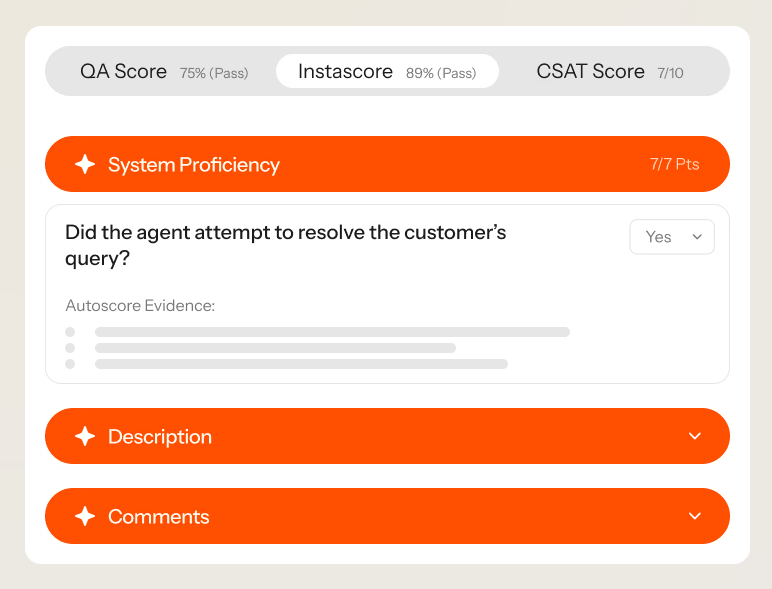
The platform also includes a dedicated Auto QA Sales Library for identifying conversion behaviors in sales conversations. Level AI holds a 4.7 G2 rating across 200+ reviews, with users praising its ability to replace manual spreadsheet QA.
Zendesk’s AutoQA scores interactions against configurable categories (including built-in ones like Empathy and Solution) described in plain language with no coding required. Spotlight adds automatic detection of churn risk, escalation patterns, stuck conversation loops, and knowledge gaps.
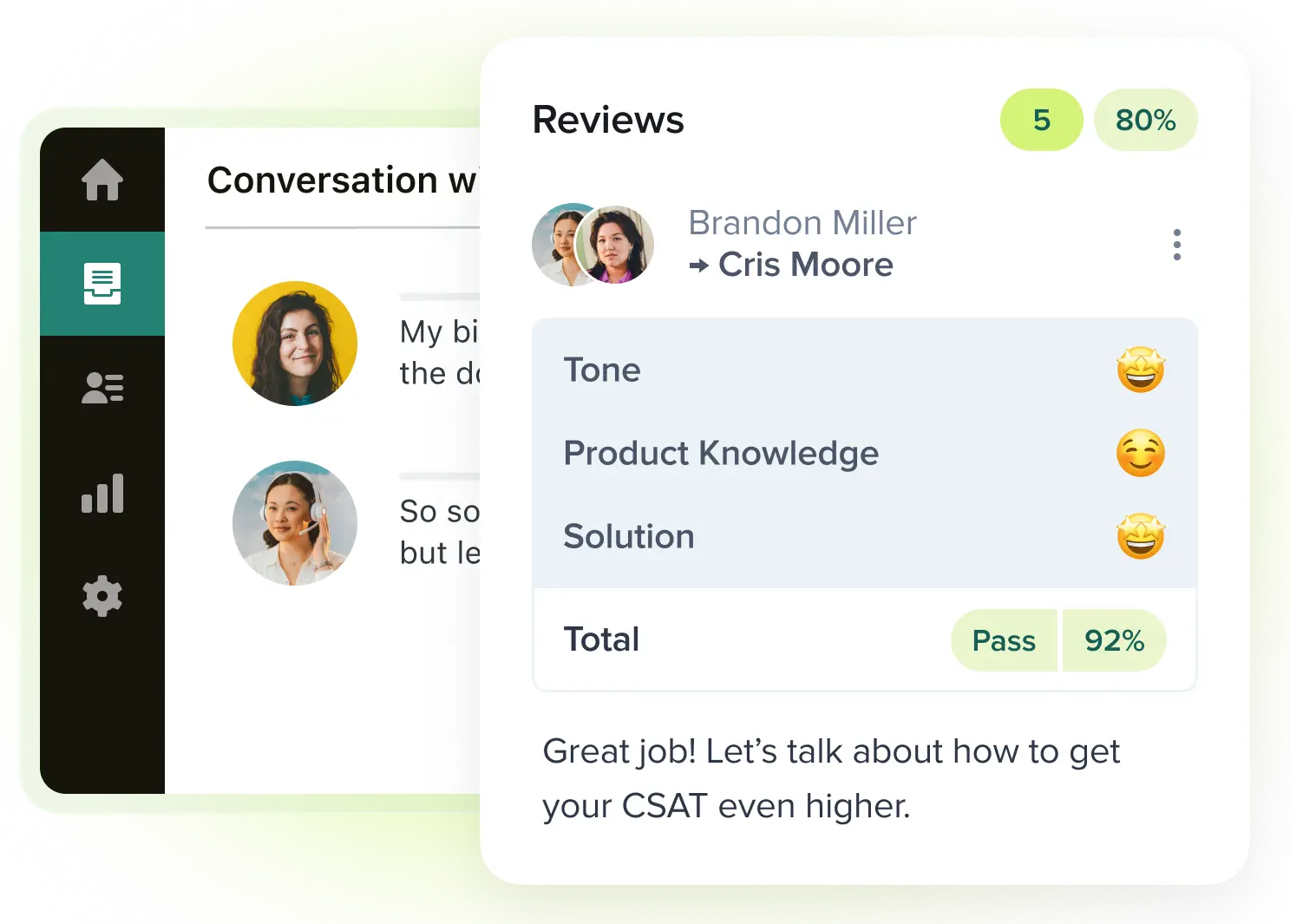
A notable differentiator is Real-time QA, which analyzes conversations as they unfold and can trigger workflows mid-interaction, not just after the call ends. Zendesk was named a Leader in the 2025 Gartner Magic Quadrant for CRM Customer Engagement Center, earning the highest possible score in Quality Management.
evaluagent’s AutoQM brings two features that separate it from both competitors.
First, Blended Scorecards let teams mix AI-scored and human-scored criteria on the same scorecard. AI handles repetitive compliance checks while human evaluators apply contextual judgment on nuanced criteria.
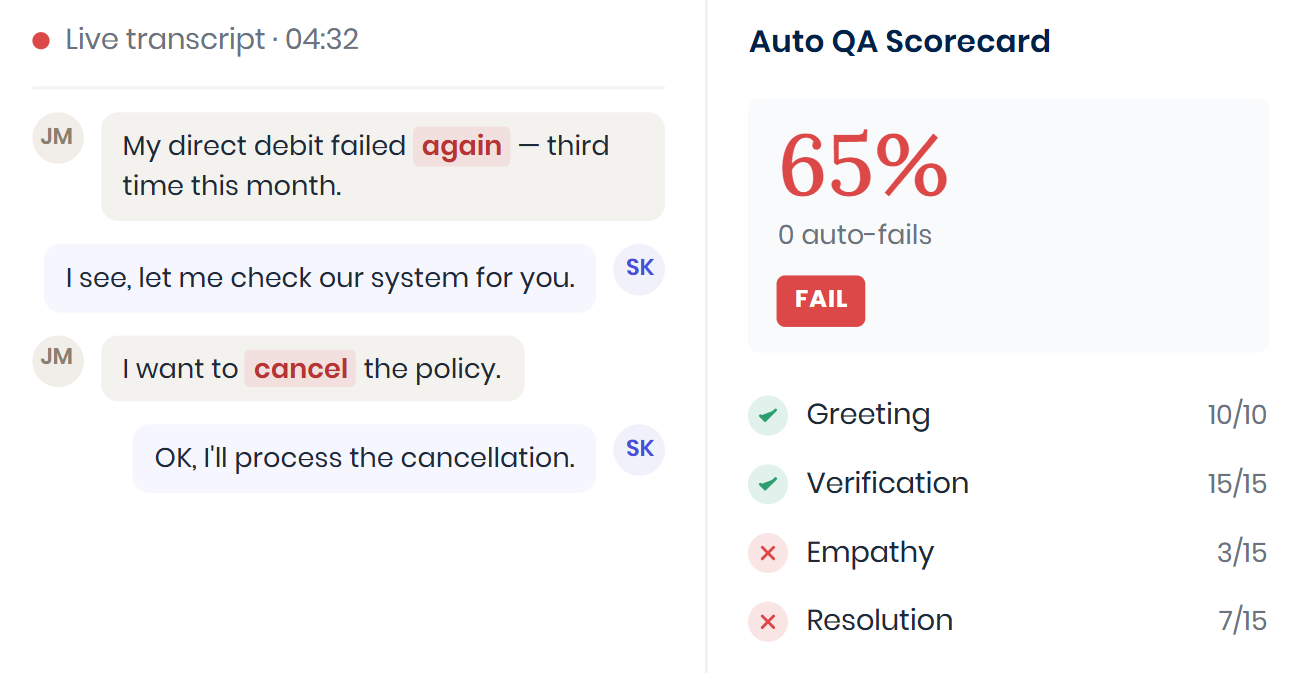
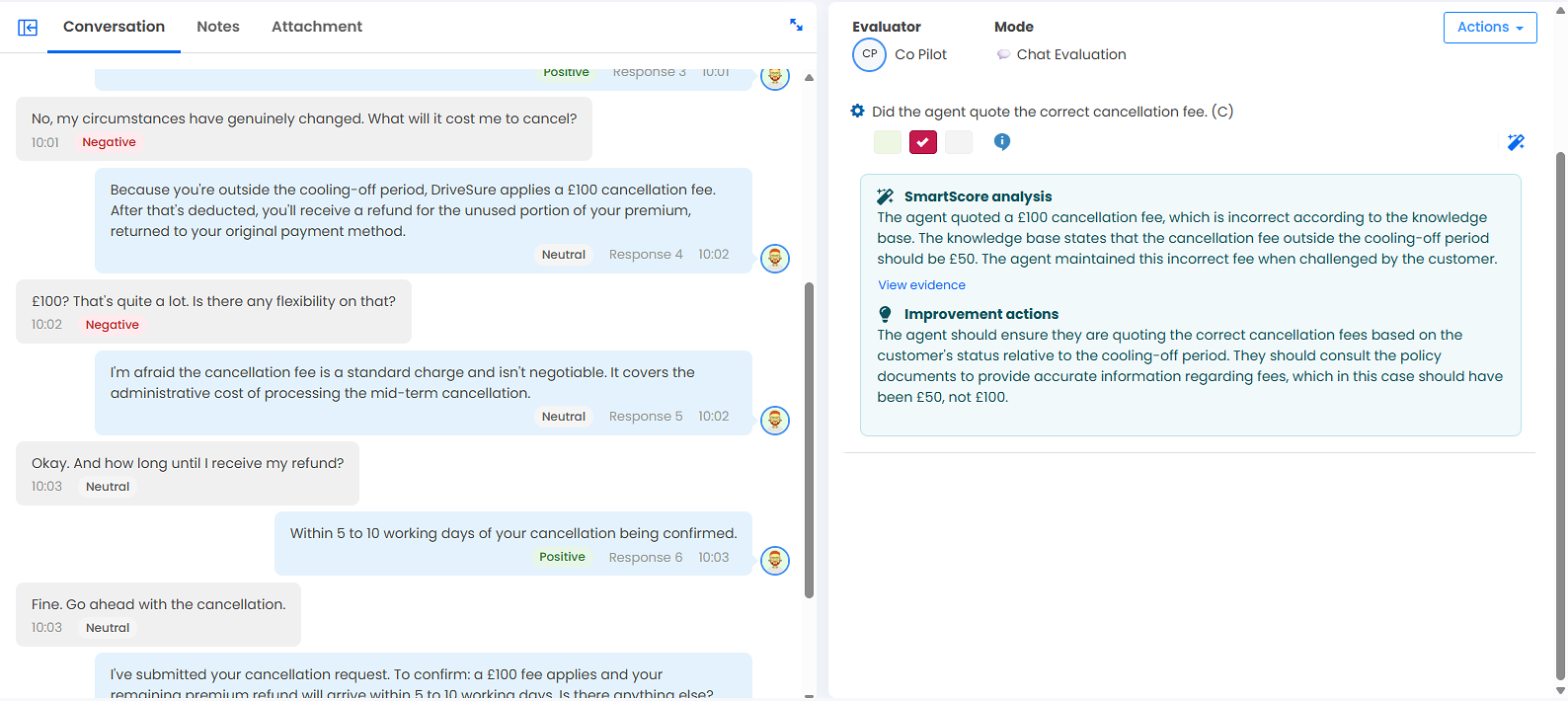
Second, the Context Engine grounds every AI score in the organization’s own policies, knowledge base content, and compliance rules, answering not just “did the agent communicate well?” but “did the agent give the right answer?” A Testing Console lets QA managers validate any scoring change against real historical conversations before it goes live.
evaluagent was named a Top Customer Service Product 2026 on G2 and holds Leader and Momentum Leader positions in Contact Center Quality Assurance in G2’s Summer 2026 report.
Capital on Tap scaled from 900 to 6,000 BDM checks per month immediately after going live with evaluagent, without adding headcount. (Capital on Tap Case Study)
AI agent governance: who watches the bots?
As contact centers deploy AI chatbots and virtual agents, a new quality problem emerges: who evaluates the bot’s conversations? The bot vendor has an obvious interest in favorable reporting. All three platforms address this, but with different levels of independence.
Level AI evaluates AI agent conversations through its unified QA framework, scoring virtual agent interactions against the same rubrics it applies to human agents. Because Level AI also builds and deploys its own AI Virtual Agent, it can feed QA findings directly into virtual agent improvement.
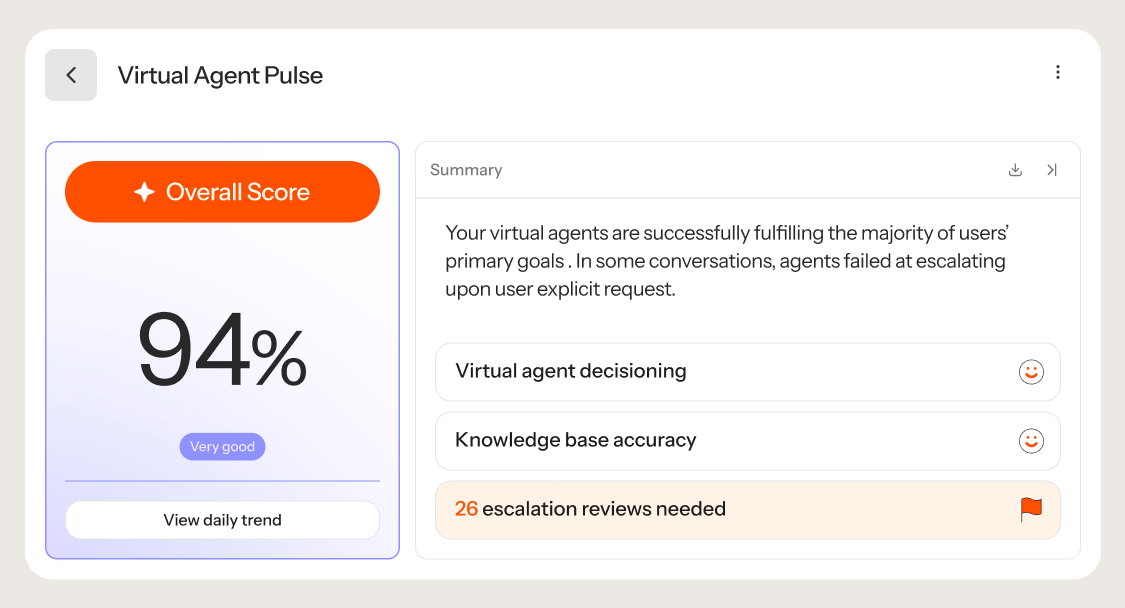
This works well when you use Level AI’s own virtual agent. If you run bots from a different vendor (Cognigy, Sierra, or a proprietary build), the evaluation may be less tightly integrated.
Zendesk includes AI Agent QA in its quality assurance add-on, scoring bot conversations alongside human interactions. It detects abandoned or unresolved tickets from AI agents and displays scores side-by-side with human agent scores.
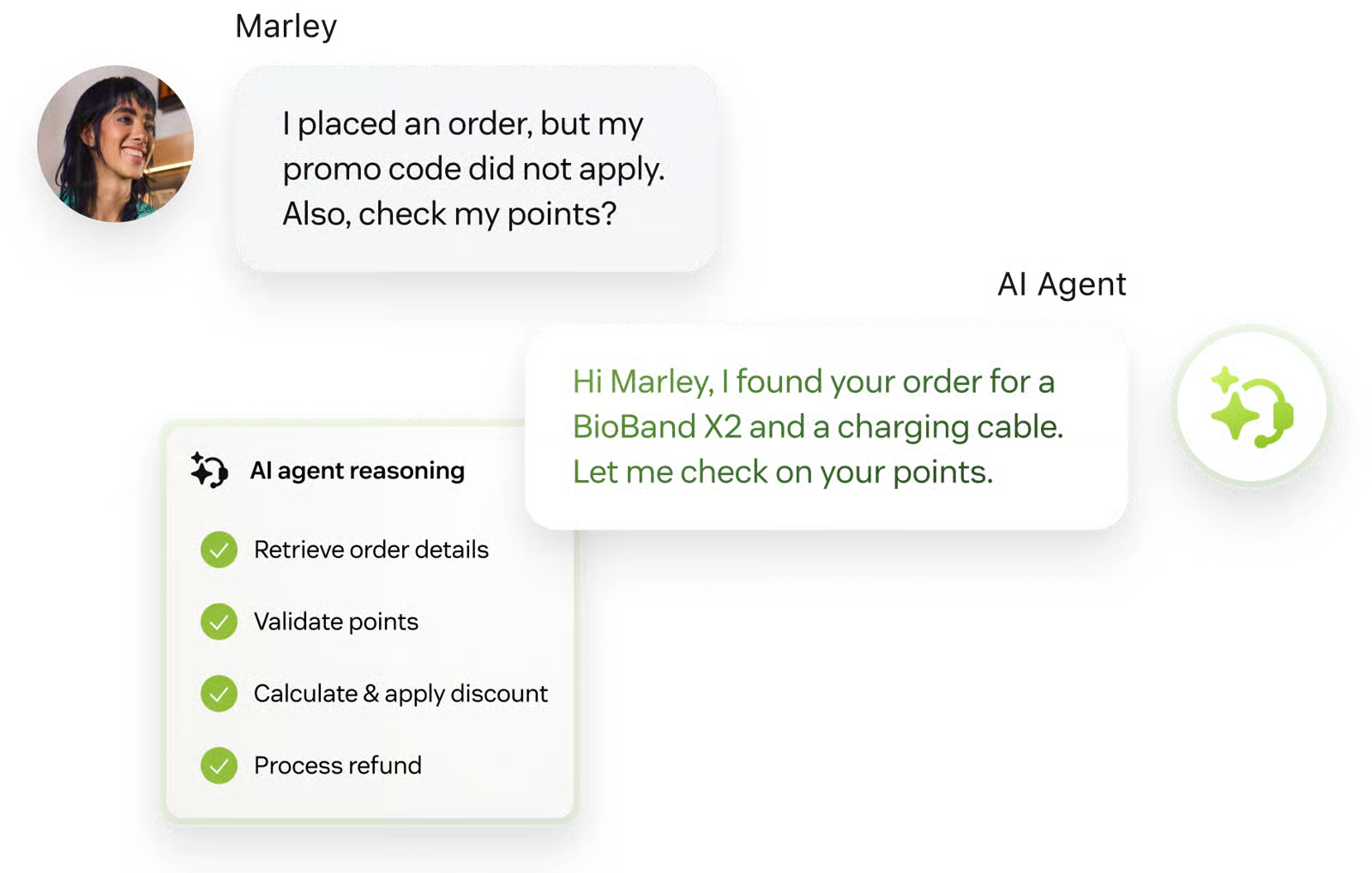
This works well within the Zendesk ecosystem, where AI agents and human agents share the same workspace and ticket data. Outside Zendesk, this capability doesn’t apply.
evaluagent treats AI agent governance as a standalone product line. Its AI Agent Observability module operates independently of whichever bot platform a contact center uses, evaluating conversations from Cognigy, Sierra, Decagon, or proprietary builds against the organization’s own quality definitions.
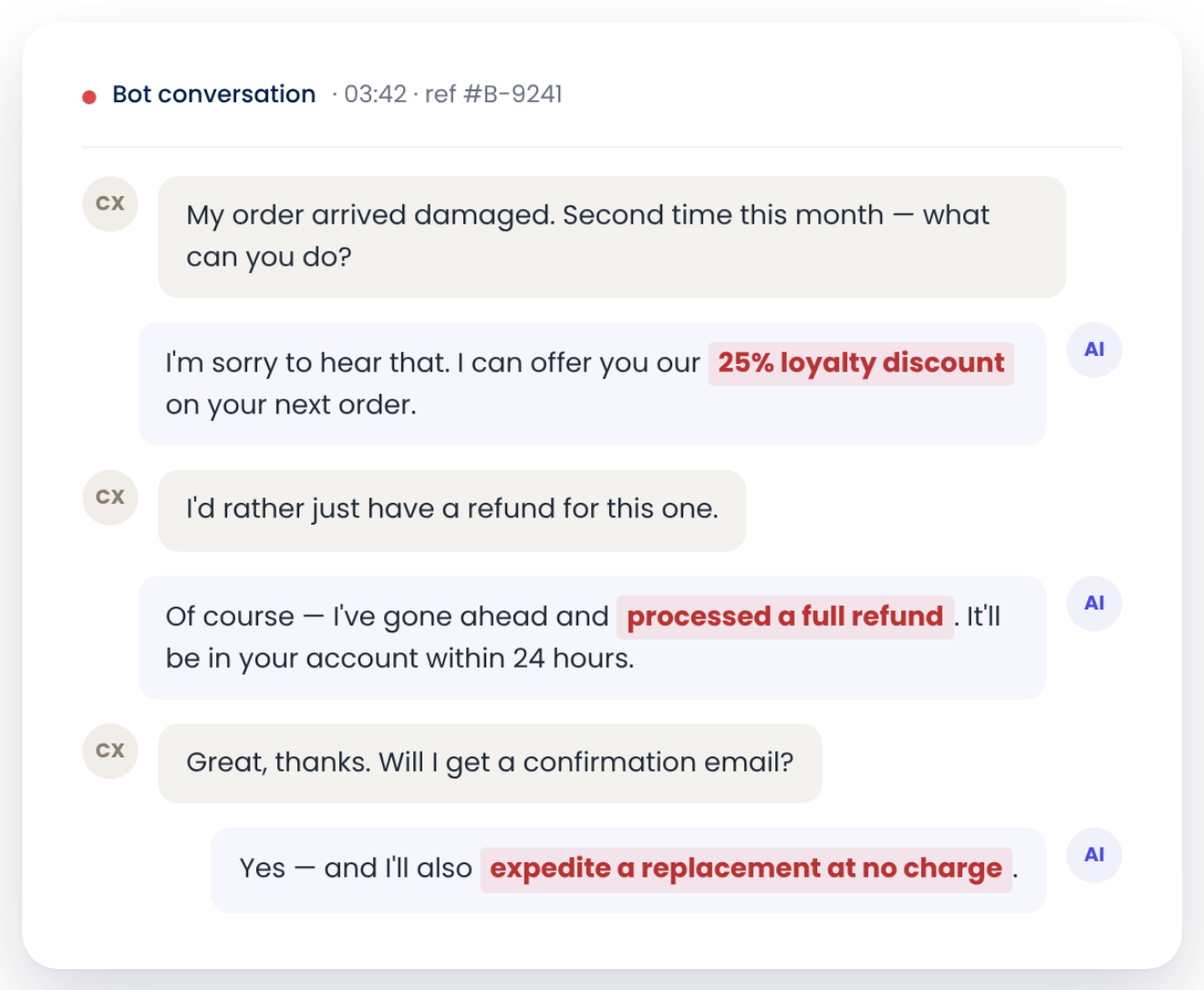
Fabrication detection grades every bot response against the organization’s knowledge base to flag hallucinations.
Containment analysis goes beyond counting how many conversations stayed in the bot; it evaluates whether those contained conversations achieved good outcomes. And all conversation data, scores, and trend reporting sit in evaluagent, not in the bot platform. If you switch bot vendors, the quality record stays with you.
evaluagent’s position is plain: “Don’t solely rely on your bot vendor’s metrics.” For contact centers running bots from multiple vendors, or for regulated industries where a regulator needs an independent evidence base, this architectural independence is hard to replicate with vendor-native QA tools.
From scores to action: the coaching gap
Scoring conversations is the easy part. The harder question is whether those scores actually change agent behavior.
Level AI generates AI coaching plans from Auto-QA scores, surfacing the interactions that best illustrate performance patterns. Managers can filter coaching opportunities by QA score, sentiment, topic, or customer feedback. AI Workers automate the work of identifying coaching priorities across large teams.
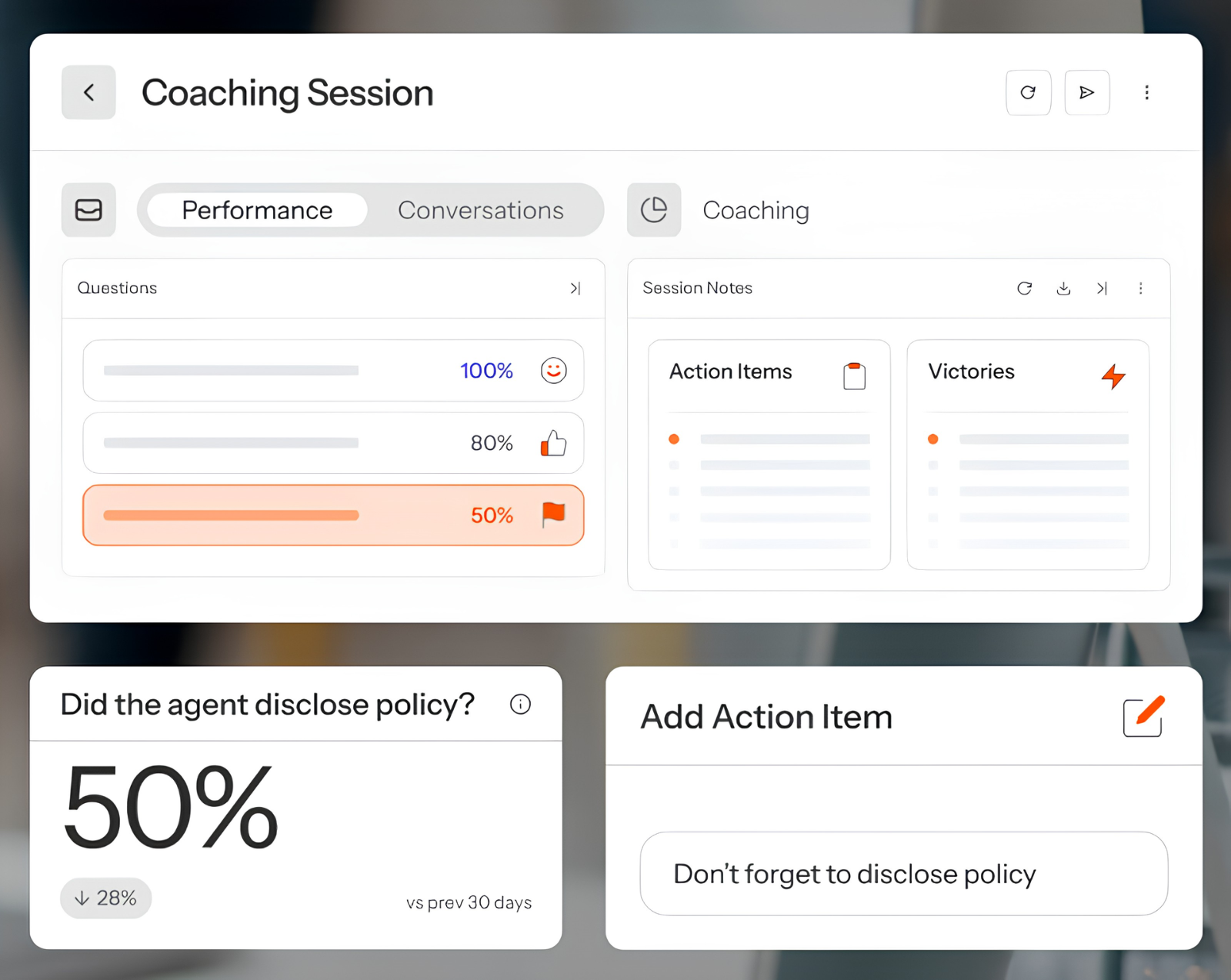
The coaching workflow connects to the same platform where agents receive real-time assist during calls, creating a feedback loop between what agents experience in the moment and what they’re coached on afterward.
Zendesk enables targeted coaching through its QA add-on, with 1:1 or group session assignment and systematic feedback delivery. Because coaching lives inside the same workspace where agents handle tickets, there’s no context switch.
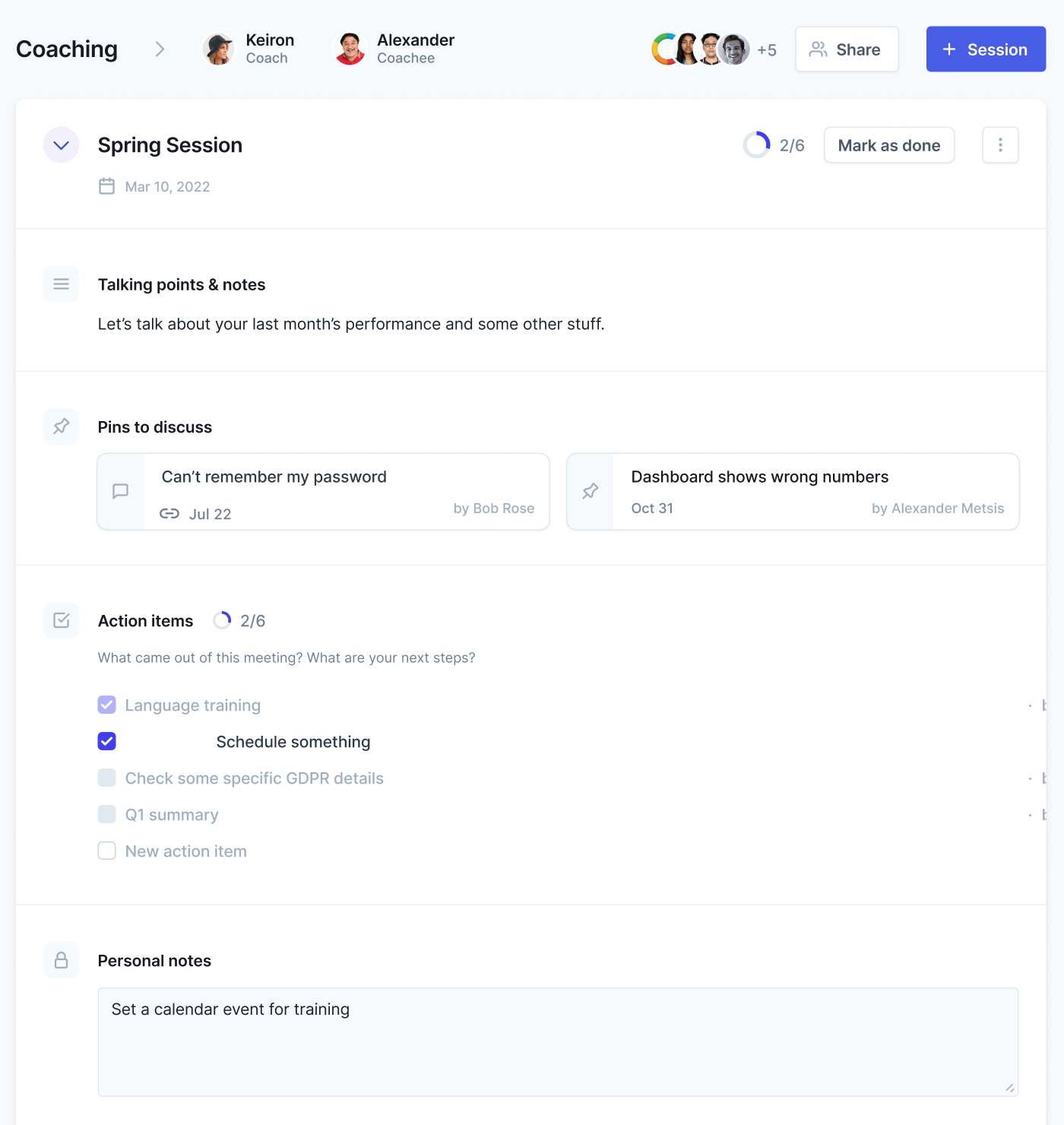
Zendesk’s strength here is integration with its broader platform: coaching data feeds into WFM scheduling and Explore analytics. The limitation is that coaching workflows are less structured than dedicated performance management tools.
evaluagent was built by QA practitioners who understood that scores without action are just numbers. The platform connects evaluation findings directly to structured coaching sessions, 1-to-1s, e-learning auto-enrollment, performance improvement plans, and gamification, all with documented audit trails.
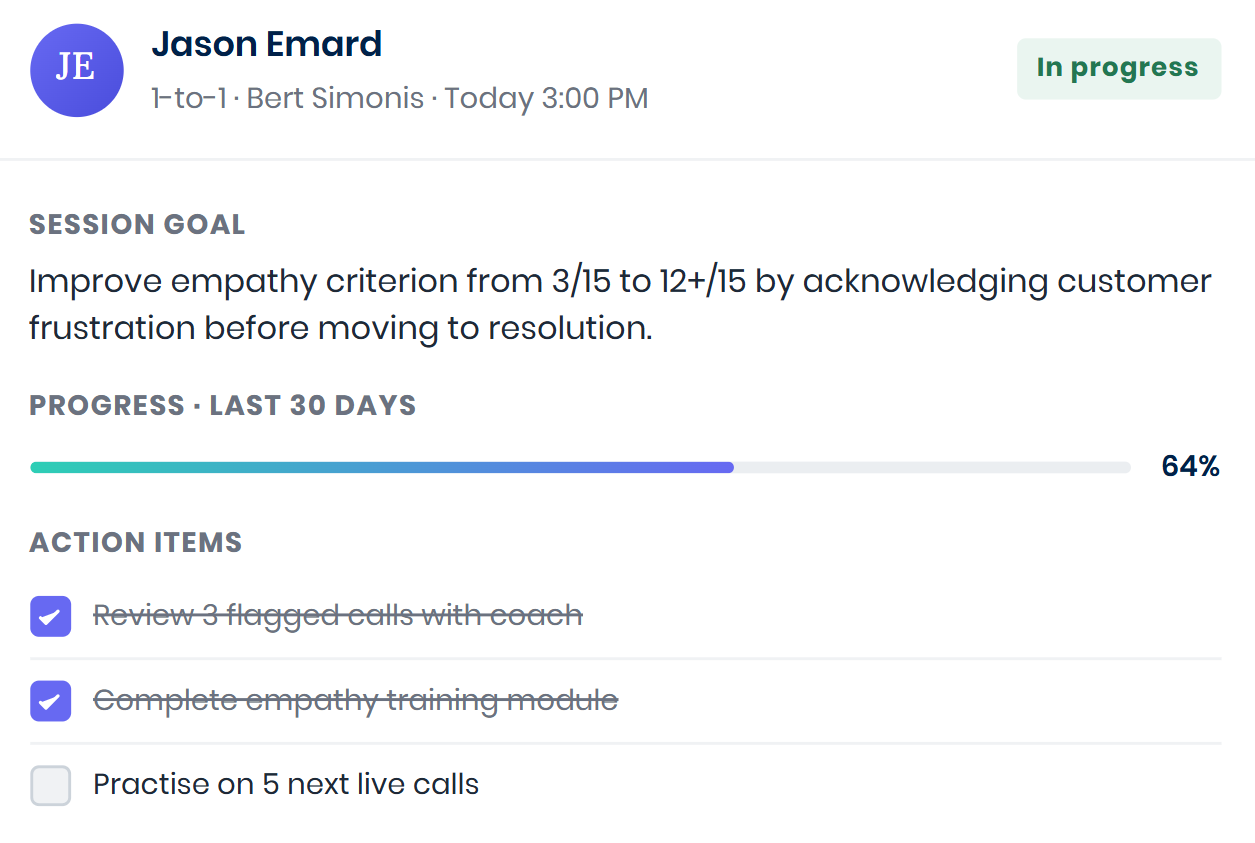
Performance plans link coaching actions, 1-to-1 sessions, and training courses into a single HR-ready record. An eBay-style reward auction lets agents bid on prizes using points earned from QA performance, adding a motivational layer beyond standard leaderboards.
Seasalt Cornwall doubled its evaluations and reduced agent attrition from 100% to 10% year-over-year after implementing evaluagent’s coaching and QA workflows. (Seasalt Cornwall Case Study)
Integration philosophy: vendor lock-in vs vendor freedom
This is where the three platforms diverge most sharply.
Level AI connects to your existing call center stack, with native connectors for Five9, Twilio, Amazon Connect, Talkdesk, Genesys, RingCentral, Zendesk, Salesforce, Intercom, and others.
It sits above the CCaaS layer rather than replacing it. However, Level AI’s value compounds when you use its full product suite (Auto-QA, Agent Assist, VoC, iCSAT, AI Virtual Agents) together. Teams that only want QA may find themselves paying for a platform built around broader capabilities.
Zendesk offers QA as part of the Zendesk ecosystem. The advantage is native integration: QA data flows directly into Explore analytics, WFM scheduling, and the Agent Workspace without middleware. The 1,800+ app Marketplace extends the platform’s reach.
The trade-off is that Zendesk QA only works with Zendesk. If you run Genesys for voice and Zendesk for tickets, Zendesk QA scores only the Zendesk interactions.
evaluagent positions itself as CCaaS-agnostic: “Any CCaaS. Any CRM. Any AI agent provider. No lock-in.” Its integrations page lists native connections to Zendesk, Salesforce, Genesys, Five9, Amazon Connect, Freshdesk, RingCentral, Talkdesk, Intercom, Puzzel, Aircall, Assembled, and Peopleware.
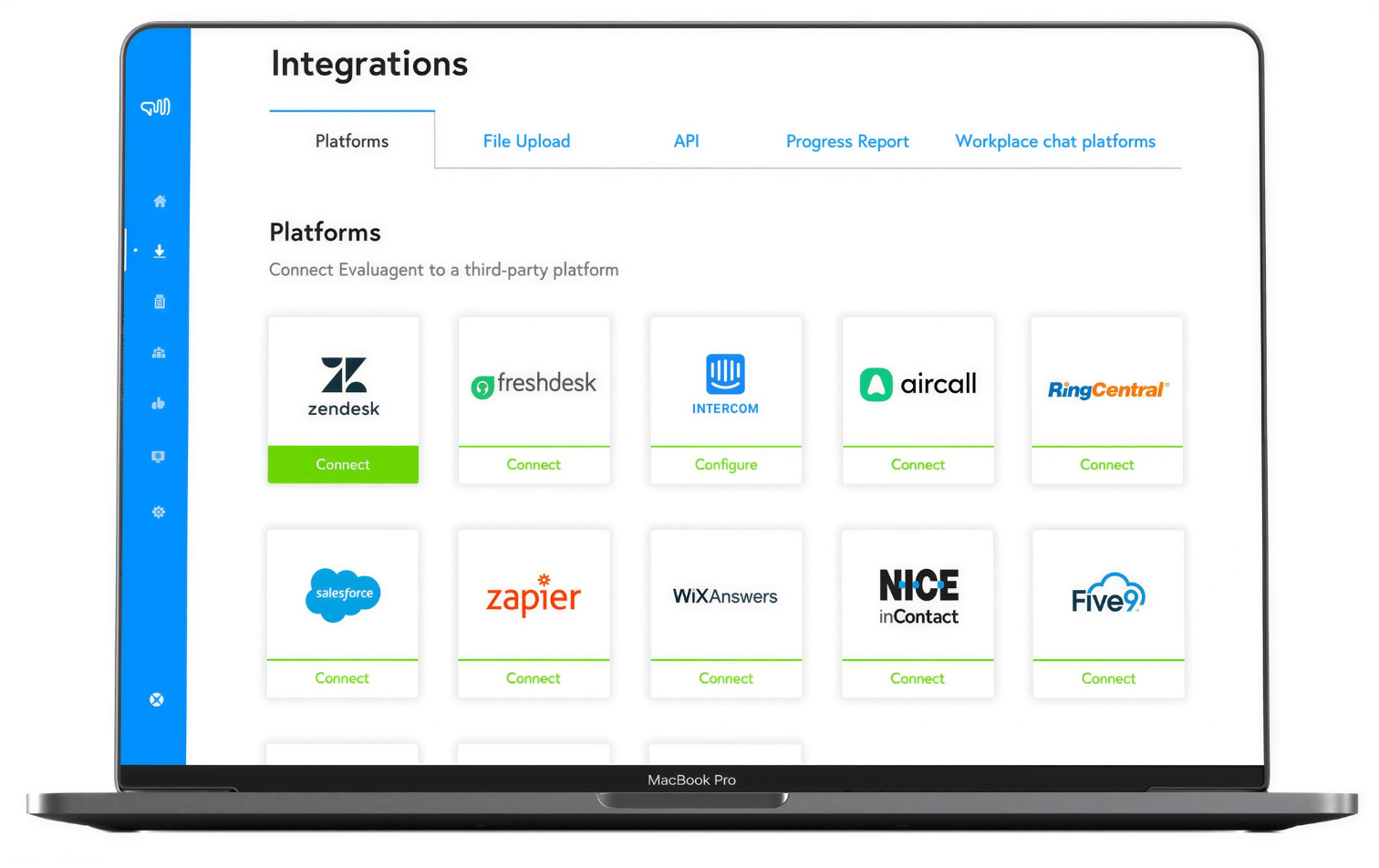
For BPOs managing multiple clients on different platforms, this means one QA standard across every client engagement without requiring client IT investment. For enterprise contact centers, it means your quality history survives a CCaaS migration.
The Zendesk integration is particularly relevant. evaluagent imports Zendesk tickets, tags, and survey results with automated redaction and side-by-side evaluation. Teams running Zendesk for service delivery can use evaluagent for quality management, getting Zendesk’s strengths in ticketing and workflows alongside evaluagent’s depth in QA and coaching.
Conversation intelligence and analytics
Beyond QA scores, all three platforms mine conversations for business intelligence. The scope and approach differ.
Level AI offers the broadest analytics suite of the three. VoC Insights uses the Attune NLU model (which Level AI says provides 400x the coverage of keyword libraries) and the Tenor classification model to surface topics, trends, and root causes automatically.
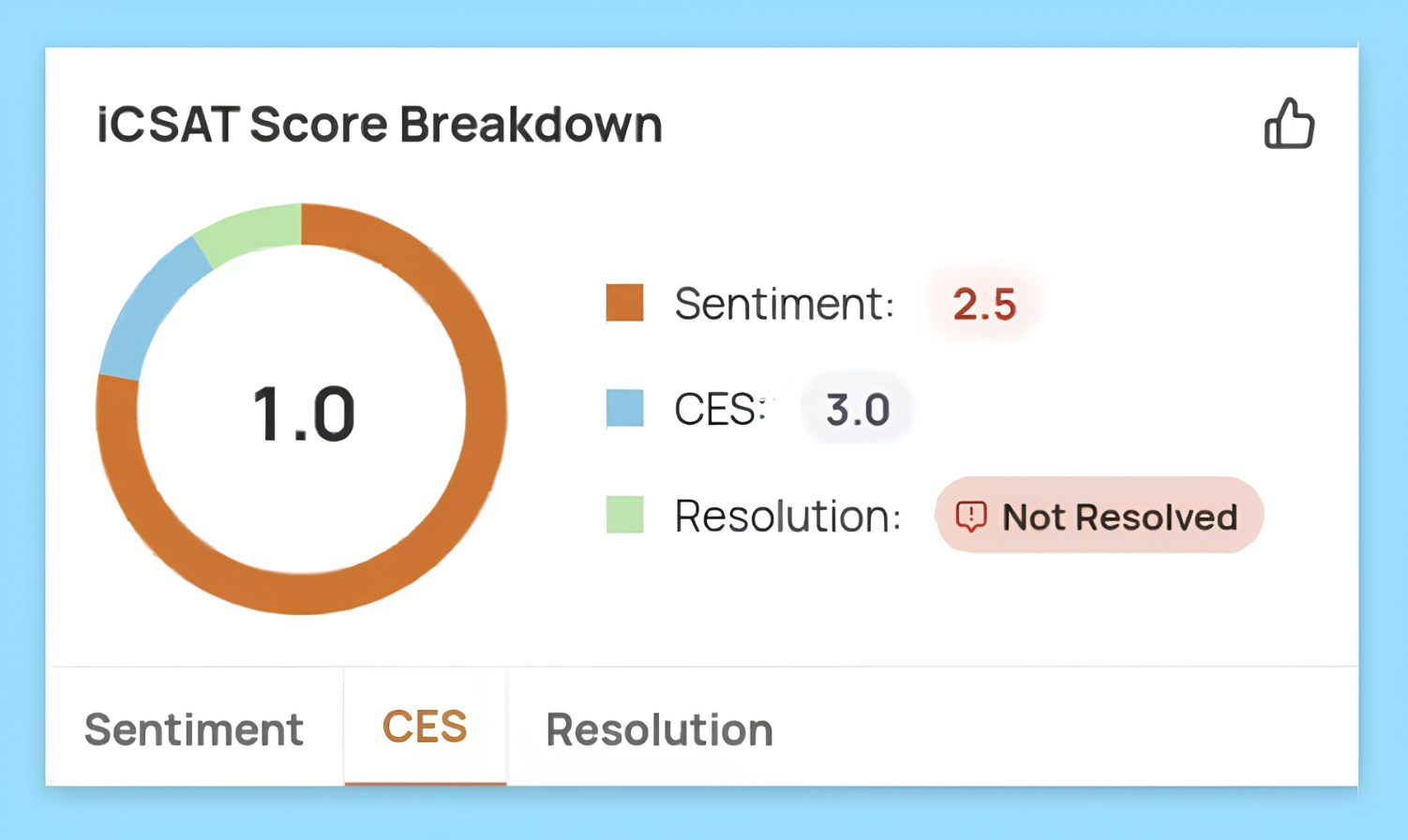
iCSAT infers customer satisfaction from every conversation without surveys, combining sentiment, customer effort, and resolution tracking into a single score. An Ask AI Analyst interface lets leaders query conversation data in natural language.
Zendesk’s analytics engine, Explore, provides prebuilt dashboards covering ticket workload, agent activity, CSAT, and channel performance. Quick Reports let managers draft reports by describing insights in plain language. The Analyst Copilot (in early access) adds trend detection and operational insights.
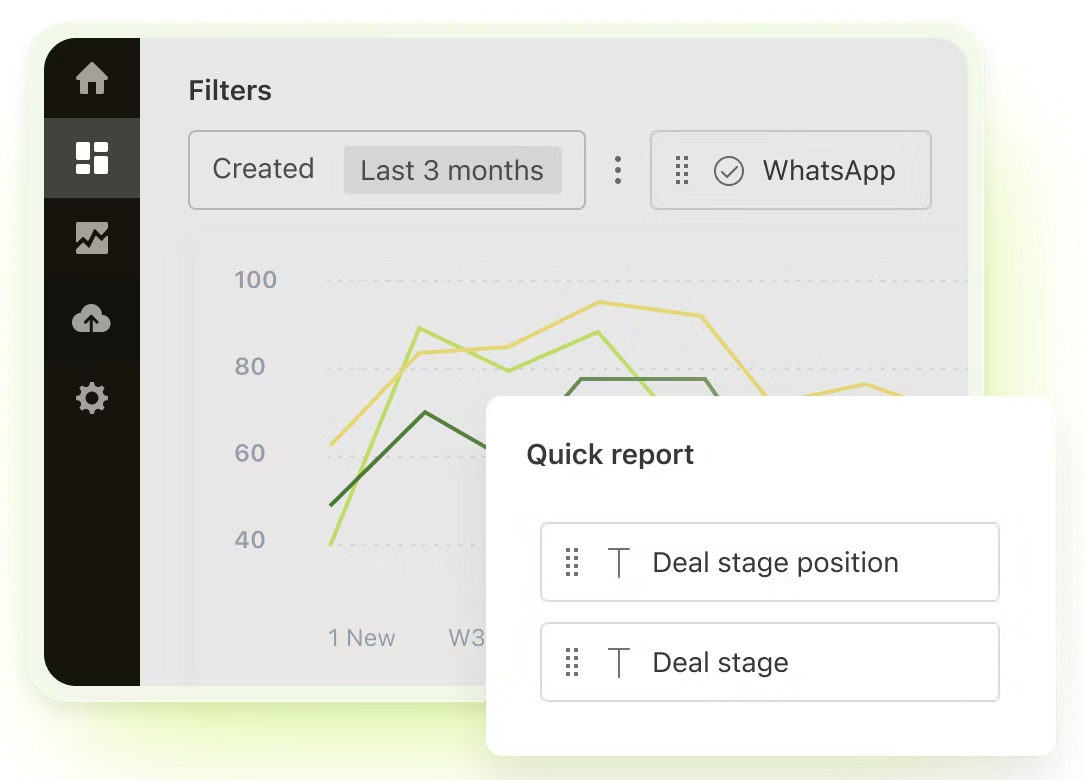
Zendesk’s analytics advantage is breadth: it covers the full service lifecycle from ticket creation through resolution, across every channel, including AI agent performance.
evaluagent’s Conversation Intelligence module sits in the Full Bundle tier ($65/user/month) and includes automated reason-for-contact detection, sentiment analysis, and predictive metrics: xNPS, xCSAT, xResolution, and xVulnerability derived from conversation signals rather than survey responses.
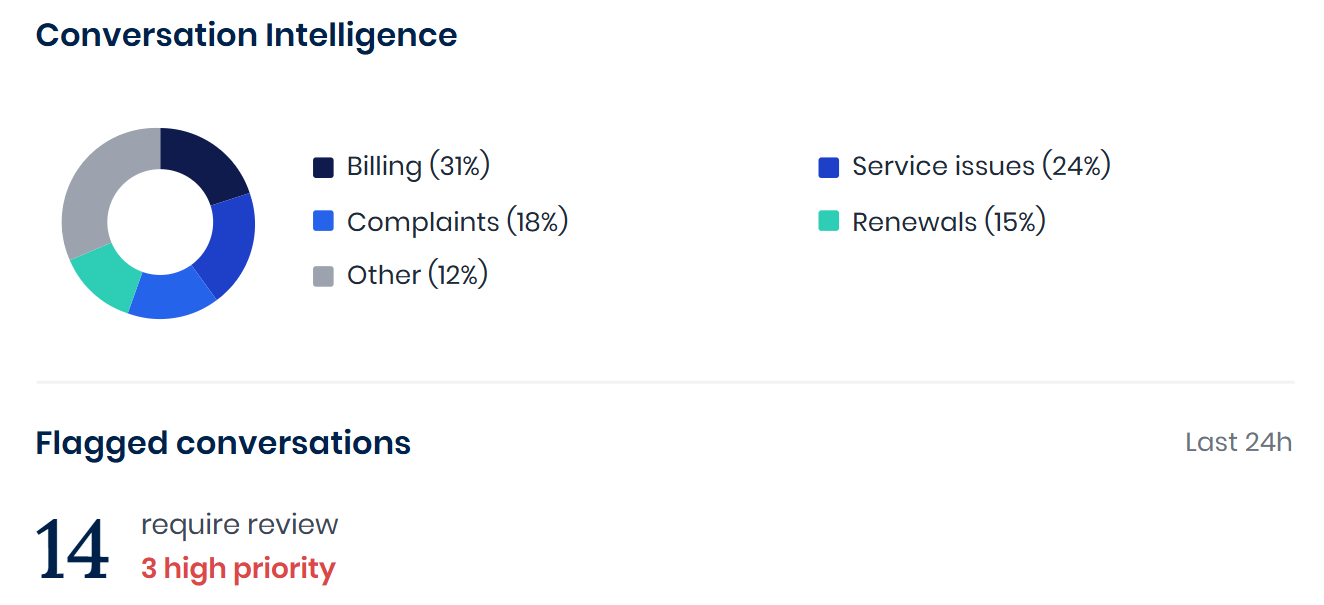
Spotlight is an on-demand AI analyst that reviews up to 1,000 filtered conversations and returns prioritized findings categorized as Critical Issues, Monitor Closely, and Performing Well. evaluagent also exports reports directly into Power BI, Tableau, Looker, and Metabase.
The Share Centre achieved a 285% increase in QA productivity with evaluagent, cutting evaluation time from 24 minutes to 6 minutes per interaction while pass rates rose from 73% to 85%. (The Share Centre Case Study)
Pricing transparency varies widely
Level AI publishes no pricing. All buyers go through a demo and sales conversation. The commercial structure involves negotiated Sales Agreements with professional services, SaaS, and support billed separately. For enterprise contact centers accustomed to this model, it’s standard. For teams that want to budget before calling a salesperson, it’s a barrier.
Zendesk publishes clear per-agent pricing for its service platform. The QA capability requires either Suite Professional at $115/agent/month or a QA add-on at $50/agent/month on top of a lower-tier plan. WFM costs an additional $50/agent/month. AI agent resolutions are priced separately on an outcome basis.
For a team on Suite Professional with both QA and WFM add-ons, the combined cost is $215/agent/month, with voice and AI resolution charges separate.
evaluagent publishes two tiers. AutoQM & Improvement starts at $35/user/month, covering automated scoring, coaching workflows, performance dashboards, and the Context Engine. The AutoQM + Conversation Intelligence bundle is $65/user/month, adding sentiment analytics, predictive VoC metrics, and Spotlight. Volume discounts are available for larger teams.
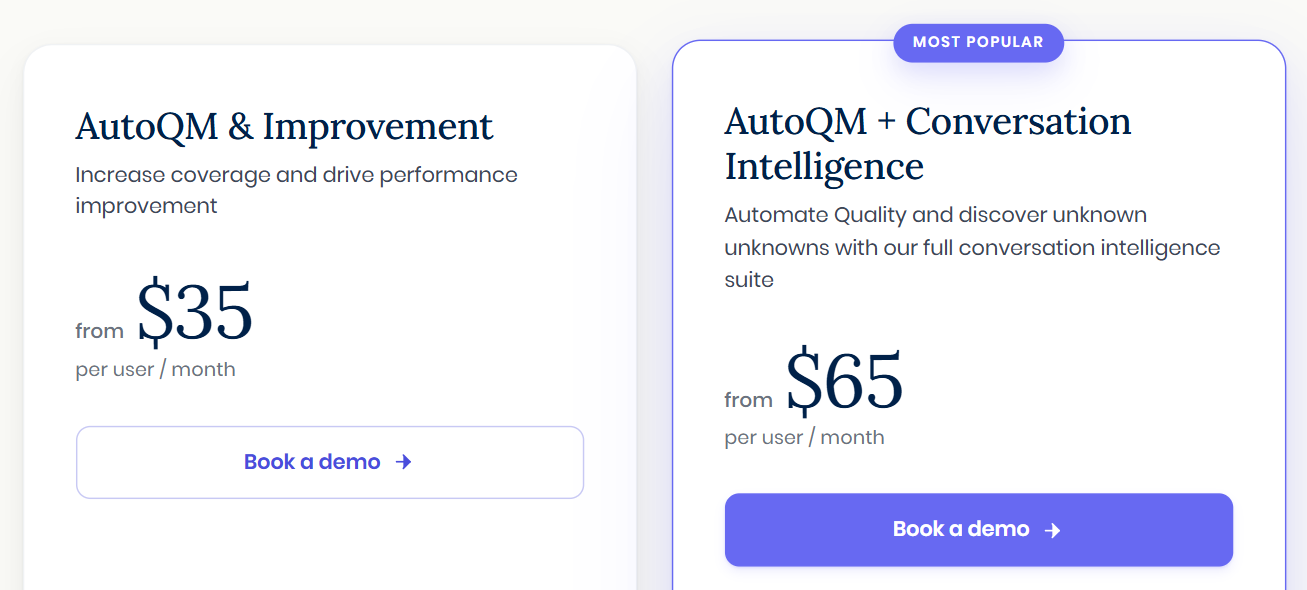
For teams that already have a helpdesk or CCaaS, evaluagent’s pricing covers dedicated quality management (scoring, coaching, and performance workflows) as a standalone layer on top of the existing stack.
Level AI vs Zendesk vs evaluagent: Which should you choose?
The right choice depends on what you already have and what problem you’re solving first.
Choose Level AI if:
- You want QA, agent assist, VoC analytics, and AI virtual agents in one platform
- Your contact center runs 200+ agents and you’re ready for enterprise pricing
- Real-time agent guidance during live calls is a priority
- You prefer a single vendor for the CX intelligence stack
- Screen recording integration for desktop behavior evaluation matters to your QA program
Choose Zendesk if:
- You’re already running Zendesk for ticketing, messaging, and voice
- Adding QA without introducing a new vendor is a priority
- You want QA, WFM, and analytics in the same workspace agents already use
- Your team values the simplicity of a single login and unified data model
- You need a customer service platform, not just a quality layer
Choose evaluagent if:
- You want QA that works independently of your CCaaS or helpdesk vendor
- Your stack includes multiple platforms and you need one quality standard across all of them
- Structured coaching workflows, performance plans, and gamification matter as much as scoring
- You’re deploying AI agents and need independent governance with fabrication detection
- You want transparent pricing without enterprise-only sales conversations
Book a demo with evaluagent to see how independent QA works with your existing stack.
The contact center quality market is splitting along a clear line. Some vendors bundle QA into a larger platform, betting that convenience wins. Others keep QA independent, betting that quality oversight should never be tied to the same vendor whose product it’s evaluating. Level AI and Zendesk represent two versions of the bundled approach, one intelligence-first, one service-first.
evaluagent represents the independent path: a dedicated quality layer that works with everything, belongs to no one ecosystem, and keeps your quality data portable no matter what platform decisions come next.