Playvox built its name as a digital-first workforce engagement management platform that contact centers could adopt without replacing their existing infrastructure. Its mix of quality assurance, workforce management, coaching, and gamification made it popular with teams on Salesforce, Zendesk, and Amazon Connect. But NICE Systems acquired it in October 2024, and that changes the calculation for buyers today.
To write this Playvox review, we analyzed the platform thoroughly. We believe it’s a good choice if:
- You need a full WEM suite covering QA, WFM, coaching, and gamification in one platform
- Your contact center runs on Salesforce Service Cloud and you want native AppExchange integration
- You value agent-facing gamification with karma points, badges, and leaderboards
- You need workforce scheduling with omnichannel forecasting for digital channels
- You’re comfortable with a platform now owned by NICE Systems
However, Playvox might not be the best choice if:
- You need AI that scores 100% of conversations automatically against your own quality standards
- You’re deploying AI agents and need independent governance over their output
- You want a vendor-neutral QA platform without ties to a large CCaaS provider
- You need conversation intelligence with predictive customer metrics across every interaction
- You prioritize transparent, published pricing over quote-only sales engagements
In that case, consider evaluagent: an AI-powered quality assurance and performance improvement platform that scores every conversation (human and AI) against your own standards, connects evaluation findings to coaching and development workflows, and stays independent of any CCaaS vendor.
We’ve included a detailed look at evaluagent at the end of this review as the strongest alternative for contact centers that need deeper AI-driven QA and AI agent governance. To see it in action, book a demo here.
What is Playvox?
Oscar Giraldo, a software developer from Manizales, Colombia, founded Playvox in 2012. The idea came from visiting a contact center in Chile, where Giraldo saw that motivation was the biggest challenge for operations leaders, driving high turnover and inconsistent service. He built Playvox first as an agent performance and gamification tool, then expanded it through acquisitions into a full workforce engagement management suite.
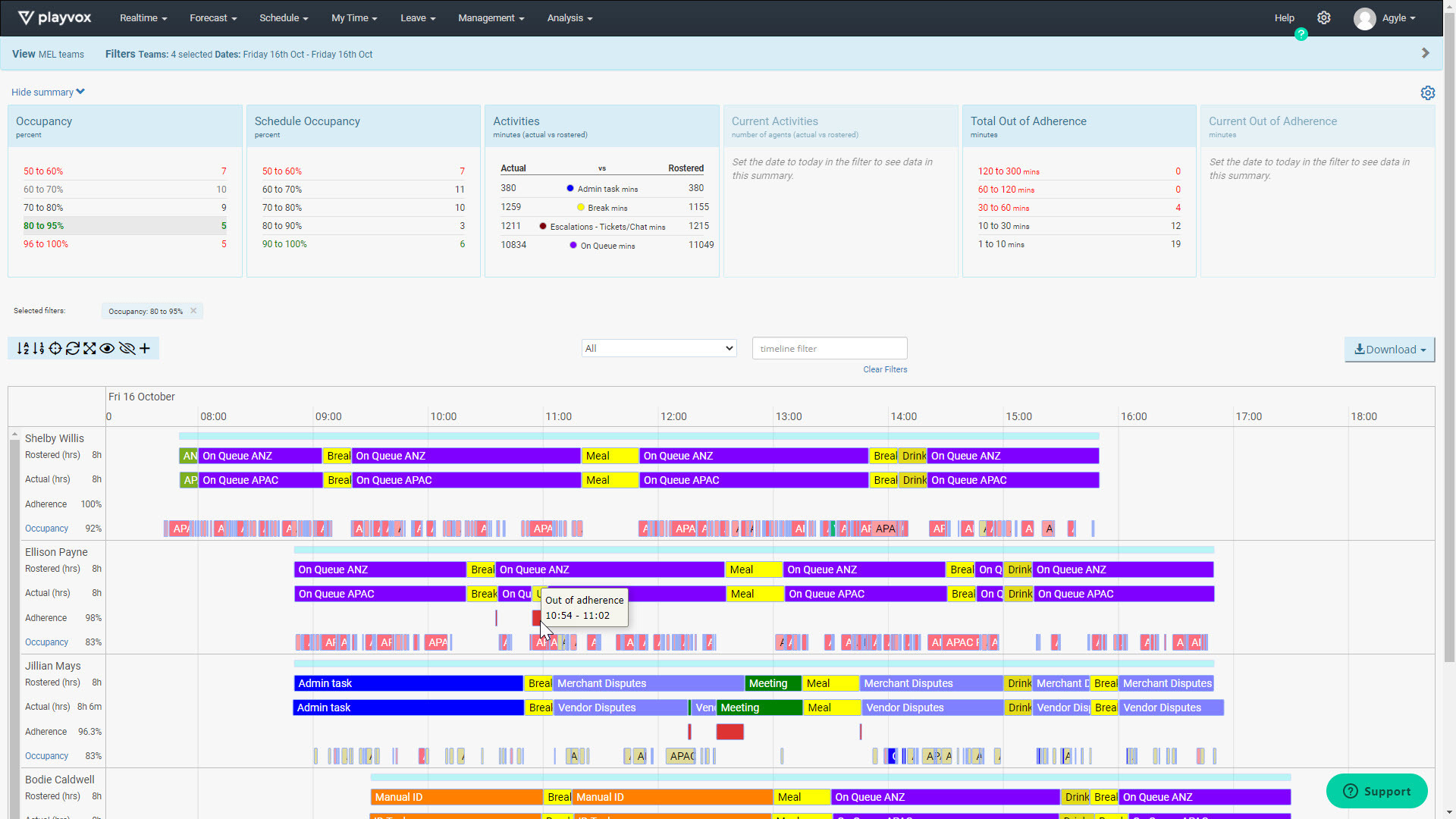
The company raised roughly $34.2 million in total funding, including a $25 million Series B led by Five Elms Capital in January 2021. Two acquisitions shaped the platform: Agyle Time in January 2021 brought workforce management scheduling and forecasting, and Prodsight in January 2022 added AI-driven voice-of-customer analytics (rebranded as Playvox Customer AI).
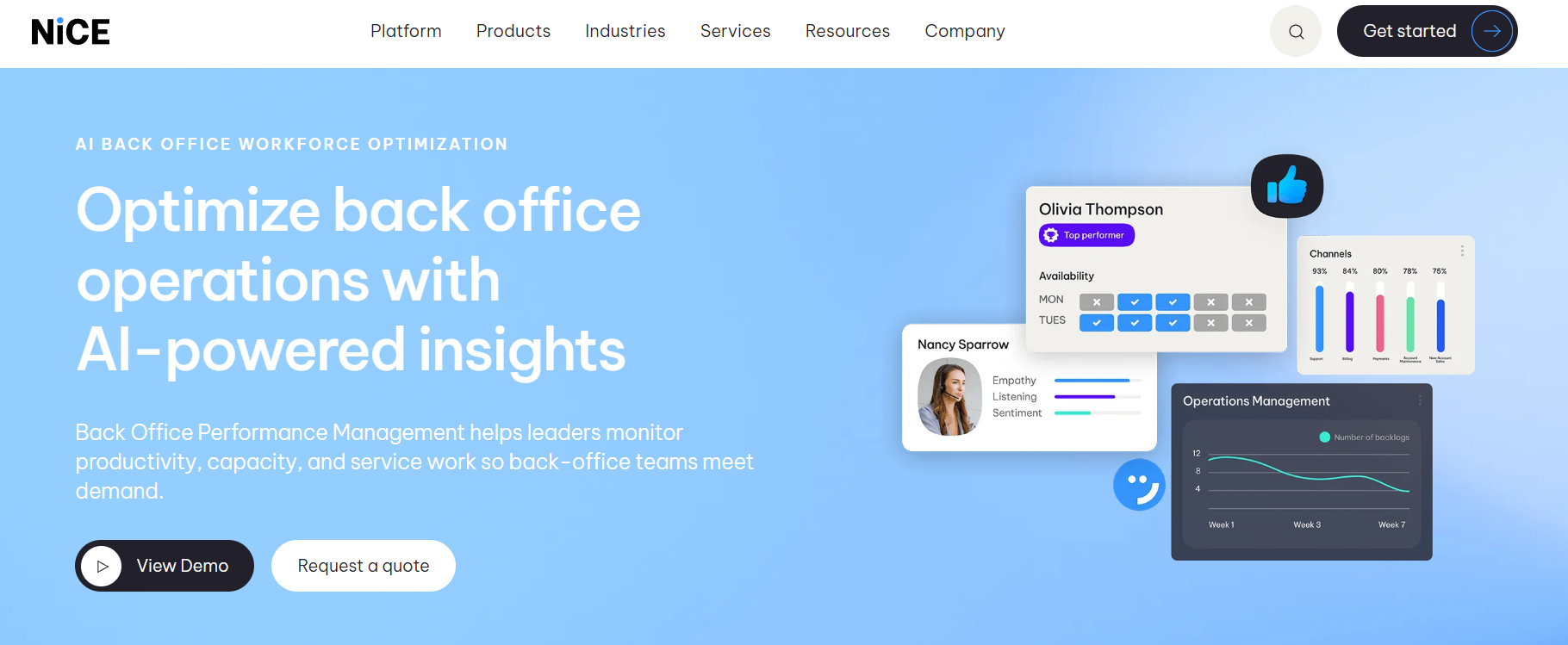
On October 1, 2024, NICE Systems acquired Playvox for an undisclosed price and rebranded it “Playvox by NICE.” It now operates as a WEM product line within NICE’s portfolio. Before the acquisition, Playvox had roughly 160 employees and an estimated $75 million in annual recurring revenue. By mid-2026, the Playvox entity retained about 42 employees, with most functions absorbed into NICE.
The platform targets mid-market to enterprise contact centers running digital-first or omnichannel operations, with particular strength among teams on Salesforce Service Cloud, Zendesk, or Amazon Connect.
Playvox Pros & Cons
| Pros | Cons |
|---|---|
| Full WEM suite with modular purchasing (QA, WFM, coaching, gamification) | NICE acquisition creates roadmap and pricing uncertainty |
| Strong Salesforce Service Cloud integration via AppExchange | Fragmented modules with no unified cross-module dashboard |
| High user satisfaction on G2 and Capterra pre-acquisition | WFM lacks global/local schedule balancing for multi-region operations |
| Intuitive interface with 4-6 week typical implementation | Reviewers describe reporting as basic, lacking analytical depth |
| Agent gamification with karma points, badges, and rewards store | No published pricing; quote-only through NICE sales |
| Omnichannel WFM built for digital channels, not retrofitted from voice | Customer support quality inconsistent post-acquisition |
| AI-powered AutoQA for sentiment scoring across digital interactions | AutoQA limited to sentiment scoring; no full automated quality scoring |
Playvox Review: How It Works & Key Features
Quality Management: Playvox combines structured human evaluation with AI-assisted sentiment scoring across digital interactions.
Playvox Quality Management is a digital-first QA platform for contact centers handling high volumes of support tickets, live chat, email, and voice. It targets the standard QA coverage gap: manual processes typically evaluate only 2-5% of interactions.
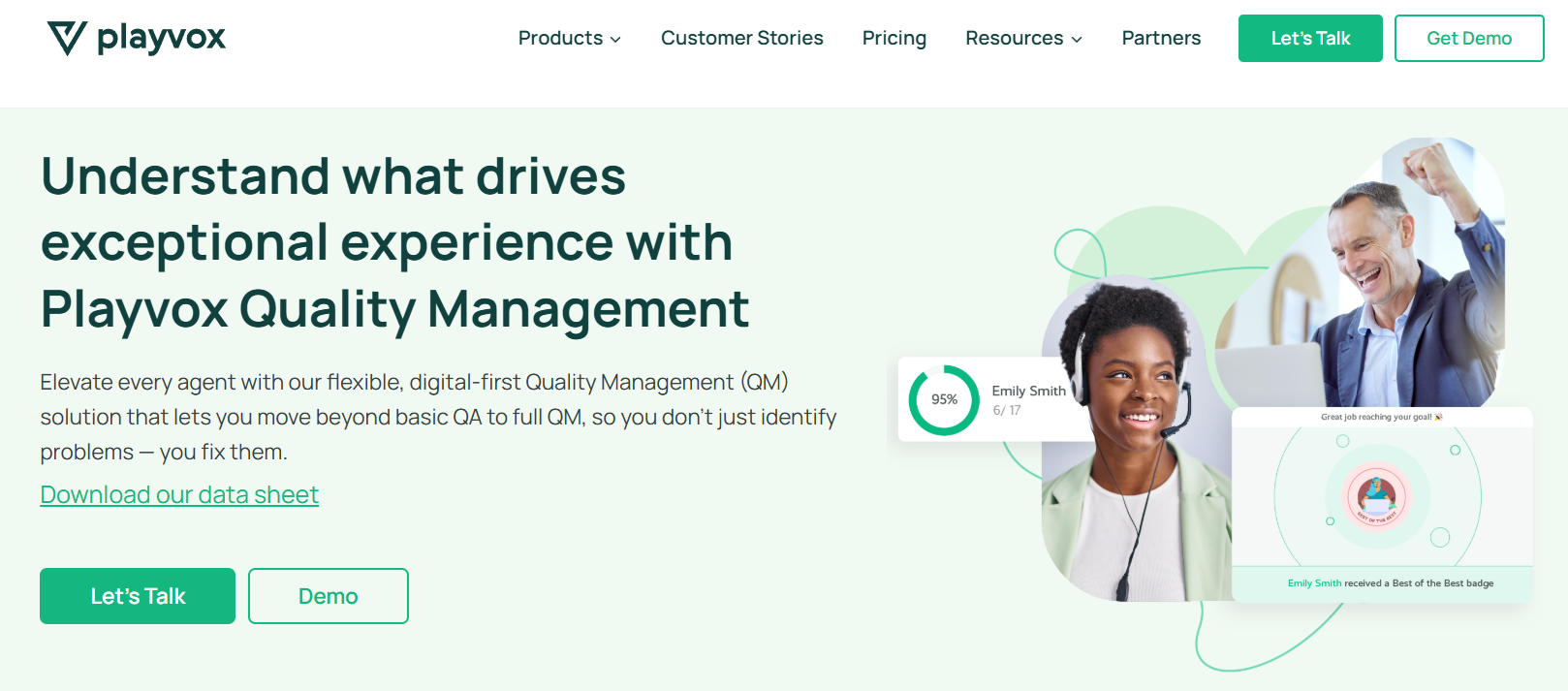
The workflow starts with Playvox Workloads, which delivers a steady stream of interactions to QA analysts based on daily, weekly, or monthly evaluation goals. Analysts select an agent and a scorecard, then score the interaction question by question. Teams customize scorecards to their own rubrics and channels, and the platform calculates scores automatically.
The AI layer, AutoQA, analyzes digital interactions across email, chat, and social to produce sentiment scores (positive, neutral, or negative) across 100% of interactions. Playvox developed AutoQA through the Prodsight acquisition and launched it first for customers on Zendesk, Salesforce Service Cloud, and Kustomer. The planned roadmap included topic identification, compliance scoring, and direct AI scoring into evaluation forms, though progress on these features since the acquisition is unclear.
Calibration sessions let multiple evaluators independently score the same interaction and compare results, aligning scoring standards. Results feed into agent performance dashboards and trigger coaching workflows. Before the NICE acquisition, Playvox earned recognition as a G2 Global Leader in Contact Center Quality Assurance for three consecutive years through Summer 2024, with the highest satisfaction score in the category.
Workforce Management: Cloud-native scheduling and forecasting built for digital-first contact centers.
Playvox WFM is a cloud-native application that came through the Agyle Time acquisition. Because it was built for digital-first contact centers (not retrofitted from voice), concurrent-channel scheduling and asynchronous workload forecasting are native capabilities.
The forecasting engine ingests historical volume data and real-time queue metrics to generate forecasts across all work types. It handles both synchronous workloads (voice calls) and asynchronous workloads (email, ticketing, social) within the same model, and plans for multi-step customer interactions that traditional Erlang-C models cannot accommodate.
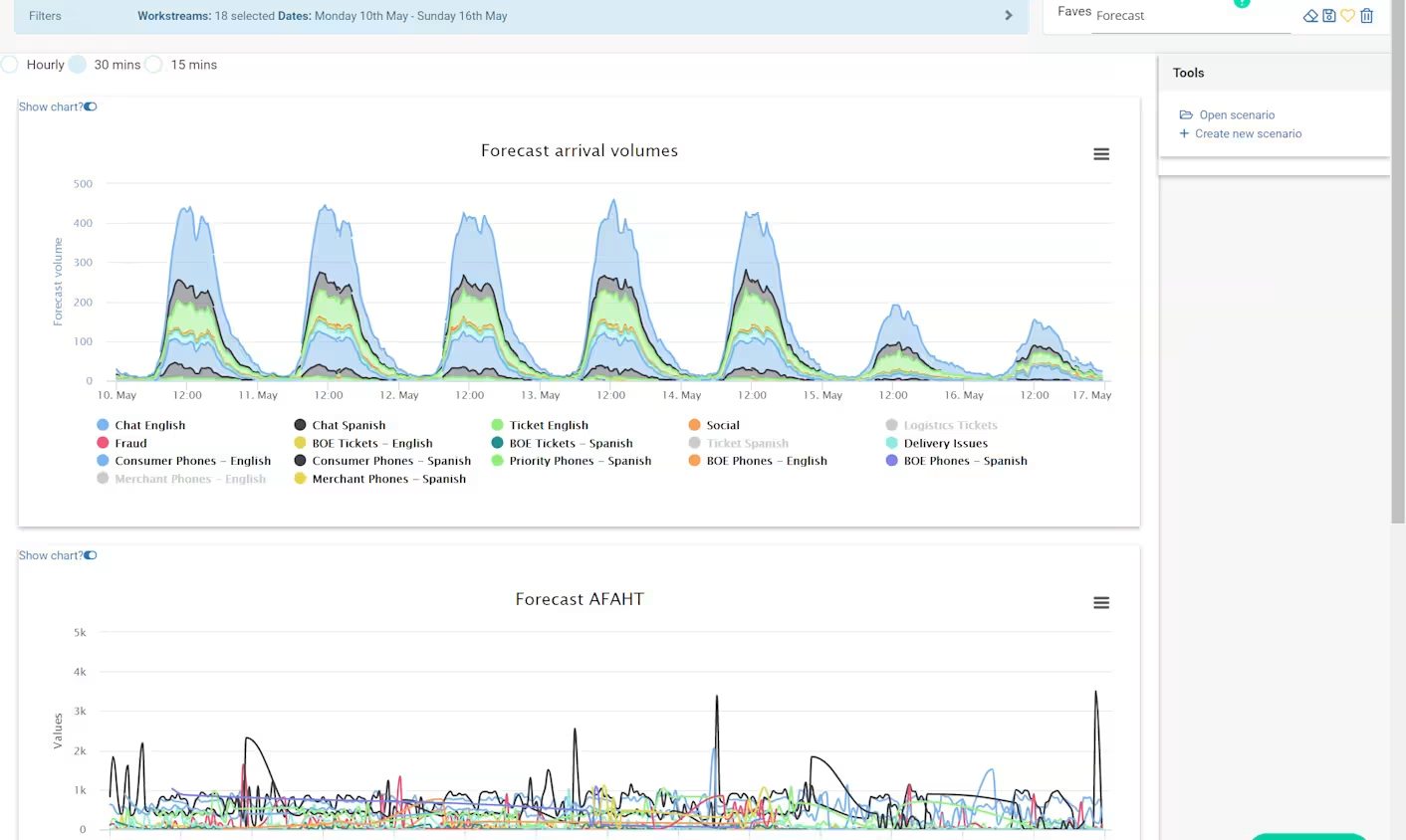
The scheduler factors in KPIs, forecasts, business requirements, and agent skills to automate scheduling, including the concurrent model common in digital channels where agents handle multiple interactions at once. Real-time intraday management gives supervisors a live view of planned versus actual performance across every location and work type.
Agents use a mobile self-service layer for leave requests, shift availability, timesheets, and shift swaps. A separate Capacity Planner module adds scenario modeling for long-range, multi-skill, multi-channel resource planning.
Integrations cover Zendesk, Salesforce Service Cloud, Amazon Connect, Dialpad, Aircall, Freshworks, and Gladly.
Performance Management & Gamification: Unified dashboards and game mechanics to track and motivate agent performance.
Playvox Performance Management pulls over 60 metrics and 100+ data points into a single configurable dashboard, giving supervisors a clear view of the KPIs that matter to their operations. Managers can create team-level dashboards that filter to individual agents, set targets for each KPI, and track progress.
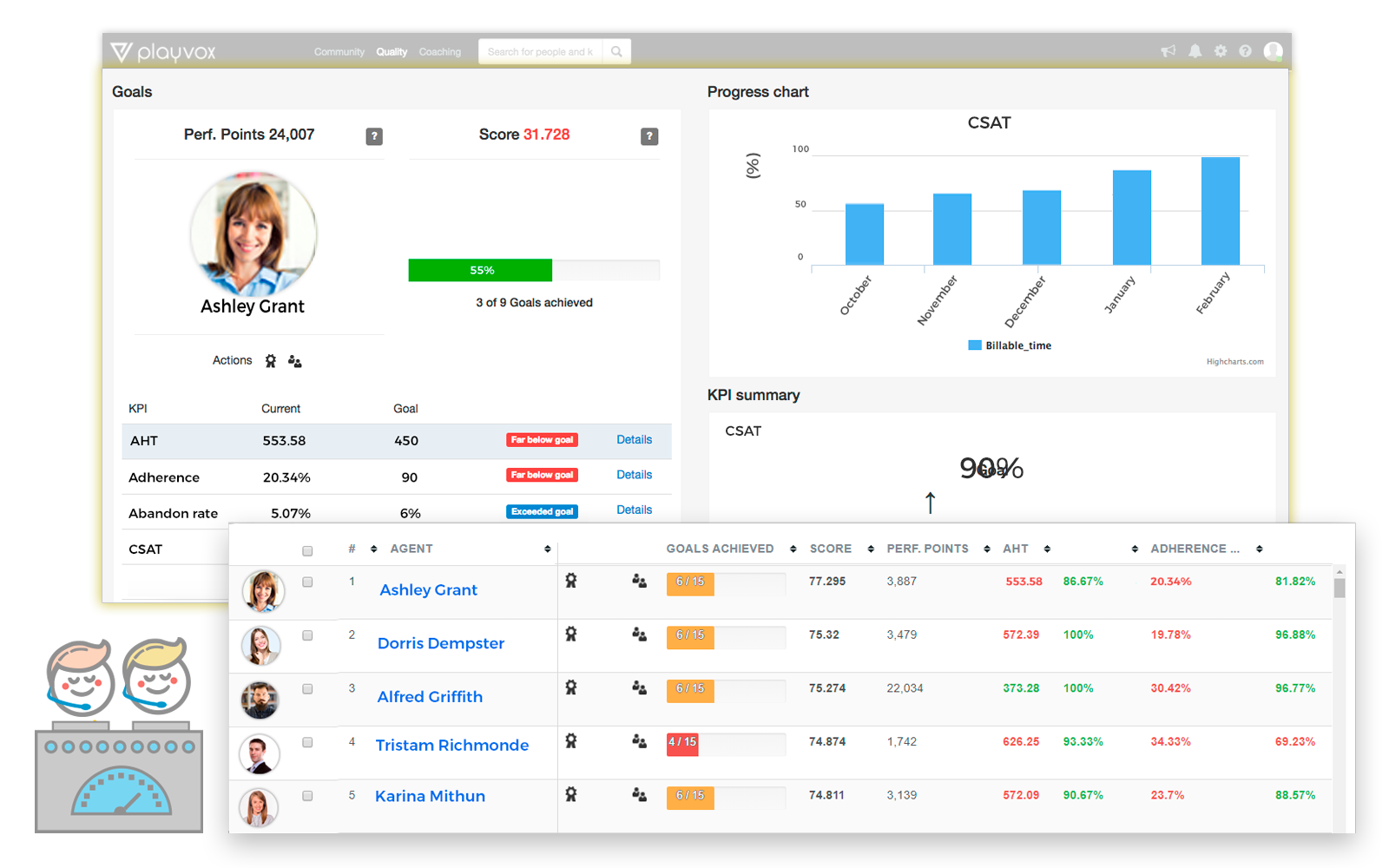
The dashboard compares the scheduled staffing plan against actual performance in real time, flagging coverage or adherence gaps before they escalate into service level breaches. Agents can optionally see their own metrics, closing the gap between behavior and awareness.
The gamification module (Playvox Motivation) adds a Karma Points system that awards points automatically when agents hit predefined triggers: completing a learning lesson, posting on the community wall, scoring above a QA threshold, or finishing a coaching session. Team leaders and fellow agents can also award points manually.
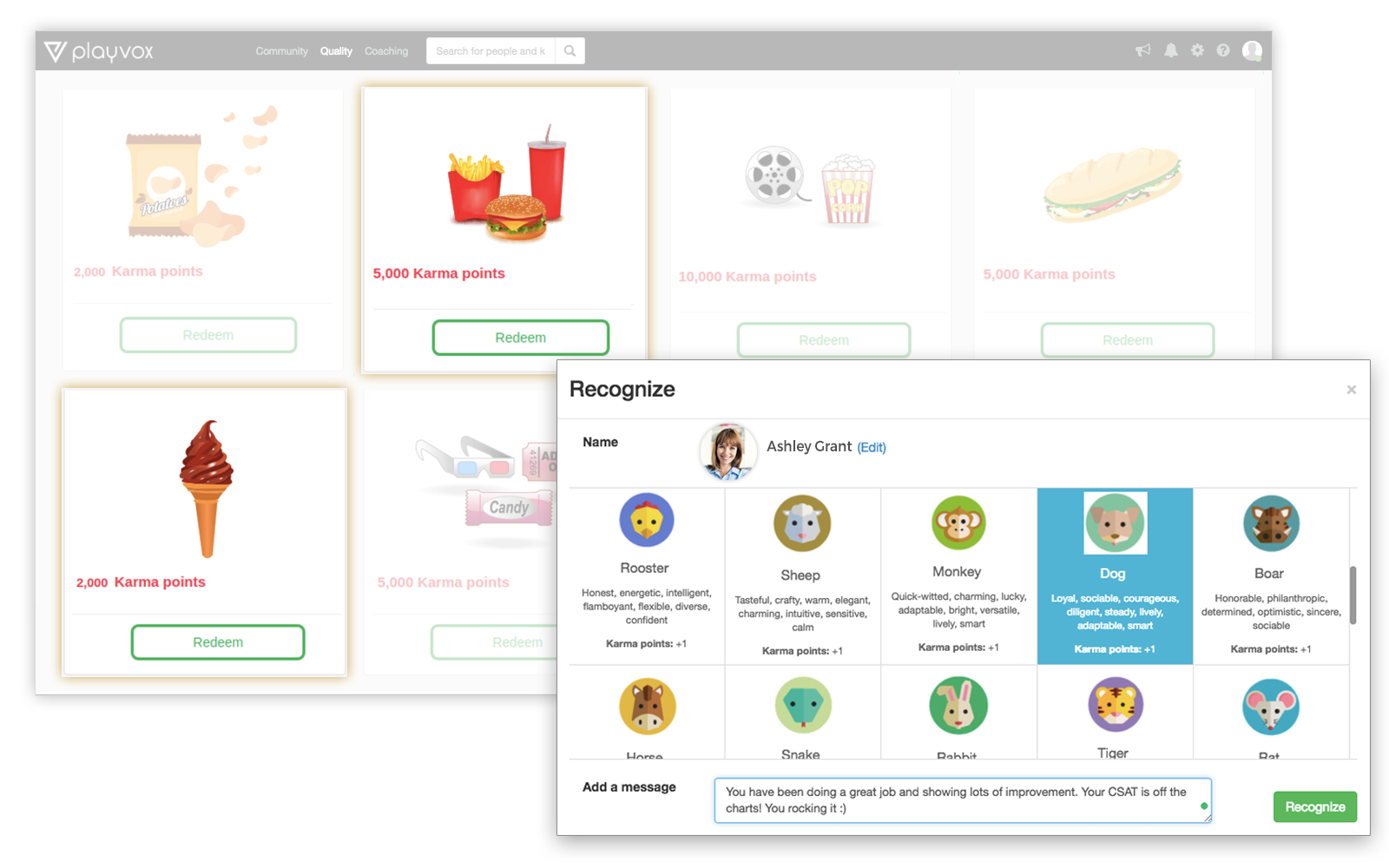
Recognition Badges connect to company goals, leaderboards rank individuals against teammates, and a Karma Store lets agents redeem points for configured rewards. A Community Wall provides a social layer for sharing accomplishments and peer recognition across remote or hybrid teams.
Coaching & eLearning: QA-driven coaching workflows with multimedia learning paths.
Playvox’s Coaching module connects directly to Quality Management evaluations. After a QA analyst scores an interaction, the system surfaces coaching recommendations based on those results. Managers build coaching plans using pre-built templates or custom plans with text, images, and video referencing specific interactions.
Agents acknowledge coaching assignments and respond through a two-way feedback channel, creating a documented record. A Coaching Stats dashboard tracks assigned versus completed coaching, progression over time, and historical records per agent.
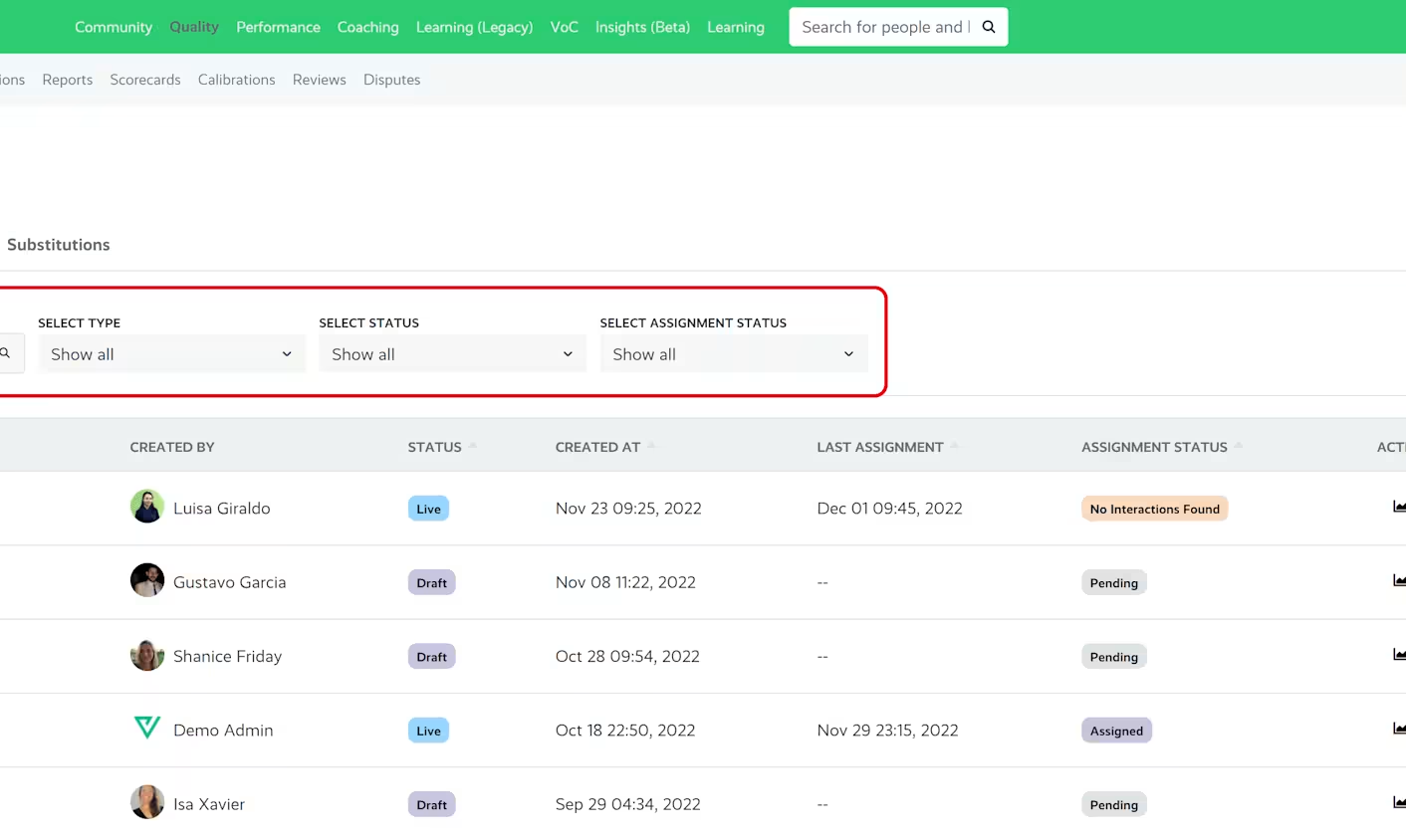
The Learning module supports multimedia course building with video, rich text, and interactive formats. Structured learning paths sequence courses with flexible assignment by role, team, or individual need. Comprehension checks and embedded quizzes measure knowledge retention, not just completion. The same platform that flags a quality gap can trigger a learning path to address it.
Customer AI: NLP-driven voice-of-customer analytics from tickets, reviews, and surveys.
Playvox Customer AI, acquired via Prodsight in January 2022, applies natural language processing to every ingested message from ticketing systems (Zendesk, Intercom, Freshdesk), 85+ review platforms (Trustpilot, App Store, Google Play), and survey tools (NPS, Typeform, SatisMeter).
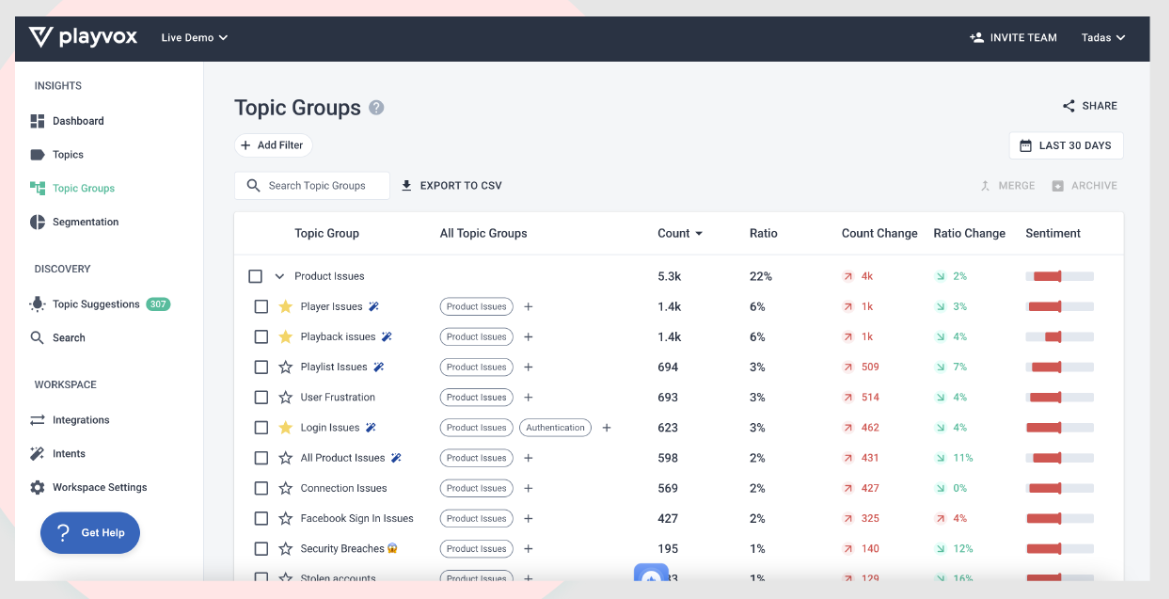
The NLP layer assigns sentiment scores and classifies messages against user-defined topic taxonomies. Teams create their own topic hierarchies, and the model learns from the feedback corpus over time. New topics apply retroactively across all historical messages, so insight isn’t bounded by when a team started tracking something. The module supports 100+ languages with automatic translation.
Where Playvox Falls Short
Playvox earned strong satisfaction scores as an independent company, but several limitations have grown more apparent since the NICE acquisition. These reflect both the platform’s original design choices and the uncertainty that comes with new ownership.
Acquisition Uncertainty. The October 2024 NICE acquisition is the biggest factor for buyers. NICE already offers full WEM through CXone Mpower, creating real risk of feature consolidation, pricing changes, and migration pressure. CX Today notes that many Playvox customers chose the platform specifically to avoid NICE and now sit inside NICE’s upsell funnel. The Playvox entity shrank from about 160 employees to roughly 42 by mid-2026, and the developer docs at developers.playvox.com are now inaccessible.
AutoQA Stops at Sentiment. Playvox’s AutoQA scores sentiment (positive, neutral, negative) across digital interactions, but does not score conversations against your own quality scorecards. The planned roadmap for compliance scoring, topic identification, and AI scoring into evaluation forms has not been publicly updated since the acquisition. Teams that need AI to evaluate whether agents followed the right process, gave the right answer, or met compliance requirements still depend on human evaluators.
Fragmented Module Architecture. Multiple Capterra reviewers note that QA metrics, WFM data, and coaching outputs live in separate views with no unified dashboard. Seeing a single agent’s full performance picture requires navigating between modules manually.
WFM Gaps for Multi-Region Operations. G2 reviewers report missing the ability to balance global and local schedules, a gap that matters for contact centers spanning time zones. Other complaints include inadequate shift-swap workflows, the inability to save custom dashboard views (forcing daily recreation), inaccurate intraday data, and limited mobile functionality.
Reporting Lacks Depth. Capterra reviewers describe reporting as “still quite basic.” The platform lacked conversational QA and True to Interval (TTI) analytics before the acquisition, capabilities CX Today flagged as absent from the pre-acquisition product.
No AI Agent Governance. As contact centers deploy AI chatbots and virtual agents, Playvox offers no quality layer for bot conversations. There is no hallucination detection, no off-policy response flagging, and no way to evaluate AI agent output against the same standards applied to human agents.
These are not failures. The WEM breadth, Salesforce integration, and agent engagement tools remain genuine strengths. But for contact centers whose primary need is AI-driven quality assurance with full conversation coverage, the gaps point toward a different type of platform.
Top Playvox Alternative: evaluagent
evaluagent addresses Playvox’s quality assurance and AI governance gaps directly. Founded in 2012 by three operators who spent their careers running contact centers and managing quality teams, evaluagent is an AI-powered QA and performance improvement platform that scores every conversation (human and AI) automatically, then connects those scores to coaching, performance plans, and agent development.
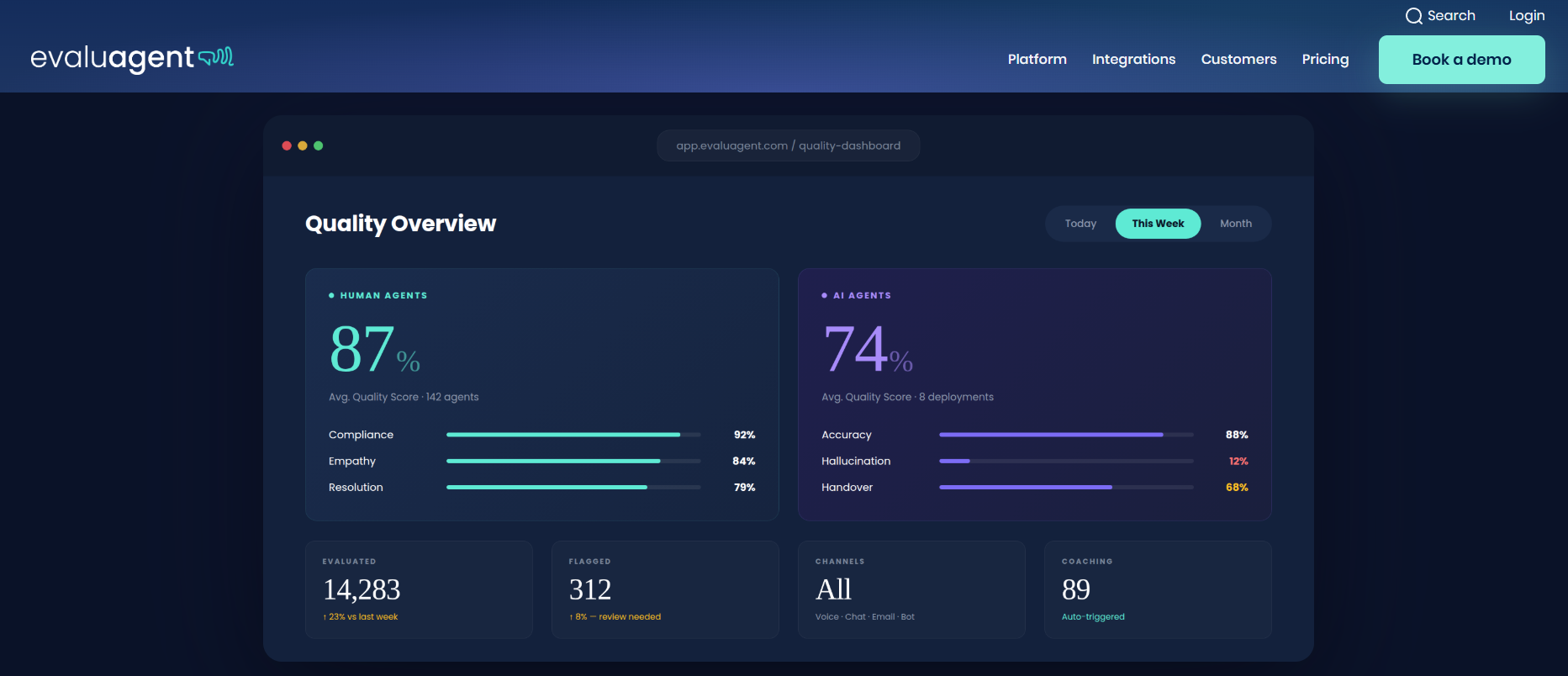
The company has reported nearly 500% revenue growth over three years, secured a $20 million growth investment from PeakSpan Capital, and earned Leader and Momentum Leader in Contact Center Quality Assurance in G2’s Summer 2026 report (rankings based on verified customer reviews, not analyst briefings). It is the only contact center software on G2’s Top 50 UK Software Companies 2026 list for the third consecutive year.
evaluagent remains independently owned and CCaaS-agnostic: “Any CCaaS. Any CRM. Any AI agent provider. No lock-in.”
AutoQM with Context Engine: AI scores 100% of conversations against your own quality standards.
Where Playvox’s AutoQA produces sentiment labels, evaluagent’s AutoQM scores 100% of interactions across voice, chat, and email using scorecards calibrated to each customer’s QA standards. The difference is fundamental: instead of knowing whether a conversation was positive or negative, you know whether the agent followed the right process, gave the correct answer, and met compliance requirements.
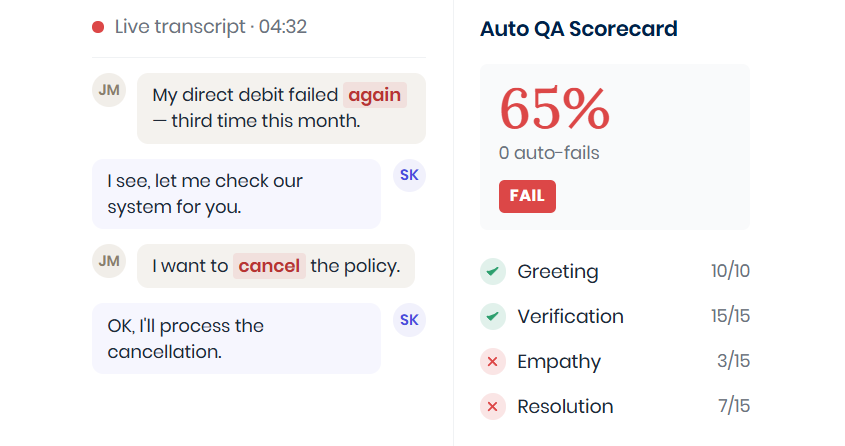
The Context Engine, launched April 2026, grounds AI scoring in company-specific policies, knowledge base content, and compliance rules. It checks not just whether an agent communicated well, but whether they gave factually correct information. A Testing Console lets QA managers trial any scoring change against real historical conversations before going live, preventing miscalibration.
SmartScore applies AI to qualitative line items with transparent reasoning, explaining why a mark was awarded. Blended Scorecards let AI handle repetitive rule-based checks while human evaluators keep the nuanced assessments. And Agent Disputes create a feedback loop where disagreements improve model accuracy over time.
Capital on Tap scaled from 900 to 6,000 BDM checks per month after go-live without adding headcount, avoiding the need for four to five times as many analysts. (Capital on Tap Case Study)
AI Agent Observability: Independent governance for AI chatbots and virtual agents.
Playvox has no capability here. evaluagent’s AI Agent Observability module evaluates every AI agent conversation against the same quality standard applied to human agents. The framing is direct: “Hallucinations. Off-script answers. Promises your business can’t keep. Without observability, every AI conversation is an unaudited brand risk.”
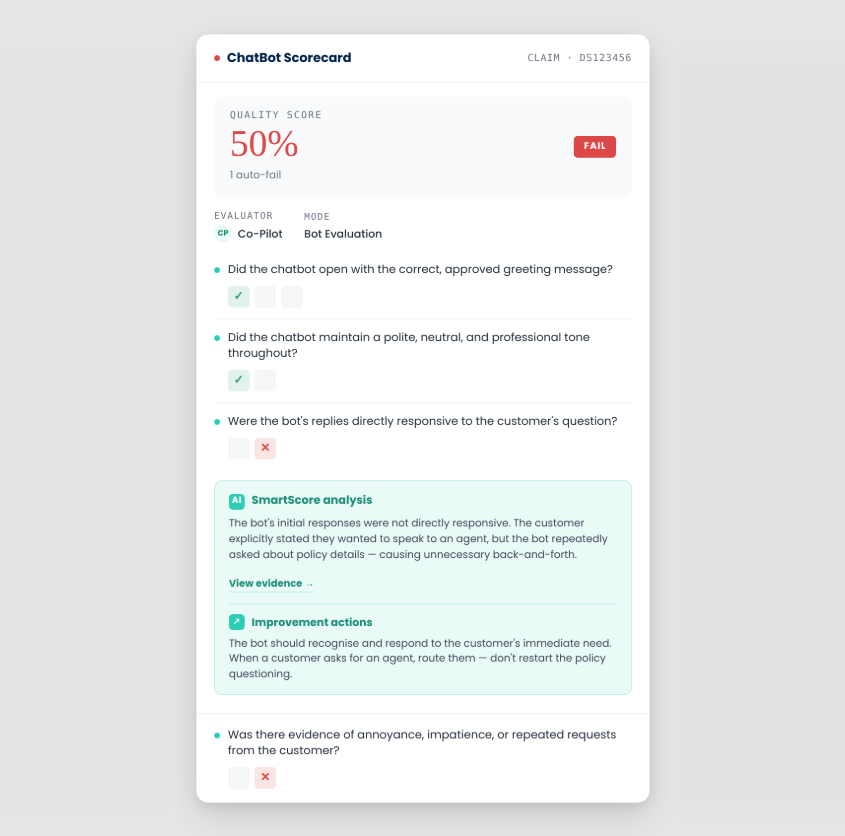
The module includes fabrication detection grounded in the organization’s own knowledge base, containment analysis that goes beyond resolution counts to assess whether contained conversations achieved good outcomes, and handover tracking that identifies escalations where a human agent inherits an already-damaged conversation.
Cross-vendor scoring grades conversations from multiple bot platforms (Cognigy, Sierra, Decagon, and others) against a single quality definition, enabling direct comparison across vendors and against human agents. Conversations, scores, and trend reporting sit in evaluagent (not in the bot platform), so switching vendors does not erase your quality history.
Conversation Intelligence: Predictive customer metrics across every interaction.
evaluagent’s Conversation Intelligence module provides analytics that Playvox’s Customer AI does not match. It derives predictive xNPS, xCSAT, xResolution, and xVulnerability scores from conversation signals across 100% of contacts, rather than relying on post-call survey response rates that typically fall below 20%.
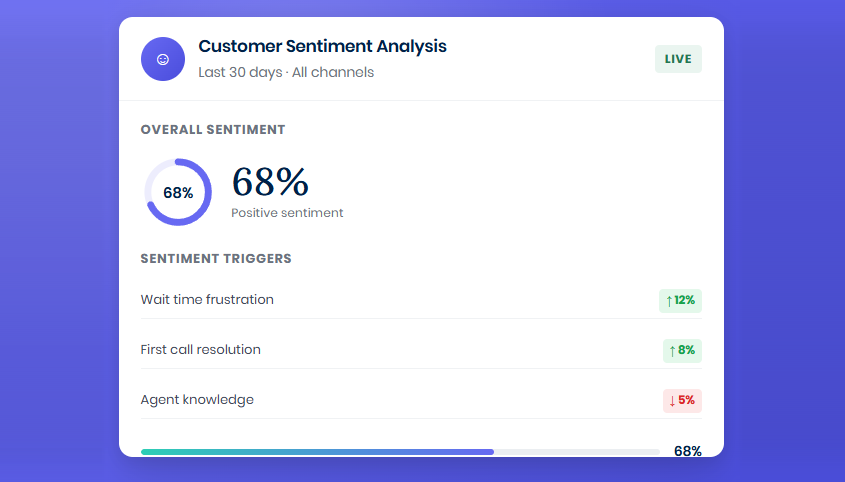
Reason for Contact detection auto-classifies every interaction without manual tagging. Spotlight, an on-demand AI analyst tool, analyzes up to 1,000 filtered conversations and returns themes categorized as Critical Issues, Monitor Closely, and Performing Well, with evidence excerpts and conversation-level links.
Every insight traces back to the specific conversation moment that produced it. Custom Insight Topics are built through a no-code interface with a testing console, accessible without data science expertise.
Closed-Loop Performance Improvement: From QA scores to measurable agent development.
Like Playvox, evaluagent connects quality scores to coaching workflows. The depth of that connection sets it apart. Coaching and 1-to-1 sessions tie directly to conversation evidence, with progress tracked against session-specific goals. Performance Plans link 1-to-1 sessions, coaching actions, and eLearning courses into an HR-ready record with a built-in audit trail.
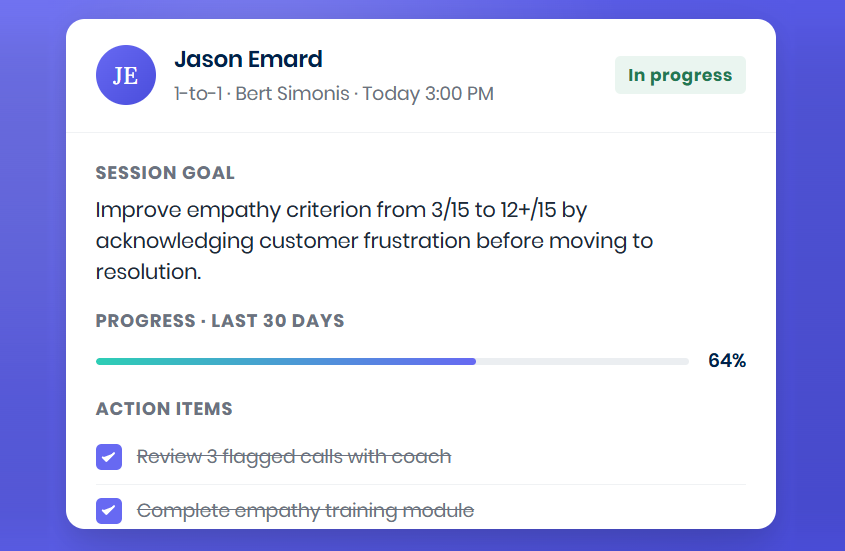
Actions fire automatically when a score, sentiment shift, or compliance flag meets a configured threshold, triggering a coaching session, escalation, or eLearning enrollment without waiting for a manager to spot the trend. A built-in LMS offers interactive eLearning with auto-enrollment triggered by performance metrics.
Gamification includes points, badges, leaderboards, and a distinctive eBay-style reward auction where agents bid on prizes with earned points.
Seasalt Cornwall doubled evaluations and reduced agent attrition from 100% to 10% year-on-year after implementing evaluagent’s coaching and quality framework. (Seasalt Cornwall Case Study)
Transparent Pricing and CCaaS-Agnostic Integrations: Published tiers with no vendor lock-in.
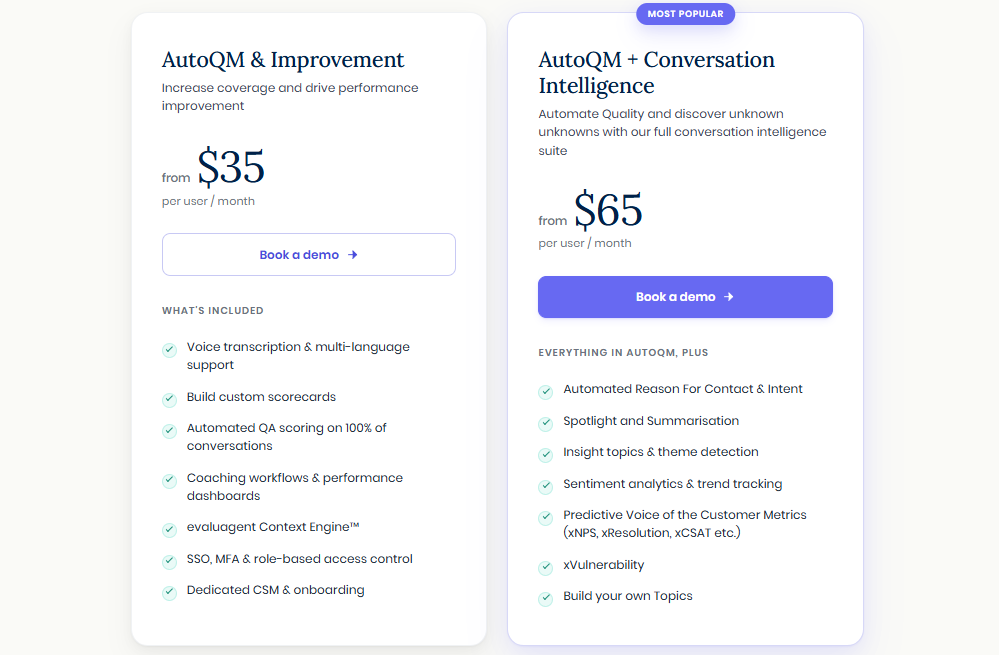
evaluagent publishes its pricing:
AutoQM & Improvement: From $35 per user/month
- 100% automated conversation scoring across voice, chat, and email
- Context Engine for knowledge-grounded scoring
- Coaching workflows, performance dashboards, and gamification
- Voice transcription with multi-language support
- SSO/MFA/role-based access and dedicated CSM
AutoQM + Conversation Intelligence: From $65 per user/month
- Everything in the first tier
- Automated Reason for Contact and Intent detection
- Spotlight AI analyst and conversation summarization
- Predictive Voice of Customer metrics (xNPS, xCSAT, xResolution)
- Custom Insight Topics with no-code builder
evaluagent integrates natively with Zendesk, Salesforce, Genesys, Five9, Amazon Connect, Freshdesk, RingCentral, Talkdesk, Intercom, Puzzel, Aircall, Assembled, and Peopleware. An open API covers unlisted platforms. The platform holds SOC 2 Type II, ISO/IEC 27001:2022, Cyber Essentials Plus, GDPR, HIPAA, and EU AI Act readiness certifications.
Playvox or evaluagent: Comparison Summary
| Playvox | evaluagent | |
|---|---|---|
| QA coverage model | Human evaluation + sentiment-only AutoQA | AI scores 100% of conversations against custom scorecards |
| AI agent governance | Not available | AI Agent Observability with hallucination detection |
| Conversation intelligence | Customer AI (topic tagging, sentiment from tickets/reviews) | Predictive xNPS, xCSAT, xResolution across all interactions |
| Knowledge-grounded scoring | Not available | Context Engine validates factual accuracy against policies |
| Workforce management | Full WFM with omnichannel forecasting and scheduling | No native WFM (integrates with Assembled, Peopleware) |
| Coaching workflow | QA-driven coaching with templates and acknowledgment | QA-driven coaching with performance plans and audit trails |
| Gamification | Karma points, badges, leaderboards, rewards store | Points, badges, leaderboards, eBay-style reward auction |
| CCaaS integrations | Salesforce, Zendesk, Amazon Connect, Kustomer, Freshdesk, others | Zendesk, Salesforce, Genesys, Five9, Amazon Connect, Talkdesk, others |
| Vendor independence | Owned by NICE Systems since October 2024 | Independent, CCaaS-agnostic |
| Security certifications | SOC 2 Type II (pre-acquisition) | SOC 2 Type II, ISO 27001, Cyber Essentials Plus, HIPAA, EU AI Act Ready |
| Pricing transparency | Quote-only through NICE sales | Published: from $35/user/month |
| Best for | Full WEM suite with WFM and Salesforce integration | AI-driven QA with full coverage and AI agent governance |
Final Verdict
The choice between Playvox and evaluagent comes down to what your contact center needs most.
Choose Playvox if you need a full WEM suite covering QA, workforce scheduling, coaching, and gamification in one platform, and you’re comfortable inside NICE’s ecosystem. It remains a strong fit for Salesforce Service Cloud contact centers that need native AppExchange integration and omnichannel WFM. The agent engagement tools, fast implementation, and high pre-acquisition satisfaction scores show a product built with frontline teams in mind.
Choose evaluagent if your priority is AI-powered quality assurance that scores every conversation against your own standards, connects those scores to coaching and development, and provides independent governance over AI agents. Its Context Engine, full-coverage AutoQM, and AI Agent Observability address the quality gaps that Playvox’s AutoQA and NICE’s acquisition have left open. For contact centers deploying AI agents, evaluating regulated interactions, or needing a vendor-neutral quality layer, evaluagent offers the depth and independence that a NICE-owned platform cannot credibly match.
Get started with evaluagent here.