Amazon Connect grew from AWS’s internal customer service system into one of the most widely adopted cloud contact center platforms available. It now handles over 16 million interactions daily and has earned Leader status in the Gartner Magic Quadrant for CCaaS three years running. It offers something most contact center platforms don’t: pure pay-as-you-go pricing with AI capabilities included in the base rate, not sold as add-ons.
To create this Amazon Connect review, we analyzed it in depth. We believe it’s the right choice if:
- You already run on AWS and want a natively integrated contact center
- You need elastic scaling without per-seat licensing or long-term contracts
- You want omnichannel support across voice, chat, email, SMS, and WhatsApp
- You have engineers comfortable with AWS infrastructure
- You want AI capabilities (transcription, agent assist, summaries) bundled into base pricing
However, Amazon Connect’s built-in quality management may not go far enough if:
- You need independent quality assurance that works across multiple CCaaS platforms
- You want AI-scored evaluations calibrated to your specific QA standards, not generic models
- You require coaching workflows that connect scores directly to agent development
- You need to govern AI chatbot conversations independently of the bot vendor’s own metrics
- Your QA team needs a turnkey solution without AWS engineering overhead
For contact centers in this position, evaluagent integrates directly with Amazon Connect to provide an independent quality assurance layer. It scores 100% of conversations automatically using AI calibrated to each organization’s own QA standards, connects evaluation insights to structured coaching and performance improvement, and evaluates both human agents and AI bots against the same quality framework, all without requiring AWS configuration.
We’ve included a detailed look at evaluagent later in this review. If you’d like to see how it works alongside Amazon Connect, you can book a demo here.
What is Amazon Connect?
Amazon Connect is AWS’s cloud-native contact center platform, launched publicly in 2017 after Amazon’s own customer service team built it internally starting around 2007. The founding logic mirrors how AWS itself was born: Amazon built infrastructure it needed, proved it at scale, then opened it to everyone else.
The platform has since been repositioned as “Amazon Connect Customer” as part of a broader 2025–2026 expansion, though most buyers still call it Amazon Connect. It crossed $1 billion in annualized revenue in Q3 2025, with AI optimizing over 12 billion minutes of customer interactions in the prior year. Over 700 feature releases since launch have turned it from a telephony replacement into a full customer experience platform with native AI.
Amazon Connect serves organizations from university IT departments to enterprises running 10,000+ agents. Its customer base spans financial services, transportation, utilities, e-commerce, and healthcare, with particular strength among companies already invested in AWS.
Amazon Connect Pros & Cons
| Pros | Cons |
|---|---|
| – Pay-as-you-go pricing with no per-seat fees | – Requires AWS expertise for advanced configuration |
| – All AI capabilities bundled into base pricing | – Native reporting requires additional tooling for depth |
| – Elastic scaling proven at 10,000+ agent deployments | – Call quality depends on agent internet connectivity |
| – Native integration with the broader AWS ecosystem | – Interface less polished than some dedicated CCaaS competitors |
| – Omnichannel support across voice, chat, email, SMS, WhatsApp | – Costs can grow at high volumes with added AWS services |
| – Gartner MQ Leader and Forrester Wave Leader (2025) | – No built-in CRM; requires Salesforce or ServiceNow integration |
| – Drag-and-drop Flow designer for routing logic | – Quality management lacks coaching workflows that connect to agent development |
Amazon Connect Review: How it Works & Key Features
Omnichannel Contact Center: Amazon Connect routes voice, chat, email, and messaging through a single platform with AI-powered self-service.
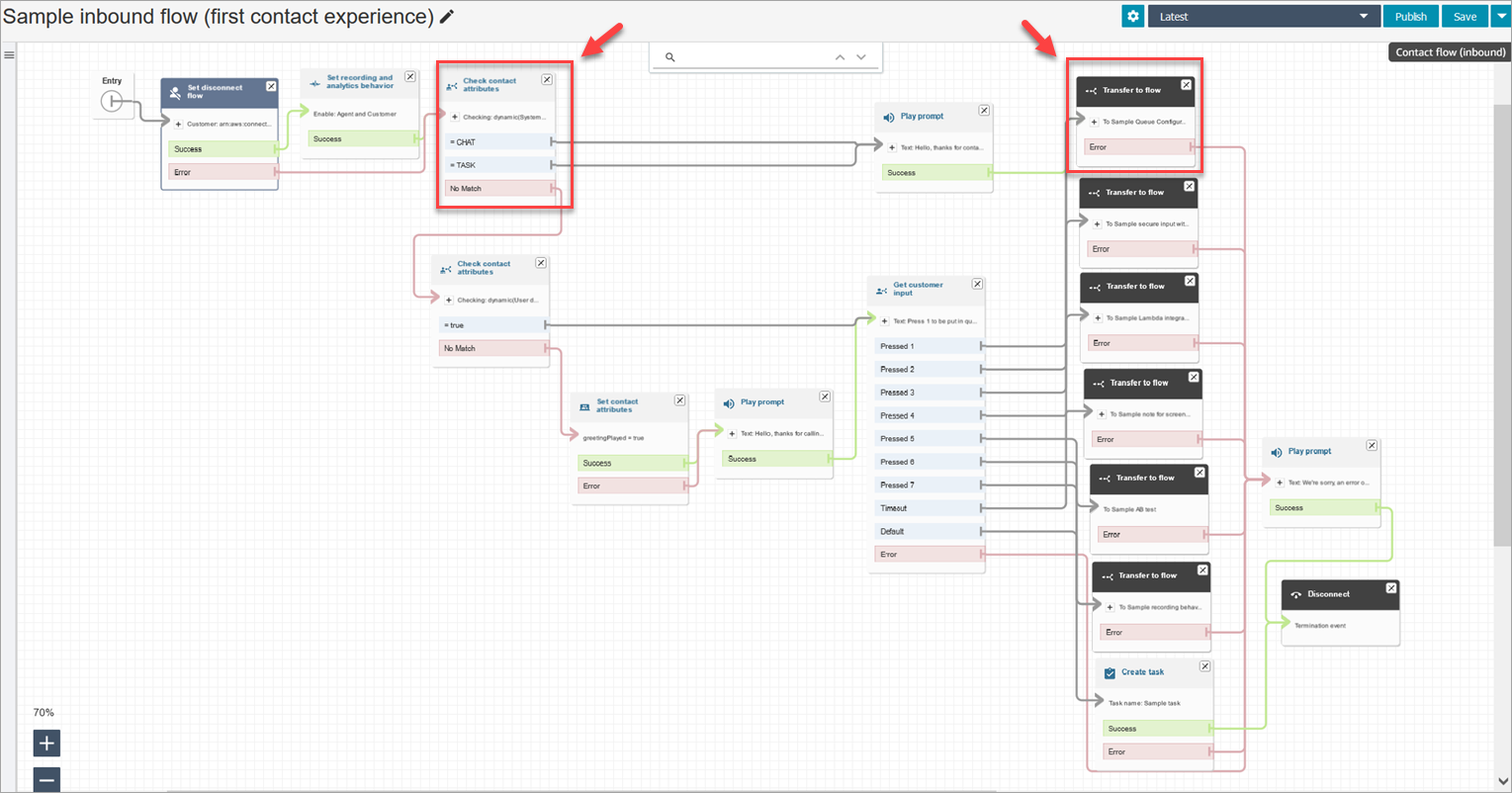
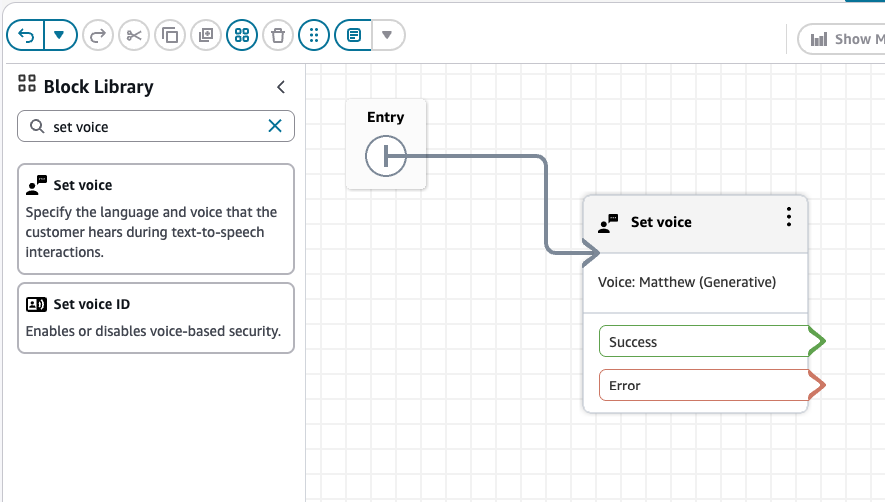
Every customer interaction in Amazon Connect passes through a Flow: a drag-and-drop workflow that defines the customer journey from first contact to resolution. The same flow engine powers IVR menus, chatbot conversations, email routing, and agent step-by-step guides, so you build routing logic once and apply it across channels.
Telephony runs through a managed network of 40+ tier-1 carriers with DID and toll-free numbers in 158 countries, eliminating separate carrier contracts. Voice quality uses a 16kHz wideband softphone built for packet-loss resistance, and in-app or web calling can be embedded in customer-facing applications via a single line of code.
Self-service is where the platform’s recent investment shows. Agentic AI bots can navigate backend systems independently to schedule appointments, verify accounts, and process updates without agent involvement.
Amazon Nova Sonic powers speech-to-speech voice AI in 30+ languages with natural-sounding responses, while Amazon Lex handles natural language understanding. The platform combines rule-based IVR with agentic AI, letting teams choose where to use defined rules and where to deploy autonomous AI agents.
Digital channels include real-time and asynchronous chat with persistent conversation history, native WhatsApp Business integration, Apple Messages for Business, SMS, and email routing. For outbound, four dialer modes (predictive, progressive, preview, and agentless) support voice, SMS, email, and WhatsApp campaigns with ML-powered answering machine detection and built-in TCPA compliance controls.
Agent Productivity: A single workspace surfaces context, AI guidance, and step-by-step workflows.
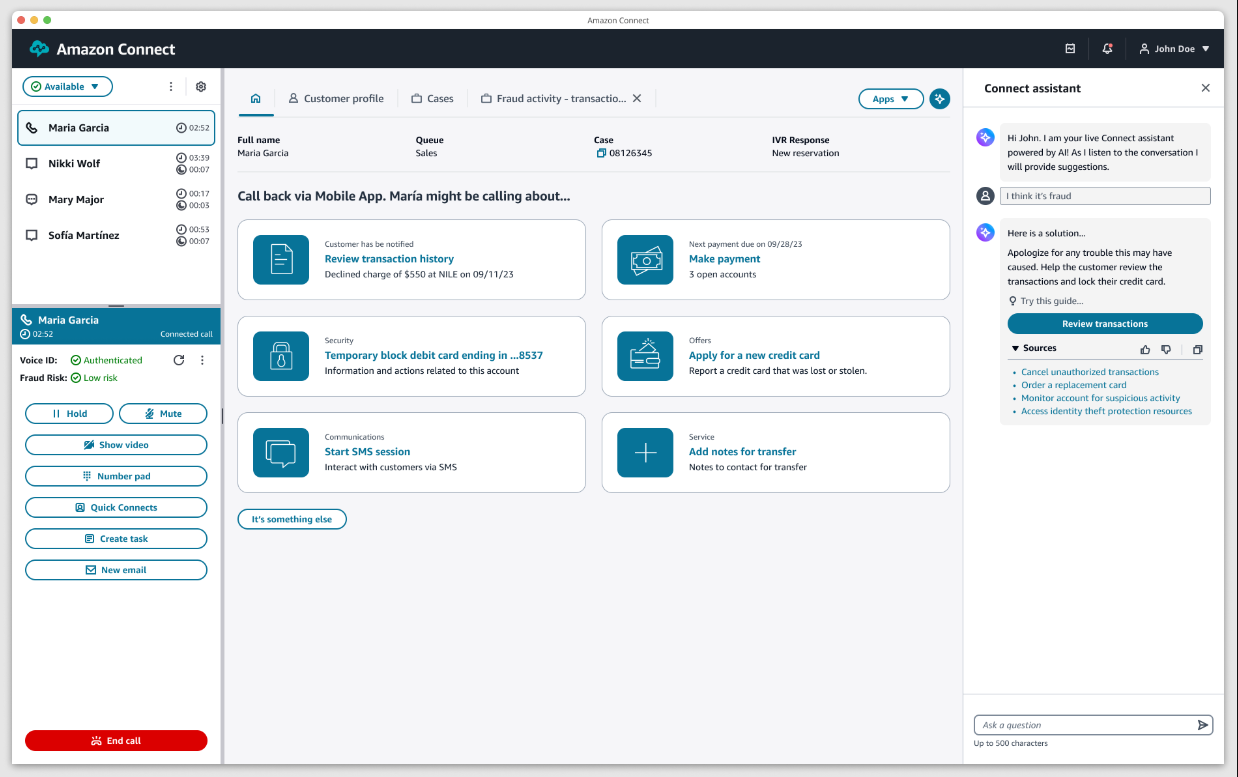
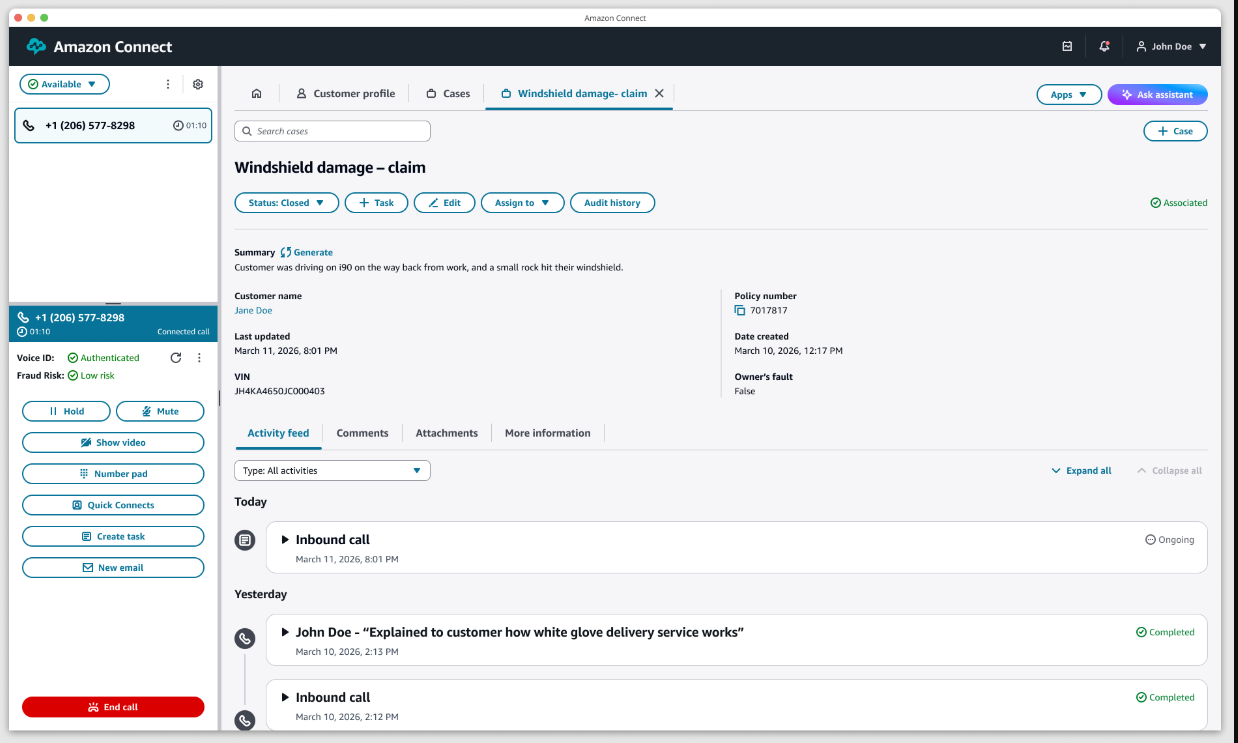
The Agent Workspace puts everything an agent needs in one browser tab: contact controls, customer profiles, case management, AI recommendations, and step-by-step guides. When a contact arrives, the system resolves customer identity from 80+ data source integrations, surfaces prior self-service context via Cases, and begins AI-assisted analysis of the live conversation to deliver recommended responses and actions without the agent requesting them.
Customer Profiles unifies data from CRMs, e-commerce platforms, and analytics tools into a single real-time view, using machine learning to resolve duplicate records across phone numbers, email addresses, and names. The same profile engine applies Amazon.com’s recommendation technology to surface product recommendations and cross-sell triggers during live interactions.
Step-by-step guides use the same drag-and-drop designer as contact routing flows. They trigger automatically by queue, IVR input, or customer data. When a contact ends, AI-generated post-contact summaries replace manual after-call notes within seconds, covering both voice and chat in a structured format.
Cases captures the full timeline of contacts, tasks, emails, chats, and calls tied to a single customer issue. Cases can be created automatically from IVR or chatbot context, so agents never have to ask the customer to repeat their reason for calling.
Analytics & Quality Management: Contact Lens analyzes conversations and automates evaluations across all channels.
Contact Lens for Amazon Connect is the platform’s conversation analytics engine. It transcribes voice calls in real time, applies sentence-level sentiment analysis, detects interruptions and non-talk time, and categorizes contacts using rules-based and AI-driven tagging. Supervisors see live sentiment trends and can search transcripts in full text.
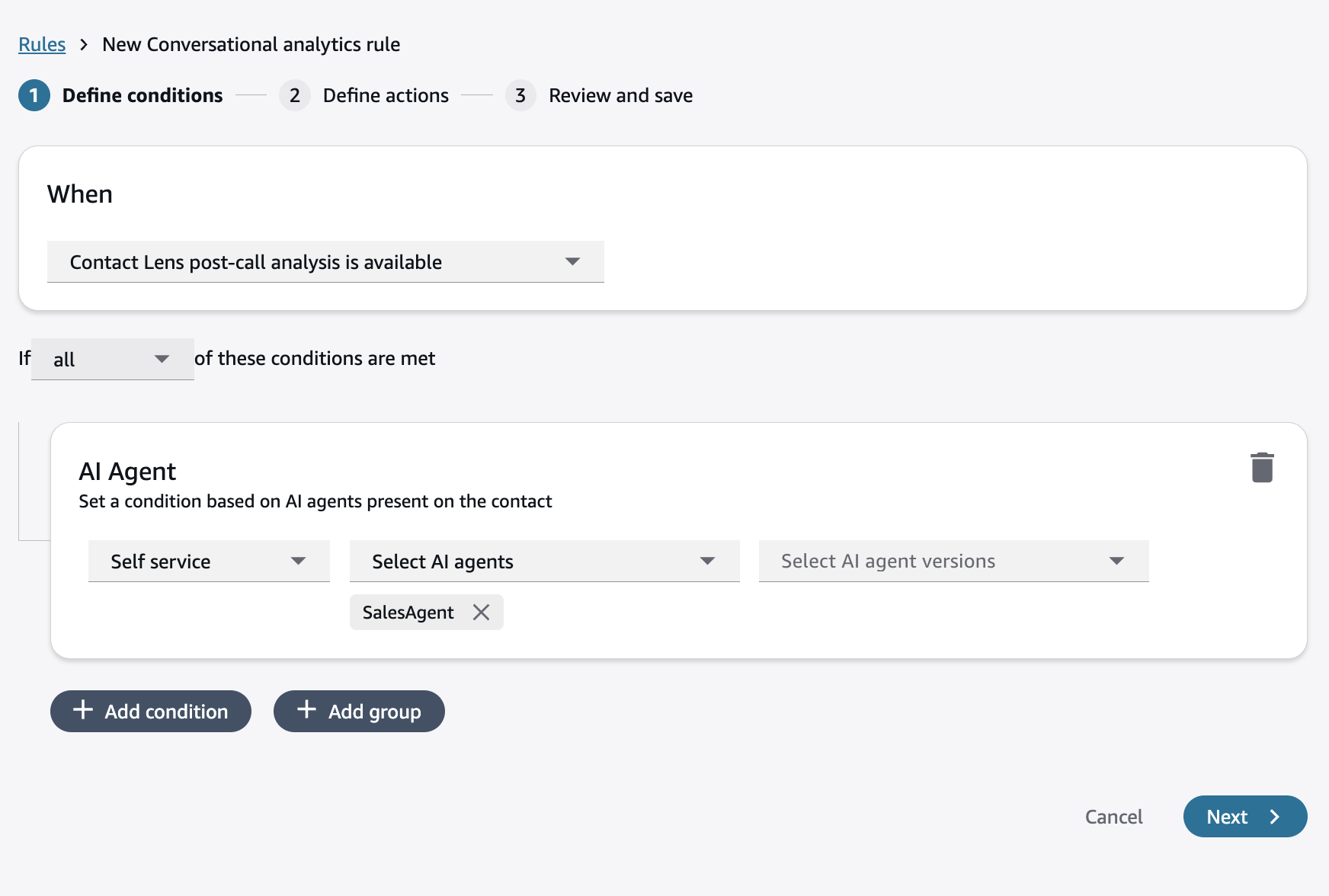
The quality management capabilities stand out for a CCaaS platform. Automated evaluations can run on 100% of contacts analyzed by Contact Lens, covering both human agents and automated interactions. Managers define evaluation criteria using conversational prompts, and the system returns answers with supporting context and justification. Evaluations extend to self-service interactions handled by bots and AI agents, so organizations can apply the same quality standards to automated systems as to human agents.
Screen recording captures agent screens alongside audio during voice calls, chats, or tasks. Automatic PII detection and redaction scans transcripts and audio for sensitive data and masks it before storage. An analytics data lake with zero-ETL architecture makes all conversation data queryable from BI tools without separate pipelines.
Amazon Connect also includes native workforce management: ML-powered forecasting (short-term, long-term, and intraday), capacity planning with scenario analysis, optimized scheduling across skills and languages, and automated intraday adjustments. Forecasts update daily for short-term and every 15 minutes for intraday predictions. Real-time dashboards refresh every 15 seconds.
Pricing Structure: Pay-as-you-go pricing eliminates per-seat fees and bundles all AI capabilities.
Amazon Connect uses a consumption-based pricing model with no seat licenses, no minimum commitments, and no long-term contracts. The current “Connect Customer” plan bundles all AI capabilities into base interaction rates:
| Channel | Rate |
|---|---|
| Voice | $0.038 per minute |
| Chat | $0.010 per message |
| SMS and third-party messaging | $0.014 per message |
| $0.080 per email |
These rates include AI-powered self-service, real-time agent assist, conversational analytics, post-contact summaries, forecasting, scheduling, performance evaluations, and screen recording. No separate add-on fees for any AI feature.
Telephony costs (carrier-level per-minute charges and per-day phone number fees) are billed separately on top of the voice service charge. Messaging delivery fees for SMS, WhatsApp, and email (via AWS End User Messaging and Amazon SES) are also additional. Cases cost $0.12 per case created, and Customer Profiles with external data cost $0.005 per profile per day.
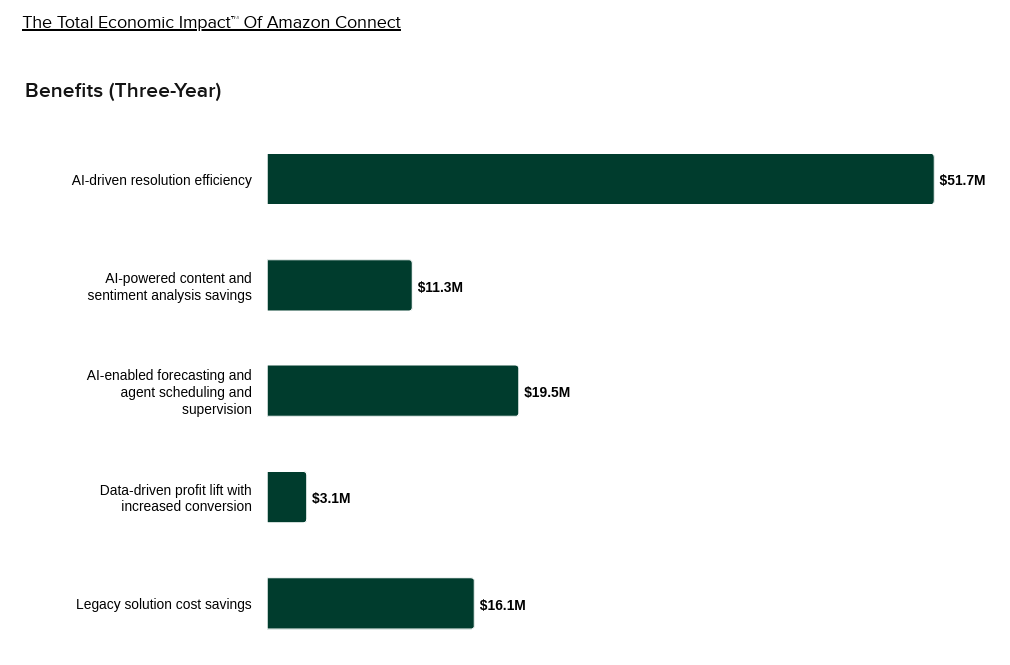
A Forrester TEI study found 342% ROI with payback under 6 months and $78.7M NPV over 3 years, with $51.7M in efficiency gains from AI contact resolution.
There is no standalone free trial, but the AWS Free Tier includes limited usage for the first 12 months, and feature-specific trials (conversational analytics, performance evaluations, forecasting) activate upon first use.
Where Amazon Connect Falls Short
Amazon Connect delivers a capable contact center platform with built-in analytics that go further than most CCaaS competitors. But gaps appear when you move beyond contact handling into sustained quality improvement. These reflect a platform built for infrastructure flexibility, not specialist QA depth.
Quality management is capable but ecosystem-dependent. Contact Lens can run automated evaluations on 100% of contacts, which is useful. But generating custom reports or building deeper analysis typically requires connecting Amazon QuickSight or an external BI tool, adding cost and configuration overhead. Organizations wanting QA dashboards without custom setup will find the native reporting functional but limited.
No coaching workflow tied to scores. Contact Lens produces scores, transcripts, and summaries. What it doesn’t do is connect those findings to structured coaching sessions, 1-to-1s, performance improvement plans, or agent development tracking. The gap between “this agent scored poorly on empathy” and “here’s a coaching plan with evidence, goals, and progress tracking” requires either a separate system or custom development.
AI agent governance sits inside the ecosystem. Amazon Connect can evaluate AI-led interactions using the same framework as human agents, which puts it a step ahead of most CCaaS platforms. But the evaluations run within the same system that hosts the AI agents. Organizations deploying bots from third-party providers (or wanting an independent second opinion on their own AI) need a QA layer that sits above the contact center, not inside it.
The platform rewards engineering investment. G2 reviewers describe Amazon Connect as “not beginner-friendly,” requiring “a fair amount of tweaking.” Advanced workflows and IVR configurations need AWS expertise. Gartner Peer Insights echo this: the platform delivers value for teams with cloud engineering resources but creates friction for operations teams without them.
Call quality varies with infrastructure. Because Amazon Connect is fully web-based, voice quality depends on agent internet connectivity. G2 reviewers note latency spikes in certain regions, with dropped calls reported during peak periods. Organizations in regions with limited AWS infrastructure coverage may experience inconsistent audio quality.
These limitations create a natural opening for tools that specialize in the QA workflow Amazon Connect supports but doesn’t fully own: independent scoring, coaching, agent development, and AI governance.
Best Amazon Connect Integration for Quality Assurance: evaluagent
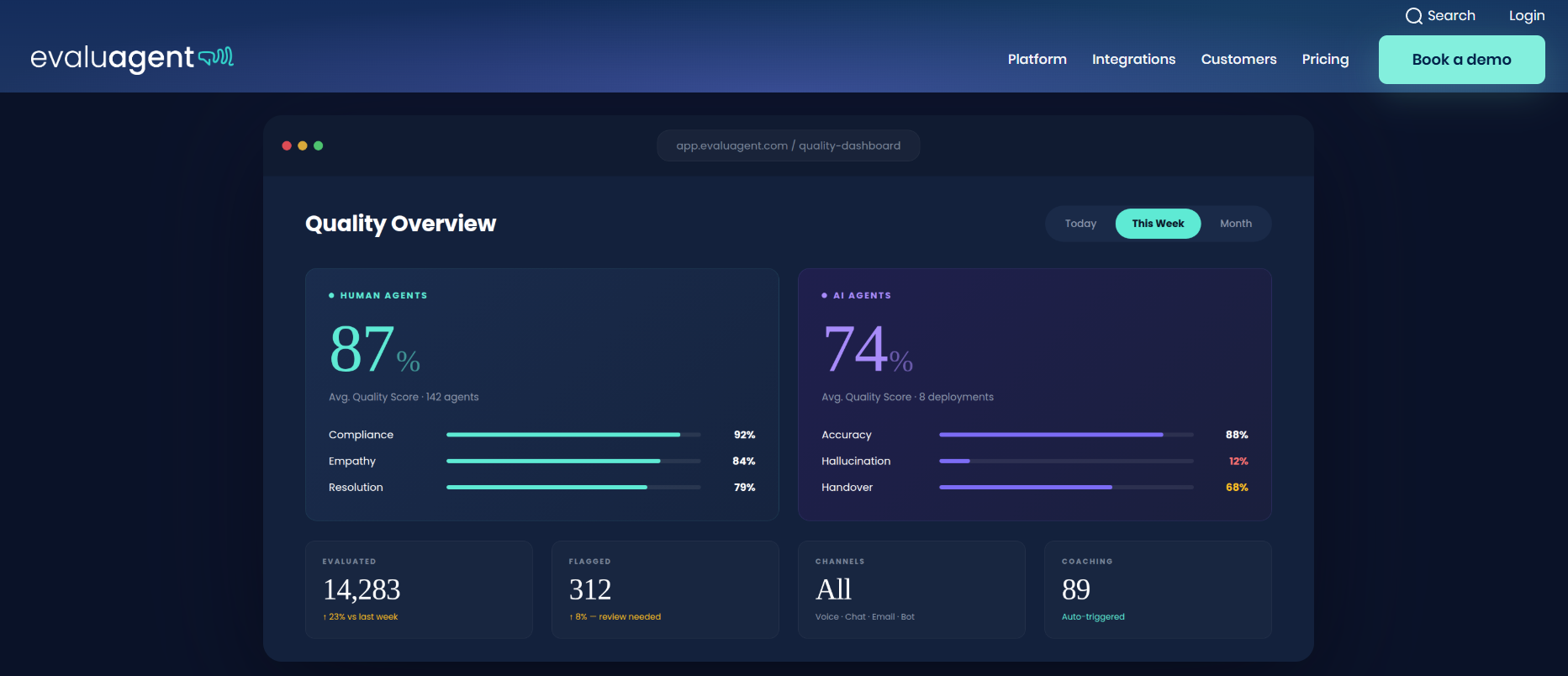
evaluagent addresses Amazon Connect’s quality management gaps with a dedicated QA and performance improvement platform that integrates directly with Amazon Connect to import calls and chats for independent evaluation. Series A-funded and backed by Peakspan, evaluagent is built around a single premise: visibility across every agent, human and AI.
The platform is named in G2’s Top 50 UK Software Companies 2026 (the only contact center software on the list for three consecutive years) and recognized as a Leader in G2’s Summer 2026 Contact Center Quality Assurance report, with rankings based on verified customer reviews. It holds SOC 2 Type II, ISO/IEC 27001:2022, and Cyber Essentials Plus certifications, is HIPAA-aligned and GDPR-compliant.
The integration adds an independent quality layer on top of Amazon Connect’s existing infrastructure. Conversations flow from Amazon Connect into evaluagent automatically, where they’re scored, analyzed, and connected to coaching workflows without AWS engineering.
Full-Coverage AutoQA: evaluagent scores 100% of conversations with AI calibrated to your specific quality standards.
Where Contact Lens evaluates interactions using conversational prompts within the AWS ecosystem, evaluagent’s AutoQA applies a scoring model calibrated to each organization’s own QA standards. The Context Engine (launched April 2026) grounds AI scoring in uploaded company policies, knowledge base content, and compliance documents, so evaluations measure not just communication quality but whether agents gave factually correct answers.
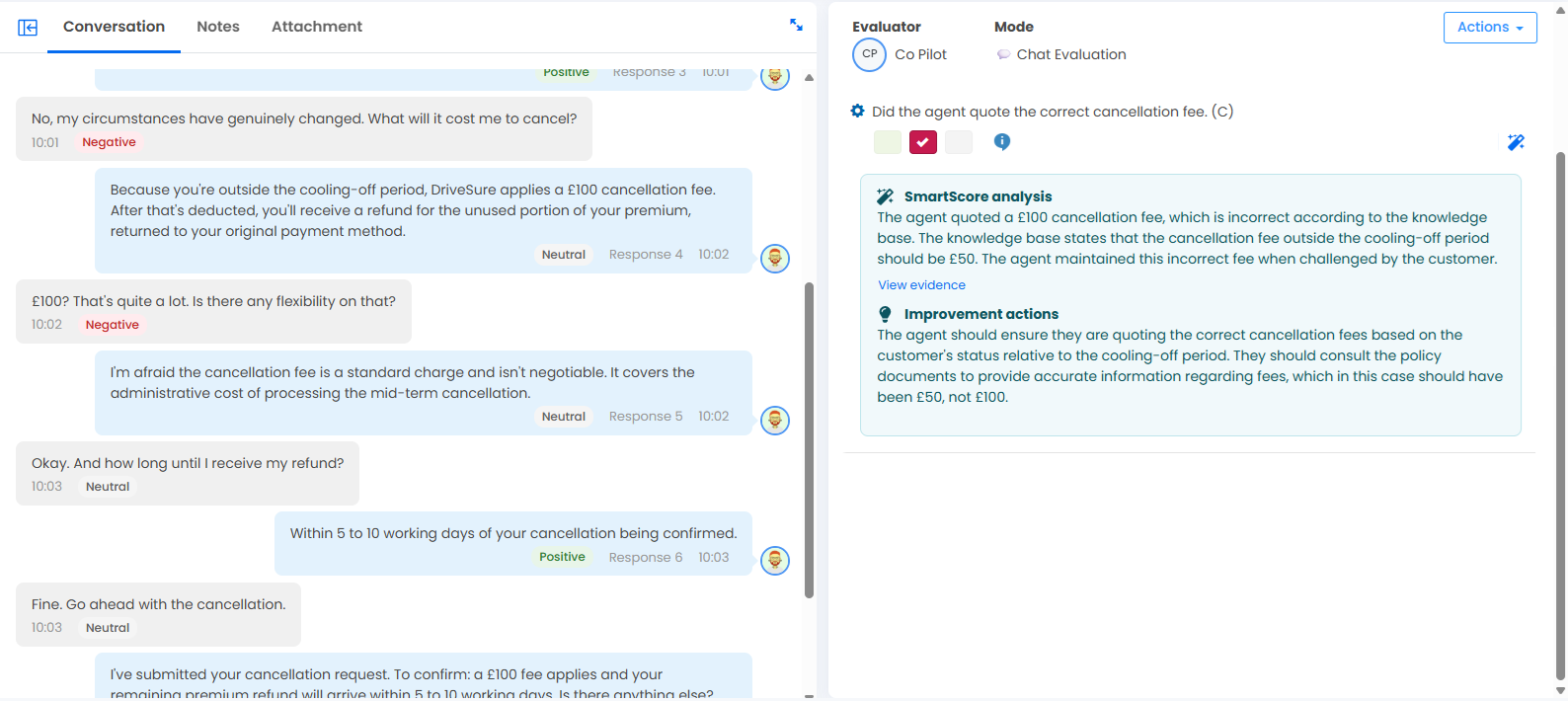
Scoring starts with custom scorecards built through a drag-and-drop builder, with weighted criteria, auto-fail logic, and per-queue configuration. Blended Scorecards let some criteria be scored by AI while others stay with human evaluators on the same card. SmartScore applies AI to qualitative line items with transparent reasoning, explaining why a mark was awarded, not just the score.
A Testing Console lets QA managers validate any scoring change against real historical conversations before it goes live, preventing miscalibration. Agent Disputes create a formal appeals process where disputes are assigned, tracked, and logged. Calibration sessions keep human and AI scoring aligned over time.
Capital on Tap scaled from 900 to 6,000 BDM quality checks per month immediately after go-live without adding headcount. (Capital on Tap Case Study)
AI Agent Observability: Independent governance for chatbots and virtual agents across any provider.
As contact centers deploy more AI agents, the question shifts from “can we automate?” to “can we prove our AI performs well?” Amazon Connect’s built-in evaluations run within the same system that hosts the AI. evaluagent’s AI Agent Observability sits above the agent layer and assesses performance independently, whether the bot runs on Amazon Lex, Cognigy, Sierra, Decagon, or a proprietary build.
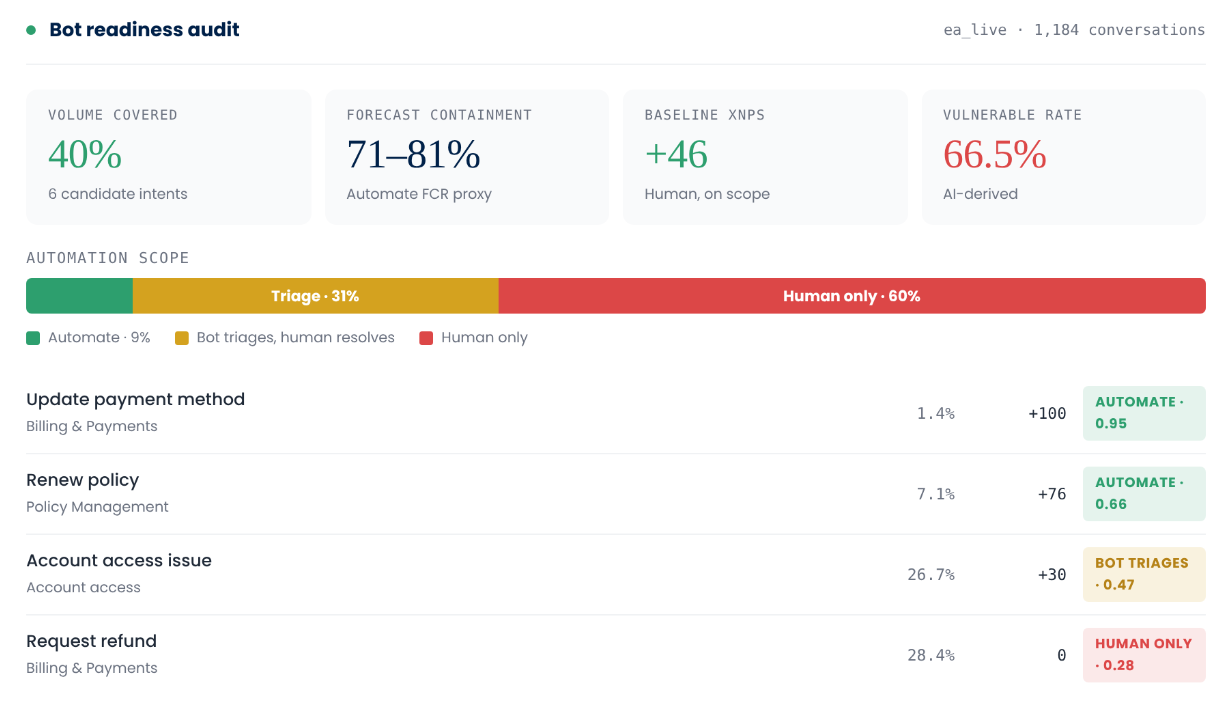
The module applies the same quality framework used for human agents to every AI conversation. Fabrication detection flags responses that hallucinate or invent information by grading each answer against the organization’s knowledge base. Containment analysis goes beyond counting contained conversations to track whether those conversations achieved good outcomes. Handover tracking identifies when bots escalate to human agents and whether those handovers arrive with damage already done.
Intent-level performance reporting groups scores by query type, showing which intents the bot handles cleanly and which generate frustration. Cross-vendor scoring enables direct comparison across bot platforms and against human agents using the same quality definition. Quality records stay in evaluagent, not in the bot platform, so switching vendors doesn’t erase your quality history.
Closed-Loop Coaching: Evaluation insights connected directly to agent development workflows.
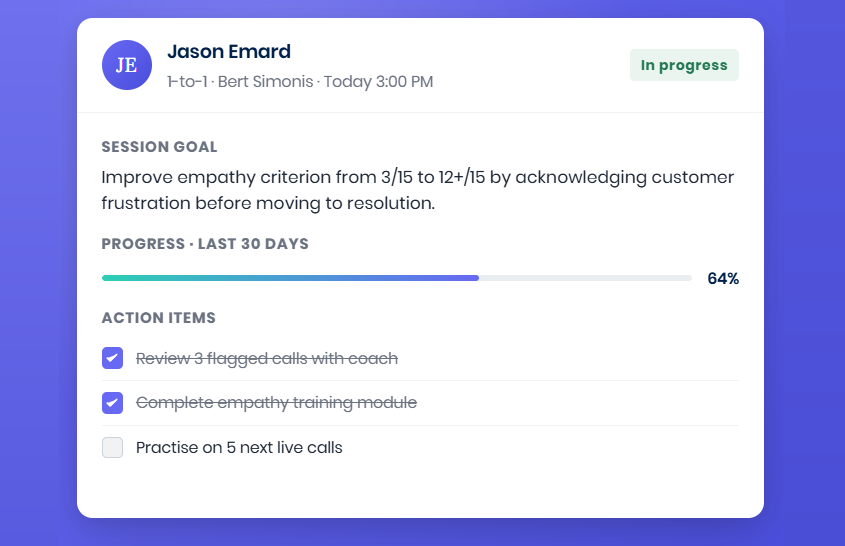
Contact Lens produces scores but leaves the connection to coaching as an exercise for the organization. evaluagent closes that gap with structured coaching sessions tied directly to conversation evidence. When a score, sentiment shift, or compliance flag meets a configured threshold, automated Actions trigger the appropriate response: a coaching session, an escalation, or enrollment in an eLearning module.
1-to-1 coaching sessions track progress against specific goals with the conversation evidence attached. Performance Plans link coaching sessions, training, and eLearning into an HR-ready record with a full audit trail. A built-in LMS offers interactive lessons, quizzes, and learning paths with auto-enrollment triggered by performance metrics.
Gamification adds an engagement layer with points, badges, leaderboards, and an auction where agents bid earned points on prizes.
Seasalt Cornwall doubled evaluations and reduced agent attrition from 100% to 10% year-on-year after implementing evaluagent’s coaching workflows. (Seasalt Cornwall Case Study)
Conversation Intelligence & Pricing: Predictive CX metrics and flexible per-seat pricing.
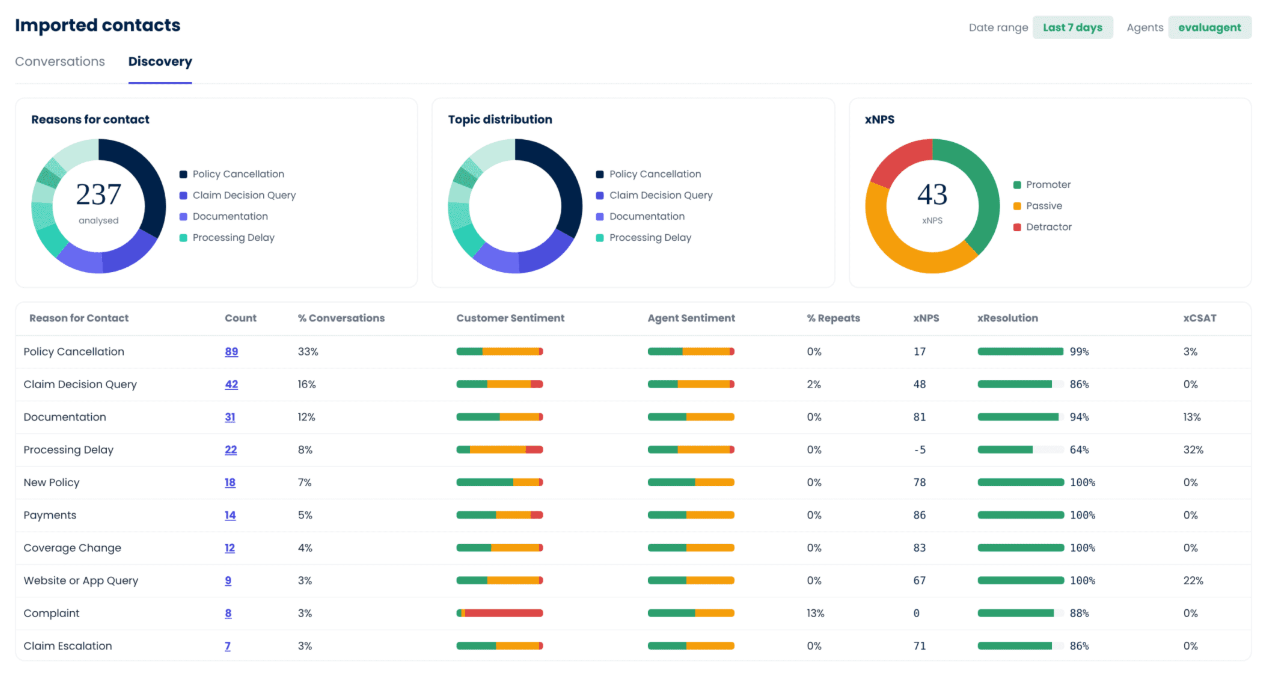
evaluagent’s Conversation Intelligence module adds analytics beyond QA scoring: automated reason-for-contact detection, predictive xNPS, xCSAT, and xResolution scores derived from conversation signals rather than survey responses, sentiment analysis with trend tracking, and a Spotlight tool that acts as an on-demand AI analyst, reviewing up to 1,000 conversations to surface critical issues without the user specifying what to look for.
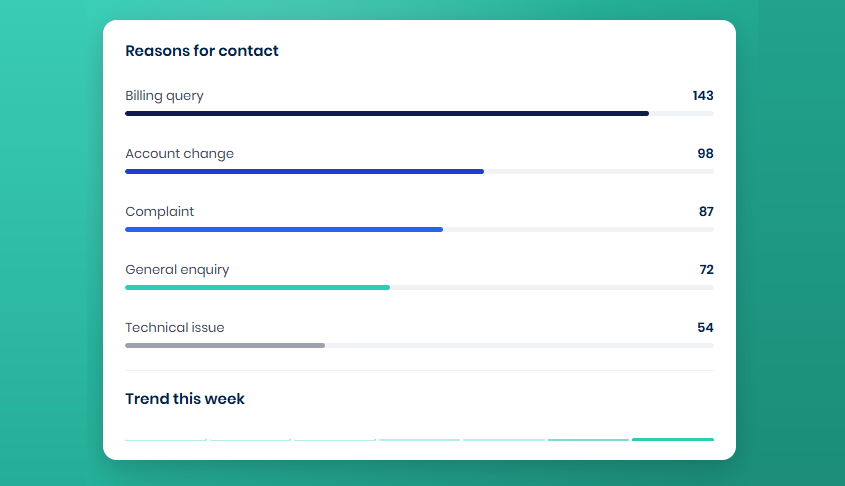
Pricing uses a per-seat model for human agents:
- AutoQA & Improvement: From $35 per user/month, including 100% automated scoring, coaching workflows, gamification, Context Engine, and fabrication detection
- AutoQA + Conversation Intelligence: From $65 per user/month, adding reason for contact, sentiment analytics, predictive CX metrics, Spotlight, and custom topic builders
Both tiers include a dedicated Customer Success Manager and structured onboarding. evaluagent reports that most organizations go live in weeks, not months. Volume discounts are available for larger teams.
The Share Centre cut evaluation time from 24 minutes to 6 minutes per interaction (a 285% increase in QA productivity) while pass rates rose from 73% to 85%. (The Share Centre Case Study)
Amazon Connect and evaluagent: Comparison Summary
Amazon Connect (Contact Lens) | evaluagent | |
|---|---|---|
| Primary focus | Cloud contact center with built-in analytics | Independent QA and agent performance management |
| QA coverage | 100% automated evaluations via Contact Lens | 100% automated scoring via AutoQA with Context Engine |
| Scoring calibration | Conversational prompts within the AWS ecosystem | Organization-specific policies, knowledge base, and compliance rules |
| Coaching workflows | Not natively included | Structured 1-to-1s, performance plans, eLearning, gamification |
| AI agent evaluation | Evaluates within the same platform | Independent cross-vendor evaluation with fabrication detection |
| Reporting depth | Requires QuickSight or external BI tools | Built-in dashboards with export to Power BI, Tableau, Looker |
| CCaaS compatibility | Amazon Connect only | CCaaS-agnostic: Amazon Connect, Genesys, Five9, Talkdesk, more |
| Setup complexity | AWS engineering for advanced configuration | Go-live in weeks with dedicated onboarding |
| Certifications | PCI DSS, HIPAA, SOC 1/2/3, ISO 27001, FedRAMP | SOC 2 Type II, ISO/IEC 27001:2022, Cyber Essentials Plus, HIPAA-aligned, GDPR-compliant |
| Pricing model | Pay-per-interaction (voice: $0.038/min) | Per-seat ($35–$65/user/month) |
| Free plan | AWS Free Tier (limited, 12 months) | Demo-based; no self-serve free plan |
| Best for | Full-stack cloud contact center with native AI | Independent QA, coaching, and AI agent governance |
Final Verdict
Amazon Connect and evaluagent serve different but complementary roles in the contact center stack. The choice isn’t between them; it’s whether you need both.
Choose Amazon Connect if you’re building or migrating a cloud contact center and want a platform that scales elastically, bundles AI into base pricing, and integrates natively with the AWS services your organization already runs. It’s the right foundation for enterprises that need omnichannel support, AI-powered self-service, and consumption-based pricing without per-seat fees. For organizations with AWS engineering resources, it delivers contact center infrastructure that grows without contract renegotiation.
Add evaluagent if you need quality assurance that goes beyond scoring. evaluagent turns Amazon Connect’s conversation data into a continuous improvement system: independent AI scoring calibrated to your standards, coaching workflows tied to specific conversation evidence, AI agent governance that doesn’t rely on the bot vendor’s own metrics, and predictive CX intelligence across every interaction. It connects to Amazon Connect in weeks and gives QA teams, team leaders, and contact center directors the tools to act on what Contact Lens reveals.
Connect evaluagent to your Amazon Connect instance here.
Together, Amazon Connect handles what happens during customer interactions. evaluagent handles what happens after, turning every conversation into a signal for improvement.