Choosing between Genesys Cloud CX and Zendesk for your customer service operations comes down to five questions:
- Do you need a full contact center platform with native telephony, or a ticketing-first system that’s expanding into voice?
- Is AI-powered self-service your primary goal, or are you focused on improving the quality and consistency of human agent interactions?
- How important is workforce management, scheduling, and forecasting as part of the same platform?
- Are you running a voice-heavy contact center with hundreds of agents, or a digital-first support team handling tickets and messaging?
- Once your agents handle interactions, how do you know whether they gave the right answers, followed compliance rules, and improved over time?
In short, here’s what we recommend:
Genesys Cloud CX is the enterprise contact center platform for organizations that need the full stack: voice routing, IVR, omnichannel digital engagement, AI virtual agents, workforce management, and journey analytics, all natively integrated.
With over 7,000 organizations on the platform and $2.8 billion in cloud ARR, Genesys Cloud CX is designed for complex, high-volume contact centers. Its voice infrastructure, predictive routing, and agentic AI serve enterprises running hundreds to thousands of agents across regulated industries.
The trade-off is complexity: advanced configuration requires real technical investment, and pricing starts at $75/user/month before AI consumption charges.
Zendesk is the service platform that started with ticketing and has grown into a full omnichannel solution covering messaging, voice, knowledge management, and workforce operations.
Trained on roughly 20 billion ticket interactions, Zendesk’s AI resolves routine inquiries on its own while its unified agent workspace keeps human agents productive across every channel.
It’s the stronger choice for digital-first teams and mid-market organizations that want fast deployment without heavy implementation overhead.
Its contact center capabilities are newer, though (built on an Amazon Connect partnership), and the full AI suite at enterprise scale pushes costs well beyond the $19/agent/month entry point.
Both platforms include built-in quality assurance tools. But built-in QA from your contact center or ticketing vendor faces an inherent limitation: you’re asking the same system that handles interactions to also judge whether those interactions were good. For organizations that need independent, full-coverage quality assurance with a direct line to coaching and agent development, there’s a dedicated layer worth considering.
evaluagent is the independent QA and performance management platform that works alongside both Genesys Cloud CX and Zendesk rather than replacing either one.
It scores 100% of conversations automatically across voice, chat, and email, then connects those scores to coaching sessions, performance plans, and gamified development workflows.
Its Context Engine checks whether agents gave factually correct answers by grounding AI scoring in your own policies and knowledge base.
As contact centers deploy AI chatbots, evaluagent’s AI Agent Observability independently evaluates bot conversations for hallucinations, off-policy responses, and compliance breaches. Because evaluagent integrates natively with both Genesys and Zendesk, it adds a dedicated quality layer without replacing your existing infrastructure.
If independent quality assurance across both human and AI agents sounds like the missing piece in your CX stack, book a demo with evaluagent.
Genesys Cloud CX vs Zendesk vs evaluagent at a glance
| Genesys Cloud CX | Zendesk | evaluagent | |
|---|---|---|---|
| Core function | Enterprise CCaaS platform | Service and ticketing platform | Independent QA and performance management |
| Voice infrastructure | Native telephony, ACD, IVR, outbound dialer | Voice via Zendesk Talk and Amazon Connect partnership | No native voice; ingests recordings from any CCaaS |
| Digital channels | Web messaging, WhatsApp, email, social, SMS | Messaging, email, social, SMS, live chat | Channel-agnostic (evaluates any text or voice interaction) |
| AI automation | Virtual agents, predictive routing, copilots | AI agents, copilot, intelligent triage | AI-powered AutoQA scoring with Context Engine |
| Quality assurance | Built-in Virtual Supervisor and speech analytics | Built-in AutoQA and Spotlight | Dedicated full-coverage QA with coaching workflows |
| Workforce management | Native WFM with AI forecasting | WFM add-on ($50/agent/month) | No native WFM; integrates with Assembled, Peopleware |
| AI agent governance | Guardrails within own virtual agents | QA scoring of own AI agents | Independent evaluation of any vendor’s AI agents |
| Analyst recognition | Gartner CCaaS Leader, 11 consecutive years | Gartner CRM CEC Leader (2025) | G2 Leader, Contact Center QA (Summer 2026) |
| Starting price | $75/user/month | $19/agent/month (Support Team) | $35/user/month |
| Best for | Enterprise voice-heavy contact centers | Digital-first mid-market service teams | Organizations needing independent QA across any platform |
Two platforms, two philosophies
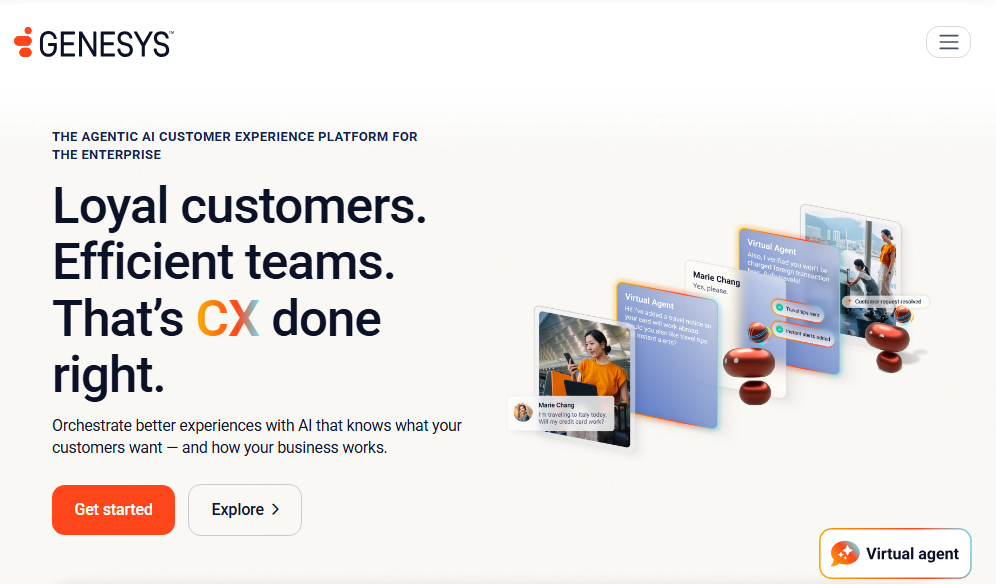
Genesys Cloud CX and Zendesk approach customer service from opposite directions.
Genesys started with the phone call. For over three decades, the company has routed voice interactions in complex enterprise environments. Everything else (digital channels, workforce management, AI automation) was built around that telephony core.
The result is a platform where voice quality, call routing, and real-time workforce coordination are mature, while digital capabilities came later.
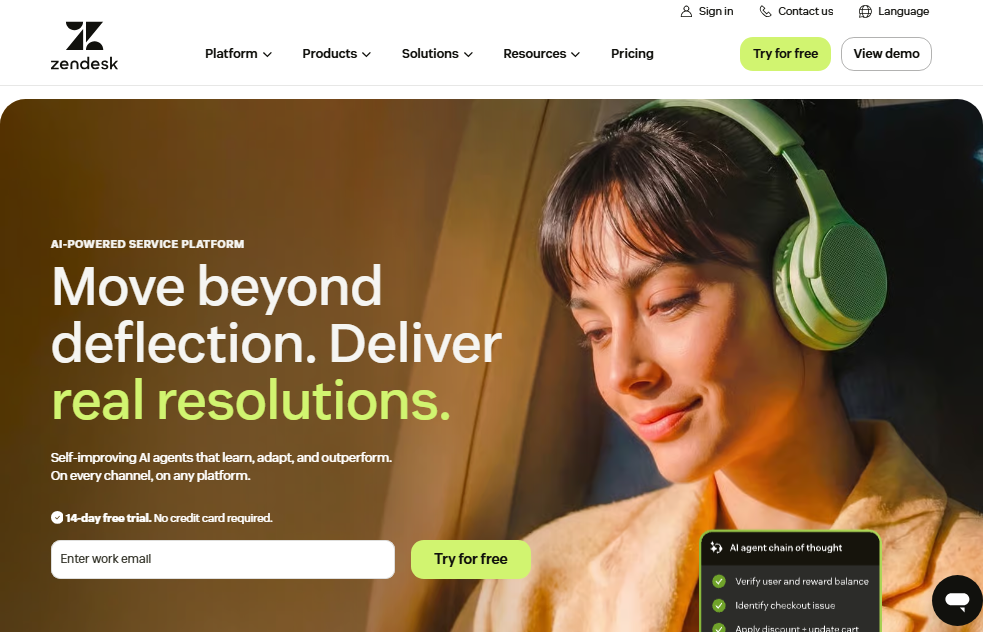
Zendesk started with the support ticket. Founded in 2007 as a simpler alternative to clunky enterprise helpdesk software, it built its reputation on email ticketing and then expanded into live chat, messaging, and eventually voice.
The result is a platform where the agent workspace, ticket workflows, and knowledge base are refined, while voice and full contact center capabilities are newer additions.
This difference in origin shapes every buying decision. A 500-seat contact center handling 80% voice traffic will find Genesys Cloud CX’s telephony indispensable. A 200-person support team handling mostly email and messaging will find Zendesk’s agent workspace and AI automation more productive from day one.
But regardless of which platform handles the interactions, neither was built primarily to answer the question: “Was the agent’s response actually correct, and what should we do about it if it wasn’t?”
Genesys Cloud CX owns voice and enterprise routing
Voice remains the dominant channel for complex, high-stakes customer interactions, and Genesys Cloud CX treats it as a first-class citizen rather than an add-on.
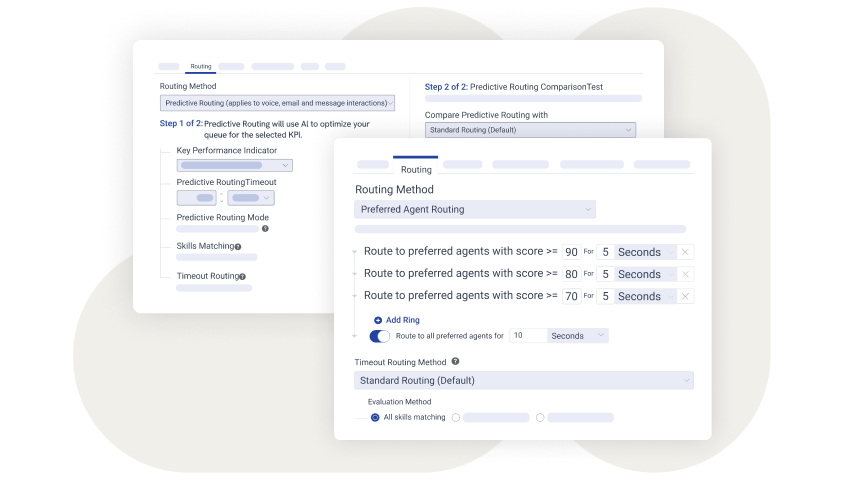
The platform combines the entire voice stack (telephony, ACD, IVR, outbound dialer, and call recording) into a single cloud-native system. Organizations can run managed telephony through Genesys Cloud Voice, bring their own carrier via BYOC Cloud, or maintain on-premises SIP infrastructure through BYOC Premises. Each model connects to the same ACD routing engine, which supports skills-based, bullseye, preferred agent, and AI-driven routing that learns from interaction outcomes to optimize for specific KPIs like first-contact resolution.
The IVR layer uses a visual drag-and-drop flow builder with speech recognition and NLU for intent detection, and Virtual Agents powered by Large Action Models can handle multi-step tasks before a human agent gets involved.
For outbound, Genesys supports up to 50 simultaneous voice campaigns with predictive, power, and preview dialing modes, contact lists up to 5 million records, and built-in DNC enforcement.
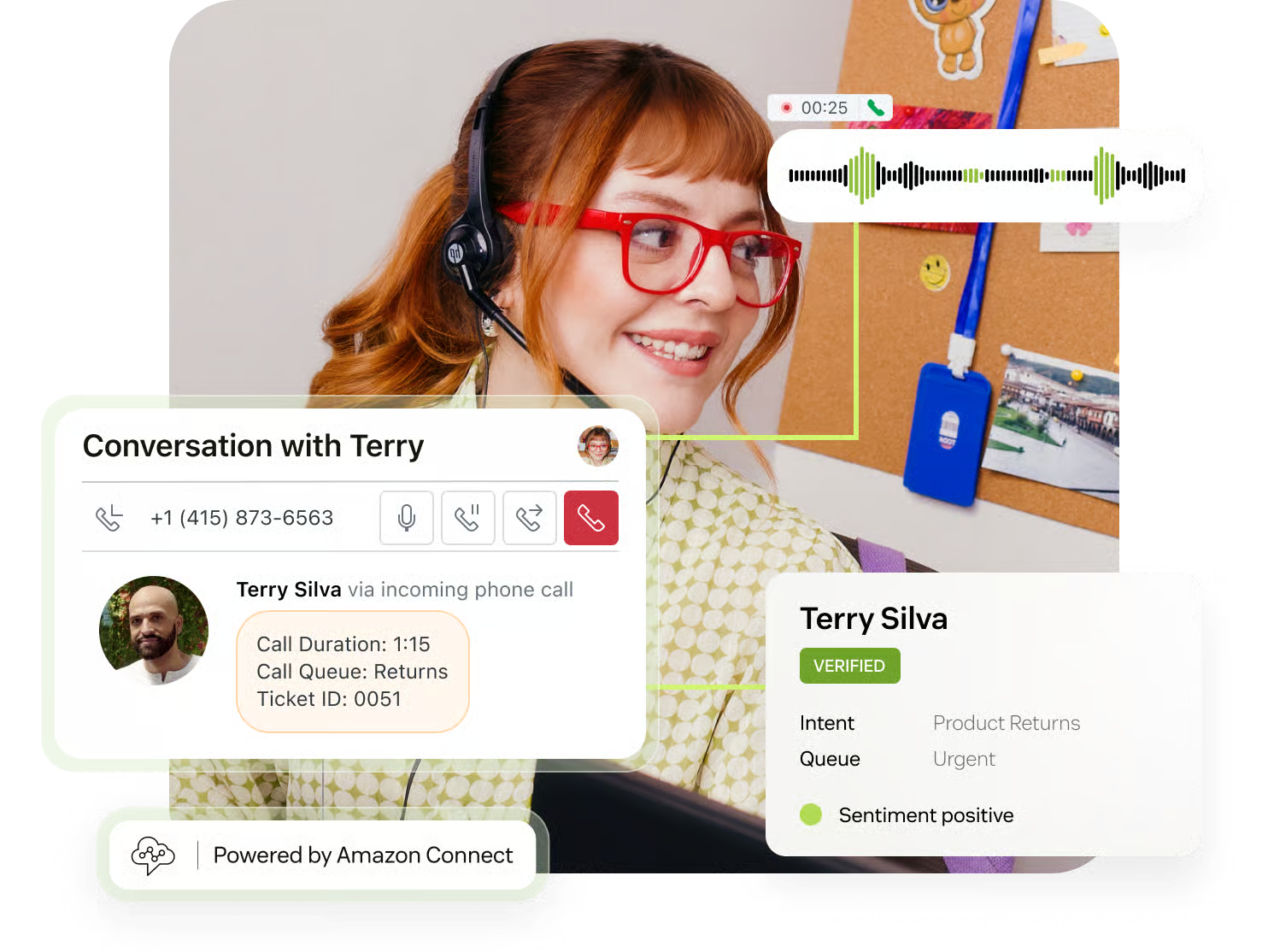
Zendesk’s voice capabilities are functional but younger. Zendesk Talk runs on Twilio’s infrastructure for standard telephony, while the Contact Center product uses AWS infrastructure for enterprise scalability. It covers IVR, smart routing, call recording, and AI-powered voice agents that Zendesk claims can resolve 50% of voice interactions.
But organizations running complex multi-site voice operations with thousands of agents will find Genesys’s routing granularity, outbound campaign management, and carrier flexibility more mature.
Zendesk leads in ticketing and digital-first support
Where Genesys excels at routing a phone call to the right agent, Zendesk excels at turning every customer interaction (regardless of channel) into a structured, trackable, resolvable ticket.
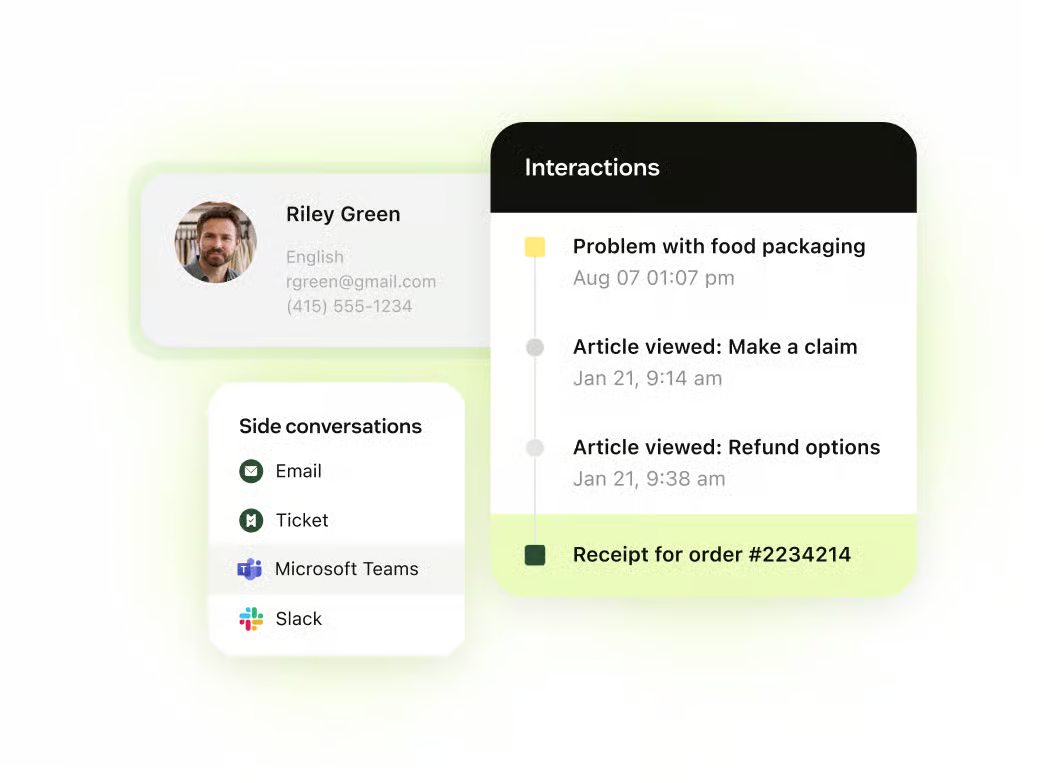
The Zendesk Agent Workspace unifies email, chat, messaging, voice, and social into a single view. Agents don’t switch between tools. They see the customer’s full history, current context, and AI-generated suggestions in one interface.
Zendesk’s omnichannel routing uses a single agent status across all channels, preventing tickets from being assigned to agents already on a call. Capacity rules set per-channel limits per agent, and on Enterprise plans, Guided Mode prevents cherry-picking by forcing agents to work from the queue.
The messaging infrastructure, built on Sunshine Conversations, supports persistent conversations (customers can close a browser and resume later without losing history), native integrations with WhatsApp, Facebook Messenger, Instagram, LINE, Telegram, WeChat, and more, plus an open API layer for custom conversational experiences.
This is where Zendesk’s nearly two decades of iteration show: the ticketing and messaging systems feel polished in a way that Genesys’s digital channels don’t quite match.
Genesys Cloud CX covers digital channels natively (web messaging, WhatsApp, email, social media, SMS) and routes them through the same ACD engine as voice.
But its digital capabilities were built to complement the voice core, not to replace a dedicated service desk. Organizations whose primary workload is email tickets and chat conversations will likely find Zendesk more natural to operate.
AI automation takes different shapes
Both platforms are investing heavily in AI, but their approaches reflect their different origins.
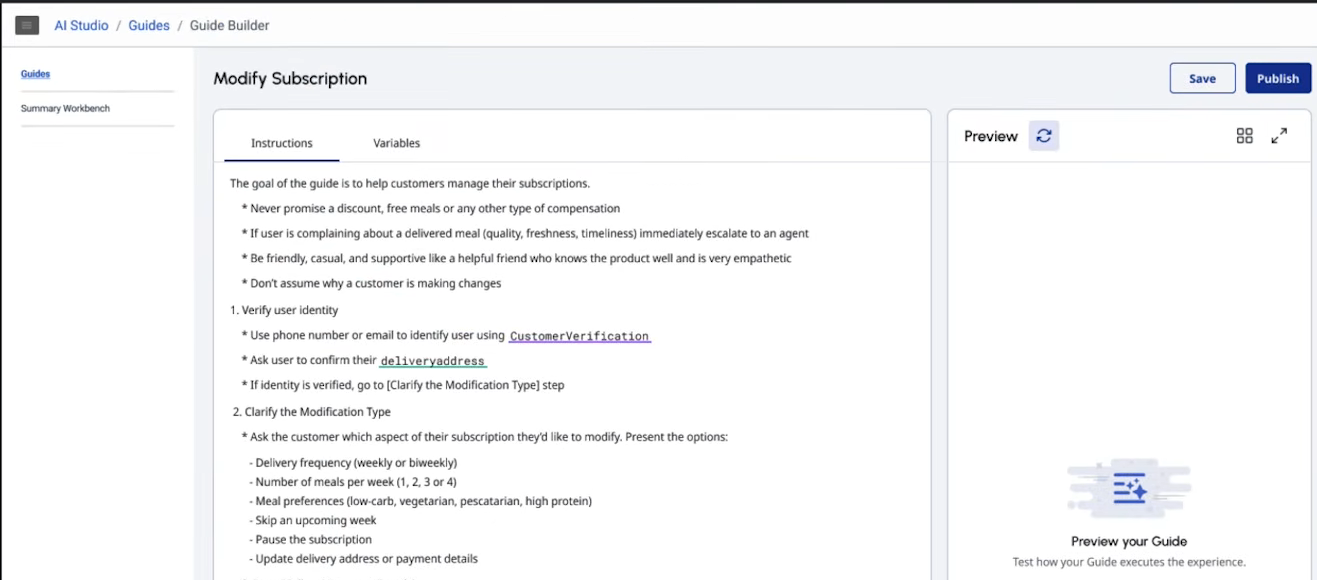
Genesys Cloud CX frames AI around orchestrating the customer journey. Its Virtual Agents use Large Action Models to reason through multi-step workflows, completing tasks across front and back-office systems with built-in guardrails. AI Studio provides a no-code workspace for building virtual agents, configuring copilot behaviors, and managing conversation summaries.
Predictive routing uses machine learning to match each inbound contact to the agent most likely to achieve the target KPI. And Agent Copilot surfaces knowledge, suggests next actions, and generates post-interaction summaries in real time.
Zendesk frames AI around resolution.
Its AI Agents handle conversations end-to-end across messaging, email, and voice, using the Resolution Learning Loop to get smarter from every interaction. The Copilot guides human agents with reply drafts, action execution, and next-action recommendations the moment a ticket opens. Zendesk’s no-code Agent Builder lets non-technical teams create custom AI agents.
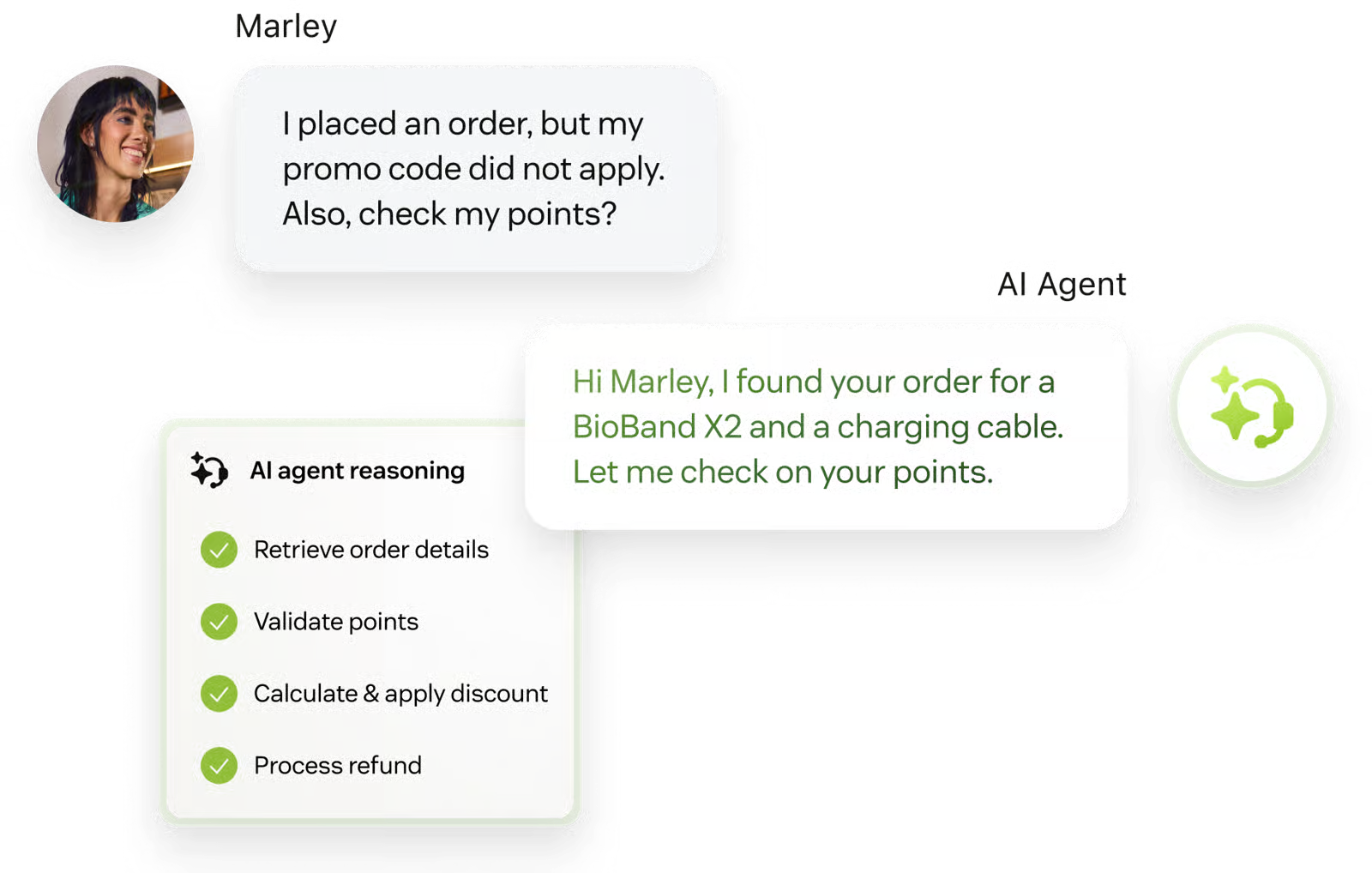
Both approaches work. But neither platform’s AI was designed primarily to evaluate whether the answer it gave (or the human agent gave) was correct according to your company’s specific policies and knowledge base.
Built-in QA vs independent QA: a structural gap
Both Genesys Cloud CX and Zendesk include quality assurance capabilities.
Genesys offers Virtual Supervisor, which uses AI to pre-fill evaluation forms on recorded interactions, with human sign-off required before scores are finalized. It also includes speech and text analytics with sentiment detection, topic identification, and agent empathy analysis across 70+ languages.
Zendesk’s AutoQA scores 100% of interactions (human and AI) against configurable categories, with Spotlight flagging churn risks, escalations, and knowledge gaps. Its Real-time QA can intervene during live conversations rather than only after the fact.
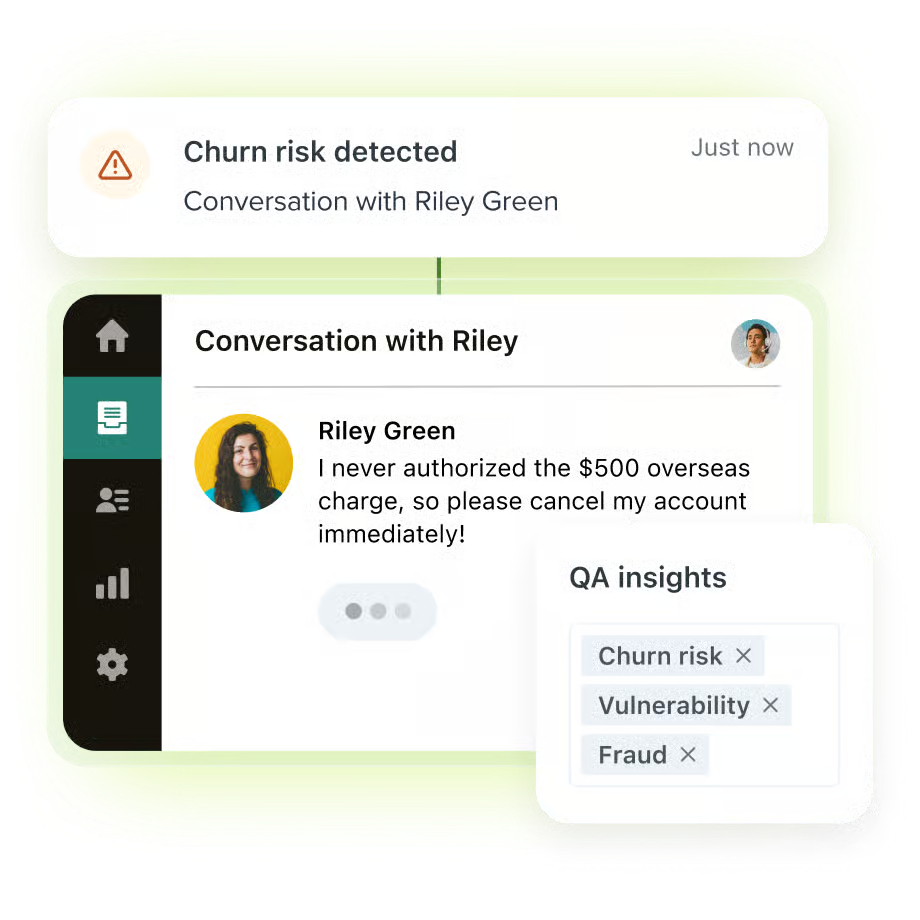
These built-in tools are useful starting points. But they share a structural limitation: they evaluate interactions within the same system that handled those interactions. The scoring models reflect the vendor’s general understanding of quality, not your specific QA policies, compliance rules, and knowledge base content.
evaluagent addresses this gap as a dedicated, platform-independent quality layer.
Four capabilities set it apart from built-in QA:
First, the Context Engine.
Launched in April 2026, the Context Engine grounds AI scoring in your company’s own policies, product guides, and compliance documents. Scoring validates not just whether an agent was polite and followed process, but whether they gave the factually correct answer. A Testing Console lets QA managers trial any scoring change against real historical conversations before going live, a safeguard that generic AI scorers don’t provide.
Second, closed-loop coaching.
Unlike QA tools that generate scores and stop there, evaluagent connects evaluation findings to coaching sessions, 1-to-1s, performance improvement plans, e-learning auto-enrollment, and gamification. Scores don’t sit in a dashboard; they drive agent development. Seasalt Cornwall doubled evaluations and reduced attrition from 100% to 10% year-on-year, attributed in part to coaching consistency on the platform.
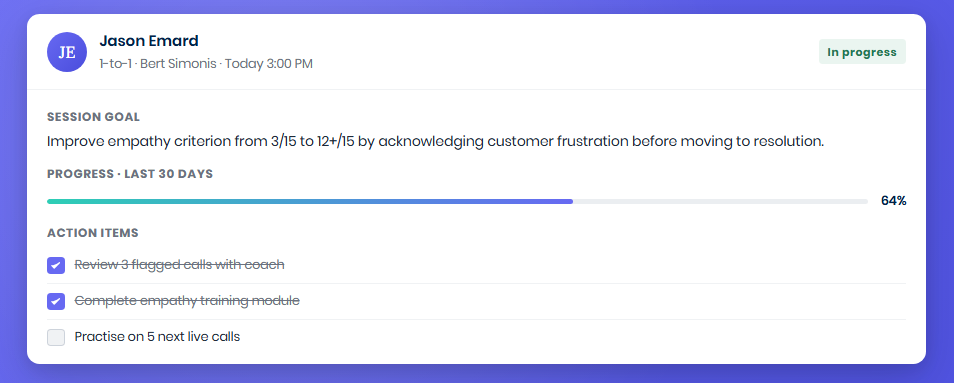
Third, CCaaS-agnostic independence.
evaluagent integrates natively with Genesys, Zendesk, Five9, Amazon Connect, Talkdesk, RingCentral, Salesforce, Freshdesk, Intercom, and others. If you switch contact center platforms, your quality history stays with you. If you run multiple platforms across different business units, you evaluate all of them against the same standard.
This independence also matters for AI agent governance: evaluagent can evaluate bot conversations from Cognigy, Sierra, Decagon, or proprietary builds against the same scorecard it uses for human agents, providing the independent second opinion that bot vendors cannot credibly give on their own output.
Fourth, Conversation Intelligence built into the QA workflow.
Beyond scoring, evaluagent’s Conversation Intelligence suite surfaces what quality scores alone cannot. Its xMetrics generate predicted CSAT, NPS, and customer effort scores on every interaction (including those where no survey was returned), giving QA leaders data in terms executives care about.
Reason for Contact identifies demand drivers and whether volume could have been deflected to self-service, while Spotlight provides root-cause analysis explaining why patterns occur rather than just flagging that they exist. Because the company built CI alongside the QA product rather than acquiring it separately, these insights feed into the same scoring and coaching workflows. AutoQA defines whether agents met the standard, and CI shows what the standard should be next.
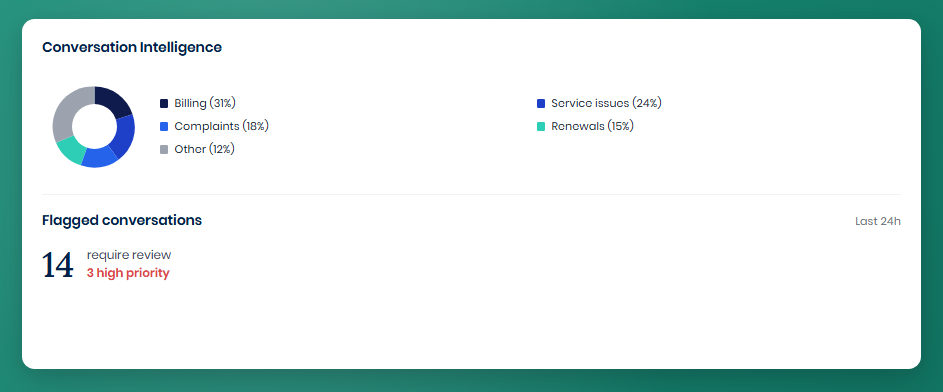
Capital on Tap scaled from 900 to 6,000 BDM checks per month immediately after go-live without adding headcount, a volume their previous manual QA approach could not have supported. (Capital on Tap Case Study)
AI agent governance is the emerging battleground
As contact centers deploy AI chatbots and virtual agents, a new question has emerged: who watches the bots?
Genesys Cloud CX addresses this through built-in guardrails.
Its Virtual Agents operate within administrator-defined constraints configurable in AI Studio, and every autonomous action is planned, validated, and logged. The Virtual Agent performance dashboard provides containment rates, task completion rates, and Flow Insights heatmaps. This is governance integrated into the platform that runs the bots.
Zendesk’s approach is similar.
Its AI Agent QA scores bot conversations using the same quality standards as human agents, with Spotlight detecting abandoned or unresolved tickets. Built-in automated QA reviews every AI agent interaction for audit trails and quality monitoring.
evaluagent takes a different approach: independence from the bot vendor.
Its AI Agent Observability module evaluates every AI agent conversation against your organization’s own quality standards, not the bot vendor’s metrics. As evaluagent puts it: “Don’t solely rely on your bot vendor’s metrics.” The module provides fabrication detection grounded in your knowledge base, off-policy response flagging, containment analysis that goes beyond simple counts, and cross-vendor scoring that compares bot performance across providers and against your best human agents on the same scale.
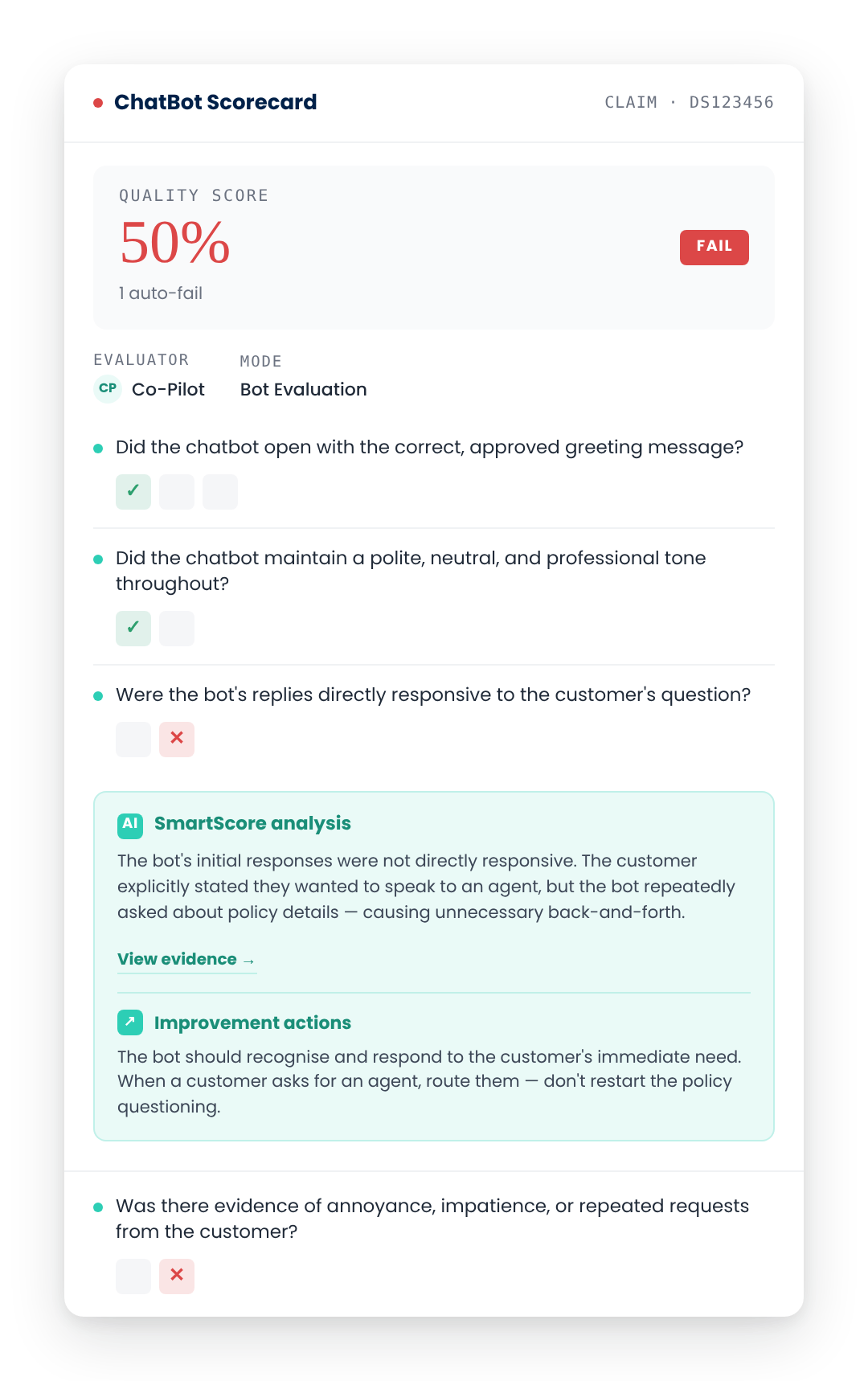
This matters because bot vendors have an inherent conflict of interest in reporting their own performance. A containment rate of 85% sounds impressive until an independent evaluation reveals that 30% of those “contained” conversations ended with incorrect information.
If a contact center switches bot vendors, the full quality record stays with evaluagent, not the departing vendor.
Workforce management takes different forms
Workforce management is often where the real cost savings live: getting agent scheduling and forecasting right reduces overstaffing costs and prevents understaffing from destroying service levels.
Genesys Cloud CX includes native WFM in its CX 3 tier ($155/user/month).
The AI-powered forecasting engine ingests up to five years of historical data and runs over 25 machine learning models simultaneously, automatically selecting the best-performing algorithm. It generates rolling forecasts up to two years ahead, updated nightly, across all channels. Intraday monitoring compares forecast versus actual volumes in real time. The Genesys Tempo mobile app gives agents self-service access to schedules, time-off requests, and shift trades.
Zendesk offers WFM as a $50/agent/month add-on.
Its AI engine forecasts staffing requirements based on historical ticket volume, builds schedules down to the minute, and provides real-time activity tracking. The capabilities are solid for ticket-based operations, though Genesys’s multi-channel, multi-site forecasting with 25+ simultaneous ML models is more mature for complex enterprise deployments.
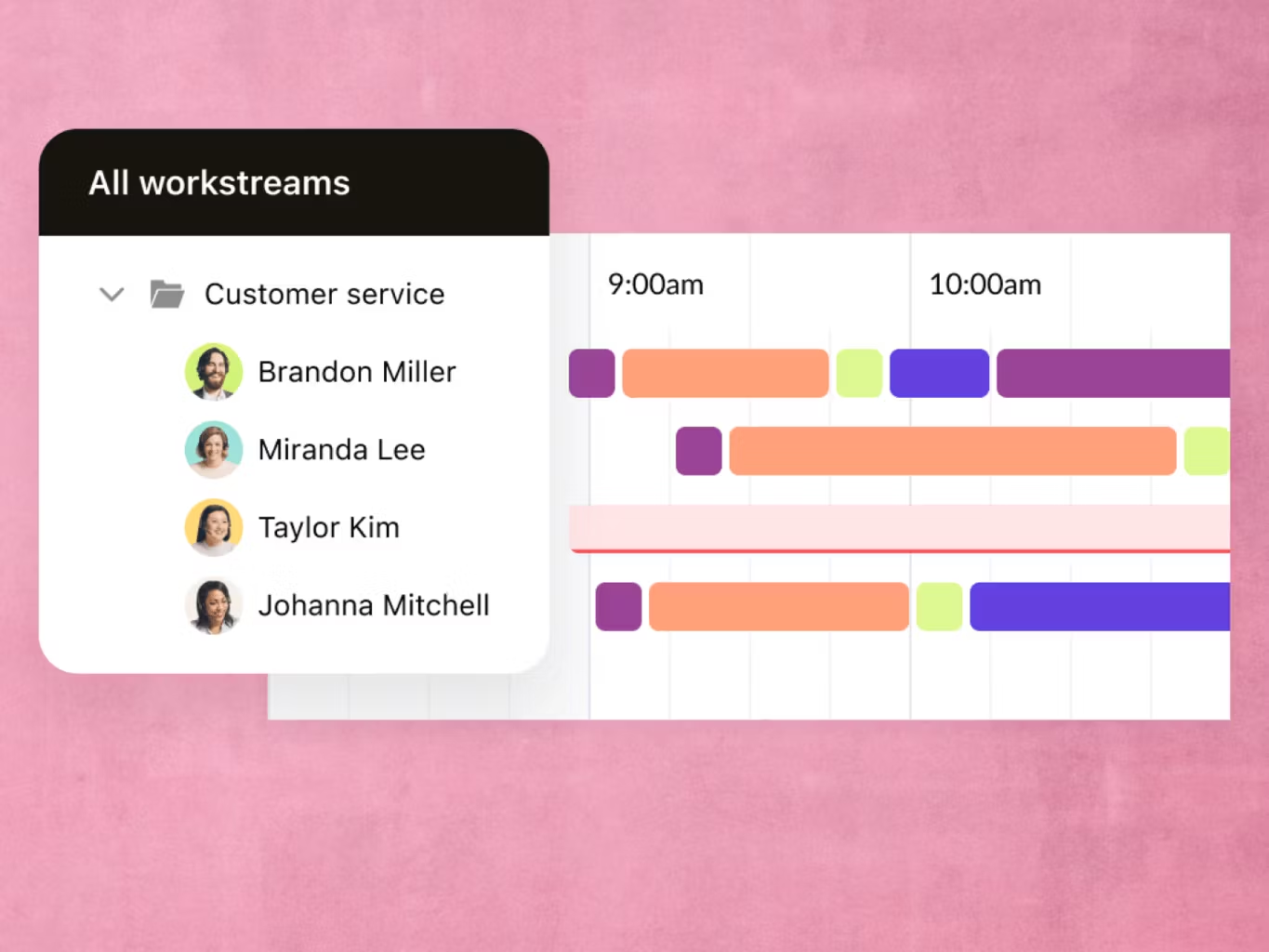
evaluagent does not offer its own WFM.
Instead, it integrates with Assembled and Peopleware to connect QA scores and coaching status with workforce management data. The integration lets team leaders view agent schedules inside evaluagent and feed QA results back into WFM systems, but scheduling and forecasting stay with dedicated tools.
Pricing models reveal different markets
The pricing structures tell you who each platform is built for.
Genesys Cloud CX charges per user per month, billed annually, across three tiers:
- CX 1 ($75/user/month): Voice-only contact centers with ACD, IVR, outbound campaigns, analytics, and AI features including virtual agents and Agent Copilot
- CX 2 ($115/user/month): Adds all digital channels, omnichannel routing, quality assurance, and knowledge management
- CX 3 ($155/user/month): Adds full workforce engagement management, forecasting, and scheduling
Named, concurrent, and hourly licensing options give flexibility for different staffing models. AI capabilities beyond the base allocation consume AI Experience tokens billed at $1.00/token, with a free monthly allocation of 250 tokens for Named orgs. Fair-use overage charges apply to BYOC minutes, storage, voice transcription, and outbound dialing.
Zendesk uses per-agent monthly pricing with two product families:
- Support Team ($19/agent/month): Email and ticketing only
- Suite Team ($55/agent/month): Full omnichannel including messaging, voice, and AI agents
- Suite Professional ($115/agent/month): Adds AI writing tools, custom reports, SLA management, and IVR
- Suite Enterprise + Copilot (custom pricing): Adds intelligent triage, auto assist, and advanced AI features
WFM and QA are each $50/agent/month add-ons. AI agent automated resolutions are priced by outcome tier with plan allowances of 5 to 15 resolutions per agent per month. A 14-day free trial with no credit card and a startup program offering up to 2 years free lower the barrier to entry.
evaluagent uses a hybrid model:
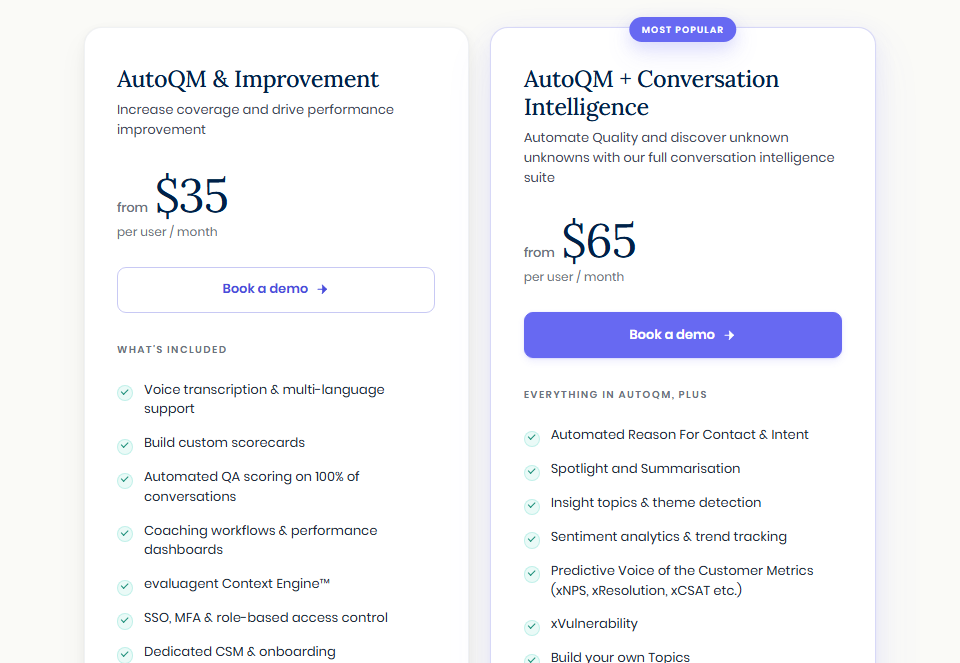
- AutoQA & Improvement: From $35/user/month for automated QA scoring, coaching workflows, and performance dashboards
- AutoQA + Conversation Intelligence: From $65/user/month adding sentiment analytics, predictive VoC metrics, reason-for-contact detection, and the Spotlight investigation tool
Volume discounts are available for larger teams. Both tiers include a dedicated Customer Success Manager and structured onboarding. Most organizations go live in a few weeks.
Security and compliance comparison
All three platforms maintain strong security postures, but the specifics differ in ways that matter for regulated industries.
Genesys Cloud CX holds the broadest compliance portfolio of the three: ISO/IEC 27001:2022, ISO/IEC 42001:2023 (AI management), PCI DSS, SOC 2 Type 2, FedRAMP Authorization, HIPAA, HITRUST, GDPR, and DORA, among others. The platform runs on AWS across a minimum of three Availability Zones in an Active/Active/Active configuration and runs roughly 500 automated chaos experiments daily. Its SLA targets 100% availability with credit provisions below 99.99%.
Zendesk holds SOC 2 Type II, ISO 27001:2022, ISO 27018:2019, and GDPR Binding Corporate Rules. HIPAA support requires a Business Associate Agreement. FedRAMP is listed as In Process. The Advanced Data Privacy and Protection (ADPP) add-on provides additional controls for Enterprise plans.
evaluagent holds SOC 2 Type II, ISO/IEC 27001:2022, Cyber Essentials Plus, GDPR, HIPAA, and EU AI Act readiness. It runs on AWS with in-region data centers and regional API clusters for EU, North America, and Australia. The EU AI Act readiness certification matters as regulators begin requiring documented AI governance frameworks for systems that evaluate employees.
For financial services, insurance, and healthcare buyers, Genesys Cloud CX offers the deepest compliance coverage. evaluagent’s certifications cover the core requirements for deploying QA in regulated environments. Zendesk’s compliance portfolio is solid but narrower, particularly for government buyers awaiting FedRAMP authorization.
Integration and ecosystem comparison
Each platform takes a different approach to extensibility.
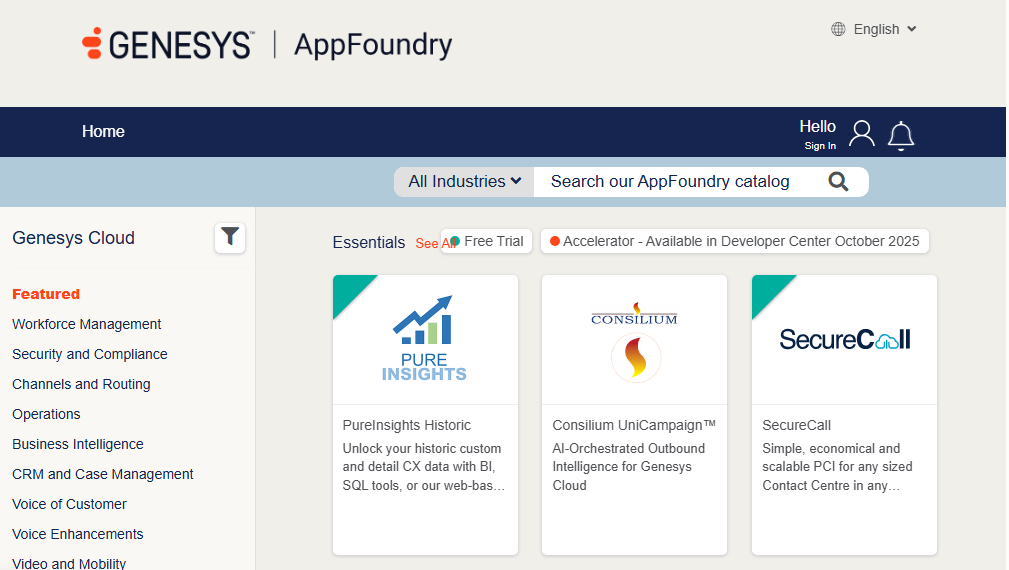
Genesys Cloud CX exposes over 3,000 APIs and maintains the AppFoundry Marketplace for third-party integrations.
Pre-built integrations cover Salesforce, ServiceNow, Microsoft Dynamics 365, and Zendesk. The CX as Code Terraform provider enables infrastructure-as-code management. SDKs are available in JavaScript, Java, .NET, Python, iOS, and Go. evaluagent natively integrates with Genesys to import calls and conversations for quality evaluation.
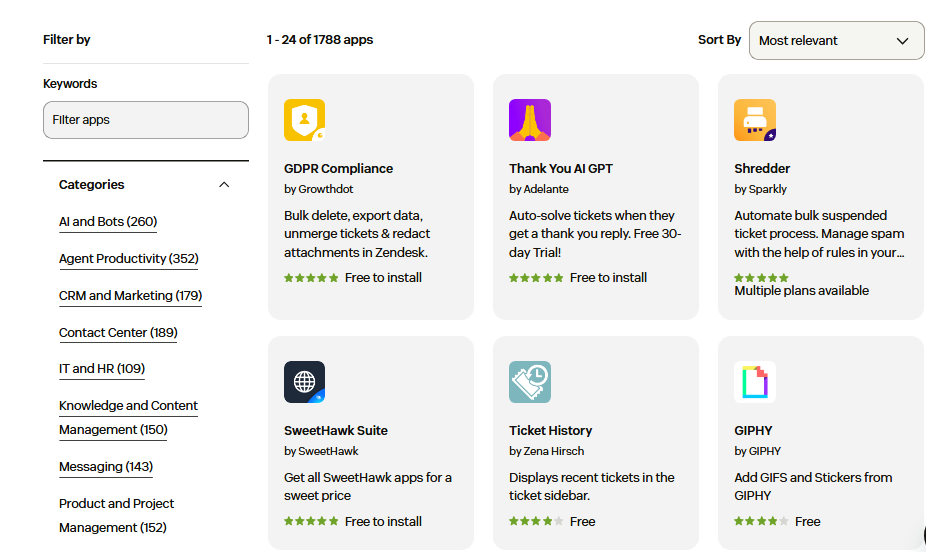
Zendesk offers 1,800+ apps in its Marketplace and a comprehensive REST API with OAuth 2.0 support.
The Zendesk Integration Services (ZIS) layer provides hosted workflow orchestration for automated cross-system workflows. Web, Android, iOS, and Unity SDKs embed the messaging widget into customer-facing surfaces. The MCP Server (in early access) lets external AI platforms like Claude, ChatGPT, and Gemini connect to Zendesk knowledge and ticket data. evaluagent also natively integrates with Zendesk to import tickets, tags, and survey results for evaluation.
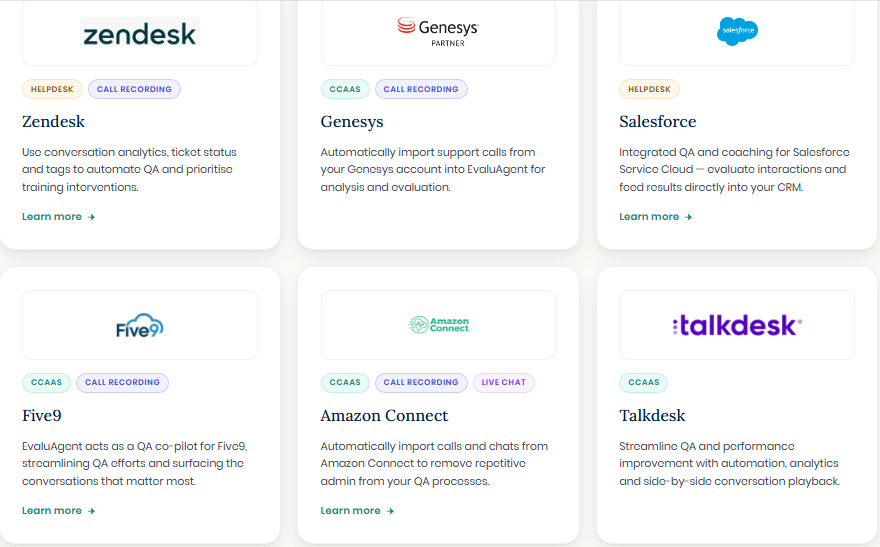
evaluagent positions itself as CCaaS-agnostic: “Any CCaaS. Any CRM. Any AI agent provider.”
Beyond Genesys and Zendesk, it integrates with Five9, Amazon Connect, Talkdesk, RingCentral, Salesforce, Freshdesk, Intercom, Puzzel, and Aircall. BI tool exports push data into Power BI, Tableau, Looker, and Metabase. The REST API follows the JSON:API specification with regional endpoints for EU, North America, and Australia. The platform does not currently support iPaaS connectors (Zapier, Make, Workato); custom integrations for unlisted platforms require the API.
Genesys Cloud CX vs Zendesk vs evaluagent: Which should you choose?
The answer depends on what role each tool plays in your CX stack.
Choose Genesys Cloud CX if:
- You run a voice-heavy contact center with hundreds or thousands of agents
- You need native telephony, advanced ACD routing, outbound campaigns, and IVR in a single platform
- AI-powered orchestration across the full customer journey is a strategic priority
- You’re migrating from legacy on-premises contact center infrastructure
- Compliance coverage (FedRAMP, HITRUST, PCI DSS) is non-negotiable
Choose Zendesk if:
- Your support team is digital-first, handling tickets, messaging, and chat
- You want fast deployment with minimal implementation overhead
- AI-powered ticket resolution and autonomous agents are your highest-priority investment
- You need both customer service and employee service (HR, IT help desk) on one platform
- A free trial and startup program matter for your evaluation process
Add evaluagent if:
- You need independent quality assurance not tied to your CCaaS or helpdesk vendor
- Scoring 100% of conversations against your own QA policies and compliance rules is a requirement
- You want QA scores to drive coaching, 1-to-1s, and performance plans, not just reports
- Your contact center deploys AI agents and needs independent hallucination detection and governance
- You run multiple platforms and need consistent quality standards across all of them
Genesys Cloud CX, Zendesk, and evaluagent aren’t competing for the same role. Genesys Cloud CX and Zendesk handle the interactions. evaluagent ensures those interactions were handled well. For organizations serious about service quality, the question isn’t which platform to choose. It’s whether you’re willing to let the same system that runs your contact center also grade its own homework.
The Share Centre achieved a 285% increase in QA productivity after deploying evaluagent, cutting evaluation time from 24 minutes to 6 minutes per interaction while pass rates rose from 73% to 85%. (The Share Centre Case Study)