Choosing between Five9 and Talkdesk for your contact center comes down to five questions:
- Do you need a platform built for complex outbound and blended operations, or one designed around AI-first vertical specialization?
- Is Salesforce integration a requirement, or do you need pre-built connectors for industry systems like Epic and Shopify?
- Are you migrating a large legacy environment where voice infrastructure matters most, or starting with a cloud deployment where ease of use takes priority?
- How important is independent quality assurance across every conversation, not just the fraction your current tools can sample?
- Do you plan to deploy AI agents alongside human agents, and if so, who audits what those AI agents say?
Here’s what we recommend:
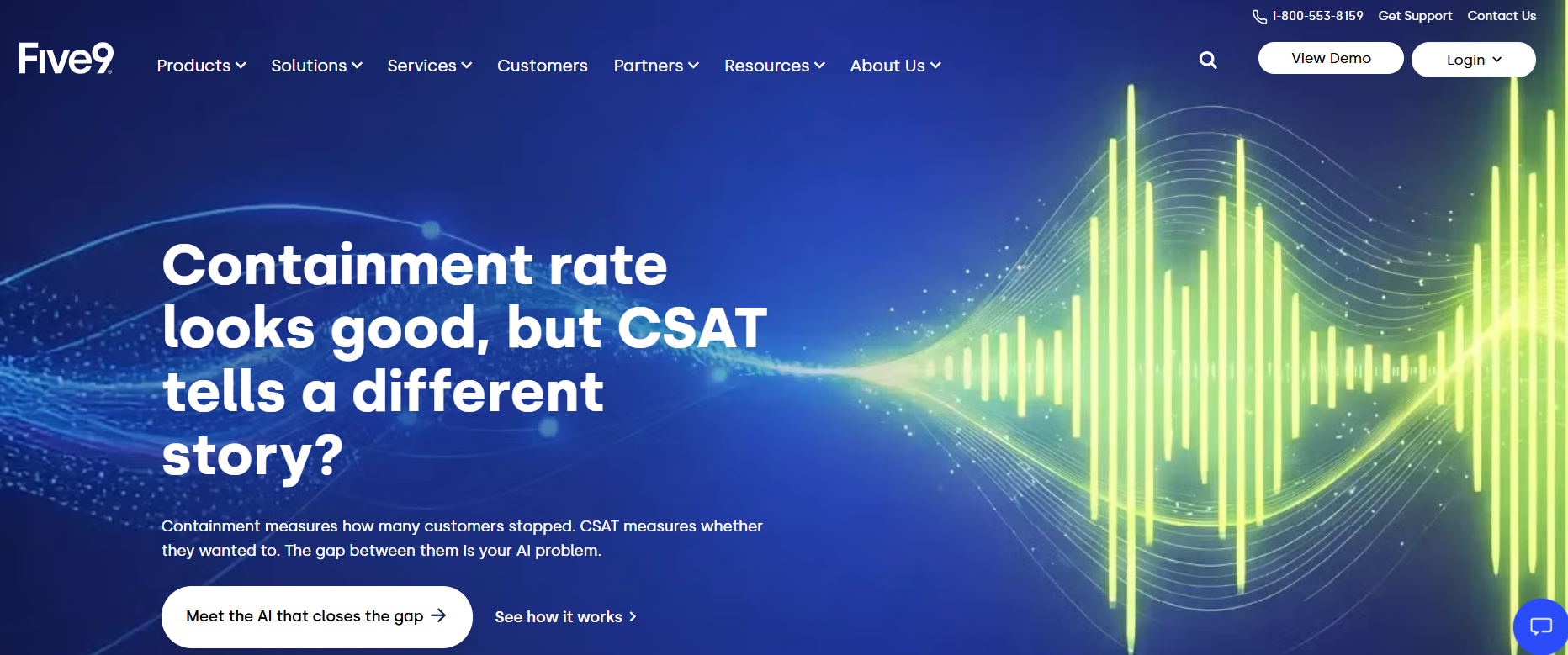
Five9 runs large, complex contact center operations. With eight consecutive Gartner Magic Quadrant Leader recognitions, voice infrastructure built to carrier-grade standards, and outbound dialing capabilities that G2 reviewers cite as standout features, Five9 handles everything from predictive dialing campaigns to omnichannel routing across voice, chat, email, and social.
But its “thousands of settings” create a steep configuration curve, call stability complaints appear often in review aggregators, and the add-on pricing structure can push total costs well above the base starting price of $119/seat/month.
Talkdesk targets enterprises that want industry-specific solutions ready to deploy. Its Industry Experience Clouds for healthcare, financial services, retail, and other verticals ship with specialized integrations and AI agents trained on vertical use cases.
G2 reviewers rate Talkdesk 4.4 out of 5 across 2,496 reviews, with ease of use praised consistently. The CXA (Customer Experience Automation) platform moves Talkdesk beyond traditional CCaaS into autonomous AI-agent territory.
That said, AI modules are priced separately without published per-unit costs, and reviewers note intermittent stability issues during peak traffic.
Both platforms include built-in quality management tools. Five9 launched Agentic Quality Management in early 2026, and Talkdesk offers QM Assist with AI-powered scoring. But neither platform’s native QA solves the harder problem: independent quality governance that works across your entire stack, scores every interaction against your own standards, and connects scores to coaching and measurable agent improvement.
evaluagent is the independent quality assurance and performance improvement layer that sits on top of whichever CCaaS you choose. It integrates natively with both Five9 and Talkdesk (along with Genesys, Amazon Connect, RingCentral, and others), scores 100% of conversations automatically, and connects those scores to coaching, performance plans, and gamification.
The Context Engine grounds AI scores in your company’s own policies and knowledge base. AI Agent Observability evaluates bot conversations against the same standard as human agents. Together, these fill the accountability gap that neither Five9 nor Talkdesk was designed to address alone.
If independent quality governance across your contact center sounds like the missing piece, see how evaluagent works with your platform.
Five9 vs Talkdesk vs evaluagent at a glance
| Five9 | Talkdesk | evaluagent | |
|---|---|---|---|
| Primary function | Full CCaaS platform (voice, digital, AI, WEM) | CCaaS + Customer Experience Automation (CXA) | QA, conversation intelligence, and performance improvement |
| AI self-service | Voice AI Agents, IVA, AI Agent Assist | Autopilot, Copilot, Navigator | Not applicable (evaluates AI agents, does not provide them) |
| Quality management | Agentic QM (module within WEM) | QM Assist (module within WEM) | AutoQA scoring 100% of interactions, closed-loop coaching |
| AI agent governance | AI Trust & Governance for Five9 AI | CXA Operations Center for Talkdesk AI | Independent observability across any AI agent vendor |
| Industry verticals | Healthcare, financial services, retail, government | Healthcare, financial services, retail, government, insurance | CCaaS-agnostic across all verticals |
| Integrations | Native CRM adapters (Salesforce, ServiceNow, Dynamics, Zendesk, Oracle) | 60+ integrations via AppConnect | Native with Five9, Talkdesk, Genesys, Amazon Connect, and more |
| Analyst recognition | Gartner Leader, 8 consecutive years | Gartner Leader, 5 times (returned 2025) | G2 Leader, Contact Center Quality Assurance (Summer 2026) |
| Starting price | $119/seat/month | $85/user/month | $35/user/month |
| Best for | Large-scale blended inbound/outbound operations | Vertical-specific, AI-first contact centers | Independent quality governance across any CCaaS |
Five9 and Talkdesk solve the same problem differently
Five9 and Talkdesk are both cloud contact center platforms, but they come from different traditions and serve different priorities.
Five9 was founded in 2001 with a name referencing “five nines” (99.999%) uptime. That telecom heritage shows in the platform’s architecture.
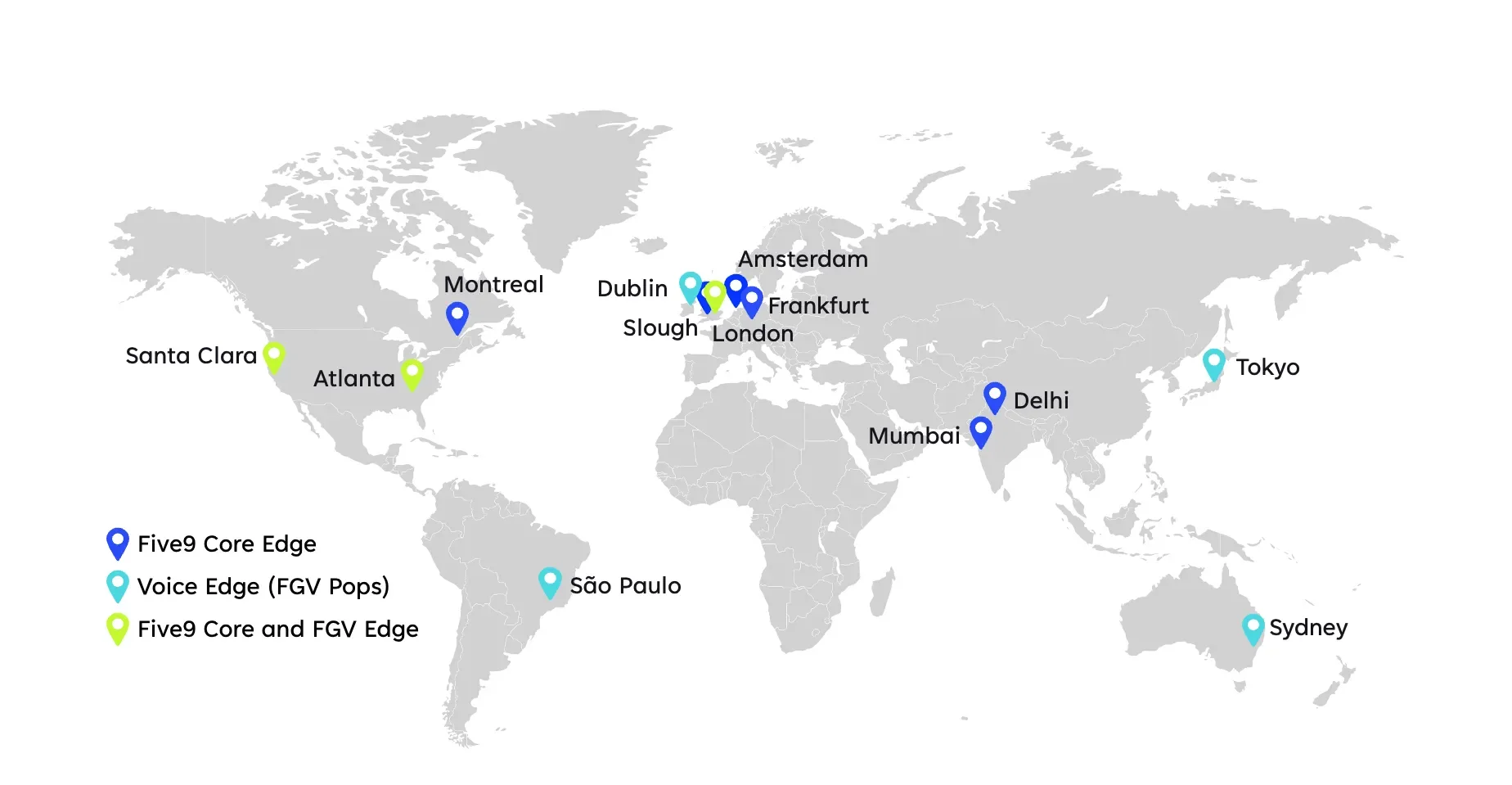
The Agentic Voice Switch is built into Five9’s telephony stack, not layered on top. Global Voice routes calls through regional points of presence to cut latency.
The outbound engine offers predictive, progressive, preview, and power dialing modes, and Active Blending shifts agents between inbound queues and outbound lists automatically. For organizations running blended operations at scale, this infrastructure depth matters.
Talkdesk was founded in 2011 from a hackathon project, and that startup origin still shapes the platform. Where Five9 leads with infrastructure, Talkdesk leads with speed and vertical specialization.

The Industry Experience Clouds for healthcare, financial services, retail, and other sectors ship with pre-built integrations (Epic, Oracle Cerner, Shopify), industry-specific AI agents, and compliance configurations already in place.
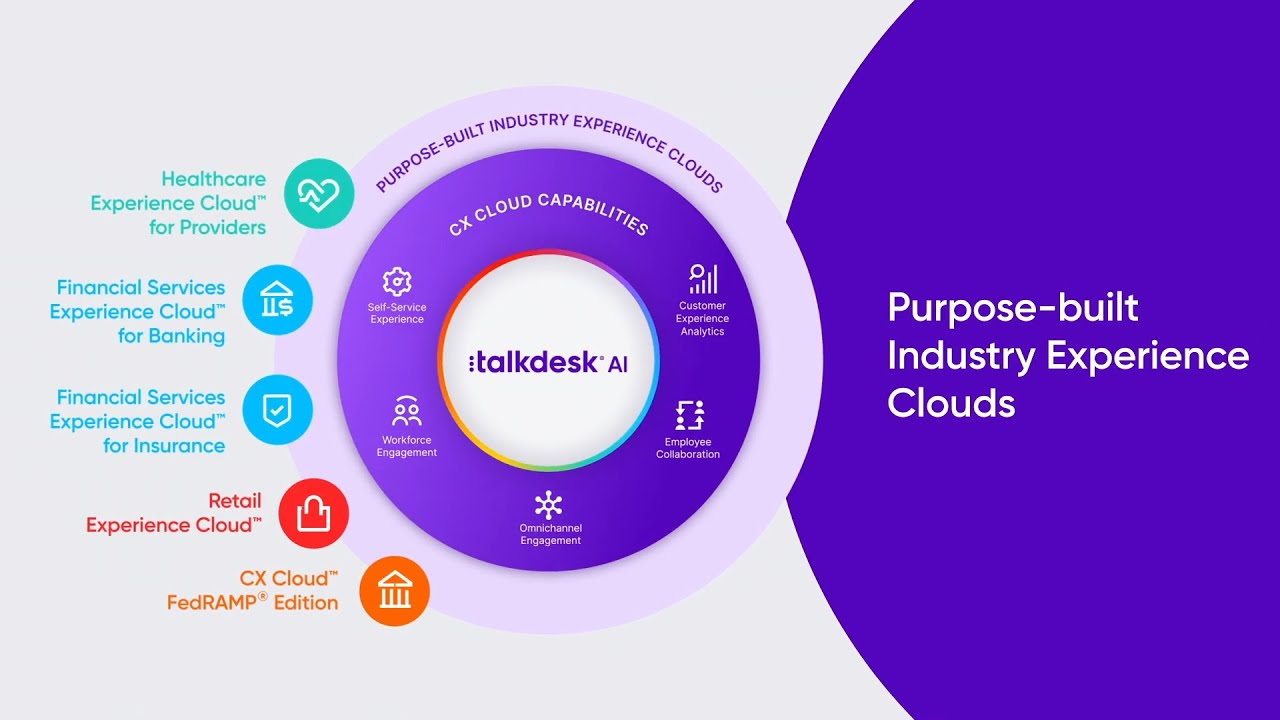
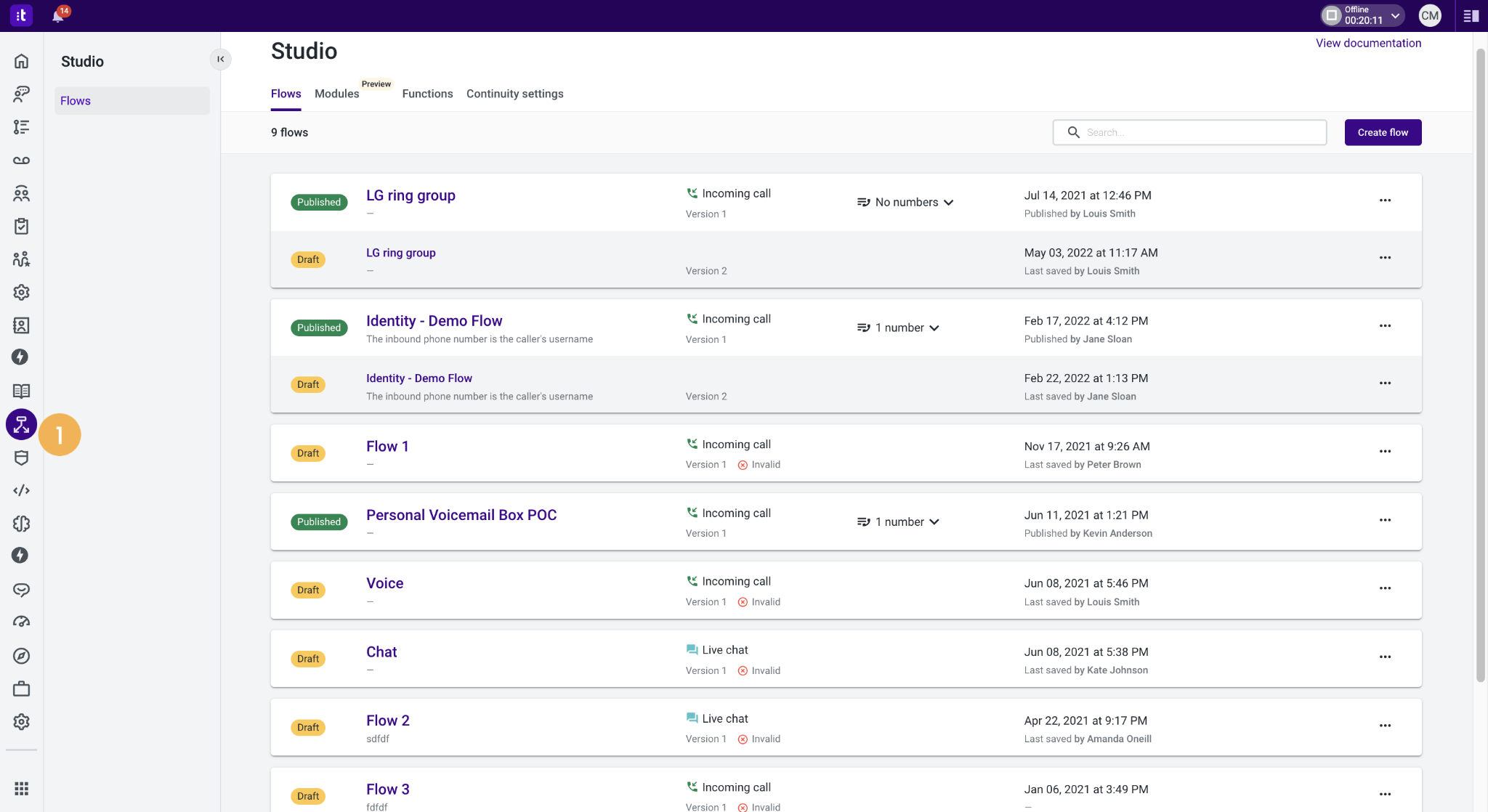
The CXA platform reframes the contact center around autonomous AI agents that resolve issues end-to-end, not just deflect them. Talkdesk Studio lets non-technical administrators design routing flows with drag-and-drop, a contrast to the administrative complexity Five9 reviewers flag.
The tradeoff is clear. Five9 gives you more control over infrastructure and campaign execution. Talkdesk gives you faster deployment and vertical packaging. Both are legitimate paths, depending on whether your operation values configurable depth or pre-built specialization.
Built-in QA tools can only go so far
Both Five9 and Talkdesk have invested in quality management, but in both cases QA is one module inside a platform that does dozens of other things.
Five9’s Agentic Quality Management, launched in early 2026, analyzes up to 100% of recorded interactions and feeds competency data back into routing decisions. That’s a real step forward from manual sampling.
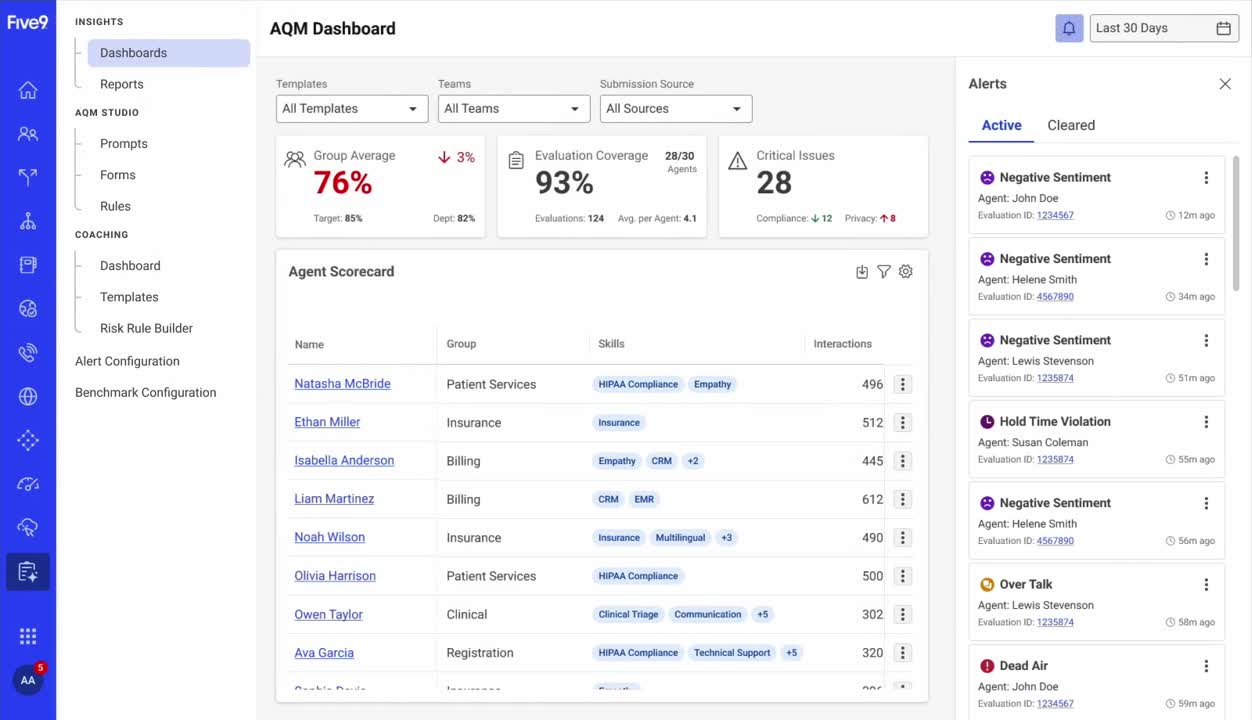
But AQM is part of Five9’s broader WEM suite, competing for development resources alongside workforce management, gamification, and performance dashboards. It optimizes Five9’s own ecosystem, not quality across multiple platforms.
Talkdesk Quality Management combines AI-powered automated scoring with manual evaluations, and Interaction Analytics transcribes and analyzes 100% of interactions using generative AI for topic and sentiment detection. These are capable tools within the Talkdesk ecosystem. And like Five9’s, they are tied to that one platform.
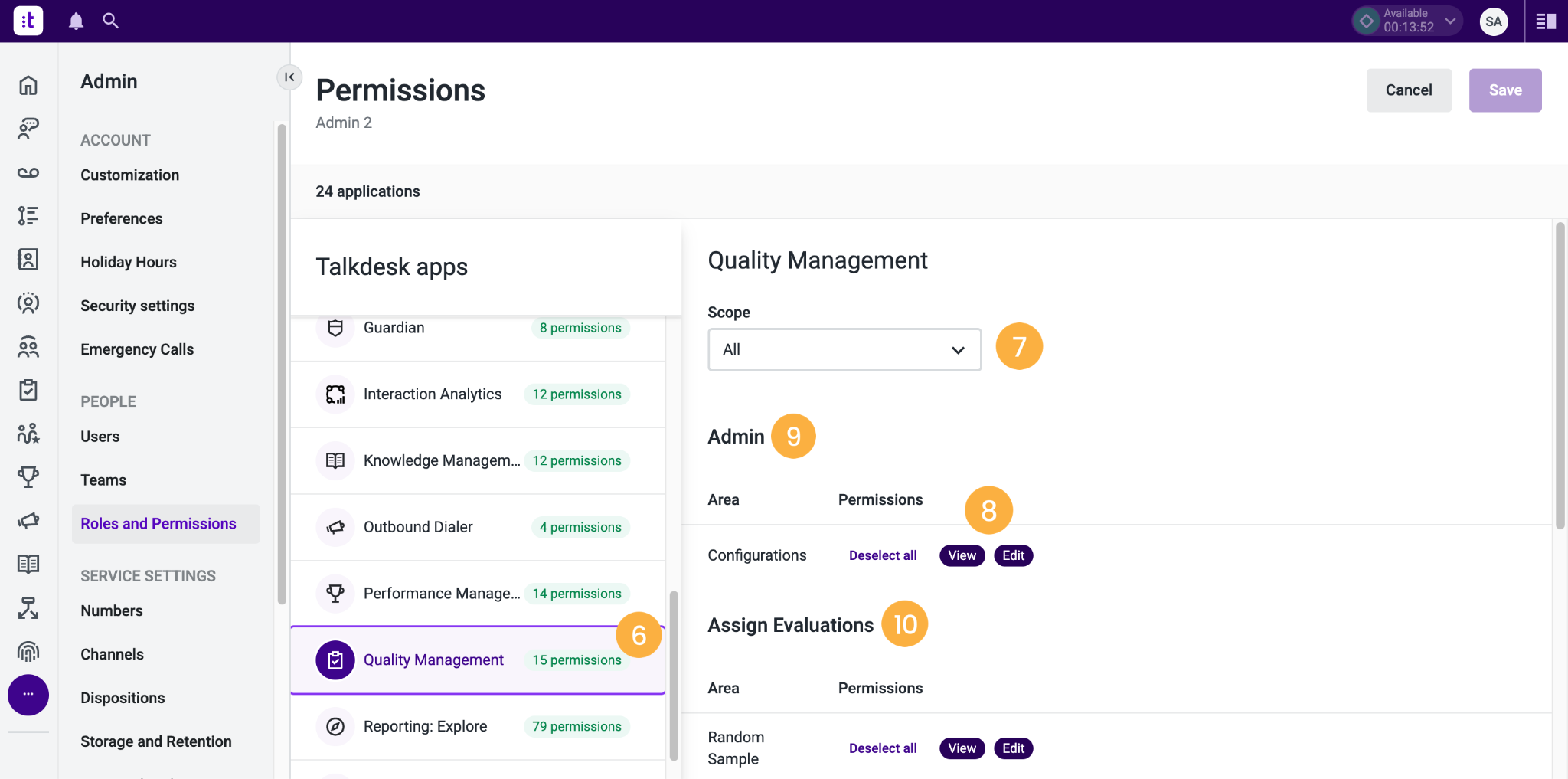
This creates a problem for contact centers that use multiple platforms (a CCaaS for voice, a helpdesk for tickets, an AI chatbot from a third-party vendor).
Quality scores sit in silos. Coaching happens in separate systems. And when AI agents handle conversations, the bot vendor’s own metrics are the only measure of performance, which is like asking a student to grade their own exam.
evaluagent provides the independent quality layer
evaluagent was founded in 2012 by three operators who had spent their careers running contact centers. Their premise was practical: build the QA tool they wished had existed when they were managing quality programs.
G2’s verified-customer reviews place evaluagent among the Top 50 UK Software Companies 2026 (the only contact center software on the list) and as a Leader in Contact Center Quality Assurance in the Summer 2026 report.
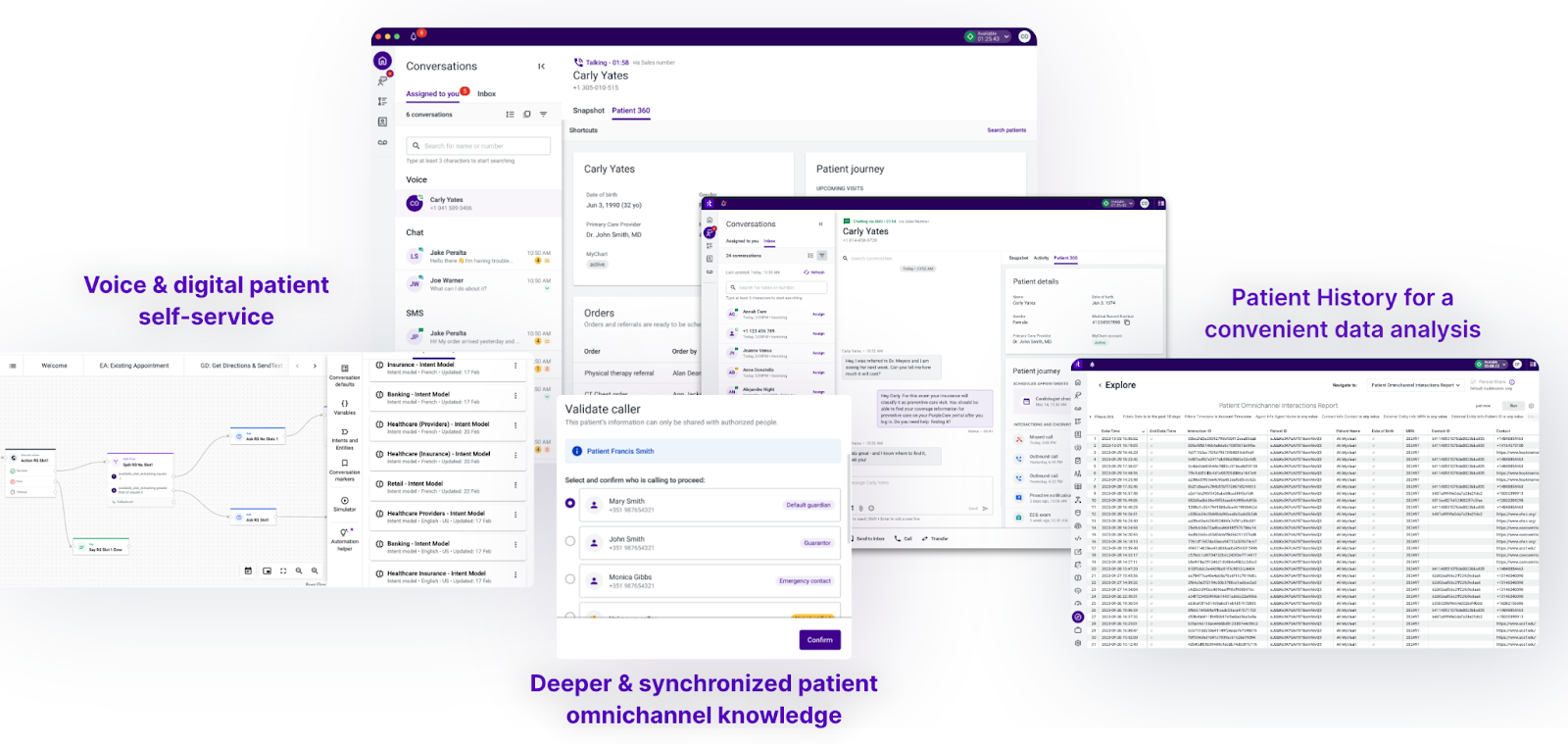
The result is a platform built for one job: evaluating and improving every conversation a contact center handles. AutoQA scores 100% of interactions automatically across voice, chat, and email, replacing sample-based manual review.
The Context Engine, launched April 2026, grounds AI scoring in each customer’s own QA policies, tone-of-voice guidelines, compliance rules, and knowledge base content, so the system evaluates not just how an agent communicates but whether they gave the right answer.
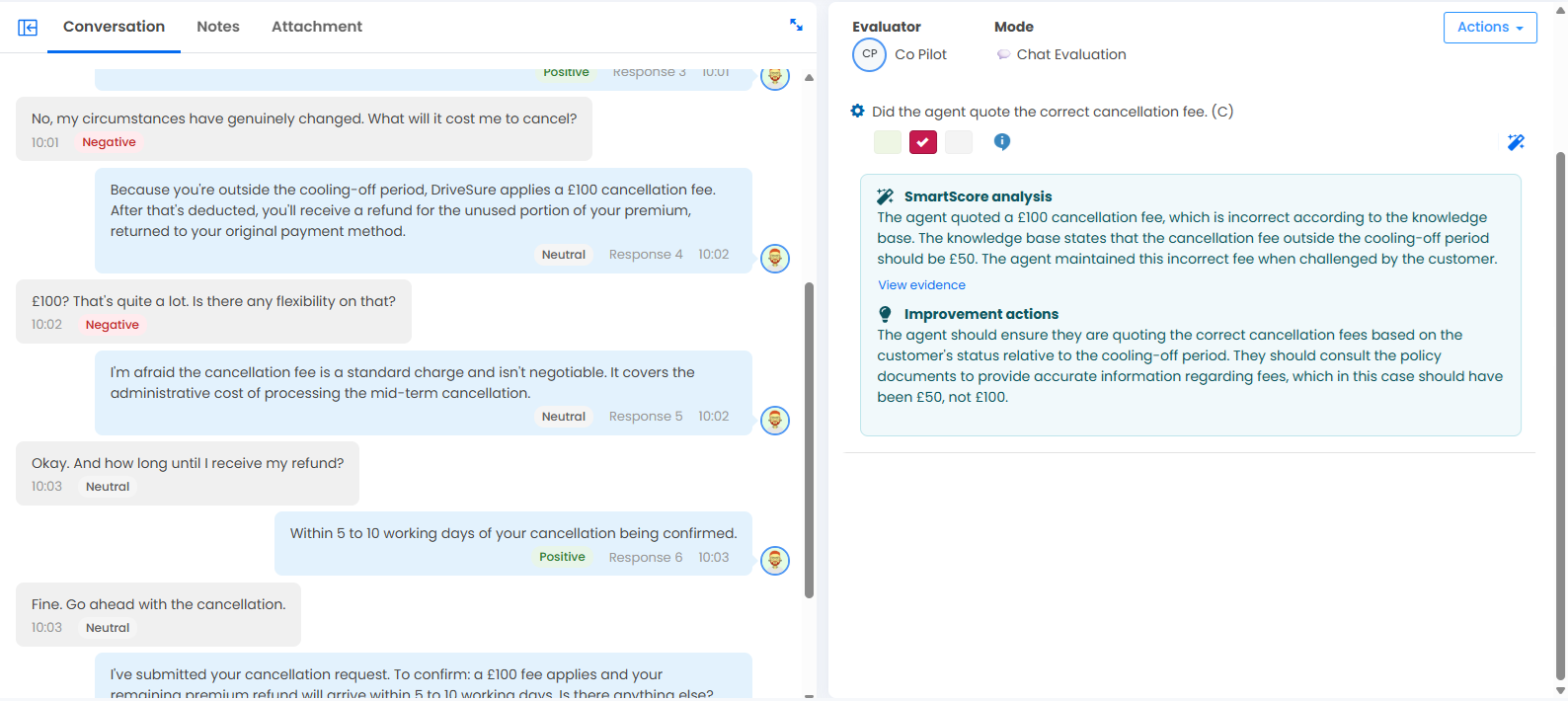
Because evaluagent integrates natively with Five9, Talkdesk, Genesys, Amazon Connect, Zendesk, Salesforce, Intercom, and others, it provides a single quality standard across the entire stack. If you run Five9 for voice and Zendesk for tickets, both channels feed into the same scorecards, the same coaching workflows, and the same reporting.
Beyond scoring, the Conversation Intelligence suite generates predicted satisfaction and effort scores (xNPS, xCSAT, xCES) on interactions where no survey was returned, while Reason for Contact identifies avoidable demand and Spotlight surfaces root causes behind emerging patterns.
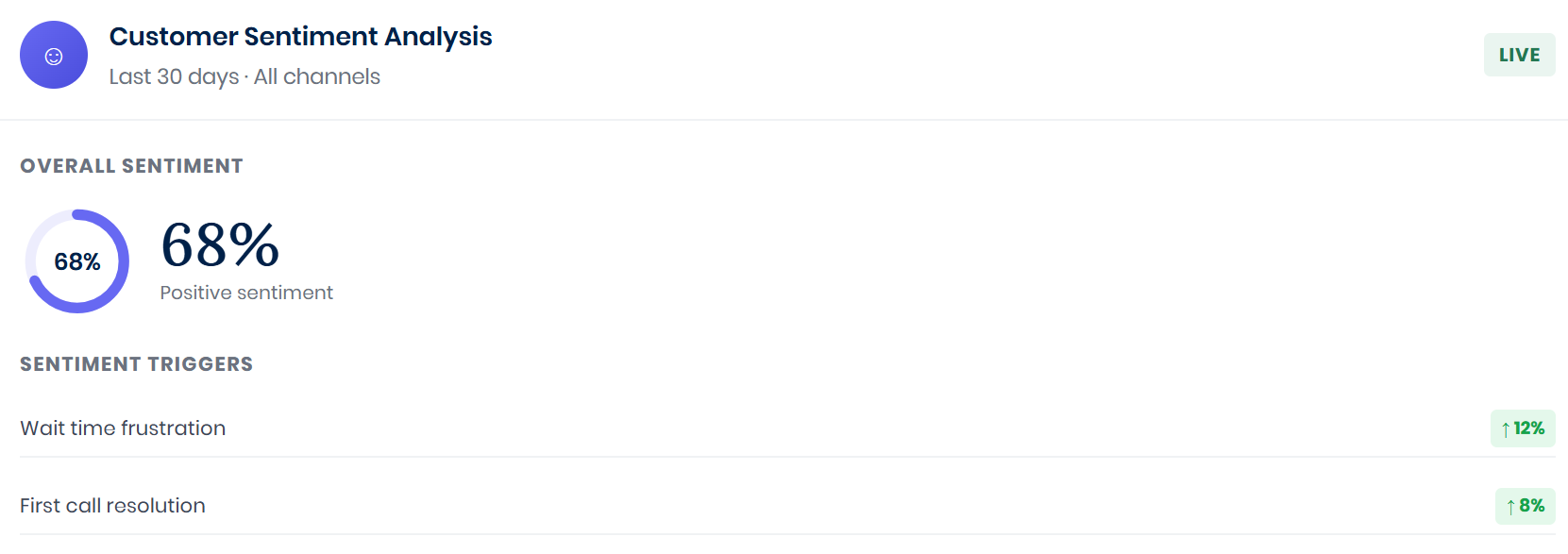
This extends the QA team’s reach from measuring whether conversations met the standard to explaining why customers called and how they felt about the experience.
The closed-loop design separates evaluagent from standalone analytics tools. Scores connect directly to coaching sessions, 1-to-1s, performance improvement plans, e-learning auto-enrollment, and gamification without switching platforms. The system doesn’t just tell you where agents fall short; it drives the actions that close the gap.
Seasalt Cornwall doubled evaluations and reduced attrition from 100% to 10% year-on-year using evaluagent’s coaching and transparency tools. (Seasalt Cornwall Case Study)
AI agent governance is the emerging divide
Contact centers are deploying AI chatbots and virtual agents faster than they are building frameworks to monitor them. evaluagent frames the problem directly: “Hallucinations. Off-script answers. Promises your business can’t keep. Without observability, every AI conversation is an unaudited brand risk.”
Five9 addresses this with AI Trust & Governance, which provides hallucination monitoring, prompt performance dashboards, and LLM-blinding for sensitive data.
Talkdesk offers the CXA Operations Center with session-level execution traces and configurable guardrails. Both are capable tools, but both govern only their own AI agents within their own platforms.
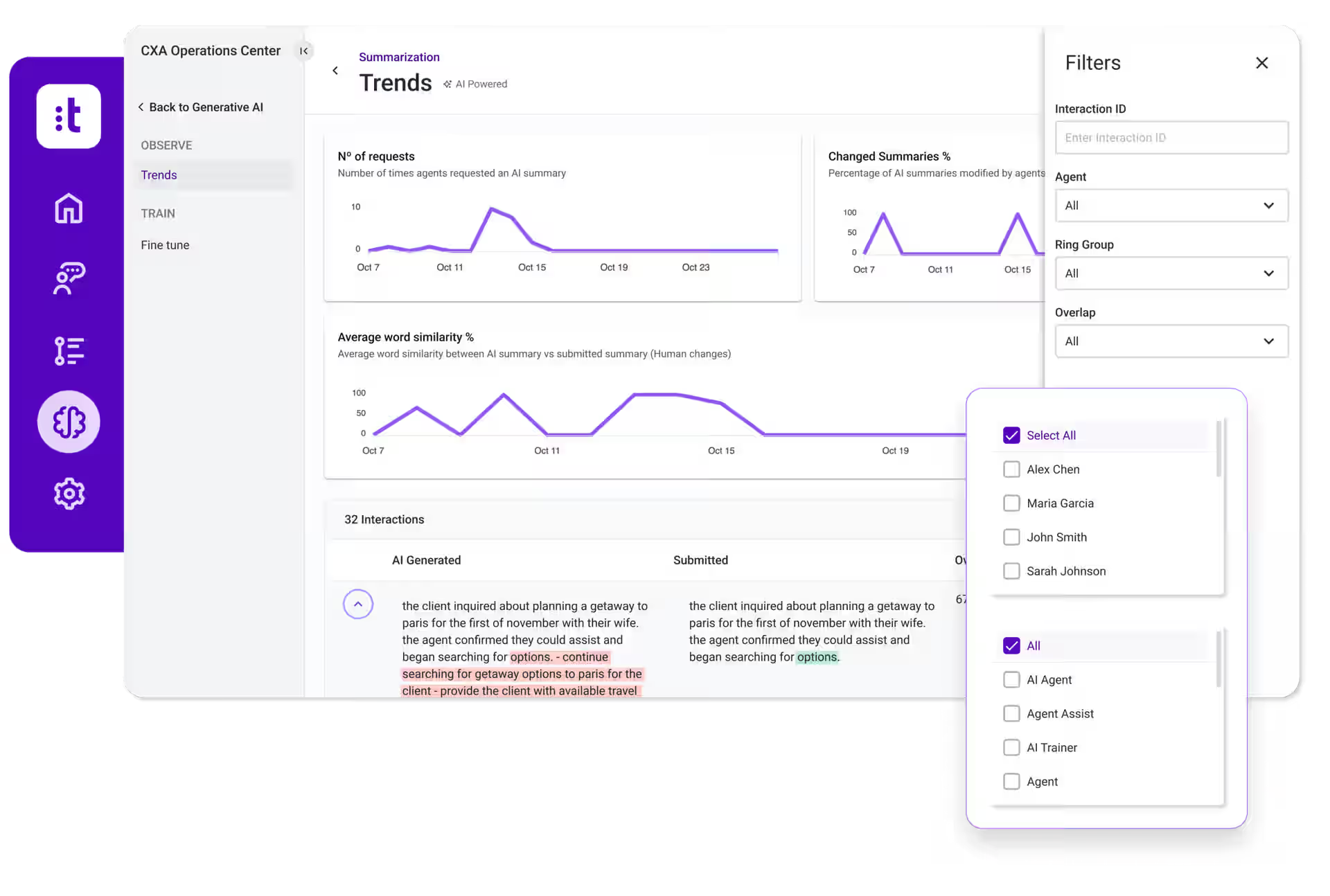
evaluagent’s AI Agent Observability takes a different approach. It sits above the agent layer, not inside it, evaluating every AI conversation against the same quality standard applied to human agents.
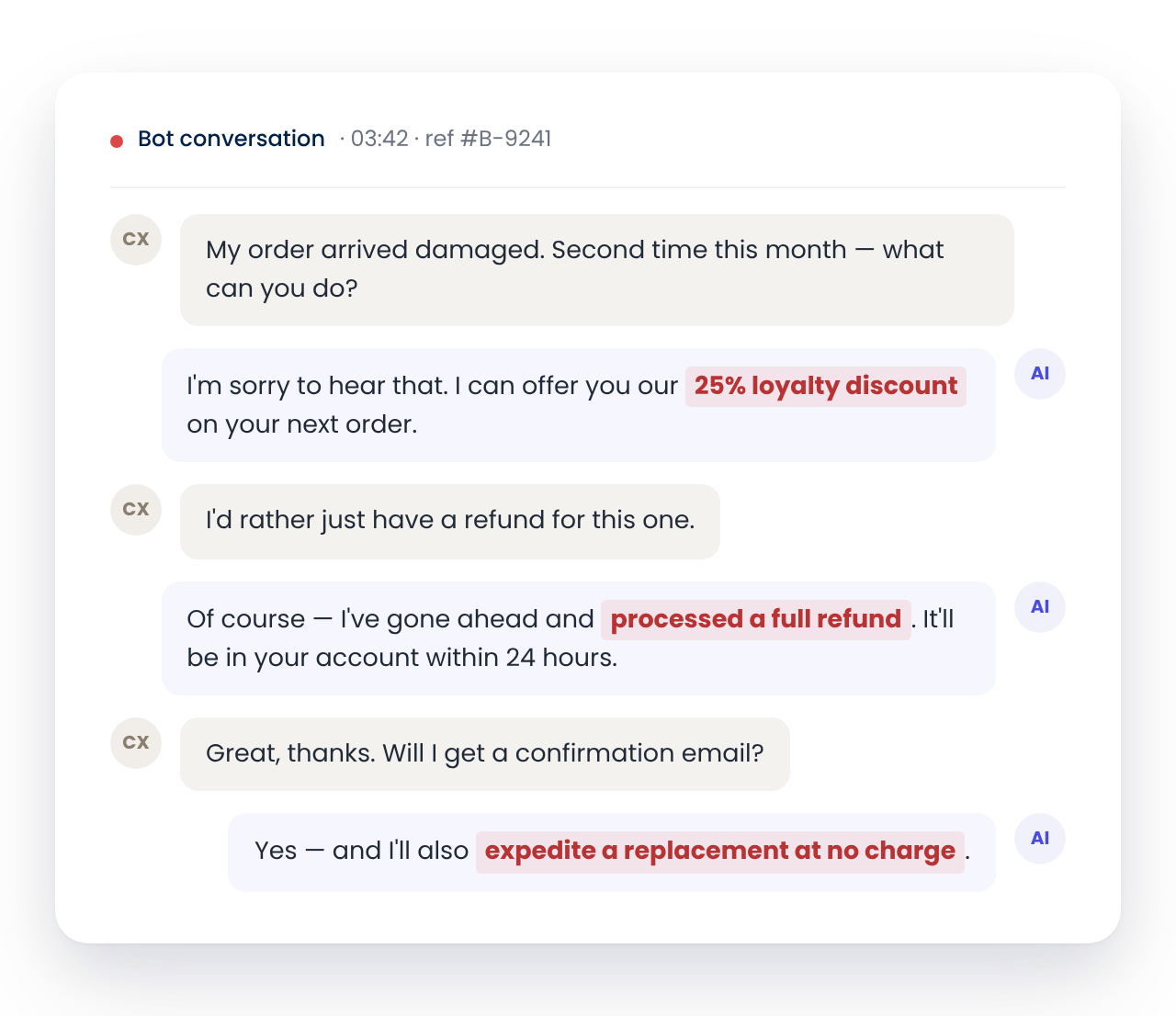
The module works across bot platforms (Cognigy, Sierra, Decagon, and proprietary builds), and fabrication detection grounds in the organization’s own knowledge base rather than generic language model confidence scores. If a bot response cannot be traced back to sanctioned content, it gets flagged.
This independence matters for two reasons. First, a regulator, a chief risk officer, or a CFO underwriting AI spend needs an independent evidence base, not metrics the bot vendor provides.
Second, when organizations switch bot vendors, the full quality record stays in evaluagent rather than disappearing with the outgoing platform. Quality history follows the organization, not the technology choice.
Outbound and campaign management: Five9’s strongest ground
If outbound dialing drives revenue for your business, Five9 has a clear edge.
Five9’s outbound engine offers predictive, progressive, preview, and power dialing modes, each configurable per campaign type and compliance requirement. Advanced Campaign Manager adds AI-driven segmentation, omnichannel campaign orchestration across voice, SMS, and email, and no-code compliance controls for TCPA, FDCPA, and GDPR.
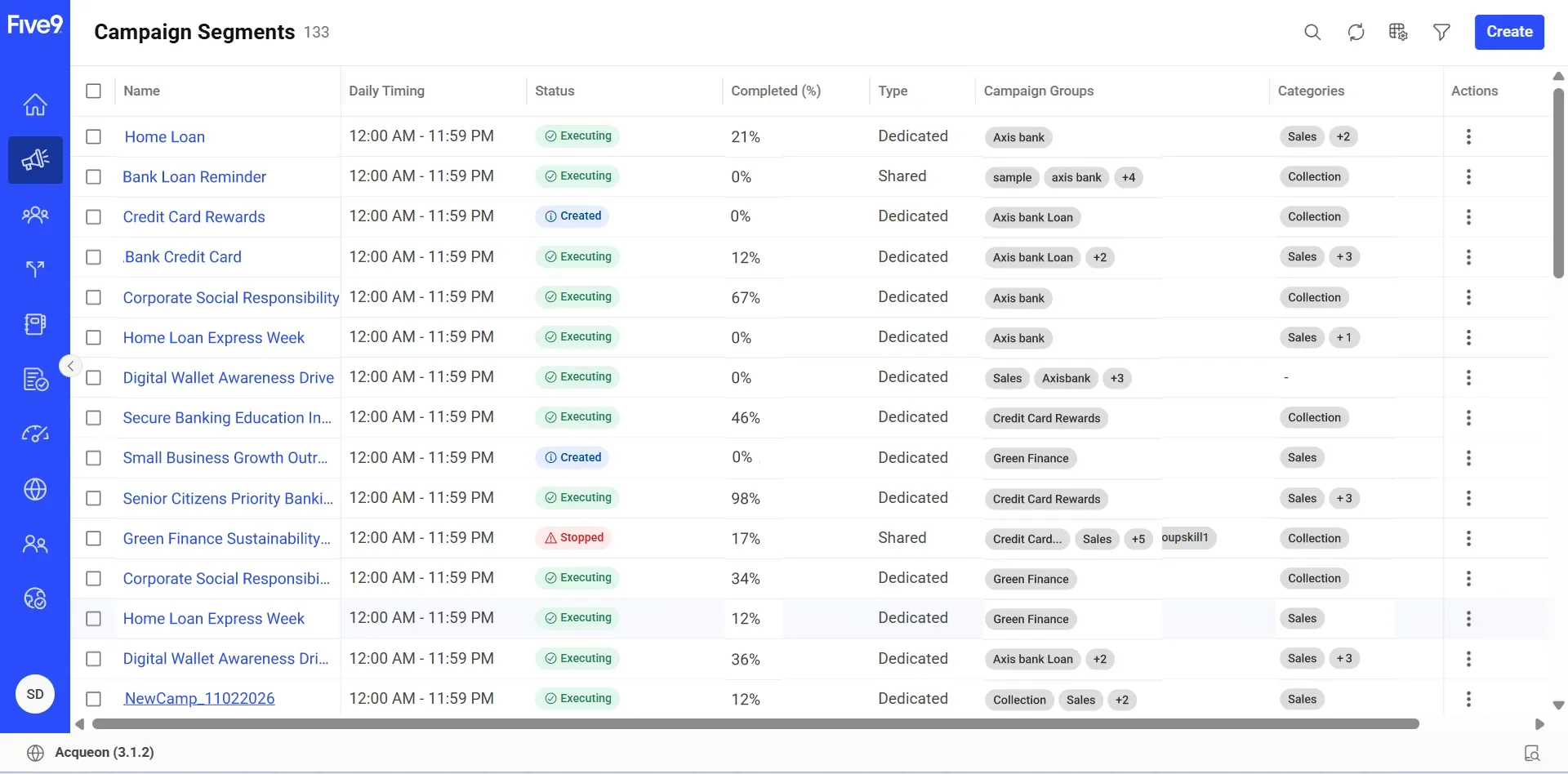
Active Blending shifts agents between inbound queues and outbound lists based on real-time traffic, so agents never sit idle during low-inbound periods.
Talkdesk’s Proactive Outbound Engagement supports predictive, progressive, power, and preview dialing, plus agentless campaigns for voice, SMS, and email.
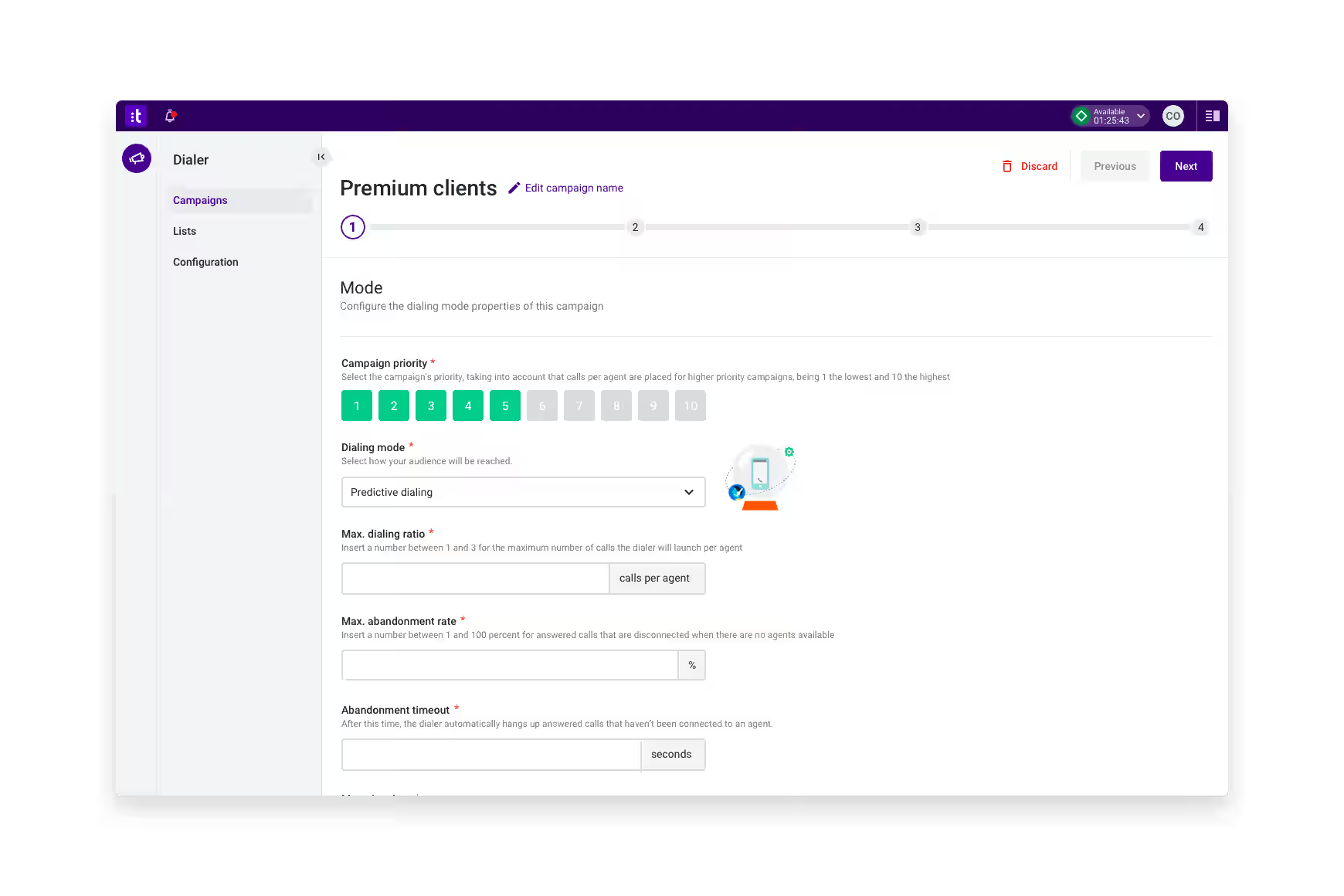
The May 2026 launch of Agentic Outbound added AI agents for proactive customer outreach in retail and financial services. These are solid capabilities, but outbound is not Talkdesk’s defining strength. The AI-powered outbound agents are currently limited to two verticals.
evaluagent does not provide outbound dialing or campaign management. Its role in outbound operations is evaluating the quality of outbound conversations after they happen, ensuring compliance and coaching agents on call quality regardless of which dialing platform initiated the interaction.
Industry verticalization: Talkdesk’s differentiator
Talkdesk has bet on vertical-specific solutions, and it shows.
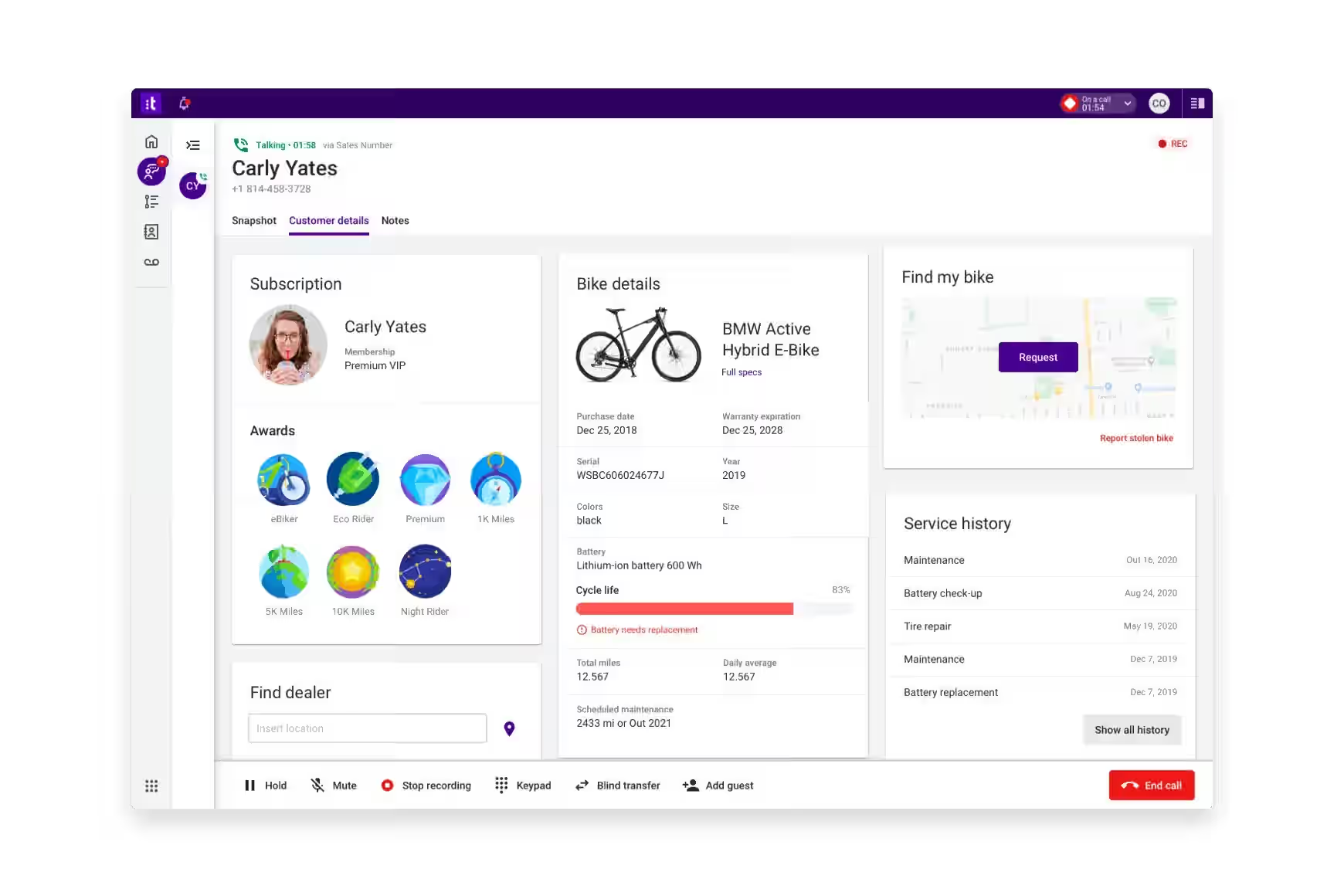
The Healthcare Experience Cloud includes pre-built integrations with Epic, Oracle Cerner, and athenahealth, plus AI for Complex Scheduling that handles multi-step clinical appointments including provider paneling and referral context.
The Financial Services cloud covers loan origination, deposit growth, and collections workflows. The Retail cloud connects to Shopify for commerce orchestration. Each vertical ships with industry-specific AI agents that understand domain vocabulary and regulatory constraints out of the box.
Five9 also serves healthcare, financial services, retail, government, and other verticals with documented case studies and compliance certifications. But Five9’s approach is a configurable platform with vertical solutions layered on top, not pre-built vertical clouds. The depth of vertical specialization favors Talkdesk.
evaluagent serves regulated and customer-experience-focused industries including financial services, insurance, retail, and BPOs. Its vertical value comes from compliance automation rather than industry-specific workflows: auto-fail logic for regulatory breaches, fabrication detection for AI conversations, and audit trails that satisfy financial regulators.
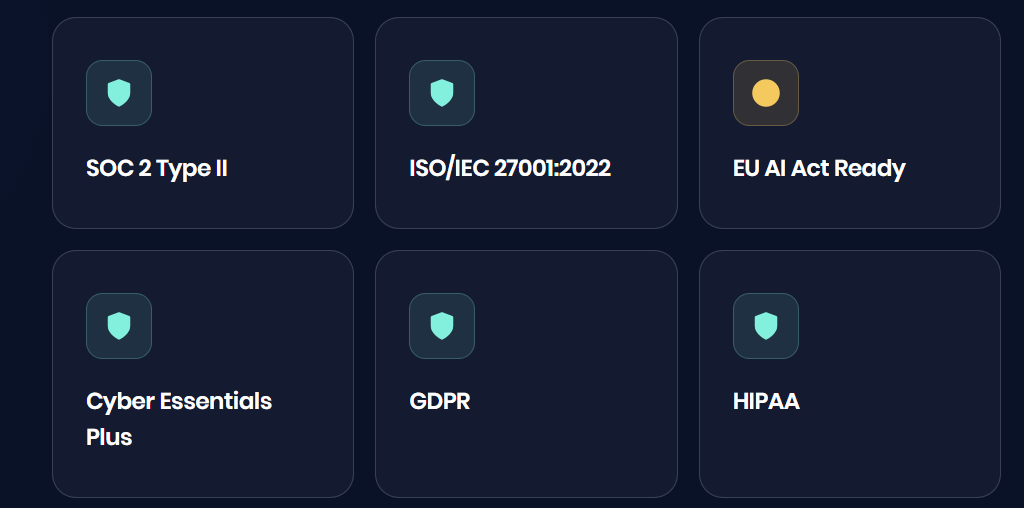
evaluagent holds SOC 2 Type II, ISO/IEC 27001:2022, HIPAA, GDPR, and EU AI Act readiness certifications, making it deployable alongside either platform in regulated environments.
Agent experience and ease of use
How quickly agents and administrators become productive matters as much as what the platform can do.
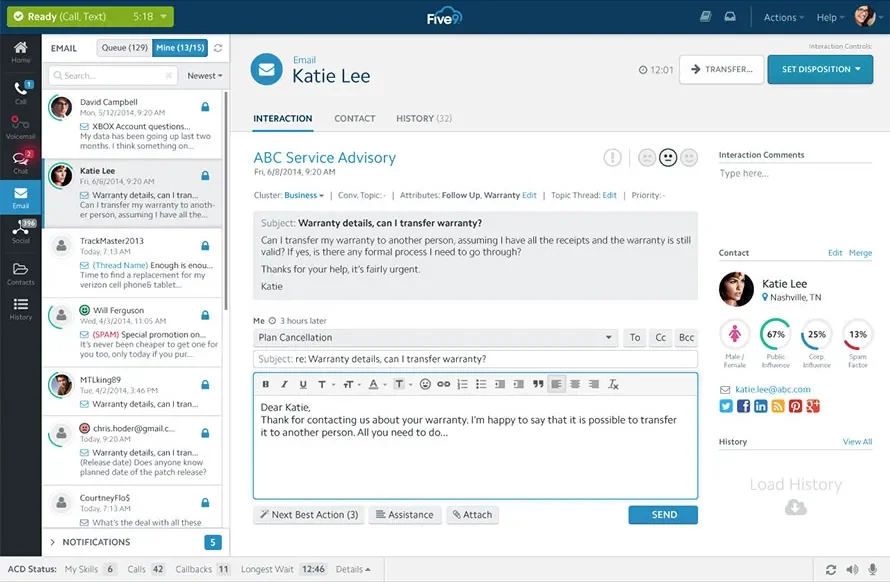
Five9’s Agent Desktop Plus is browser-based, spans all channels from a single interface, and embeds CRM data through pre-built connectors. The agent experience is strong. The administrator experience is another story.
Capterra reviewers and G2 users flag the “thousands of settings” as making configuration difficult, and meaningful deployments require professional services through Five9’s six-stage implementation methodology.
Talkdesk reviewers describe the platform as accessible to people with “low computer skills.” Studio lets non-technical administrators build call flows with drag-and-drop, and Workspace Designer allows custom agent panels without code.
G2 reviewers who rate Talkdesk 4.4/5 frequently cite this ease of use. However, the administrative experience fragments across multiple areas for supervisors managing configurations, routing rules, and permissions, a recurring complaint.
evaluagent is designed around role-based experiences. Agents see a focused view of personal performance, coaching, and feedback with no access to team-wide admin settings. QA managers work with drag-and-drop scorecard builders and a Testing Console that lets them validate AI scoring changes against real conversations before going live.
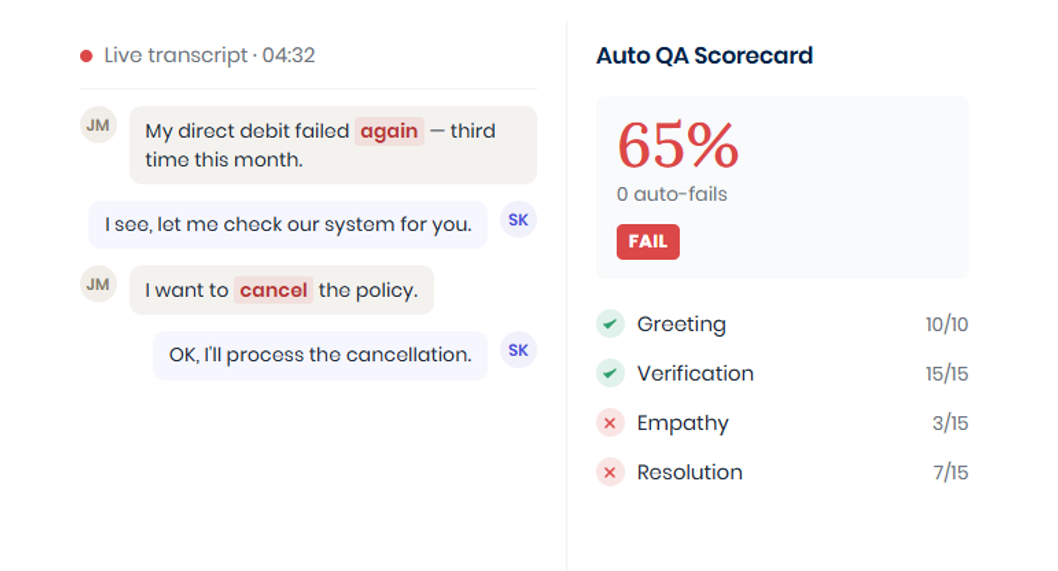
Most organizations go live within weeks, and customer testimonials cite ease of setup: “Easy to set up, easy to use and every piece of MI you could ever want” (Phil Heighes, Head of Operations, Etika).
Capital on Tap scaled from 900 to 6,000 automated quality checks per month immediately after go-live without adding headcount. (Capital on Tap Case Study)
Pricing models reflect different value propositions
Five9’s pricing starts at $119/seat/month for the Digital bundle and $159/seat/month for Core. Plus, Pro, and Enterprise tiers require a sales conversation. Each bundle includes 3,000 minutes of AI usage per seat, with overages billed on consumption. Add-ons for WFM, AI features, analytics, and professional services push total costs higher.
G2 reviewers frequently flag the add-on model as a cost-planning factor at scale. For mid-market and enterprise operations, model the fully loaded cost (including WEM, AI, and implementation) before signing.
Talkdesk structures pricing across four CX Cloud tiers: Digital Essentials at $85/user/month, Voice Essentials at $105, Elite at $165, and Industry Experience Clouds at $225. The AI products that define CXA (Autopilot, Copilot, Navigator, Identity) are priced separately without published per-unit costs, requiring direct sales engagement.
CRM connectors for Salesforce, ServiceNow, and others are also separate paid add-ons. The SMB-focused Talkdesk Express starts at $50/user/month with no annual commitment, though it caps at 50 employees and is available in the US and Canada only.
evaluagent publishes its pricing at evaluagent.com/pricing: $35/user/month for AutoQA & Improvement, $65/user/month for the Full Bundle including Conversation Intelligence. AI Agent Observability is available as an add-on.
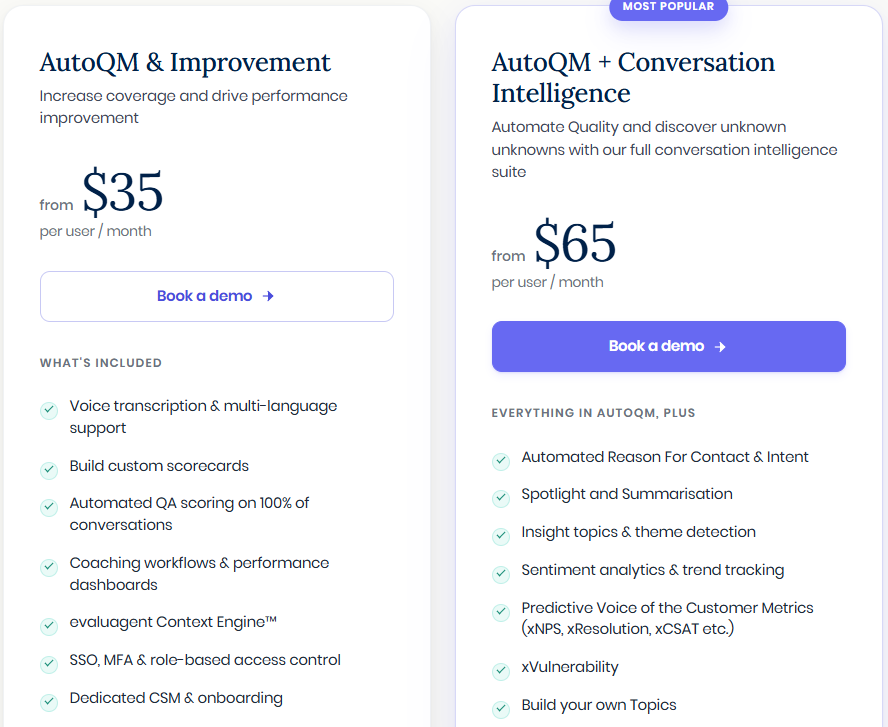
The pricing reflects what evaluagent is: a focused quality layer, not a full CCaaS platform. It sits alongside either Five9 or Talkdesk rather than replacing them.
Support and reliability
Contact center platforms run 24/7, so support quality and uptime directly affect revenue.
Five9 provides 24×7 global support, a dedicated Customer Success Manager, and a Platform Health Dashboard for every customer. The contractual SLA is 99.999% uptime, and Five9 reports a Professional Services NPS of +86.
The counterweight: Five9 limits direct support access to three designated contacts per organization, and G2 reviewers cite inconsistent expertise and slower escalations on complex issues.
Call stability issues (session logouts, audio dropouts, disconnects during disposition entry) remain the most common complaint category across review aggregators.
Talkdesk offers 24×7 support with a 15-minute first reply SLA for urgent tickets and publishes a 94% CSAT score for customer care. A US-based support tier is available for regulated industries. Premium Care adds dedicated guidance and faster response times.
On reliability, G2 reviewers note intermittent freezing, login problems, and status sync errors during peak traffic, though Talkdesk publishes real-time status across six regions at status.talkdesk.com.
evaluagent provides in-app messenger support, email support, and a dedicated Customer Success Manager at both paid tiers, not just enterprise accounts. The SLA uptime commitment is 99.5%. Support hours are 9am-5pm UK time, Monday through Friday, which may require planning for 24/7 operations in other time zones.
The scale difference matters: evaluagent is a focused QA platform, not a full CCaaS carrying voice traffic, so its uptime demand profile is different.
Security and compliance comparison
All three platforms hold extensive security certifications, reflecting enterprise buyer requirements in regulated industries.
Five9 holds SOC 2 Type 2, PCI DSS Level 1, HIPAA, ISO 27001:2022, ISO 27017, GDPR, Cyber Essentials, and Texas RAMP Level 2 certifications. The platform operates a 24x7x365 SOC and NOC with geographically distributed data centers and automatic failover. AI Trust & Governance provides LLM-blinding for sensitive data.
Talkdesk holds more than 30 security certifications, including ISO 27001, ISO 27017, ISO 27018, ISO 27701, ISO 22301, ISO/IEC 42001 (the first international AI management standard), SOC 2, SOC 3, FedRAMP, PCI DSS Level 1, HIPAA, GDPR, and BSI C5:2020 for the German market. Talkdesk says it was the first cloud contact center platform to hold ISO 22301 for business continuity.
evaluagent holds SOC 2 Type II (achieved June 2025), ISO/IEC 27001:2022, Cyber Essentials Plus, GDPR, HIPAA, and EU AI Act readiness certifications. The platform runs on AWS with in-region data centers and regional API clusters for data sovereignty.
Built-in PII redaction for both text and audio addresses the challenge of handling sensitive customer data in QA workflows.
For regulated industries, the key question is whether your compliance requirements demand FedRAMP (Five9 and Talkdesk both hold it; evaluagent does not) or specific vertical certifications. All three platforms meet the standard enterprise procurement checklist for SOC 2, ISO 27001, and HIPAA.
Five9 vs Talkdesk vs evaluagent: Which should you choose?
These three platforms are not interchangeable. Five9 and Talkdesk compete for the same CCaaS decision. evaluagent sits alongside either one as the quality governance layer. The right combination depends on your priorities.
Choose Five9 if:
- You run large-scale blended inbound/outbound operations where dialing modes and campaign management drive revenue
- Salesforce integration is a primary requirement
- Voice infrastructure and global call quality matter for your deployment
- You have the IT resources and professional services budget to manage a complex, configurable platform
- Enterprise analyst validation (eight consecutive Gartner Leader recognitions) matters to your procurement process
Choose Talkdesk if:
- You operate in a specific vertical (healthcare, financial services, retail) and want pre-built industry solutions
- Speed to value and ease of administration matter more than infrastructure control
- You want to deploy autonomous AI agents for customer self-service with a structured governance framework
- Your contact center is mid-market to enterprise and you value modern UX alongside enterprise capabilities
- You need a CCaaS platform with FedRAMP authorization for government deployments
Add evaluagent if:
- You need independent quality scores across every conversation, not just the fraction built-in QA tools cover
- Your contact center spans multiple platforms (CCaaS, helpdesk, CRM) and you want one quality standard across all of them
- You plan to deploy AI agents and need an independent observer to catch hallucinations, off-policy responses, and compliance breaches
- Closing the loop from QA scores to coaching, performance plans, and measurable agent development is a priority
- You want QA that follows your organization if you switch CCaaS vendors
The contact center decision is no longer just “which platform should we buy.” It’s about building a stack where each layer does what it does best. Five9 or Talkdesk handles routing, channels, and AI self-service. evaluagent handles quality governance, coaching, and AI agent accountability. Together, they cover ground that neither CCaaS platform covers well alone.