Genesys Cloud CX is one of the largest contact center platforms on the market. With more than 7,000 organizations running on it worldwide, $2.8 billion in cloud ARR, and an 11-year streak as a Gartner Magic Quadrant Leader, it has become the enterprise default for organizations that need voice, digital channels, AI automation, and workforce management in one place.
To create this Genesys Cloud CX review, we analyzed the platform extensively. It’s the right choice if:
- You run a multi-channel contact center with hundreds or thousands of agents
- You need voice, digital engagement, AI automation, and workforce management in one platform
- You want integrations with Salesforce, ServiceNow, or Microsoft Dynamics
- You need compliance across regulated industries
- You’re ready to invest in professional services for deployment
However, Genesys Cloud CX might not be the best choice if:
- Your primary pain point is quality assurance coverage and you’re evaluating only 2-5% of conversations today
- You need an independent QA layer that works across multiple CCaaS platforms, not just one
- You want to connect QA scores directly to coaching, performance plans, and agent development in a single workflow
- You need to evaluate AI agent conversations independently from the bot vendor’s own metrics
- You require a specialist QA tool that goes live in weeks, not months
In this case, you should consider evaluagent: a contact center quality assurance and performance management platform that scores 100% of conversations automatically across voice, chat, and email, then connects to structured coaching, performance plans, and gamification.
evaluagent integrates natively with Genesys Cloud CX and works with Five9, Amazon Connect, Zendesk, Salesforce, Talkdesk, and other platforms, giving you a dedicated quality layer without CCaaS lock-in.
We’ve included a detailed look at evaluagent later in this review as the specialist alternative for teams that need more from QA than any CCaaS platform provides natively. If you’re ready to see how automated quality management works, you can book a demo here.
What is Genesys Cloud CX?
Genesys Cloud CX is a cloud-native contact center platform built for enterprise operations. The company behind it, Genesys, was founded in 1990 in Daly City, California by Gregory Shenkman and Alec Miloslavsky, originally focused on computer telephony integration (CTI).
After decades as an on-premises telephony leader, the company’s 2016 acquisition of Interactive Intelligence for $1.4 billion brought the cloud-native platform that would become Genesys Cloud CX.
Today, Genesys positions itself as “the agentic AI customer experience platform for the enterprise.”
The platform covers five areas from a single architecture: AI automation (virtual agents, copilots, knowledge management), voice services (ACD, IVR, outbound dialing), digital engagement (web messaging, WhatsApp, email, social media), workforce engagement management (quality assurance, forecasting, scheduling, performance management), and customer journey management (analytics, orchestration, predictive engagement).
The company employs more than 6,000 people and serves over 8,000 organizations in more than 100 countries. Its customer roster includes AXA, HSBC, Visa, Lufthansa, Ferrari, Heineken, Virgin Atlantic, and Nespresso.
Genesys is privately held, with Hellman & Friedman, Permira, and TCV as primary shareholders, and Salesforce and ServiceNow as strategic investors following a $1.5 billion combined investment in July 2025.
Genesys Cloud CX Pros & Cons
| Pros | Cons |
|---|---|
| – Voice, digital, AI, WFM, and QA in one native platform | – Steep learning curve for advanced configuration (Architect, WEM) |
| – 11-year Gartner Magic Quadrant Leader for CCaaS | – Enterprise pricing starts at $75/user/month |
| – AI automation with virtual agents, copilots, and predictive routing | – Out-of-the-box reporting can limit complex needs |
| – 3,000+ public APIs with SDKs in multiple languages | – Implementation complexity for large deployments |
| – Salesforce and ServiceNow integrations | – QA features require human sign-off on every AI evaluation |
| – Agent desktop praised in G2 reviews | – AI features consume tokens billed separately from seat licenses |
| – Compliance portfolio (FedRAMP, HIPAA, ISO 42001, PCI DSS) | – Native QA covers interactions but lacks dedicated coaching workflows |
Genesys Cloud CX Review: How It Works & Key Features
AI Automation: Genesys Cloud CX embeds virtual agents, copilots, and predictive routing directly into the platform.
The AI automation suite is where Genesys has concentrated its recent investment, with nearly $450 million in R&D spend in FY2026 and 70% of Genesys Cloud customers actively using Genesys AI by January 2026.
The centerpiece is the Agentic Virtual Agent, powered by Large Action Models (LAMs) rather than general-purpose LLMs.
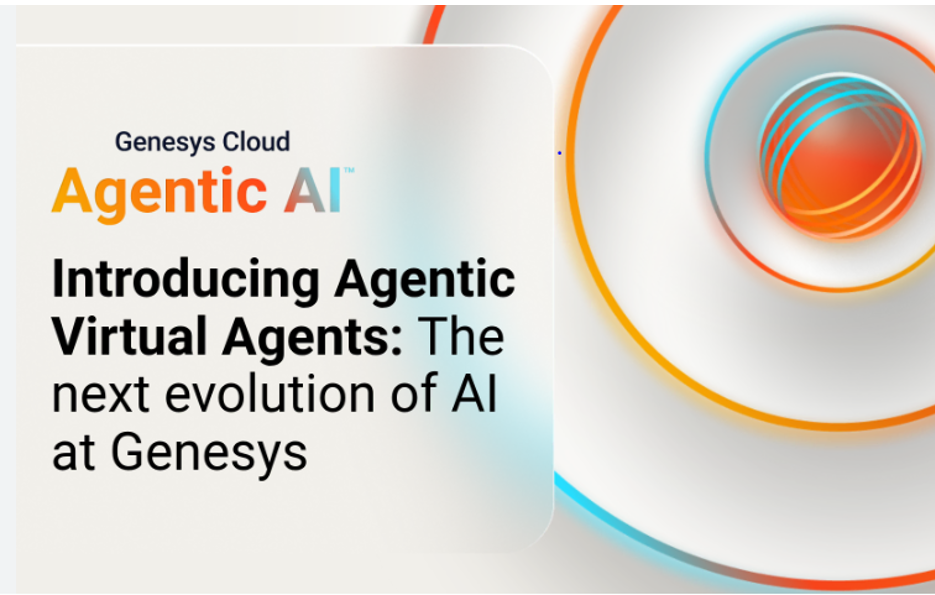
LAMs plan and execute multi-step tasks deterministically, reducing hallucination risk from free-form text generation. Virtual agents reason through customer goals, connect to backend systems, and complete tasks within administrator-defined guardrails.
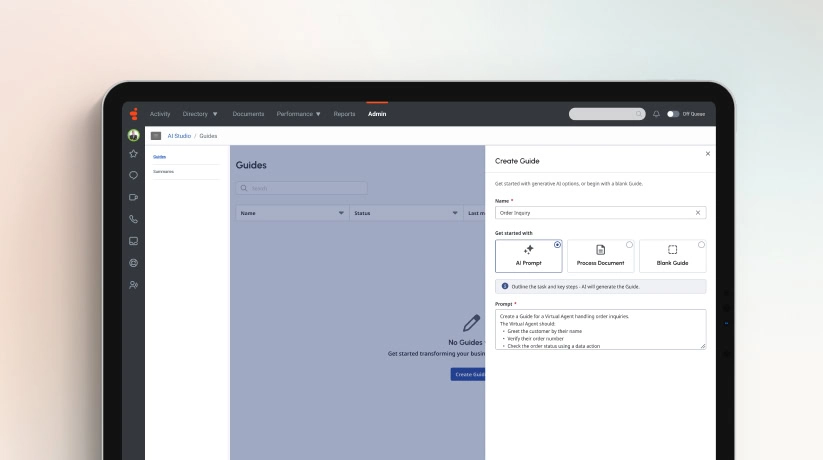
Genesys Cloud AI Studio is the no-code workspace where teams build and manage AI capabilities. AI Guides, the core building blocks, let teams describe use cases in natural language or upload process documents, and the system generates the intents, slots, and dialog logic automatically.
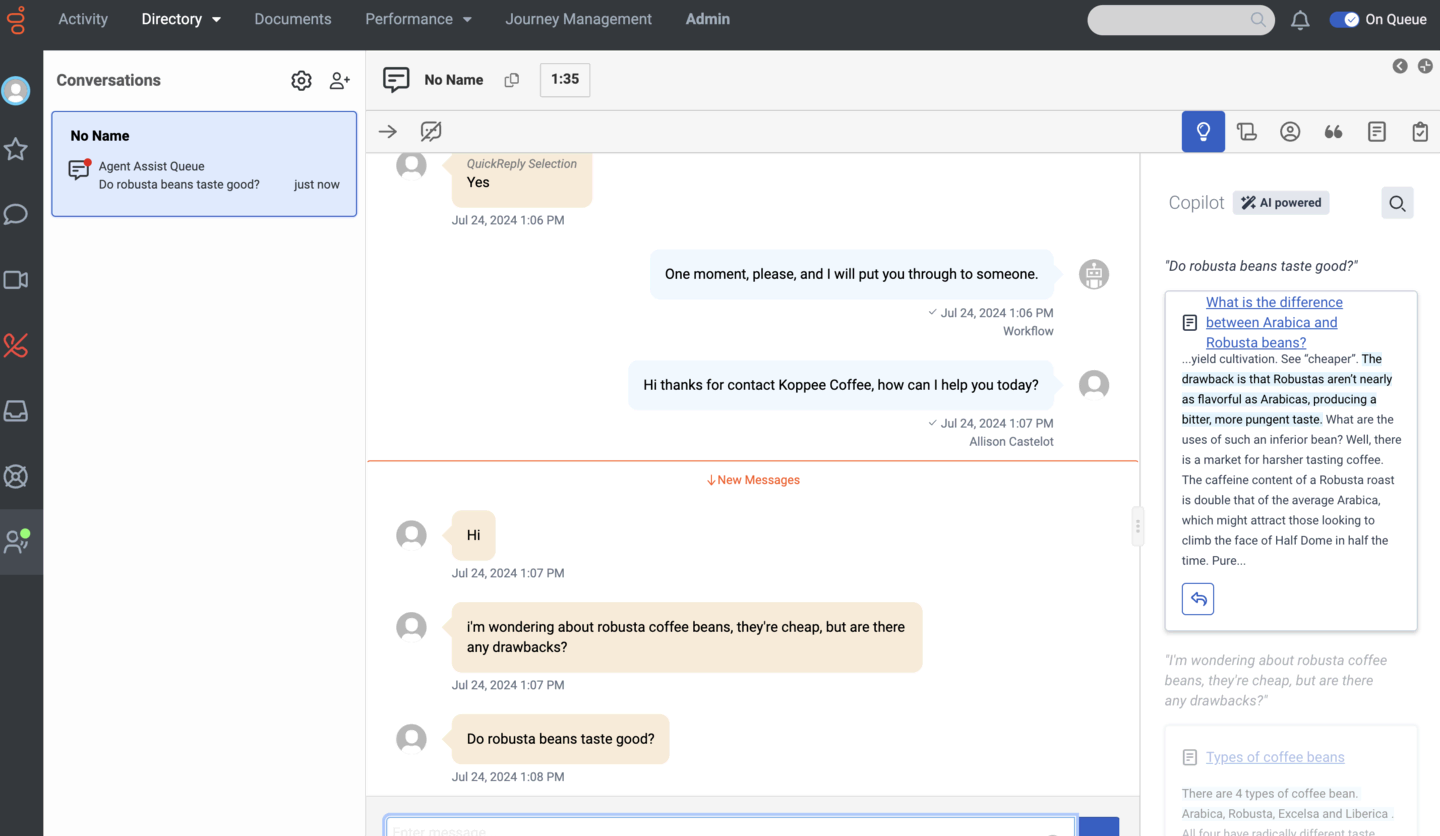
For live interactions, Agent Copilot surfaces relevant knowledge, suggests next actions, and generates post-interaction summaries.
Supervisor Copilot handles sentiment analysis, transcript translation across 70+ languages, and natural-language metric queries. More than 120 organizations adopted the Genesys Cloud Virtual Supervisor within months of its March 2025 launch, achieving an average AI scoring accuracy of 94%.
Predictive routing uses machine learning to match each inbound contact to the agent most likely to achieve a target KPI (first-contact resolution, handle time, or sales conversion), updating continuously from real interaction outcomes.
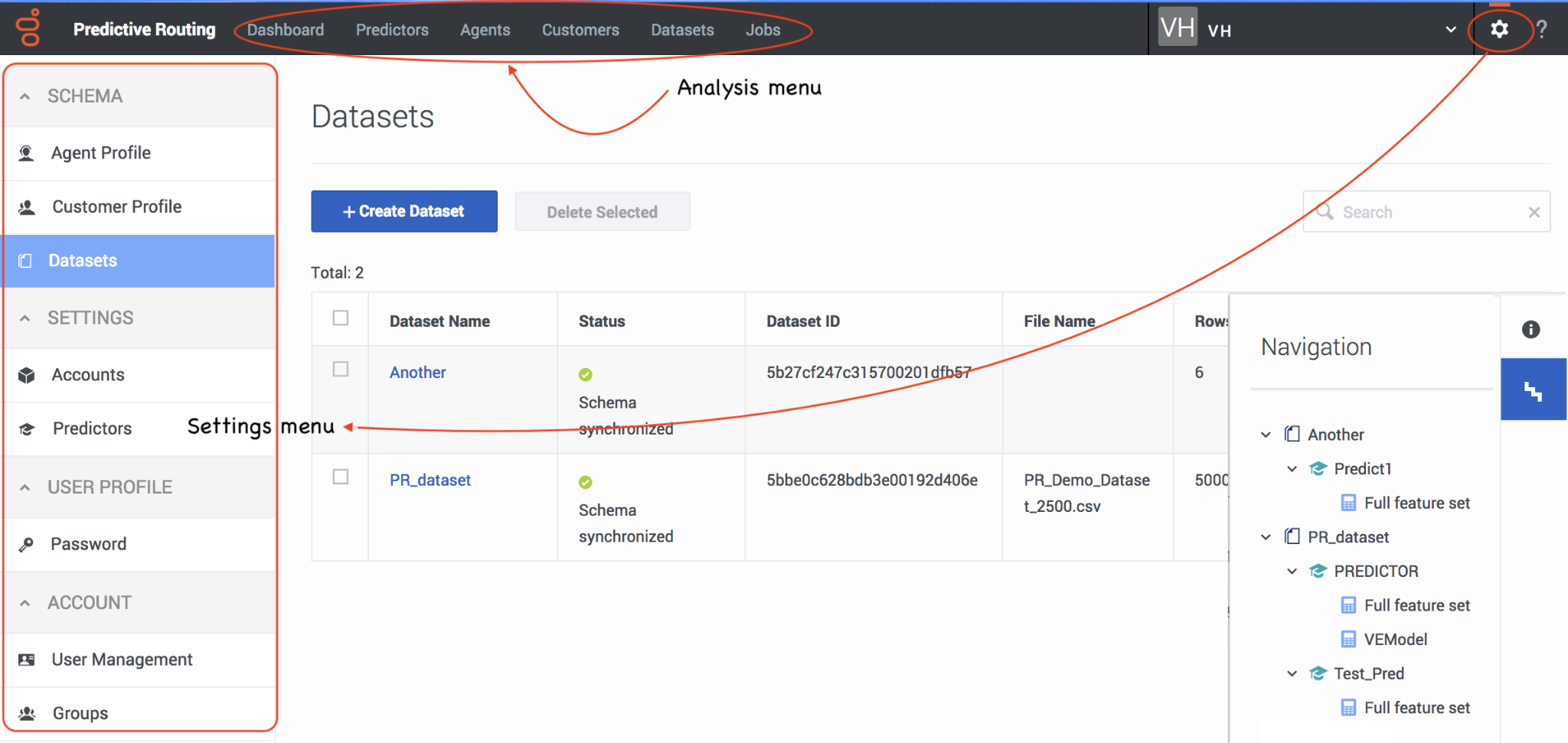
Explainability features show which data points influenced each routing decision.
Voice Services & ACD: Genesys Cloud CX puts the full voice stack in one cloud-native platform.
Voice remains central to the platform. The CX 1 plan at $75/user/month targets voice contact centers, including call routing, speech-enabled IVR, outbound campaigns, and unified communications.
The platform offers three telephony connection models: Genesys Cloud Voice (fully managed, no carrier contract needed), BYOC Cloud (customers terminate their own SIP trunks), and BYOC Premises (for regulatory or connectivity requirements). All cloud variants include multi-zone redundancy on AWS.
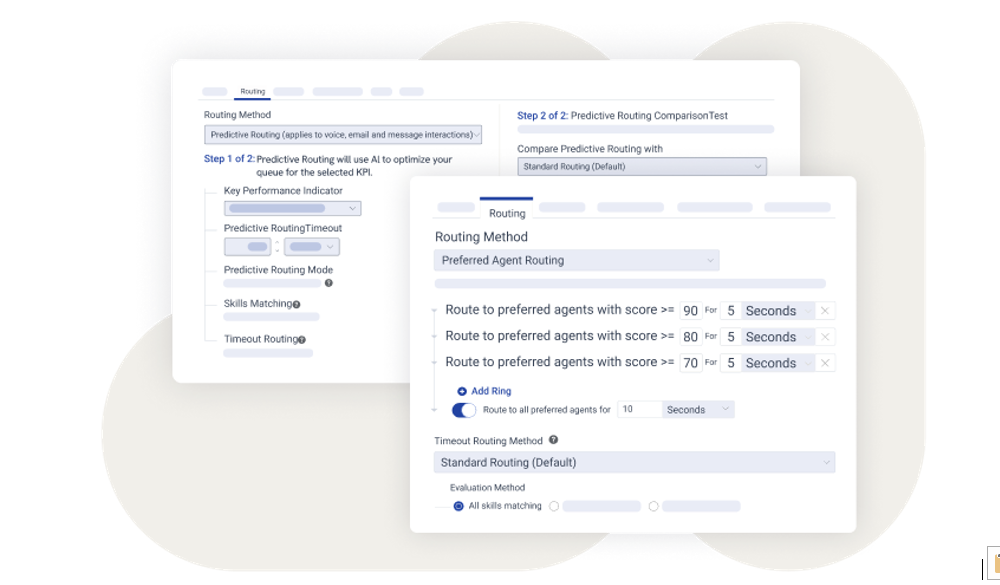
The ACD routing engine supports multiple strategies: skills-based routing, bullseye routing (which relaxes skill criteria if no match is found within a threshold), preferred agent routing, and AI-driven routing that attaches behavioral signals to identify skill combinations that improve first-call resolution. A no-code rule engine lets business teams create and modify routing rules without IT.
The IVR layer uses a visual drag-and-drop flow builder with speech recognition, DTMF input, and native or third-party NLU. Conversation context carries forward when a call escalates to a live agent.
For outbound operations, up to 50 voice campaigns can run simultaneously with support for up to 5 million contacts per organization and predictive, power, and preview dialing modes.
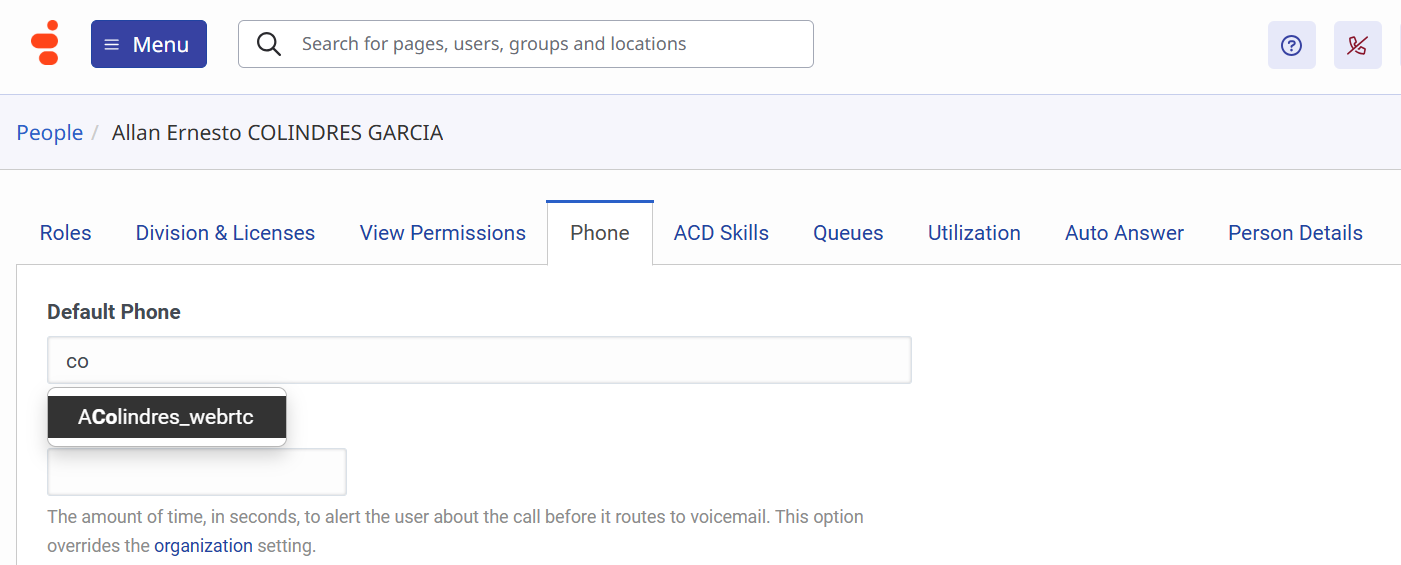
A browser-based WebRTC phone supports the Opus codec, dual-channel call recording, persistent connection mode, and VDI environments, so agents can work from any location without physical phone hardware.
Digital Customer Engagement: Genesys Cloud CX routes digital interactions through the same ACD engine as voice.
Rather than bolting digital channels onto a voice-first platform, Genesys routes web messaging, WhatsApp, email, SMS, Facebook, Instagram, X, and Google Business Profile through the same ACD engine that handles phone calls.
Agents work from a single workspace regardless of channel, and journey context persists when customers switch between them.
Web messaging supports both real-time and asynchronous conversation. Customers can start a chat, close their browser, and resume later without losing context. Co-browse and screen share are available within the async session, with privacy controls to mask sensitive areas.
The native WhatsApp integration includes guided onboarding in Genesys Cloud, message template management, rich media support, and outbound campaigns. WhatsApp Business Calling supports voice escalation, preserving context in the same conversation thread.
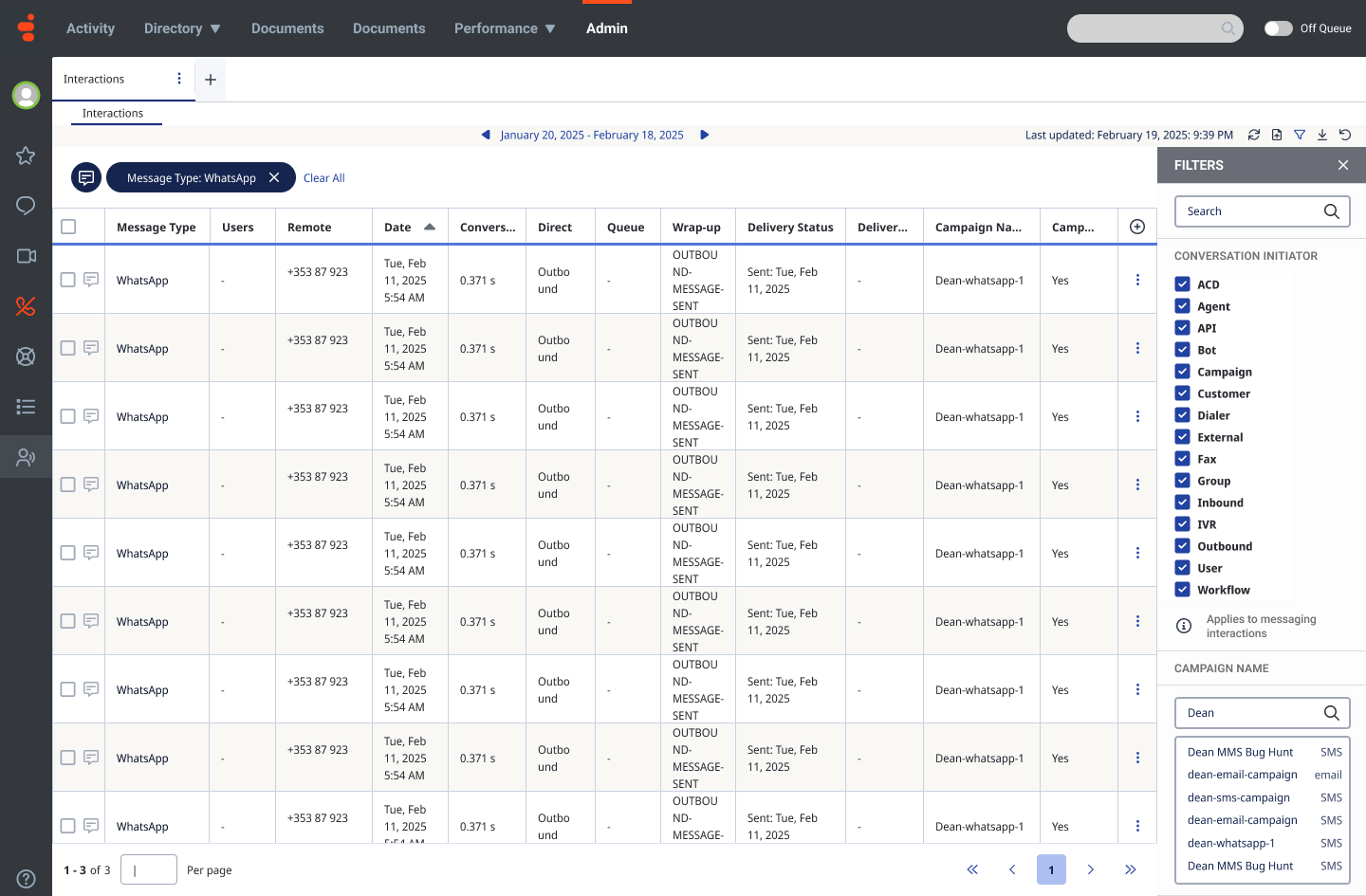
For email, the platform uses AWS SES for inbound malware scanning with SPF, DKIM, and DMARC for outbound authentication. Social media listening uses configurable escalation rules (up to 25 per organization) that filter by keywords, sentiment, language, location, and media type before surfacing posts to agent queues.
Workforce Engagement Management: Genesys Cloud CX bundles scheduling, quality monitoring, and performance management natively.
The WEM suite is available on the CX 3 and CX 4 plans, and unifies what typically takes three or four vendor systems: workforce management, quality assurance, speech analytics, and performance management.
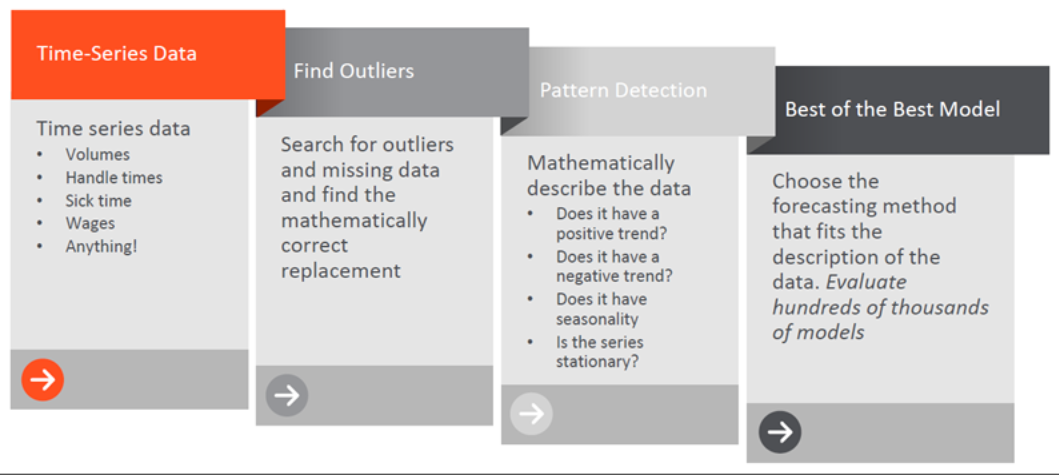
The AI-powered forecasting engine ingests up to five years of historical data and generates rolling forecasts up to two years ahead, running 25+ machine learning models and selecting the best-performing algorithm. Intraday monitoring compares forecast versus actual volumes in real time.
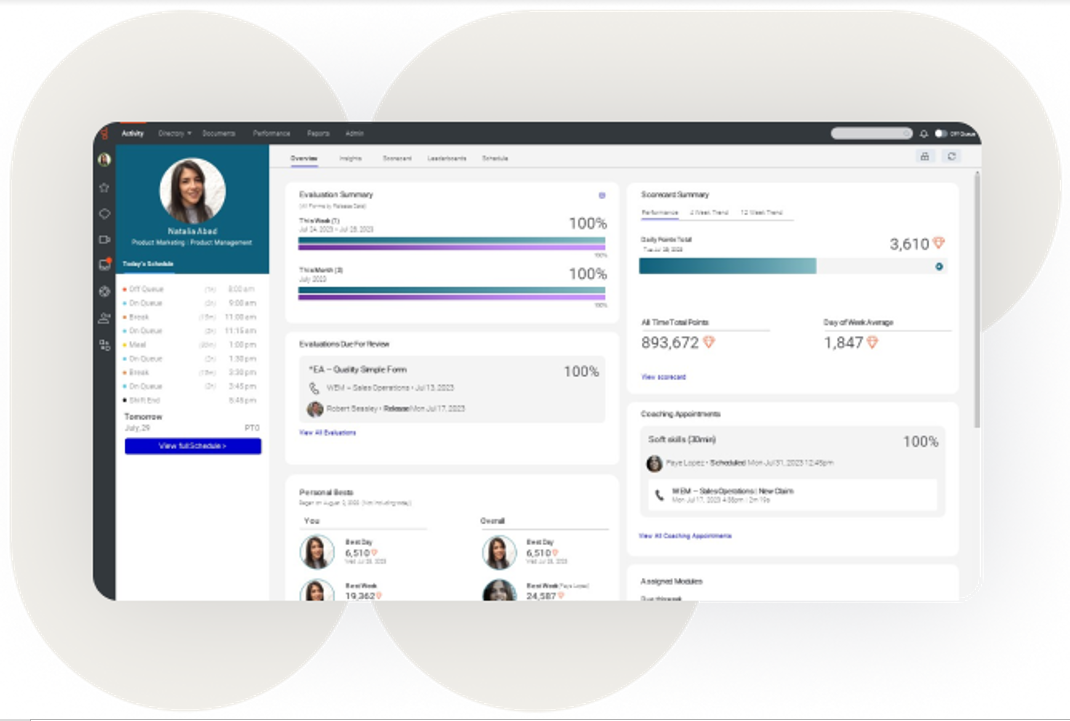
Agents manage schedules, time-off requests, and shift trades through the Genesys Tempo mobile app.
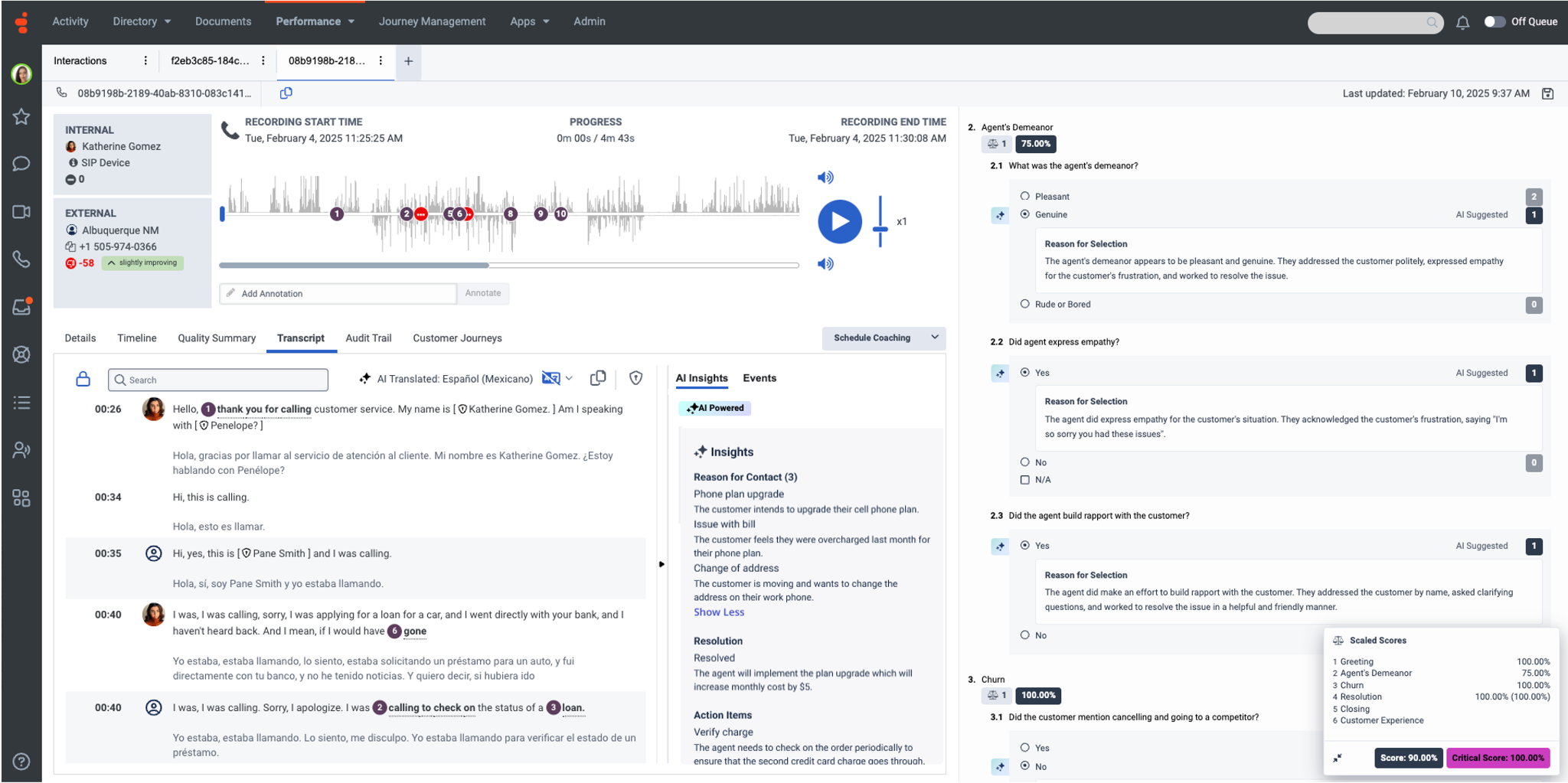
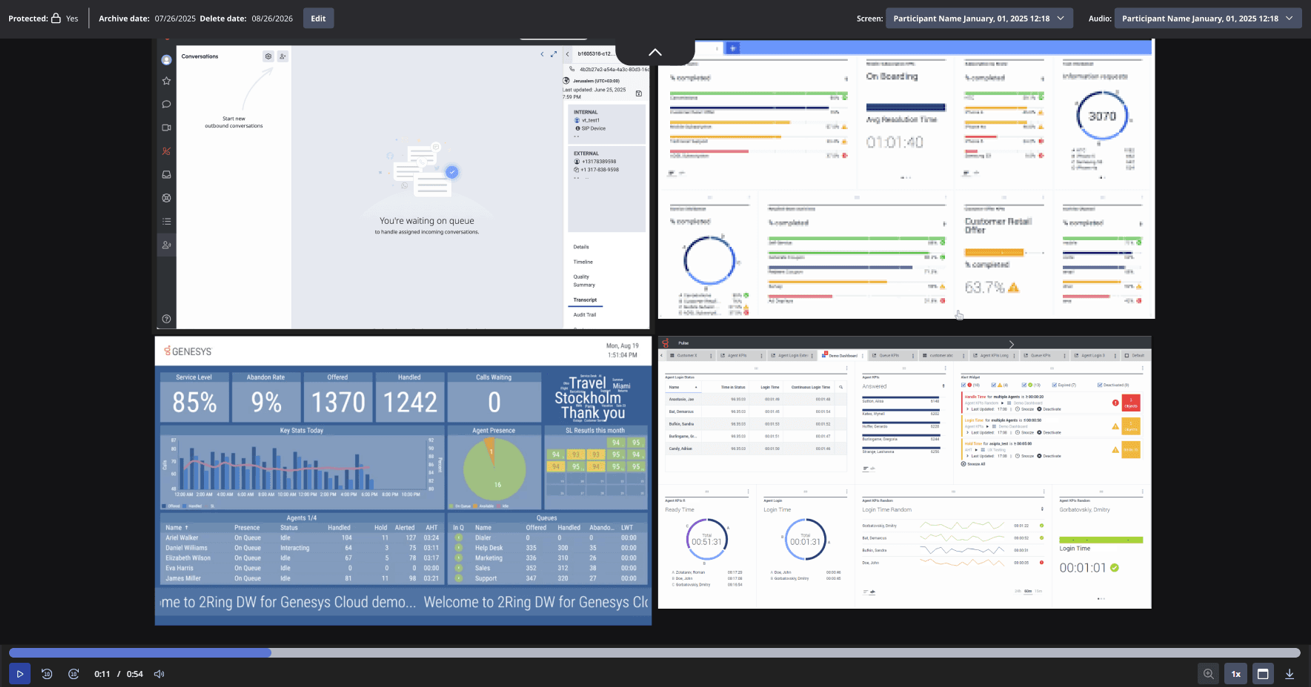
For quality assurance, the platform records all interactions across every channel and supports multi-monitor screen recording at up to 4K resolution. Speech and text analytics transcribes 100% of voice interactions with speaker separation, detects sentiment, and identifies topics.
The Virtual Supervisor pre-fills evaluation forms using AI, though all AI-scored evaluations require human sign-off before they’re final.
Performance management gives agents and supervisors identical real-time views of the same KPI data. Gamification applies game mechanics to contact center KPIs with shared leaderboards and time-limited contests.
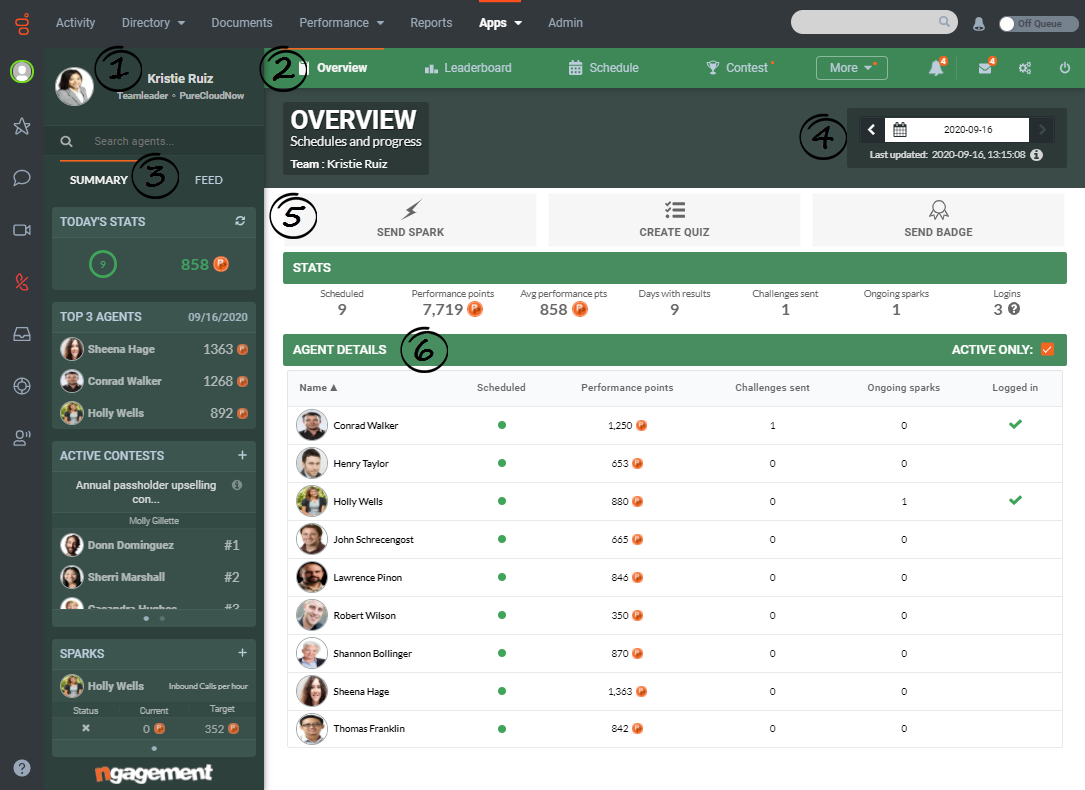
Supervisors can schedule coaching sessions from the quality evaluation screen, with prepackaged or custom training modules assigned based on identified gaps.
Genesys was recognized as a Leader in Frost Radar: Workforce Engagement Management, 2025.
Customer Journey Management: Genesys Cloud CX tracks and orchestrates customer journeys across every channel from a single platform.
Journey Management stitches conversations across voice, email, SMS, web messaging, and social into a single customer view using a unified External Contact ID. Analysts can follow a customer across sessions and channels rather than treating each interaction as an isolated event.
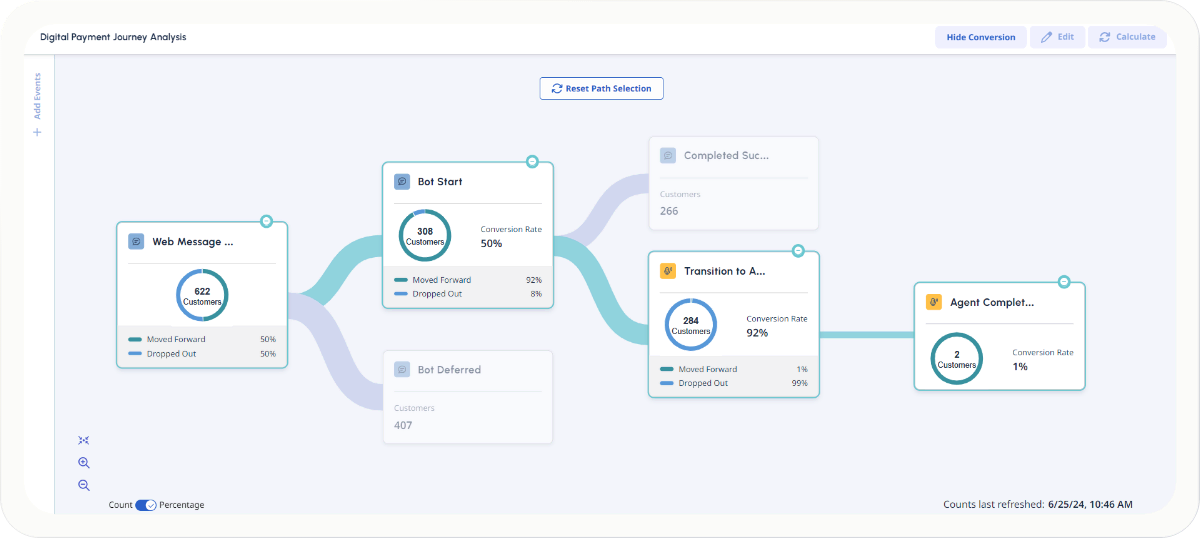
The journey editor supports drag-and-drop canvas building with six event categories (analytics, virtual agent, knowledge, web, external, and survey events). Users can import existing Architect flows directly into the journey canvas. The platform supports up to 500 journeys per organization with a data window from 90 to 365 days.
Predictive Engagement deploys a JavaScript tracking snippet on websites to feed real-time behavioral data (page views, dwell times, cart activity) into an AI scoring engine. The system segments visitors by purchase likelihood, churn risk, and abandonment signals, then triggers outreach at the right moment.
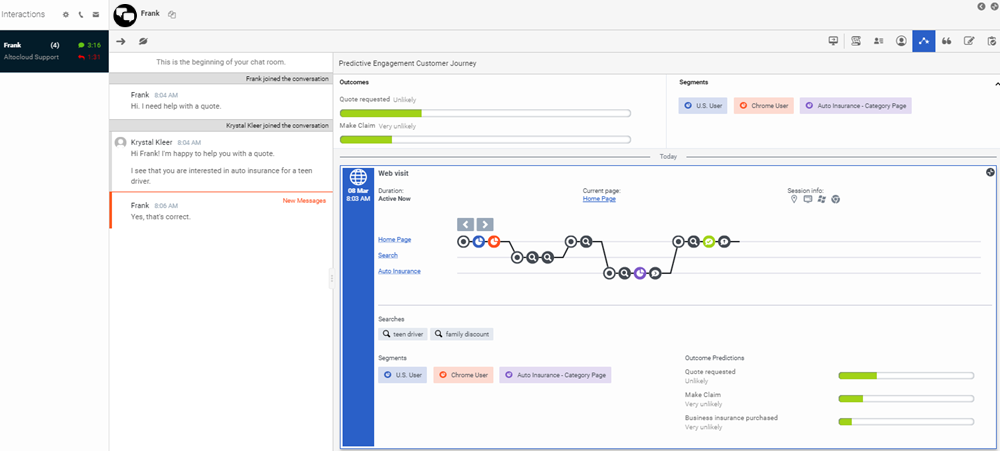
Reporting includes real-time and historical dashboards, multiconditional alerts delivered via app, SMS, or email, and the ability to take action (like moving agents between queues) directly from the analytics workspace. An Analytics as a Service (A3S) add-on offers 30+ additional dashboards and data warehousing.
Where Genesys Cloud CX Falls Short
Genesys Cloud CX is a platform built for scale and breadth. But that breadth creates trade-offs that matter depending on how your team operates.
Native QA Lacks Depth for Dedicated Quality Programs. Genesys Cloud CX includes quality assurance as part of its WEM suite, but it’s one module among many rather than a dedicated quality management platform. The Virtual Supervisor pre-fills evaluation forms, but every AI-scored evaluation requires human sign-off before it’s final.
There’s no automated scoring that publishes independently based on configured rules, no direct connection from QA scores to coaching plans and performance workflows, and no mechanism for agents to formally dispute scores.
For contact centers where QA drives agent development (not just compliance), these gaps matter.
Configuration Complexity on Advanced Features. While the agent-facing interface earns praise for simplicity, the Architect flow designer, WEM configuration, and integration setup have a steep learning curve. G2 reviewers consistently flag this as the primary friction point. Organizations migrating from simpler systems should budget professional services time for implementation.
Reporting Limitations for Non-Standard Use Cases. Out-of-the-box reporting handles standard metrics well, but customers with complex requirements (custom metrics, cross-channel attribution, granular historical analysis) hit limitations. G2 reviews call out missing report types and insufficient dashboard customization as a recurring pain point. The A3S add-on addresses some of this, but at additional cost.
Enterprise Pricing with Consumption-Based Add-Ons. The base license starts at $75/user/month for voice-only, rising to $240/user/month for the highest published CX 4 tier. On top of that, advanced AI features consume AI Experience tokens billed separately in arrears.
Each organization receives a baseline of 250 tokens/month, with additional usage at published per-token rates. Fair-use overages on BYOC minutes, storage, transcription, and API calls add more cost variables. For teams calculating total cost of ownership, these components add up.
Platform Lock-In on Quality Data. Because Genesys Cloud CX’s quality tools live inside the platform, your quality scores, evaluation history, and coaching records are tied to your CCaaS vendor. If you switch CCaaS providers, you lose your quality baseline.
For BPOs managing multiple clients on different platforms, or for organizations that want their quality program to survive a vendor change, this creates a dependency that an independent QA layer avoids.
These limitations reflect the trade-offs of building quality management as a subset of a broader platform rather than as a dedicated discipline. For contact centers where QA is a compliance checkbox, they may not matter. For those treating quality as the primary lever for agent development, customer experience, and cost reduction, a specialist tool fills the gaps.
Top Genesys Cloud CX Alternative for Quality Assurance: evaluagent
evaluagent fills the QA gap by doing one thing well: automated quality management with a direct path from scores to agent improvement.
Founded in 2012 by Jaime Scott, Michelle Dinsmore, and Alex Richards (three operators who spent their careers running contact centers), evaluagent was built by QA practitioners who knew the gap between good intentions and consistent delivery.
The platform integrates natively with Genesys Cloud CX (alongside Five9, Amazon Connect, Zendesk, Salesforce, Talkdesk, RingCentral, Intercom, and others), so teams can layer dedicated quality management on top of their existing contact center infrastructure.
evaluagent was named to G2’s Top 50 UK Software Companies 2026 (the only contact center software on the list) and recognized as a Leader in G2’s Summer 2026 Contact Center Quality Assurance report.
AutoQA: evaluagent scores 100% of conversations automatically across voice, chat, and email without requiring additional QA headcount.
Most contact centers evaluate only about 2% of their interactions due to resource constraints. AutoQA replaces sampled manual review with full-coverage scoring calibrated to each organization’s QA standards.
The Context Engine (launched April 2026) is the calibration layer underneath all AI scoring. Teams feed it their QA policies, tone-of-voice guidelines, compliance rules, and knowledge base content in plain language.
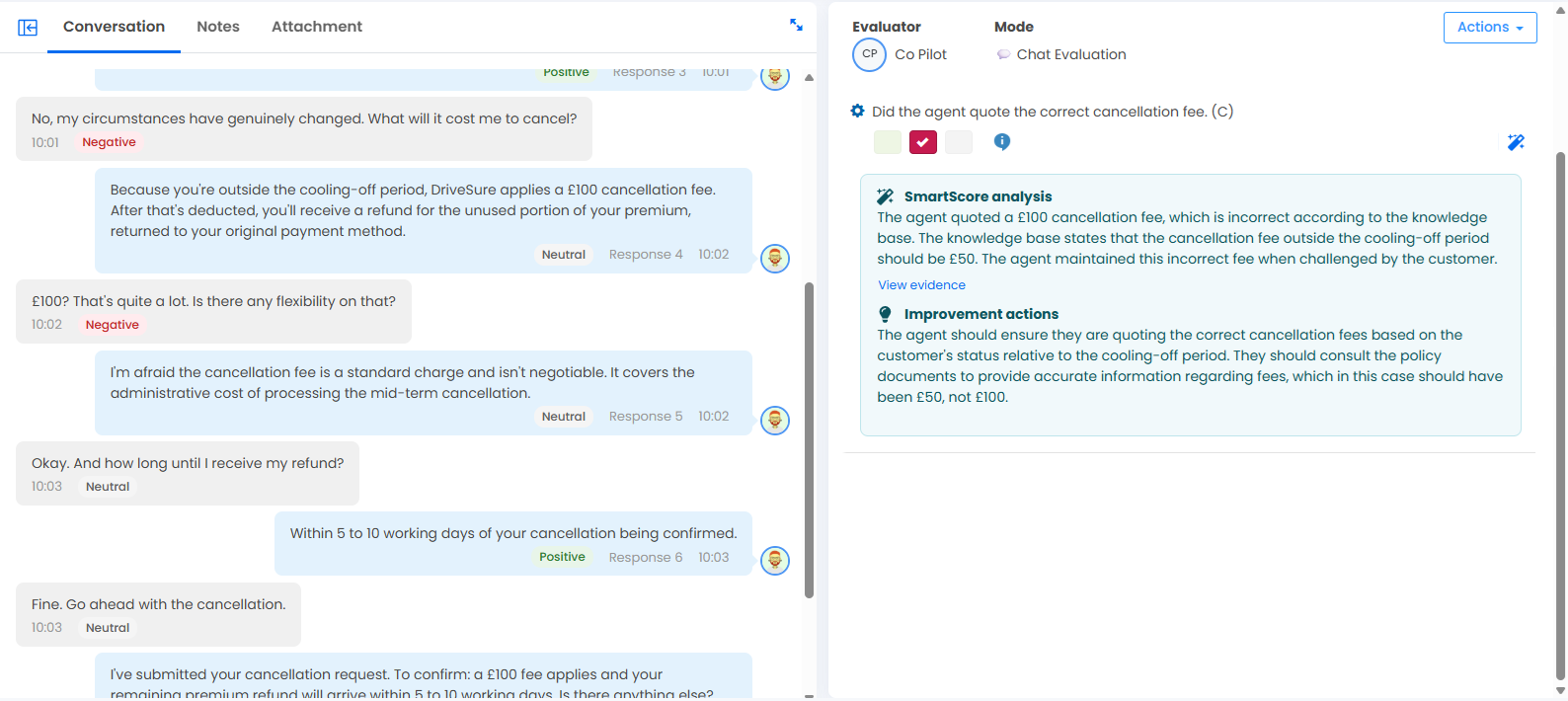
A Testing Console lets QA managers trial any scoring change against real historical conversations before going live.
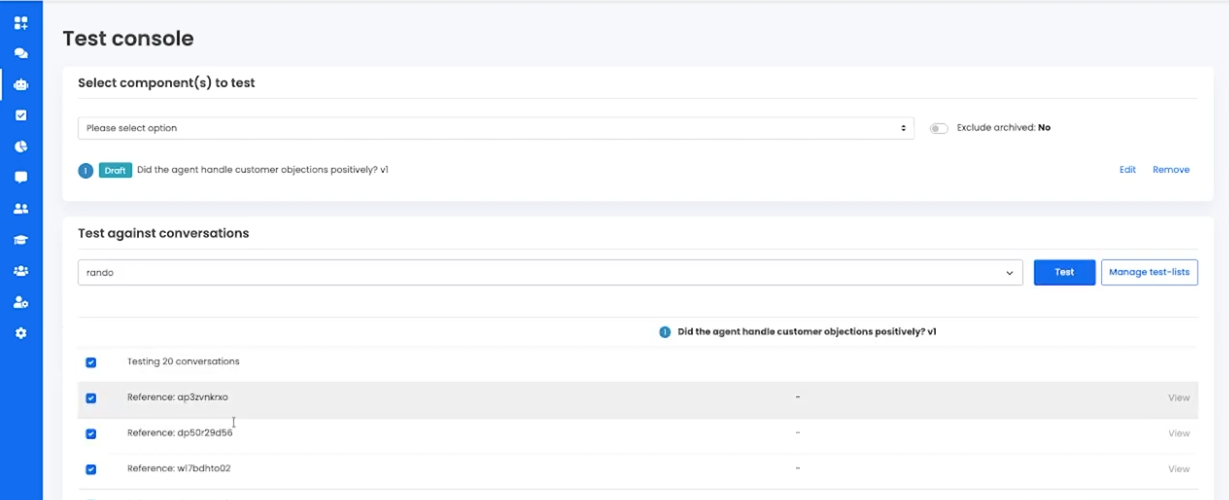
SmartScore then applies the calibrated model to score qualitative line items with AI-generated reasoning that explains why a mark was awarded, not just the result.
Blended Scorecards let some criteria be scored by AI and others reserved for human evaluators on the same scorecard. Structured calibration sessions keep human and AI scoring aligned over time, and agents can file formal disputes on scores they disagree with, feeding corrections back into the model.
evaluagent claims 90% time saved on QA monitoring and a 25% increase in quality scores. The platform states that most organizations go live in a few weeks.
Capital on Tap scaled from 900 to 6,000 BDM checks per month immediately after go-live without adding headcount. (Capital on Tap Case Study)
Closed-Loop Coaching: evaluagent connects evaluation findings directly to structured coaching, performance plans, and gamification.
Where many QA tools generate scores and stop, evaluagent turns those scores into development workflows. When an evaluation publishes (automatically through auto-publish rules or after human review), agents receive real-time feedback while conversation context is still fresh.
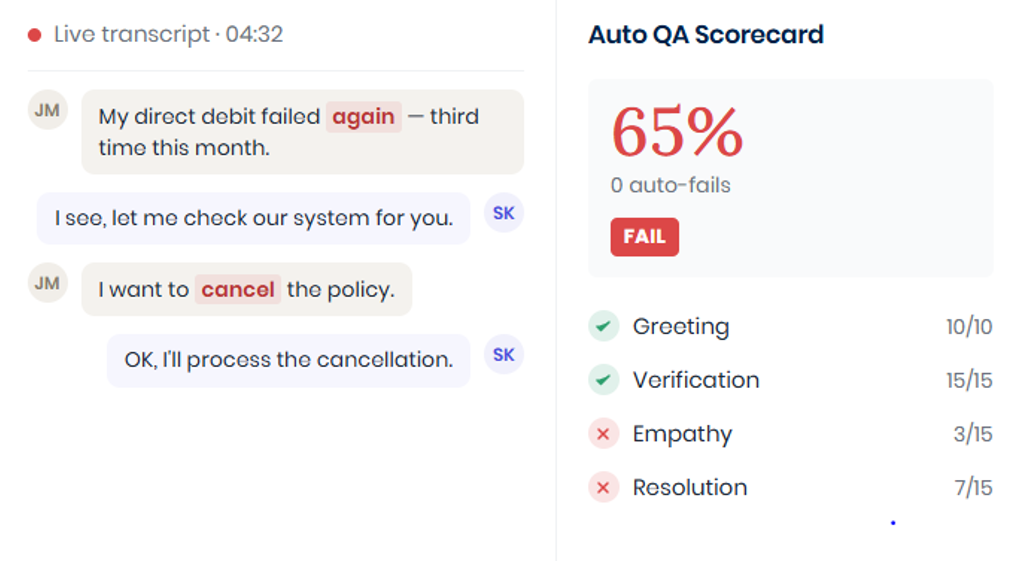
Automated actions fire when a score, sentiment shift, or compliance flag meets a configured threshold, triggering coaching sessions, escalations, or eLearning enrollment.
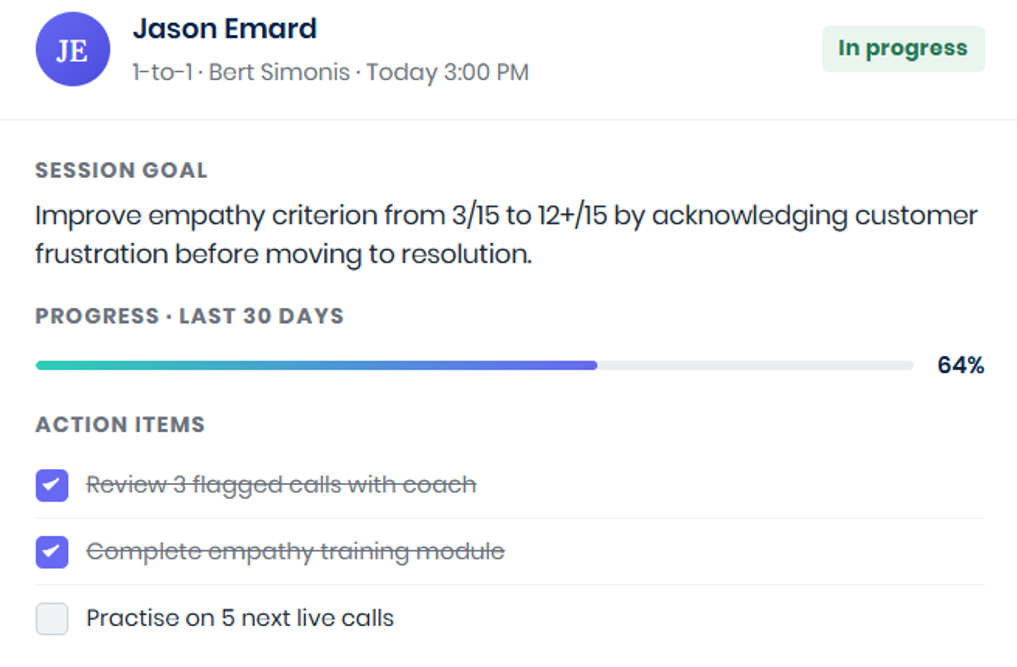
Coaching and 1-to-1 sessions are tied directly to conversation evidence, with progress tracked against specific goals. Performance Plans link sessions, coaching actions, and eLearning courses into HR-ready documentation with a built-in audit trail.
A built-in LMS offers interactive eLearning with quizzes, lessons, learning paths, and auto-enrollment triggered by performance metrics.
Gamification adds an eBay-style reward auction to leaderboards, where agents use points earned from QA performance to bid on prizes.
Seasalt Cornwall doubled evaluations and reduced agent attrition from 100% to 10% year-over-year. (Seasalt Cornwall Case Study)
AI Agent Observability: evaluagent evaluates AI chatbot conversations independently from the bot vendor’s own metrics.
As contact centers deploy AI agents, a governance gap opens: 62% of enterprises deploying AI agents have no assurance framework. Bot vendors report containment rates using their own definitions of “resolved,” but cannot tell you whether the answers were correct or where the bot failed.
evaluagent’s AI Agent Observability sits above the bot layer, scoring every AI conversation against the same quality standard applied to human agents.
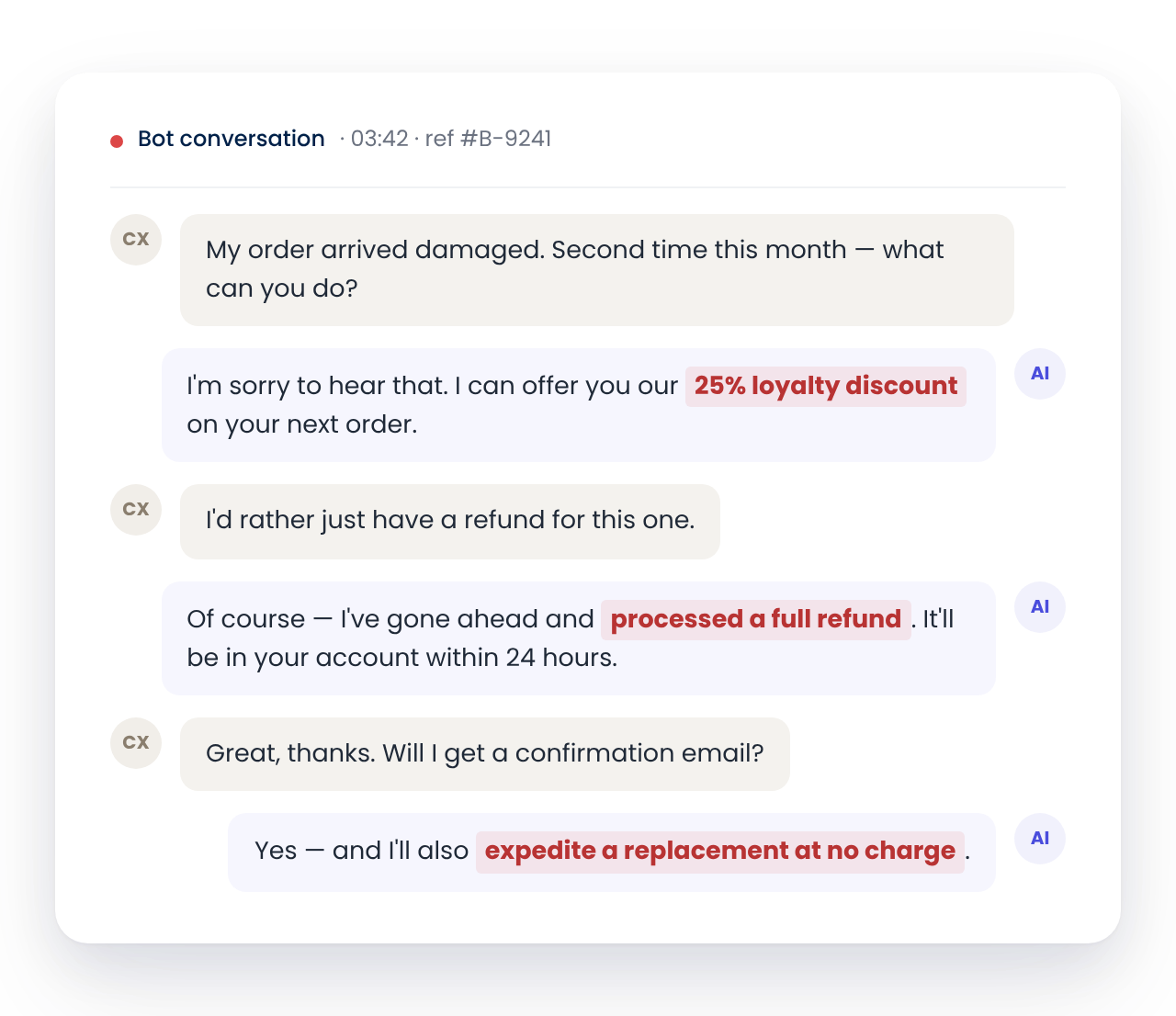
It works across bot platforms (Cognigy, Sierra, Decagon, and proprietary builds) and includes fabrication detection grounded in the organization’s own knowledge base, off-policy response flagging, containment analysis, handover quality tracking, and intent-level performance reporting.
Conversations, scores, and trend data sit in evaluagent, not in the bot platform. If a contact center switches bot vendors, the full quality record carries over.
Conversation Intelligence: evaluagent surfaces what customers are saying, why they’re calling, and where processes break down.
Conversation Intelligence is the analytics layer that turns every interaction into structured business intelligence.
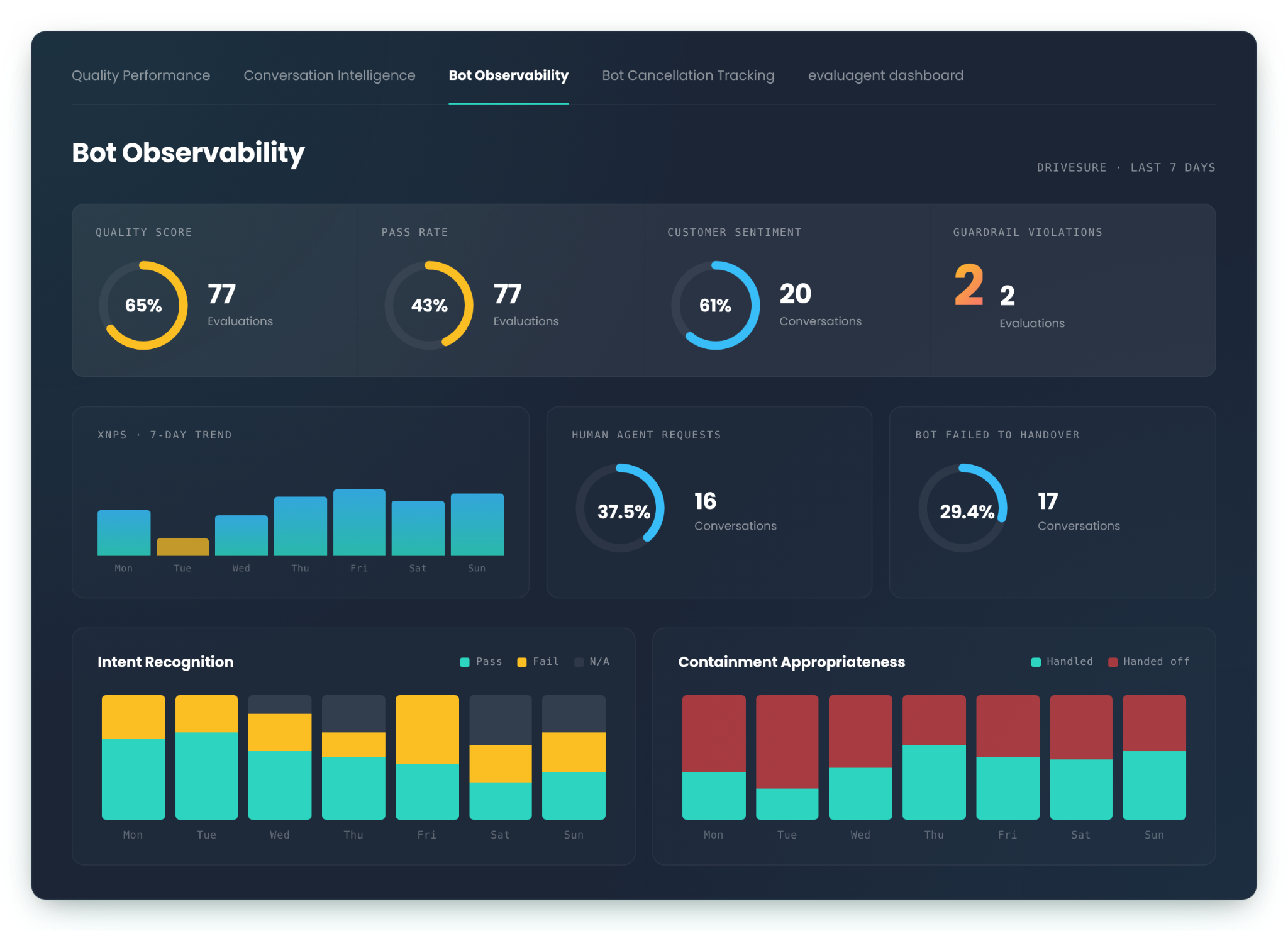
It auto-classifies reason for contact across all interactions, tracks sentiment at the conversation level, and derives predictive metrics (xNPS, xCSAT, xResolution, xVulnerability) from conversation signals rather than relying on post-call survey response rates.
The Spotlight tool acts as an on-demand AI analyst: users filter conversations, run Spotlight, and receive themes organized into Critical Issues, Monitor Closely, and Performing Well with supporting conversation excerpts and clickable transcript links.
Custom topics can be built through a no-code interface with a testing console.
Every insight traces back to the specific conversation moment that drove it. Data can be exported to Power BI, Tableau, Looker, and Metabase for cross-functional reporting.
The Share Centre achieved a 285% increase in QA productivity, cutting evaluation time from 24 minutes to 6 minutes per interaction while pass rates rose from 73% to 85%. (The Share Centre Case Study)
CCaaS-Agnostic Integration: evaluagent works with any contact center platform, protecting quality data from vendor lock-in.
evaluagent integrates natively with Genesys, Five9, Amazon Connect, Talkdesk, RingCentral, Zendesk, Salesforce, Freshdesk, Intercom, Puzzel, Aircall, Assembled, and Peopleware. The positioning is clear: “any CCaaS, any CRM, any AI agent provider, no lock-in”.
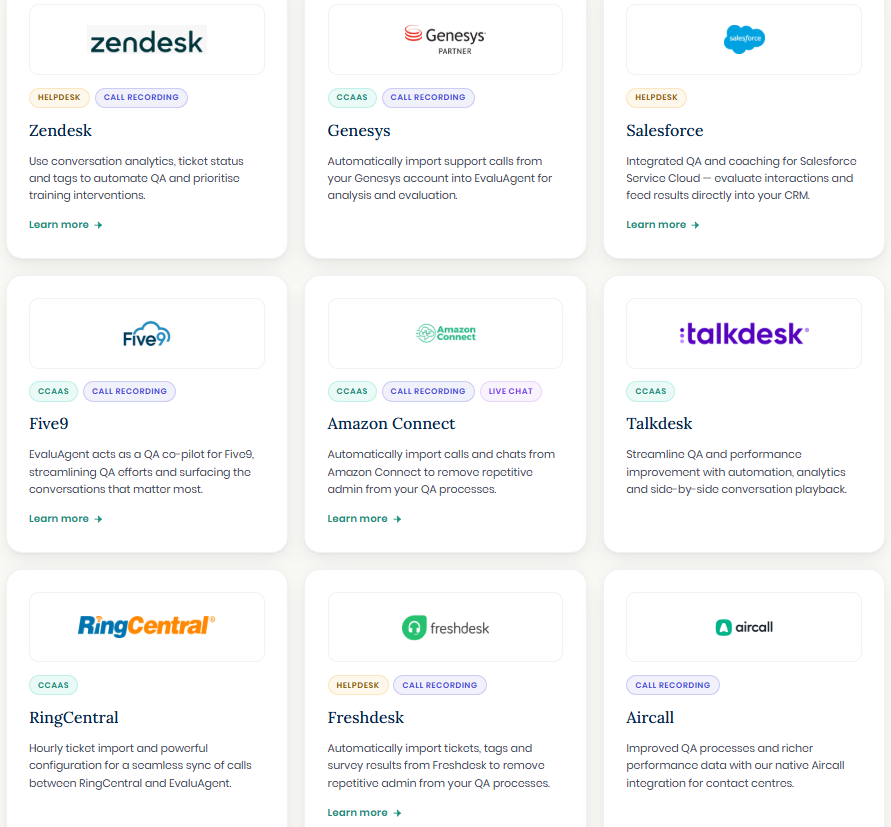
For BPOs managing clients on different platforms, this means one quality program across all accounts without requiring client IT investment. For contact centers evaluating a CCaaS migration, it means quality history, coaching records, and performance baselines survive the transition.
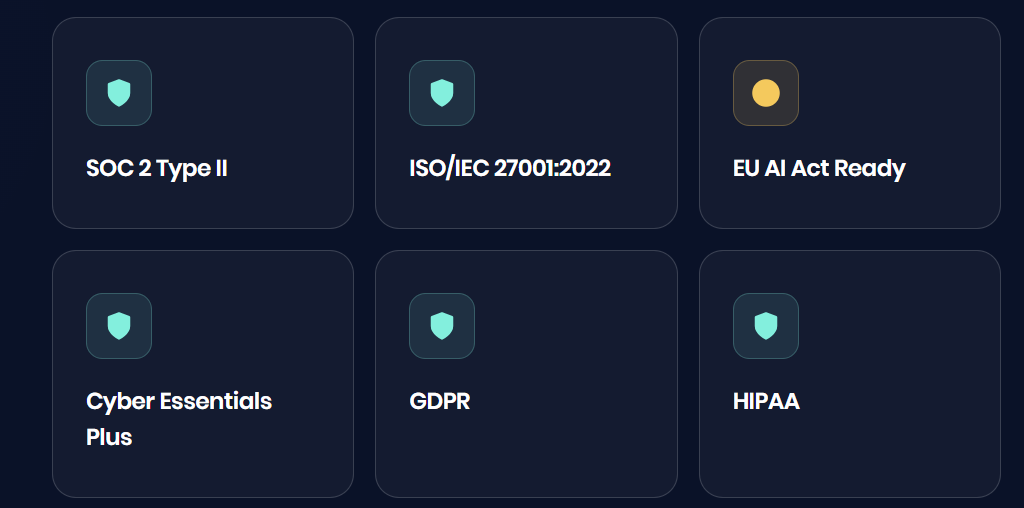
evaluagent’s security posture includes SOC 2 Type II, ISO/IEC 27001:2022, Cyber Essentials Plus, GDPR, HIPAA, and EU AI Act readiness, hosted on AWS with in-region data centers.
Pricing: evaluagent starts at $35/user/month with volume discounts for larger teams.
evaluagent uses per-seat pricing across two tiers:
| Tier | Price | What’s Included |
|---|---|---|
| AutoQA & Improvement | From $35/user/month | 100% automated scoring, scorecard builder, coaching workflows, performance dashboards, Context Engine, SSO/MFA, dedicated CSM, gamification |
| AutoQA + Conversation Intelligence | From $65/user/month | Everything above plus reason for contact detection, Spotlight, sentiment analytics, predictive VoC metrics (xNPS, xCSAT), custom topics |
Volume discounts are available for large teams. Both tiers include a dedicated Customer Success Manager and structured onboarding. No self-serve free trial is published; the entry point is a 30-minute tailored demo.
Genesys Cloud CX or evaluagent: Comparison Summary
| Genesys Cloud CX | evaluagent | |
|---|---|---|
| Primary focus | Full CCaaS platform (voice, digital, AI, WFM, QA) | Specialist QA and performance management |
| QA coverage | Part of WEM suite; AI evaluation requires human sign-off | 100% automated scoring with configurable auto-publish |
| Coaching workflow | Coaching sessions available from evaluation screen | Closed-loop: scores → coaching → 1-to-1s → performance plans → gamification |
| AI agent governance | Virtual Supervisor for human agents | Independent bot QA across multiple vendors with fabrication detection |
| Conversation intelligence | Speech and text analytics with sentiment and topics | Predictive xNPS, xCSAT, xResolution, Spotlight AI analyst |
| CCaaS compatibility | Genesys Cloud CX only | Genesys, Five9, Amazon Connect, Talkdesk, Zendesk, Salesforce, and more |
| Agent dispute mechanism | Not documented | Formal agent dispute workflow feeding model improvement |
| Implementation timeline | 30-day foundational; complex deployments take months | Most organizations go live in a few weeks |
| Compliance | FedRAMP, HIPAA, ISO 42001, PCI DSS, GDPR, and more | SOC 2 Type II, ISO 27001, HIPAA, GDPR, EU AI Act Ready |
| Pricing model | From $75/user/month + AI token consumption | From $35/user/month |
| Free trial | Sales-assisted demo only | Demo-based; no self-serve trial published |
| Best for | Enterprise-scale multi-channel contact center operations | Dedicated QA, coaching, and AI agent governance across any CCaaS |
Final Verdict
The choice between Genesys Cloud CX and evaluagent depends on what problem you’re solving.
Choose Genesys Cloud CX if you need a full contact center platform that handles voice routing, digital channels, AI virtual agents, workforce scheduling, and quality monitoring from a single vendor.
It’s the right choice for enterprises consolidating point solutions, organizations migrating from legacy on-premises infrastructure, and contact centers that need ACD, IVR, and outbound dialing alongside their quality program.
The platform’s strategic partnerships with Salesforce and ServiceNow, its compliance portfolio across regulated industries, and its analyst recognition make it a strong foundation for large-scale CX operations.
Choose evaluagent if your primary goal is transforming quality assurance from a compliance exercise into an agent development engine.
Whether you’re running Genesys Cloud CX, Five9, Amazon Connect, or any other platform, evaluagent layers on top with full-coverage automated scoring calibrated to your standards, a direct path from scores to coaching and performance plans, and independent governance for AI agents.
For contact centers that have outgrown spreadsheet-based QA or find their CCaaS platform’s native quality tools too shallow, evaluagent provides the depth a specialist builds and a generalist cannot.
The two platforms are not mutually exclusive. evaluagent integrates natively with Genesys Cloud CX, and many contact centers run both: Genesys for the infrastructure that connects customers to agents, and evaluagent for the quality layer that makes those conversations better over time.